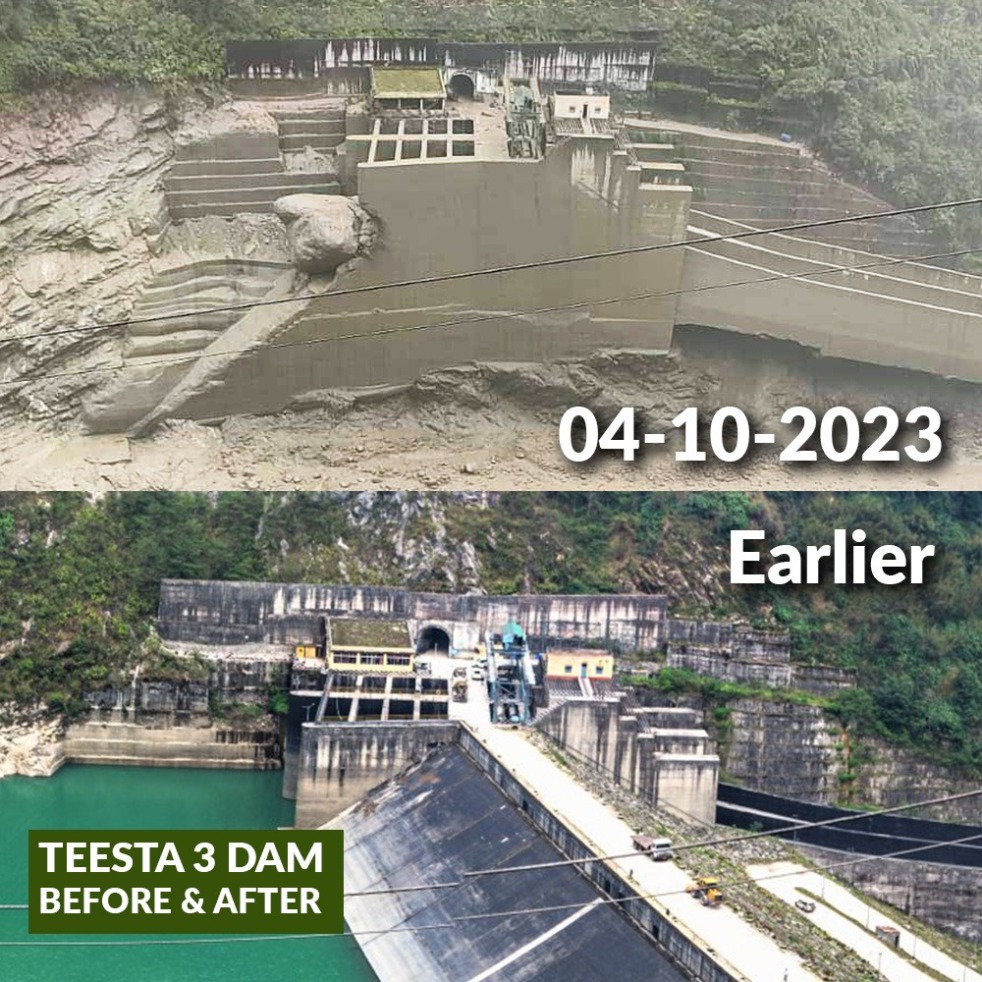
A Glacial Lake Outburst Flood (GLOF) that originated at South Lhonak Glacial Lake at around 00.40 hours on Oct 4, 2023, washed away the 60 m high dam of Sikkim’s biggest hydropower project, the 1200 MW Teesta 3 HEP. The flood has brought unprecedented disaster all along the river in Sikkim and further downstream in W Bengal and then Bangladesh. Central Water Commission (CWC) reported early in the morning of Oct 4 that there was cloud burst at the site of the lake burst, the cloud burst could have played the role in triggering the lake burst. (Feature image above: A combination of before after photos of Teesta 3 dam put together by Siddharth Agarwal.)
Continue reading “Glacial Lake FLood destroys Teesta-3 Dam in Sikkim, brings wide-spread destruction”Month: October 2023
DRP 021023: Why this culture of opaque governance around Joshimath?
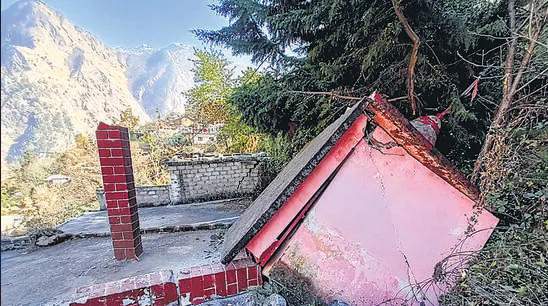
(Feature Image: A temple collapses after the gradual ‘sinking’ of Joshimath in Chamoli district, on Jan. 08, 2023. PTI/HT)
It is clear that the Union and the Uttarakhand government did not want the reports prepared by different national institutes related to Joshimath Sinking, to be made public and the state High Court had to order it to do so. The government’s view of the report is clear from that. It took the judiciary so many months to finally order the report to be made public. What is it that the government wanted to hide? Why? From whom? Why is there this culture of opaque governance even in disaster management related issues? Is it growth fundamentalism that is driving the government as the single most factor? Or is it the arrogance and adamant attitude of the governance, not wanting to consider any questions raised against their decisions? Why is there so little faith in the people, society and transparent, accountable governance? Why is the judiciary allowing such a culture to prevail generally?
These are some of the key questions that arise from this and other such episodes.
Continue reading “DRP 021023: Why this culture of opaque governance around Joshimath?”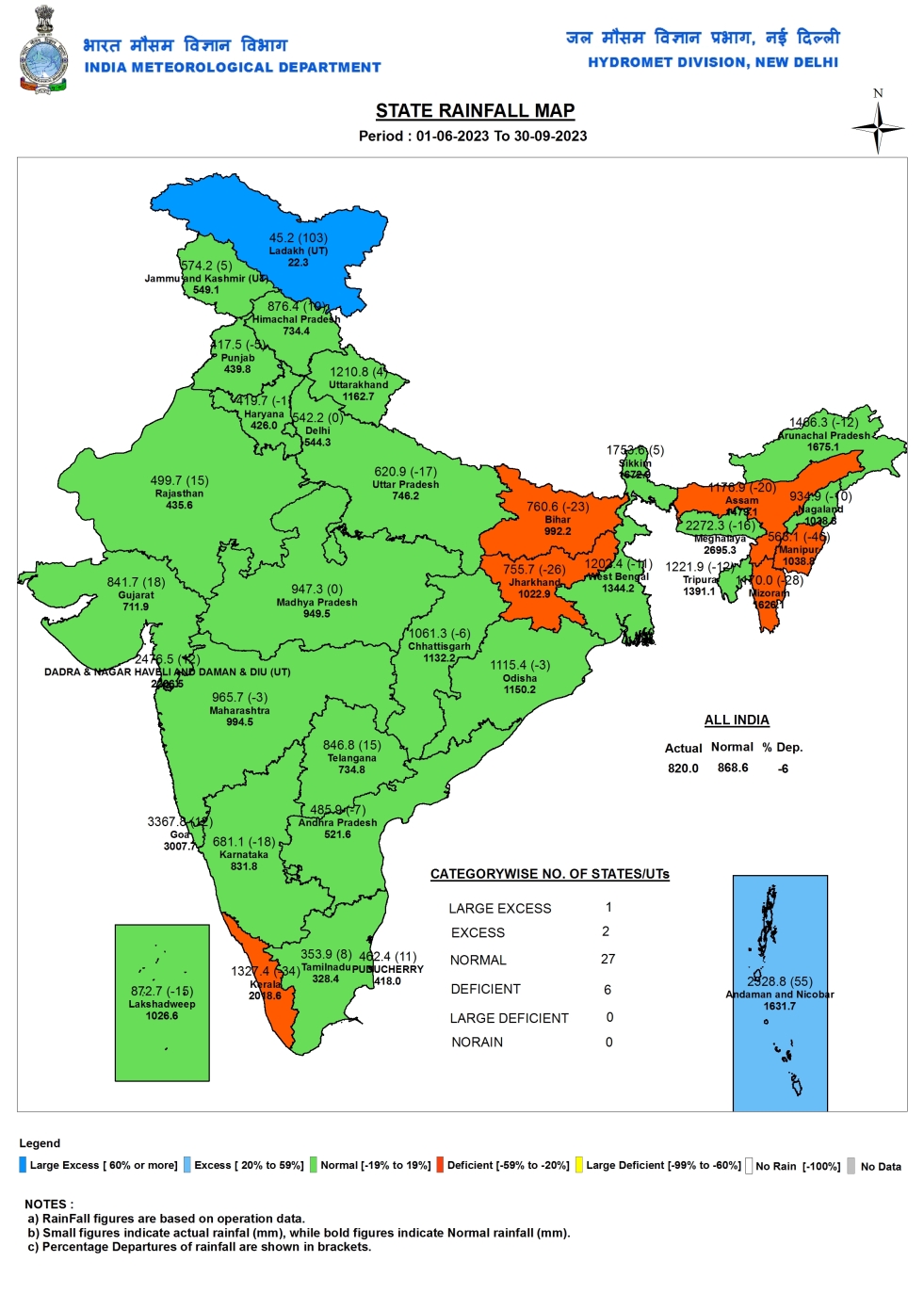
SW Monsoon 2023: District wise rainfall in India
In the just concluded South West Monsoon 2023, India received 820 mm (925 mm in SW Monsoon 2022[i]) rainfall, about 94.45 % (106.5% in 2022) of the Normal SW Monsoon rainfall of 868.6 mm or 5.55% (6.5% above normal in 2022) below normal SW Monsoon rainfall as per India Meteorological Department (IMD). This rainfall will now be categorised as below normal rainfall though the distribution has been unprecedented, both temporally and spatially.
Continue reading “SW Monsoon 2023: District wise rainfall in India” SANDRP