Dams · Maharashtra · Rivers

Maharashtra Urban water sector in 2016: Big cities eyeing big dams

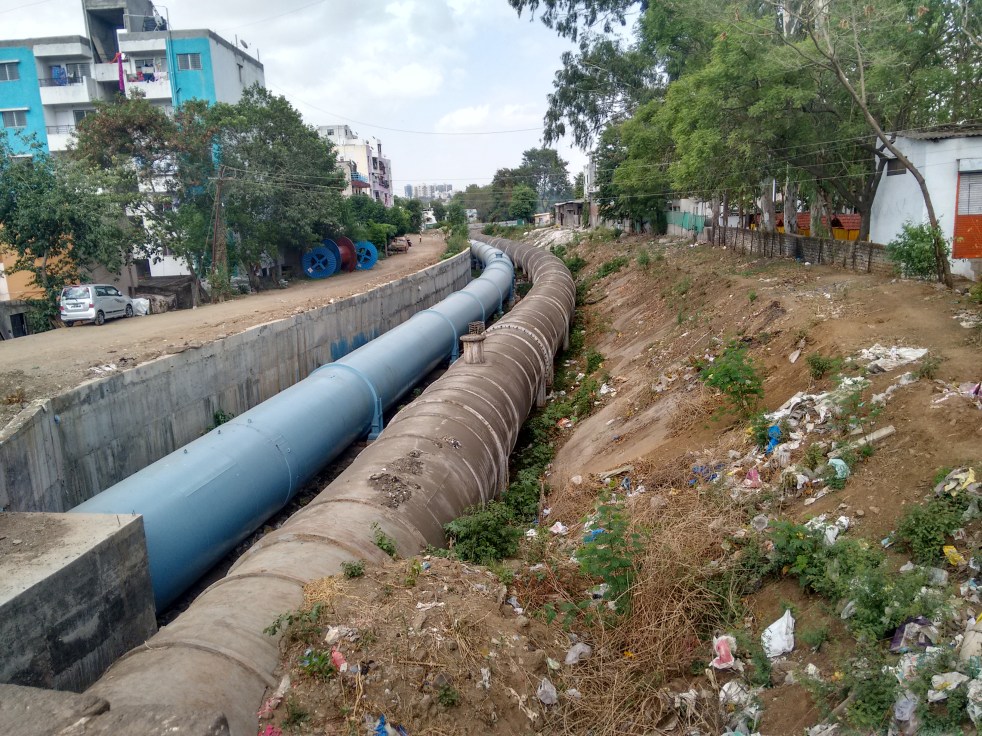
Above: Pipelines which supply water to Pune City from Khadakwasla Dam (Photo: Amruta Pradhan, SANDRP)

Urban narrative of Maharashtra revolves predominantly around cities of Mumbai (along with the Mumbai Metropolitan Region i.e. MMR), Pune, Nagpur and Nashik. Dominance of these large urban centres or the big cities over raw water sources is apparent. These cities have per capita water supply much more than the prescribed norms and continue to seek more water allocations. As Maharashtra gears up to fund more and more dams tapping finances from different sources, big cities with growing footprint of water consumption are all set to claim more water from these dams. Continue reading “Maharashtra Urban water sector in 2016: Big cities eyeing big dams”

Krishna River · Maharashtra · Rivers · Western Ghats

Bhima River in Maharashtra: A profile

Above: Pandhapur wari, the yearly pilgrimage on Bhima banks (Source: pandharpurwari.com)

Bhima River, the largest tributary of Krishna River holds a special significance for the state of Maharashtra. The river is closely woven with the spiritual fabric of the state. The river is also referred to as Chandrabhaga River, especially at Pandharpur- the famous pilgrimage city, as it resembles the shape of the Moon. Bhima basin occupies nearly 70% area of the Krishna Basin falling in Maharashtra. Though the river originates in Maharashtra, it merges with Krishna river in Karnataka state, thus can be viewed as an independent basin.

In recent years Bhima basin has been subjected to excessive pressure of anthropogenic activities such as religious festivals attracting millions of pilgrims through the year, growing pollution by urban centres, growing sugarcane cultivation and over extraction of the river water to feed the water guzzling crop. These activities are taking toll in the river’s health and its water availability. Maharashtra state’s haste of building more and more dams in Krishna basin is most prominently visible in Bhima basin.

In this sense this sub-basin of Krishna River Basin, is its perfect miniature.

We try to present a short profile of this basin. This article is in continuum with profile of Krishna River within Maharashtra published by SANDRP a few weeks back[1]. Continue reading “Bhima River in Maharashtra: A profile”

Dams

Yamuna River 2016: Unjustified Dams, Hydro Projects

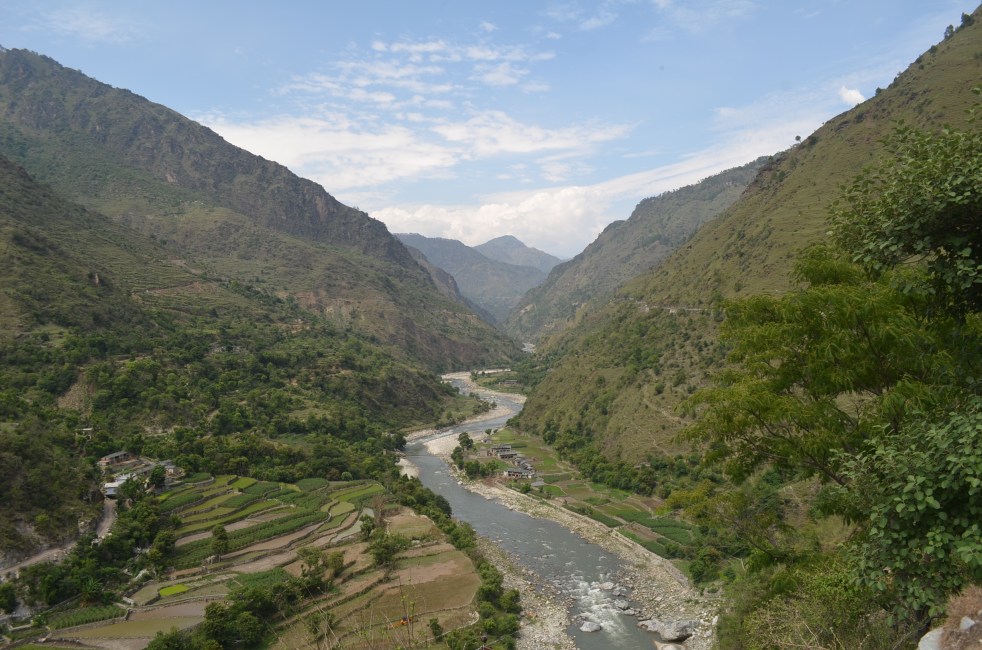
The first part of 3-part blog series throws light on impact of dams and hydro projects in upper reaches of the River and the imminent dangers of climate change that have jeopardized the entire eco-system around the Yamuna rivers. 

The second part would bring forward the plight of severely polluted and threatened Yamuna tributaries in the mainland of Haryana, Uttar Pradesh (UP), Rajasthan and Madhya Pradesh (MP). The third and concluding part would detail the status of ongoing and planned cleaning and rejuvenation projects launched in 2016.  

Continue reading “Yamuna River 2016: Unjustified Dams, Hydro Projects”

Dams · DRP News Bulletin

DRP: 9 Jan 2017 (India Groundwater Continues to Decline: Govt Report)

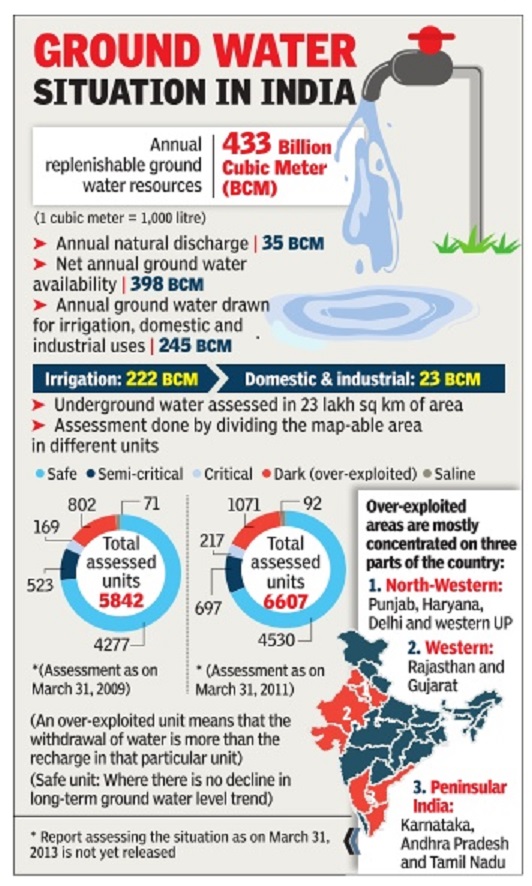
Ground water recharge plan is a non-starter Though the latest report, covering assessment of ground level situation as on March, 2013, is still being compiled, sources in the Central Ground Water Board (CGWB) hinted at further increase in the number of `dark’ (over-exploited) units. Decline in ground water level due to over exploitation of available resources had prompted the Centre in 2013 to come out with a master plan for artificial recharge of ground water, specifying how different states would go about it on priority. But majority of the states have, so far, not implemented the master plan. Only six states -MP, Gujarat, W-Bengal, UP, Chhattisgarh and Karnataka have taken follow-up actions despite the fact that the number of `dark’ units increased from 802 in March, 2009 to 1,071 in March, 2011. This not only says what the title mentions, but also shows how slow our official agencies are in even coming up with groundwater data, the latest data is for March 2011! 

Continue reading “DRP: 9 Jan 2017 (India Groundwater Continues to Decline: Govt Report)”
Maharashtra · Rivers

NGT stays work of Pune Metro affecting rivers: Another violation of the river floodplain

In a welcome move Western Zone Bench of National Green Tribunal (NGT) issued an interim stay on the proposed portion of the metro route passing through the Mutha river bed in the Pune city.[i] This directive was passed in an Environmental Interest Litigation (EIL) filed in the NGT on May 26 last year by a group of citizens contending that in the proposed metro rail alignment, a 1.7 km stretch passing through the left bank of the Mutha river could cause an irreversible damage to riverbank ecosystem along that route.

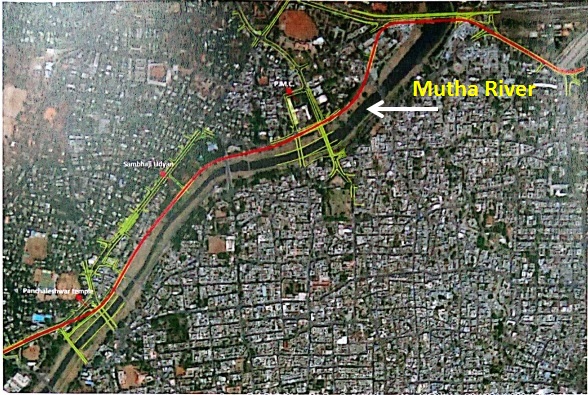
In the first phase two corridors of metro have been proposed in Pune. Corridor-I is of 16.59 km length from Pimpri-Chinchwad to Swargate and Corridor-II is of 14.6 km from Vanaz to Ramwadi. The petition before NGT Pune bench is against the 1.7 km stretch of Vanaz-Ramwadi corridor proposed through left bank of river Mutha. The metro route is proposed to enter the Mutha riverbed behind Savarkar memorial on Karve Road and proceed towards Pune Municipal Corporation (PMC) Bhavan and further to Food Corporation of India godowns behind Shivaji Nagar District Court.[ii] Two Metro stations are also proposed on the riverbed, one near Deccan Bus Stand and the other behind Sambhaji Park. Presently soil testing work for the project is in progress.

Proposed Metro alignment passing through Mutha riverbed (Source: Report of Technical Support Group on Biodiversity of PMC)

It certainly seems a good news for Pune’s rivers which have routinely made headlines for their pollution and poor state in general. Closer look towards the details however would cast a shadow on this development. The alignment through the river bed has been proposed despite PMC recently facing and losing a petition in NGT against 2.3 km long (and 24 m wide) road from Vitthalwadi to NH-4 bypass which was being constructed illegally right in the Mutha Riverbed. In its final judgment in July 2013 NGT ordered the road to be realigned. Subsequently a contempt petition was filed when PMC failed to comply with the orders where the NGT in January 2015 again ordered removal of the constructed road.[iii] Continue reading “NGT stays work of Pune Metro affecting rivers: Another violation of the river floodplain”

Dams · Sand Mining

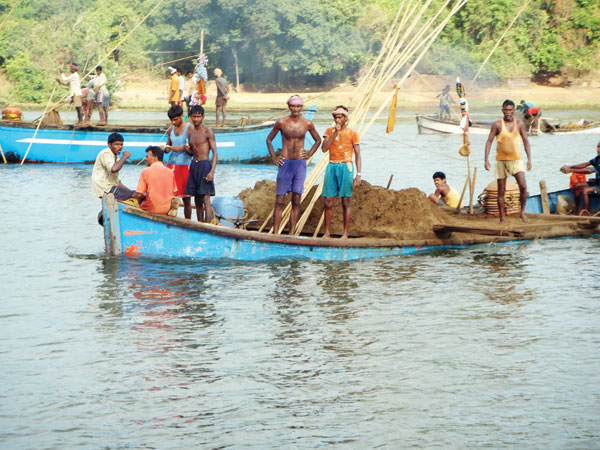
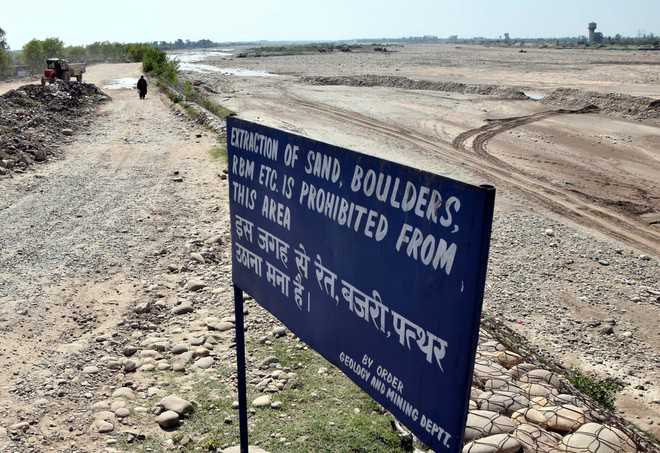
River Sand Mining in India in 2016–III – Judicial Interventions

Ever since its land mark judgment[1] on February 27, 2012, the Supreme Court (SC) of India is not hearing any particular case pertaining to River sand mining regulation. In 2012 judgment SC had directed all Union Territories and State Governments to seek Environmental Clearances (EC) from Ministry of Environment, Forest & Climate Change (MoEF&CC) for mining minor minerals even in less than 5 ha or renew the same after prior approval from the MoEF&CC. Before this order, mining areas of less than 5 ha were exempted from EC enacted under Environmental Impact Assessment (EIA)-2006[2].

On Aug 5, 2013, the National Green Tribunal (NGT), has passed an important decision[3] ordering a ban on sand excavation across the country without permission from State Environment Impact Assessment Authority (SEIAA) and MoEF&CC. Further in November 2013, interpreting environment as Central Government subject and directing MoEF&CC to frame uniform sand extraction rules, the NGT prohibited State Governments[4] to form mining rules separately.

Since then, in pursuit of compliance to aforesaid orders, NGT and the High Court (HC) in several States have been frequently directing respective Government agencies to facilitate sustainable River sand removal. In this context, these courts have issued a number of orders and decisions all through 2016.

In fact, the sustained hearings in SC and NGT have resulted in first to Sustainable Sand Mining Policy draft 2016[5] and then to formation of Sustainable Sand Mining Guidelines 2016[6].

Continue reading “River Sand Mining in India in 2016–III – Judicial Interventions”

Dams · Sand Mining

River Sand Mining in India in 2016-II- Governments Show no Will to Regulate


In the second part of three-part blog series SANDRP presents an overview of steps taken by Central and State Governments on this issue of river sand mining practices in the year 2016.

CENTRAL GOVERNMENT

The year 2016 started with a welcoming development when none other than the Prime Minister of India, Sri Narendra Modi himself, while delivering inaugural address[1] at 103rd session of Indian Science Congress, in Mysuru on January 06, 2016 cited the importance of rivers in human history.  Emphasizing the value of rivers, he stressed on the use of science and technology to understand the impact of urbanization, farming, industrialization and ground water use and contamination on the river eco-system. Revering the Rivers as soul of nature, the PM emphasized to make renewal of Rivers an element of a larger effort to sustain Nature.

Contrary to this, on January 06, 2016, the Union Transport Minister revealed Government plans considering use of river sand for national highways construction[2]. The minister particularly mentioned sand of river Yamuna to be used in construction of national highways and agreements would be signed with states to seek approval for using sand from their rivers. The report ironically mentioned it as innovative moves to boost infrastructure development. Interestingly the Sustainable Sand Mining Management Guidelines 2016[3] from Union Ministry of Environment, Forests and Climate Change (MoEF&CC) condemned the use of sand in concretization including its burial under highways despite very high value of minerals found in the sand. 

In the same month the MoEF&CC came out with a draft notification[4] for a new sustainable sand and minor mineral mining policy[5] applicable form January 1, 2016. Proposing to decentralize the process of granting environmental clearance the draft notification prescribed creation of District Environment Impact Assessment Authority (DEIAA) for screening mining proposals followed after district level survey report. As per the draft policy District, State and Central level authorities were eligible to approve environment clearances (EC) for mining up to five ha, 5-50 ha, over 50 ha respectively. 

Continue reading “River Sand Mining in India in 2016-II- Governments Show no Will to Regulate”

Dams · DRP News Bulletin

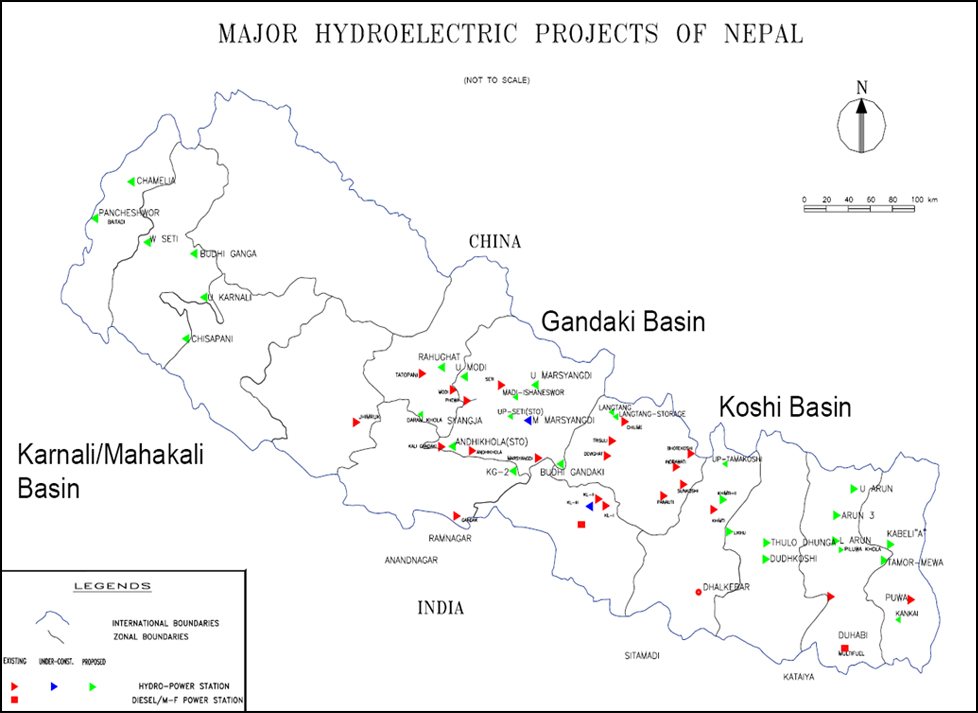
DRP: 2 Jan 2017 (Corruption in Nepal’s Hydro Power Projects)

The latest report of Transparency International reveals that lack of dependable hydrological data, authentic study, action plans giving dual meaning, lack of transparency in the power purchase agreement and a failure to increase the risk-bearing capacity among power developers have remained major hindrances towards the development of hydropower sector in Nepal.

As per the report, the irregularities start from the stages of project selection and identification and this tendency further flourished in the period of a survey and the project implementation, the report states, highlighting a responsible role from the government level to control this practice.

The report also points out that environment standard violations, inadequate compensation in regard to land acquisition, false claims, unreasonable local demands, unwarranted contract variations, bias in selection of top officials like board members and CEOs during the construction, procurement, and implementation phases are working as a catalyst to bring the hydro sector under the grip of corruption.

Continue reading “DRP: 2 Jan 2017 (Corruption in Nepal’s Hydro Power Projects)”