Ganga

Ganga and Varanasi’s Waste-water Management: Why has it remained such an Intractable Problem?

Guest blog by: Dr Kelly D. Alley (ALLEYKD@auburn.edu), Auburn University, USA

Varanasi is newsworthy these days, situated symbolically and politically in the new Prime Minister’s agenda. In his victory speech, the PM-elect Narendra Modi vowed to clean the sacred river Ganga. After assuming the office of Prime Minister, he reiterated the vow and pledged renewed efforts for Ganga cleanup.

Three months later, a skeptical Supreme Court reviewed the new government’s Ganga Plan and remarked that with this approach the river will not be cleaned in 200 years. The Supreme Court asked for the full details of the cleanup plan, and inserted its role as a monitor over central government plans. The government has reportedly submitted a new plan to the court, but no details are available yet in the public domain. However, from media reports, it seems the plan is not very different from what has been done in the name of the Ganga Action Plan so far.

As residents and sympathetic outsiders know, the wastewater problem in this sacred, ancient city is seemingly intractable. In order to implement lasting solutions to the recurring river pollution scenario, we need to investigate the current situation. I just completed a field trip to this special city that many call Banaras. I visited all the existing and planned components of the wastewater collection, treatment, and disposal system. In this article I will try to create a visual map of the wastewater infrastructure and management problems and define the current lines of command and control within the vast and overlapping water, environment, and public health bureaucracies. This should help to identify systemic problems in each that need to be addressed when charting a new direction.

The seemingly intractable problems of Ganga clean up (rejuvenation will need so much more than just a clean up) in Banaras can be divided into three categories. First, there are governance problems that are related to how decisions on technologies, scale, operators and siting are made. These include problems with the solicitation, selection, and implementation of projects, especially the design and construction and operation and maintenance of sewers, sewage pumping stations and sewage treatment plants. Second, there are serious infrastructure problems that are part of the complexity of this ancient city.

Third, there is a real electrical power supply problem. Securing continuous electrical power for sewage pumping stations and wastewater treatment facilities is a low priority, and emergency standby generators are not used when the grid-provided power is unavailable.  As a result, the intermittent operation of sewage pumping stations and sewage treatment plants is ineffective in protecting water quality in Ganga and in provisioning safe drinking water and sanitation in Varanasi.

When the sewerage infrastructure is operated intermittently, the treatment technology cannot treat the wastewater adequately, and the concentration of contaminants and water quality indicators such as total suspended sewage solids (TSS) and biological oxygen demand (BOD), heavy metals, toxic organic compounds, and the Most Probable Number (MPN/100ml) of fecal coliform bacteria–indicating the presence of enteric waterborne disease pathogens in the treated effluent–remain high. So in a way providing partial power to a sewage treatment plant does not do the work and is therefore a largely inoperable, non-functional, sunk cost.

Governance

The Government of India established the Ganga Action Plan in 1986 to lead the way in river pollution control programs. In 2009, the Government declared the Ganga a national river and established the National Ganga River Basin Authority. The National Mission Clean Ganga (NMCG)–the implementing agency under this Authority–is now housed in the Ministry of Water Resources, River Development and Ganga Rejuvenation under the Government of India. The Mission Director is the chief executive of the NMCG.

At the state level in Uttar Pradesh, there is a state Project Management Group (PMG) chaired by the Chief Minister. It includes members from the State Ministries of Environment and Irrigation, the Uttar Pradesh Pollution Control Board and the state water commissions. The State PMG decides whom to select for work, and in most cases uses the Uttar Pradesh Jal Nigam (the state level sewage engineers) to execute wastewater project work.

The State PMG can outsource consultancy work and allocate projects to NGOs as well; although in all cases, it has allocated the wastewater engineering work to the Uttar Pradesh Jal Nigam. These layers of committee membership create a vast water bureaucracy at the state level in addition to the committee memberships and officers at the Central level. They are not independent regulators, monitors and compliance officers (which are needed) but contributors and benefactors of political and profitable decisions in the ongoing issuing of contracts, clearances and other approvals.

This is a big problem because any contract for sewerage work must pass through all these departments and boards, with money wasted on bids and approvals for specific projects. In addition there is no other implementing agency in Varanasi so if the UP Jal Nigam’s work is shoddy or even fraudulent, then the Ganga River and the whole city suffers without an alternative. This situation is well known to Banaras residents who will complain daily that funds meant to improve the sewerage system are simply eaten up by various agencies while wastewater is diverted into the sacred river without treatment.

In addition, the foreign donor agency, the Japan International Cooperation Agency or JICA, has been present in Varanasi for many years to advise and assist with capacity building and technological cooperation for the Ganga Action Plan. Apart from controlling the flow of funds, however, it appears that JICA has worked within the current lines of command and control, thereby helping to perpetuate rather than reform the system.

Infrastructure

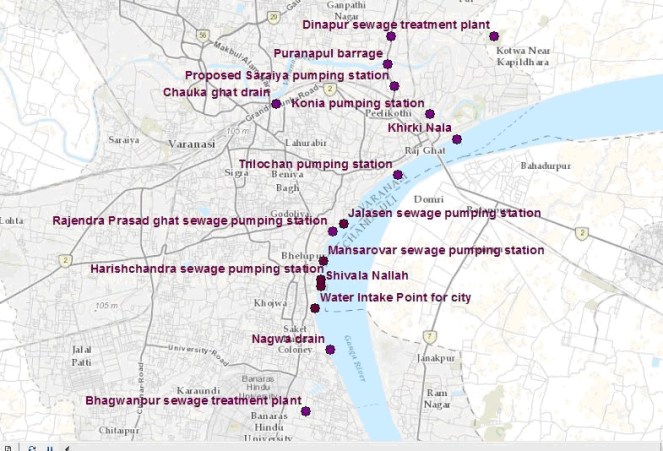
So what is the current situation with the main wastewater drains? The main drains for the city are the Nagwa drain, located in the south and upstream of the main city, and Khirki nallah, located in the north downstream of the main bathing ghats. The Ganga flows northward at Banaras (see map). The Varuna River enters from the west and circles the outer part of the older sacred city complex before draining into the Ganga at the downstream or northern end. In the last year the Varuna River has turned into a wastewater pond upstream of the barrage recently built under the Puranapul Bridge that crosses the Varuna River. The Varuna river banks downstream of that barrage have also become the dumping grounds for all forms of solid waste and the entire landscape is hellish. One wonders how the communities in the vicinity can survive.

The existing wastewater management facilities include three sewage treatment plants, five sewage pumping stations along the ghats, and one main sewage pumping station at Konia. The Konia pumps are supposed to pump up to 80 million liters of sewage per day to the Dinapur treatment plant located in the trans-Varuna neighborhood of Dinapur village, if they work at full capacity. However they rarely do.

For instance, only one screw pump was working on the day of my visit, so that means it was running at 1/3 its capacity. This would also mean that the Dinapur treatment plant was receiving only 1/3 of the wastewater it is capable of treating, according to its nominal treatment capacity, and therefore it was running at 1/3 capacity. However to be exact one would have to know how many hours the one pump operates each day of the week and then the capacity factor can be calculated. For instance, if the pumping station runs at 1/3 capacity for only 6 of the 24 hours each day then the capacity factor would be 1/12 or about 8%.

If capacity factors of the pumping stations and treatment plants are taken into account in a Life Cycle Cost assessment then the cost per unit volume (ML) of treated sewage would sky rocket.  The UP Jal Nigam does not keep a daily operational log with data like energy usage data, and thus there are no metrics, no measures, and no good management practices. This adds up to a lack of proper governance. Many monitoring committees have made visits to site facilities but have failed to correct the daily malfunctioning of the entire system. On my trip to videotape the Khirki wastewater drain in late June, I said to the boatman taking me, “So they release this water into Ganga ji at night and in early morning, right? Like chup ke?” He replied, “No Madam not chup ke. It is right there running wastewater all the time. Everyone can see it, and they are not even bothering to hide it!”

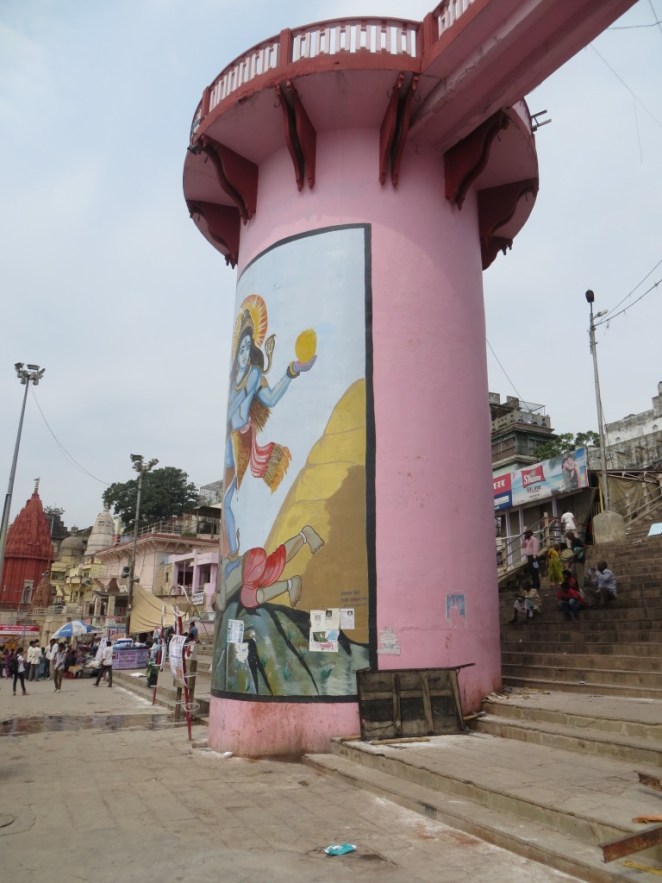
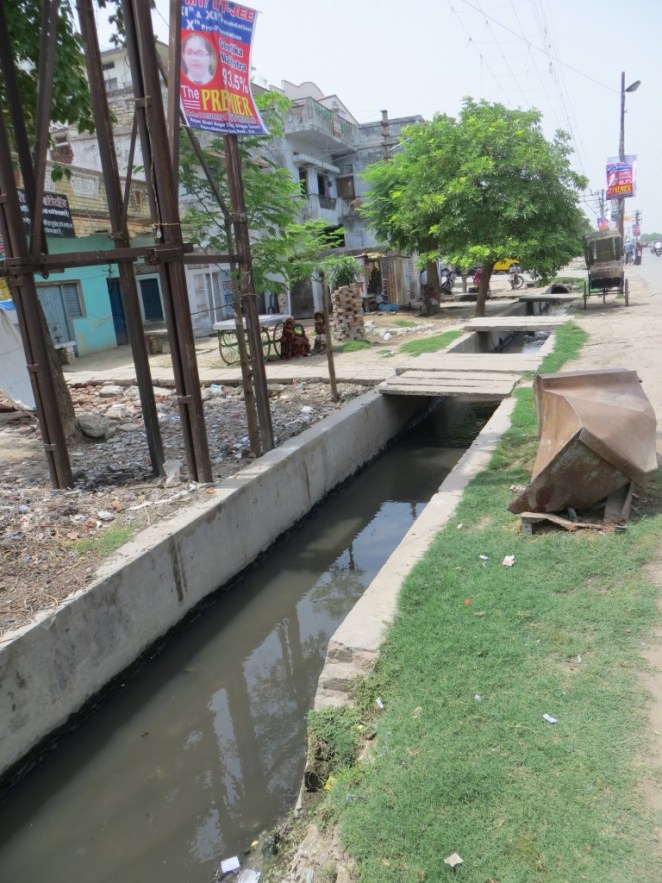
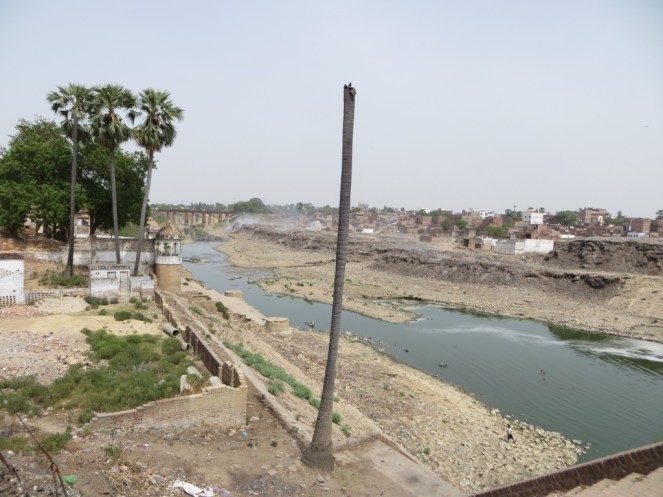
Below are current pictures of parts of the system that have been damaged, destroyed or poorly maintained. The map can be used to place these pictures in the city space.

Map of main infrastructure facilities in Varanasi


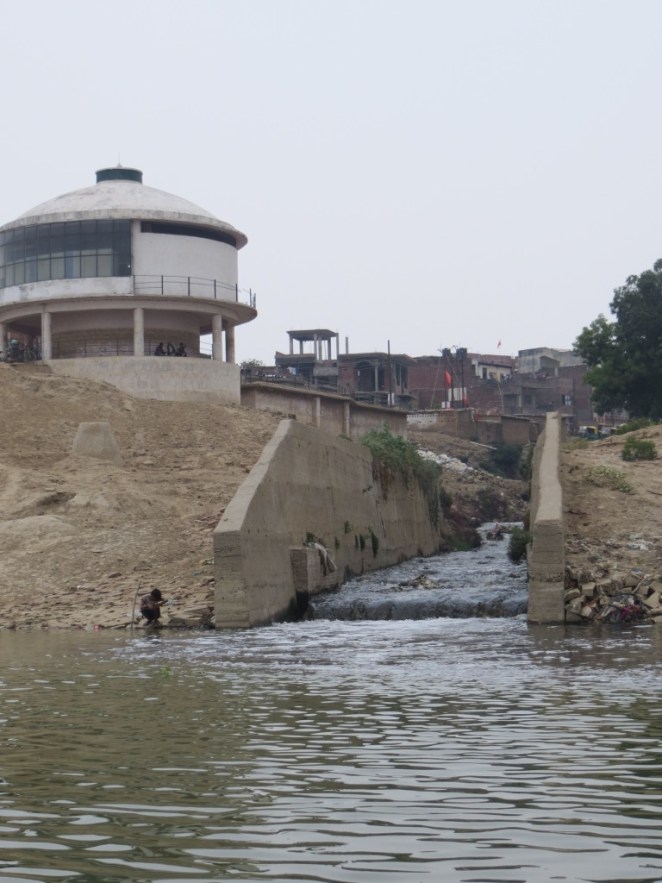
Rajendra Prasad ghat sewage pumping station (one of five ghat pumping stations that send sewage running underground toward the river back to the main trunk line and on to Konia pumping station)
A drain in the western side of Banaras in the unsewered area near the Varuna river. This drain runs to Chauka ghat where the Chauka ghat pumping station is proposed.


The Puranapul bridge with the barrage hidden behind the pillars.
Solid waste dumpsites just downstream of the Puranapul bridge.
A drain in the trans Varuna region.


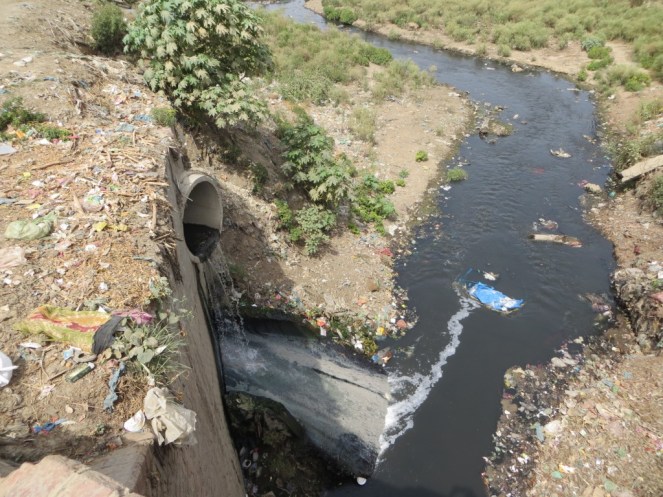
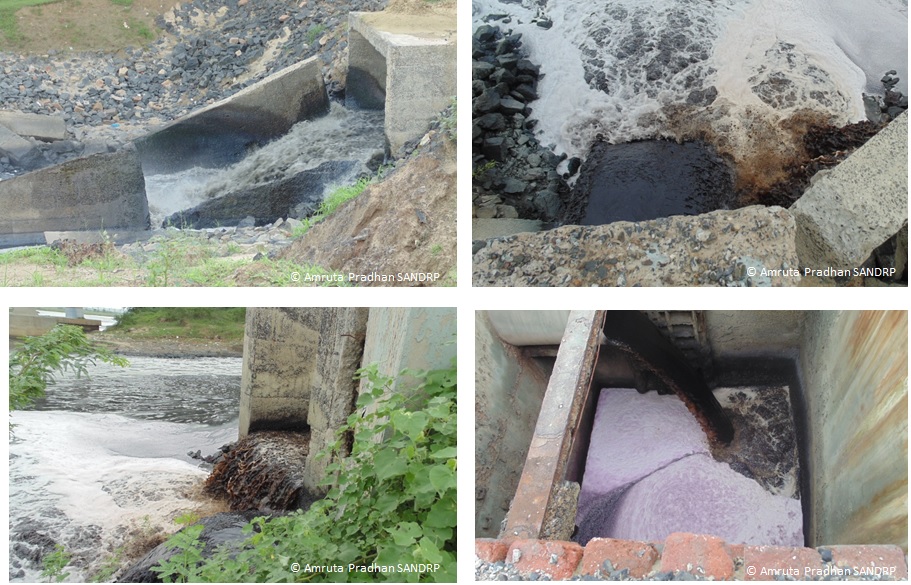
Khirki Nallah, just upstream from the confluence of the Varuna & Ganga rivers and downstream from the sacred city.


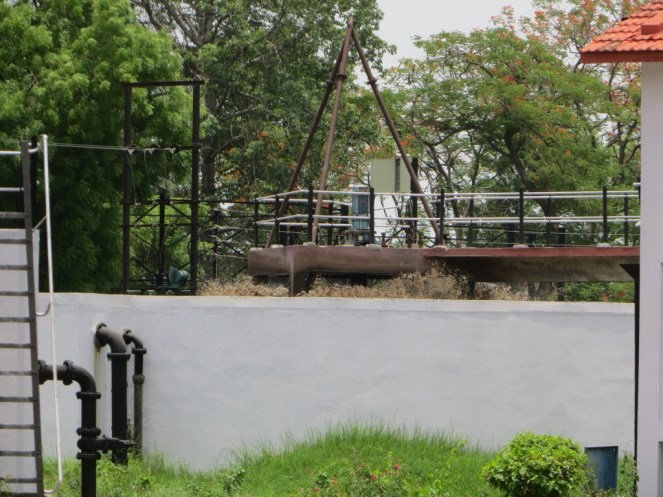
Bhagwanpur sewage treatment plant
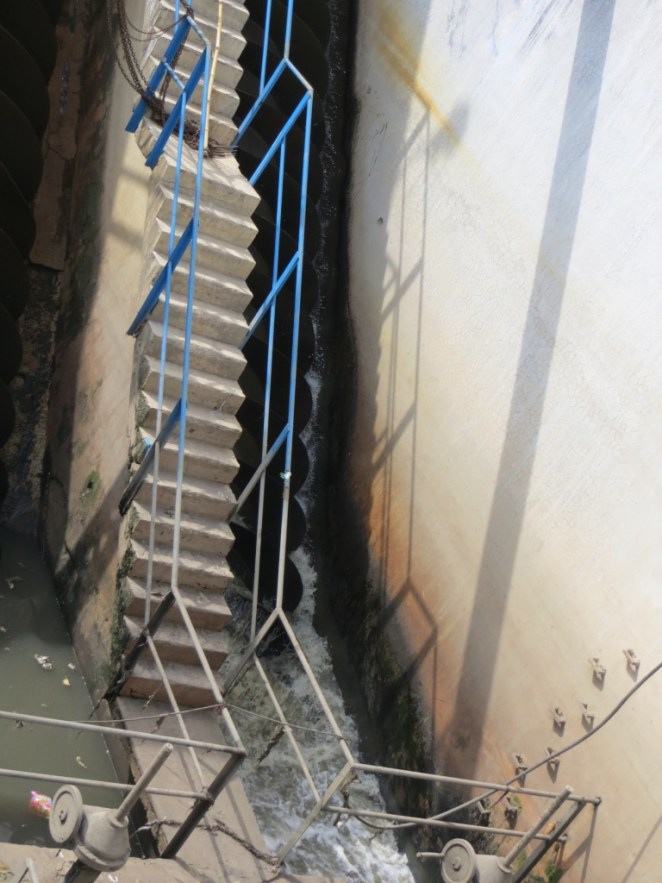
Konia sewage pumping station. Only one screw pump is working
Another shot of Konia sewage pumping station with only one screw pump working
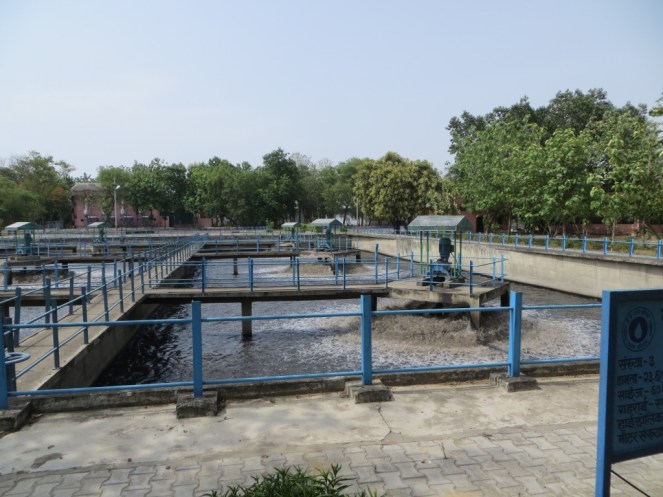
Aeration basins at the Dinapur sewage treatment plant
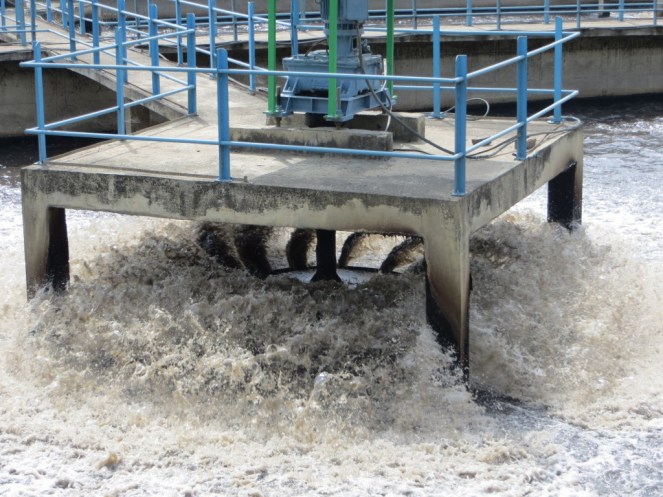
Low efficiency splasher aerators in the aeration basin
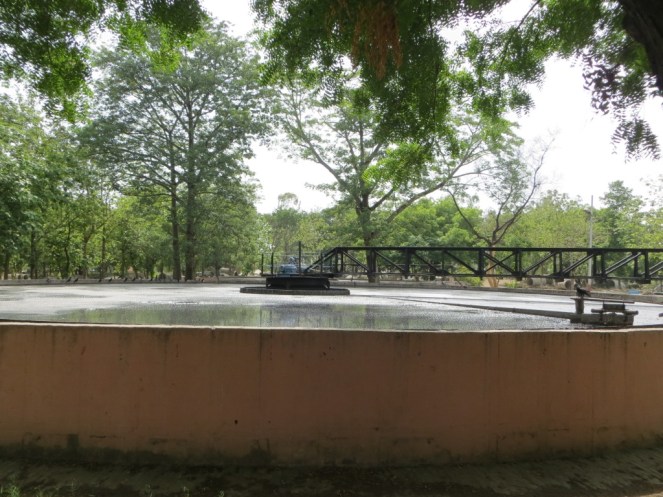
Secondary clarifier at the 80 MLD Dinapur sewage treatment plant


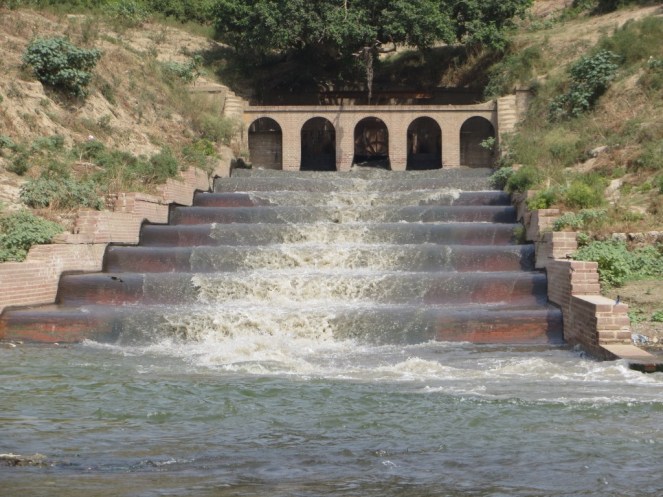
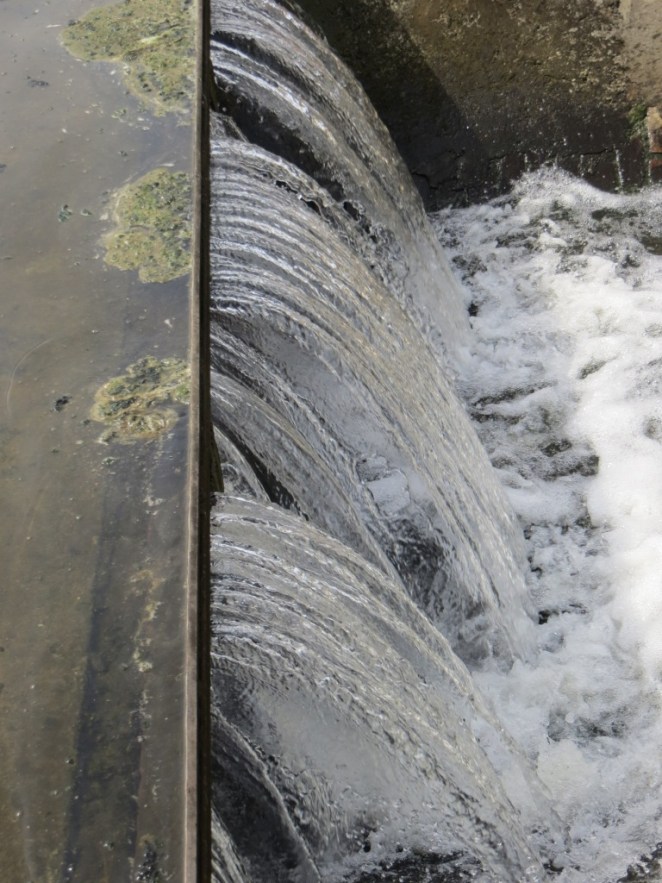
Canal taking treated effluent back to the river
Treated wastewater--it looks "clean" but the fecal coliform content is usually in the range of 100,000 MPN/100ml to 1,000,000 MPN/100ml. This is well above safe levels for bathing and human consumption
Treated wastewater–it looks “clean” but the fecal coliform content is usually in the range of 100,000 MPN/100ml to 1,000,000 MPN/100ml. This is well above safe levels for bathing and human consumption
Nagwa wastewater drain, near the confluence of the Assi and Ganga and upstream of Assi ghat and the raw (drinking) water intake point for the city. The non-functioning Nagwa pumping station is in the background
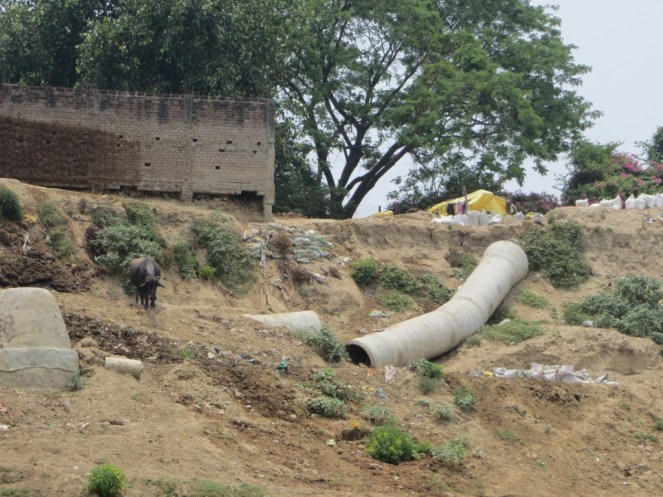
Sewage pipeline damaged by the flood of June 2013 but not repaired. When it was built, it was the pipeline to nowhere. There was no treatment plant constructed at its terminus in Ramana Village along the river bank and upstream of the Nagwa drain

Power

We have to think about wastewater problems in the context of public health, environmental health, electrical power supply and national and state priorities for power distribution. In the current scenario using existing technologies and scales (there are better options for technology and scale), a significant amount of energy is required to pump and treat wastewater using sewage pumping stations and the activated sludge treatment process. In India energy supplies are allocated to industrial and urban needs long before they are distributed to sewage treatment plants. Looking at the current energy scenario in India it is not hard to see that wastewater pumping and treatment require continuous power and are not sustainable in the context of the current power deficit. Biological secondary treatment using the Activated Sludge Process (ASP) uses a significant amount of electricity to operate aeration equipment and mixers. Another technology used in Kanpur, the Upflow Anaerobic Sludge Blanket (UASB), is also a capital and energy intensive process. With other demands high on the agenda, it is unlikely that precious power will be available to run all the existing and proposed sewage pumping stations and sewage treatment plants on a daily basis now and into the future if the existing technologies and scales continue to be used.

Take Away Points

If wastewater infrastructure is built, it is done with large government investments of public funds, sometimes with capital from international banks; there is little private equity to drive the process. Instead the costs of building (and also poorly building) these facilities are absorbed across a range of human services including public health, education, housing and infrastructure. The costs of operating and maintaining sewage pumping stations and treatment plants are also high and operation and maintenance of the facilities become a low priority after construction.

For instance, the sewage treatment plant laboratories are ill-equipped and this means that the UP Jal Nigam operators are unable to monitor, measure, and report operational and water quality data. Due to the absence of laboratory equipment, instruments and analytical capacity, they are not able to optimize the treatment process. Generally the functional components of the sewerage infrastructure – the sewage pumping stations and treatment plants – are overwhelmed by the dysfunctional components and by the enormous pollution load. In this way the functioning units in the system become important, not for effectively treating the waste but for projecting a façade of functional infrastructure, especially when site visits by monitoring agencies are underway. Yet the norm is that facilities are operated only periodically and usually below capacity, and the result is that untreated wastewater is passed through open drains to agricultural fields or rivers. During rains and the monsoon, wastewater combined with storm water flows directly into the Assi, Varuna, and Ganga Rivers.

This sacred city requires a competent participatory authority to master plan, design, select the right scales and technology, construct, operate and effectively maintain a comprehensive wastewater collection, treatment and reuse system. Its governance requires clearly defined norms of transparency, accountability and participation.

A competent authority should connect central, state and municipal levels and be accountable to the residents of the city not just through the municipal corporation and its elected officials, but also directly through norms of participatory governance. These governance reforms should include clearly defined norms of transparency, accountability and participation that pertain to the entire system and to each component part–the pumping stations, sewage and water treatment plants, sewers and associated facilities. A piecemeal approach with the Jal Nigam exclusively at the helm has not worked thus far and it has sunk crores of rupees into poorly operated and maintained infrastructure, even in the face of national and global attention and numerous judicial interventions to the cause of Ganga cleanup. A careful constitution of accountable engineering agencies, a welcoming approach in planning and implementation to citizen contributions, and a vigilant monitoring of operations and maintenance practices by concerned citizen groups can go a long way to reforming the system. There is no doubt that this cause runs deep in the hearts of every Banaras resident.

[For PDF file containing this blog, see: https://sandrp.in/otherissues/Varanasi_Ganga_Wastewater_Management.pdf.]

Additional Information:

1) Video of the run off coming through the Rajendra Prasad ghat pumping station after a heavy rain in June 2014: https://www.youtube.com/watch?v=ujBB2FLYkZM

2) Video of Khirki Nallah in June 2014: https://www.youtube.com/watch?v=S0KUXEw7DRg

3) Video of Nagwa Nallah in June 2014:

https://www.youtube.com/watch?v=7xraLNjdPg4&feature=youtu.be

4) POST SCRIPT For further reading: http://www.thethirdpole.net/2015/11/06/tibet-dams-hold-back-silt-not-water

Sabarmati

Whither Riverfront Development? A photo tour of Sabarmati River

Sabarmati Riverfront 1

Sabarmati Riverfront Development Project has converted the Sabarmati River into an urban space by reclaiming nearly 200 ha of land and displacing nearly 10000 people.

Sabarmati Riverfront 5

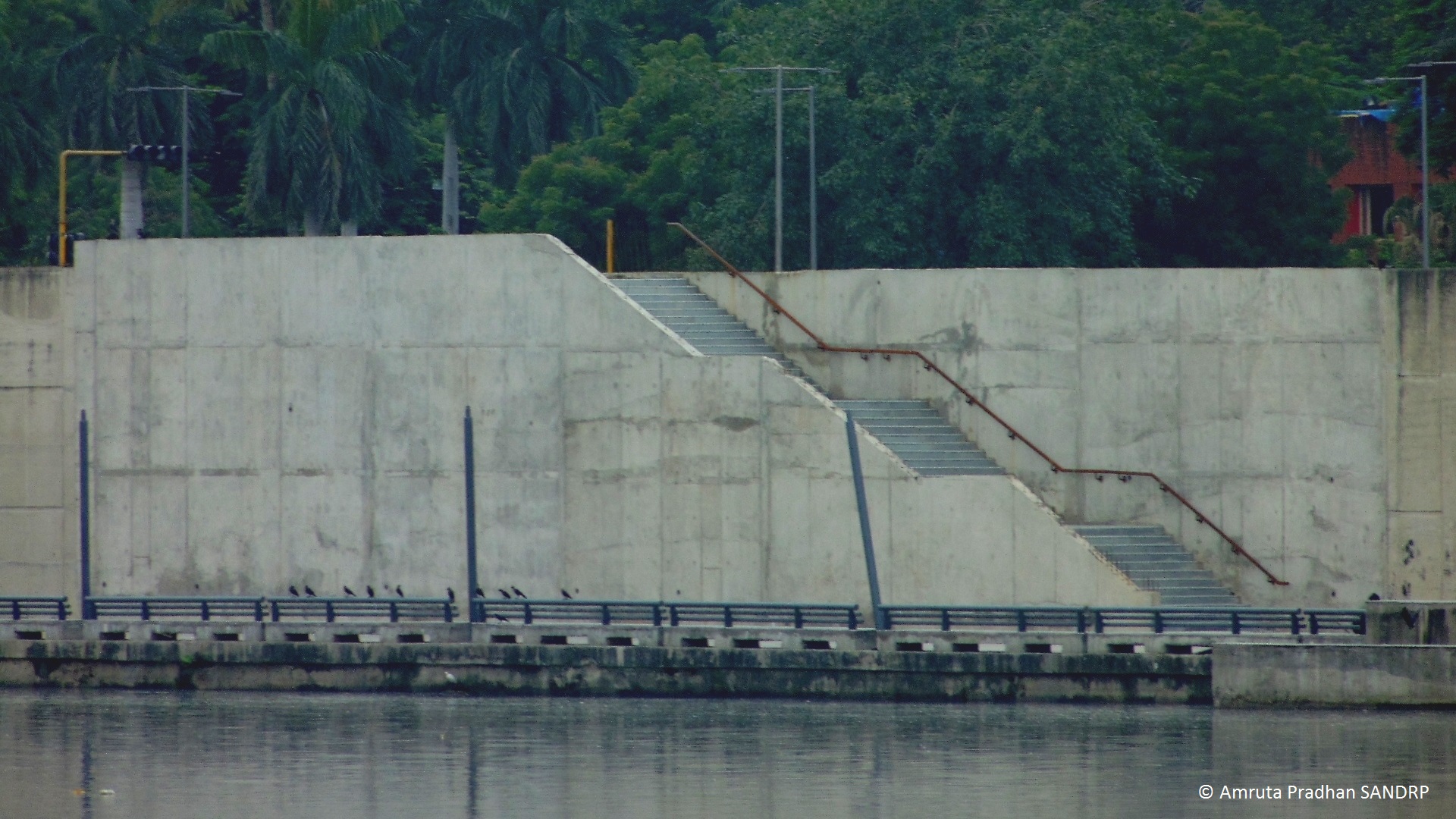
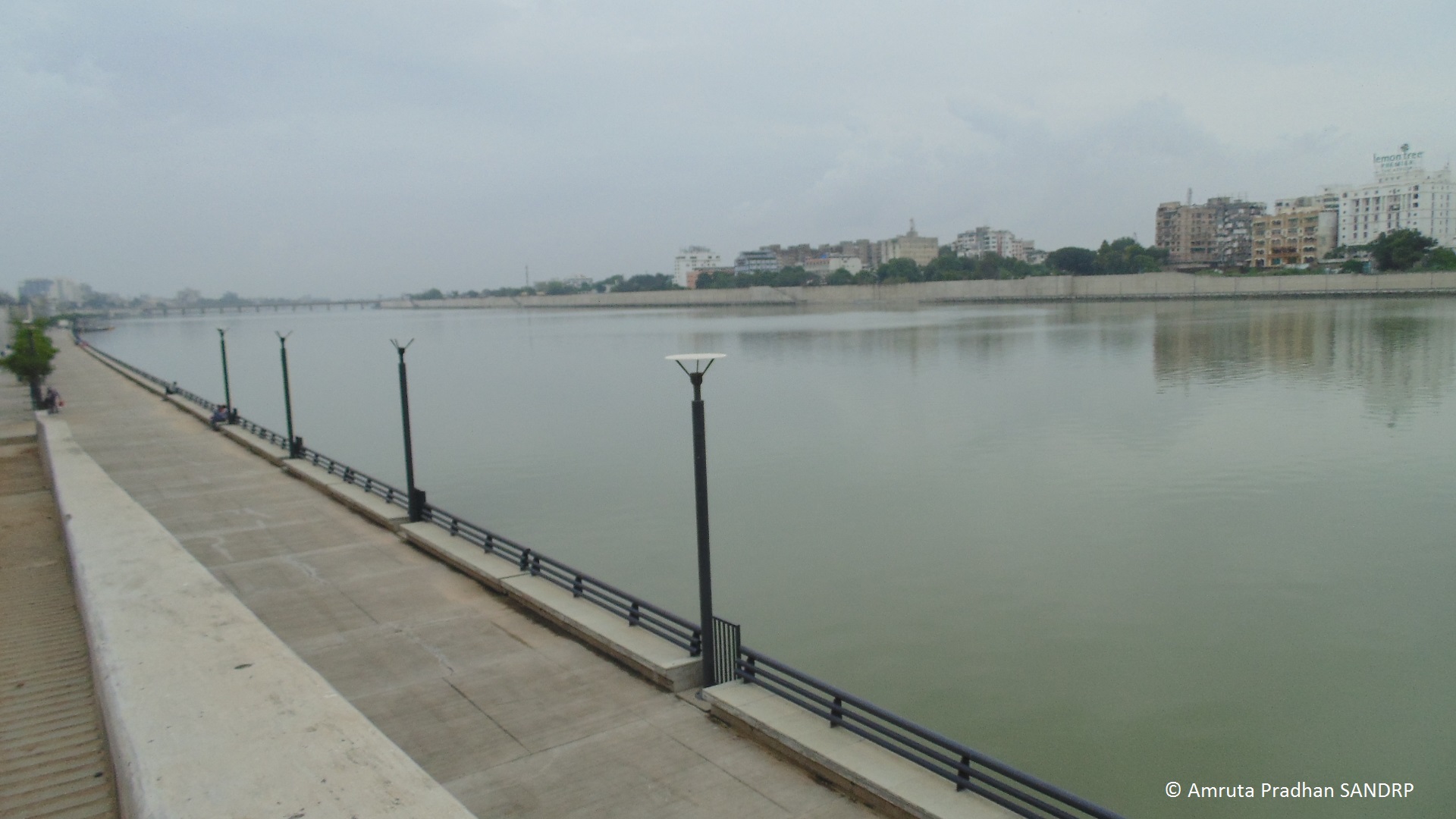
Concrete embankment walls of height 4 to 6 meters have been created for a stretch of 10.4 KM on both banks with walkways.

Sabarmati Riverfront 2

Width of Sabarmati channel is uniformly narrowed to 275 metres during the riverfront development project, when naturally average width of the channel was 382 metres and the narrowest cross-section was 330 metres.

The original character of the river is changed completely from a river to a canal.

Narmada Canal meets Sabarmati 1
Water from Narmada Canal entering Sabarmati

The water that is impounded in Sabarmati Riverfront stretch is not Sabarmati river water, but Narmada River Water.

Water from Narmada canal is released in Sabarmati upstream of the Riverfront Project.

Narmada Canal 13

City of Ahmedabad or Sabarmati River has no right on Narmada River Water, it’s the water meant for drought prone areas of Kutch, Saurashtra and North Gujarat. Thus the water we see in Sabarmati in Ahmedabad is water deprived from the drought prone areas.

Untitled 1
Site at which water from the Narmada Canal is released into Sabarmati River
Sabarmati Effluent & Sewage Discharge 6
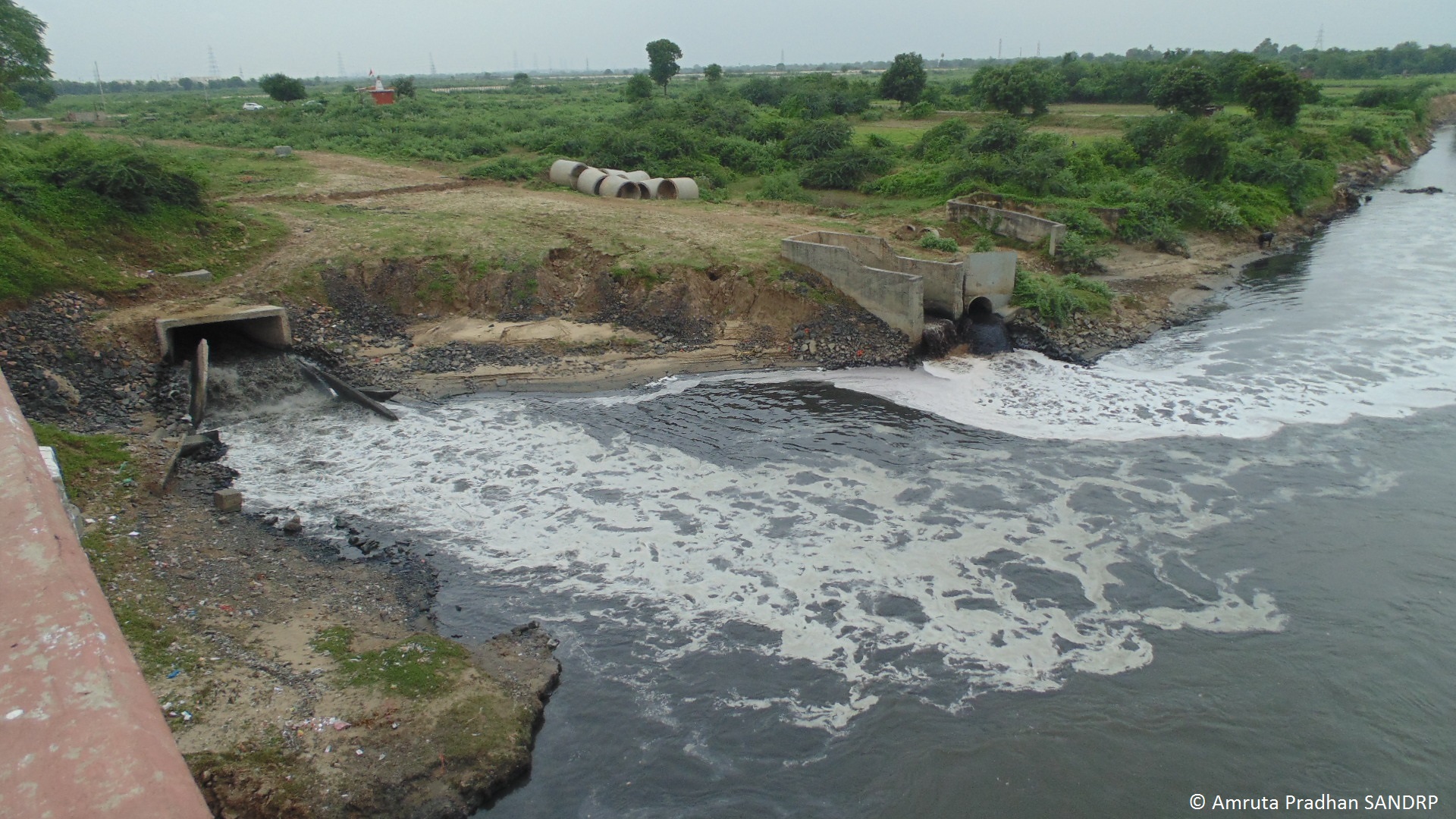
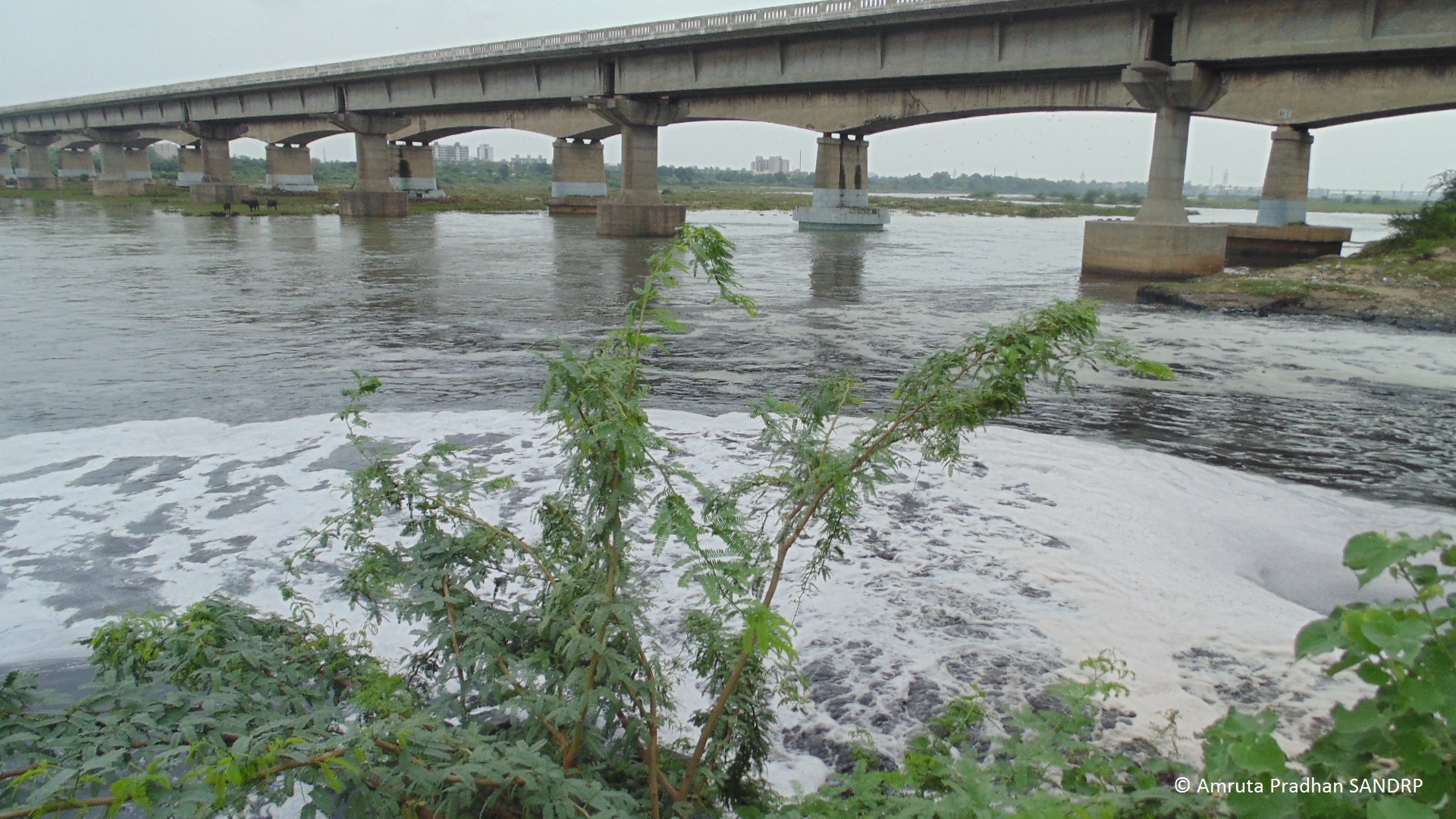
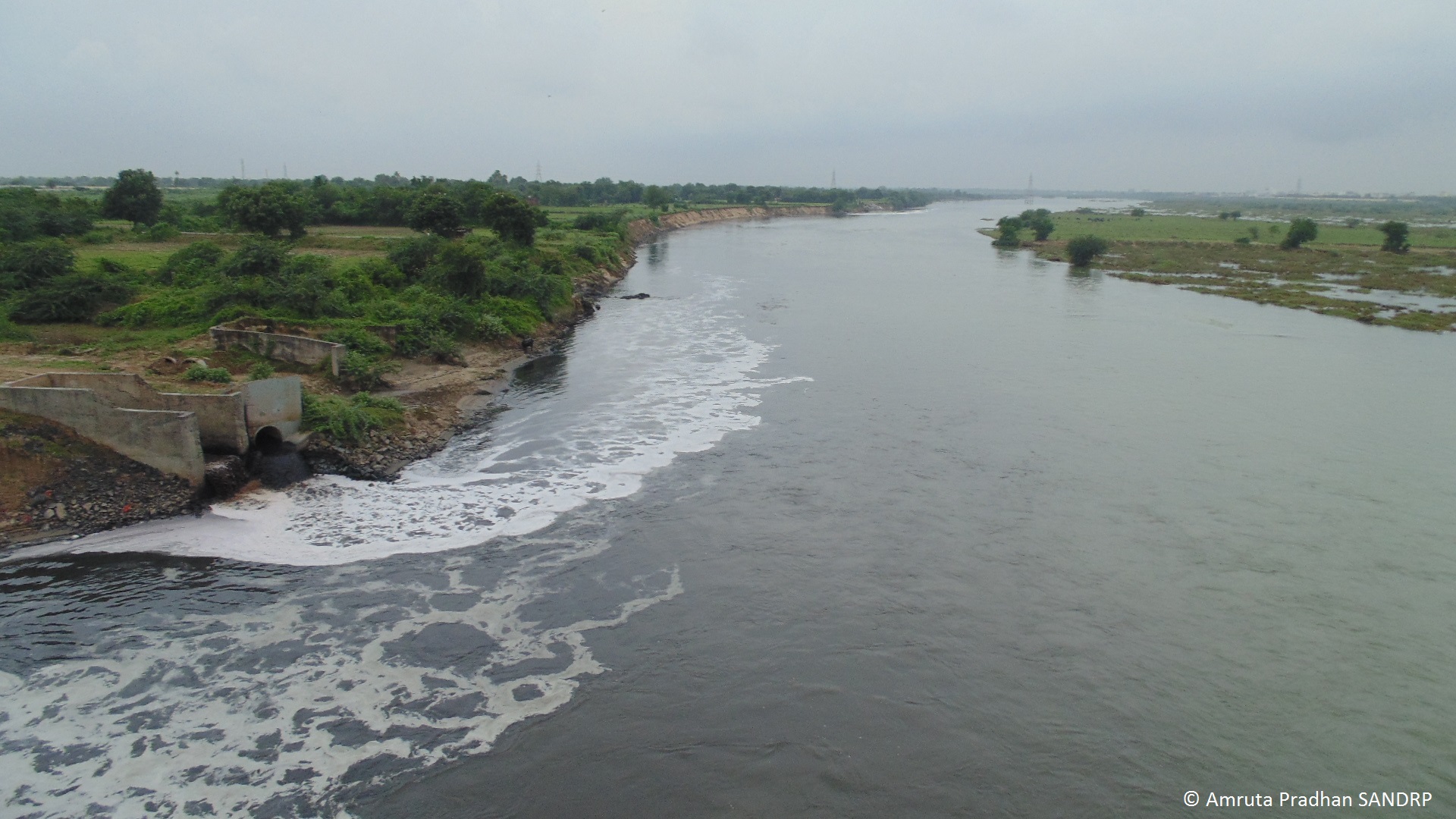
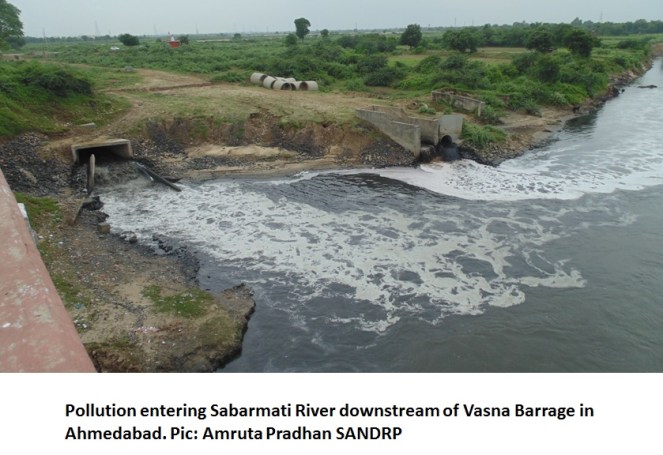
Untreated sewage and industrial effluent are discharged into Sabarmati River near Vasna Barrage downstream of Riverfront project

Sabarmati Riverfront Project has not resulted in cleaning of Sabarmati River. Instead the pollution from untreated sewage and industrial effluent has been diverted near the Vasna Barrage downstream of Riverfront project stretch.

Untitled 2
Untreated sewage and industrial effluent are discharged into Sabarmati near Vasna Barrage downstream of Riverfront project
Sabarmati Effluent & Sewage Discharge 4
Site bellow Narol Vishala Bridge where the untreated sewage & effluent is disposed

Sabarmati Effluent & Sewage Discharge 5

Even after the Riverfront Development Project, Water Quality of Sabarmati River downstream of the Vasna Barrage is extremely poor.

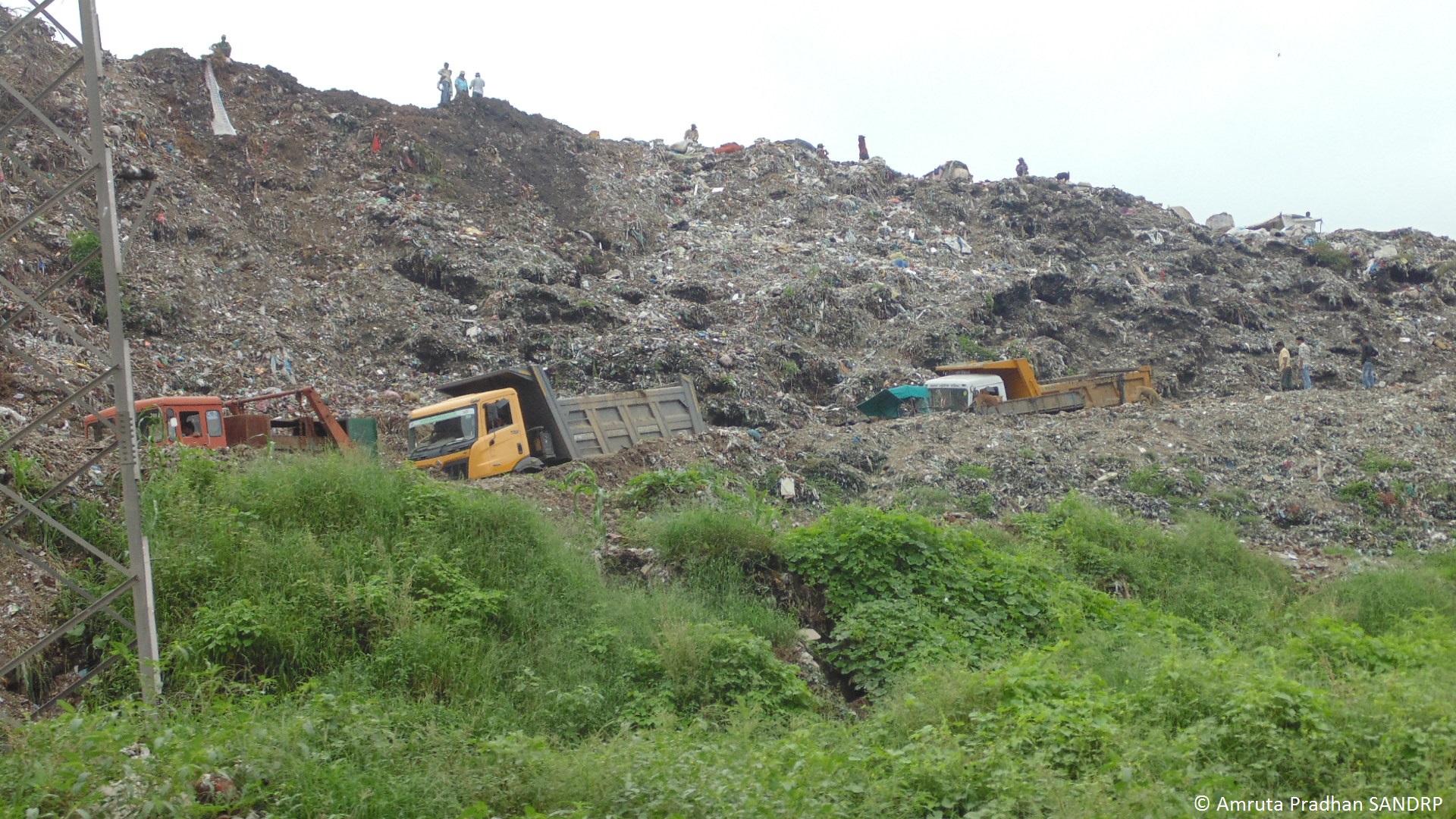
Solid waste dumping site near Vasna Barrage 3
Solid waste dumping site for Ahmedabad located 4 to 5 KM from the Sabarmati River
Solid waste dumping site near Vasna Barrage 4
Solid waste dumping site located 4 to 5 KM from the Sabarmati RIver

So can we see Sabarmati River rijuvenated or even cleaned anywhere? The 10.4 KM long stretch is like a canal, upstream of it is a dry river in most days and downstream is one of the most polluted stretch.

(Photos taken in September 2014 by author)

Amruta Pradhan, SANDRP amrutapradhan@gmail.com

Post Script: January 21, 2015: Another report on reality of Sabaramati success story: http://week.manoramaonline.com/cgi-bin/MMOnline.dll/portal/ep/theWeekContent.do?programId=10350679&contentId=1826603

Agriculture · Irrigation

Climate Change and Agriculture: Where is the National Mission on Sustainable Agriculture?

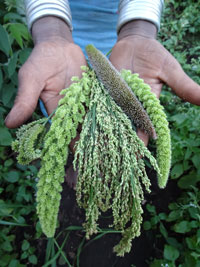
Adaptive Agriculture: A mix of Millets, Corn, Legumes and Vegetables grown by tribals in the same plot. Photo: Aparna Pallavi, Down to Earth

When the farmers were losing their crop due to less or no rain, the government was still speculating about 2014 being a drought year. Now that the damage is done, we have seen some acknowledgement from authorities of the actual situation. One wonders then why is it that the government has to wait for calamity to strike when it already knows the dangers that lie ahead. In a burst of enthusiasm, it set up the eight missions under the National Action Plan for Climate Change (NAPCC) in 2008, one of which is the National Mission for Sustainable Agriculture. But the ground situation seems to be the same with or without it.

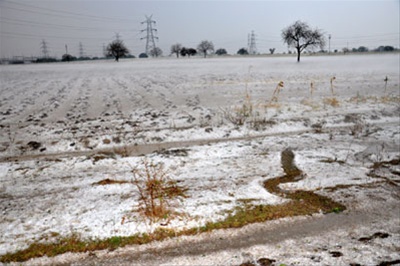
Destruction ofcrops due to untimely hailstorms in Marathwada Photo: Sakaaltimes

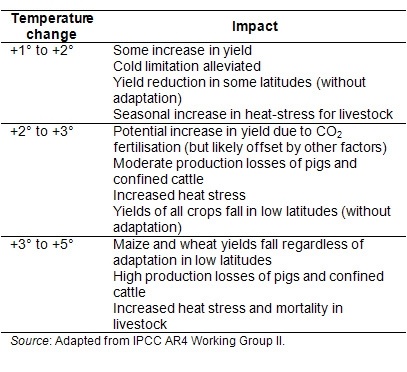
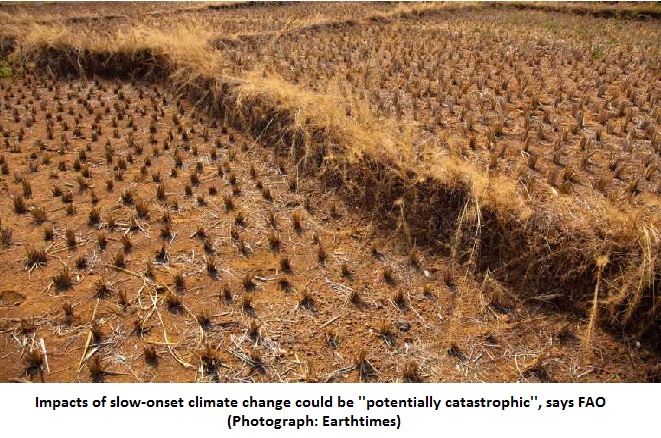
The Indian network for climate change assessment (INCCA) report suggests that there is a probability of 10-40% loss in crop production in India by 2080-2100 unless we take mitigation measures and adapt to the global warming[i]. The 5th assessment report of the Intergovernmental Panel on Climate Change (IPCC), estimates that 60% more food will be needed by 2050 given the current trends in food consumption[ii]. It is also estimated that for tropical places especially like India and China, the length of the growing season and suitability for crops will decrease as it is determined by moisture availability and extreme heat, where both are being affected as a result of climate change. This means that there will be considerable losses in agricultural productivity in India, leading to negative impacts on food security in the country. In such a situation, it is important for the government to work towards safeguarding the livelihoods of its farmers, who contribute highly to the GDP (13.7%) and form a big part of the overall labour force in the country. In its National Mission for Sustainable Agriculture, the government stated that there will be an estimated reduction in agricultural yield by up to 4.5-9% in the medium term (2010-2039), whereas a reduction of about >25% in the long term (2040 and beyond) if no measures are taken[iii].

Keeping in line with this, the IPCC report estimates that almost half of the wheat-growing area of the Indo-Gangetic Plains could experience significant amounts of stress due to heat by 2050s, along with the expansion of temperate wheat environments northwards as climate changes. ii The INCCA report said that projections indicated the possibility of loss of 4-5 million tonnes in wheat production with every rise of 1 degree Celsius temperature. i In an instance concerning wheat production in the Indo-Gangetic plains in 2004, the report sites that temperatures were higher by 3-6 degree Celsius, which is almost 1 degree C per day over the whole crop season. As a result, wheat crop matured earlier by 10-20 days and wheat production dropped by more than 4 million tonnes in the countryi.

SA1

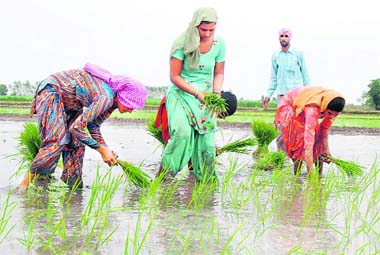
Similar is the case with rice. In another report on Punjab, it was seen that with all other climatic variables remaining constant, temperature increases of 1⁰C, 2⁰C, 3⁰C would reduce the grain yield of rice by 5.4, 7.4 and 25.1 % respectively[iv]. The report by INCCA, in its projections for 2030, said that the yields of irrigated rice will be affected by about 10% in the coastal areas. Rain-fed rice yields are projected to increase upto 15% in many districts in the east coast, whereas they may fall by about 20% in the West Coasti. In India, rice is a widely grown crop. Its production determines livelihoods of majority of the farmers for one season. It is also the most water intensive crop. As temperatures rise, there is also increased stress on water required through the growing season. In India, 70% of our arable land is prone to drought, 12% to floods and 8% to cyclones[v]. In such cases, farmers who live with uncertainty have less money for food, farm investments and a reduced capacity and willingness to try out new technologies and practices.

FAO

To add to the rise in temperatures, in its Summary for Policymakers, the IPCC clearly stated that it is very likely that hot extremes, heat waves and heavy precipitation events will continue to become more frequent. Thus the uncertainty is bound to increase. These climate extreme events are being witnessed in India even this year. There has been high rainfall deficit at many places through most of the monsoon season, thus leading to crop losses. There is extreme rain in the hills, which lead to the floods in Uttarakhand, Bihar, Orissa and now in Jammu and Kashmir. But the government still does not acknowledge the role of climate change in these anomalies.

Rice Farming in Punjab Photo: The Tribune

Adapting farmers: Even though the climate is changing, the farming practices have not changed at most places. But there has been evidence that at some places farmers have adopted different techniques in the face of climate change even if they do not address it directly, but only make decisions based on impacts. The small and marginal farmers, it has been noticed, do not have the capacity to go for fresh sowing in case the crop goes bad when rains fail.

The Baiga tribe of Mandia and Dindori districts in particular have reverted back to this technique of planting multiple crops, which are resilient to environmental stress and give assured yield. The Madia tribe in Maharashtra have reverted to a similar practice of penda. This is happening because the people have suffered huge losses due to unsuccessful paddy crop because of erratic rain. These practices are being implemented with the help of an NGO, Nirman. The problem facing the people today is that the land used for this is forest land and not agricultural land, thus causing land insecurity. However, these people are making the effort to save their livelihoods with no help from the government.

A Baiga home with harvested corn Photo: Aparna Pallavi, Down to Earth

In the case of Bundelkhand region in Central India, over 70% of the population relies on rainfall for agriculture[vi]. The farmers here have started replacing wheat with barley as it is a less water intensive crop and this is a semi-arid region. It is also preferred because the input cost of barley is almost 50% less than wheat and its market price is 20% more. In this region, there have been efforts from organizations such as Development Alternatives which has formed farmers’ clubs to help the community adopt climate resilient techniques for agriculture, like drip and sprinkler irrigation, adoption of drought resistant seed varieties and integrated pest management.

Intergrating agroforestry with Wheat in Bundelkhand Photo: ANI News

In another report of a similar instance, basmati farmers in Karnal district are reverting back to an old practice of growing maize, which is a less water intensive crop[vii]. This is being undertaken even in large landholdings, as there is less water availability, with groundwater[viii] levels showing a decline in recent years. According to the National Mission for Sustainable Agriculture document, irrigation requirements in arid and semi-arid regions are estimated to increase by 10% for every 1⁰C rise in temperature[ix]. Therefore, it is very important for farmers to adopt techniques which help in its conservation.

The Consultative Group on International Agriculture Research (CGIAR) research Programme on Climate Change, Agriculture and Food Security (CCAFS), in collaboration with IFFCO India, has started the pilot for implementing climate smart agricultural technologies in three villages in Bihar. In an attempt to alter the cropping pattern, they re-introduced the sowing of mungbean, which is a short duration crop of the summer season. It is planted during the fallow season and increases soil fertility. For increasing yield, the ‘Pusa Visal’ variety of mungbean is used, which is a better variety compared to the previously used one[x]. The yield from the initial trials ranged from about 0.80-1.70 t/ha as against 0.30-0.80 t/ha under farmers’ practice. The yield for the pusa visal variety was also significantly higher than that of the farmers’ variety. Seeing such results, other farmers have also expressed the desire to follow suit.

The CCAFS is also taking initiative in Haryana, where about 26 villages are targeted. Various climate smart techniques like the laser-levelling technique are being implemented here. This technique, it is claimed, helps conserve about 25-30% of the water used otherwise in rice-crop plantation[xi]. Even the way of planting rice is different in that it is directly sown in the field where it then sprouts. This is known as “direct-seeded rice”. Apart from this, there is also the practice of using crop-residue to nourish fields, which saves the cost of extra fertilizer. To optimize the use of fertilizer, farmers are being taught to use a tool called “nutrient-expert”, which judges the amount of fertilizer application required in a field. These techniques help reduce uncertainty in the crop output. The earlier maize growing practice mentioned in the case of Karnal, is also one of the climate smart techniques.

SA2

Agriculture also contributes to the emission of greenhouse gases. In fact, in 2004, agriculture directly contributed to 14% of the global anthropogenic greenhouse gas (GHG) emissions according to the IPCC[xii]. There has been an increase in CO2 emissions by about 100 ppm since pre-industrial times. Emissions of CO2 are often accompanied by ozone (O3) precursors that have driven a rise in troposphere O3 that harms crop yields. Elevated O3 since pre industrial times has very likely suppressed global production of major crops compared to what they would have been without O3 increases, with estimated losses of roughly 10% for wheat and soybean and 3-5% for maize and rice. Thus it is necessary that the government builds its capacity to better understand and measure the impact this has on agriculture and take the required steps to control it.

National Mission for Sustainable Agriculture (NMSA): The focus of this mission under National Action Plan on Climate Change (NAPCC) is supposed to be to mainly improve the productivity of rain-fed agriculture. One might ask then, why it did not promote techniques like the System of Rice Intensification (SRI)[xiii] which requires much less water than conventionally grown rice. The mission recognizes that in the event of climate change, the vulnerability of India is more pronounced because it is dependent on agriculture, places excessive pressure on natural resources and has poor coping mechanisms.

Boost of SRI Photo: India Water Portal

It estimates that most of the crops are likely to witness a decline after 2020 which is when the temperature threshold of many crops might get breached. Studies suggest a significant decrease in cereal production by the end of this century. The situation will be most critical in areas which are rain-fed and have complex cropping systems. These constitute about 60% of the net cultivated area. But acknowledging it is one thing and doing something about it is quite another. The climate smart techniques are showing results at some places, but are still not being actively adopted by the government. In a recent press release, the ministry of agriculture announced that the sowing of kharif crop has crossed the 986.59 lakh ha mark, but this is still much less than the 1020.78 lakh ha which was sown last year around the same time[xiv]. Despite this, the government has expressed hope for a positive response in crop output next season, envisaging a growth of four percent[xv], while not acknowledging the impact of huge rainfall deficit in June July this year.

Drought in Marathwada, Maharashtra Photo: India Today

The mission acknowledges that since most of the agricultural production takes place in rural areas and engages people from the marginalized sections of the society, their coping capacity during climatic extremities are limited. But what has the government done since the inception of this plan? It has been almost 6 years since NAPCC was launched and the farmers still suffer the same fate without any compensation from the government. Even today, they are at the mercy of the weather. It will not work anymore to ignore the fact that this is now being aggravated by climate change. There is a need for more climate smart agricultural techniques in the country. The least the government can do is to acknowledge that the unpredictable weather patterns, especially the irregular monsoon is in fact a result of climate change. It will do good to also recognize that out of the 300 million undernourished in South Asia, about 250 million are in India[xvi] and any threat to agriculture is an added threat to their existence.

Padmakshi Badoni, SANDRP, padmakshi.b@gmail.com

END NOTES:

[i] http://www.moef.nic.in/downloads/public-information/fin-rpt-incca.pdf

[ii] http://www.ipcc.ch/ipccreports/far/wg_II/ipcc_far_wg_II_full_report.pdf

[iii] http://www.agricoop.nic.in/Climatechange/ccr/National%20Mission%20For%20Sustainable%20Agriculture-DRAFT-Sept-2010.pdf

[iv] http://www.thehindubusinessline.com/opinion/can-our-agriculture-tackle-climate-change/article5883523.ece

[v] http://www.thehindubusinessline.com/opinion/can-our-agriculture-tackle-climate-change/article5883523.ece

[vi] http://zeenews.india.com/news/eco-news/organic-farming-helps-farmers-increase-their-resilience-to-climate-change_865934.html.

[vii] http://www.thehindu.com/news/national/other-states/karnal-farmers-get-climatesmart/article6377570.ece

[viii] For more information on groundwater situation in the country, visit SANDRP’s blog https://sandrp.wordpress.com/2014/08/11/groundwater-falling-levels-and-contamination-threaten-indias-water-lifeline-urgent-need-for-community-driven-bottoms-up-management/

[ix] http://www.agricoop.nic.in/Climatechange/ccr/National%20Mission%20For%20Sustainable%20Agriculture-DRAFT-Sept-2010.pdf

[x] http://ccafs.cgiar.org/blog/changing-farming-practices-south-asia-food-secure-future#.VA1RssKSxoE

[xi] http://www.voanews.com/content/india-climate-smart-villages-agriculture-technology-farming/2439713.html

[xii] http://www.oecd.org/tad/sustainable-agriculture/agricultureandclimatechangeimpactsmitigationandadaptation.htm

[xiii] To read more about SRI, see https://sandrp.wordpress.com/2014/07/19/huge-potential-of-system-of-rice-intensification-sri-needs-more-attention/

[xiv] http://pib.nic.in/newsite/AdvSearch.aspx (5th September 2014)

[xv] http://pib.nic.in/newsite/erelease.aspx (8th September 2014)

[xvi] http://www.thehindubusinessline.com/opinion/can-our-agriculture-tackle-climate-change/article5883523.ece

Forest Advisory Committee

Yettinahole Diversion DPR: New Avataar, old problems

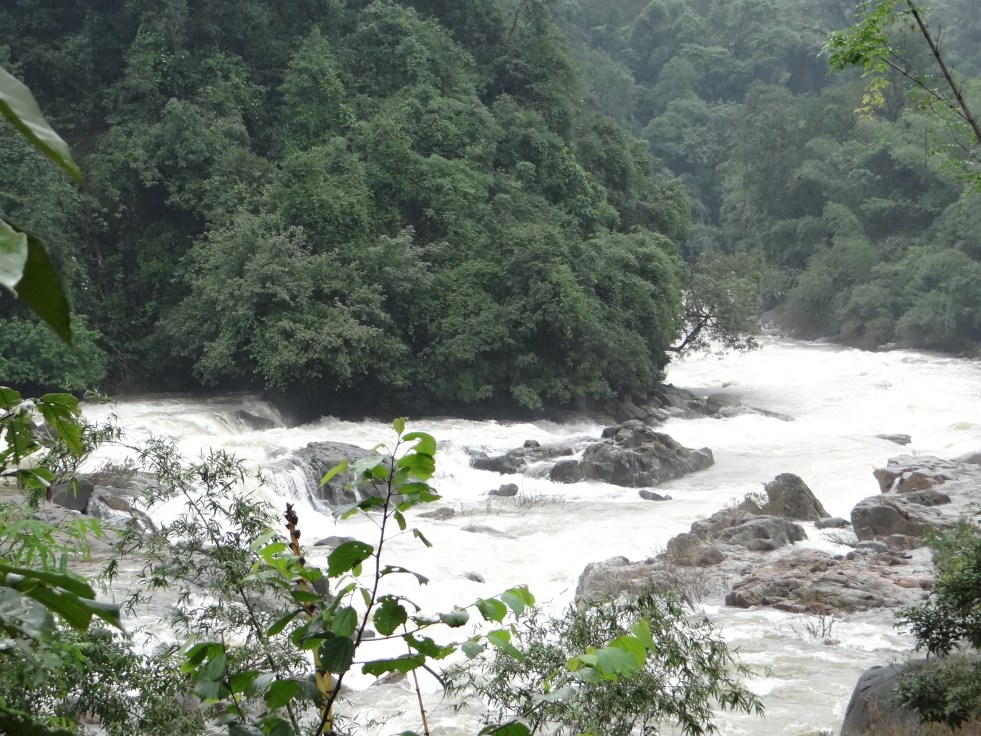
River Netravathi in the upper reaches Photo: Parineeta Dandekar, SANDRP

Like a many-headed serpent, Yettinahole (Netravathi) Diversion Project refuses to die. Every time one of its head is cut, it grows a new head.

Following criticism of the Project Report [i](based on which Karnataka Government had already made budget provisions in 2013), a new DPR of the project has been prepared in December 2013 by EIT RIP JV [ii] which tries to amend blatantly illegal stands taken earlier. However, after scratching the surface, it is clear that the DPR is just as illegal and dangerous as the interim Project Report was.

Yettinahole, or rightly the Netravathi Diversion Project has always been a political project, visualized to earn political mileage and brownie points. Veerappa Moily originally from Dakshin Kannada, moved to Chikkaballpur constituency in 2009, from when he started pushing the project strongly. As the Environment Minister, Moily also laid the foundation stone of the project in Chikkaballapur, just before the Loksabaha Elections in March 2014 [iii]. Strategically, the stone was laid in Chikkaballapur and not in Hassan, from where the water actually be diverted. No political party has opposed the project consistently.

Even before a complete DPR, Karnataka 12-14 Budget of the Congress Government allocated nearly 2800 crores for this scheme. The current govt lost no time and directly awarded contracts worth nearly 1000 Crores to Hindustan Construction Company, in a joint venture with GVPRL, without any clearances or any public consultations[iv].

Before the laying of the foundation stone of the project, SANDRP had presented a detailed analyses if the Project Report proving how the project is violating Environmental Protection Act by evading Environmental Clearance.[v] A number of eminent personalities from Karnataka had jointly written to the MoEF to appraise the Project for EC. In response to this, the MoEF had written to the Karnataka Govt and Karnataka Neeravari Nigam Limited (KNNL), seeking clarifications on the nature of the project. Although this move was triggered due to the submission made by SANDRP and other groups, we never saw KNNL’s response despite specifically asking for it. We only saw MoEF’s lame justification, bailing out KNNL and Karnataka Government and turning a blind eye to the huge impacts of the project.

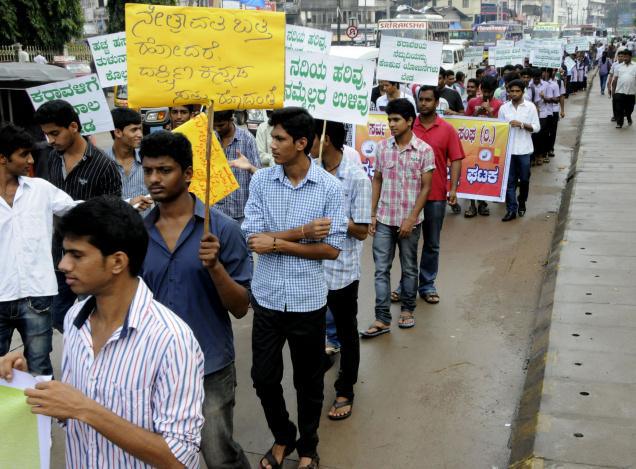
Students protesting against Yettinahole Project Photo: DaijiWolrd

When Karnataka CM Siddramaiah was about to lay the foundation stone along with Mr. Moily, SANDRP wrote an open letter to him[vi], as the Environment Minister, asking a direct question as to how can he himself formally initiate a scheme which is blatantly violating laws governed by his own Ministry. Following this, the ceremony was cancelled[vii], only to be held surreptitiously later.

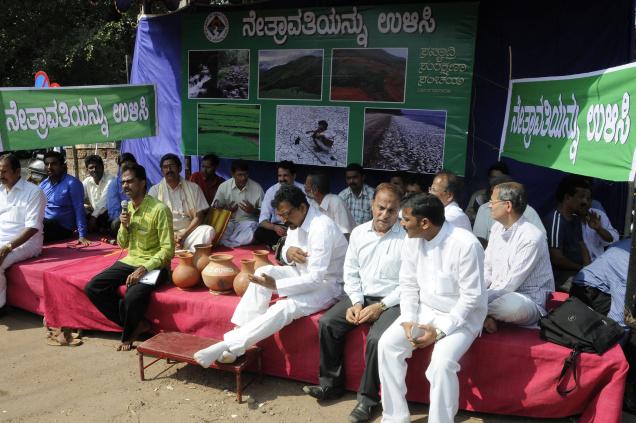
During all this, there was huge and unprecedented opposition to the project from Dakshin Kannada and Mangalore. Farmers, students, workers, women groups all came together, united in their opposition against a project that would divert their Netravathi.  People stopped trains, organized hundreds of dharnas, boycotted voting, organised signature drives, etc. Leaders in all hues came together in a rare show of discontent. On the day of foundation stone laying, people in Dakshin Kannada voluntarily observed a strict Bandh. Funnily enough, even the beneficiary district of Chikkaballpur opposed the project as the 2.82 TMC water that it would be getting after so much of fanfare was too meager, in the face of the grand promises of lush fields and no worries.

More Protests against the Project Photo: The Hindu
Protest in Hassan against Yettinahole Photo: The Hindu
Protesters stopping  a train Photo: News Karnataka
Protesters stopping a train Photo: News Karnataka

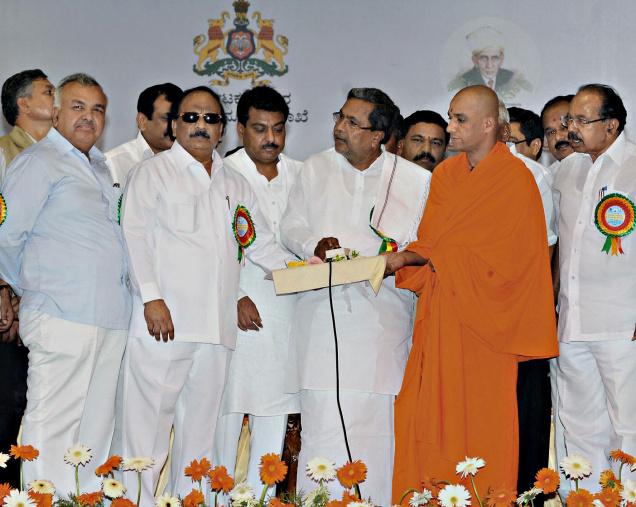
Despite these unprecedented protests and in the face of 2014 Loksabha Elections, foundation stone was laid on a dais in Chikkaballapur. The dais was burgeoning under the weight of several political strongmen.

This event stands out as an example of undemocratic behavior for an elected government.

Foundation Stone laying Ceremony Photo: The Hindu

The Government of Karnataka did not hold a single public meeting in Dakshin Kannada, trying to understand and address people’s apprehensions. When eminent personalities from Dakshin Kannada planned to hold a National Consultation on Yettinahole Diversion in NIT Suratkhal in August 2013, the meeting was cancelled at the last minute due to political pressure on the organizers.

As things stand now, the project does not have Environmental Clearance, Forest Clearance, Wildlife Clearance, has not started rehabilitation and resettlement of over 10 villages that it will submerge, but its work can start at any moment.

SANDRP accessed the Detailed Project Report (DPR) of the Project from local activists, who obtained it under RTI. Analysis of the DPR reveals a number of issues. KNNL has drastically changed the initial Project Report, avoiding mention of contentious issues we had raised like hydropower generation, irrigation component, etc., thus strongly vindicating the objections raised. However, going further, it is clear that these changes are cosmetic. Deeper problems and severe unstudied impacts of the scheme remain.

SANDRP analyzed 4 volumes of the DPR and Annexures of the Project. What follows is some myth busting about the Yettinahole Detailed Project Report.

1. What is the Current Project? Is it different from the last Project Report?

While the Project Report of June 2012 was titled: ‘Scheme for diversion of flood water from Sakleshpura (West) to Kolar/ Chikkaballapura Districts (East)’, the DPR dated December 2013 has taken out all the random stuff on Kolar and Chikkaballapura and simple calls it as “Yettinahole Project”.

Current Project as per the DPR, is divided in Two Phases.

Phase I: 8 weirs will be built in the Western Ghats, on the streams Yettinahole, Kerihole, Kadumanehole and Hongadahalla. It also includes several pump houses next to weirs, raising mains that run for several kilometers are nearly 5 kms wide, 3 Delivery Chambers (DC) and a gravity canal taking waters from Weirs 3, 4 and 5  to Doddanagara (DC 3) in the Western Ghats forests.

From the weirs, 85 cumecs (Cubic Meters per second) water will be drawn 24*7 in the six months of June-November.

This will be delivered through 4 Delivery Chambers with the last DC: DC 4 at Haravanahalli.

Phase II: From DC 4, water will be diverted to a canal running 274 kilometers, cutting across the ridge line dividing Cauvery and Krishna Basins and culminating at a Balancing Reservoir at Byragondlu and Thumbadi, in Koratgere Taluk. Thumbadi Reservoir will store about 3 TMC water and will submerge nearly 700 hectares of land and three villages[viii] while Balancing Reservoir at Byragondlu will store 5.7 TMC water and will submerge 7 villages [ix]and an area of about 2000 hectares. The Reservoir at Devaranyadurga, which was proposed in the Project Report has been replaced by these two.

It includes construction of several storage tanks and reservoirs for en route water supply. It will also delivery water to T.G. Halli and Hesarghatta Reservoirs, which supply water to Bangalore. It also plans to supply water to Devanhalli Industrial Area.

The project envisages constructing 7 additional storage reservoirs and 10 major canals. Water will also be used to fill more than 500 Minor Irrigation (MI) Tanks in many districts and taluks.

It is amazing how the project envisages filling MI Tanks to 50% capacity: The DPR says that water will be pumped and released to the highest point and an additional sluice gate will be made to all MI tanks to let water flow into the cascading MI tank. This sounds highly impractical.

The project also includes constructing over 100 bridges in villages and nearly 100 road brides on major roads.

So although details have changed, the basic of the project remain the same. There is no change in Western Ghats, except for the fact that not 24 TMC, but 47 TMC water will be pumped now!

Survey markings in Sakaleshpur. People had no idea why the survey was carried out and no information was given. Photo: Parineeta Dandekar
Survey markings in Sakaleshpur on peoples homes. People had no idea why the survey was carried out and no information was given. Photo: Parineeta Dandekar

2. What is the cost of this current Project? Can the cost be borne easily by KNNL or Karnataka Government?

The cost of the Project as per DPR stands at nearly 13000 Crores as per 12-13 price line. This exceeds the entire 13-14 years’ budget of the Karnataka Water Resources Department, which stands at 8007 Crores and is nearly five times the annual budget of KNNL, the implementing agency.[x] This is a colossal amount of money to spend to convey approximately 7 TMC water to Kolar and Chikkaballapur and other nonspecific projects.

3. Who are the Main Beneficiaries? Will Kolar and Chikkaballpur really get 24 TMC water as promised?

The supposed beneficiaries of the project are several towns, villages, cities and industrial areas[xi] and No, Kolar and Chikkaballapur again lose out and get only about 7 TMC water.

4. Then who will be getting this water?

The DPR puts out a diffuse list of beneficiaries ( see Annex below) including Bangalore urban area through TG Halli and Hesarghatta Reservoir and the Devanhalli Industrial Hub. There are no population projections or future need calculations for this region like all other regions and at no place does the DPR say that water will go to Bangalore. However, TG Halli and Hesaraghtaa reservoirs are both used by the Bangalore Water Supply and Sanitation Board [xii]for Bangalore City and in the last Budget, the government had itself stated that water will be used for Bangalore Urban Area’s needs.

How Bangalore treats its local water bodies Photo: The Alternative

A review of beneficiaries:

  • Bangalore gets 3 TMC water: The DPR says that about 3 TMC water will be released to TG Halli and Hesargahtta Reservoirs and for the Devanhalli Area.
  • Minor Irrigation Tanks and hence irrigation gets maximum water at 9 TMC: Nearly 9 TMC water will be used for filling more than 500 MI tanks upto 50% of their live storage capacity. This water will be supposedly used for “groundwater recharge”. There are several participatory, cheap and sustainable ways for recharging groundwater, which seem to have been rejected in favor of long distance transfer. In any case, this groundwater recharge will be used for agriculture, as most of the agriculture there depends on groundwater and hence, the project qualifies for Environmental Clearance.
  • The project is being pushed for the drought affected taluks in Kolar Chikkaballapur and Tumkur and even a brief glance at the calculation shows that even in 2023-24, the drinking water demand of these places cumulatively will be just 12 TMC! Then why are we diverting 24 TMC water, double of the ten years’ estimate?

5. What is the basis for diverting 24.01 TMC?

The report provides no justification about why 24 TMC is supposed to be diverted. In fact, after population calculations and making provisions for drinking water supply for the beneficiary districts and villages, the DPR simply states : “This has resulted in a balance availability of 8.9 TMC” . This is a strange statement to make. What is meant by “balance availability”? Is there compulsion for diverting 24 TMC by hook or by crook from the Western Ghats?

6. 24 TMC Diversion? No 47 TMC Diversion!

The project envisages diverting 85 cumecs (Cubic Metres per second) water[xiii], purportedly for six months of June-November. The DPR states that pumps will function 24*7 during this period. Even a simple, back-of-the-envelope calculation indicates that 85 cumecs diversion leads to nearly 47 TMC diverted over six months and not 24 TMC, as is claimed.

7. Was there a detailed hydrological study to arrive at 24 TMC diversion?

The proponents have no flow data from individual streams. The 13,000 Crores project is to be based on shoddy hydrology data.

They have used gauge data from Bantwal across Netrvathi, which is approximately 60-70 kilometers downstream and in a completely different eco-region from the hills. This gauge data is simply extrapolated based on catchment area of each stream. This is highly unscientific.

The earlier Project Report used an entirely different method for calculating this yield, based in rainfall in individual catchments. Interesting to see that although to different methods were used by two different reports, divertible yield is exactly the same to the last decimal point of 24.01 TMC!

The fact of the matter is that there have been no scientific studies to find out the level of safe diversion. The DPR makes a fantastic statement in conclusion to the effect that:

“According to the revised computations, the divertible yield has been assessed as 22.14.TMCHowever, Prof.Rama Prasad , who has conducted the Hydrology studies has opined that the yield of 22.14 TMC at 50% dependability is very much on a conservative side and 24.01 TMC of divertible yield is available across the streams. This has been taken note off and for the present proposal, 24.01 TMC of water has been considered as the divertible yield from the selected streams to proceed further regarding finalization of the scheme in total.”

This just shows the random way in which divertible yield has been fixed!

8. How about the downstream Impacts of this diversion, which was the main reason for protests in Dakshin Kannada and Mangalore? Were the impacts studied?

There has been NO assessment of downstream water needs or impacts of this diversion on the downstream people or ecosystems. The DPR just ‘assumes’ that there will not be any impact on downstream users of ecology!

This is evidently misleading. One example of the problem in such assumption is that the flow data of Hongadahalla maintained by KPCL (given in Annex) indicates that flow in streams like Hongadhalla in August near the gauging point, has not exceeded even 20 cumecs. However, the according to the DPR[xiv], arrangement has been made to divert a whopping 30 cumecs from Hongadhalla from Weir 7 during June-November. This means that in the downstream, the rivulet will be rendered dry.

9. Was Impact Assessment for Western Ghats conducted?

The project proponent has not even clarified as to what will be forest land required for diversion. The section on Impact Assessment in the EMP deals largely with the beneficiary region without dealing with impacts on Wesetrn Ghats at all. There has been no study on eflows as per the HLWG (High Level Working Group on Western Ghats/ Kasturirangan Committee Report)report, no study of estuarine fisheries, no study of drinking water needs.

Cornered Wildlife in Sakaleshpur, leading to crisis Photo: News 24 7

10. Will there be profound impacts in the downstream region?

Yes. Yettinahole Project will “divert” water out of the basin and unlike most other irrigation or hydropower projects, the water will be permanently lost from the basin. The ecosystem and livelihoods in the downstream are closely linked to the hydrology of the Netravathi. In fact even in June, which is supposed to be a “peak season” for diversion, Mangalore and other parts of Dakshin Kannada have been facing water shortages[xv]. In addition, there are several estuarine and riverine fishermen dependent on the Netravathi for their livelihoods. There are many industrial areas, SEZs coming up in Mangalore which will be needing more water. While there has been a prospective study of the population and water demand growth of the beneficiary region in the DPR, there has been not even a mention of Mangalore and its increasing needs in the future in the DPR, highlighting the bias of the proponents.

There are several functioning mini hydel projects on the individual streams as well as tributaries which depend on the assured flow from upstream. They have not even been consulted before this decision was taken.

Drying Thumbe Dam which supplies water from Netravthi to Mangalore town Photo: The Hindu

11. Will there be a severe impact on Ecology and Wildlife?

The project falls within 10 kms boundary of the Pushpagiri Sanctuary, one of the specific World Heritage Sites in the Western Ghats[xvi]. The entire region has exceptional biodiversity.  The project also affects the Mysore Elephant Reserve.

The region has exceptional fish biodiversity, with several new species [xvii]being discovered from the region. There have been efforts to declare this area as a specific fish sanctuary.[xviii]Despite this, the Environmental Management Plan of the DPR states that the fish diversity in most streams is “Poor”. This is a very irresponsible and misleading statement.

Man Animal Conflicts in Sakaleshpura are on a rise. Mega infrastructural activities envisaged in Yettinahole Project will worsen the situation further. There has been no mention of this.

Canara Pearlspot, an endangered fish of many such species found in Netravathi Photo: Arkive.org

12. Considering the impacts and the strong opposition from Dakshin Kannada, were any public consultations held?

No. there has not been a single open public consultation held by the proponents or the Karnataka Government in the affected region. This indicates lack of respect for democratic values and transparency. Shockingly to the question: “ Have-public  debates  about  utility  of  projects  been  held  and  the  response  thereof  outlined  in the Report?” has been answered as “Yes” in the DPR.

In fact there has been no such report in the DPR.

The DPR also states: 1.14: “Many public meetings have been held by the Govt. to make the people aware of the importance of the scheme both in the initial reaches and the end reaches of the project.”

More protest Marches in Mangalore Photo: Daiji World

This is entirely false as no such meeting has been held on Dakshin Kannada where informed discussions can be held.

To conclude:

Yettinahole diversion or Netravathi Diversion Project is an extremely costly ( 13000 Crores +) project of the Karnataka Government. It has been based on weak hydrology, nonexistent impact assessment of the downstream region, no Forest Clearance, no Wildlife Clearance and no public consultations. It is violating Environment (Protection) Act 1986, Forest (Conservation) Act 1980 and Wildlife (Protection)Act 1972. As has been proved by SANDRP, Karnataka has violated Environmental Laws in the recent past[xix].

The project provides no justification for diverting 24 TMC, plans to divert more volume than that, most of which is meant for urban areas and irrigation, without options assessment of cheaper and more sustainable options.

The project has illegally awarded tenders worth Rs 1000 crores without clearances.

In the interest of ecology, downstream population of Dakshin Kannada, public resources, wildlife, World Heritage sites and even future generations, at least until we have basis for informed decisions including a credible EIA, SIA, Options assessment and participatory decision making process, Projects like Yettinahole need to be shelved. Already multiple PILs against the project have been filed in the High Court and routed to the NGT. We hope NGT will also take a strong view on the serious issues involved here.

Severe downstream impacts and drying up of streams due to Yettinahole project reminds one of the tale of Sage Durvasa, meditating on the banks of the Tunga, not very far from Dakshin Kannada. Durvasa loved the river and was known for his short temper. As Bheema dammed the flowing River, Durvasa was agitated to see dried up river bed in the downstream. Yudhishthira saw this and advised Bheema to break the dam himself, to avoid the wrath of Sage Durvasa. Bheema relented and broke the dam, to allow the free flow of the river once more. (One of India’s first decommissioned dams?)

Let us hope that Netravathi flows unhindered and continues to support human and non-humans alike like she has been doing for centuries. Even for the areas claimed to be benefiting from the project, there are cheaper, sustainable and credible options available than this mega project.

– Parineeta Dandekar (parineeta.dandekar@gmail.com)

(We are specifically thankful to Kishore Kumar Hongadhalla, from Hassan for all his help.)

Netravathi in the Upper reaches Photo: Parineeta Dandekar

END NOTES:

[i] https://sandrp.wordpress.com/2013/09/18/yettinahole-diversion-an-imprudent-rs-100-billion-proposition/

[ii] This name/acronym of this consultant does not bring any results on the internet

[iii] http://www.coastaldigest.com/index.php/news/62505-amidst-protests-siddaramaiah-moily-lay-foundation-stone-for-yethinahole-project

[iv] http://www.hccindia.com/news.php?news_id=35

[v] https://sandrp.wordpress.com/2013/09/18/yettinahole-diversion-an-imprudent-rs-100-billion-proposition/

https://sandrp.wordpress.com/2013/09/10/complete-appraisal-needed-for-yettinahole-diversion-project-letter-to-moef/

[vi] https://sandrp.wordpress.com/2014/01/30/open-letter-to-dr-veerappa-moily-as-he-supports-foundation-stone-laying-of-yettinahole-diversion-project/

[vii] http://www.daijiworld.com/news/news_disp.asp?n_id=216104

[viii] Mallekavu, Dogganahalli & Gaurikallu

[ix] Veerasagar, Lakkamuttanahalli, Belladahalli, Gajamenahalli, Sugadahalli, Lakkenhalli, Garadagallu

[x] http://waterresources.kar.nic.in/documents/Budget%20allocation%202013-14x.pdf

[xi]Main beneficiaries of the Project:

  • Kolar district comprising of all Taluks
  • Chickaballapura distrct comprisnig of all Taluks
  • Tumkur district  comprising  of  areas  in  Palar  and  Pennar  basins  including  Chiknayakanahalli and Sira Taluks along with selected villages in Tiptur and Gubbi Taluks.
  • Hassan district comprising of villages in Arasikere taluk
  • Karnataka Neeravari Nigam Limited Yettinahole Project
  • Chikamagalore district comprising of selected villages in Kadur taluk
  • Ramanagara district
  • Bangalore Rural district comprising of Nelamangala, Doddaballapura, Devanahalli and Hoskote Taluks
  • Augmenting the water to T.G.Halli reservoir
  • Augmenting water to Hesaraghatta reservoir
  • Drinking water supply to Devanahalli Industrial area and surrounding areas
  • Providing water for tank filling purposes to fill selected M I Tanks to their 50 % capacity (average) in the M I tanks falling under Palar and Pennar basins and Arasikere taluk

[xii] http://bwssb.org/water_source_schemes.html

[xiii] Page 218, Volume I, Detailed Project Report

[xiv] Detailed Project Report, Volume I, Page 197

[xv] http://mangaloretoday.com/main/Precarious-water-situation-in-DK-MP-instructs-supply-in-tankers.html

http://www.samachar.com/MRPL-shuts-down-all-units-due-to-water-scarcity-meujNDiibca.html

http://www.thehindu.com/2005/04/08/stories/2005040815460300.htm

[xvi] http://whc.unesco.org/en/list/1342/multiple=1&unique_number=1921

[xvii] http://wgbis.ces.iisc.ernet.in/biodiversity/pubs/ces_tr/TR122/introduction.htm

[xviii] http://www.iucnredlist.org/details/summary/169618/0

[xix] http://www.thestatesman.net/news/70189-Maharashtra–Karnataka-govts-accept-violating-green-act.html

Ganga · Mithi · Mumbai · Narmada · Sabarmati

Riverfront Development in India: Cosmetic make up on deep wounds


There is a rush of riverfront development schemes in India. We have heard of Sabarmati Riverfront development being drummed many times, followed by the proposed rejuvenation of Ganga, supposedly on the lines of Sabarmati.

What does Riverfront Development entail? Is it River Restoration? Are the millions of rupees spent on Riverfront Development schemes justified? Will it help in saving our damaged rivers?

A cursory glance at the existing river restoration/ improvement/beautification schemes indicates that the discourse revolves mainly around recreational and commercial activities. It is more about real estate than river. Activities that are promoted on the riverfronts typically include promenades, boat trips, shopping, petty shops, restaurants, theme parks, walk ways and even parking lots in the encroached river bed.

Riverfont 1

Pioneering project in Riverfront Development was claimed to be the Sabarmati Riverfront Development project of Ahmedabad city which was supposed to be designed based on riverfronts of Thames in London and Seine in Paris. The project which began as an urban development project is lately being pushed as a role model for many urban rivers in India. This kind of riverfront development essentially changes the ecological and social scape of the river transforming it into an urban commercial space rather than a natural, social, cultural, ecological landscape. Is it wise to go for this kind of development on riverfronts? What does it do to the river ecosystem, its hydrological cycle? What does it do to the downstream of river? These questions need to be explored before accepting the current model of riverfront development as replicable or laudable.

Reclaim and beautify!

Most of the currently ongoing projects lay a heavy emphasis on beautification of rivers. Riverfronts are treated as extension of urban spaces and are often conceived as ‘vibrant’, ‘throbbing’ or ‘breathing’ spaces by the designers. Concrete Wall Embankments, reclamation of the riverine floodplains and commercialization of the reclaimed land are the innate components of these projects. Quick glimpse at various Riverfront Development Projects confirms this.

Sabarmati Riverfront Development Project

Sabarmati Riverfront Development Project of Ahmedabad city which is presented as a pioneer in urban transformation[1] has been proposed by Environmental Planning Collaborative (EPC), an Ahmedabad-based urban planning consultancy firm, in 1997 and envisaged to develop a stretch of 10.4 km of the banks on both sides of the river by creating concrete embankment walls on both banks with walkways. A Special Purpose Vehicle called the Sabarmati Riverfront Development Corporation Ltd. (SRFDCL) was formed in the same year for implementation of the project. The financial cost of the initiative was estimated to be in the range of around INR 11520 million[2]. Around two thirds of this amount has already been spent.

Construction of the project started in 2005. The project sought to develop the riverfront on either side of the Sabarmati for 10.4 kms by constructing embankments and roads, laying water supply lines and trunk sewers, building pumping stations, and developing gardens and promenades[3]. Mainstay of the project was the sale of riverfront property. Land along the 10.4 km stretch on both the banks was reclaimed by constructing retaining walls of height ranging from 4 to 6m[4]. 21% of the 185 ha of reclaimed land which was developed by concretizing the river bank[5] was sold to private developers for commercial purpose.[6] Activities hosted on this reclaimed land were recreational and commercial activities like restaurants, shops, waterfront settlements, gardens, walkways, amusement parks, golf course, water sports and some for public purpose like roads etc. The sale of reclaimed land created by the project is expected to cover the full cost of the project. Ahmedabad Municipal Corporation (AMC) claims that the after the project “river has added vibrancy to the urban landscape of Ahmadabad with its open spaces, walkways, well-designed gardens along with activities which contribute to economic growth.”[7]

Even though the project has been modeled as “best practice” by several financing institutions[8], it has also drawn severe criticism for poor rehabilitation of the displaced (rehabilitation happened only after High Court orders following a public interest petition) disrupting the nexus of shelter, livelihood and services of urban poor, lack of transparency in the execution and for tampering with the carrying capacity of the river. No Environment Impact Assessment of the project has been conducted nor any credible public consultation process held.

Sabarmati channel has been uniformly narrowed to 275 metres during the riverfront development project, when naturally average width of the channel was 382 metres and the narrowest cross-section was 330 metres[9]. In this attempt of “pinching the river”[10], the original character of the river is changed completely from seasonally flowing river to an impounded tank illegally taking water from Narmada Canal[11]. River banks have been treated as land that is wasted on which value could be created by reclaiming and not as seasonal ecological systems with floodplains as an integral part of its flows (Baviskar 2011). Seasonality of the river is destroyed and fauna and avi fauna on edges have been damaged. No thought has been given for protection, sustenance or enhancement of the riverine ecosystem. The water that is now impounded in this stretch is not even Sabarmati river water, but Narmada River Water, on which the city of Ahmedabad or Sabarmati has no right, it’s the water meant for drought prone areas of Kutch, Saurashtra and North Gujarat.

The River Sabarmati itself was a perennial river till the Dharoi Dam in the upstream stopped all water at least in non Monsoon months, making the river dry. The stretch flowing through Ahmedabad was carrying the mostly untreated sewage of Ahmedabad city and toxic effluents from the City and district industries.

In the name of Sabarmati River front development, no cleaning of the river has happened, the project has only transferred the water from both banks to the river downstream from Vasna barrage, which is situated downstream from the city. The Vasna barrage stops and stores the water released from Narmada Main Canal that crosses the river about 10.4 km upstream from the barrage. Thus this 10.4 km stretch of the river now holds the Narmada water and huge losses from the stretch are losses for the drought prone areas.
Riverfont 3

The reclaimed land and the narrowing of the channel have been tampering with the carrying capacity of the river. The project was stalled during August 2006 to March 2007 due to heavy floods[12]. Prior to the floods, the river’s maximum carrying capacity was calculated at 4.75 lakh cusecs on basis of the rainfall over last 100 years[13]. The floods however proved the calculation wrong. National Institute of Hydrology (NIH) and Indian Institute of Technology Roorkee (IITR) were asked to re-evaluate the project design, in the light of the river’s carrying capacity, and see whether the execution of the project would damage the river’s ecology[14]. Report by the NIH, Roorkee in 2007 said “the calculations did not take into account any simultaneous rainfall over the entire catchment area”[15]. This means that the carrying capacity was based only on the water flow from the Dharoi Dam (which is upstream of Ahmedabad City) and not from other places in the river’s catchment until Ahmedabad that also contribute to the volume of water in the Sabarmati. This report states that the riverfront development is “not a flood control scheme”, and that the municipal corporation will have to work out other measures to meet the impending challenge of floods.

The project is also heavily criticized for the poor rehabilitation of the evicted slum population. Large scale eviction was being carried out in an utmost non-transparent manner. A public interest litigation (PIL) was filed in the Gujarat High Court by Sabarmati Nagarik Adhikar Manch (SNAM) or Sabarmati Citizens Rights Forum, supported by several other non-governmental organisations (NGOs) to ensure that the rehabilitation plan was shared with them and to bring transparency to the process. According to the high court orders, at least 11,000 affected families were to be rehabilitated and resettled by AMC. Demolition drive went on without ensuring rehabilitation. Over 3,000 people have moved to a marshland in the outskirts of city with negligible compensation, little & infrequent access to drinking water and minimal sanitation facilities[16].

“The ecology of the river is being transformed to satisfy the commercial greed of a select few,” said Darshni Mahadevia of CEPT, expressing concerns about riverfront ‘beautification’[17].

The project that has converted the Sabarmati River into an urban space by reclaiming nearly 200 ha of land and has sustained by borrowing water from Narmada Canal today is claimed to be a role model for many riverfront development projects in the country. Should this model really be replicated? Many of the rivers like Yamuna, Ganga, Mithi, Brahmaputra etc. that are being ‘developed’, have had a flood history which is being ignored in the process. With having no regards to the hazards of floods, several riverfront projects are being pushed across the country by different government agencies.

The fact that even after a Riverfront Development Project, Water Quality of Sabarmati downstream the Vasna Barrage is extremely poor and the cosmetic treatment of flowing water stretch at Ahmedabad is actually water from Narmada, which was promised for the drought hit regions of Kutch and Saurashtra, highlights the contradictory and superficial nature of such Riverfront development schemes.

Yamuna Riverfront Development inspired from Sabarmati Model

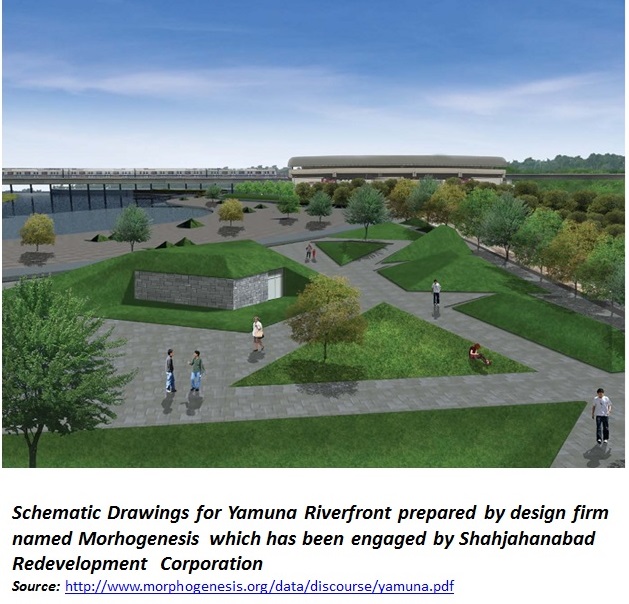
Recently the newly elected BJP led Central Government sent a team of bureaucrats to Gujarat to study the feasibility of replicating the successful model of the Sabarmati Riverfront Development Project for cleaning the Yamuna[18]. Despite the concerns about flooding of Yamuna, the team is exploring ways of replicating Sabarmati Model. In 2009, the Sheila Dikshit administration was also planning channelizing the Yamuna and putting up a waterfront like Paris and London with recreational facilities, parking lots and promenades etc[19].

Reclamation of the floodplains to create a concrete riverfront, like in Ahmedabad, could be ecologically unsound and even dangerous for Delhi that is already extremely vulnerable to floods[20]. The sediment load in Yamuna is very high. The non-channelized river rises by over four metres during peak monsoon flooding[21]. Risk of flooding will increase multifold for a channelized river. The Inter-governmental Panel on Climate Change last year put Delhi among three world cities at high risk of floods. Tokyo and Shanghai are the two other cities.

An expert committee appointed by the Ministry of Environment & Forests (MoEF) to examine the Yamuna River Front Development Scheme of the Delhi Development Authority (DDA) recommended that DDA should scrap its ambitious plan for developing recreational facilities, parking lots and promenades. [22] The committee was formed following order from National Green Tribunal which was drawn in response to a petition filed by activists and Yamuna Jiye Abhiyaan convener Manoj Misra.[23] The committee pointed out that recreational spots located in active floodplain areas would kill the river and cause floods in the city. About the Sabarmati Model Being followed, CR Babu, Chair of the committee said: “There is no Sabarmati river. It’s stagnant water with concrete walls on two sides. The floodplains have been concretized to make pathways and real estate projects. It cannot be replicated for our Yamuna”.

The committee report says the Yamuna Riverfront Development scheme will reduce the river’s flood-carrying capacity and increase flooding and pollution and it recommended a ban on developmental activity in the river’s Zone ‘O’ and its active floodplains on the Uttar Pradesh side. It also said that a 52-km stretch of the Yamuna in Delhi and Uttar Pradesh be declared a ‘conservation zone’ as restoring the river’s ecological functions is heavily dependent on the environmental flow through this stretch, particularly in the lean season.

Manoj Misra of Yamuna Jiye Abhiyan, dismisses the Sabarmati solution saying “We cannot call it a Sabarmati model… It’s like a mirage created for a brief stretch. Let’s be clear about it. If the Delhi bureaucrats have gone there to learn from the Gujarat model, it’s up to them to figure out if it can be implemented. I cannot call the Sabarmati project a river rejuvenation project – it’s more of a real estate project… That is not advisable for Delhi.” [24]

Another important aspect which does not feature at all during the talks of Yamuna Riverfront Development is the massive displacement that will take place. Over a dozen unauthorised colonies are located on the riverbed. These colonies which have been in existence for over 40 years will have to be uprooted which again may lead to Sabarmati like situation where urban poor are brushed aside to serve interests of real estate developers and urban middle class.[25]
Riverfont 4

City of Noida on the other hand has decided to go ahead with the Rs 200 crore Yamuna Riverfront Development Project that Greater Noida Authority (GNA) has been planning[26]. The project involves developing recreational facilities like parks, Yoga centres, picnic spots and sports centres, polo grounds, golf course etc. on Hindon and Yamuna floodplains. Officials from GNA claim that these facilities will be for recreational purpose and will be developed without disrupting the natural flow of Yamuna. Here again the project has nothing to do with sustaining, cleaning, rejuvenation of the river.

Ganga cannot be ‘developed’ as Sabarmati

Prime Minister Narendra Modi made a promise during his election campaign in Varanasi to clean up Ganga.[27] The National Ganga River Basin Authority (NGRBA) was shifted from the environment ministry to the water resources ministry.[28] New name for the Ministry of Water Resources is Ministry of Water Resources, River Development and Ganga Rejuvenation. Uma Bharati was assigned with this specially created ministry for cleaning Ganga by the PM. “If Sabarmati can be cleaned, all other rivers can also be made better.” print media has quoted Uma Bharati.[29] Ms Uma Bharati seems to have no idea that Sabarmati has NOT been cleaned, the Sabarmati project just transferred the polluted water downstream of the 10.4 km stretch. Can Sabarmati Model be replicated at Ganga? Even if it is replicated, will it help the cause or river or river rejuvenation? The answer is clearly a BIG NO. A number of apprehensions have been raised in this regard. “The so-called Sabarmati model won’t work for the Ganga. The Sabarmati has neither been cleaned nor rejuvenated,” Openindia News quotes Himanshu Thakkar, environmentalist and coordinator of SANDRP[30]. He further points out that
Sabarmati Model survives on water from Narmada canal in the stretch of 10.4 km which flows through the Ahmedabad city. This is not possible in case of Ganga.

Priority for the river rejuvenation is restoring its water quality, freshwater flow and not riverbank beautification. More than Rs. 5,000 crore (some estimates this figure to be over Rs 20 000 crores) has been spent on cleaning the Ganga in the past 28 years. The Ganga Action Plan was launched in 1986 and was in 1994 extended to the Yamuna, Gomti and other tributaries of the Ganga. The second phase of the Ganga Action Plan was launched in 2000 and NGRBA was created in 2009.[31] The plan however has not achieved what it set out to achieve. Water quality for Ganga River has been declining and is unfit even for irrigation or bathing. Potable use is out of question. The count of harmful organisms, including hazardous faecal bacteria, at many locations is more than 100 times the limit set by the government. The water’s biochemical oxygen content, which is vital for the survival of aquatic wildlife, has dipped drastically.[32] Any “cosmetic treatments”[33] will not work for Ganga, like they have not worked for Sabarmati.

Several Riverfront Development Projects springing up across nation

While there are experts opposing replication of Sabarmati Riverfront Project on Ganga and Yamuna River, there are several other riverfront projects which are inspired by the Sabarmati Project and which are being pushed without any kind of studies or impact assessment. Their possible impacts on the riverine ecology, flood patterns, downstream areas etc. are going unchecked.

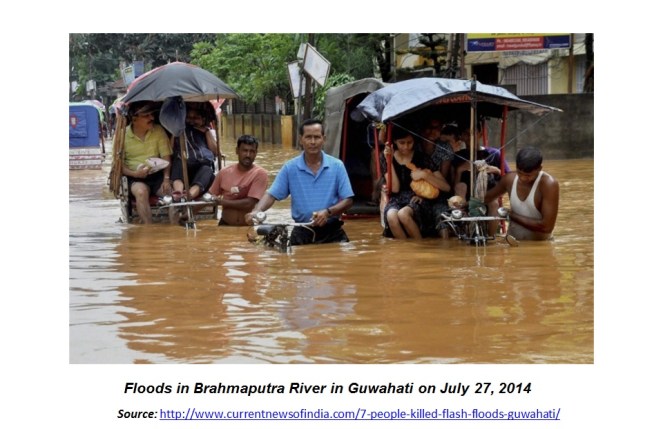
Brahmaputra Riverfront Development Project: Another “multi-dimensional environment improvement and urban rejuvenation project” that is set to come up with plans for reclaimed river banks is on Brahmaputra River in Guwahati[34]. While on one hand the city is struggling to cope up with the flood prone nature of the Brahmaputra River, State Government of Assam plans to take up an ambitious project to develop the city riverfront named ‘Brahmaputra Riverfront Development Project’ under the Assam Infrastructure Financing Authority. The riverfront project will be implemented by the Guwahati Metropolitan Development Authority (GMDA) in phases[35]. Foundation of the beautification project was laid by the Chief Minister Tarun Gogoi in February 2013. The project plans to achieve maximum possible reclamation[36].While the plan talks of revitalization of the river ecology and Strengthening of riverbanks through soil bio engineering it has several urban features on its agenda like promenade, Ghats, Plazas and Parks; buildings, conference facilities, Parking lots, ferry terminals, Bus and para transport stops, Urban utilities and drainage, Improved infrastructure for floating restaurants, Public amenities; Dhobi Ghats, etc.[37]

Will such a huge real estate development leave any room for river or its revitalization?

Tendency to flood is an important feature of River Brahmaputra. The river also has one of the highest sediment loads in the world. Every year during the successive floods, most of the areas in the valley of Assam remain submerged for a considerable numbers of days causing wide spread damages. In a phenomenon as recent as June 27, 2014 Guwahati experienced heavy downpour for 15 hours, setting off flash floods[38]. Half of the city was submerged under flood water. The authorities blamed illegal encroachments on watersheds across the state capital for the flash floods, which had choked the natural outlets for the gushing water. National Institute of Hydrology (NIH), Roorkee; upon being requested by the GMDA; is carrying out a study which includes river shifting analysis for studying stability of the river banks, flow variations to determine the perennial water depth, estimate of floods of various return periods for design of river embankments, estimate of water surface profiles employing hydro-dynamic river flow model and design parameters for river embankments[39]. The Bramhaputra Riverfront Development Project however has been inaugurated even before the requisite studies have been completed.
Riverfont 5

Gomti Riverfront Development Project in Lucknow: The project by the Lucknow Development Authority is based on the Sabarmati Riverfront Model. It plans to “beautify” Gomti River between Gomti Barrage and Bridge on Bye-pass road connecting Lucknow-Hardoi road and Lucknow-Sitapur road, a length of about 15 Km. According to the Technical Bid Document released by the Lucknow Development Authority, the Riverfront Project has no component of water treatment or river restoration, but is a landscape-based development project, which will also look at “reclaiming” the river banks for activities like shops, entertainment area, promenades, etc. The inspiration for the project swings from Thames Rivefront in London, to Sabarmati in Gujarat, depending on the political party in power.[40]

In all this discussion, there is no mention of maintaining adequate flow in Gomti, treating sewage, conserving its floodplains, or any other ecological angles.

River Improvement and Restoration are also about real estate!

For many government agencies, ironically, not just river beautification, but the idea of river improvement and restoration is also about channelizing rivers and providing recreational facilities.

Pune Rivefront Project: Pune Municipal Corporation, the Pune city also known for chronically polluting Mula and Mutha rivers that flow through the heart of the city, has sanctioned a River Improvement Project, under the aegis of JNNURM (Jawaharlal Nehru National Urban Renewal Mission). The Project envisages channelizing the river, introducing barrages to maintain water levels, development of riparian zone as entertainment and shopping groups, even Parking lots, introducing navigation in the river etc. There are several issues with this “improvement” project. Firstly, it is not planned according to the once in a hundred years flood in Pune, it plans to constrict the river further, thus encroaching the riverbed. Creation of stagnant pools through barrages will result in backwater effect on the many nallahs that join the river. These Nallahs routinely flood in rainy season and additional backwater in these nallahs will worsen the situation further. The project does not say a word about treating water quality, but envisages to build drainage lines inside the riverbed and carry the sewage out of Pune city limits. This hardly qualifies as river rejuvenation or restoration. A case has been filed against this project in National Green Tribunal.

Goda Park (Godavari Riverfront Project) in Nashik, Maharashtra: Godavari emerging from the Brahmagiri Hills in Nashik is famed not only for being one of the longest rivers in India, but also because Kumbh Mela is held on its banks every 12 years in Nashik. Nashik and Trimbakeshwar have had no dearth of funding for cleaning Godavari. They have received funds from the National River Conservation Directorate as well as JNNURM. Despite this, Godavari is extremely filthy in Nashik. Ignoring the pressing issues of water quality, Nashik Municipal Corporation and a specific political party have been hankering after beatification of Godavari’s banks. In fact, the project has been handed over to Reliance Foundation by the Nashik Municipal Corporation[41] without any public consultations or discussions. As per reports, the components of this 13.5 kms long project will be laser shows, musical fountains, rope-way, multi-purpose meeting hall, garden, water sports, canteen, etc.[42]

In the meantime, there are several court orders against Nashik Municipal Corporation pending about severe water pollution in the River including Ram Kund where holy dip on Kumbh Mela is supposed to be taken.

Mithi Riverfront Development: Stretch of 18 km of Mithi River flows through city of Mumbai. Course of Mithi has been modified throughout the city to host range of activities.[43] On 26 July 2005, the river flooded some of the most densely populated areas claiming nearly 1000 lives[44].

After these catastrophic floods, the Municipal Corporation of Greater Mumbai (MCGM) and Mumbai Metropolitan Region Development Authority (MMRDA) made a plan to “restore” the river. BMC and MMRDA’s definition of restoration involves desilting, beautification and building of a retaining wall. Stretch of 4.5 km of the total six km stretch of the river that falls within MMRDA’s jurisdiction is covered with mangroves. MMRDA has planned to beautify the stretch of remaining 1.5 km (10 Ha) which lies right amidst mangroves by developing a promenade. MMRDA plans developing this project on a PPP (Public Private Partnership) basis. Interestingly, the Mukesh Ambani-led Reliance Foundation and Standard Chartered bank have been selected for this project.[45]

As per the Coastal Zone Management Plan (CZMP) of the area, the proposed Mithi Riverfront Development Project falls in Coastal Regulation Zone (CRZ) II and III. The proposal was presented to CRZ authority in its 82nd meeting on 10th June, 2013[46]. CRZ authority has not allowed any reclamation or construction activities in this stretch. For Widening, lengthening & reconstruction of the existing bridge CRZ has referred the proposal to MoEF and asked MMRDA to take prior permission of High Court if the proposal involves destruction of mangroves[47].

Observer Research Foundation, a private, not for profit organization (funded by Reliance India[48]) from Mumbai has come up with a study that recommends a 21-point programme for reclaiming the Mithi, envisaging a single and unbroken river-park corridor spanning across the entire 18-km length of the Mithi with dedicated bicycle tracks, gardens, amphitheatres, sports and recreation.[49]
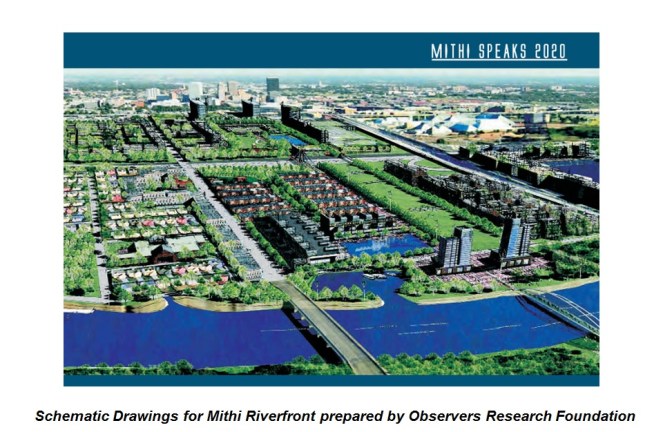
Riverfont 6

Riverfront Development is NOT River Restoration

As is evident, the riverfront projects discussed above are essentially river bank beautification & Real Estate Development projects and not helping restoration of the river. The projects aim at comodifying rivers to develop urban scapes. Such riverfront development changes the essential character of the river. Stream channelization and alteration of shoreline disconnects the river stretch from adjacent ecosystems and leads to risks of habitat degradation, changes in the flow regime and siltation[50].

While the water of the rivers flows in the natural landscapes, there are many processes that are happening. Sediments are carried, fertile land is created along the banks, river channel is widened, flooding, deposition of sediments during flooding, cleansing of river etc.[51] However the urban rivers are alienated from this natural landscape to such an extent that the rivers are reduced to merely nallas carrying city’s sewage and filth.

Flow, connectivity and flood are fundamental characteristics of rivers and rivers need space for that. If these are violated the river water spreads uncontrolled through the habitation causing catastrophic events like Mithi Flooding.

Creating more room for rivers

While Indian cities are busy replicating Riverfronts of Thames and Seine, there are some remarkable projects going on in some other countries which actually talk of giving more room to the rivers during floods. They are trying to restore the river and not beautify, concretize, channelise or encroach on it.

In the Netherlands, such an integrated approach has been adopted for ‘Room for the River Program’[52]. The program is currently being implemented in the Dutch Rhine River Basin of the country.

The programme started in 2006 is scheduled to be completed by 2015. The objectives of the programme are improving safety against flooding of riverine areas of Rivers Rhine and Meuse by increasing the discharge capacity and improving of spatial quality of the riverine area.

At 39 locations, measures will be taken to give the river space to flood safely through flood bypasses, excavation of flood plains, dike relocation and lowering of groynes etc. Moreover, the measures will be designed in such a way that they improve the quality of the immediate surroundings.

While Room for the River programme focuses on flood management in sustainable way, Yolo Bypass is another unique initiative aimed at keeping intact the benefits to the ecosystem without causing a negative impact on water supply[53]. The Yolo Bypass is a flood bypass in the Sacramento Valley located in Yolo and Solano Counties of California State in USA. The primary function of the bypass is flood damage reduction. It is a designated floodway that encompasses 60,000 acres in eastern Yolo County between the cities of Davis and Sacramento. All the properties within the bypass are subject to a flood easement that allows the state to flood the land for public safety and ecological benefit.

Conclusion

Riverfront of Thames in London and Seine in Paris are often cited as successful models of riverfront development in India. However, the ecological as well as social setting of Indian rivers and the challenges that we face are significantly different from these foreign models. A Blind replication will only be wastage of public funds and degradation of the rivers further. Riverfront development projects across the country seem to be alienated from the river, and talk only about its urban banks, trying to achieve cosmetic changes on deeper wounds by encroachment and real estate development on the belly of the rivers. The need of the hour is river rejuvenation and not river FRONT development. Let us hope that we see central place for rivers in all these projects. Moreover, there is neither any social or environmental impact assessment, nor any regulation or democratic participatory decision making process. Such projects will only be at the cost of the poor, the environment, future generation and to short term benefits of real estate developers and a section of urban middle class.

Amruta Pradhan, SANDRP (With Inputs from Himanshu Thakkar & Parineeta Dandekar)

amrutapradhan@gmail.com

An edited version of this article has been published at: http://indiatogether.org/gujarat-sabarmati-riverfront-development-model-for-ganga-yamuna-environment

END NOTES:

[1] http://www.egovamc.com/SRFDCL/SRFDCL.pdf

[2] http://www.egovamc.com/SRFDCL/SRFDCL.pdf

[3] http://www.frontline.in/static/html/fl2802/stories/20110128280208500.htm

[4] http://www.frontline.in/static/html/fl2802/stories/20110128280208500.htm

[5]http://www.business-standard.com/article/current-affairs/amc-bets-on-huge-returns-from-riverfront-property-sale-114032000894_1.html

[6] http://indiaenvironmentportal.org.in/files/file/Sabarmati%20Riverfront.pdf

[7] http://www.egovamc.com/SRFDCL/SRFDCL.pdf

[8] http://indiaenvironmentportal.org.in/files/file/Sabarmati%20Riverfront.pdf

[9] http://www.downtoearth.org.in/node/5786

[10] http://www.frontline.in/static/html/fl2802/stories/20110128280208500.htm

[11] http://landscapeindiapbb.wordpress.com/2013/10/30/riverfront-development-ahmedabad/

[12] http://www.downtoearth.org.in/node/5786

[13] http://archive.indianexpress.com/news/flood-control-in-sabarmati-a-challenge-for-amc/654704/

[14] http://www.downtoearth.org.in/node/5786

[15] http://archive.indianexpress.com/news/flood-control-in-sabarmati-a-challenge-for-amc/654704/

[16] http://indiaenvironmentportal.org.in/files/file/Sabarmati%20Riverfront.pdf

[17] http://www.downtoearth.org.in/node/5786

[18] http://timesofindia.indiatimes.com/city/delhi/Delhi-babu-all-praise-for-Sabarmati-plan/articleshow/36363896.cms

[19] http://timesofindia.indiatimes.com/city/delhi/Scientist-cautions-against-riverfront-plan/articleshow/38500711.cms

[20]http://timesofindia.indiatimes.com/city/delhi/River-experts-say-Sabarmati-no-model-for-Yamuna/articleshow/36222968.cms

[21] http://timesofindia.indiatimes.com/city/delhi/Scientist-cautions-against-riverfront-plan/articleshow/38500711.cms

[22]http://timesofindia.indiatimes.com/city/delhi/Scientist-opposes-Sabarmati-model-says-reclaiming-floodplain-not-a-good-idea-for-Yamuna/articleshow/36679502.cms

[23] http://www.newindianexpress.com/nation/Yamuna-Action-Plan-Soon-Promises-MoEF/2013/12/19/article1953318.ece,

http://www.indiaenvironmentportal.org.in/files/Yamuna%20River%20Front%20NGT%2018Dec2013.pdf

[24]http://timesofindia.indiatimes.com/city/delhi/River-experts-say-Sabarmati-no-model-for-Yamuna/articleshow/36222968.cms

[25] http://www.asianage.com/delhi/illegal-colonies-near-river-may-be-shifted-946

[26] http://timesofindia.indiatimes.com/city/noida/Twin-cities-to-go-ahead-with-riverfront-project/articleshow/34845006.cms

[27] http://indianexpress.com/article/india/politics/modi-assigns-task-of-cleaning-ganga-to-uma-bharti/,

http://www.firstpost.com/politics/cleaning-up-the-ganga-yamuna-why-modi-must-forget-sabarmati-model-1560939.html

[28]http://www.hindustantimes.com/india-news/clean-up-act-superbody-headed-by-pm-modi-to-drive-mission-ganga/article1-1253158.aspx

[29] http://www.firstpost.com/politics/cleaning-up-the-ganga-yamuna-why-modi-must-forget-sabarmati-model-1560939.html

[30] http://news.oneindia.in/india/sabarmati-model-not-enough-for-ganga-1478033.html

[31] http://news.oneindia.in/india/sabarmati-model-not-enough-for-ganga-1478033.html

[32] http://www.business-standard.com/article/opinion/rejuvenating-a-river-114052801804_1.html

[33] http://www.business-standard.com/article/opinion/rejuvenating-a-river-114052801804_1.html

[34] http://www.assamtribune.com/scripts/detailsnew.asp?id=aug3113/city05

[35] http://guwahatilife.blogspot.in/2011/02/cm-lays-foundation-of-beautification-of.html

[36] http://www.assamtribune.com/scripts/detailsnew.asp?id=aug3113/city05

[37] http://www.psda.in/guwahati.asp

[38] http://www.ndtv.com/article/india/flash-floods-in-guwahati-seven-dead-in-last-15-hours-548974

[39] http://www.assamtribune.com/scripts/detailsnew.asp?id=aug3113/city05

[40]http://timesofindia.indiatimes.com/city/lucknow/Lucknow-Development-Authority-to-get-new-blueprint-of-Gomti-riverfront-development-project/articleshow/19687344.cms

http://m.financialexpress.com/news/akhilesh-wants-london-eye-in-lucknow/975999/

[41] http://www.reliancefoundation.org/urban_renewal.html

[42]http://articles.economictimes.indiatimes.com/2013-09-20/news/42252355_1_goda-park-project-reliance-foundation-mns-chief-raj-thackeray

[43] The Mumbai airport has its domestic and international terminals, and its cargo complex along the Mithi River. There are five major railway stations along the Mithi River including Mahim and Bandra on the western line andSion, Chunnabhatti and Kurla on the central line. The upcoming V ersova-Andheri-Ghatkopar corridor of the Mumbai Metro project that also crosses over the Mithi River has two stations planned along the Mithi River at Marol and Saki Naka. There are also several bus stops located close to the river all along its banks.

(Source: http://orfonline.org/cms/sites/orfonline/modules/report/ReportDetail.html?cmaid=23400&mmacmaid=23401)

[44] http://orfonline.org/cms/sites/orfonline/modules/report/ReportDetail.html?cmaid=23400&mmacmaid=23401

[45] http://indianexpress.com/article/cities/mumbai/beautification-plans-of-mithi-river-promenade-stuck-over-crz-norms/

[46] https://mczma.maharashtra.gov.in/pdf/MCZMA_MoM82.pdf

[47] The proposal was cleared subject to compliance of following conditions

(i) The proposed construction should be carried out strictly as per the provisions of CRZ Notification, 2011 (as amended from time to time) and guidelines/ clarifications given by MoEF time to time.

(ii) Disposal of debris during construction phase should be as per MSW (M&H) rules. 2000.

(iii) Tidal flow of river should not be obstructed.

(iv) The project proponent should obtain prior High Court permission, if the proposal involves destruction of mangroves or construction falls with 50 nil buffer zone.

(v) All other required permissions from different statutory authorities should be obtained prior to commencement of work

[48] http://www.rediff.com/news/report/najeeb-jung-the-man-who-may-run-delhi/20131213.htm

[49]http://www.indiawaterportal.org/sites/indiawaterportal.org/files/why_mumbai_must_reclaim_its_mithi_gautam_kirtane_orf_2011.pdf

[50] http://water.epa.gov/type/wetlands/restore/principles.cfm

[51] Nature Conservation by Ketki Ghate, Manasi Karandikar

[52] http://www.downtoearth.org.in/node/5786

[53] http://www.americanrivers.org/initiative/floods/projects/yolo-bypass-and-the-fremont-weir/
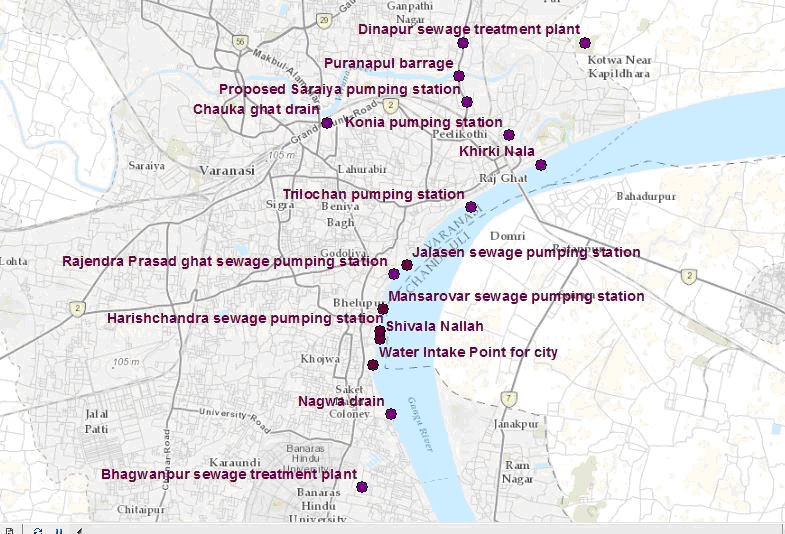
Chenab · Floods · Jammu and Kashmir

Why does Central Water Commission have no flood forecasting for Jammu & Kashmir? Why this neglect by Central Government?

During Sept 4-6, 2014 Jammu and Kashmir in North India is facing one of the worst floods. NDTV[1] has reported that these are the worst floods in 60 years (The Times of India reported that this was worst flood of the state since independence based on number of casualties.). More than 160 people have died and some 2500 villages are affected (1615 in the valley, rest in Jammu), out of which 450 are completely submerged (390 in valley)[2]. Over 10 000 people are stranded across the state. The flood has affected almost all 10 districts in the Jammu region. J&K Chief Minister admitted that the rescuers have yet to reach the worst affected South Kashmir region. Jammu Srinagar Highway has remained blocked for over three days. Several rivers have been flowing above the danger mark and most parts of south Kashmir, including Pulwama, Anantnag and Kulgam districts have been submerged. Jhelum was flowing at 30.7 ft in South Kashmir, 7 ft above the danger mark. Chenab river was also flowing above the danger mark at several places.


Authorities have declared the bridge over the Chenab in Akhnoor unsafe for traffic. Source: Vinay Saraf's facebook post
Authorities have declared the bridge over the Chenab in Akhnoor unsafe for traffic. Source: Vinay Saraf’s facebook post

Unprecedented floods Landslides triggered by heavy rainfall have damaged roads, dozens of bridges, buildings and crops. As many as 40 people went missing after a landslide in Thanamandi area of Rajouri district in Jammu region. Heavy rain in the catchment areas of Jhelum river has so far submerged more than 100 villages in the south Kashmir districts of Anantnag, Kulgam, Shopian, Pulwama, where the river was still rising, as well as the north Kashmir districts of Ganderbal, Srinagar and Badgam[3]. The flood has surpassed the 1992 memories and revived the 1959 flood memories[4].

Flood Forecast map of CWC has no sites to forecast floods in J & K

Vehicular traffic has been stopped on the Jammu-Pathankot highway due to incessant rain. Jammu is on red alert and Tawi bridge is also in danger.

Flood image from Vinay Saraf's Facebook post
Flood image from Vinay Saraf’s Facebook post

State Finance Minister Abdul Rahim Rather said Chenab was flowing at 38 ft at Akhnoor which is four ft above the danger mark cumulatively discharging 2.75 lakh cusecs, a quantum of discharge which equals all other rivers of the state.

The situation is very grim indeed: “According to the Army, the situation in the state is as grim as it was in Uttarakhand last year.” Union Home Minister has visited the state and the prime minister has expressed grief.

VERY HEAVY Rainfall during Sept 3-6 The state received massive 250 mm of rainfall in just three days between Sept 3-4, out of its seasonal monsoon rainfall of 568 mm till Sept 6, 2014. Rainfall just on Sept 6 was 106 mm, which is unbelievable 3116% of the normal rainfall for that date for J&K.

Rainfall Map from IMD showing that J&K received 558 mm rainfall till Sept 6, progressing to excess rainfall category in three days from deficit category on Sept 3, see the next map below

It can be seen from the season rainfall map see above of India Meteorology Department as on Sept 6, 2014 that J&K had received 558 mm rainfall till that date, progressing to Excess Rainfall category (blue colour code) from Deficit season rainfall of 308 mm as on Sept 3, 2014 (see IMD map below), in just three days.

IMD Map of Sept 3, 2014, showing J&K in deficit rainfall category (brown colour) with seasonal rainfall of 308 mm

CWC has no flood forecasts for J&K However, shockingly, India’s premier water resources body, Central Water Commission, responsible for flood forecasting and providing advisory to the states for tackling floods, has no flood forecast for any place in the state. The CWC’s flood forecast list[5] on Sept 6, 2014 has 18 level forecasts and 8 inflow forecasts, but NONE from J&K. CWC’s Flood forecast site has another option[6] that provides hydrographs for various rivers and location. Again for J&K it provides NO hydrographs. The options on CWC’s Flood Forecast site for list based selection[7] and map based selection[8] again has no information about Jammu & Kashmir.

J&K Flood Control Chief Engineer called the situation Alarming. Photo Source - NNIS
J&K Flood Control Chief Engineer called the situation Alarming. Photo Source – NNIS

This seems like shocking omission on the part of CWC, which functions under Union Ministry of Water Resources and reminds one that CWC completely failed to provide any flood forecast when Uttarakhand faced its worst floods in June 2013[9]. We hope CWC will urgently include the flood vulnerable sites of J&K in its flood forecasting and also explain to the people of J&K and rest of the country why these sites were not included so far.

Akhnoor flood image from Vinay Saraf's Facebook post
Akhnoor flood image from Vinay Saraf’s Facebook post

Mismanaged hydro projects increase the damage In this context, media has reported[10] that Dulhasti Hydropower project on Chenab river decided to open its flood gates DURING the worst flood period, which lead to further increase in flood levels in the downstream areas: “Release of water by NHPC dam is expected to increase the levels of the Chenab massively between Kishtwar and Ramban. Surged level can lead to submergence of the highway.” Such additional floods could have been avoided if the gates were kept opened in anticipation of floods. Such opening of gates during the floods can lead to catastrophic consequences for the downstream areas as happened in case of Srinagar Hydropower project in Uttarakhand in June 2013.

Kids crossing flooded bridge in flood hit J&K Photo Sources - NNIS
Kids crossing flooded bridge in flood hit J&K Photo Sources – NNIS

MoEF’s wrong decisions The Union Ministry of Environment and Forests have been clearing hydropower projects in the Chenab basin even without proper social and environment impact assessment as was evident in case of Sach Khas project most recently. As SANDRP pointed out in a submission to the Expert Appraisal Committee[11], the EIA and public hearing process of the Sach Khas HEP has been fundamentally inadequate and flawed and yet without even acknowledging the issues raised in this submission the EAC has recommended approval of the project. This is bound to be legally untenable decision. Such decisions by the EAC and MoEF are likely to add to the disaster potential in Chanab and other basins in J&K. There is also no cumulative impact assessment of such massive number of big hydropower projects any basins of J&K.

It is well known, as witnessed in case of Uttarakhand in 2013, that hydropower projects hugely add to the disaster potential of the vulnerable areas. We hope the J&K and central governments make this assessment on urgent basis and we hope the apex court does not have to intervene for such assessment as the Supreme Court had to do through its order of Aug 13, 2013 in case of Uttarakhand.

SANDRP

POST SCRIPT: This is one possible fall out of this, also flashed by several newspaper and following CWC questioned by media: http://www.cwc.nic.in/main/webpages/Flood%20Forecasting%20in%20uncovered%20Himalayan%20and%20interstate%20inflow%20forecasting%2011092014.pdf

Stumbled upon this on January 14, 2015. Hope the government will be now implementing this.

END NOTES:

[1] http://www.ndtv.com/article/cheat-sheet/over-100-dead-as-jammu-and-kashmir-witnesses-worst-floods-in-50-years-587572?pfrom=home-lateststories

[2] http://www.thekashmirwalla.com/2014/09/death-toll-160-jammu-kashmir-facing-worst-flood-60-years/

[3] http://www.kashmirdispatch.com/headlines/050926328-thousands-flee-homes-in-flood-ravaged-jammu-and-kashmir.htm

[4] For pictures of what people are going through, see: http://www.thekashmirwalla.com/2014/09/pictures-deadly-floods-hit-kashmir/
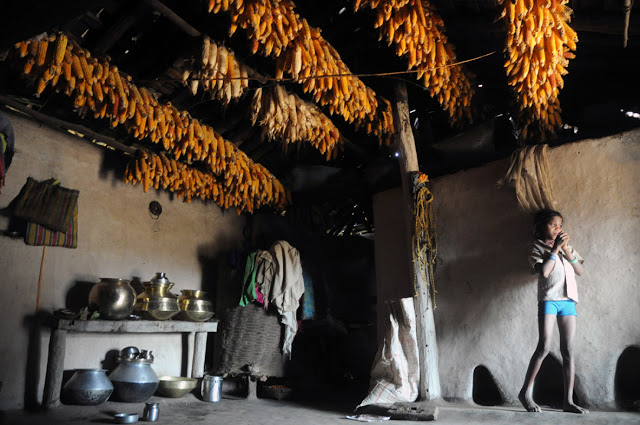
[5] http://180.92.171.80/ffs/current-flood-forecast/

[6] http://180.92.171.80/ffs/hydrograph/

[7] http://180.92.171.80/ffs/data-flow-list-based/

[8] http://www.india-water.gov.in/eSWIS-MapViewer/
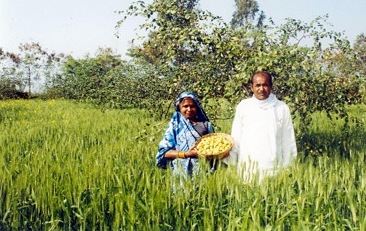
[9] https://sandrp.wordpress.com/2013/06/25/central-water-commissions-flood-forecasting-pathetic-performance-in-uttarkhand-disaster/
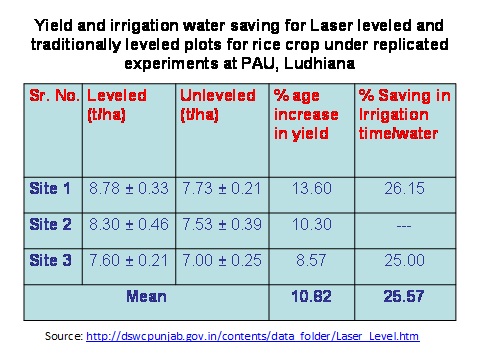
[10] http://www.kashmirlife.net/kashmir-flooded-chenab-may-witness-upsurge-as-dulhasti-gates-being-opened-65126/

[11] https://sandrp.wordpress.com/2014/08/19/sach-khas-hydro-project-in-chenab-basin-another-example-of-wapcoss-shoddy-eia/

[12] http://www.hindustantimes.com/india-news/flood-situation-in-jammu-worsens-toll-mounts-to-100/article1-1260718.aspx

Climate Change · Ministry of Environment and Forests

Climate Change and Rising Sea-Levels: Real Threats coupled with Govt’s inaction

Above: Child playing on the Ghormara island in Sunderbans, which is being increasingly affected by rising sea levels    Photo: Phys.org

Global ocean levels have risen by about 19 cms in the past century[i]. Over 1961-1993, the global average sea level rose at a rate of 1.4 mm per year. But in the recent past, the rate of rise has gone up.  Over 1993-2003, it was observed that the average rate of rise more than doubled to about 3.1 mm per year[ii]. As the earth gets warmer, the threat of land inundation due to sea level rise also increases.

So what is the cause of this rise? According to scientists, this is caused due to thermal expansion of the ocean water and due to melting of glaciers and of ice caps. The amount these have contributed to the above is only speculative as the data available for such estimations is spotty and does not date back far enough. But what is somewhat known is the loss this creates and might create in the future in terms of land inundation, though not really accounting for the loss  in the lives of various people, especially the ones living along coasts. The problem today is not that this is happening, the problem is that we do not seem to be doing enough to mitigate the impacts of the sea level rise, nor do we seem to do anything to adapt to it.

In the case of the Indian subcontinent, according to a report published by a group of ecologists led by Dr. M Zafar-ul Islam, there may be a loss of about 14,000 sq. km. of land in case the sea levels rise by one metre[iii]. The report also warns that marine intrusion might affect 18 of the 48 eco-regions in India. This report mainly assesses the losses in the case of sea levels rising by one metre and six metres. In the one metre scenario, which is the estimated rise by 2100, the Sundarbans may lose about half of their area, while the Godavari-Krishna mangrove region is estimated to lose about a quarter of its land. It is also estimated that seven protected areas – Bhitarkanika, Chilka Lake, Point Calimere, Interview Island, Lothian Island, Sajnakhali and Pulicat Lake- would be about 50% flooded in case of a 1 metre riseiii.

The Bhitarkanika Mangrove System is a rich repository of biodiversity, while providing shelter from coastal erosion Photo fro Vagabound images
The Bhitarkanika Mangrove System is a rich repository of biodiversity, while providing shelter from coastal erosion Photo from Vagabound images

In the Sundarbans part of the largest riverine delta of the world, the villagers are struggling to protect their lands as more and more land is being claimed by sea water, sinking villages. The people living on the banks of these islands have observed that the river has widened and is eating into the island on a regular basis, constantly reshaping them. A study by Professor Sugata Hazra, director of the School of Oceanography, Jadavpur University, found that the total land area of 6402.090 sq. Kms of Sunderbans in 2001 was found to be reduced to 6358.048 sq kms in 2009. This would mean an approximate loss of about 44.042 sq kms. This has led to the displacement of approximately 7,000 people in the last 30 years according to this study[iv], but this seems like an under-estimation. The MoEF’s (Union Ministry of Environment and Forests) Climate Change Assessment report, also called 4 X 4 report (since it looks at 4 Sectors in 4 most vulnerable regions), prepared by the Indian Network of Climate Change Assessment, quoted a 2000 study by Goodbread and Kuehl, which said that the rise in sea level can be attributed partially to the subsidence of the Ganga-Brahmaputra delta at the rate of about 4mm/year, as estimated by sedimentological studies[v].


From Peter Caton's remarkable Photo documentation of teh Sea Level rise in Sunderbans Photo: Peter Caton/ Greenpeace
From Peter Caton’s remarkable Photo documentation of the Sea Level rise in Sunderbans Photo: Peter Caton/ Greenpeace

Deltas as sinking as sediments are trapped by dams The sinking of deltas due to upstream interventions are also contributing to impacts felt in the coastal areas, in addition to the impacts due to rising sea levels. In many cases like the above, part of the driving force for effective rise in sea levels is the sinking deltas due to the absence of sediments from the upstream. According to a report by SANDRP earlier this year, the Ganga-Brahmapuptra delta, carrying one of the highest sediment loads of the world, has experienced a 30% reduction in sediment over the past century. Thus the impacts seen in case of the Sundarbans is a mix of two factors: rising sea level and delta sinking. The driving force behind sinking deltas is damming of rivers in the upstream, which blocks sediments from entering the river channel and effectively, the Delta. The reduction in water flow to the deltas due to upstream diversions adds to this.

pic1

Source: http://www.nature.com/news/floods-holding-back-the-tide-1.15013

These dams trap the sediment that should have come downstream with the river and deposited on the delta. Moreover, due to water diversions in the upstream, less and less water is flowing in the deltas, and less flow means less capacity to carry sediment to the deltas. Due to these reasons, the deltas are experiencing reduced silt deposit which then leads to their sinking and the sea eating away the remaining area. According to the report, in the last 50 years, the combined annual sediment flux of the large Chinese rivers has reduced from 1800 million tons (Mt) to about 370 Mt mainly due to the construction of a large number of dams[vi]. The Yellow river delta in China is sinking so fast that the local sea levels are effectively rising by upto 25 cms/year, nearly 80 times the global average.i

Deltas_Coverpage

It is also interesting to note that in places like Jakarta, Indonesia, which is home to almost 10 million people, the heavily populated areas have sunk by as much as six and a half feet as groundwater is pumped from the earth to drink[vii]. This increases their risk of flooding and even more so if the groundwater levels continue to drop. With this drop in groundwater levels, the river flow in downstream areas decrease. This reduces the capacity of the river to carry silt, thus making the condition even worse[viii].

An estimated half a billion people live on or near deltas, constituting the highly vulnerable populations. The government needs to alter its development plans to suit the vulnerabilities and needs of these people. With its constant imposition of building large dams and barrages without taking into account the impacts they are going to have downstream, the government is just adding to the existing impacts and threats faced due to climate change. Moreover the governmnet anyways refuses to acknowledge that large sections of Indian people, particularly the poor and weaker sections are suffering due to the impacts of climate change, it refuses to identify people who are vulnerable to climate change, it refused to compensate them when they suffer for no fault of theirs and it refuses to demand from the climate polluters in the west and within India to pay for the losses.

Pic2

Above: A woman wades across water in the Ganga Brahmaputra Delta. The dams hold back sediments crucial to the delta formation. Source: http://www.thethirdpole.net/dams-responsible-for-south-asias-sinking-deltas/

Reports: IPCC In the recent past, there has been much interest in sea levels rising and some research has gone into this direction. The Intergovernmental Panel on Climate Change has been assessing and publishing about the various impacts of climate change and through their assessment reports, but it is not the only body doing this. In fact, it has come under a lot of criticism lately with people outside the body, especially ones who use semi-empirical models for study, showing that the figures of the IPCC under estimate the risk at hand.

In the 4th Intergovernmental Panel on Climate Change (IPCC) report, 2007, global sea levels were observed to be on the rise with the projected rise being about 18-59 cms by 2100. After facing criticism for this figure seen as an underestimation, IPCC came out with a 5th report on climate change. In this, the predictions of global rise in sea level have gone up by 50% and now stand at 28-98 cms by 2100. This is the wide range. For high emissions, the IPCC predicts that there will be a rise by 52-98 cms, whereas, even with emission reductions, the rise is predicted at 28-61 cms[ix]. These projections are made for the global sea level for 2081-2100 relative to 1986-2005. This then puts a lot of low-lying areas at the risk of flooding. These estimates are speculative to some extent due to the complexities inherent to the models used for study and spotty data. These estimates are also likely to be under estimates.

Other reports predict higher sea level rise The models that the IPCC uses for study are process models. This range given by them is derived from these models in combination with climate projections and literature assessment of glacier and ice sheet models. Some other studies done using ‘semi-empirical’ models, give different results. These studies look at how temperatures have changed over hundreds of years and the way sea levels have corresponded to it. They extrapolate based on this and their figures have come to be almost twice as high as what the IPCC found. They argue that the sea levels will rise by as much as 2 metres, and cause floods affecting roughly 187 million people[x]. The IPCC has dismissed these models as divergent and inaccurate, perhaps themselves adopting a more conservative approach than they should.

Pic3

Maale, capital of the Maldives, an Indian Ocean archipelago that is the lowest, flattest country on Earth is now protected by a seawall. By 2100 rising seas may force Maldivians to abandon their home. Photo: George Steinmetz. Source: http://ngm.nationalgeographic.com/2013/09/rising-seas/steinmetz-photography#/08-maale-maldives-670.jpg

Not being able to put a finger on it: One of the problems pointed out about the IPCC is that it does not provide the upper limit for sea level rise. For instance, if the collapse of marine-based sectors of the Antarctic ice-sheet is initiated, then the sea level could rise by several times more than projected during the 21st century[xi]. Scientists have estimated that the ice caps in the poles and Greenland hold enough water to raise sea level by 65 metresi. In the case of Greenland, scientists have assessed that the entire island is losing weight. The warm shore water is causing glacier calving into the sea. In a recent press release on a study conducted on ice sheets in Antarctica and Greenland, Veit Helm, glaciologist at the Alfred Wegener Institute (AWI) in Bremerhaven said that ice sheets are losing volume at the rate of about 500 cubic km per year[xii]. This study found that the volume loss in Greenland has doubled since the year 2009. At the same time, the loss of the West Antarctic sheet has tripled. This then means that the estimated rise in sea levels needs to be relooked at.

It is the responsibility of the governing authorities to take measures to try and minimize the damage that is occurring and will occur from climate change and its own skewed development projects. The government needs to identify, acknowledge and safeguard the already vulnerable communities and not make them more vulnerable in the face of the dangers they face from climate change. There is a need to integrate these climate change warnings and mitigation measures into planning and development, especially in the coastal areas. This is clearly not happening. There is little effective steps from Indian government to protect mangroves, deltas, or  coastal areas either from dams and diversions in the upstream or from sea-level rise in the downstream. On the contrary, the government plans are for accelerating the dam construction in the upstream and destructino of mangroves due to coastal projects. India’s National Action Plan on Climate Change or the state Action Plans on Climate Change do not have any credible assessments or mitigation or adaptation plans in this context.

There have been increased instances and intensities of tsunamis, floods and cyclones in the recent past. In the case of rising sea levels and deltaic changes, the warnings have been there for a long time. It is not going to be a sudden catastrophe, but is a well established danger which lurks on our coasts. Therefore, there is no excuse to let it go unaddressed. There is no excuse for inaction.

Padmakshi Badoni, SANDRP,  padmakshi.b@gmail.com

The mud men of the Sunderbans, trying to repair their river banks. Photo Peter Caton


END NOTES:

[i] http://e360.yale.edu/feature/rising_waters_how_fast_and_how_far_will_sea_levels_rise/2702/

[ii] http://www.moef.nic.in/sites/default/files/fin-rpt-incca_0.pdf

[iii] http://www.thehindubusinessline.com/news/14000-sqkm-land-at-risk-with-rising-sea-level-report/article4826559.ece

[iv] http://economictimes.indiatimes.com/news/environment/global-warming/villagers-struggle-to-save-land-as-islands-shrink-in-sundarban/articleshow/27238842.cms

[v] http://www.moef.nic.in/sites/default/files/fin-rpt-incca_0.pdf

[vi] https://sandrp.in/Shrinking_and_sinking_delta_major_role_of_Dams_May_2014.pdf

[vii] http://timesofindia.indiatimes.com/home/science/Worlds-coastal-megacities-sinking-10-times-faster-than-rising-water-levels/articleshow/34389492.cms

[viii] For a recent update on the groundwater situation in India, see:  https://sandrp.wordpress.com/2014/08/11/groundwater-falling-levels-and-contamination-threaten-indias-water-lifeline-urgent-need-for-community-driven-bottoms-up-management/

[ix] http://www.realclimate.org/index.php?p=15875

[x] http://e360.yale.edu/feature/rising_waters_how_fast_and_how_far_will_sea_levels_rise/2702/

[xi] http://www.realclimate.org/index.php?p=15875

[xii] http://www.downtoearth.org.in/content/record-decline-ice-sheets-antarctic-and-greenland

Dams

Aziza Chaouni: “How I brought a River and My City back to Life”

Above: Respecting public opinion and expectations about their city center and their river. This includes people from all economic and social strata Photo: http://www.asla.org

As India attempts to tackle the huge and growing problem of Urban water pollution and Urban rivers, there are repeated attempts to look outwards and try to learn from experience of successful cases from other countries. While replication of such cases is never easy and most of the times not possible, one can learn lessons from such examples. Here is one such case from North African Country of Morocco.

Fez River - A River of Trash as Aziza says Source - TED
Fez River – A River of Trash as Aziza says Source – TED

Architect and Professor at Toronto University, Aziza Chaouni narrates in her TED talk how the Fez River flowing through the City of Fez in Morocco (Northern Africa) is being cleaned up and uncovered and the role she played: “The Fez River winds through the medina (city) of Fez, Morocco—a mazelike medieval city that’s a World Heritage site. Once considered the “soul” of this celebrated city, the river succumbed to sewage and pollution, and in the 1950s was covered over bit by bit until nothing remained. TED Fellow Aziza Chaouni recounts her 20 year effort to restore this river to its former glory, and to transform her city in the process.”[1]

Fez River Crusader Aziza Chaouni Source - TED talks
Fez River Crusader Aziza Chaouni Source – TED talks

Her narration of the city and the river has striking similarities with Indian rivers and cities: “The Fez medina has about 250,000 inhabitants, and all their untreated sewage went straight into the narrow river that runs through it. The river was also heavily contaminated by nearby crafts workshops and tanneries — with chemicals such as chromium 3, which is lethal. People working in the tanneries were getting skin cancer, and some of them were dying. It was terrible. Obviously the river started to stink, so people started building walls to block the view. Then, because it became a health hazard, they covered it with concrete starting in 2002. And because it was covered, people began using that open space as trash yard.”[2]

Her description of how government functions is also applicable here: “Environmental protection is almost seen as a luxury in developing countries… you have high levels of environmental pollution, but you just don’t know about it as there is not much control or accountability”.

Fez River: How it was erased over the years Source - TED talk
Fez River: How it was erased over the years Source – TED talk

The interventions she proposed were relevant for the specific location and situation and the strategies are more generally applicable: “So we proposed three main interventions: a pedestrian plaza, a playground and a botanical garden. We used four main strategies: precisely placed interventions strategically phased to enhance water quality, remediate contaminated sites, create open spaces, and build on existing resources for economic development. These interventions had to benefit the population on several levels — social, environmental, economic, urban — and be resilient, so that it would still function regardless of changes in budget, political climate, and so on. At the wider city scale, we needed to prevent the newly cleaned river water inside the medina from getting polluted upstream, so we recommended measures for improving regional water quality, too. Depending on soil geomorphology, levels of water pollution, adjacent urban fabric and ecological systems, we purposefully located various rehabilitation tactics like canal restorers, constructed wetlands, bank restoration and storm-water retention ponds.”

Fez River: Rejuvenating step by step.  Source - TED talks
Fez River: Rejuvenating step by step. Source – TED talks
State of Fez River Source - Tedconfblog
State of Fez River Source – Tedconfblog

This is something which is entirely missing in our ‘Riverfront Develoment Projects” which lately are only about real estate and propose to do nothing for the river itself.

Her observation about difficulties of a municipal project are relevant for us too: “As some of my colleagues have observed, any municipal project around the world is the most complex project you can possibly work on, especially on a large scale. Because there are just so many variables, there are so many changes in the sociopolitical landscape, and so many commercial and economic interests colliding.”

About Chaouni’s background: “Born and raised in Fez, Morocco, Chaouni has long found herself fascinated with the Fez River, which winds through the city’s ancient Medina. Once considered the city’s soul, sending water to both public and private fountains, in the 1950s, the stream started to become a toxic sewer because of overcrowding, over-development and pollution. The city responded by covering the river over with concrete slabs, bit by bit, in the process destroying houses and creating dumping grounds. When Fez received a grant to divert and clean the river’s water, Chaouni proposed the Fez River Project to uncover the river, restore its riverbanks and create pedestrian pathways. Her vision: to reclaim these areas as public spaces and reconnect them to the rest of the city.”

“A project that Chaouni has been working on for two decades, her mission to transform the Fez River began with her thesis in graduate school and has continued throughout her career. Over the course of years, the river is gradually being uncovered—illegal parking lots are being transformed into playgrounds, trees and vegetation are being planted to create public spaces. Overall, the project is revitalizing Fez as a living city.”[3]

Community-centric plans for resuscitating the famed pits of the Fez Photo: holcimfoundation.org

This example of Fez city and River is still work in progress, but what has been achieved there is certainly impressive. It can provide some lessons for us, provided we are ready to listen: It is possible to truly rejuvenate an urban river: and Sabarmati is not even the right example. In her TED talk, Aziza at one stage says that they could achieve some things only when they put on the ‘Activist’ hat, shedding the ego of the Architect.

Indian Government has no role for activists, unfortunately.

SANDRP

Impression of the resuscitated Fez River in the heart of the city Photo: Aziza Chaouni Projects

END NOTES:

[1] http://www.ted.com/talks/aziza_chaouni_how_i_brought_a_river_and_my_city_back_to_life

[2] http://blog.ted.com/2014/04/04/from-an-open-sewer-to-a-jewel-of-the-city-aziza-chaouni-on-uncovering-and-restoring-the-fez-river/

[3] http://www.ted.com/speakers/aziza_chaouni

Gujarat · Madhya Pradesh · Ministry of Water Resources · Narmada

Appeal to Government to revoke unjustified decision of increase in Sardar Sarovar Dam Height to 138.68 and Start Dialogue

1 September 2014

To
Sushri Uma Bharati
The Honourable Minister
Ministry of Water Resources, River Development and Ganga Rejuvenation
Government of India
New Delhi
minister-mowr@nic.in, psmwr-mowr@nic.in, mod-mowr@nic.in, secy-mowr@nic.in, mwp@nic.in

Copy to:
1. Shri Santosh Kumar Gangwar, Minister of State for Water Resources, River Development and Ganga Rejuvenation
2. Shri Alok Rawat, Secretary, Ministry of Water Resources, River Development and Ganga Rejuvenation and ex-officio Chairman of the Narmada Control Authority
3. Shri A. Mahendran, Executive Member (Additional Charge), Narmada Control Authority

Respected Madam,

We the undersigned are deeply concerned about the recent decision of the Narmada Control Authority (NCA) to raise the height of the Sardar Sarovar dam by 16.76 metres taking the height to the designed final height of 138.68 metres.

Sardar Sarovar Dam

We think this decision of the NCA is unjustified and unwise. 1) It will cause huge additional displacement, when rehabilitation of the people affected even at the current height is incomplete. 2) As everybody agrees and experience has shown, even at current height, Gujarat is in a position to take the water stored to virtually any part of the designed command area, and can draw its share of water as per the Narmada Water Disputes Tribunal (NWDT) award. Moreover, it has been able to utilise only a small portion of the water available at current height. So there are no compelling reasons for raising the height on this count.

Under these circumstances, the decision taken by the newly formed government at the centre and the NCA to raise the height of the dam within two weeks of oath by the new government is a hasty, unwise and disastrous decision. We earnestly appeal to you and the government to immediately withdraw the decision to raise the height of the dam.

More importantly, the issues related to the dam have festered over more than 30 years of its troubled history because governments have tended to take a legalistic stand rather than initiate an inclusive dialogue on the substantive issues about the project amongst all concerned, particularly those adversely affected. We appeal to you to start such an inclusive process of reflection and dialogue to arrive at a broad social consensus on four critical issues about the Sardar Sarovar Project (SSP) as outlined below.

1. Height of the dam: What is the height of dam needed for Gujarat to utilise its share of Narmada waters and take water to all its designated command? As already mentioned above, Gujarat is in a position to take water anywhere in the designated command area. There are studies and alternatives which indicate that Gujarat may be able to utilise its share of Narmada waters at current height and no further height increase may be required on this count. Doing away with the installation of the 16.8 meter high gates does not have any structural implications for the dam. So far as power generation is concerned, major power benefit is transitional, falling off as the states utilise their share of water and final residual power benefit is small. Moreover, even today, as per Central Electricity Authority (CEA) figures, at current height SSP generated 5,882 Million Units of Power in 2013-14, which is more than what SSP was envisaged to generate. The biggest beneficiary of power generated at SSP is Madhya Pradesh, but it forms a small percentage of its present power capacity and generation while virtually the entire brunt of massive displacement has to be borne by it. So, it may be optimal for Madhya Pradesh to trade off much of its transitional power benefit with the greatly reduced submergence and displacement with a dam at the current height. Thus there is a distinct possibility that optimal solutions exist at current height and they need to be explored.

2. Equitable distribution, sustainable use and participatory and efficient management of stored water: Given the ability to carry water to all parts of Gujarat at current height, it is more important to concentrate on issues of how water is used now. Criticism on these counts comes from some of the strongest proponents of the project. The project has been criticised, among other things, on account of gross underutilisation of the stored water, irrigation water not reaching the drought prone areas of Kachch, Saurashtra and North Gujarat, diversion of water for unplanned uses (for example, river front development, urban and industrial use south of Sabarmati), non existence of water users’ associations (WUAs) for most part of the command, lack of proper drainage in the command area, and inefficient and inequitable use.

3. Status of displacement and rehabilitation: There is a large gap in the perceptions and articulations of state and various groups and individuals including those from the adversely affected, both about the exact numbers involved as well as about the quality of rehabilitation. While the authorities have generally been claiming satisfactory rehabilitation, there is every indication that the rehabilitation even at current height falls quite short of what is legally required or what basic human justice demands. Since the submergence and displacement that would take place between 121.92 metres and 138.68 metres would be massive, there is every indication that effective rehabilitation would be intractable and virtually impossible. It becomes much more urgent to bridge this gap and come to a consensus on the actual extent and quality of rehabilitation already carried out before causing further massive displacement.

4. Environment and Climate Change: Environment and climate change issues that are important in the long run have not been given due attention. Downstream impacts of SSP on environment and livelihoods have not been properly assessed, environment-flows and requirements have not been studied and management plans have not been formulated or implemented. Climate change experts emphasise the importance to reevaluating the costs, benefits, impacts and optimality of projects and it is high time we initiated studies and discussion on these with respect to the SSP. If rejuvenation of rivers is to receive a central place in water resources development and the Narmada is to remain alive these issues need to be brought into discussion and resolved as soon as possible.

Good governance entails making socially and environmentally just decisions within a deliberative democratic framework and it is the lack of this that has resulted in three decades history of conflict and polarisation around SSP. We sincerely hope you will put us on a path of better governance, the professed aim of the new government, by revoking the decision to increase the height of the SSP from the current 121.92 m to 138.68 m and initiating a comprehensive dialogue on the substantive issues surrounding it.

Yours sincerely,

A. C. Bhagabati,
A. Latha,
A. Vaidyanathan,
Achyut Das,
Amita Baviskar,
Ashish Kothari,
Bharat Patankar,
Brij Gopal,
Devaki Jain,
Dinesh Abrol,
Dunu Roy,
Ghanshyam Shah,
Himanshu Thakkar,
Himanshu Upadhyaya,
K. J. Joy,
Kanchan Chopra,
M K Prasad,
Mamata Dash,
Manoj Mishra,
N. C. Narayanan,
Nafisa Bharot,
Prashant Bhushan,
Rajeswari Sarala Raina,
Ramaswamy R. Iyer,
S. Janakarajan,
Sanjay Kak,
Seema Kulkarni,
Sharachchandra Lele,
Shripad Dharmadhikary,
Sudarshan Iyengar,
Sudhirendar Sharma,
Suhas Paranjape,
Vimalbhai,
Viren Lobo.

Names added subsequently:

Persis Ginwalla,

Rohit Prajapati

V N Sharma

For any further details and follow up please contact:
Ashish Kothari (chikikothari@gmail.com);
Himanshu Thakkar, (ht.sandrp@gmail.com);
Himanshu Upadhyaya (himanshugreen@gmail.com);
K. J. Joy (joykjjoy2@gmail.com);
Shripad Dharmadhkari (manthan.shripad@gmail.com);
Suhas Paranjape (suhas.paranjape@gmail.com)

Dams · Free flowing rivers

Collapsing Hilsa: Economic, ecological and cultural impact of dams

Above: Hilsa fishers in Bangladesh setting out for their journey Photo: with thanks from Arati Kumar-Rao

In addition to the Gangetic Fisheries Primer, SANDRP will shortly publish a Primer documenting the Impacts of dams on Riverine Fish and Fisher Communities. One of the most profound impacts of dams on fish is blocking migration routes and perhaps no other fish symbolizes this impact as dramatically as the Hilsa: the Silver Queen of the River.

Glimpses of the impacts of dams on Hilsa in South Asia.

~~~~~~~~~~~~~~~~~~~~~~~~~~~~~~~~~~~~~~~~~~~~~~~~~~~~~~~~~~~~~~~~

Arguably, Hilsa is not just a tasty and healthy fish species that migrates from the sea up the river to spawn. It is a cultural icon that binds Bengalis, whether from West Bengal or Bangladesh, together in their shared love for Ilish Machch. Pohela Baishakh or the new year day’s meal is not complete without Ilish. Though Hilsa is celebrated fervently by the Bengalis, it is prized in all estuaries of South Asia, from Narmada, Mahanadi, Godavari, Cauvery to Indus and Irrawaddy and takes the name of  Chaski, Palva, Ilishii, Palla, Pulasa, etc. It is also found at confluence of Tigris and Euprates in Iran, where it is as prized and known as Sbour. The fish flavours several poems, folklore, songs and phraseologies of the entire South Asia. In cultural terms, the significance of Hilsa is comparable only to Salmon and Mahseer.

Ilish on Pohela Baishakh Photo: Flickr
Ilish fish and rice, a religious offering and cultural fare on Pohela Baishakh Photo: Flickr

Tenualosa ilisha, Hilsa or Indian Shad belongs to the sub family Alosinae of Family Clupeidae. Commercially, it is the most important fisheries in the estuaries, especially in the Ganga-Hooghly region.It occurs in marine, estuarine and riverine environments and is found in Indus of Pakistan, Irrawaddy of Myanmar and Indian rivers like Ganga, Bhagirathi, Hooghly, Rupanarayan, Brahmaputra, Godavari, Narmada, Cauvery, Tapti, coastal rivers like Padma, Jamuna, Meghana, Karnafuly and others in Bangladesh. It is seen to migrate up smaller estuaries like Pennar too.

Hilsa, by habitat, is a marine fish but migrates in estuaries and rivers for spawning, normally inhabiting the lower region of the estuaries and the foreshore areas of the sea. Hilsa ascends the rivers for spawning and the spent fish and their progeny migrate down the river towards lower estuaries and coastal areas, moving in shoals. The peak upstream migration of Hilsa in most of the rivers of the country is generally in the monsoons months of July and August and continues upto October or November. The spring spawners that enter the river for spawning in January-March return to the sea during July-August when these are caught in good numbers. The monsoon spawners that enter the river during September- October return to the sea after spawning and these spent fishes are caught in good numbers during January- March. Similarly, the off springs of spring-spawners make journey for the sea from the river during November- January, whereas the off springs of monsoon spawners return to the sea from the river during July- September. (Bhaumik et al, CIFRI, 2012)

Obstruction to undertaking this spawning migration by dams and barrages has been singled out as the primary reasons for the fall of Hilsa fisheries in India as well as Bangladesh. The trade of this commercially important fish species constitutes upto 1.5% of Bangaldesh’s National Gross Domestic Product and about 2 million fishers are estimated to depend on Hilsa fisheries in Gangetic estuaries. Till August 2014, Bangladesh has stopped Hilsa exports to India to contain astronomic price rises in Bangladesh as the costs of the fish are becoming uncontainable due to its cultural importance on one hand and dwindling supply on the other. India has requested Bangladesh to lift the ban of Hilsa export, but it is yet to relent, due to a number of socio-political reasons. [2]

Fishers setting off for Hilsa from Bnagladesh Sunderbans Photo: With thanks from Arati Kumar-Rao
Fishers setting off for Hilsa from the Bangladesh Sunderbans Photo: With thanks from Arati Kumar-Rao

One of the main reasons for the phenomenal fall of Hilsa in Gangetic delta has been the Farakka Barrage built by India in the 1970’s, just a few kilometers upstream the India –Bangladesh border, to divert water from Ganga into the Hooghly river, to keep the Kolkata Port at the mouth of Hooghly, free of sediments.

Prior to commissioning Farakka Barrage in 1975, there are records of the Hilsa migrating from Bay of Bengal right upto Agra, Kanpur and Delhi covering a distance of about 1400 kms. Maximum abundance was observed at Buxar, near Allahabad, at a distance of about 650 kms from river mouth. Post Farraka, Hilsa is unheard of in Yamuna in Delhi and its yield has dropped to zero in Allahabad, from 91 kg/km in 1960s. Studies as old as those conducted in mid-seventies[3] single out Farakka’s disastrous impacts on Hilsa, illustrating a near 100% decline of Hilsa above the barrage post construction.

Migration route of Hilsa, Pre Farakka Barrage spanning about 1400 kms Source: CIFRI 2012
Highly restricted range of Hilsa post Farakka Source: CIFRI

An obligatory Fish lock provided in Farakka Barrage is non-functional and tagging experiments reveal that Hilsa cannot move across the barrage due to obstruction of three-tire sluice gates.[4] For more on how Farakka has failed its objective and continues to impact livelihoods: https://sandrp.wordpress.com/2014/11/25/lessons-from-farakka-as-we-plan-more-barrages-on-ganga/

Fishers who live off the Ganges strongly feel the pressure of dams, personified by Farakka. In north India, ‘Farakka’ –the word doesn’t mean a village on the Bangladesh border anymore, but means destruction by dams. The local Hindi dialects have borrowed new phraseology: “Farakka hua, tabse hilsa toh bas bhabis” (Farakka happened, and then Hilsa exist only in imagined future)”. The same phrase repeats up to the Yamuna River! In a recent status survey of Gangetic fisheries almost 75-80% of fishers singled out ‘Farakka’ as the root cause of all their miseries. They actually referred to multiple barrages built on the respective rivers. But destruction had a common name: Farakka.[5]

Bangladesh has been making several serious attempts to revive Hilsa fisheries and implements a strict fishing ban in certain months to avoid fishing “jatkas” or small Hilsa. It has also declared several Hilsa Sanctuaries to protect the fish and is witnessing small and steady improvements in the population. India has hardly taken any steps to protect this specie. IUCN has led a program called Ecosystems for Life: A Bangladesh-India Initiative and Hilsa fisheries is a part of this project. There is also a Norwegian project on Hilsa Aquaculture [7] ( All prior efforts of Hilsa Aquaculture have failed). However, the primary need to address the giant problem of the Farakka Barrage is being unaddressed. The barrage and reduced freshwater in the downstream is also exacerbating other stressors like sedimentation of the river mouth, high fishing pressure on limited stocks, concentrated pollution, etc.

Hilsa in other Rivers (would taste as sweet!) Hilsa is found not only in Ganges delta but most of the estuaries in India. In all of these places, Hilsa fishery is primarily affected by dams and barrages near the estuaries, blocking spawning migration and reducing freshwater from upstream.

Hilsa in Cauvery: A century of impacts In Tamizh, Hilsa caught at Sea is Kadal Ullam and the one in the River is the Aattu Ullam. Here, the impact of Mettur dam on valuable Hilsa fisheries in the Cauvery has been recorded as early as 1939 in an issue of Current Science, where it is stated: “Unfortunately the effect of the dam (Mettur on Cauvery) on the fisheries below was disastrous. The number of valuable Indian Shad or Hilsa, the most important sea fish ascending the Cauvery for breeding purposes, declined as the high floods which enabled them to ascend the rive no longer occur. The serious decline of fisheries in Cauvery would be evident from the fact that the fishery rental of the river below the dam which used to amount to 80000 Rs. annually has steadily declined since the formation of the dam to about 42,900 rupees.”[8] Puntius species also disappeared in Cauvery post dam, which formed 28% of the landings prior to dam construction.[9]

As per the Report “Fishing the Cauvery: How Mettur Changed it all,” by Ramya Swayamprakash published by SANDRP[10], It was Sir Aruthur Cotton himself, way back in 1867 who alerted the erstwhile government about the damages wrought by weirs on river fisheries. Immediately, Dr. Francis Day was commissioned to investigate the impact on fisheries and subsequently appointed Inspector-General of Fisheries in India. In his report on the fisheries of India and Burma, Day condemned dams as insurmountable barriers to fish passage; he designed a fish passage which was on the Lower Anicut on the Kollidam. The pass was primarily designed for the Hilsa who could not ascend it, as it was too wide. According to the Madras Fisheries department in 1909, the fish pass did not ensure Hilsa migration because of various practical and technical difficulties; in the first place, the expenses for the construction of a fish pass were not commensurate with the expected results and secondly, sufficient water could not be provided for the efficient working of the pass. Interestingly, Hilsa was sought to be cultivated and exported along the lines of the Salmon in north-western United States. So important was the Hilsa that a stuffed specimen made its way into the exhibits sent to the Great Exhibition from the Bombay Presidency, in 1851!

Fishing at the Lower Anicut on Cauvery Photo: Wikimedia Commons

Today, the Hilsa is unknown on the Cauvery. According to fish biologists, the Hilsa ascended the anicuts on the Cauvery up to Mettur to spawn overcoming the low anicuts. But the coming of the Mettur Dam formed an impassable barrier.

Hilsa in Godavari is known as Pulasa when caught i the river and Vilasa when caught n the sea!  Here too, the fish is declining and main reasons are said to be declining water levels and the Dowleswaram Barrage [11] (Arthur Cotton Barrage). In Andhra villages too Pulasa has a huge cultural significance.

This author made a presentation to the Standing Committee of the Lok Sabha, the lower house of Indian Parliament in June 2012 about the impacts of dam on riverine fish and discussed Hilsa, when an MP from Coastal Godavari district in  Andhra Pradesh said, “I know Pulasa! My constituency depends on riverine fisheries like Pulasa, and not marine fisheries, but we end up talking only about marine fish and not river fish and Pulasa and the impacts of upstream projects on livelihoods of river fishers”

Pulasa/ Hilsa of teh Godavari Photo: The Hindu
Pulasa/ Hilsa of the Godavari Photo: The Hindu

In Mahanadi, Orissa, Hilsa has been hit by dams and is recording a declining trend[12]. Paradip recorded about 500 tonnes Hilsa, but prices have increased astronomically.[13]

Hilsa in Narmada, Sardar Sarovar and the proposed Bhadbhut Barrage The narrative of damming the Narmada by the Narmada Valley Projects is one of the most significant stories of an on-going struggle against modifying a river and way of life of her people. Although there are many facets to the story ranging from displacement, false benefits and true costs, forest loss, non-existent rehabilitation and an all-pervasive insensitivity of the government towards weaker communities, the impacts of this project on riverine fisheries have been equally profound. Narmada River system experienced a nearly 70% decline in Hilsa catches in just a decade between 1993 to 2004 ( From 15319 t to 4866 t  ) and this decline was prominently recorded from 1998-99 onwards.[14] As per CIFRI, the most stressed species after Sardar Sarovar Project (SSP) construction is the Hilsa and Macrobrachium prawn (Jumbo River Prawn). CIFRI made some prediction about impacts of the dam after 35 years, calling it a ‘critical period’ when fisheries will be nearly lost. Shockingly, these conditions are already being witnessed in Narmada Estuary in Bharuch which records nearly 30%  Inland Fish production. More than 12,000 people from 21 villages in Bharuch alone depend on Narmada Estuary for fisheries.

Assessment of impact of commissioning of Sardar Sarovar dam and other projects in 2009 by CIFRI revealed that SSP will retain 96% of the sediment, adversely affecting biological productivity of the downstream including Narmada estuary.[17] However, already the Sardar Sarovar and upstream dams in Narmada Basin have already resulted in retention of about 95% sediment, cutting off the delta from nutrient rich silt.  Historical  sediment  discharge  of  Narmada  was  61  million  tonnes  and  the  current sediment  discharge  (average  of  last  ten  years  of  the  study)  was  found  to  be  3.23  million  tonnes.[18]

According to CIFRI, “While the annual inflow is 23.68 MAF (1981-1990), it will be reduced to 15.9 MAF after 10th year of SSP, to 4.34 MAF at the 30th year and will cease at the 45th year. This freshwater decline will severely affect Hilsa fishery and prestigious fishery contributed by M rosenbergii (Jumbo River Prawn)”. As freshwater declines, there will be “Steep hike in salinity regime with tidal ingress. Fishery not tuned to such enhanced salinity will succumb to such pressure. Mangroves will also be affected and this will impact marine fish production as Mangroves are nurseries of many marine fish.”

Gujarat Government has agreed to release 600 cusecs water from Sardar Sarovar and Bhadbhut Barrage as environmental flows. There is no study as to whether this amount is sufficient for estuarine balance, for ecological needs of Hilsa or other species, for spawning migration, etc. Also, there is no guarantee that Gujarat will release this meagre quantity. Ironically, the minimum flows of 600 cusecs agreed to be released by Gujarat through SSP come to 532. 9 Million Cubic Metre (MCM) water annually and CIFRI’s warning of a sharp fisheries decline at 30th year was for 4.34 MAF or 5353.4 MCM! So, 532.9 MCM released now as minimum flows is barely 10% of a dire scenario predicted at 30th year of commissioning SSP[i]!

It is hardly a wonder that Hilsa is falling sharply in Narmada Estuary and fishers are directly blaming the Sardar Sarovar for this decline.[19]

Last Straw for Narmada Hilsa: Bhadbhut Barrage: Gujarat Government is planning to build Bhadbhut Barrage about 17 kms from Bharuch, directly affecting the Narmada estuary and the Hilsa and Prawn fishery. The Barrage is planned for SEZ and also water sports and is a part of an infeasible scheme known as the Kalpasar project which plans to dam almost all rivers as they meet the Gulf of Khambat.

Slogans against Bhadbhut Barrage say: "The Dam will kill the fishers: This government is killing people"
Slogans against Bhadbhut Barrage say: “The Dam will kill the fishers: This government is killing people”

The Bhadbhut Barrage is being fiercely opposed by fishers in Bharuch because of its serious impacts on their livelihoods and Hilsa fisheries. Public Hearing of Bhadbhut Barrage was held in July 2013, wherein the fisher community staged a walk out, stressing that the EIA had under-reported Hilsa fisheries in the region, number of fishers and their dependence on the Estuary for fish. The walkout took place immediately after Pravin Tandel, the fisherfolks’ local leader, spoke saying the project would “adversely affect the fish catch, especially Hilsa, once it is implemented. Currently, Hisla fetches Rs 1,200 per kg, and is our main source of livelihood.”[20]

Fisherfolk protesting against Bhadbhut Barrage Photo: Counterview.org

Hilsa in the Indus: In the Indus too, Hilsa fisheries, known as Palla are the main stay of local fisher communities. Hilsa fish is a highly contested territory due to declining catches.

Before the construction of the Sukkur Barrage, the Palla used to reach to Multan as per records of 1907. The Sukkur Barrage and then later the Kotri Barrage severely restricted Palla’s range, affecting the fish and its fishers. According to M. R. Quereshi, ex-Director of Marine Fisheries Department of Pakistan, the Palla used to ascend the river (Indus) to spawn in the middle of June but its ascent is now delayed by at least one month owing to late freshets. Kotri Barrage near Hyderabad has severely restricted its breeding range. Like the Cauvery, in Kotri too the fish ladders do not work due to faulty designs and Hilsa is unable to ascend them, consequently prevented from going up to the upper reaches of the river. As a result the Hilsa fishery is being depleted and immediate action is imperative to increase its production. “Failing this, the fish will eventually disappear from the river.”

Palla fishers at Kotri, on the banks of Indus circa 1890. Photo from British Library, UK
Palla/Hilsa fishers at Kotri, on the banks of Indus circa 1890. Photo from British Library, UK

To conclude, the fate of this silvery fish hangs in a fine balance. Not only does the Hilsa enjoy huge cultural significance, it also supports millions of livelihoods. In the United States, several dams, like the recent Glines Canyon Dam on the Elwha, have been decommissioned for their impacts on migrating fish and dependent communities. Elwha river dams came down in a biggest decommissioning effort because the indigenous Klallam tribe asserted its rights on traditional Salmon fisheries which were blocked by these dams. In Japan too, Arase Dam was decommissioned because of its impact on Ayu fish and fishers.

What has happened in India to the Hilsa fish and fishers is far more serious.

Hilsa has a striking ecological, economic and cultural significance. Till date, ranching or farming of Hilsa has not worked. Till date, fisher communities continue to face conflicts, hardships and risks, go deeper and deeper in the sea to gather a few Hilsa. Till date, dam operations have not changed, nor have the fish passes been designed, built, operated or monitored to help the fish.  Till date, none of the fisher communities who suffered colossal losses when a dam affected Hilsa, have been compensated for their loss.

Is it not time to rethink these dams, to help the fish and our fishers?

-Parineeta Dandekar, SANDRP, parineeta.dandekar@gmail.com

Hilsa as a sacred offereing Photo from Flickr, with thanks to the contributor
Hilsa as a sacred offering Photo from Flickr, with thanks to Arup Kanjilal


[1] Dugan, 2008, Quoted in FAO Report No. 7, Sustainable Fisheries and Aquaculture for food security and nutrition, 2014

[2]  Chief Minister Mamata Banerjee refused to share the Teesta waters with Bangladesh, the neighbouring country has imposed a ban on export of the silver-scaled fish.

[3] Ghosh, 1976 quoted in Review of the biology and fisheries of Hilsa, Upper Bengal Estuary, FAO, 1985

[4] Bhaumik and Sharma, Present status of Hilsa in the Hooghly Bhagirathi River, CIFRI, 2012

[5] Nachiket Kelkar, Thirsty Rivers, Bygone Fishes, Hungry Societies, Dams Rivers and People, December 2012 https://sandrp.in/rivers/Thirsty_Rivers_Bygone_Fishes_Hungry_Societies_Nachiket_Kelkar_Dec2012.pdf

[6] Pathak et al, Riverirne Ecology and Fisheries, vis a vis hydrodynamic alterations: Impacts and Remedial measures, CIFRI, 2010

[7] http://www.nofima.no/filearchive/Rapport%2002-2013.pdf

[8] B. Sundara Raj, The Mettur Dam Fisheries, Current Science, October 1939

[9] Sugunan, Reservoir Fisheries of India, FAO, 1995

[10]  Ramya Swayamprakash, Fishing the Cauvery, How Mettur changed it all, SANDRP, June 2014

[11] http://www.thehindu.com/todays-paper/tp-national/tp-andhrapradesh/pricey-pulasa-is-now-everyones-favourite/article6235820.ece

[12] A Raisd,On Mahseer of Hirakud, Fishing Chime, August 2005 http://www.fishingchimes.com/onmah.htm

[13] http://timesofindia.indiatimes.com/home/environment/flora-fauna/Is-Hilsa-fish-on-its-way-out/articleshow/21932621.cms

[14] Milton, STATUS OF HILSA (Tenualosa ilisha) MANAGEMENT IN THE BAY OF BENGAL: AN ASSESSMENT OF POPULATION RISK AND DATA GAPS FOR MORE EFFECTIVE REGIONAL MANAGEMENT, Report to FAO Bay of Bengal Large Marine Ecosystem Project , 15 February 2010

[15] CIFRI, River Narmada, Its Environment and Fisheries, 2009

[16] EIA of Bhadbhut Barrage by NEERI, 2013

[17] CIFRI, River Narmada, Its Environment and Fisheries, 2009

[18] Gupta et al, quoted in Dandekar, Thakkar, Shrinking and Sinking Deltas: Major role of Dams in delta subsidence and Effective Sea Level Rise, SANDRP, 2014 https://sandrp.in/Shrinking_and_sinking_delta_major_role_of_Dams_May_2014.pdf

[19] http://articles.economictimes.indiatimes.com/2012-08-08/news/33100832_1_hilsa-catch-utpal-bhaumik-hilsa-prices

[20] http://www.counterview.net/2013/07/fisherfolk-walk-of-out-public-hearing.html

[i] While we do not know the schedule through which Gujarat Government plans to release this water, the fact remains that this figure of 600 cusecs is not supported by any studies.