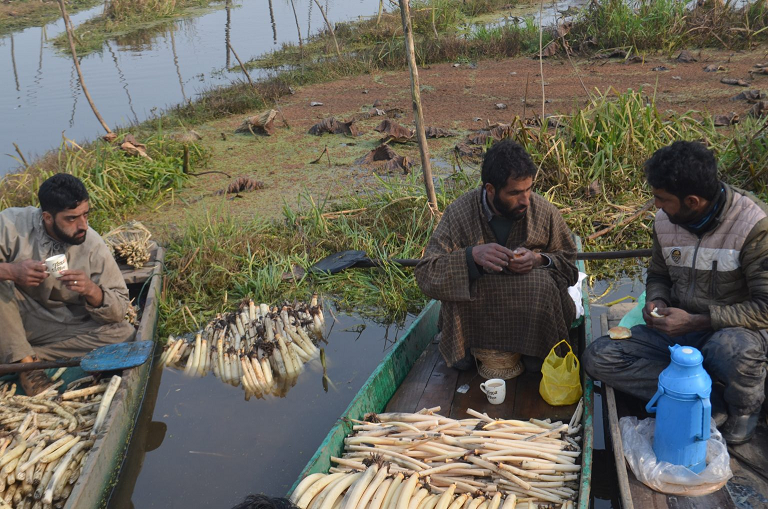
(Feature Image: Struggling for survival: The harrowing lives of Anchar Lake Nadru harvesters. The Nadru harvesters highlight the lack of safety measures, as they can only afford low-quality wetsuits. Haseeb Ibm Hameed/Greater Kashmir)
While the theme for World Wetlands Day (WWD) 2024 is Wetlands and Human beings, this compilation of top ten wetlands (other than Ramsar Wetlands) reports reveals that on ground most of the wetlands and dependent people in India continue to be subject of degradation and neglect primarily due to absence of holistic restoration plans and clearly defined wetlands governance. The first of the series covering the worrying condition of Ramsar Wetlands sites in the country can be seen here.
1. Bihar Pond ‘stolen’: No action; encroachments rampant More than four days ago, a shocking story was reported widely — an entire pond was stolen in Darbhanga town. The brazen act has had no conclusion yet, as no action has been taken so far to date, angering local residents. Local administrative authorities are playing the old game of issuing directives to subordinates to enquire into the case and take action.
Since the last decade, no one has been held accountable in Darbhanga for the encroachment of a number of ponds, Narayan Choudhary, convenor of Talaab Bachao Abhiyan (Save Lakes Campaign) in Darbhanga district said. “There is no official record of a land mafia being punished for encroaching on a pond here. The land mafia have no reason to fear laws or people like us who are fighting to save ponds,” he said.
Around 200 out of a total 350 ponds in Darbhanga have been filled up in the last 30 years according to Choudhary. “Authorities have made no serious effort to save or protect ponds. According to local official records, only 100 to 125 ponds, both small and large, remain in Darbhanga town,” said Choudhary. Darbhanga had 350 ponds in 1960, according to the dist gazetteer. The number dipped to 250 in the 1990s, with fewer than 100 ponds now, as per dist municipality. https://www.downtoearth.org.in/news/governance/pond-stolen-in-bihar-s-darbhanga-no-action-so-far-locals-allege-such-encroachments-rampant-93693 (3 Jan 2024) Despite locals alerting authorities about suspicious soil-filling activities, the police arrived only after the pond had been completely filled, highlighting the audacity of land mafias in encroaching on both land and water bodies with apparent impunity. https://assamtribune.com/national/bihar-pond-disappears-overnight-in-darbhanga-replaced-by-hut-1512701 (31 Dec. 2023)
2. Goa Brimming Bondvol lake found emptied, villagers shaken The Calapur comunidade office-bearers and Santa Cruz villagers found the filled-to-capacity Bondvol lake drained of all its water on Nov 24. The earthen dam built just over a century ago during the Portuguese era at Vhoddlem Bhat had been notified as a wetland by State Wetland Authority (SWA) a few years ago.
“The water of the lake had been stored without being released for the past five years, but nothing of this sort had happened,” said Peter Gonsalves, the special attorney of Calapur comunidade. He added, “This is a very serious matter and we are in the process of filing a complaint with police and other authorities, demanding strict action against the miscreants.” The office-bearers of the comunidade informed SWA and the water resources department about the emptying of the lake by miscreants even as the legal aspects are being looked into.
The 22-metre hilltop dam irrigated 120 ha & villagers would raise two crops and vegetables a few decades ago. The local community had to fight hard to save the lake and high court of Bombay at Goa had directed the government to constitute a task force to prepare a road map for its conservation. https://timesofindia.indiatimes.com/city/goa/brimming-bondvol-lake-found-emptied-villagers-shaken-up/articleshow/105482747.cms (25 Nov. 2023)
3. Himachal Pradesh Dharamsala lake losing water, threatens fish survival A few months ago, the Jal Shakti Department had used bentonite to plug the leakage at the floor of the lake. The lake lost its water retention capacity after the Public Works Department removed silt from its bed to increase its depth in 2011.
Locals consider Dal Lake sacred and there is a small Shiva temple also on its banks. However, persisted silting from the adjoining mountains had reduced the depth of the lake from earlier depth of 10 ft. About half of the lake area has been filled with silt and converted into grass land. As per revenue records, the area of lake was about 1.22 ha. However, due to silting it has been reduced to half.

A massive operation with the help of locals was launched in 2011 by the local administration for resurrecting the lake. The silt taken out was used to create a parking near the temple area. Since then, the lake has dried rapidly. According to geologists, unscientific digging is likely to have created aqueducts at the base of the lake, leading to draining of water. https://www.tribuneindia.com/news/himachal/dharamsala-lake-losing-water-again-threatens-fish-survival-572902 (17 Dec. 2023)
4. Tamil Nadu Heavy metal pollution of Veeranam lake The Veeranam lake supplies drinking water to the surrounding areas & to Chennai and irrigates a few hundred ha. The primary source of metal pollution is the small, medium & large-scale industries that include tanneries, battery factories, and distilleries that are transferred to the lake through the Cauvery river.
In addition, the river also collects wastewater from the river basin communities that gets deposited in the lake. The river also carries sewage from the local panchayats, cities, and municipalities and is contaminated with pesticides, fertilizers, and chemicals used in farms.
This highly contaminated water can harm both animal and human health, since the lake serves as a source of potable water for a large section of the population. The study highlights the urgent need: To manage, protect and maintain the ecological balance of the lake and protect the health of humans who depend on the lake for their livelihood and survival. There is also need to monitor the health of wetlands such as lakes as they provide clean drinking water, support livelihoods and serve as a habitat for many types of animals & birds. https://www.indiawaterportal.org/articles/heavy-metals-poison-veeranam-lake-tamil-nadu (25 Jan 2023)
5. Jammu & Kashmir The harrowing lives of Anchar Lake’s Nadru harvesters -The Nadru (Lotus stem) harvesters face daily challenges, including the risk of infections from contaminated water splashing into their eyes, ears, or nostrils. Two lives have already been claimed by infections entering open wounds. The polluted water forces them to spend valuable time cleaning the lake, affecting both production and harvest.
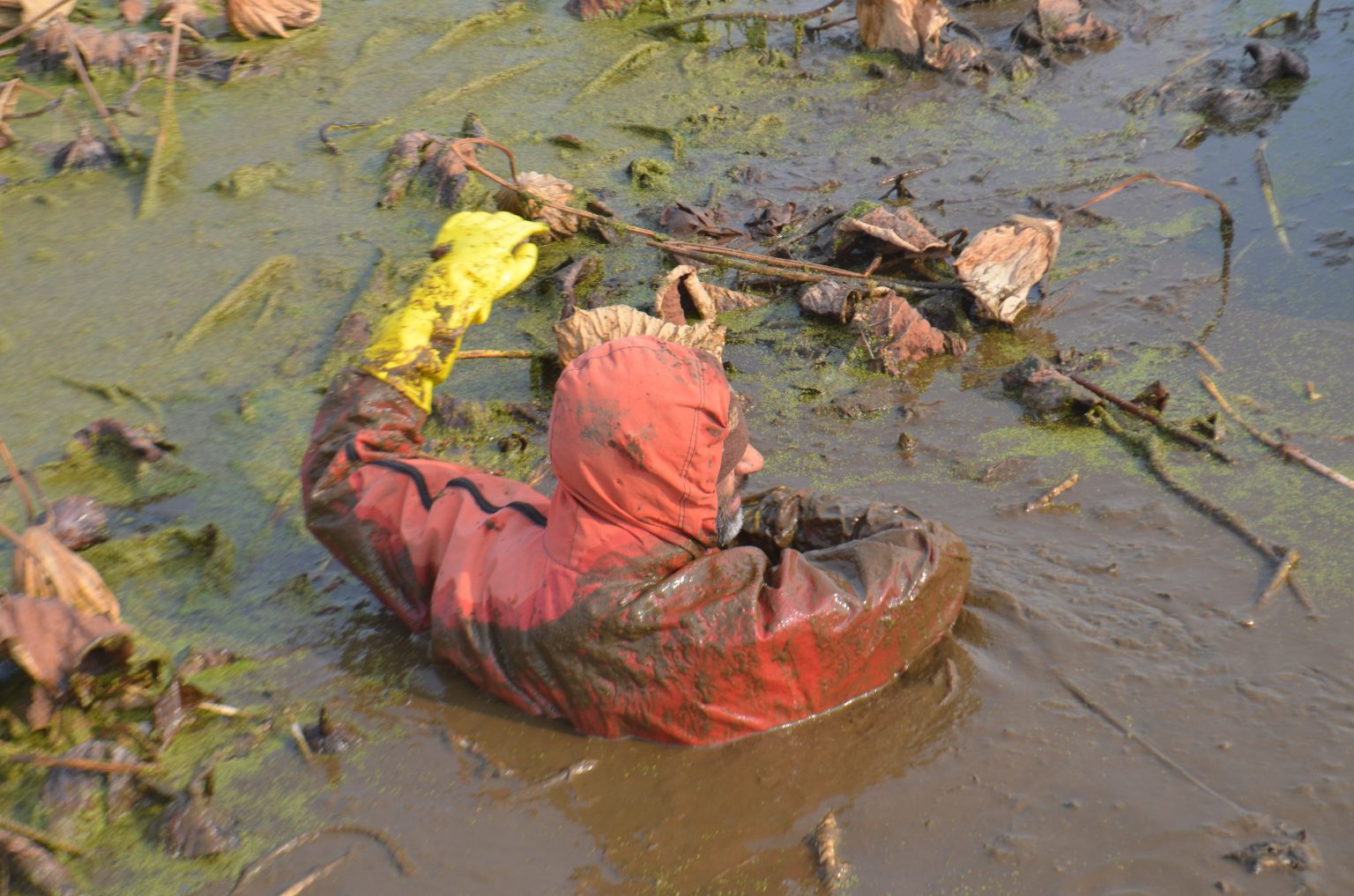
Just over two-decades ago, they were able to drink this water and use it for other domestic purposes. But now, with every kind of sewage flushed into the lake, the water has turned poisonous, leaving little hope of survival for the men involved in this business.
As the men dive and start looking for lotus stems with their feet, creating wobbles in the water, the lake reveals its dirty secrets: a strong stinking smell fills the air, making it nearly impossible for outsiders to stay there. “We have to remove the weeds, the algae and other unwanted layers that could hamper both the production and the harvest,” says Altaf.
The makeshift dam near Sangam Kadlebal keeps breaking, affecting the water levels in the harvesting portion. Over 200 men are required to tie that 300-feet makeshift dam. The government must reduce the size and build a proper dam with a control unit, farmers demand. Tying up the dam takes a whole day, meaning, losing their one day of earning. Low water levels make it almost impossible to harvest lotus stems. https://www.greaterkashmir.com/kashmir/struggling-for-survival-the-harrowing-lives-of-anchar-lake-nadru-harvesters/ (29 Dec. 2023)
6. Tamil Nadu First biodiversity heritage site Arittapatti needs attention M. Mathivanan, T. Ganesh There are over 72 lakes, three check dams, and more than 100 sunais in the Arittapatti area composed of seven hillocks—Kalinjamalai, Vayuthupullamalai, Ramayimalai, Aaputtanmalai, Kazhugumalai, Thaenkoodumalai, and Kodangimalai—which are an integral part of the local people’s lives. Besides hosting a wide variety of wildlife, the hillocks are also steeped in history, with the Kudaivarai Koil, rockbeds of Jain monks, and Tamil Brahmi inscriptions dating back to 2nd century BCE found here.
When we talked to the local people, we got a sense that there is support as well as disgruntlement concerning the BHS (Biodiversity Heritage Site) tag. Veerammal (80), the panchayat president of Arittapatti, said: “The Kalinjamalai hillock is an integral part of our life. Ten years ago, the granite mafia tried to start mining here but our village stood united in protest against it. The then Madurai District Collector, U. Sagayam, visited the area and managed to save it. Since then we have been seeking protected status for the hillock, and we have got it now. I believe that the BHS status will save the hill from mining.”
But there are fears among the local pastoral communities that the government might stop them from using the land for activities like grazing, fishing, and herb and honey collection, which they have been doing for generations. Herding her goats on the hills, 60-something Nachiammal (name changed) said: “This hillock quenches our thirst, so we cannot allow mining here. We thank the government for protecting it. However, we should be continued to be allowed to graze our livestock.”
Along with Arittapatti, Vagaikulam wetland, a well-known heronry in Tenkasi district, was also proposed as a BHS. But the local community strongly opposed the proposal during the public hearing. They believed that the declaration would affect their existing rights. Not only the community but also the Public Works Department, which maintains the wetland, refused to issue a no-objection certificate to the proposed BHS on the grounds that it would give more power to the Forest Department in managing the lake.
The TNBB (Tamil Nadu Biodiversity Board) had not framed the rules for implementing the Biological Diversity Act until 2017. The government should be proactive in creating awareness among people and line departments before declaring an area as BHS. The myth of “no access”, which tends to make local people wary of conservation tags, needs to be dispelled so that communities cooperate with the government in protecting ecologically and historically sensitive zones. https://frontline.thehindu.com/environment/tamil-nadu-first-biodiversity-heritage-site-arittapatti-needs-your-attention/article66449484.ece (09 Feb. 2023)
7. Uttar Pradesh Saryu wetlands sold Between Oct. and Dec. 2023, as Ayodhya prepared for the consecration of the Ram temple, a firm called Time City Multi State Cooperative Housing Society bought a small parcel of land near the Saryu river for Rs 1.13 crore. Weeks later, it sold the land to the Adani group for more than three times the price – Rs 3.57 crore. Time City is no ordinary real estate firm. It is part of the Time City group founded by Chandra Prakash Shukla, a former chartered accountant with the Sahara group who joined the BJP and was an MLA from Kaptanganj between 2017 and 2022. The group is run by Shukla’s former business associate, Pankaj Pathak – a BJP member who has many friends in the state unit of the party.
The profits made by the group – which faces allegations of cheating and two FIRs in a police station in Lucknow – shine a light on an aspect often overlooked in reports about how the Ram temple is transforming Ayodhya. It has also created a set of local beneficiaries, often connected to the ruling party. The losers are farmers who sold their land for cheap as well as the local ecology. The land in Majha Jamthara that was sold to the Adani group is part of the environmentally sensitive wetland near Saryu, a habitat of the Sarus crane, grey heron and the Indian fox. Since Dec 2022, the govt has prohibited any new construction in this area. https://scroll.in/article/1062426/in-ayodhya-firm-linked-to-bjp-leaders-sold-ecologically-sensitive-land-to-adani-for-a-big-profit (20 Jan. 2024)
8. Uttarakhand Drona Sagar another Neglected Lake of Kashipur Like Giri taal, the Drona Sagar is another lake in Kashipur town succumbing to official neglect. The circular water body is spread over about 3 ha and is hardly 1.5 km away from Giri taal in south east direction. In recent past, both the lakes were fed by a distributary canal originating from Tumria dam on Phika river in Ramganga basin. Presently the canal portion between these lakes has been replaced with giant RCC hume pipes and a RCC road has been laid over it. The inlet of the canal joining Drona Sagar has also been cemented.

A visit to the Drona Sagar and available media reports only suggests the future of the lake is uncertain. The govt plans appear concerned more about development of tourist facilities and lack holistic approach to protect and revive the ancient lake. The concerned department must make honest efforts to restore the water supply sources to the Drona Sagar and also facilitate rainwater harvesting structures in and around the lake. Otherwise, further degradation of ancient Drona Sagar lake seems inevitable. https://sandrp.in/2023/04/11/uttarakhand-2023-drona-sagar-another-neglected-lake-of-kashipur/ (11 April 2023)
The wetlands in the Ganga river basin have been under severe pressure. Deforestation and erosion, shifting of wetlands to paddy fields, pressure due to developmental activities of industry or residential areas, pollution due to industrial- and domestic-waste dumping, overfishing, and the introduction of exotic plants and animal species have taken a toll on them. Some have degraded. Others have disappeared. In the end, conserving these small yet extremely crucial parts of India’s riverine systems may seem insignificant, but it could emerge as the biggest step in the rejuvenation of the Ganga. https://www.moneycontrol.com/news/environment/why-namami-gange-success-lies-in-wetland-conservation-10063591.html (12 Feb. 2023)
9. Kerala Alappuzha’s houseboat industry reels under sewage disposal issue Forced to dole out large sums as penalties due to the non-functional STPs and the lack of any alternative arrangements, a section of houseboat operators are all set to hold protests, while the others have adopted a “wait and watch” policy in the hope that the government would soon come out with solutions. “We’ll conduct a protest march to the District Tourism Promotion Council office (DTPC) here and a dharna in front of the District Collectorate on Oct 16. On one hand, the govt is doing nothing to resolve the pollution issue and on the other, it levies huge penalties and cancels licenses. This is affecting the survival of the houseboat industry here,” said Kevin Rozario, general secretary of the All Kerala Houseboat Owners and Operators’ Samiti. As per the current provisions, the annual licence for operations will be renewed only if operators empty septage from their houseboats every three months. https://www.onmanorama.com/kerala/top-news/2023/10/10/alappuzha-houseboat-industry-in-crisis-due-to-sewage-disposal-issue.html (10 Oct. 2023)
10. Tamil Nadu Ramakkal lake polluted, emits foul smell Pollution level has risen in Ramakkal Lake with a foul smell causing distress to Hale Dharmapuri residents, who have urged the municipality to undertake renovation and improve filtration units. The Ramakkal Lake, spanning 103.6 ha and having a capacity of 33.5 mcft, irrigates over 111 ha. However, over the past few months, the pollution level has increased.
R Sivaraja, a resident of Hale Dharmapuri said, “Ramakkal Lake is the most prosperous lake in the district. But the water was extremely polluted with sewage water draining into the lake. The issue was resolved by setting up a filtration unit. But in the last eight months, the filter beds have not been functioning, resulting in increased pollution levels. So we urged the municipality to undertake renovation and protect the lake.”
K Rajkumar, another resident said, “The lake is emitting a foul smell, while one part of the reason is the pollution. The other part is due to the visitors dumping food waste. Because of its location, many roadside vendors have set up shops near the lake and people buy food here and consume it in the park. They later dumped the waste in the water. Moreover, the park near the lake has become a hotbed for anti-social elements who consume liquor and dump plastic cups and bags in the lake.” https://www.newindianexpress.com/states/tamil-nadu/2023/sep/14/ramakkal-lake-in-tn-polluted–emits-foul-smell-residents-demand-rejuvenation-2614615.html (14 Sept. 2023)
Some More Relevant Reports
Jammu & Kashmir Dying Khushalsar Lake Known for crystal clear water, Khushalsar Lake in Srinagar has been reduced to a cesspool due to constant flow of drains from human habitations. Khushalsar forms one of the outflow channels of Dal Lake via the Nallah Amir Khan canal and Gilsar lake. Till a few decades ago, the lake was a favourite haunt of tourists. The lake hosted many species of fish and migratory birds. It was also famous for the Lotus stem popularly known as Nadru, which is one of major sources of livelihoods for local farmers.
Gradually, due to unabated encroachments, growth of obnoxious vegetation propelled by sewage of the catchments, waters of Khushalsar become stagnant and stinking. Last remnants of the lake are being extensively encroached upon, mainly on its side facing Ali Jan Road. The lake has been facing an onslaught of encroachments as no department has officially owned it so far. With departments passing the buck, the land mafia has received free hand to gradually bury the lake and undertake constructions. More than a lake now, it has been turned into a concrete jungle and cesspool. Interiors of the lake are also being encroached upon by extension of agricultural land mainly by filling.
Conservation of the lake has never been taken seriously by successive regimes. In the mid-sixties, the Housing and Urban Department started a peripheral sewerage scheme with STP to arrest the sewage ingress in Khushalsar and treat it. The project was left partially executed. Govt had formulated a plan of Rs 61 crores for preservation of Khushalsar in 2002. The plan, approved by the Central Government, envisaged protecting and developing the lake by removal of encroachments by way of earth filling, illegal plantations and constructions. The project also aimed to demarcate and fence the lake and deploy Forest Protection Force personnel to keep strict vigil to stop further encroachment. But the plan too was buried. https://www.greaterkashmir.com/editorial-page-2/dying-khushalsar-lake-calls-for-lease-of-life/ (18 Dec. 2023)
Challenges wetlands facing Instances such as Dal Lake succumbing to municipal waste and pollution from local and external sources, exemplify this neglect. Similarly, Wular Lake, Manasbal Lake, Haigam Rakh, Hokersar, Anchar, and Shalbug are not immune to the prevailing apathy. These water bodies grapple with issues like sedimentation, land use and land cover (LULC) changes, infrastructural impediments, haphazard planning, and vested interests from various segments of society, including development authorities like LAWDA and WUMDA. https://kashmirlife.net/what-challenges-are-kashmiri-wetlands-facing-340548/ (02 Feb. 2024)
Kerala Turtles die as fire breaks out in wetland in Kasaragod 56 turtles were found burnt to death after a fire broke out in a 2 ha wetland at Payyanki, near Charvathur, in Kasaragod on June 4. The fire has been burning in the private plot, which has paddy, trees, and shrubs, for the past two days.
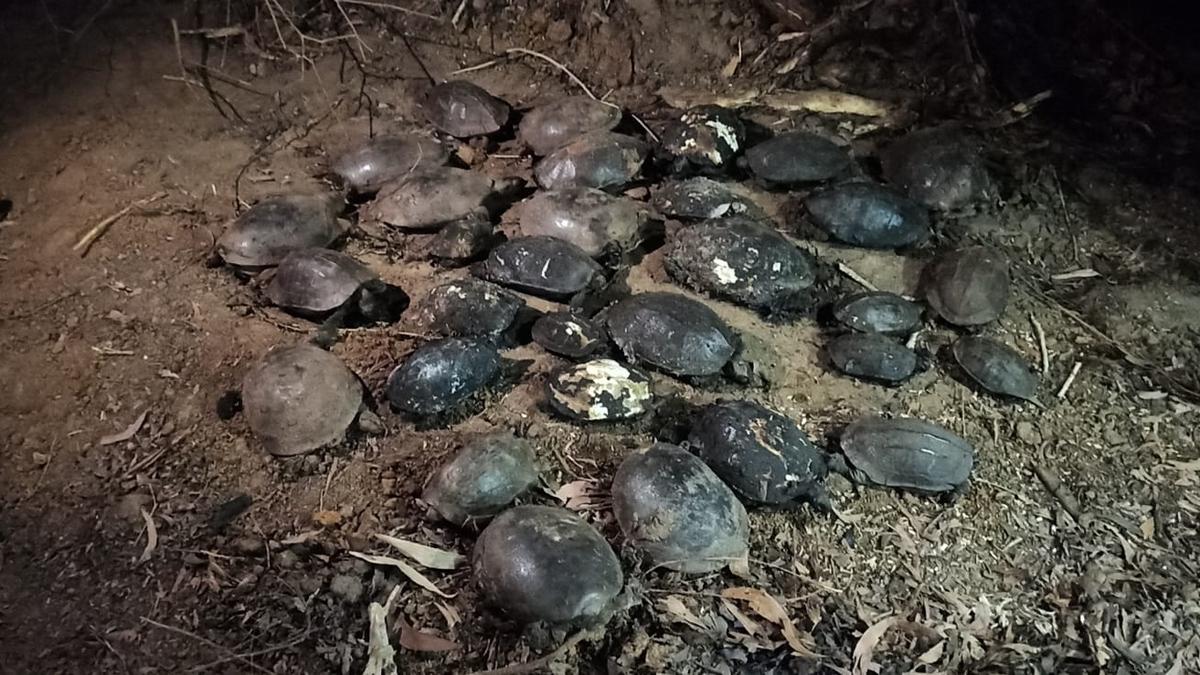
Twenty-two Indian flapshell turtles and 34 black turtles, which come under Schedule I and Schedule II of the Wildlife Protection Act, were found burnt to death when local people and Forest department personnel arrived at the site to extinguish the fire, according to Kanhangad Forest Range Officer A.P. Sreejith. Local people say the area is a habitat for several turtles and many more would have died. https://www.thehindu.com/news/national/kerala/turtles-die-as-fire-breaks-out-in-wetland-in-kasaragod/article66930529.ece (04 June 2023)
Karnataka Shrinking mangroves threaten livelihoods Karnataka’s 320km long coastline stretch flanked by the biodiversity hotspot of the Western Ghats and the Arabian Sea is facing an existential threat. The mushrooming of power plants, rapid disappearance of mangrove forests and the coastal wetlands and pollution have posed serious challenges. https://www.deccanherald.com/amp/state/top-karnataka-stories/power-plants-shrinking-mangroves-threaten-ktaka-coastline-and-livelihoods-1205904.html (02 April 2023)
Compiled by Bhim Singh Rawat (bhim.sandrp@gmail.com)

 SANDRP
2 thoughts on “WWD 2024: Both Wetlands & Human Beings Remain Neglected”