Urban Rivers

Top Ten Judicial Actions on Urban Rivers 2022: Executors Deliberately Delaying, Diluting, Defying orders

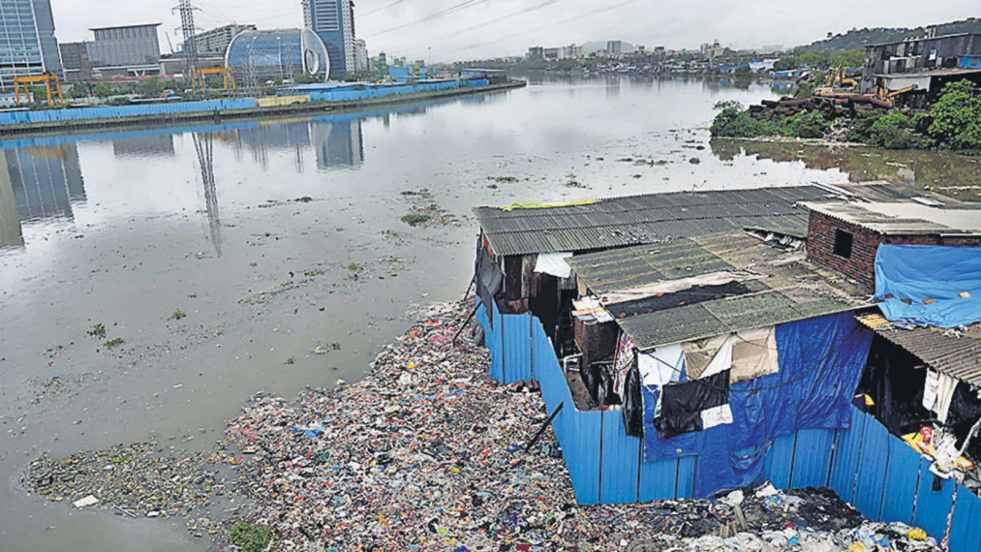
(Feature Image: The order is subject to the orders of the SC which is pending. NGT on Nov. 24, 2021ordered the BMC to deposit within three months an environmental penalty of ₹28.20 crores to the CPCB for discharging raw sewage into the city creeks, rivers and drains. HT Photo)

During past one year, the judicial bodies including National Green Tribunal, Supreme Court, various High Courts have passed several orders and made critical observation while dealing with multiple issues afflicting Urban Rivers in India. This report highlights top ten such judicial interventions across India. The stories underline that the responsible agencies particularly pollution control boards and district, state and union governments have been failing miserably in timely and efficient implementation of these judicial orders, some of which are quite remarkable. If the executive bodies do not show right spirit and seriousness in enforcing the existing rules and court orders the state of India’s urban river only go downhill.    

Continue reading “Top Ten Judicial Actions on Urban Rivers 2022: Executors Deliberately Delaying, Diluting, Defying orders”
DRP News Bulletin

DRP NB 040722: Stalled, delayed, cancelled Hydro in Bhutan

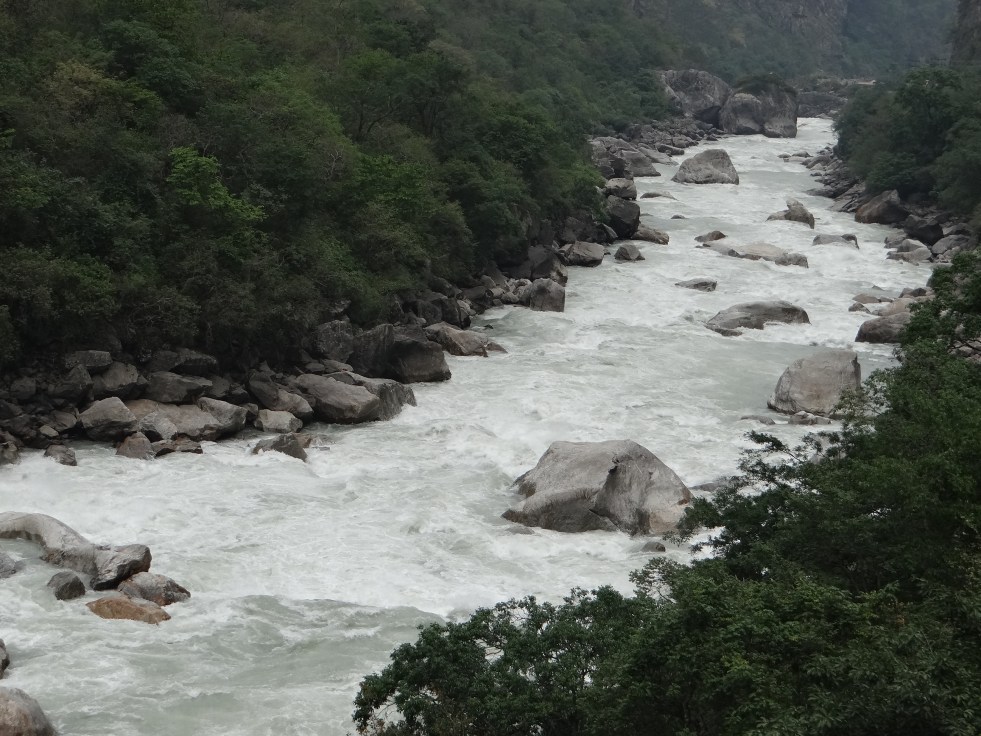
(Feature Image: Stretch of Punatsangchu River that will be diverted through the tunnel when the dam is commissioned Photo: SANDRP)

Puncturing the prevalent notion about India Bhutan Cooperation on hydropower projects, there is news this week (in fact the news on this score has been coming for more than a couple of years, but Indian media seems to be practicing a self-imposed ban on putting out such stories – but that is another story as they say) that hydropower projects have been stalled, delayed, reconfigured, and even cancelled in Bhutan. This is broadly in line with the increasing economic non viability of hydropower projects.

Kuensel, Bhutan’s national newspaper, has reported about such projects quoting the National Council recommendation to the government of Bhutan to expedite the decisions about the stalled projects like the massive Punatasanchchu-I HEP and the Kholongchu HEP. It has also reported that the government of India conveying to Bhutan that India has sufficient electricity supplies, suggesting that the proposed Nu 200 Billion Sunkosh Hydropower project may not have any definite dateline and hence likely to not go forward. The happenings at the geologically unstable site selection for Punatsanchchu project involving India’s Central Water Commission, Wapcos and Geological Survey of India among others is in fact major scandal and how the whole issue has been dealt with so far. The happenings at the Kolongchu HEP being executed by the SJVN (erstwhile Sutlej Jal Vidhyut Nigam Ltd) as the first ever joint venture project in Bhutan in terms SJVN not giving the promised contracts to Bhutanese companies also does not bode well for Joint Venture projects in future. Both Punatsanchchu and Kholongchu HEPs are stalled and delayed for long, increasing the cost of the projects and power from the projects. While all this is broadly in line with increasing economic non viability of hydropower projects, a lot of this can be avoided by increasing transparency and accountability in governance of these projects.

Continue reading “DRP NB 040722: Stalled, delayed, cancelled Hydro in Bhutan”
Urban Rivers

Urban Rivers 2022-Top Ten Govt Actions: pre-occupation with STPs without accountable governance

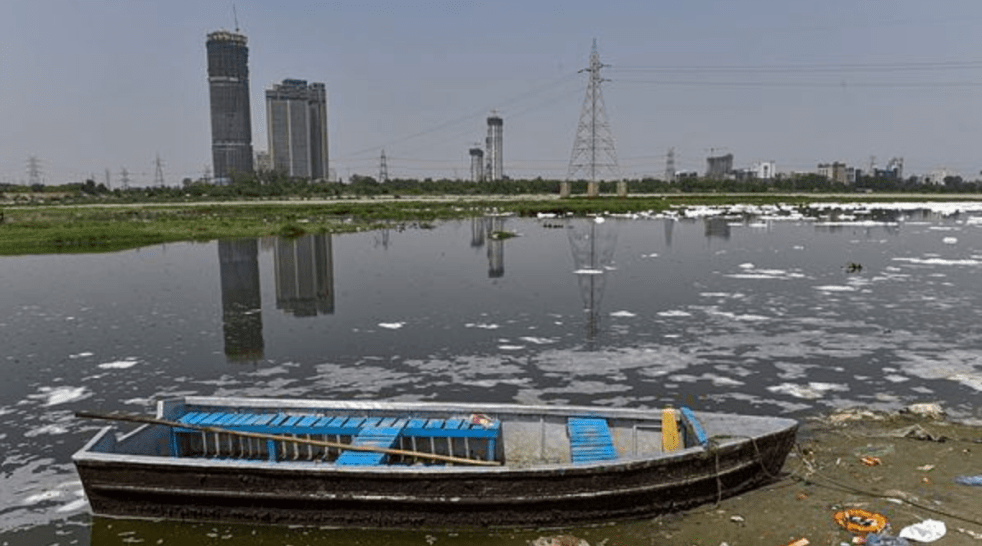
(Feature Image:- A boat is anchored on Yamuna bank as toxic foam float in Delhi, June 5, 2021. PTI Photo/TIE)

This report focuses on various plans implemented and under consideration by respective governments vis- a-vis the plight of Urban Rivers in ten cities of India during past one year. It shows the preoccupation of the government in setting up of more and more Sewage Treatment Plants and Industrial Effluent Treatment Plants, even as most of the existing STPs and ETPs are known to be functioning far below the promised levels and many not functioning at all. Without addressing the governance of the STPs and ETPs transparent, accountable and participatory, there is little chance of these helping the rivers. It seems more like part of government’s pre-occupation and faith in infrastructure and no faith in governance or people. It also covers some questionable decisions which would further damage the eco-system of these already degraded and threatened rivers in addition to impacting the dependent urban communities adversely.

Continue reading “Urban Rivers 2022-Top Ten Govt Actions: pre-occupation with STPs without accountable governance”
Urban Rivers

India’s Urban Rivers in Crisis in 2022: Top Ten Cases

This report highlights top ten cases of the grave crisis faced by India’s Urban Rivers during the past one year.

1. Reality of Sabarmati River in Ahmedabad Effluents from 4 CETPs don’t meet parameters The untreated influent as well treated effluent from 4 CETPs under the Ahmedabad Municipal Corporation jurisdiction do not adhere to prescribed parameters, stated 2 draft reports of CSIR–NEERI. The 2 draft reports submitted to the PCB on March 24, 2022 with respect to functioning of 4 of the total 7 CETPs under AMC jurisdiction — Naroda Enviro Project Ltd (NEPL), Gujarat Vepari Maha Mandal Odhav (GVMM), CETP Green Environment Services Co-op Society Ltd (GESCL) Vatva and CETP Narol Textile Infrastructure & Enviro Management (NTIEM) Narol.

The 2 drafts reports were submitted before the Gujarat HC on March 24 by way of an affidavit by GPCB in relation to a suo motu PIL being heard by the Gujarat HC concerning pollution in Sabarmati river. GPCB in its affidavit submitted that pursuant to the CSIR NEERI analyses of the 4 CETPs, the reports have also been forwarded to the concerned CETPs and have been asked to furnish the timeline of action plan to the GPCB at the earliest. Notably, CM Bhupendra Patel had told the Assembly that Rs 136 crore was spent in 2020 and 2021 to clean up Sabarmati river. https://indianexpress.com/article/cities/ahmedabad/sabarmati-river-pollution-effluents-from-4-cetps-dont-meet-parameters-report-7838085/  (27 March 2022)

Continue reading “India’s Urban Rivers in Crisis in 2022: Top Ten Cases”
DRP News Bulletin

DRP NB 270622: There are many man made factors behind Assam Floods, Mr CM

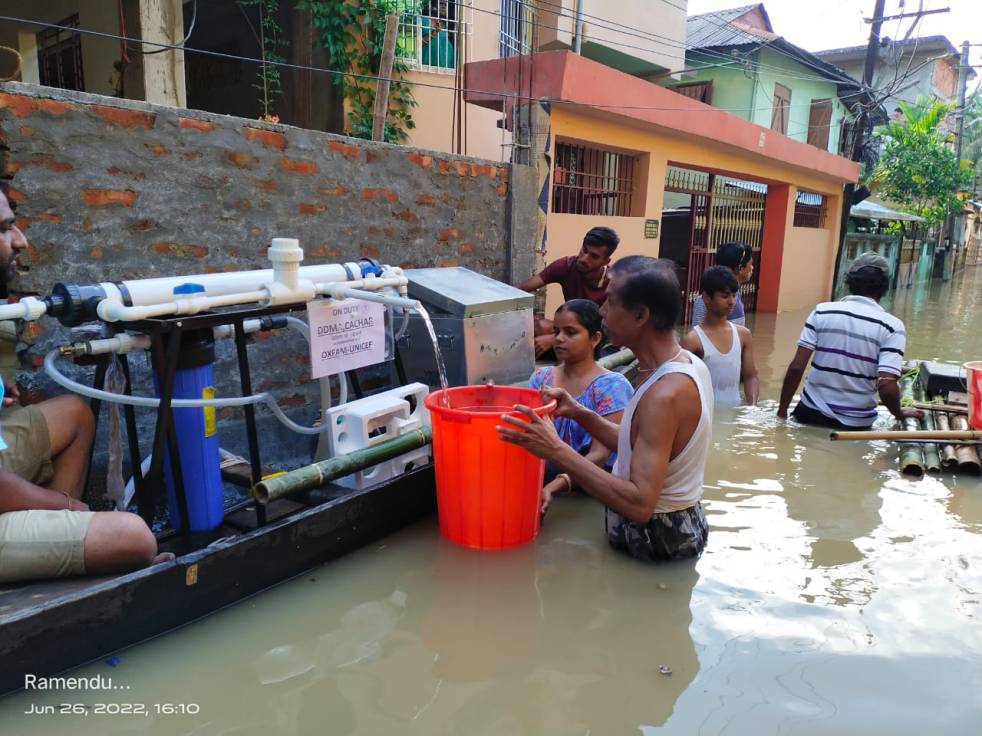
(Feature Image:- DDMA, UNICEF and Oxfam have innovated boat-mounted water treatment units to provide life-saving water to the people in need within Silchar & its peripheral areas. Source:- Assam State Disaster Management Authority )

The Assam Chief Minister has called the unprecedented floods in Silchar town along Barak river in South Assam as man-made floods. The reason given is that the breach of embankment along the Barak river in the town was created by some people. It is good to see that the Assam CM Mr Himanta Biswa Sarma has recognised that some of the floods can be due to man made factors. And indeed, investigation followed by action is required in all such cases. But the CM should not limit this to just the breach of Barak embankment or the role of some of the people who may have breached the embankment earlier in May to provide outlet to one of the lakes. The investigation must also look into the role of the water resources department as to why they did not swing into action earlier, both in terms of repair and investigation. .

In fact, according to reports so far, no less than 297 embankments have breached during this monsoon so far already. Many or rather most of them have happened due to systematic neglect and lack of proper maintenance by the water resources department and needs proper investigation and action. There is also an urgent need for assessment of cost benefit and efficacy of the embankments in Assam.

Continue reading “DRP NB 270622: There are many man made factors behind Assam Floods, Mr CM”
Urban Rivers

Top Ten River Front Development Stories 2022: Destroying Rivers, Livelihoods

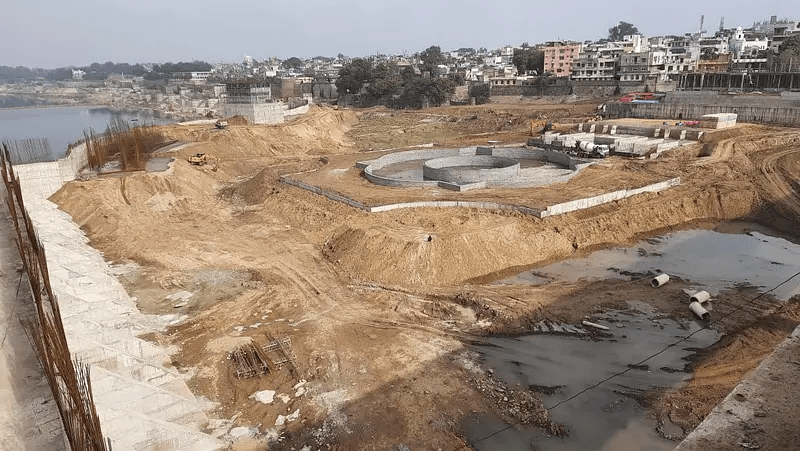
(Feature Image: Work on Rs. 700 crore Chambal RFD project in Kota which is supposed to be ready by Dec. 2022 end. Image Source: Free Press Journal)

The Central and various state governments have been pushing big budget River Front Developments (RFD) projects as panacea for all the urban water woes. In reality, these are River destruction projects with the objective of encroaching on river floodplain and even river beds of Urban Rivers. These RFDs have been failing to deliver on proposed claims and resulting in waste of public money apart from causing more damages to urban rivers eco-system and livelihoods of dependent communities. The projects are also multiplying the Urban Flood potential. In reality, India urgently requires an Urban River Policy as a subset of Urban Water Policy to guide how to treat urban water and urban rivers.

This compilation highlights situation of ten such RFD projects in the country which are failing miserably and facing stiff resistance from concerned citizens and dependent people during last one year or so.

Continue reading “Top Ten River Front Development Stories 2022: Destroying Rivers, Livelihoods”
DRP News Bulletin

DRP NB 200622: Erratic onset & progress of SW Monsoon in India

It is great to see an EDITORIAL on monsoon progress in one of India’s National newspapers, THE TIMES OF INDIA on June 20, 2022. The editorial figure of monsoon deficit of 32% at all India level is hugely outdated as it was for rainfall till 8.30 am on June 15. According to the latest figures of rainfall till 0830 am on June 19 available as we write this, the deficit is DOWN to just 8% as rainfall has been above normal on each of the last five days. The deficit in NW India has also reduced from 77% reported in TOI edit to 63% now. The monsoon has also covered much larger area except in North West India. The rainfall so far has already broken several records in terms of intensity of rainfall.

Nevertheless, the key message of the TOI EDIT, about our wrong cropping pattern and urgent need of the govt to come up with schemes to incentivise farmers to change to more appropriate cropping pattern is very important.

Continue reading “DRP NB 200622: Erratic onset & progress of SW Monsoon in India”
Urban Rivers

Urban Rivers 2022: Top Ten Positive Stories from India

(Feature Image: WATERMARK: An 1810 painting by J. Hammer of the Hooghly at Serampore/ Source, The Telegraph)

The plight of urban rivers in India has been going from bad to worse courtesy systematic neglect and unplanned development projects. On the one hand they are being increasingly deprived of freshwater flows by diverting water for domestic supplies and on the other have been turned into dumping place for mostly untreated solid and liquid waste in massive amounts from residential areas as well as industrial pockets. Nevertheless, there are some remarkable efforts being undertaken by individuals, organizations, government departments aiming at restoration of urban rivers at some places across the country. This compilation highlights top ten such positive urban river stories taking place during past one year. 

Continue reading “Urban Rivers 2022: Top Ten Positive Stories from India”
River Biodiversity

When a gharial landed in a cow shelter in Delhi

It’s been more than six months since I got a Whatsapp video forward from my friend Yayati Bhardwaj along with a message in Hindi about some cow vigilant rescuing a ‘crocodile’ from Swaroop Nagar area of Delhi and sending it to a cow shelter in Narela, a bustling town in North West Delhi bordering Haryana.

It was around 07:00 pm on November 12, 2021 when busy in market, I had quick glance over the video. It was not very clear and shot with loud Punjabi music playing in the background. It showed some monitor lizard kind reptile lying motionlessly on ground with wheat grains scattered around it. At first sight, I found nothing to be surprised or worth responding.

Continue reading “When a gharial landed in a cow shelter in Delhi”
DRP News Bulletin

DRP NB 30 May 2022: Govt not serious about Rain Water Harvesting

(Feature image: Condition of a RWH structure in Karnal. The Tribune)

As India Meteorological Department (IMD) declared onset of 4 month South West Monsoon in Kerala on May 29, 2022 and published map of monsoon onset in rest of the country, key highlight of the news this week is how callous, non-serious is the govt in harvesting the rain where it falls. This is in spite of all the sloganeering about harvesting rain where and when it falls right from Prime Minister to downstairs. As they say, our actions speak louder than our words. The news came from Delhi and Karnal (Haryana) that in both states the rainwater systems even in government premises are lying defunct if all built.

The story would be similar from rest of the country. This also shows how serious is the government in working towards sustaining groundwater, India’s water lifeline as the biggest help GW can get is from harvesting rain where it falls, when it falls. This is particularly pertinent in the context of changing rainfall pattern with changing climate. If we had systems in place to harvest rain when and where it falls, it would also help reduce the flood peaks significantly. But until the government shows it is serious through demonstrable evidence of functioning rain water harvesting systems all across the river basins across India, there will be little morale authority in government pushing rest of us working to harvest rain, where and when it falls.

Continue reading “DRP NB 30 May 2022: Govt not serious about Rain Water Harvesting”