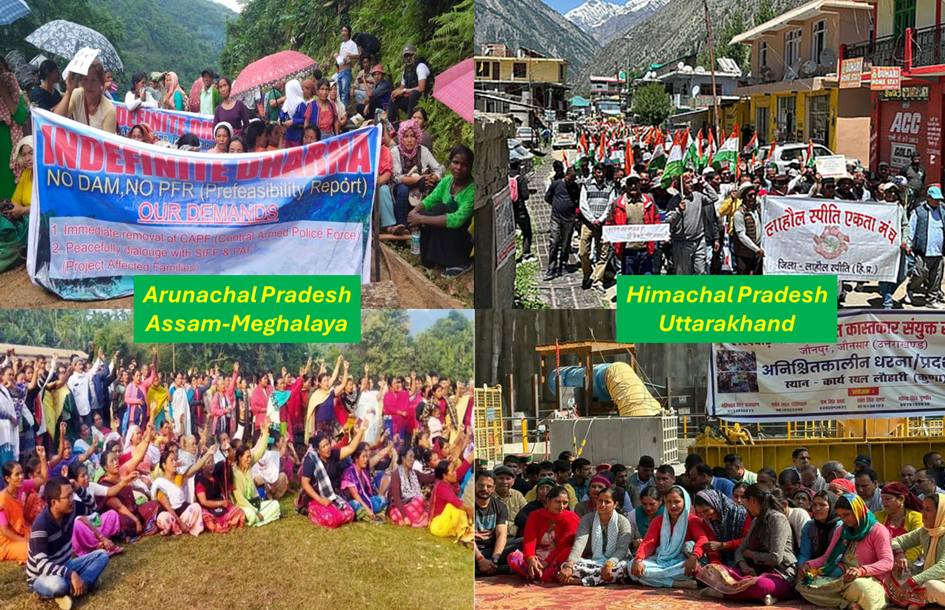
The local communities have continued their collective resistance against destructive hydro power (HEP) projects in North East and North West Himalayan states in India all through 2025. The ACT in Sikkim has condemned the EAC decision to rebuild the washed-out Teesta III dam. The SIFF along with dependent villagers and concerned citizen groups have opposed the forceful deployment of armed forces for SUMP surveys in Siang river basin.
Continue reading “2025: People’s Resistance Against Hydro Projects in Himalaya”Tag: wildlife
2025: Pump Storage Projects Developments in India
(Feature Image: Former SC judge N. Santosh Hegede, environmentalist Suresh Heblekar and other activists stage a protest urging the govt to abandon the Sharavati PSP on Nov. 29. Source)
2025 has seen increase in concerns and protests against pump storage projects (PSP) across the country. While citizens and experts have criticized Sharavathi PSP in Karnataka, Sillahalla PSP in Tamil Nadu, Shahbad PSP in Rajasthan, Bargi PSP in Madhya pradesh and numerous PSPs in western ghats in Maharashtra for their potential adverse impacts on forest, environment, endangered animals, the Sileru, Pedikota and Yerravaram PSPs in Andhra Pradesh faced resistance for undermining tribal and forest rights. Indeed, most of the PSPs are being proposed in sensitive region of Western Ghats and tribal dominated population endangering both the wildlife and vulnerable population.
Continue reading “2025: Pump Storage Projects Developments in India”National Dolphin Day 2025: Deaths, Threats, Conservation Efforts related to Gangetic Dolphins
(Feature Image: Carcass of a Gangetic dolphin found on Ganga river bank in Sahibganj district on Oct. 02, 2025)
Oct. 5 is marked as National Dolphin Day since 2022 after a decision by the NBWL in its 67th meeting in March 2022. Earlier the day was designated as Ganga River Dolphin Day. Bihar has been celebrating Oct. 5 as ‘Dolphin Day’ for the past many years. In May 2010, the MoEF had notified the Gangetic Dolphin as ‘National Aquatic Animal’ and in Aug. 2022 launched the Project Dolphin.
Continue reading “National Dolphin Day 2025: Deaths, Threats, Conservation Efforts related to Gangetic Dolphins”Controversial Road Project Threatens Bhopal’s Bhoj Wetlands, Forest & Wildlife
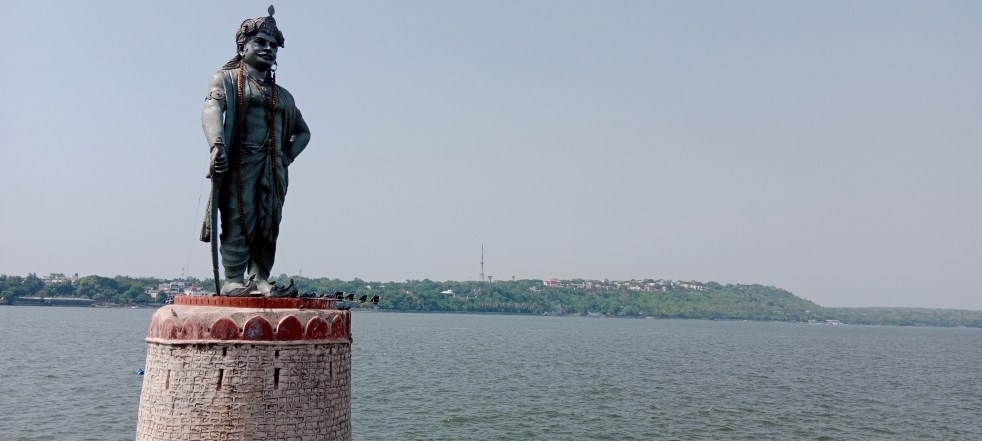
(Feature Image: Statue of great Parmar King Raja Bhoj in Upper lake in Bhopal. Bhim Singh Rawat/SANDRP, May 2023)
The Bhoj wetlands in Bhopal city is one of the oldest man-made lake in Asia. The waterbody is a fountainhead of environmental services and a designated Ramsar wetlands site. Despite this, the wetlands eco-system has been facing gradual degradation on account of growing encroachments, pollution[i] and extravagant tourist projects. Amid this, a new road project cutting through the catchment area of Bhoj wetlands and forest land around Bhopal city has raised alarm bells among concerned citizens who term its unnecessary and suggest better options as win-win solution.
Continue reading “Controversial Road Project Threatens Bhopal’s Bhoj Wetlands, Forest & Wildlife”DRP NB 191222: Question marks over viability of pump hydro projects
(Feature Image: 1772 Mw PSHPs Spain. Photo courtesy of Iberdrola/ ENR)
The question marks over viability of huge number of pump storage hydro projects (PSHP) being pushed forward in India currently were flowing in the rivers for long. This week, Moody’s investors Service (MIS) seems to have strengthened this after it downgraded Greenko Energy Holdings’ corporate family rating. It may be noted that Greenko is the biggest investor in PSHPs in India from private sector and a major part of Greenko’s new investments are in PSHP.
This makes the implications of MIS’s downgrade all the more interesting. MIS has noted that PHSPs are capital intensive and each PHSP will generate cash flow only after at least 2-3 years of construction (in reality it can be much longer than 2-3 years, the operative phrase here is at least). It also noted that the additional debt to be raised from Greenko’s capital spending, coupled with a rising interest environment will put further pressure on “GEH’s already weak financial metrics” and that Greenko’s high financial leverage due to its substantial capital spending program will keep its financial metrics below its downgrade trigger “for an extended period of time”.
Continue reading “DRP NB 191222: Question marks over viability of pump hydro projects”When a gharial landed in a cow shelter in Delhi
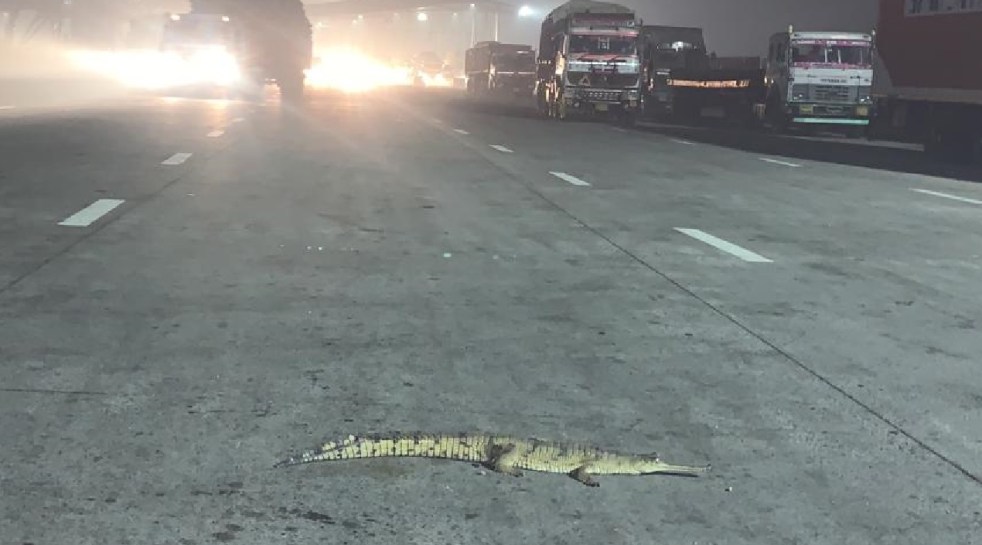
It’s been more than six months since I got a Whatsapp video forward from my friend Yayati Bhardwaj along with a message in Hindi about some cow vigilant rescuing a ‘crocodile’ from Swaroop Nagar area of Delhi and sending it to a cow shelter in Narela, a bustling town in North West Delhi bordering Haryana.
It was around 07:00 pm on November 12, 2021 when busy in market, I had quick glance over the video. It was not very clear and shot with loud Punjabi music playing in the background. It showed some monitor lizard kind reptile lying motionlessly on ground with wheat grains scattered around it. At first sight, I found nothing to be surprised or worth responding.
Continue reading “When a gharial landed in a cow shelter in Delhi”DRP NB 12 July 2021: Will Bhupender Yadav improve India’s Environment Governance?
It’s rather rare when some of the most well-known environmentalists of India, including Ritwick Dutta and Manoj Misra welcome the arrival of Bhupender Yadav as India’s new Environment Minister. The state of the environment governance under the outgoing minister, Prakash Javadekar has worsened so much, both in perception and substance, that possibly any change would look better. In fact Javadekar may be front runner for the label of India’s worst ever environment minister according to some analysts.
The environment appraisals, the constitution of committees including the various Expert Appraisal Committees, the Forest Advisory Committee and the Standing committee of National Board of Wildlife, the public hearings and consultation processes, the state of pollution and rivers, biodiversity, wetlands, floodplains, sand mining, to name just a few areas, were all seen going downhill on a steep slope during the Javadeker period. The monitoring and compliance remained non existent. Some would argue that was it much different before Javadekar. The point is Javadekar had no pretentions of trying to improve the environment governance. He was out to dilute every available norm and he seemed to have succeded significantly.
Even if Yadav were to genuinely wish to improve matters, how much will he be allowed to do, by the perceived imperatives of the economic fundamentalist agenda, the well-entrenched vested interests and the bureaucracy is a question that only time will tell, but there is little doubt that a lot can and needs to be done rather urgently and none of these perceived obstacles should come in the way if there is will. The climate change is making the improvement in environmental governance rather urgent.
Continue reading “DRP NB 12 July 2021: Will Bhupender Yadav improve India’s Environment Governance?”DRP NB 18 May 2020: Signs of Impending Dam Floods in SW Monsoon 2020?
These are rather ominous signs. As per the latest reservoir storage bulletin of Central Water Commission dated May 14, 2020, the 123 reservoirs monitored by CWC has massive, 64.6 BCM (Billion Cubic Meters) in live storage capacity, which is about 165% of the capacity on same date last year and average of last ten years, even as monsoon is just weeks away. Most dams known to create DAM INDUCED FLOODS in the past, including Bhakra dams (we wrote about it earlier this month: https://sandrp.in/2020/05/07/are-we-ready-to-use-more-water-from-snow-melt-in-indus-basin-this-year/), Narmada dams, Odisha and W Bengal dams (Cyclone AMPHAN is going to bring a lot of water here in next few days, even before the monsoon), Krishna basin dams, Cauvery basin dams, Bansagar and Gandhi Sagar Dams, and Kerala dams among others. All these dams have above average storage situation.
Continue reading “DRP NB 18 May 2020: Signs of Impending Dam Floods in SW Monsoon 2020?”
Uttarakhand Riverbed Mining 2020: Rivers, People, Revenue Robbed
The hilly state of Uttarakhand also known as land of rivers has seen increase in riverbed quarrying operations over past decade. With establishment of stone crushers industry, scale and intensity of riverbed minerals (RBM) excavation has further increased in past few years. So has become the impact on villagers and rivers.
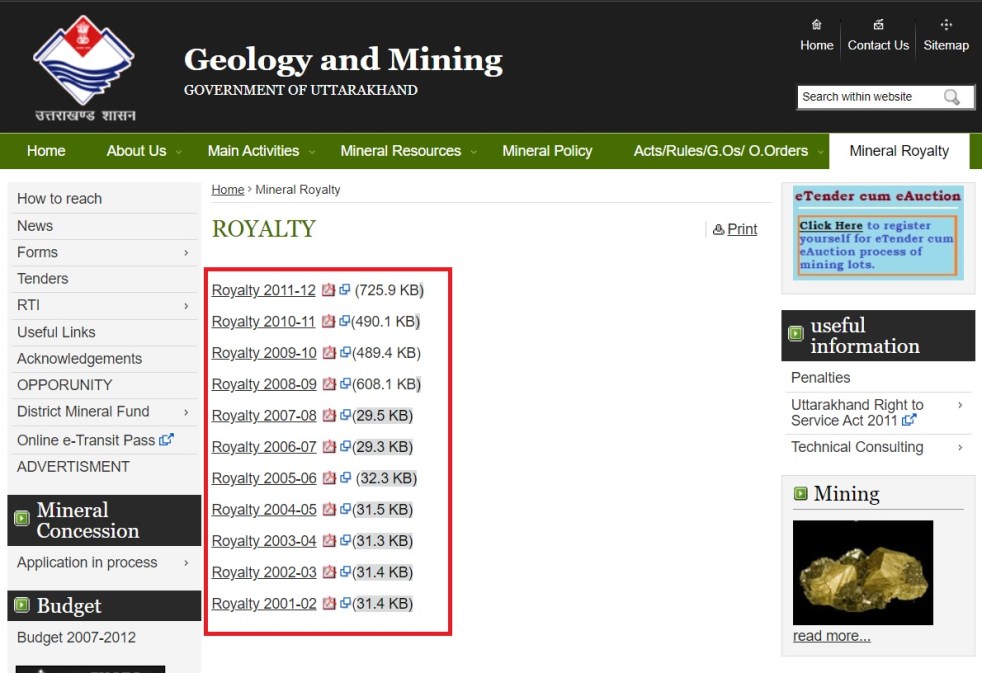
However, the government lacks monitoring, transparency, accountability in checking the unscientific, unauthorized RBM as is evident from a review of Uttarakhand Mining and Geology Department (M&G) website and media reports. In fact the state government has neither conducted replenishment study nor formed District Mineral Foundation (DMF), suggesting that it is hand in gloves in organized loot of RBMs.
Continue reading “Uttarakhand Riverbed Mining 2020: Rivers, People, Revenue Robbed”
India Ramsar Wetlands in Crisis in 2020
Ramsar wetlands in India require urgent intervention for central, state governments and Ramsar Convention as this 2020 report shows. The five regional reports from India in 2020 show that despite Ramsar tag, the fate of these wetlands has seen no marked improvement. This raises the question as to how helpful for wetlands in India is the Ramsar tag.
In 2019, India has added 10 more wetlands selected under Ramsar Convention taking total number of Ramsar wetlands in the country to 37 covering about 10,679.39 sq km area across 15 different Indian States and two Union Territories (UTs). A description of each of India’s 37 Ramsar wetlands, as given on official Ramsar website is given in Annexure below. A decade after the first meeting at Ramsar in Iran for wetland protection in 1971, India got its first wetlands, Chilika lake (Odisha) and Keoladeo National Park (Rajasthan) registered as Ramsar wetland of global significance in Oct 1981.