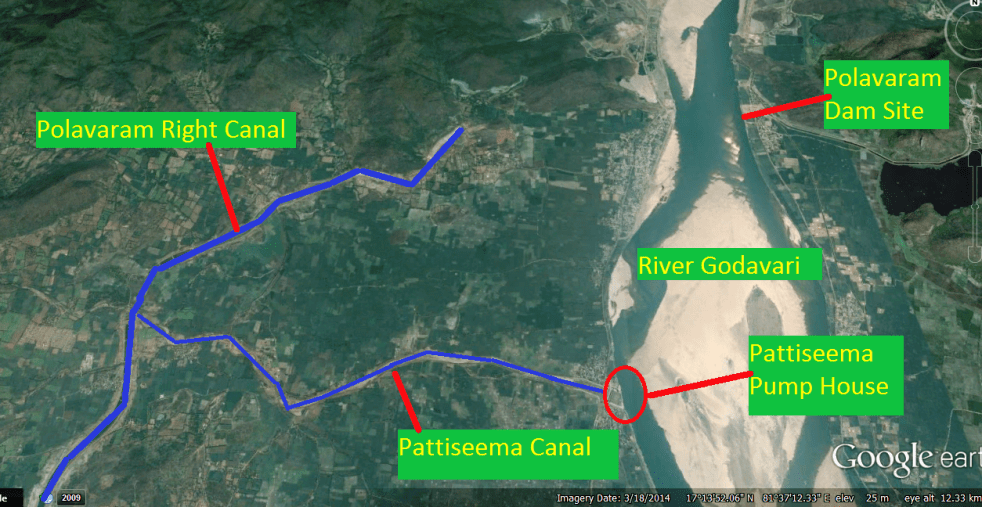
Godavari Krishna River Linking: Are we celebrating an illegal, unnecessary & misconceived water transfer project? SANDRP recent blog investigates and exposes the reality behind much hyped Godavari-Kirshana Interlinking project which is in true sense mere a pumping of water projects that too without required legal clearances.
Continue reading “Dams, Rivers & People: Sep 28, 2015 (The reality behind much hyped Godavari-Kirshana Interlinking project)”Tag: Water

Dams, Rivers & People: August 17, 2015
HYDROPOWER
UTTARAKHAND: National Institute of Disaster Management asks Govt. to make disaster study must for Uttarakhand hydel projects (17 Aug. 2015) This is good to see, it uses almost the exact language some of us having using since the disaster.
SIKKIM: Lanco in talks to sell Sikkim hydro power project (11 Aug. 2015) The Lanco group confirmed that it is in talks with strategic investors to sell its 500 megawatt (MW) hydro-electric power plant in Sikkim, as part of an effort to consolidate its businesses and reduce debt.
ARUNACHAL PRADESH: Neha Sinha (BNHS) in her article titled A bird, a dam and a belief explores the ethical and environmental aspects intertwined with construction of Nyamjang Chhu dam which will destroy the habitat of the Black-necked crane at Zemithang in Arunachal Pradesh. The Save Mon Region Federation (SMRF), a group spear-headed by local Buddhist Lamas, has challenged the environmental clearance in the NGT. LIFE are the lawyers for petitioners. Sanjay Upadhyay and Raj Panjwani are lawyers for Bhilwara group.
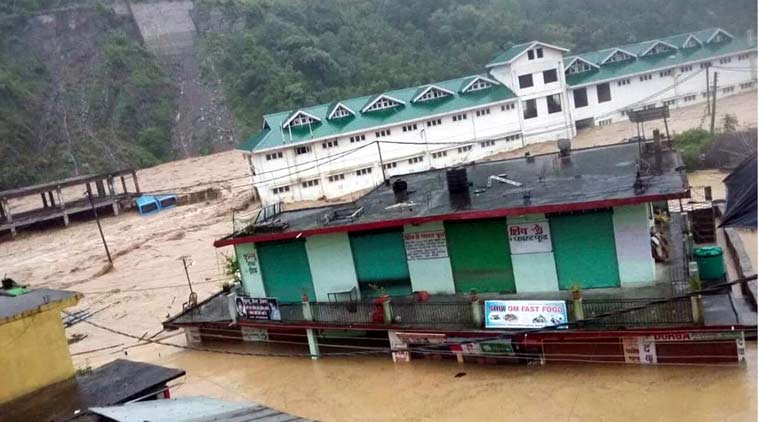
MANIPUR: Why Manipur is flooded (12 Aug. 2015) Interesting to see Down to Earth sees role of dams in Manipur floods: On the other hand continuing their agitation Mapithel dam affected downstream people hold protest meet (16 Aug. 2015) Joint Action Committee (JAC) for Mapithel Dam Downstream Affected People organized a protest meeting at Tumukhong Village, Imphal East District. The meeting demanded immediate rehabilitation and resettlement of Mapithel Dam affected people in the downstream areas. Also get to see a special news report on 26 years long protest of Chandog village against Mapithal Dam.
Dams, Rivers & People: August 10, 2015
HYDROPOWER
NORTH-EAST:ASSAM: Experts warned Centre Govt against rushing through big dam projects (08 Aug. 2015) Even local BJP leaders are against Big dams in North EAST: “BJP leader and former bureaucrat Chandrakanta Das said that the power-starved Northeast should generate electricity through small and run-of-the-river dams instead of big dams. We need power for development, but that should not come at the cost of our pristine environment. We should explore power generation through small and run-of-the-river dams,” he said.
SIKKIM: Delay in completion of 500 MW Teesta Hydropower Project cost Lanco dearly as lenders prepare for Rs. 2400 crore debt-equity conversion (10 Aug. 2015) Lenders to Lanco Teesta Hydro Power will convert part of their Rs 2,400-crore outstanding loans to the company into 51% equity in the most significant such takeover since the Reserve Bank of India allowed lenders to do so when borrowers fall behind on repayments. A consortium of lenders, including some large private and public sector banks, agreed to convert part of their loans to Lanco Teesta into equity at a recent meeting. Senior executives at a large commercial bank said that close to Rs 780 crore will be converted into equity under the capital market regulator’s formula. This will be the second such instance of a bank exercising its right to acquire a majority stake in an ailing company.

Dams, Rivers & People: August 03, 2015
HYDROPOWER
NORTH-EAST: ARUNACHAL PRADESH: Mapithel Dam; Social organization demand decommissioning of Mapithel dam (03 Aug. 2015) Asia Indigenous Peoples Pact (AIPP) and Naga People’s Movement for Human Rights (NPMHR) submitted memorandum to the Prime Minister of India Narendra Modi demanding a halt to the construction of Mapithel Dam and immediate decommissioning of the project. A joint statement issued by AIPP Secretary General Joan Carling and NPHRM Secretary General Neingulo Krome said the construction of Mapithel Dam under the supervision of the Government of Manipur directly affects and threatens the several scheduled tribes in the affected districts whose sources of income are land and agriculture. It may be mentioned that when it is commissioned the dam would affect over 8,000 people in 22 villages. http://e-pao.net/GP.asp?src=28..030815.aug15
UTTARAKHAND: Expert Body recommends modification of Uttarakhand hydro projects prevent 2013-like disaster (31 July 2015) An expert body appointed by the Centre to analyze the adverse ecological and environmental impact of hydroelectric power projects (HEPs) in Uttarakahand has told the Supreme Court that comprehensive modification of the projects is required to prevent a repeat of 2013 disaster in the state. In an affidavit filed in the Supreme Court, the Centre said the expert body (EB) had suggested promoters of the six projects– National Thermal Power Corporation (NTPC), National Hydroelectric Power Corporation (NHPC), Tehri Hydro Development Coporation (THDC), GMR and Super Hydro Pvt Ltd—to incorporate a number of safeguards in view of the 2013 disaster. The government said the projects would not be allowed to operate till the companies modify their projects. http://timesofindia.indiatimes.com/india/Uttarakhand-hydro-projects-need-to-be-modified-to-prevent-2013-like-disaster-SC-told/articleshow/48290097.cms
Chief Minister asks industry to invest in small hydroelectric projects (27 July 2015) Chief Minister Harish Rawat today sought help from the PHD Chamber of Commerce and Industry Uttarakhand for investment in small and micro hydel projects in the state. He sought support for 2 MW to 5 MW hydel projects under the policy formulated by the state government. The state is still not realizing how small hydro projects are equally disastrous for sensitive mountains. In June 2015 SANDRP visit in Yamuna valley highlights how Gangani and Hanuman Ganga small hydro projects have caused irreversible losses to local environment and community people as well.http://www.tribuneindia.com/news/uttarakhand/cm-asks-industry-to-invest-in-small-hydroelectric-projects/110988.html
Dams, Rivers & People: 20 July, 2015
HYDROPOWER
NORTH-EAST ARUNACHAL PRADESH: Green clearance to Dibang Project challenged in NGT (17 July 2015) The 2880 MW Dibang Multipurpose Project will see construction of a mammoth 278-metre tall concrete gravity dam and it will submerge a vast forest area of 4,577.84 hectares or 45.77 sq km, of which major chunks are community forests. The forest land to be diverted is also a major habitat of endangered species such as tiger, leopard, snow leopard, Himalayan Black Bear, Slow Loris, Himalayan Black bear, Leopard cat and Fishing Cat. http://www.dnaindia.com/india/report-green-clearance-to-country-s-biggest-proposed-hydro-project-challenged-in-ngt-2105267 Continue reading “Dams, Rivers & People: 20 July, 2015”
Dams, Rivers & People: July 13, 2015
HYDRO POWER
UTTARAKHAND: Vishnugad-Peepalkoti Hydroelectric Project affected protested against World Bank (09 July 2015) The affected people of Vishnugad-Peepalkoti Hydroelectric Project (VPHP) have surrounded the officers of World Bank with the slogan of “World Bank Go Back, Let Ganga free”. In even the bad weather and rain, almost 70-80 people have surrounded the hotel in which the team of World Bank was staying. Their officers were present there from 03rd July without the knowledge of villagers. After the incident, Ms.Sona Thakur of World Bank has came out and asked them to sit and talk inside the hotel. https://www.facebook.com/sandrp.in/posts/1083146828379656
Why Vishnuprayag and other Uttarakhand Hydro Projects continue to affect two years after the June 2013 disaster https://sandrp.wordpress.com/2015/07/09/why-vishnuprayag-and-other-uttarakhand-hydro-projects-continue-affect-two-years-after-the-june-2013-disaster/
Small Hydro: Kharadi in Yamuna Basin: when Small Hydro unleashes big destruction https://sandrp.wordpress.com/2015/07/10/kharadi-small-hydro-unleashing-big-destruction/
Jammu & Kashmir: NHPC’s Chutak power house submerged in Kargil: NHPC clueless two weeks after the disaster https://sandrp.wordpress.com/2015/07/11/nhpcs-chutak-power-house-submerged-in-kargil-nhpc-clueless-two-weeks-after-the-disaster/
DAMS
MHA to Monitor Landslide Dams to Avoid Any Disaster (10 July 2015) The threat of severe earthquakes in the Himalayan region close on the heels of the devastating one in Nepal, as indicated by several scientific studies, has prompted India to put hundreds of landslide dams or LSDs under constant monitoring so that they do not break with catastrophic consequences. The Centre has roped in the National Remote Sensing Centre, Central Water Commission and the Indian Air Force as part of the new SOPs to ensure continuous monitoring of the quantity of water flow of all major rivers in the upper reaches by visual, instrumental, aerial and satellite surveillance, and ascertaining the cause of a reduced water flow at the earliest. http://epaperbeta.timesofindia.com/Article.aspx?eid=31818&articlexml=MHA-to-Monitor-Landslide-Dams-to-Avoid-Any-10072015003067
NAPM Press Release: Frustrated over long delay in rehabilitation, Sardar Sarovar Project Affected Commits Suicide (10 July 2015) Yesterday, on 9th July 2015, in the village Chimalkhedy, barely 10 to 12 kms away from the Sardar Sarovar Dam, TembhryaKutarya consumed poison and committed suicide. This news reveals the actual dire reality underlying the false tall claims of rehabilitation by Maharashtra Government. While this press note is being drafted the dead body of the old man Tembhrya Kutarya is decaying on the banks of the river Narmada in the village Chimalkhedy and the Govt. is “still thinking” how to take MBBS doctor there to do postmortem. Dr. Anil Patil appointed on the riverine dispensary on the medical barge that is very irregular, in spite of being in Kevadia colony (the colony near SSP) since yesterday morning was apparently neither aware of nor was concerned about this incident. https://www.facebook.com/sandrp.in/posts/1083835098310829

Dams, Rivers & People: June 1, 2015
Dams, Rivers & People News Update (22-31 May 2015)
MORE BAD NEWS FOR INDIAN FARMERS:
http://pib.nic.in/newsite/PrintRelease.aspx?relid=122218
Press Information Bureau
Government of India
Ministry of Earth Science
02-June-2015 15:20 IST
Dr Harsh Vardhan Says – “It’s not Just an Unusually Hot Summer, It is a Climate Change” Continue reading “Dams, Rivers & People: June 1, 2015”
AAP Government in Delhi: Agenda on Water
Dear Arvind and everyone else at AAP,
It is indeed a historic day in Indian politics and governance as AAP government led by Arvind Kejriwal took oath at Ramlila Ground today(December 28, 2013). It gives and amazing, thrilling feeling and has filled us with joy and hope. It is indeed likely to change the politics of India in fundamental ways. Salutes to all those who made this possible.
As well wishers we are unable to avoid the temptation of writing to AAP about some of the things they can be done in whatever little time that they may be allowed to govern in Delhi.
1. Democratise governance of DJB Delhi Jal Board (DJB) is one of the most non-transparent, non participatory, unaccountable bodies. Longer term agenda would need to institutionalize bottom up democracy in its functioning from mohalla sabha level to the top. In the mean time, you can tame some immediate steps to ensure that there is immediate independent oversight and participation of the Board. The steps suggested in AAP manifesto like putting daily readings of bulk water meters at each step are certainly welcome, but more steps are required in this line regarding the governance of the Board.
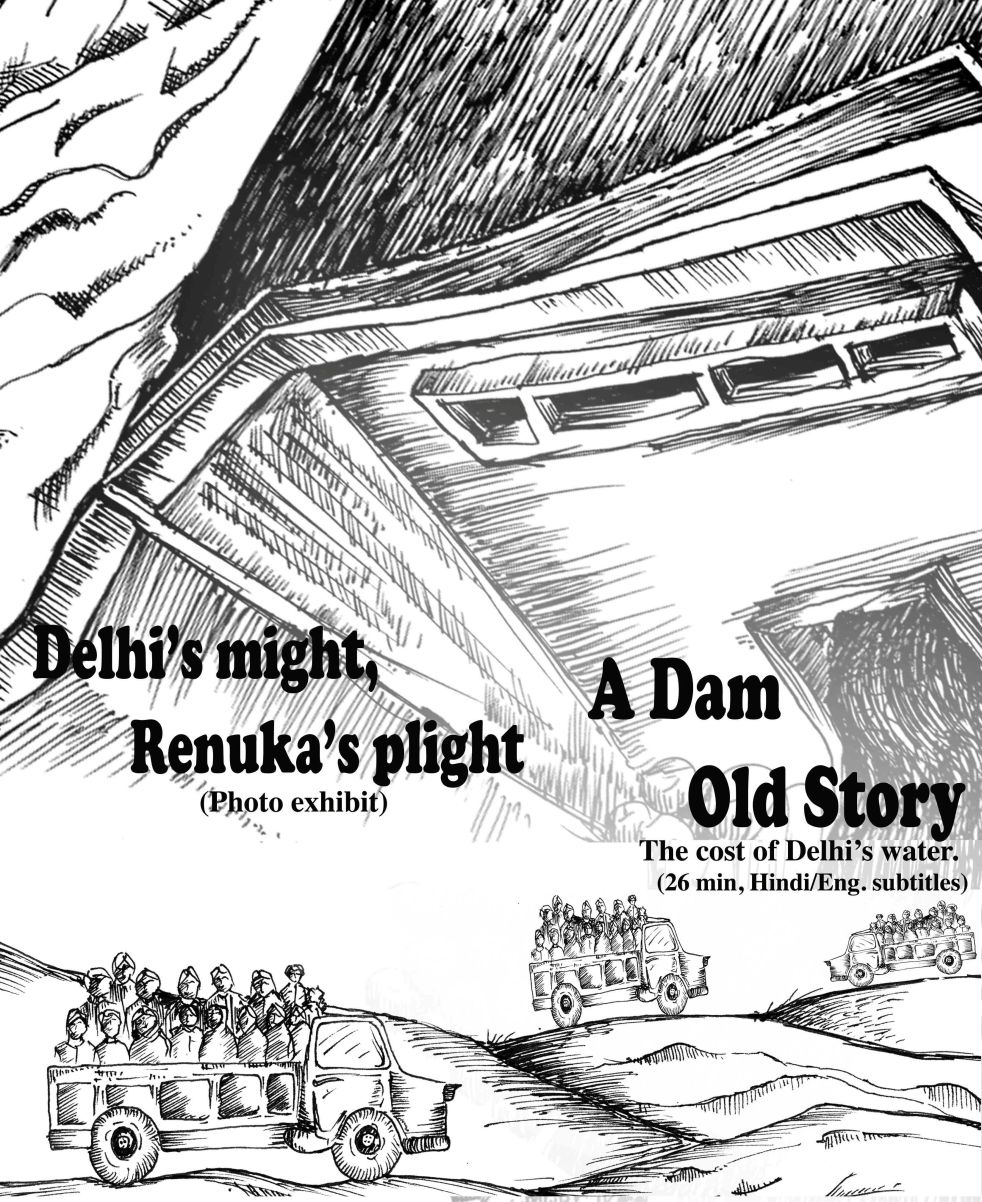
2. Stop Supply side projects Delhi as a city is privileged place. As even planning commission has noted, Delhi gets more per capita water than Amsterdam, Paris, Bonn or most other European cities. The amount of water that Delhi gets is sufficient to provide for necessary needs of today and even for all future times. Delhi should not be asking for any more water from new dam projects like the Renuka, Lakhwar and other dams. To move in that direction, DJB can be asked to prepare a plan for next 20 years (as a first step) assuming Delhi wont get any more water than it currently gets. As you are well aware, there will be several components of this plan including: A. Rainwater harvesting B. Plugging leaks C. Instituting Water Audits D. Putting in place functioning water meters at each junction E. Adequate treatment of wastewater F. Reuse and recycle of waste water G. avoiding unnecessary water intensive activities H. Protecting local water bodies I. Ensuring sustainability of flood plains, Ridge and other such ecological spaces J. Ensuring protection of catchments.
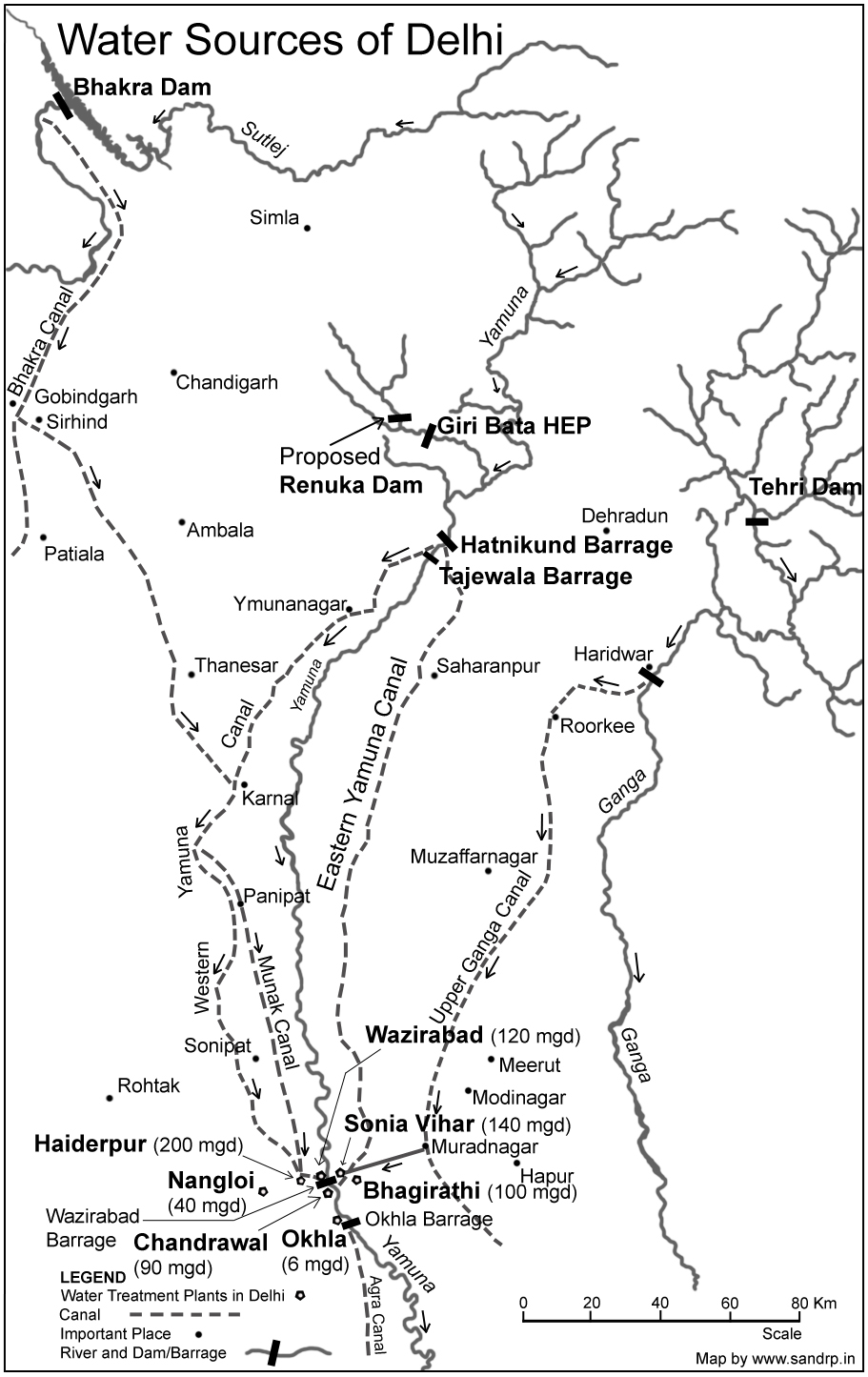
Some of these are elaborated below and all of them can be effectively achieved only with democratic water governance.
DJB should also be asked to get out of the commitment for resources for Renuka and other upstream projects and also need for such projects.
3. Rainwater harvesting Ask DJB to prepare time bound plan to ensure that there are functioning rainwater harvesting and use/ recharge systems in place at: All government buildings, all colleges, all schools, all institutions, all metros, all railway stations, all flyovers, all (over-ground) metro lines, all parks, all malls, all multiplexes, all commercial buildings. Many of the storm water drains can also be used for recharging groundwater where appropriate. This should be time bound and consequences to follow after a reasonable time limit say one year. There should be some credible way of ensuring that these function.
4. Sewage Treatment PlantsDelhi has India’s largest installed capacity of STPs, but none are functioning as per the design in terms of quantity or quality of outputs. Put in place credible governance for these to ensure that they function and make specific officers responsible for these and mechanisms to ensure they face consequences when these STPs do not function. Each plant can immediately have a monitoring committee including AAP or local MLA, media persons, civil society persons and RWA persons.
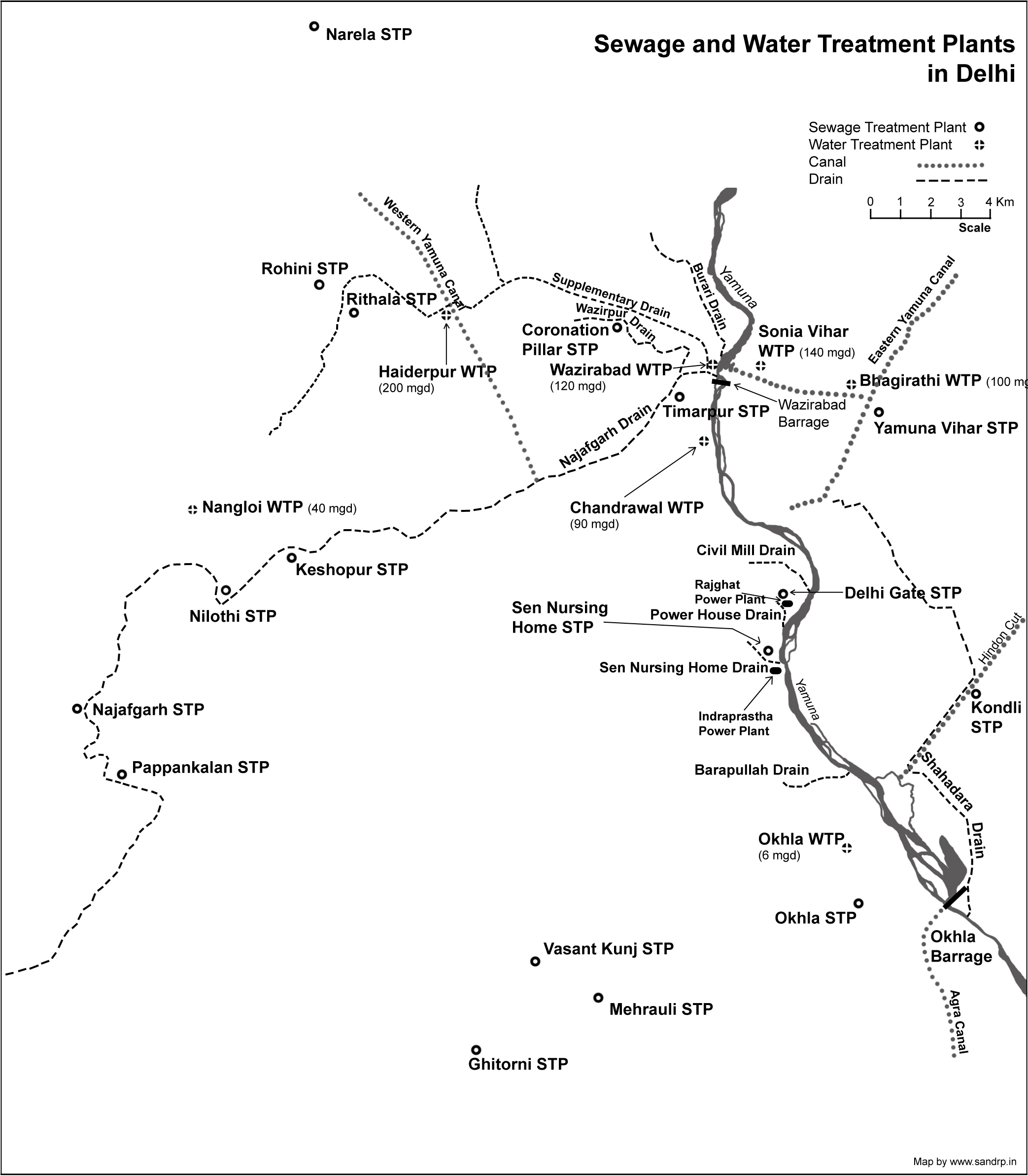
5. Decentralisedsewage capacities Where necessary and possible, put in place decentralized STPs using less resources and more environment friendly methods in a time bound manner. All large establishments in any case should have their own STPs and water recycle plans. Additional STP capacity should preferably be decentralized one. DJB should be asked to prepare norms and plans for these.
6. Sewage reuse plans DJB should be asked to prepare a credible sewage reuse and recycle plans so that there is less pressure on fresh water supply and more recycled sewage is used to meet non potable use in the city.
In addition to the DJB the three wings of the MCD must also in tune with the DMC Act 1957 be re-vested with roles and responsibilities for an efficient sewerage system and management in the city.
7. Drainage system A functioning drainage system and their maintenance is key part of urban water system and it is good that AAP manifesto has included this. DJB should be ask to put their plan on this in public domain along with the maintenance system and those responsible for it. Connect this too to Mohalla Sabha.
8. Groundwater governance It is well known that Delhi is over using groundwater, 2004 estimates show that this was 70% above the recharge then. The governance of groundwater use is under DJB and this needs to be democratized and only at RWA, mohalla or ward level can there be proper governance, which needs to be put in place urgently, along with more recharge systems. Ask DJB to prepare a ground water map of Delhi along with aquifer map (over longer term) and use it to integrate rainwater harvesting, local water sources and Delhi water supply.
9. 700 lphd free water Equity in water distribution remains a serious issue in the city. On the AAP promise to provide free water to those that are going to use less than 700 litres water per household (or less than 140 lpcd), while intentions of helping ensure those who are using minimum water is good, there are a large number of question marks. We sincerely hope this does not translate into clamour for more water for Delhi from outside sources. Secondly, we hope this does not lead to wastage of water, which would actually mean less water available for those who do not have. This also hinges on functioning household level water meters. Moreover, 140 lpcd may be the norm, at least 50 lpcd would be guaranteed with credible enforcement mechanism. Even this 50 lpcd can be provided at minimum token price of Rs 1 per KL. Those who use higher quantity should be asked to pay for the full water use with some subsidy and those who use more than 140 lpcd should be asked to pay higher than cost price so that there is some revenue generation for cross subsidization for the poor. Water price should include the full sewage treatment cost. Incentivising local treatment and reuse is an excellent idea in AAP manifesto.
10. Investigate Munak stalemate We have noticed that AAP manifesto talks about ensuring that Delhi gets is water share from Munak based on the money spent. However, one of the reasons Delhi is not getting that water is that Delhi did not enter into an agreement with Haryana before agreeing to provide money for the Munak project. It needs to be investigated why did Delhi agree to spend money on Munak before entering into such legal agreement. AAP govt may consider instituting such an investigation.
11. Yamuna river There is a lot that is required to be done for the Yamuna river, some of which has been highlighted in the AAP manifesto as well. Some of the steps listed above could help the cause of the river. Some of the addition steps should include: a) Demarcate Yamuna flood plain to ensure there is no more encroachment of the same; b) some of the current encroachments can be asked to vacate the flood plain in time bound manner; c) ensure there is some releases of water from Hathnikund and Wazirabad barrages immediately, ask for a long term plan for the river assuming there will be no more dams in the upstream.
12. Transparency about and reversal of agreements with Degremont, Veolia and other private companies The agreement that DJB has entered into with various private companies on Sonia Vihar, Rithala and other projects and the three water supply zones should be put in public domain and ways found to reverse them where possible.
We know Mr Kejriwal and lot of others at AAP would be familiar with a lot of this since Mr Kejriwal led the successful campaign against water privatisation in Delhi in 2005, and we hope credible steps would be taken up in these directions as soon as possible.
Thanking you,
Yours sincerely,
Himanshu Thakkar
South Asia Network on Dams, Rivers & People (https://sandrp.wordpress.com/, http://sandrp.in)
Manoj Misra
Yamuna Jiye Abhiyaan (http://www.peaceinst.org/)
 SANDRP