Above: Young kid from a fishing family in Kahalgaon, even the most informed communities (Ganga Mukti Andolan) are clueless about the government’s intentions (Photo by Veditum)
GUEST BLOG BY: Siddharth Agarwal
As the Ganga rises and fills streets and alleys with it’s water all along it’s course, I spend a time out at home, partially because of personal reasons and in some parts due to the rising levels of the river hindering all sorts of movement around it. Currently on a walk along the Ganga for Veditum India Foundation’s ‘Moving Upstream’ project, I’ve been able to walk a distance of about 1000 kms alongside it’s banks from Ganga Sagar till Varanasi in 50 days’ time. Some places saw me walking right next to the river while others had me maintaining my distance since it just wasn’t possible to peruse a course anywhere in the vicinity of the flooded banks.
The rising levels of the river are no surprise, an annual occurrence with variation only in ferocity. We’re surprisingly still caught off guard, every single year, with this news about floods in cities like Patna, Allahabad and Varanasi making it to national television on an almost daily basis. But what of all the places between Patna, Allahabad and Varanasi? What of all the places that are not cities and of all the people who are not urban dwellers? The major focus as I walk along the river are the people of the river and their lives, those who inhabit this space known to all as the vastly fertile Indo-Gangetic plains but unknown as a place extremely vulnerable to the forces of nature and shaky towards those man-made.
What will happen to a river that already has no fish and is way too salty. The barrages will mean doom for even the few fish that are left (Photo by Veditum)
I had been informed in advance of the situation of our fishermen by minds already working in the field of environment and rivers in our country, often mentioning that these communities were severely under-represented and very much neglected even when it came to discussions relating to them. Non-inclusiveness of communities while making decisions is not a new theme in India, but given the extent of impact that some upcoming government decisions/policies was going to have on these people, I decided to ask them a few questions as I proceeded upstream from Ganga Sagar, starting early June 2016.
Anywhere downstream of the Farakka barrage, the mention of the word barrage has a stunning effect on the people and 1975 is a year that fisher folks remember as a year of doom. For most readers and even for me before I started upon this trip, this would makes sense if one tries to put in a little effort in imagining how a barrage or dam might affect a river. But unlike how logic would dictate, this effect doesn’t exist just downstream of the barrage and similar reactions continued even further upstream, in Jharkhand and Bihar.
In places along the feeder canal from the Farakka Barrage, an increased frequency of ships to the Thermal Power Plants has resulted in rapid soil erosion (Photo by Veditum)
The National Mission for Clean Ganga and The National Waterways programme have been in the limelight for making grand promises of :
1.) Cleaning and maintenance of the river
2.) Economic Development and Cheaper Transportation.
Now, this is not a commentary on the efficiency and feasibility of making such proposals, simply an attempt to understand the impact of such programmes. EIA (Environmental Impact Assessment) and SIA (Social Impact Assessment) are the terms you might be looking for, something that ideally the governing authority should be taking care of. But why is any of this important or relevant to this article? It is because whatever happens in these places between Patna, Allahabad and Varanasi is very much relevant and important to discuss. These are not uninhabited spaces, but pretty well populated areas with a lot of lives at risk.
Coming back to the point of the two government programmes, firstly, the NMCG letting the Waterways programme run through protected areas and non-protected ecologically sensitive areas goes very much against the whole agenda why this mission was set up. Secondly, the waterways programme in a bid to decrease ‘transportation’ costs and utilise our river potential recently ran tests with large vessels on the Ganga.
Small country boats near Farakka. Wonder what large waves from huge vessels will do to these (Photo by Veditum)
What is surprising (or rather not) is that these test runs were without any warnings to fishermen and boatmen in said test sections, the few who were on the waters at the time of passing of these vessels had to face high waves, enough to topple a less experienced or unaware boatman. The news of these tests were flashed all over the main stream media, but failed to make it to those for whom it mattered. Not an uncommon occurrence at all, but till when will this go un-noticed? On asking these fishermen if they have any clue why this is happening, most of them responded in the negative while a few said they’ve learnt about the government’s plans to run large vessels on the river.
As this conversation extends and questions follow, it is gradually revealed that the picture is not clear and conversations have somehow trickled down in a very muzzled form. Though most fishermen laugh off the prospect of this being a constant activity because of the extreme reduction in water level that the river has seen these past years, often mentioning how large excavators and multiple tugboats have been needed anytime a large vessel has traversed these stretches in lean seasons. There’s talk of loss of fishing nets and reduced catch, difficulty in controlling small country boats in high waves, chances of accidents when transporting villagers to small ‘diars’ for agricultural work, loss of land where there’s no embankments and so on, but this also brings us to the most important part of this article.
The dark clouds often linger over the heads of those not involved, not informed (Photo by Veditum)
The Water Highway programme on the Ganga has been proposed on a 1500 km stretch from Allahabad to Haldia, with barrages at about every 100 kms. Now, an avid news reader would have knowledge of this as a great policy step but the fisherman who directly depends on the river for his livelihood does not. This holds true for maybe 15-20 different fishing communities that i’ve had the chance to interact with in the first 50 days and even the mention of new barrages was way too shocking for those who have had to bear the burden of Farakka’s impacts. There are even places where locals have signed their wishfulness of a barrage near their villages without understanding consequences and only having been shown the shiny side like we see everyday in the papers, called ‘development’.
The ‘Moving Upstream’ project intends to understand and present a narrative of the river and it’s people, hoping this will lead to more meaningful conversation and inclusive action by the government. In a recent announcement by Sushri Uma Bharti Ji – Union Cabinet Minister of Water Resources, River Development & Ganga Rejuvenation, she said she will march down the length of the river to take stock of the status of various projects commissioned by her. I’m glad that cues are possibly being taken from the Moving Upstream project, but like every other government project, when will our habit of assessment (if at all) after execution stop and preparedness & understanding before implementation materialise? I hope she does her Ganga yatra before approving any projects, I hope for inclusiveness.
बाणसागर बाॅध, सोन नदी, गंगा नदी और पटना को दर्शाता मानचित्र
21 अगस्त 2016 की सुबह, गंगा नदी का जलस्तर लगातार बढ़ते हुए, पटना में 50.43 मीटर पर पहुॅच गया। जिससे पटना में गंगा नदी अपने पहले के उच्चतम बाढ़स्तर 50.27 मीटर से 16 सैंटीमीटर ऊपर बह रही थी। 22 अगस्त 2016 तक पानी का जलस्तर गंगा नदी के किनारे तीन अन्य स्थानों पर उच्चतम बाढ़स्तर को पार कर गया। जिसका विवरण निम्न हैः-
स्थान 22.08.2016 को उच्चतम बाढ़स्तर पुराना उच्चतम बाढ़स्तर बलिया उत्तरप्रदेश 60.30 मीटर 60.25 मीटर (14 सितंबर 2003) हाथीदाह, बिहार 43.17 मीटर 43.15 मीटर (07 अगस्त 1971) भागलपुर बिहार 34.55 मीटर 34.50 मीटर (05 सितंबर 2013)
इस तरह से हम देखते हैं कि पटना में उच्चतम बाढ़ का रिकार्ड तोडने के बाद, अब यह बाढ़ गंगा नदी के किनारे बसे बिहार और उत्तरप्रदेश के अन्य इलाकों में पहुॅच रही है। यहाॅ यह बात उल्लेखनीय है कि बिहार में अब तक वर्षा औसत से 14 प्रतिशत कम हुई है। सवाल यह उठता है कि इसके बावजूद गंगा में रिकार्ड तोडने वाली बाढ़ क्यों आयी?
Above: Map Showing the location of Bansagar Dam, Sone River, Ganga River and Patna
Water level of Ganga at Patna reached 50.43 m on Aug 21, 2016 morning with still showing rising trend. This level was already 16 cm higher than the highest ever recorded flood level (HFL) of Ganga at Patna of 50.27 m. By Aug 22, 2016, at three more sites along Ganga, the water level had already breached the highest recorded levels: Balia in Uttar Pradesh (Ganga Water level at 60.3 m, higher than the HFL of 60.25 m recorded on Sept 14, 2003), Hathidah in Bihar (Ganga water level at 43.17 m, higher than the HFL of 43.15 m recorded on Aug 7, 1971, that is 45 years back) and Bhagalpur in Bihar (Ganga water level at 34.55 m, higher than HFL of 34.5 m recorded on Sept 3, 2013). This means that the highest flood level that started at Patna is now travelling both upstream and downstream along Ganga.
Several districts of Bihar along Ganga are facing floods, with at least 10 lakh people affected and about 2 lakh people displaced. On Aug 21 alone, NDRF teams have rescued over 5300 people from Didarganj, Bakhtiyarpur, Danapur Chhapra, Vaishali and Maner. At least ten lakh people have been affected in Bihar, two lakh have been displaced and scores have been killed. It seems more like and annual natural calamity.
But that is not the case, if we look closely. Available information shows that the unprecedented floods that we are now seeing in Ganga in Bihar and UP are largely due to contribution of two dams: Bansagar Dam along Sone river in Madhya Pradesh in the upstream and Farakka Dam (misleadingly called a Barrage) on the Ganga river in West Bengal. If Bansagar Dam was operated in optimum way, than it need not have released over ten lakh cusecs of water. As pointed out by Bihar government, the high floods brought by Ganga in Patna are majorly due to the high flow contributed by Sone river upstream of Patna. Continue reading “A tale of two dams: Is Bihar’s unprecedented flood an avoidable man-made disaster?”→
Unsustainable sand mining from riverbeds can have huge social, environmental, geomorphic and disastrous impacts for rivers. In this three part report, SANDRP is trying to provide a picture of what happened on this issue in 2015 in India.
This first part looks into 2015 putting together instances of illegal sand mining that occurred throughout the year in different Indian States. The successive blogs would make an attempt to cover all governmental measures and judicial interventions taken in 2015 to reign in uncontrolled extraction of this possibly most consumed natural resource after air and water.
Illegal mining of sand is profoundly linked to growth in construction industry that have accelerated in recent decades. Since then demand for this mineral is only going up. Today possibly there is not a single river in the country that is not ruined by sand mining. As a result, while the state of rivers has gone worse, the number of violent instances around illegal sand mining is on the increase.
जलवायु परिवर्तन की मार से किस प्रकार भारतीय खेती और किसान प्रभावित हो रहे है, इसकी एक झलक हमको फरवरी अंत और मार्च 2015 के आंरभ में हुई। अप्रत्याशित हिमपात, बरसात एवं परिणामस्वरूप आई बाढ़ के रूप में देखने को मिली। 28 फरवरी से 03 मार्च 2015 चार दिन तक हुई इस बेमौसमी बरसात से लाखों भारतीय किसानों के प्रभावित होने की आशंका है। साथ-साथ जलवायु परिवर्तन जनित इन घटनाओं से भूमिहीन किसानों की बहुत अधिक दुर्दशा होती है और ऊपर उनकी सुध लेने वाला कोई नहीं है। Continue reading “जलवायु परिवर्तन की मार झेल रहे भारतीय किसान ; बेमौसमी बरसात का प्लेजियों को सबसे ज्यादा नुकसान”→
“We do not want dams; in fact we don’t need it. It is the industries for which they need water, and for which they want us to give up our fertile ancestral land and destroy the forests which we have protected since centuries and put our children in danger.”
An affected villager
Kanhar Dam is one of those projects which is an example of how so called developments worsen the situation for the people and environment. The project conceived 37 years ago has been in abeyance since last 25 years. With the latest inauguration of construction of the dam on 5th December, 2014 after a span of 25 years without a fresh proper cost benefit analysis (CBA), any environment impact assessment (EIA) or Social Impact Assessment (SIA) ever, the commencement of project activities is making way for a large social uprising in the heavily industrialized zone of Uttar Pradesh.
Google Earth Image showing the proposed dam site
Kanhar Irrigation Project is located downstream of the confluence of River Pagan with Kanhar near village Sugawan in Tehsil Dudhi of District Sonebhadra, Uttar Pradesh. It was originally approved by the Central Water Commission in September, 1976 at an initial budget of Rs. 27.75 Crores. Initially, there was some foundation work undertaken but the project was soon stalled due to inter-state issues, lack of funds and volcanic protests from tribal communities of the region. As per a progress report of the project for 1998-99, the construction work is completely abandoned since 1989-90. Since then, there are numerous occasions when the project was inaugurated, notable among them is one on 15th January, 2011 when the then Chief Minister Mayawati laid foundation stone again. Another inauguration took place when on 12th November, 2012 when Mr. Shiv Pal Singh Yadav (uncle of present CM Akhilesh Yadav), the Irrigation Minister of Uttar Pradesh laid another foundation stone to start the work of spillway. However no work could be taken up.
The project proposes a 3.003 km long earthen dam having a maximum height of 39.90 m from deepest bed level which may be increased to 52.90 m if linked to Rihand reservoir. The project envisages submergence of 4131.5 Ha of land which includes parts of Uttar Pradesh, Chhattisgarh and Jharkhand mostly dominated by tribal communities. The project is expected to provide irrigation to Dudhi and Robertsganj Tehsils via left and right canals emerging from both sides of the dam with capacity of 192 and 479 cusec respectively. The culturable command area of the project is 47,302 ha. The project imposes enormous threat not only on the environment and ecology but also to thousands of tribal families of Vindhyas living there since hundreds of years and has demanded for protection of their forests and proper implementation of R & R (Rehabilitation and Resettlements).
Kanhar Project Map As per 1976 documents
The controversy actually began when the Central Water Commission in its 106th meeting of Advisory Committee for the ‘techno-viability of irrigation, flood control and multipurpose project proposals’ approved the project at an estimated cost of Rs. 652.59 crores at 2008-09 price level. A bare perusal of the minutes shows that there is no consideration of the environment and social impacts of the project. The minutes also show that the approval was granted in the presence of representatives of Ministry of Environment and Forests and Ministry of Tribal Affairs.
Local Voices Suppressed
The inauguration of the project held on 5th December 2014 was marked by the presence of heavy police force and paramilitary forces which were deployed to guard the construction site on the river bed. Few roads have been blocked by Police and it is reported that the entry to the project site is stopped 1.5 km ahead of the construction site. To speed up the work, regular increase of heavy equipments and machinery is in progress. CCTV cameras are also reported to be installed at the site to keep a regular check on the activities.
Forests Devmanwa Pahadi in village Bhisur
There is a constant effort by the administrative authorities to suppress the voices of aggrieved and affected raised against the project and those who have attempted to do so are being arrested under the Uttar Pradesh Gunda Niyantran Adhiniyam, 1970 or ‘Gunda Act’. There are repeated incidences of arrests and FIRs against the local people. Incidences of people-police clashes are now becoming a daily routine affairs. Recently the SDM, Dudhi along with the other policemen was also injured in a similar clash. In retaliation to it, there were series of arrests being made by the police and FIRs were filed against 500 unnamed locals. There is an atmosphere of fear already created among the villagers in the region.
The question arises is, whether due procedure has been adopted by the state government as prescribed under law? And if yes then what is the reason for suppressing the voices and why is so such chaos being generated by the government? The project is in controversy due to several questions which are still left unanswered and requires a detailed clarification from the State Government.
The rise of Kanhar Bachao Andolan
The Kanhar Bachao Andolan (KBA) is the first of its kind integrated protest which emerged in the form of an organization in the year 2002 under leadership of a Gandhian activist Bhai Maheshanandji of Gram Sawaraj Samiti based in Dudhi tehsil of Sonebhadra and Gram Pradhans of villages which would be submerged if the project is implemented. The KBA has been raising the issue of tribal rights and discrepancies in the R & R before the state govt. through representations, protests and petitions in High Court. There is a continuous peaceful campaign against the project by KBA since a decade including the unceasing protest which started from 5th December, 2014 on the other side of the River Kanhar opposite to the construction site. Fanishwar Jaiswal, who is a former-Gram Pradhan of Bhisur village and an active member of KBA said, “There was a public meeting organized by the MLA of Dudhi in June, 2014 to address the R & R issues. The Gram Pradhans of several villages presented their views against this project and also submitted written representations; however those views and protests were never registered by the government in any of their reports.”
Protests on Kanhar RIver Bank at Sugawaman village
Rich Forests and Tribal Culture at Stake
I got a chance to visit Sonebhadra district in July, 2014 where I came to know about this project and the ongoing protests. I visited the project area and interacted with the people of Sundari and Bhisur villages of Dudhi tehsil which are the affected villages among several others. Dense forests and agricultural fields were the most common landscape feature. One could have seen the abandoned machines, several of which were half-sunk to the soil, broken houses with ghostly appearances which were informed as the once constructed officer’s colonies of the project and old rusted sign boards stating ‘Kanhar Sinchai Pariyojna’. Those structure and abandoned equipments were clear evidences of the Kanhar project which was abandoned long back by the government.
Till 1984, a large number of trees were felled by the government in the midst of protests by the tribal communities. But, since then the work did not take place and there was no displacement of tribals. They have now planted more forests in their villages and have their own regulation bodies for protection of these Forests. “Cutting trees is seen as sin in our culture and we have strict fines and punishments if someone does that. Trees are our life and we are protecting them for our children”, said Pradhan of village Sundari which will be the first village to be submerged by the project.
Sundari Forests to be affected due to Kanhar Dam in Uttar Pradesh
We discussed about the status of biodiversity and came to know about their dependence on traditional medicines which they obtain directly from the forests. All the villagers I met were satisfied with their rural lifestyle and have developed their own way of sustaining agricultural production by choice of specific vegetable, pulses and crops depending on climate.
It was informed that every year elephants visit the Kanhar River from the Chhattisgarh side. Animals like Sloth Bear, Leopard, Blackbuck, Chinkara and several reptiles are abundantly noticed by people due to presence of hills and forests in the region.
‘We do not want dams; in fact we don’t need it. It is for the industries which need water, and for which they want us to give up our fertile ancestral land and destroy the forests which we have protected since centuries’, said a villager.
It is suspected that the Kanhar dam is being constructed to supplement the Rihand dam to provide water for the industries in Sonebhadra and adjoining region. It seems that the government has not learnt from the experience of Rihand dam which was constructed in 1960s in the same district in the name of irrigation, but gradually diverted the water for thermal power plants and industries. The water in Rihand dam is now severely contaminated with heavy metals which has entered the food chain through agriculture and fish. Like the Rihand dam, the new project will cause more destruction than good to the people of the region.
Vindhya Bachao’s Intervention
It is very clear that the project is going to destroy a huge area of dense forests and going to displace not only the tribal communities from their roots but also affect the rich flora and fauna of the Sonebhadra. To know about the actual status of the environment and forests clearance of the project, RTI (Right to Information) applications were filed with the Ministry of Environment, Forests and Climate Change in July, 2014. The belated reply was received only in Dec, 2014 on initiating a first appeal. The responses states that the ‘Environment Clearance’ was granted on 14.04.1980 which is more than 30 years old and therefore any further information with respect to the same cannot be granted since the same is exempted under the RTI Act 2005. Hence, two things are clear that the project requires a fresh ‘Environment Clearance’ under the EIA Notification, 2006 & a forests clearance prior to start of any construction activity.
Police at Kanhar Dam protests
In view of this fact, On 22nd December, 2014 an application was filed by Advocate Parul Gupta on behalf of applicants Debadityo Sinha (Vindhya Bachao) and O.D. Singh (People’s Union for Civil Liberties) before the National Green Tribunal praying for taking action against the UP Government for carrying out construction activity of the project without statutory clearances under EIA Notification, 2006 and Forest (Conservation) Act, 1980. The application came up before the bench of Justice Swatanter Kumar on 24th December 2014 wherein stay orders were issued against the Government with clear indication that no construction activity shall be allowed to be undertaken if they do not have ‘Environment’ ‘ and ‘Forest’ Clearance’ as prescribed under law.
The major Environmental and Social issues which require to be carefully considered before the project is allowed to move ahead are as follows:
Large Social Implications: Nearly 10,000 tribal families are going to be affected directly who will lose their ancestral land permanently. Gram Sabhas of the project affected villages has already passed a consensus against the project and submitted the same to the State Govt.
Dense Forests will be lost: The Renukoot Forest Division is one of the dense forests of Sonebhadra with tree density of 652 per hectare as per data obtained from a forest clearance application involving the same forest division. The Kanhar project document shows 4439.294 Ha of land categorized as ‘Forest and others’. In such case, lakhs of trees will be affected by this project which would cause significant impact on environment, wildlife and livelihood of tribals.
Loss of Rich Biodiversity: Vindhyan mountain range is known for the wildlife and rich diversity of medicinal plants which are inherently linked with tribal culture. Scientific Publications shows there are at least 105 species of medicinal plants in the region which are extensively used as traditional treatment by tribal people. The project will endanger the remaining few patches of forests which are not only the last few remaining patches of rich biodiversity but refuge to several wild animals in this heavily disturbed landscape. Conversations with the villagers will reveal presence of mammals like Sloth Bear, Leopard, Blackbuck, Chinkara, Jackal etc and several reptiles including Bengal monitor and snake species in these forests. The submergence area falling in Chhattisgarh is reported to be an elephant corridor.
Immense loss to ecology of river Sone and Ganga: Kanhar is a major tributary of River Sone which forms an important catchment of Ganga River Basin. After construction of Rihand Dam and Bansagar dam and various other water abstraction structures owing to number of industries in the region because of availability of coal mines-River Sone is one of the most exploited system which has lost its riverine characteristics. Central Inland Fisheries Research Institute reported disappearance of 20 fish species from Sone in the time span between 1976 and 2011 which is attributed to increased abstraction of water from the Sone river system. The report clearly states that ‘damming of rivers or tributaries is the root cause of river obstructions causing severe modifications and perturbations to the river flow, velocity, depth, substratum, pools, ecology and fish habitat’. There is reporting of 14 exotic alien species in the river. The report claims that the river Sone is in critically modified (class F) condition with discharge of mere 5.16% of Mean Annual Runoff (MAR) and it will require at least 34.2% of MAR to bring it to slightly modified class (class B). In such a scenario, damming of 5200 km2 of the total catchment of 5,654 km2 of river Kanhar will be disastrous for the river Sone depriving it of the major share of the present water availability. As Sone river system forms an important catchment of River Ganga, the impact on ecology of River Ganga is undeniable.
Contribution to Climate Change: We will lose lakhs of trees which would act as carbon-absorption system. To double the problem, the carbon which is locked in the forests will be released to atmosphere when these trees will be felled. While Carbon Dioxide is released from aerobic decomposition of plants, the anaerobic decomposition of organic matters will release methane which is 24 times more potential GHG than Carbon Dioxide. There is global evidence which support production of GHGs in dams, the quantity of which varies on several parameters like climatic conditions, water depth, water fluctuation, area of submergence, dissolved oxygen etc. Emission of GHGs like Methane is known for a positive feedback trigger which would lead to more absorption of heat causing further rise in temperature, thus increasing the rate of anaerobic decay in the reservoirs and release of more Methane.
Lack of Proper Cost-Benefit Analysis: The cost benefit ratio of such projects are calculated on investment and direct benefits from the projects with consideration of impact of project on people & ecosystem, which are often underestimated and excluding socio-cultural costs and cost of a healthy environment and cost of services provided by the river, forest and other ecosystems. The monetary value of the impacts such as on forests, biodiversity, fishing, non-use values, public money spent on infrastructures, cultural loss and other negative impacts are not considered at all.
Lack of Options assessment There has been no options assessment as to establish that this proposed dam is the best option for water resources development in the Kanhar/ Sone basin.
Conclusion
There is no justification for the project. There has not even been an application of mind if the project is beneficial to the people and society. There is not even any impact assessment, nor any democratic decision making process. A huge amount of public money is already spent on development of schools, roads, hospitals, houses etc in the area, which will be lost permanently by this project. At the time, when this project was incepted in 1976 the environment and social scenario of the country and this region was very different from what it is today. River Sone was not in critically modified state, Forests of Sonebhadra and adjoining regions were still intact, human population was lesser, technology was not so advanced, science of climate change was not fully understood and the need of protection of environment was not felt or required as it is today. In 1976, protection of rivers was not a primary concern as the problems were not evident as it is today. In such scenario furthering such abandoned projects shows poor understanding of environment and insensitive attitude by the policy makers. It is thus important to undertake a proper cost-benefit analysis, a fresh Environment Impact Assessment and Social Impact Assessment, conduct proper options assessment to understand the implications of this project on the ecological balance and people keeping into account the present scenario. Such studies should undergo a detailed scrutiny and public consultation process.
Panoramic photograph of project site Photo by author
About the Author: Debadityo Sinha is coordinator of Vindhya Bachao, an environment protection group based in Mirzapur. He can be contacted at debadityo@vindhyabachao.org. More details on the project can be accessed at www.vindhyabachao.org/kanhar.
POST SCRIPT UPDATE on March 16 2015 from the author:
Update from NGT hearing dated 12th March, 2015
The Ministry of Environment, Forests and Climate Change has filed its reply before the National Green Tribunal confirming that there exists a confusion with respect to grant of forest clearance diverting 2500 acres of forest land for construction of the Kanhar dam. The Ministry has defended itself claiming that the Forest Clearance dates back to the time when the Ministry was not in existence and therefore the files pertaining to the same cannot be traced. However, it has shifted the burden of proof on the State of U.P. indicating that a letter dated 28.8.1980 by the then ministry of agriculture implies the grant of fc and must be produced by the state.
The state in defence has filed a bunch of letters which according to them refers to the grant of forest clearance. However, the state has failed to produce thee letter dated 28.8.1980 which is claimed to be the FC granted to the project.
The court observed that :
Learned counsel appearing for MoEF submits that the original letter of 1980 granting Forest Clearance to the Project Proponent is not available in the records of the MoEF. Similar stand is taken by the Project Proponent. However, both of them submit that the preceding and subsequent transactions establish that clearance was granted. ….. Since it is a matter of fact and has to be determined on the basis of record and evidence produced by the parties, we grant liberty to the Applicant to file Replies to this Affidavit, if any, within three days from today. We also make it clear that one of the contentions raised before the Tribunal is whether it is an ongoing project for number of years or it’s a project which still has to take off and which law will be subsequently applicable today. Let the Learned counsel appearing for the parties also address to the Tribunal on this issue on the next date of hearing.
Ms. Parul Gupta appeared for the applicants while Mr. Pinaki Mishra and Mr. Vivek Chhib appeared as counsel for State of U.P. and MOEFCC respectively. The matter is now listed for two days- 24th March, 2015 and 25th March, 2015 for arguments. For the order click here , for Press Release click here
POST SCRIPT ON April 14, 2015:
Urgent Alert
Firing in Sonbhadra, UP
Police firing in Kanhar anti dam proterstors early morning today
against illegal land acquisition by UP Govt
Firing done on the day of Ambedkar Jyanti
Police firing on anti land acquisition protesters at Kanhar dam early morning today. One tribal leader Akku kharwar from Sundari village have been hit by bullet in chest, Around 8 people have been grievously injured in the firing and lathi charge by the police. Thousands of men and women are assembled at the site to intensify the protest against on Ambedkar jyanti. The protesters were carrying the photo of Baba Saheb to mark the day as ” Save the Constitution Day”. Akhilesh Govt fired arbitrarily on the protesters among whom women are in the forefront. Most of the women have injured. The firing is being done by the Inspector of Amwar police station Duddhi Tehsil, Sonbhdara, UP.
Condemn this criminal Act and join in the struggle of the people who are fighting against the illegal land acquistion and constructing illegal Dam on kanhar river.
Roma Dy Gen Sec All India Union of Forest Working People
POST SCRIPT on April 20, 2015: Update from Roma:
Kanhar Dam – Legitimate demands of dalit farmers in UP being crushed ruthlessly, Chhattisgarh adivasi peasants being kept in the dark – says a fact finding team of
Chhattisgarh Bachao Andolan
A fact finding team of the Chhattisgarh Bachao Andolan consisting of Alok Shukla, Sudha Bharadwaj, Jangsay Poya, Degree Prasad Chouhan and Bijay Gupta visited the dam affected villages of the Kanhar Dam in UP and Chhattisgarh on 19th April 2015. The team first visited Village Bheesur which is closest to the dam site and interacted with the affected families who are mostly of the Dalit community who were still deeply affected by the repression of the 14th April and 18th April. The affected men and women were very articulate about their grievances and extremely legitimate demands. They explained that they were first told about the Kanhar Dam in the year 1976 when the then Chief Minister ND Tiwari promised 5 acres of land, one job in each family and a house measuring 40’x60’, apart from full facilities of education, health, electricity and water to the 11 affected villages of Uttar Pradesh namely Sundari, Korchi, Nachantad, Bheesur, Sugwaman, Kasivakhar, Khudri, Bairkhad, Lambi, Kohda and Amwaar. In 1983 it is correct that compensation payments were made at the rate of Rs. 1800 per bigha (approximately Rs. 2700 per acre) to the then heads of households. After this the villagers have got no notice whatsoever. On 07-11-2012 the Irrigation Minister laid the foundation stone of the dam. It was claimed that now a consolidated sum of Rs7,11,000 would be given to the heads of households as identified in 1983 and houses of 45’x10’ dimensions would be constructed for them. The farmers are rightly arguing that they have been in physical possession of the lands all these years and therefore they should be compensated as per the 2013 Act. The government must be sensitive to the fact that the earlier households have multiplied and the compensation must be provided to all adult families who will lose their livelihood. It is also very pertinent that in the meanwhile the Forest Rights Act, 2006 has come into existence and we found that many of the farmers have been granted Pattas under the Act; however the government is refusing to compensate them for the loss of such lands, which is absolutely against the spirit of the Act. The work of the dam was started on 04.12.2014 and from 23.12.2014 the villagers were sitting in continuous dharna. On that very day, efforts were made to intimidate them. While the SDM and District Magistrate did not intervene till about 6pm, at about 7pm the Provincial Armed Constabulary (PAC) of which about 150 jawans were deployed at the dam site interfered. After the Tehsildar assaulted a young man Atiq Ahmed, people rushed in from the weekly market and a fracas ensued. Right from that day cases were foisted on 16 named and 500 unnamed persons. Despite this, the villagers continued with their peaceful protest, however since the government was not carrying on any negotiations and at the same time the dam work was progressing, on 14th April they decided to shift the venue of the dharna closer to the site. The PAC opened fire and a bullet passed through Akklu Chero (Cherwa) – an adivasi of Sundari village. 39 persons were injured, 12 of them seriously. The deployment of the PAC was increased to about 500-1000 jawans. On 18th April early in the morning the administration was determined to remove the protestors. The district force and PAC surrounded the dharna site, uprooted the pandal and mercilessly beat and chased the villagers right up to their villagers. They entered Village Bheesur and not only beat up men and women, but vandalized a motor and motorcycle of Ram Lochan. Colesia showed us her injured arm and fingers and was in tears because she did not know where her husband Mata Prasad was. People were not certain where missing family members were since the injured have been taken to the Dudhi Health Centre and if any person tries to contact them they face the threat of arrest since between the cases made out against them for the events of 23rd December, 14th April and 18th April cover about 956 persons. But the team found out that the following had been injured mostly with fractures and were possibly hospitalized. The number of women injured is significant:- Village Bheesur – Rajkalia, Kismatiya Mata Prasad, Uday Kumar and Phoujdar (all ST) Village Korchi – Phoolmatiya, Butan. Village Sundari – Ram Bichar, Shanichar, Zahoor, Azimuddin, Jogi. Village Pathori Chattan – Bhagmani, Ram Prasad, Dharmjeet. Similarly the PAC people chased the protestors of Village Sundari too right up to the houses on the outskirts of the village. They damaged motorbikes and cycles even setting fire to them. We observed that the work at the dam site seemed to be progressing fairly fast. The height of the dam which was earlier stated to be about 39.90 m appears to have been increased subsequently to 52.90 m increasing the apprehensions of the people. The Police had cordoned off the area and there were still a large number of PAC trucks and personnel in their makeshift camp of sheets. When the team reached Village Sundari, there was an extremely tense atmosphere. Some dominant caste-class persons were holding a meeting in which others seemed to be quite subdued. Some very vocal local leaders told us that they do not want any interference from any outside NGO or organization. Most of them were quoting the DM Sanjay Kumar belligerently saying that he had said that all protest and movements should stop. Otherwise he would foist so many cases that they would rot in jail for the rest of their lives and use up all the compensation in paying lawyers. Some persons who seemed to have been sent by the administration were clicking our photos when we introduced ourselves. The leaders told us that they had decided to accept the compensation and would be going to the DM to inform him so as that was the only way the cases would be lifted. While it was clear that not all the persons in the meeting were in agreement with this “decision”, they were clearly cowed down by the cases and the pressure being brought by the administration. However our most tragic experience was in the affected villages of Chhattisgarh in block Ramchandrapur of district Balrampur. They fall in the “Sanawal” constituency of erstwhile Home Minister Ram Vichar Netam who had assured the villages that there would be no submergence whatsoever in Chhattisgarh. Even when the current MLA Brihaspati Singh of Congress tried to hold a meeting at Sanawal in which he invited the protestors of UP, lumpen supporters of Ram Vichar Netam made it difficult for him to educate the villagers about this. We were shocked to find that the Water Resources Department of Chhattisgarh admits that the following 19 villages are to be submerged – Jhara, Kushpher, Semarva, Dhouli, Pachaval, Libra, Kameshwarnagar, Sanawal, Tendua, Dugru, Kundru, Talkeshwarpur, Chuna Pathar, Indravatipur, Barvahi, Sundarpur, Minuvakhar and Trishuli; and 8 to be partially submerged – Chera, Salvahi, Mahadevpur, Kurludih, Tatiather, Peeparpan, Ananpur, and Silaju. Yet the villages are in blissful ignorance. Only after the incident on the UP side of the dam occurred, on 18th April an Engineer came to Jhara village and stated that 250 acres of land would be submerged out of which 100 acres was private land. But even this is not the truth since it is clear that the entire village is to be submerged. As we were leaving Jhara village we saw a whole convoy of 6 Government Scorpios rushing through the village. Clearly, the state at some point has to begin some legal acquisition proceedings and seem to be at a loss as to how to do so. Strangely enough, keeping up the pretence of no submergence Shri Netam has had many constructions sanctioned in Sanawal and surrounding villages whereas ordinarily, once there is an intention to acquire, government expenditure is kept to a minimum. As we returned to Ambikapur, we heard that another fact finding team from Delhi who were to meet with the injured in hospital and the Collector Sonebhadra, had been detained for questioning. The rapidity and the ruthlessness with which the dam is being built, at any cost, indicates that is unlikely to be for the stated purpose of irrigation. With large industrial projects coming up in Sonebhadra UP and even in neighbouring Chhattisgarh and Jharkhand, on the cusp of which this dam channelizes the waters of Kanhar and Pang rivers, it appears to be that providing water to these projects and also hydel power are likely to be the real causes. The Chhattisgarh Bachao Andolan comes to the following tentative conclusions on the basis of its fact finding – 1. The demands of the project affected farmers, particularly dalits and adivasis, are eminently reasonable and the administration should enter into sympathetic discussion with them to redress their very legitimate and legal grievances. Work on the dam should be stopped during such negotiations so as to create an atmosphere of good will. 2. The PAC used excessive and unnecessary force on the protestors on both 14th April and 18th April. The complaints of the protestors should be registered as FIRs and action should be taken against the errant police jawans. 3. Using the threat of false cases against the protestors to arm-twist them to accept unjust compensation and rehabilitation is a form of state terror. The cases must be reviewed particularly the practice of filing cases against “unknown” persons, and malicious cases must be withdrawn. 4. In the State of Chhattisgarh, there has been absolutely no transparency, information or following of legal procedure with regard to affected 27 villages. The provisions of the 2013 Act beginning with the pre-acquisition procedure of Social Impact Assessment, Gram Sabha Consultation (all these areas are Scheduled areas), determination of Forest Rights, Public Hearing on Rehabilitation and Resettlement packages etc must be strictly followed. 5. Finally, the attitude of the Uttar Pradesh Government and the district administration of Sonabhadra in restraining activists from entering the area or making an enquiry into the facts on the ground is undemocratic and reprehensible.
—
Delhi Contact : c/o NTUI, B – 137, Dayanand Colony, Lajpat Nr. Ph IV, NewDelhi – 110024, Ph -9868217276, 9868857723,011-26214538
Sub: Work on Kanhar dam should stop untill court decisions are pronounced.
Dear Akhilesh ji,
We want to ask you why your government is trying to forcibly acquire land for Kanhar Dam in Dist. Sonebhadra violating the law of the land whereas your party is opposing the amendments proposed by the Narendra Modi government in the Right to Fair Compensation and Transparency in Land Acquisition, Rehabilitation and Resettlement Act, 2013. In light of the recent incidents of use of force by the District administration on 14th and 18th April, 2015, we wish to say the following.
(1) The SC judgement in the case of Niyamgiri hills, empowering the tribals to take a final decision on whether to allow multinational company to undertake bauxite mining there, should be now a precedent in all projects proposed in tribals areas. In addition the 73rd amendment to Constitution empowering Gram Sabhas to take decisions on economic planning for development should be honoured. Case no. 67043/2011 is pending in Allahabad HC relating to this right of GS and we expect that the district administration of Sonebhadra and Government of UP will wait for a decision on this.
(2) The project is 37 years old and was abandoned in 1984. The forest clearance dates back to 14/4/1980. It is a joke if the administration claims that it has the necessary environment and forest clearances on the basis of a clearance obtained 35 years back. Why is the Sonebhadra administration and UP government not prepared to wait for the National Green Tribunal judgement on this matter?
(3) It is another joke that the district administration wants to proceed on the process of acquisition done around 35 years back whereas the people have not given up their possession till date. The District Magistrate of Sonebhadra claims that he’ll rehabilitate the people displaced due to dam construction in the most ideal manner. But all he has are plans for their housing. What about their livelihood? We believe that land for land is the only proper compensation for a person whose livelihood depends on agriculture.
(4) Force should not be used against people who agitate peacefully. Dr. Ram Manohar Lohia severed relationship with his own government in Kerala because there was police firing over people in an incident in 1954. It is people’s democratic right to protest peacefully and government’s must find peaceful resolution to problems.
We commit to stand by the people in this struggle against the government which is for namesake socialist but is actually serving the interests of capitalists. We condemn all the repressive actions of the government and attempts by the district administration to terrorize people into submission so that they accept the displacement and rehabilitation package.
We hope that the Government of UP would act in a democratic spirit and respect the rights of people. It should immediately halt the construction work at Kanhar dam site and withdraw all the cases foisted on people so that people in jail may be released.
Sincerely,
Ajay Shekhar, Vice President, U.P. and Sandeep Pandey, National Vice President, Socialist Party (India) after a visit to the dam site, Sundari and Bhisur villages on 20 April, 2015.
The Environmental Impact Assessment (EIA) of Ken Betwa Riverlink project used for the public hearing to be held on Dec 23 (Silon village in Chhatarpur district) and Dec 27 (Hinouta village in Panna district), 2014 in Madhya Pradesh is, as can be seen from the details below, unscientific, incomplete, inadequate, biased, inconsistent (self contradictory), callous, making unwarranted conclusions/ assumptions, it accepts government claims uncritically and is generally a shoddy piece of work.
Background Agriculture Finance Corporation of India (now AFC Ltd) was commissioned in 2007 itself to conduct Environmental Impact Assessment (EIA) of Ken Betwa Riverlink proposal. This was even before National Water Development Agency (NWDA, a society of Government of India created in 1981-82 exclusively for studies on River Linking proposals) applied for the Terms of Reference Clearance for the EIA for this project in December 2010.
This review of the EIA of Ken Betwa project is based on the Executive Summary (English) of the EIA made available on the Madhya Pradesh Pollution Control Board (MPPCB) website in Dec 2014 before the statutory public hearing slated for Dec 23, 2014 at Silon village in Chhatarpur district and Dec 27, 2014 at Hinouta village in Panna district, both in Madhya Pradesh.
Since this executive summary is largely the same as the EIA made available to the Expert Committee set up on Inter Linking of Rivers (ILR) by the then Union Ministry of Water Resources (now Union Ministry of River Development, Ganga Rejuvenation and Water Resources – MRDGR&WR) for which I was a member, I have also provided the critique of that earlier EIA(in red font) in Annexure 1 to this Article[2].
The comments given below under each heading are only indicative to establish what is contended about the EIA here and not exhaustive.
Biased EIA In the very second paragraph of the EIA Executive summary[3], it is stated, referring to NWDA studies, “These studies established that Betwa is a water short basin”. But an EIA is not supposed to uncritically accept such assertions or assumption of the developer. In fact the EIA accepts this as gospel truth without critically examining it.
Incomplete EIA The EIA executive summary does not even have a project layout map, sections like biodiversity impact assessment, impact of destruction of substantial part of Panna Tiger Reserve, surrounding forests and livelihoods of the people dependent there on, options assessment, hydrological viability assessment, disaster potential assessment, how the project will be impacted by destruction of forests and climate change, additional green house gas emissions due to the project and downstream impacts, to name just a few issues..
EIA makes wrong claims The EIA claims in very second paragraph: “The scope of EIA studies inter-alia does not include water balance studies.” This is a wrong claim since water balance study of the Ken Betwa links establishes the hydrological viability of the project and by not going into the water balance study, the EIA has failed to establish hydrological viability of the project. SANDRP analysis in 2005[4] of the NWDA feasibility study of Ken Betwa Proposal[5] had established that the hydrological balance study of the Link Project is flawed and an exercise in manipulation to show that Ken has surplus water and Betwa is deficit.
As the collector of Panna district noted in 2005 itself[6], if the 19633 sq km catchment of the Ken river upstream of the proposed Daudhan dam (comprising areas of eight districts: Panna, Chhatarpur, Sagar, Damoh, Satna, Narsinghpur, Katni, and Raisen) were to use the local water options optimally, then there will not be any surplus seen in Ken river at the Daudhan dam site and by going ahead with the Ken Betwa Link without exhausting the water use potential of Ken catchment, which is predominantly a tribal area, the government is planning to keep this area permanently backward. But the EIA of Ken Betwa link does not even go into this issue, making the whole exercise incomplete.
Ken Betwa project destroys Panna Tiger Reserve but EIA claims project may benefit PTR! The Ken Betwa Project, as per the EIA, will submerge 4141 ha of Panna Tiger Park reserve, but the EIA Ex Summary says (para 58), “the reservoir may prevent encroachments of the park and invasion by livestock so that a relatively more secure and compact habitat is formed on Right flank of Daudhan dam which may be beneficial.”
In Para 63, the EIA executive summary goes on to claim that the project will not decrease tourists flow (due to destruction of Panna Tiger Reserve or drying of waterfalls in the downstream), but in fact increase tourist inflow because of the creation of reservoir! No word about the destruction of river!!
Absence of credible submergence figures The EIA has hugely reduced the area to be affected in Panna Tiger Reserve and in the surrounding forests compared to the figures given in the Feasibility report of the project, without any explanation. Well known conservation expert Kishore Rithe, in his article in December 2014 issue of Sanctuary Asia Magazine has raised doubts about these figures and has suggested that much larger area will be destroyed by the project than what is stated in the EIA. He has also said that the EIA does not take into account the biodiversity that will be destroyed in the forest because of the project. Using strong (& justified) words, he has said this is assassination of wildlife, to help the contractors.
EIA LIES on Biodiversity: Endangered and vulnerable species in Ken Basin find no mention in EIA Para 59 of the Ex Summary of EIA is about Aquatic Environment and it says: None of the species of aquatic plants come either under rare or endangered or endemic or threatened categories (REET). This is a shocking lie, since the following paper by Dr.K.D Joshi and B.K. Biswas of CIFRI (Central Inland Fisheries Research Institute) says that the Ken has at least 4 endangered and 9 vulnerable species. The EIA is also keeps mum about the existence of Ken Ghariyal Sanctuary in the downstream area, which will be destroyed due to the project.
CIFRI paper of 2010 said there are 4 endangered and 9 vulnerable fish species in Ken River According to a paper by Dr. K. D. Joshi and B. K. Biswas published in Journal of Inland Fisheries Society of India (42(2): 25-31, 2010) titled Piscine Diversity and Fisheries in the River Ken, proposed for the Inter-River Linking, “53 fish species classified under 40 genera, 19 families and 7 orders. Out of these, 51 species are native and 2 exotic. The river comprises some highly important threatened species including 4 endangered and 9 vulnerable species… The fish species available in the river have immense economic importance”.
Endangered species include: Tor tor (Mahseer), Chitala chitala, Eutropiichthys vacha, Ompok pabda.
The paper concludes that the proposed Ken Betwa link project will have “Deleterious impacts on piscine diversity and fishery may occur downstream to the Daudhan dam site in the river Ken, as a result of the depletion in breeding and feeding grounds and hiding sites of the fishes. This could be due to reduction in flow as a result of diversion of the water to the Ken-Betwa link.” The EIA has no word on this.
GEM of the EIA: Project canals help fish migration and will provide a ‘short cut’ for fish! This is indeed a GEM from the EIA executive summary. In para 59 the EIA executive summary says: “Interlinking of these basins through link canal will facilitate rapid migration of the fish easier… The fish has a tendency to migrate upstream. The inter linking of rivers provide another route for fish migration from Yamuna to Betwa and ultimately from Betwa to Ken. Further, the distance from Duadhan dam to the place of confluence of Ken with Yamuna is longer as compared to the distance from the place of confluence of Betwa with Yamuna and Daudhan dam through link canal. Thus, this route will facilitate rapid migration of fish.” This shows shocking ecological illiteracy of the EIA consultants. This para not only shows how poor is their understanding of fish, rivers and ecosystems, it also shows by AFCL should be blacklisted from doing any EIAs.
ANOTHER GEM FROM EIA: RESERVOIRS HELP REDUCE POLLUTION! In para 61 the EIA Ex Summary says: “Stagnated body can get rid of their pollutants by sedimentation while lotic body carries its load of pollutants downwards.” This narration of advantages of stored water as against flowing river clearly seems like a prescription that it is better to dam the river to reduce pollution! Another example ecological illiteracy of the EIA consultants.
Incomplete EMP The Environment Management Plan (EMP) in the EIA ex summary starting from para 66 is incomplete: It does not include environment flow assessment, muck disposal plan, compensatory afforestation plan, Compensatory land allocation for destruction of Panna Tiger Reserve, habitat improvement plan for the balance part of PTR, REET species plan mentioned in para 70(c) at cost of Rs 10 crores, upstream (of Daudhan Dam) water development impacts/ management plan, downstream impacts management, to mention only a few.
Outdated R&R Plan norms As stated in Paras 76 onwards, R&R (Resettlement and Rehabilitation) plan has been prepared based on norms of National R&R Policy of 2007 and MP R&R policy of 2002, but both are outdated in Dec 2014 where the applicable norms are based on The Right to Fair Compensation and Transparency in Land Acquisition, Rehabilitation and Resettlement Act, 2013. Thus the whole R&R plan is completely outdated and will need fresh assessment starting from Social Impact Assessment. The whole EIA has no mention of settlement of rights under Forest Rights Act. Thus the whole social impact and R&R section is outdated, incomplete and under estimated and hence unacceptable.
Fundamental contradictions in R&R figures Para 80 of EIA ex Summary says that 1585 families will be affected by the Daudhan Reservoir. In next para, this becomes population of 1585! Two paras latter, in para 83, the population affected by the reservoir becomes 7224! In para 92 the EIA executive summary says: “Therefore it is only 806 project affected families and there are no other affected families in the project affected villages.” This not only shows contradictions but absolute callousness of the EIA agency.
EIA says minimum agriculture wage is Rs 64/-! In para 94 the EIA executive summary says all the entitlement has been assessed based on agriculture wage rate or Rs 64/- of 2006-07! This is when the minimum agricultural wage rates for unskilled labourers w.e.f. 01.04.2014 is Rs 193[7], more than three times the rate assumed by EIA agency!
Joke of Land for Land by providing 5% of acquired land Para 96 of EIA Ex summary says that total of 6423 ha of revenue land is acquired and it is proposed to provide land for land to ST and SC families. Than it says for this purpose, a total of 358 ha of land will be required! This comes to 5.57% of acquired land and the EIA consultant says this is sufficient for providing land for land! This is clearly a cruel joke on the ST and SC families and shows how great an impoverishment programme this project is.
Social & Environmental impacts of backwater effect not assessed Para 67(c) says that 956 ha of land will be affected due to back water impact, but there is no social and environmental impact assessment of the back water impacts.
Contradictions in EMP
Para 59 says there are no REET species, and para 70(c) provides Rs 10 crores for REET species plan!
Para 70(a) says fisheries production from reservoir will be 470 MT / year and para 70(e) says the same will be 60 tons!
In para 70(a) the EMP says the reservoir fisheries will provide livelihood for 500 families and also that there will be sport licensing.
Questions over choice of AFCL for Ken Betwa EIA The Ken Betwa EIA work has been given to Agriculture Finance Corporation Ltd. (now AFC Ltd – http://afcindia.org.in/). Firstly, the basic mandate of this corporation is Agriculture Finance, and as we all know agriculture finance is in bad shape in India, one of the major reason for the agrarian crisis. In stead of focusing on its core area, this corporation has been majorly working on preparation of Environment Impact Assessment related work. Why should the government encourage such non core work by AFCL, [AFCL is itself is a quasi government body, it being owned by NABARD and EXIM bank]? Secondly, the track record of AFCL in EIA related work is quite bad. Some of the recent EIAs of AFCL that has invited adverse remarks include the EIA of Polavaram Multipurpose project (also one of the ILR links), Tipaimukh project in Manipur, Kameng Hydropower project in Arunachal Pradesh and Thoubal irrigation project in Manipur. In case of Tipaimukh and Polavaram EIAs, even some of the official agencies have found their EIAs to be wanting.
For example, the minutes of the minutes of the meeting of the Expert Appraisal Committee of the MoEF&CC for River Valley Projects, held on Oct 15, 2007 said that the EIA report for the Tipaimukh (even after several revisions spread over several years) “The revised EIA report incorporating the above mentioned information was considered by the committee in its meeting held on 15th October 2007. After careful examination of the report, the committee was of the opinion that the report has been prepared haphazardly… As such the data reported (flora and fauna) is of little value… No fresh study (on water quality) has been undertaken… No mention has been made about as to how many water bodies (ponds, lakes, Jheels, springs, etc.) are going to be submerged by the dam and what type of flora and fauna available there… The Biodiversity Management Plan as well as Fishery Management Plan are not up to the mark. Separate plan for rehabilitating the riverine species should be done. Fishery Management Plan does not say anything as to how measures will be taken for the conservation of the fish fauna occurring in the region. Instead, it talks about cultivation of economically important fish… Plan for the Biodiversity Management also needs significant improvement. IVI should be calculated for dominant species. Nothing has been said about the rehabilitation of mahseer (and similar other species), in spite of its endangered nature. The Financial outlay for both the plans has been prepared just as an eye wash and need thorough revision and enhancement of at least ten to fifteen times. The Biodiversity Management Plan is also having very small financial outlay. This also needs significant enhancement.” (Emphasis added.)
Cover Photo of B Tech paper by Chandan Bhavnani
CONCLUSION This analysis clearly shows that the EIA consultant does not have basic understanding of ecological issues related to rivers or river valley projects, ground situation in project area or laws of India. This EIA is clearly unacceptable and should be rejected. The EIA should be re-commissioned to a credible EIA agency. Appropriate steps should be taken against the current EIA consultants. The public hearing planned on Dec 23 and 27, 2014 should be cancelled as there is no basis for conducting an informed public consultation. This EIA and also the public hearing conducted based on this EIA will not stand public, scientific, social or legal scrutiny.
Ken Betwa River Link EIA from NWDA received in November 2009
WHY THIS EIA IS NOT ACCEPTABLE
This is in response to NWDA letter No.: NWDA(SCILR)/Tech-1/200/3/2006 (Vol.X)/67-86 Dated 23.3.10, requesting expert committee members to submit comments on the DRAFT Ken Betwa EIA, a soft copy of which was sent to the committee members in Nov 2009.
EIA AGENCY IS BIASED
In the very second para of the executive summary, EIA says Betwa is “Water short”. EIA agency is supposed to be unbiased and cannot parrot the assumptions of the developing agency, NWDA.
In para 1.02 (chaper 1, volume 1), it says, “It is noted that dams with reservoirs are among measures mostly resorted to as long term solution to mitigate flood losses as well as to prevent drought situations.” This is completely wrong statement, with no basis in reality, and in any case shows the bias of the agency at the outset.
In para 1.16 it says, “The anticipated benefits of the project include the following. The transfer of water to deficient areas from surplus areas;…” This clearly shows that the EIA agency has uncritically accepted the conclusion of the project developer, without so much as even an attempt to assess its correctness. How can such an agency be accepted as an objective EIA agency?
In Para17 it says, “There is no other alternative for irrigating the proposed CCA of about 3.436 lakh hectares, providing drinking water facilities to 16.98 lakh population and generating 78 MW power. This project is inevitable for removal of the backwardness and poverty of this Bundelkhand region of Madhya Pradesh. The no project option will adversely affect the development of this backward region of Bundelkhand and thereby increase the regional disparities. Such disparities contribute for large scale migrations from and unrest in the region. Therefore, no project option is an alternative to be considered.” Here again we can see the clear and repeated bias of the EIA agency. Firstly, the EIA agency does not even say what is the no project alternative. Secondly, it assumes that the project would remove the backwardness and poverty of the Bundelkhand region of MP, without any substantiation. Lastly, it says, no project option is to be considered!!! What does it mean??
EIA AGENCY IS INCOMPETENT
In para 14 of the Exe Sum, it says, “Out of the above, forest land accounts for to 5258 ha, rest of the area being agricultural lands, settlements, scrubs and water bodies. Ten villages are likely to be submerged. Area of Panna national park or Tiger reserve accounts for about 65.13 percent of total forest area under submergence with 4163 ha.” Simple calculation shows that 4163 is 79.2% of 5258, and not 65.13% as stated by the EIA. The EIA also does not explain why the forest land has reduced from 6400 ha in Feasibility report to 5258 ha and area of Panna tiger resevee has come down from 4586 ha in FR to 4163 ha now.
In Para 56 the EIA says, “The area (Daudhan project) under irreversible impacts is neither a home nor an important habit for the wildlife including birds”. To say this when the project is going to submerge over 4600 ha of Panna Tiger Reserve is shocking.
In para 58 EIA says, “Interlinking of these basins through link canal will facilitate rapid migration of the fish easier.” How can this become possible?
In Para 60 EIA says, “Stagnated body can get rid of their pollutants by sedimentation”. This is clearly wrong.
In Para 73 EIA says, “The budget for different management activities required to be carried out for mitigation and prevention of dam break is 60 lakh.”, However, none of the measures listed there can prevent dam break.
In para 1.04 it says, “In the nineteenth century British colonialism introduced technical and hydraulic principle by introducing perennial irrigation in the sub-continent… A third wave in hydraulic manipulation emerged in 1930s with new technologies put into operation to effect the virtual industrialization of river control. Now the entire river basin had become the focus for water planners and engineers. This facilitated to train the river through interconnected dams, reservoirs and diversions all the way to its estuary by harnessing its waters simultaneously for navigation, irrigation, flood control and power generation.” These statements make no sense and in any case are irrelevant and also show the ecological illiteracy of the agency and also its bias for such systems.
In para 1.10 it says, “The Gangau weir was constructed to augment supplies from Bariapur PUW for transferring the water from Ken basin to Betwa basin, as the construction of a reservoir is proposed at Daudhan village in Chhatarpur district. Before selecting the Daudhan site for construction of a reservoir, an assessment of two other alternative sites were considered.” Makes no sense. There are many other such paras and statements, but these samples should be good enough for any objective reader.
In Para 1.18 it says, “National Water Development Agency, New Delhi taken up feasibility studies of Ken-Betwa Link Project in Madhya Pradesh to cater to the needs of irrigation besides providing drinking water, power generation and diversion of waters to Betwa basin. Though there are large benefits that may accrue after assuring irrigation they are out weighed by social, environmental and economic costs.” (Emphasis supplied.) If the benefits are out weighed by the costs, than the project is non viable is it not? Why that conclusion is then not reflected in the rest of the report?
EIA INCOMPLETE
In para 66 (under Reservoir Rim Treatment) the EIA says, “The periphery line beyond the MWL will be in submerged condition for a few days only during flood period and will be vacant during other period.” No details are given as to how much area of which specific villages/ districts will be affected over how much period and what will be the impacts thereof.
EIA DRAWS UNWARRANTED CONCLUSIONS/ ASSUMPTIONS
Para 26 of Exec Sum says, “Due to drying up of leaves of trees, monkeys were found moving from one tree to another for their shelter in Panna Park near proposed Daudhan dam.”
In Para 40 it says, “Hence impact due to change in the hydrological cycle are not anticipated.” This is completely wrong, the hydrological cycle will change with the building of the dam and there will be impacts there of.
In Para 57 it says, “The Daudhan reservoir is capable of effecting the distribution of Tigers since the Tiger reserve of 4163 ha (National Park) will be submerged. But at the same time, the reservoir may prevent encroachments of the park and invasion by livestock so that a relatively more secure and compact habitat is formed on Right flank of Daudhan dam which may be beneficial.” There is no obvious logic to what the EIA says here.
In Para (on growth of aquatic weeds in reservoir) 59 it says, “The problems are manageable through bio-manipulation of reservoirs.” How can that be achieved and what will be consequences?
In Para 62 it says, “There are no places of tourist interest going to be affected due to the submergence.” This when the Daudhan dam will submerge over 4500 ha of Panna Tiger reserve, which is obviously a place of tourist interest.
In Para 66 (under compensatory afforestation) it says, “Assuming that non forest land is not available…” when the EIA is not supposed to make such assumptions.
In Para 69 the EIA talks about development of fisheries in Daudhan reservoir, without understanding that the most of the reservoir will remain under the forest dept and tiger reserve and such activities are not allowed in reserve area.
EIA MAKES CONTRADICORY STATEMENTS
In Para 69 the EIA says, “Funds to a tune of 1000 lakh are required for conservation of REET species in the submergence area.” However, earlier in para 57 it says, “…impact of the projects on REET species may not be too severe to prevent any recovery.” And in para 58 it says, “None of the species of aquatic plants comes either under rare or endangered or endemic or threatened categories (REET).”
In Para 69(a) the EIA says, “There is a proposal to develop carp based fisheries in Daudhan reservoir with an anticipated production of 470 MT/ year” and in para 69(e) it says, “Fish production from the reservoir will be increased steadily on a sustainable basis to attain a yield of 60 tones on full development by adopting the measures suggested.”
EIA AGENCY IS CARELESS
The EIA in para 34 says, “The Daudhan dam and reservoir area comprises of very hard, compact and dense quartz – arsenate”, but does not give any implications of the presence of dangerous Arsenate compound. According to Wikipedia, “An arsenate(compound) is any compound that contains this (AsO43−) ion.”[1]
The EIA says (para 4) that the Full reservoir Level is 288 m. When the FRL in FR was 287 m, the EIA should explain this change. It also claims that the MWL will be same as FRL, which is also a change from FR, no explanation is given.
EIA AGENCY USES WRONG TERMS
In para 39 it says, “No change in the regime of Ken River due to Daudhan dam or Betwa river due to Makodia dam is anticipated.” The line or the para does not explain what is meant by regime of river. If it means flood regime, since the para is talking about floods, its conclusion that there will be no change is completely WRONG. Such big reservoirs would completely change the flood regime downstream from the dams.
EIA Provisions are inadequate
In Para 91 the EIA provides for “Provision of land to land to the extent of land acquired, to the ST and SC PAFs.”. However this is completely inadequate. If the displaced population of Sardar Sarovar Dam from the same state of MP are entitled for minimum of 5 acres of irrigated land, why should the displaced population of Ken Betwa get anything less? All displaced families must get at least this.
The EIA does not indicate the R&R plan for the canal and other categories of displaced. This is also not acceptable. All categories of displaced must be treated the same way.
The R&R plan does not ensure improved and permanent livelihood for the displacement population. It also does not take into account the total resource base of the affected population, without which one cannot even assess if the affected people are better off or not.
THE EIA PROVIDES NO REFERENCES OR NAMES OF THE SOURCES OR EXPERTS IT USES IN THE REPORT. THIS MAKES SUCH FIGURES AND STATEMENTS UNVERIFIABLE AND HENCE UNRELIABLE.
The EIA also does not address many of the issues I raised following the earlier version of the EIA shared with the expert committee, this is pretty shocking too.
This brief note is sufficient to show why the current EIA for the Ken Betwa link proposal is unacceptable and the best course of action would be to go for a fresh EIA with a more credible agency. Pl include this note in the agenda of the 9th meeting of expert committee on ILR. This is not an exhaustive comment, but provides sufficient reason to reject this EIA and commission a fresh EIA from a credible agency, in consultation with the Expert Committee.
March 31, 2010, South Asia Network on Dams, Rivers & People (www.sandrp.in)
The public hearings required for the Ken Betwa River linking project (KBRLP) are to be held on Dec 23 and 27, 2014 at Silon in Chhattarpur and Hinouta in Panna districts of Madhya Pradesh. However, these public hearings violate fundamental legal norms in letter and spirit and should be cancelled and not held till these violations are rectified.
Firstly, the EIA (Environment Impact Assessment) notification of September 2006 clearly states that project EIA and EMP (Environment Management Plan) should be put up on the website of the Pollution Control Board a month before the actual public hearing. However, a perusal of the MPPCB website (http://www.mppcb.nic.in/) shows that the full EIA and EMP are still not uploaded on the website. When I talked with the concerned officers of the MPPCB, they confirmed that full EIA-EMP reports have NOT been uploaded on the MPPCB website.
Secondly, even the executive summary of EIA-EMP Report on the website is put up in such an obscure fashion that it is not possible for any common person to locate it. So I called up the phone number given on the MPPCB website: 0755-2464428. I was then told that I should call 0755 2466735 to talk to Mr Kuswaha about this. When I called Mr Kuswaha, he directed me to call Mr Manoj Kumar (09300770803). Mr. Manoj Kumar told me at 5.15 pm on Thursday, Dec 18 that he was already home and that I should call him at 12 noon next day. He however, confessed that even the executive summaries were not there about 15 days ago! When I called Mr Manoj Kumar next day and succeeded in connecting only after a few attempts, he told me that I need to first click on “Public Hearing” tab (Under EIA notification). On clicking this, one goes to a page with a table displaying various lists entitled List 1, List II, List III and List IV etc. Then one needs to click List IV. On clicking that one will see a list of projects from 469 to 601 and in that you go to project no 594 which is the Ken Betwa Project. There is no mention of the date of Public Hearing here.
I also called up Dr R K Jain (09425452150) at MPPCB regional office in Sagar, under whose jurisdiction Chhattarpur and Panna come to ask about the availability of the full EIA and EMP in soft copies. He said they are available at designated places, but about not being available on MPPCB website and available executive summaries not being properly displayed on MPPCB websites, he said that he is unable to do anything as that is happening from Bhopal.
When I told him that it is impossible for anyone visiting the MPPCB site to find this project and that the current public hearings need to be displayed more prominently, he hung up the phone, saying he has no time to answer such questions! In any case non-display of the public hearing date and executive summary in Hindi and English in easily searchable form is another violation of the EIA notification.
Thirdly, when we go through the Executive summaries in English and Hindi, we see that both are incomplete in many fundamental ways. The Hindi executive summary[1] has completely wrong translations. I could find nine gross translation errors in just first 16 paragraphs. The Hindi translation has not bothered to translation words like monsoon, MCM, PH, LBC, CCA, FRL, MWL, K-B, tunnel in first 16 paras, nor given their full forms. This makes the Hindi translation completely incomplete, wrong and unacceptable.
Fourthly, even the English (& Hindi) version of Executive summary on MPPCB website[2] is incomplete. It does not have a project layout map, sections like options assessment and downstream impacts.
Fifthly, the EIA claims in very second paragraph: “The scope of EIA studies inter-alia does not include water balance studies.” This is a wrong claim since water balance study of the Ken Betwa links establishes the hydrological viability of the project and by not going into the water balance study, the EIA has failed to establish hydrological viability of the project. SANDRP analysis in 2005[3] of the NWDA feasibility study of Ken Betwa Proposal[4] had established that the hydrological balance study in the Feasibility of the Ken Betwa Link Project is flawed and an exercise in manipulation to show that Ken has surplus water and Betwa is deficit. As the collector of Panna district noted in 2005 itself, if the 19633 sq km catchment of the Ken river upstream of the proposed Daudhan dam (comprising areas of eight districts: Panna, Chhatarpur, Sagar, Damoh, Satna, Narsinghpur, Katni, and Raisen) were to use the local water options optimally, then there will not be any surplus seen in Ken river at the Daudhan dam site and by going ahead with the Ken Betwa Link without exhausting the water use potential of Ken catchment, which is predominantly a tribal area, the government is planning to keep this area permanently backward. But the EIA of Ken Betwa link does not even go into this issue, making the whole exercise incomplete.
Sixthly, the Ken Betwa Link project is a joint project between Uttar Pradesh (UP) and Madhya Pradesh (MP), about half of the benefits and downstream impacts in Ken and Betwa basins are to be faced by Uttar Pradesh, but the public hearings are not being conducted in UP at all, the proposed public hearing is only in MP! Even within MP, the link canals will pass through and thus affect people in Tikamgarh district, but the public hearing is not being held in Tikamgarh district either.
Seventhly, the project had applied for the legally required Terms of Reference Clearance (TORC) and the same was discussed in the meeting of Expert Appraisal Committee (EAC) on River Valley Projects of Union Ministry of Environment, Forests & Climate Change (MoEF&CC) on Dec 20, 2010. However the public hearing is being held more than four years after EAC recommended the TORC and that is way beyond the normal term of two years for which TORC is valid and even for extended term of TORC of four years. The public hearing being conducted without valid TORC can clearly not be considered valid under EIA notification and hence there is no legal validity of this public hearing.
Eighthly, the EIA done by the Agriculture Finance Corporation of India was already completed when the project applied for TORC! I know this for a fact since copies of their (most shoddy) EIA were made available to the members of the Expert Committee on Inter Linking of Rivers set up by the Union Ministry of Water Resources in Nov 2009 itself. I having been a member of the committee had critiqued the shoddy EIA in April 2010 and this was also discussed in one of the meetings where the AFC EIA consultants were called and had no answer to the questions. The same base line data that is now more than five years old is being used in the EIA being used for this public hearing! This is again in complete violation of the EIA norms.
Ninthly, in a strange development, MoEF&CC issued TORC for the project on Sept 15, 2014, following a letter from National Water Development Agency dated 18.06.2014. This letter is clearly issued in violation of the EIA notification, since as per the EIA notification, the ministry could have either issued the TORC within 60 days of Dec 20, 2010 meeting of the EAC or the TORC would be deemed to have been given on 61st day or Feb 19, 2011. However, issuing the letter almost four years after the EAC meeting and that too without mentioning the deemed clearance is clearly in violation of the EIA notification.
The TORC letter on MoEF&CC website is also incomplete as it does not mention the Terms of Reference at all! They are supposedly in the Annexure 1 mentioned in the TORC, but the letter on MoEF&CC site does not include Annexure 1. When I asked Dr B B Barman, Director of MoEF&CC and who has signed the TORC letter, he said that the project has been given standard TORs for any River Valley Project. But Dr Barman forgot that the MoEF&CC was giving the TORC for the first ever interlinking of rivers project and the TOR for this unprecedented project CANNOT be same as any other River Valley Project. The TORC letter is invalid also from this aspect.
The MoEF&CC letter of Sept 15, 2014 is also without mandate for another reason. The letter says “Based on the recommendations of the EAC, the Ministry of Environment & Forests hereby accords clearance for pre-construction activities at the proposed site as per the provisions of the Environmental Impact Assessment Notification, 2006 and its subsequent amendment, 2009”. However, MoEF&CC seems to have forgotten here that the Daudhan dam site and most of the reservoir is inside the Panna Tiger reserve. Perusal of the 45th EAC meeting held on Dec 20-21, 2010 shows that EAC did not recommend preconstruction activity and the EIA division of the MoEF&CC that issued the Sept 15 2014 has no authority to allow pre construction activities inside the protected areas like Panna Tiger Reserve. Even the NBWL (National Board of Wild Life) Standing Committee meeting of Sept 14, 2006 allowed only survey and investigation and NOT preconstruction activity and in any case such activities inside protected areas cannot be allowed without Supreme Court clearance. It is thus clear that Sept 15, 2014 letter of MoEF&CC for Ken Betwa link is also without authority.
There is a third reason why the MoEF&CC letter of Sept 15, 2014 is legally invalid: the letter giving Terms of Reference clearance did not include the conditions EAC stipulated when it recommended the TORC in the EAC meeting of Dec 20, 2010. One of the conditions was that a downstream study will be done by Central Inland Fisheries Research Institute. This becomes particularly important since there is a Ken Ghariyal Sanctuary[5] which will be affected, as also the Raneh falls, both are also tourist attractions.
However, the EIA of the Ken Betwa links has no downstream impact assessment, no mention of Ken Ghariyal Sanctuary or Raneh falls. The EIA also does not contain the CIFRI study that EAC had asked for. This is yet another reason why this incomplete and inadequate EIA cannot be basis for the public hearing from Ken Betwa Project.
This article is not a critique of the EIA of the Ken Betwa Link, I hope to write a separate article for that. Here we only see how illegal is the Public hearing for Ken Betwa link to be held during Dec 23 and 27, 2014 in Chhatarput and Panna districts. The Ken Betwa link project itself is unviable and unjustified and should not be taken up at all. But that will need another article.
It seems the current Union Government under Mr Narendra Modi and Water Resources Ministry under Sushri Uma Bharti are trying to push ahead with their River Link agenda, putting aside even legal stipulations. They also do not seem to be bothered that the Ken Betwa link will only have adverse impact on Ganga and this will also affect the Ganga Rejuvenation that they say is their priority. The EIA does not say a word on this count.
NWDA Index Map of Ken Betwa link proposal
We hope the proposed public hearing will be cancelled. In any case, any clearance given to the project based on such a public hearing will remain open to challenge.
The Ramganga multipurpose project[1], from the point of view of the government, is an eminently successful project. From the date of its commissioning in 1974, government reports declare that it has been fulfilling its stated objectives[2]. These were to bring an area of 5.90 lakh hectares under irrigation, control floods downstream, supply 5.5 cumecs to Delhi and generate 451 million units of power annually.
Map by SANDRP
A data-based examination of each objective and whether it has actually been met by the project is outside the scope of this article, which presents the stories of people whose experience of the dam differs substantially from the ‘official’ version. These histories were gathered during several rounds of surveys and interviews with people living along the Ramganga at Kalagarh and Harewali.
Kalagarh is where the main storage dam of the Ramganga river valley project is located. The people of Kalagarh have only one reaction when it comes to the river- fear. Deveshwari Devi of Kalagarh described the situation of the people of her town as ‘The dam has brought us no benefits, only losses. Dia tale andhera. It is always darkest beneath the flame.’
Ramaganga raging fter water release from Kalagarh Photo: article.wn.com
The residents of Kalagarh and the neighbouring villages earlier approached the river for fishing, cutting grass, collecting wood, and farming. Since 2010, a fear of the river has brought all activities to a halt, says Nabab Ahmed who has not fished in the river for the last four years.
23 kilometers downstream of Kalagarh is Harewali barrage. The people near this barrage find their lives entirely governed by nebulous ‘authorities’ with total control over their lives and livelihoods.
Just a generation ago the farmers of Bhagota harvested three crops a year. These crops were a diverse array of grains such as wheat, rice and corn, along with sugarcane and vegetables. The Ramganga would bring in silt with its annual floods and replenish the fertility of the soil. The same floods would also recharge the soil’s moisture. In addition to the crops, people harvested the fish that made their way up and down the Ramganga as per their breeding cycle. This quiet and self-sufficient life was shared by many other villages including Parmawala and Shahajahanpur.
In the middle of the 1970s, life changed drastically. The villages were divided into ‘upstream’ and ‘downstream’ of the barrage. Like the world ‘through the looking-glass’, they now lead lives drastically opposed to each other.
The Harewali Barrage impounds the water let down by Kalagarh dam and diverts it to the Khoh river, from where it is taken to the Upper Ganga canal system. Confusing, isn’t it? This confusion pales in front of the upside-down river cycle that the people of Bhagota, upstream of the barrage, are subject to. From 15 November to 15 June, the barrage gates are closed and the people’s farmlands are flooded. This effectively does away with the Rabi and summer crop seasons. What is left is paddy cultivation during the Kharif season, and even that is at the mercy of the Dam gods. Often, the dam authorities do not open the dam gates till long after the scheduled 15 June date. This means that the farmers lose out on the sowing period. Similarly, often the gates are closed before the middle of November, which means that they lose the harvest.
Fishing is no longer as per the migratory cycle of the fish, but as per dam releases. When Kalagarh opens its gates, the fish from the reservoir are washed downstream, only to be trapped at Harewali. Thus, the fish upstream of Kalagarh are isolated, their breeding rhythms broken. Just a generation after the building of the dams, the fishers are already seeing the impact of this isolation of the fish breeding populations. Fish sizes have decreased, and the relative proportions of different species are changing.
The agricultural cycle of the downstream villages of Shahajahanpur and Parmawala is forced to move on a diametrically different level. For them, the months between June and November are a time of intense floods. They are well able to live full flows during the ‘chaumasa’, the monsoon. What causes them distress are the unannounced releases prior to and after the chaumasa. They confirmed the Bhagota residents’ claims that releases outside the scheduled dates cause great damage to crops.
‘Paalej’ farming is the cultivation of cucurbits- melons, gourds and cucumbers- along the silty banks of the river after it recedes post-monsoon. This crop is sown immediately after the monsoon as increasing areas of the banks emerge from the river, and harvested in the summer before the floods come. Now, often unexpected releases come in the late monsoon, or early in the season. Razia, a paalej farmer, sowed the fields she rents from a landed farmer three times in 2013- and lost the crop anyway. Further, the dam has altered the sediment characteristics so that instead of bringing in fine silt the river brings in coarse sand. This decreases yield even further. Razia is the last of the Paalej farmers in her village. People no longer practise what they term a gamble.
Those farmers lucky enough to own land have gone in for growing sugarcane, withstands most flooding. It too can be flattened by the sand brought in during ’emergency’ releases. Om Prakash told me that such a release this year took away both his fields in Parmawala, and also his 20-year old son. Three days after Raksha Bandhan, the young man had gone to the fields to strip the cane leaves for fodder. There was a sudden release of water, and the young man was never seen again. A sign posted on the barrage relieves the dam authorities of any culpability in such incidents.
Where do our Technocrats stand on this issue? At a recent meeting in Kanpur, several authorities including Dr. Tare, IIT consortium and Mr. Singh, retired official of UP irrigation expressed their opinion it is the people that need to adapt to the situation. Progress is needed, they said.
Dubious progress in the canal command area, sure devastation along the river. Progress.
[2] Agricultural Finance Corporation ltd. 2012. Report on environmental evaluation study of Ramganga major irrigation project. Volume 1. Central Water Commission, Environmental impact assessment directorate. February 2012
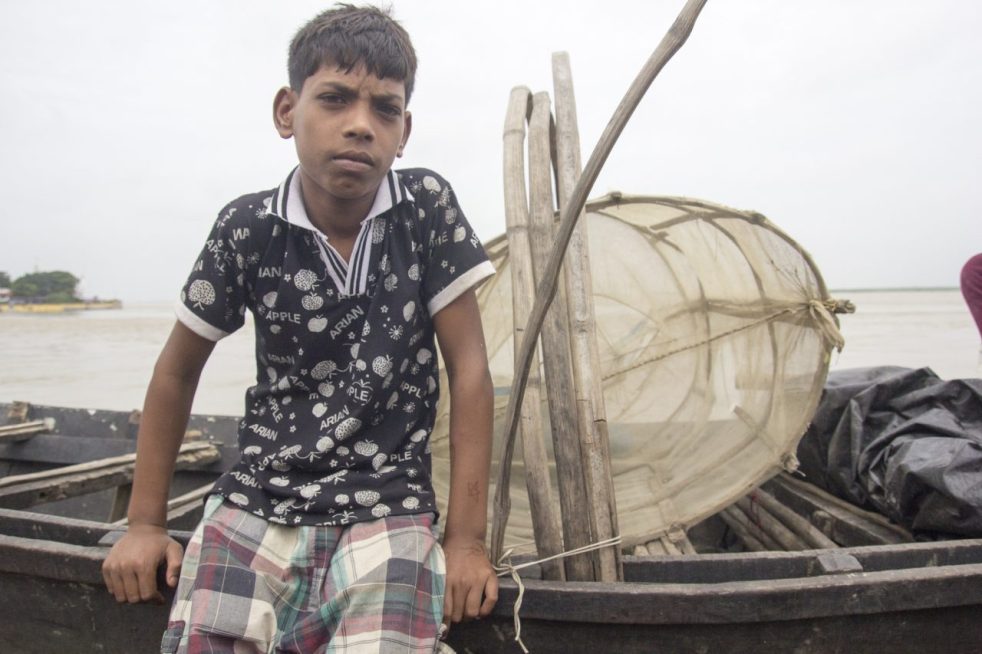
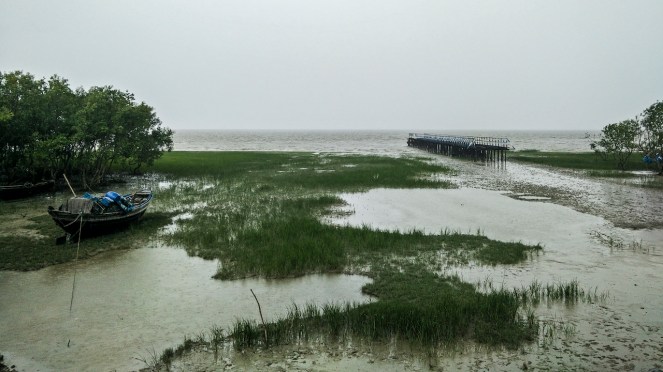
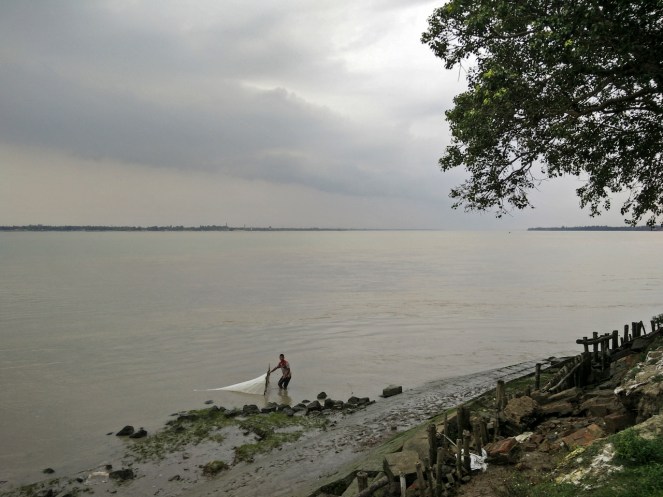
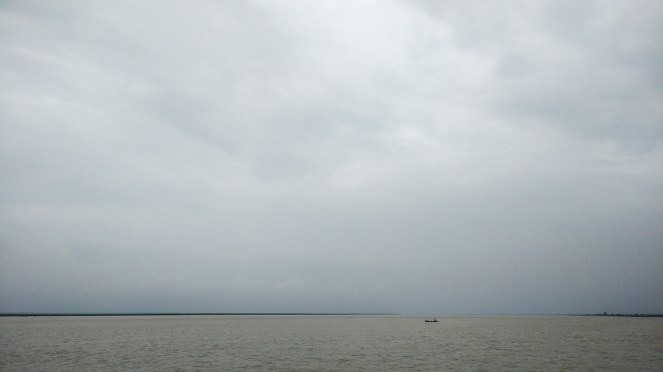
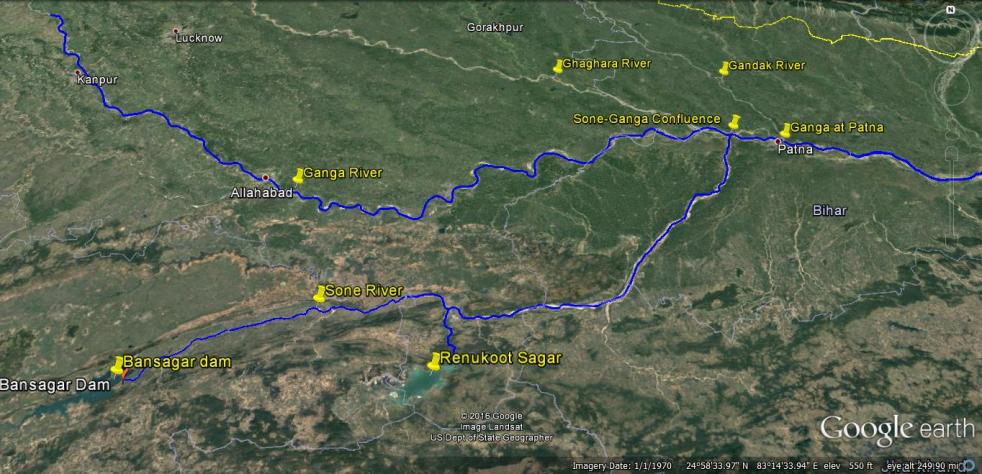

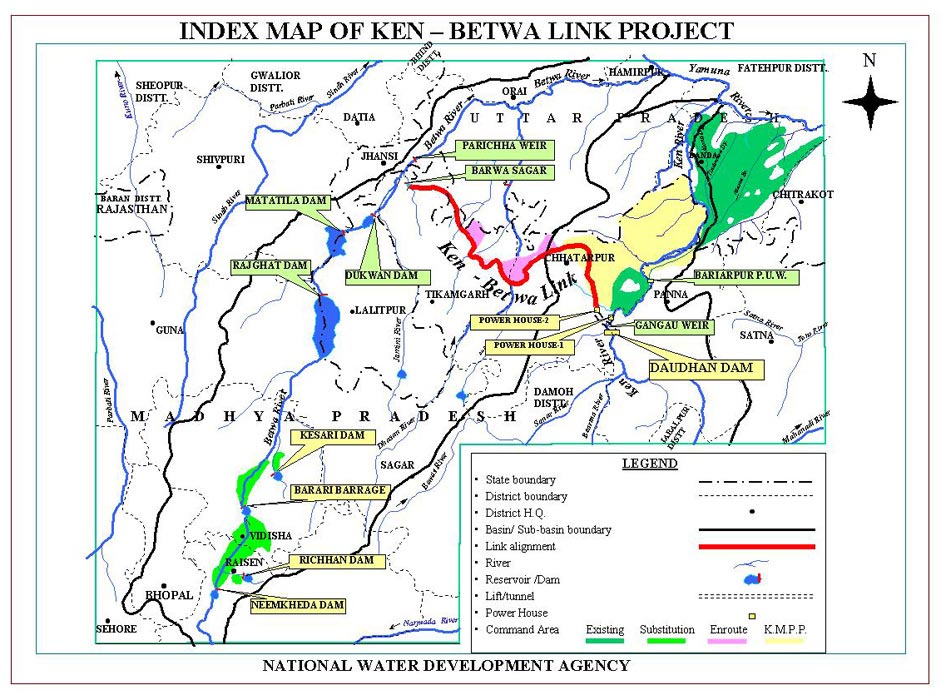

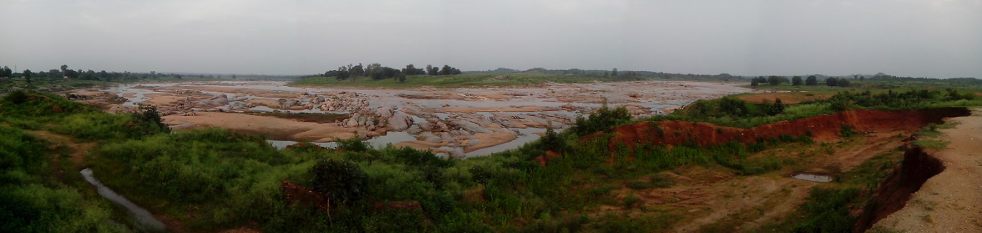
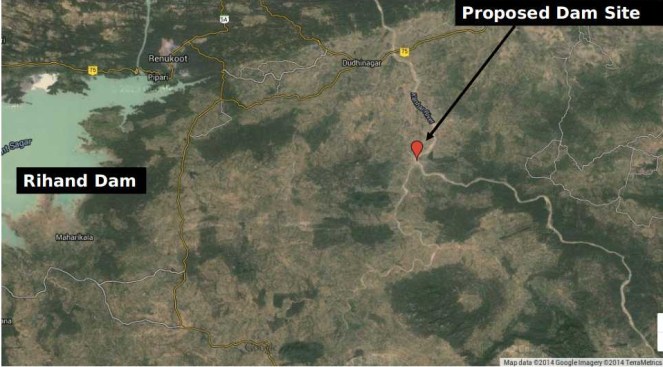


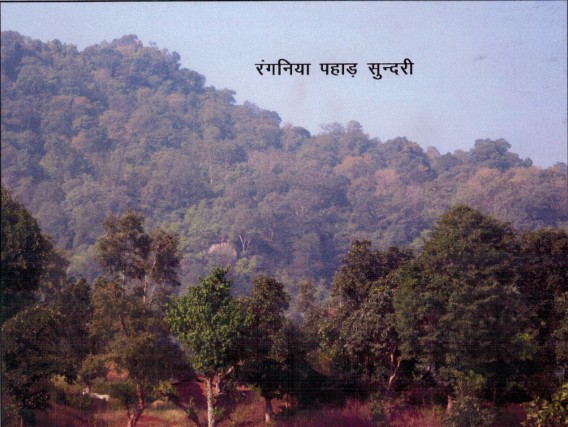



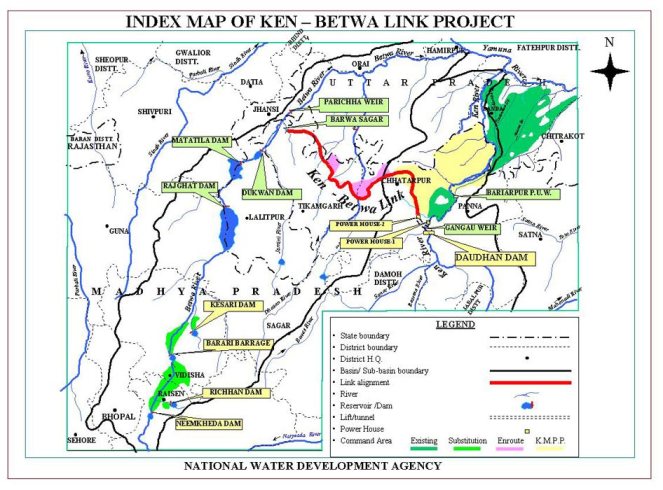


 SANDRP