DRP News Bulletin

DRP NB 051222: World Soil Day 2022: Soil where food begins

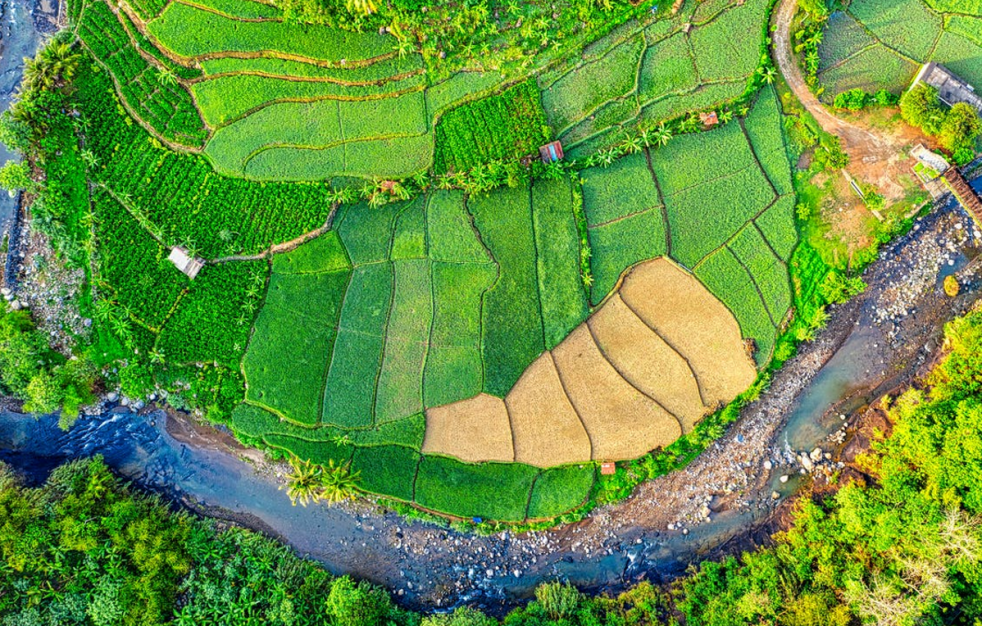
(Feature Image:-Several practical principles for soil and water conservations are important to be understood and combined. Source Wiki Farmer)

United Nations is celebrating today, i.e. Dec 5, as the World Soil day, the theme this year is “Soils: Where food begins”. The World Soil Day is held on Dec 5 each year since 2014, following the recommendation the International Union of Soil Sciences (IUSS) in 2002. The FAO Conference unanimously endorsed World Soil Day in June 2013 and requested its official adoption at the 68th UN General Assembly. In December 2013, the UN General Assembly responded by designating 5 December 2014 as the first official World Soil Day as a global awareness raising platform.

In the context of climate change, the soil organic content assumes additional huge significance. While the organic content in soils is decreasing globally, it can be reversed. If we can increase the soil organic content, it will not only help in mitigation of climate change by helping reduce the carbon in the atmosphere, it can also help in adaptation as soil with higher organic context has much greater capacity to store soil moisture, which can then be helpful in both flood mitigation (as more of the rain water is stored in the soil), and drought mitigation (soils with most moisture storage will help crops survive longer dry spells).

Continue reading “DRP NB 051222: World Soil Day 2022: Soil where food begins”
DRP News Bulletin

DRP NB 071122: Increasing focus on Urban Rivers; they continue to face destruction

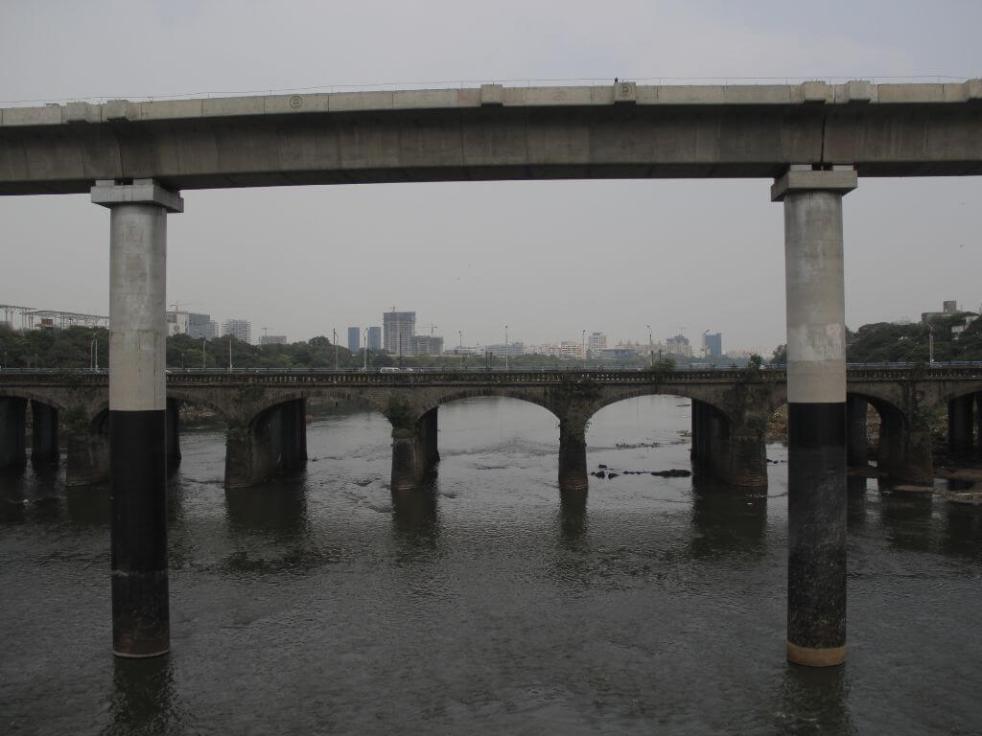
(Feature Image Source: Question of cities)

It is good to see that focus on Urban Rivers is increasing not only in media, but also by the government. The focus of the latest edition of “Question of Cities” is on Urban Rivers, carrying articles on, beside the lead article by SANDRP coordinator, Article “Rivers & Cities”, Sabarmati (Ahmedabad), Mula-Mutha (Pune), on River Centric Urban Planning Guidelines from Union Ministry of Housing and Urban Planning. In addition, this SANDRP DRP update also carries articles on Dravyawati River of Jaipur, Godavari river in Nasik and a report on Mandakini river in Badrinath.

All this increased focus is welcome, but will be worthwhile only when we see an effective impact of this on rejuvenated Urban rivers. We have yet to see that. In fact, if at all, the movement is hugely in opposite direction, with increasing destruction of Urban Rivers.

Continue reading DRP NB 071122: Increasing focus on Urban Rivers; they continue to face destruction
DRP News Bulletin

DRP NB 31×22: Unviable Hydro Projects rejected in Himachal, Arunachal Pradesh, Assam

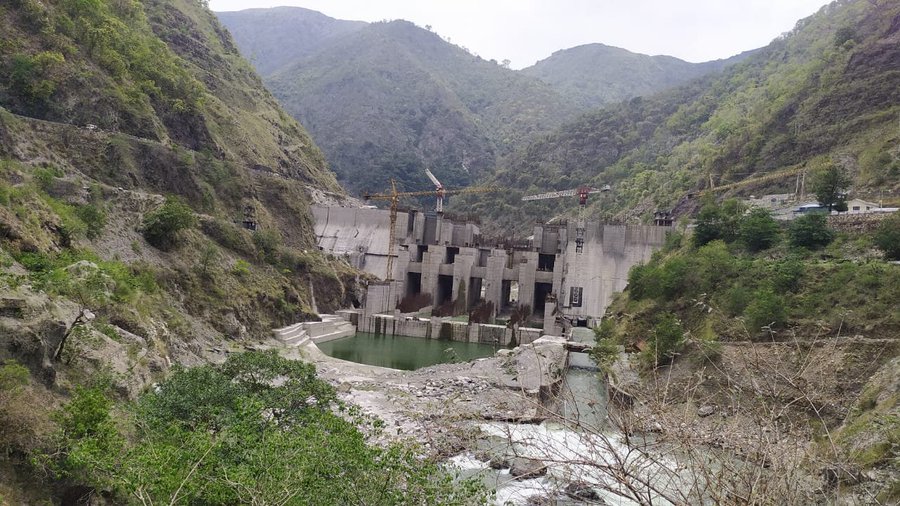
(Feature Image: Group photo during No Means No campaign in April 2022 against destructive hydro power projects in Kinnaur, Himachal Pradesh. Source: The Pahari Zone, You Tube)

A number of developments this week once again show how unviable large hydropower projects are facing rejection in a number of states. In Kinnaur (Himachal Pradesh) the local youth are demanding that the candidates in the state assembly elections to be held in November 2022 promise to work against the hydropower projects in the district.

In Arunachal Pradesh, the state government has told that High Court that they have cancelled all the 44 large hydropower projects proposed in Siang basin when locals alleged in the petition “the projects have been initiated in a reckless manner without any regard to the consequences of the same and without following any scientific research”.

In Assam with new accidents, the commissioning of the 2000 MW Lower Subansiri HEP has been pushed back further, making the over Rs 20000 crore project even more unviable. In J&K, the landslides killing 4 people at the under construction Ratel Hydropower project in Kishtwar district on Chenab River has again rung a warning as to what is in store for future if proper appraisal studies are not done. In Uttarakhand, the bid to take over the Lanco Hydropower project on Mandakini river, now undergoing bankruptcy case in the court have been rejected and same is likely to be the fate for the revised bid.

Continue reading DRP NB 31×22: Unviable Hydro Projects rejected in Himachal, Arunachal Pradesh, Assam
DRP News Bulletin

DRP NB 031022: Great Victory of People: MP govt scraps all contracts related to Maheshwar Dam

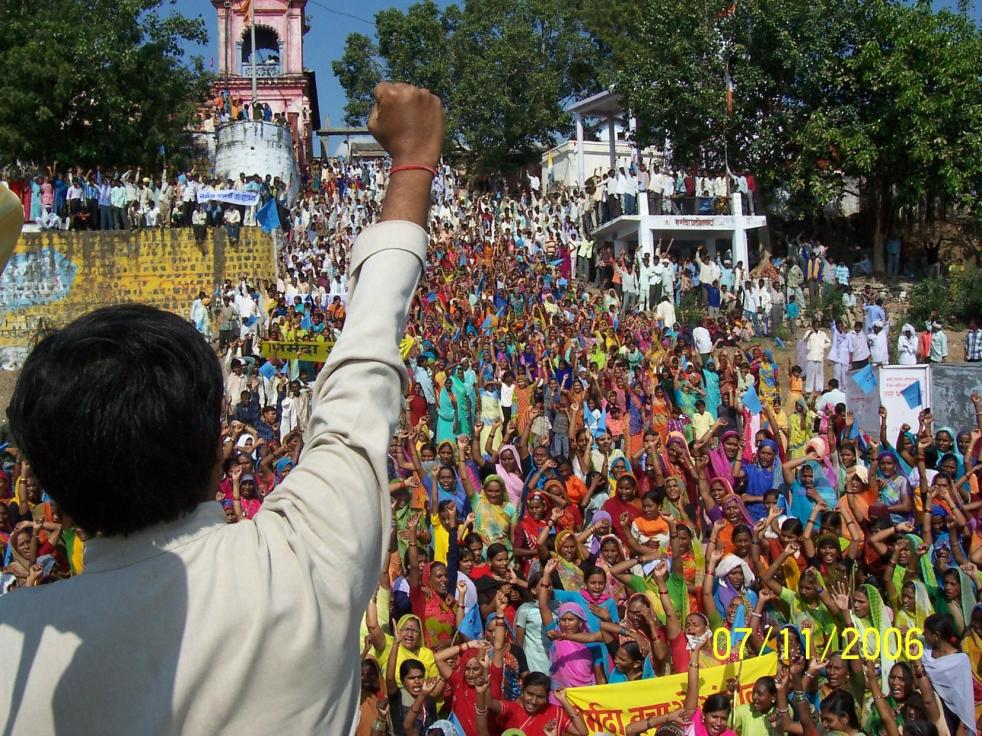
(Feature image: A protest by Narmada Bachao Andolan in Nov. 2006. Source: @Sripadmanthan)

On Sept 27, 2022, the Madhya Pradesh Government cancelled all contracts related to the Maheshwar Dam Project on Narmada. This massive dam on Narmada River in Madhya Pradesh upstream of Sardar Sarovar Project and downstream of the Omkareshwar Project was to be a multi-purpose project with a 400 MW hydropower component and water supply component among others. It was opposed by the people’s movement lead by Narmada Bachao Andolan for over two decades now. The project being implemented by the private textile company S Kumars showed no will or intention of taking care of the social or environment impacts of the project. Madhya Pradesh government so far was trying to push ahead with the project by hook or by crook, but finally had the sense to realise that this is going to be a massively costly affair at estimated Rs 42000 crores and the state and the people of state are only going to suffer costs and adverse impacts. The cancellation of all the contracts for the project signals a major victory of the people’s movement.

While congratulating the state government for cancelling the contracts, we would also suggest that the government needs to quickly decide about decommissioning of the dam, so that it does not pose safety risk to the people upstream and downstream and also perpetuates unnecessary adverse social and environment impacts. Earlier the dam is decommissioned, quicker will be the relief from these impacts. Moreover, the MP government should also not let the private company go scot free and all attempts should be made to recover the money spent and also penalise them for breach of the contracts. The private company should also be made to pay for the decommissioning costs.

Continue reading DRP NB 031022: Great Victory of People: MP govt scraps all contracts related to Maheshwar Dam
DRP News Bulletin

DRP NB 190922: Dams bringing unprecedented changes to the World’s Rivers

A new study published this week once again highlights not so well known impact of large dams on the rivers: role of rivers in building, supplying sediment, nutrients to floodplains, deltas, coastlines, estuaries, oceans and supporting so much biodiversity and how large dams are majorly adversely impacting this role of rivers. The study by scientists at Dartmouth using images from the NASA-US Geological Survey for 414 of the world’s largest rivers show the unprecedented changes the dams are bringing to World’s rivers, the impacts that in many cases are outweighing the impacts of climate change. This is particularly true of the northern hemisphere that includes India, World’s third largest dam builder.

Unfortunately in India, there is very little appreciation or acknowledgement of this role of rivers and how dams are affecting it. The least one can expect is that the Government of India should urgently initiate a study to document and understand this phenomena and also highlight what needs to be done about it. The study should be done by an independent team of multidisciplinary experts.

Continue reading DRP NB 190922: Dams bringing unprecedented changes to the World’s Rivers
DRP News Bulletin

DRP NB 290822: MP’s Dam safety mess: Publish the Karam inquiry report

(Feature Image: Karam dam after breach. Source: Patrika)

Every week we get more evidence of the massive Dam safety mess in Madhya Pradesh. The Karam dam disaster that started on the eve of independence day is still unfolding. The inquiry committee report has been submitted, but it has not been made public. This is totally wrong and shocking. Dam Safety is a public interest issue and all information related to dam safety has to be in public domain. The inquiry committee report should be immediately put in public domain. More importantly an independent inquiry should be set up as the inquiry set up earlier was more of an in-house inquiry.

Close on heals of Karam dam disaster comes the news of risks due to unattended Maheshwar dam, a massive dam on Narmada river that remains unfinished and unattended, with one of the gates damaged and story of stolen motors, wires and other spare parts and power cut, which means the hydraulic system for gates is non-functional. Again the report of the NVDA-MWR officials after visit to the dam site should be in out in public domain, as also the reports of the dam safety committee reportedly set up the MP govt for assessing safety of all the dams of MP.

Continue reading DRP NB 290822: MP’s Dam safety mess: Publish the Karam inquiry report
DRP News Bulletin

DRP NB 1 Aug 2022: Dams reduce sediment load in rivers leading to higher coastal erosion

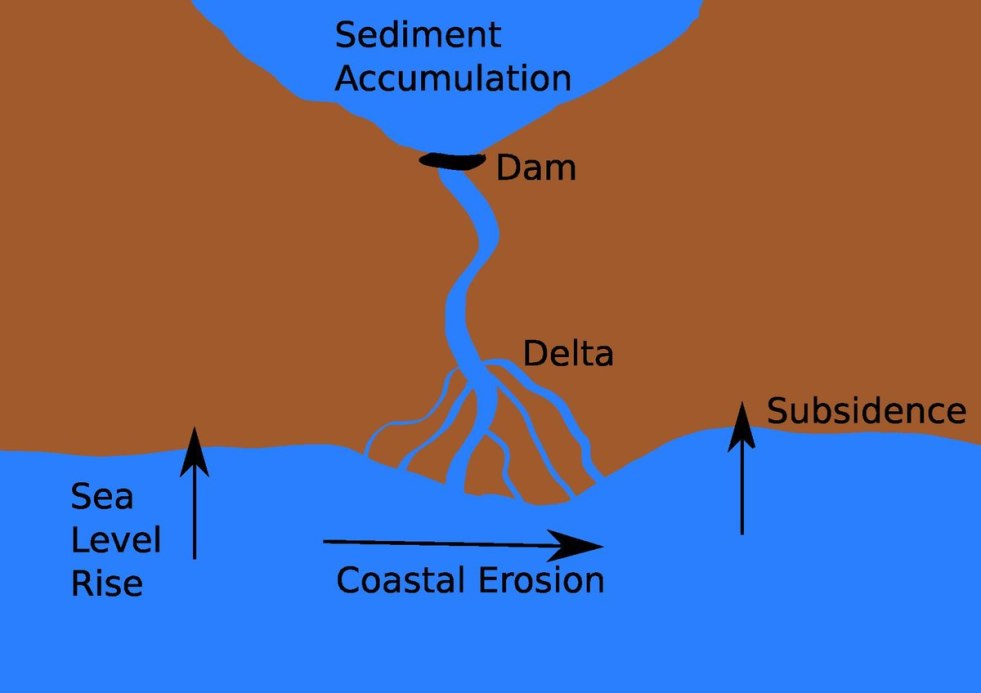
(Feature image: Delta Land Loss Mechanisms. Source Wikimedia Commons)

A new study this week has reminded us what has been known for long. Dams not only store water but also trap the sediment flowing in the river. Whatever smaller quantity of water flow from dams to downstream areas, has much lower or no silt. A lot of that silt was supposed to reach the coast, helping fight against the erosion of the coast due to sea tides and waves. With drastically lower sediment reaching the coasts, higher coastal erosion is the result. While climate change is definitely contributing to the increased coast erosion due to more frequent and higher intensity storms from the sea, the role of dams tend to work as force multiplier in increasing the coastal erosion due to less sediment reaching the coasts from river.

While a new study by a Pune University has highlighted this phenomena in case of Godavari river, peninsular India’s biggest river, this is also happening at most other rivers and where they meet the coasts. As in case of Farakka, closer the terminal dam is to the coast, greater is its effectiveness to trap the river sediment and higher is its contribution likely to be to the increase in coastal erosion.

Continue reading “DRP NB 1 Aug 2022: Dams reduce sediment load in rivers leading to higher coastal erosion”
DRP News Bulletin

DRP NB 250722: State of Yamuna River ignored by NMCG and MoEF

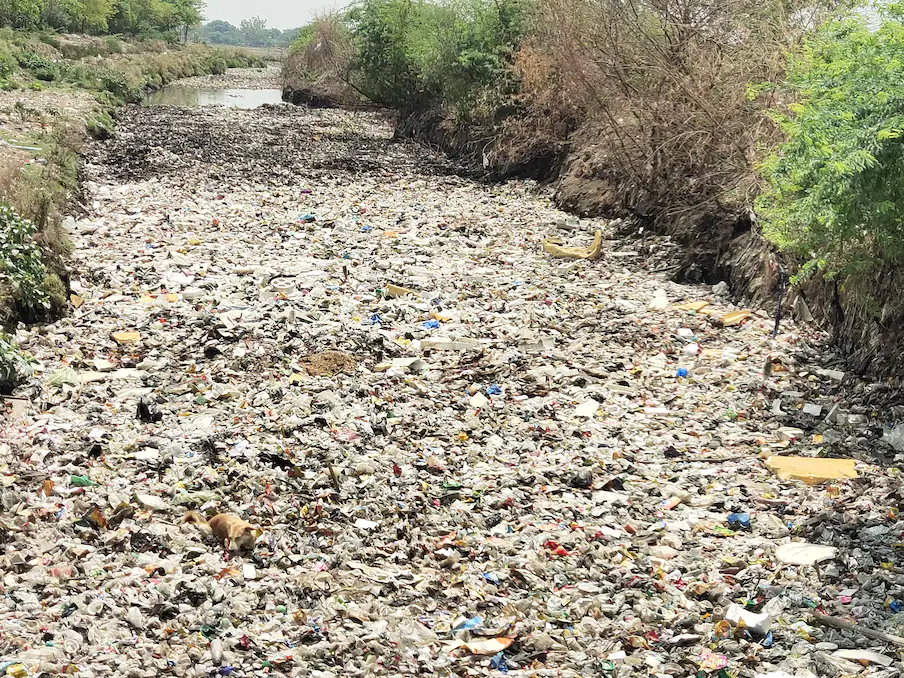
(Feature Image:- A drain choked with solid waste and untreated effluents running through Yamuna floodplains in Mathura. Source: News 18, 13072022.)

This year, even in the middle of monsoon, the Yamuna river in the national capital is in such a pathetic state, there is insufficient flows in the most of the days. The govt may jump to blame it on poor monsoon rains, ignoring that the upstream dams like the recently commissioned Vyasi dam not releasing water in the downstream is also a major reason beside the unsustainable riverbed mining and also dumping of solid waste in the upstream, including due to the building of mindless projects like the Char Dham highway, all in the news this week. Both National Mission on Clean Ganga (NMCG) and Union Ministry of Environment and Forests (MoEF) should be concerned about this lack of flows downstream from the dam and other issues listed above, but they clearly seem least bothered.

Continue reading “DRP NB 250722: State of Yamuna River ignored by NMCG and MoEF”
DRP News Bulletin

DRP NB 180722: Polavaram, Kaleshwaram projects damaged, Kadam dam overflowed

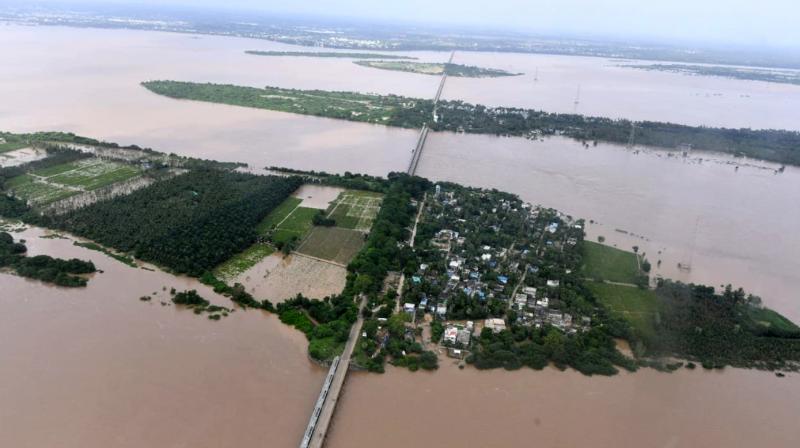
(Feature image: An aerial view of the flood-affected areas in Godavari districts on July 15. Photo by arrangement/Deccan Chronicle)

One of the noteworthy feature of the floods in ongoing on monsoon so far has been what is happening around large dam projects, particularly in Central India, Eastern India and Southern India. The Polavaram dam on Godavari river, the largest under construction dam in India, again suffered damage this monsoon as confessed by the Andhra Pradesh Irrigation Minister Ambati Rambabu after his frequent visits to the dam. The dam had suffered damage in 2019 floods and it is still not clear what is way forward and the dam has again suffered damage. This will make the unviable project even more unviable, but the government will continue to sink good money after the massive sunk funds.

The Kaleshwaram project in Godavari basin, the largest lift irrigation projects of India has also faced damages with at least two pump houses with large number of massive capacity pumps getting submerged, and third one partially flooded. The full impact of this damage will only be known after assessment once the floods recede.

Continue reading “DRP NB 180722: Polavaram, Kaleshwaram projects damaged, Kadam dam overflowed”
Urban Rivers

Top Ten Judicial Actions on Urban Rivers 2022: Executors Deliberately Delaying, Diluting, Defying orders

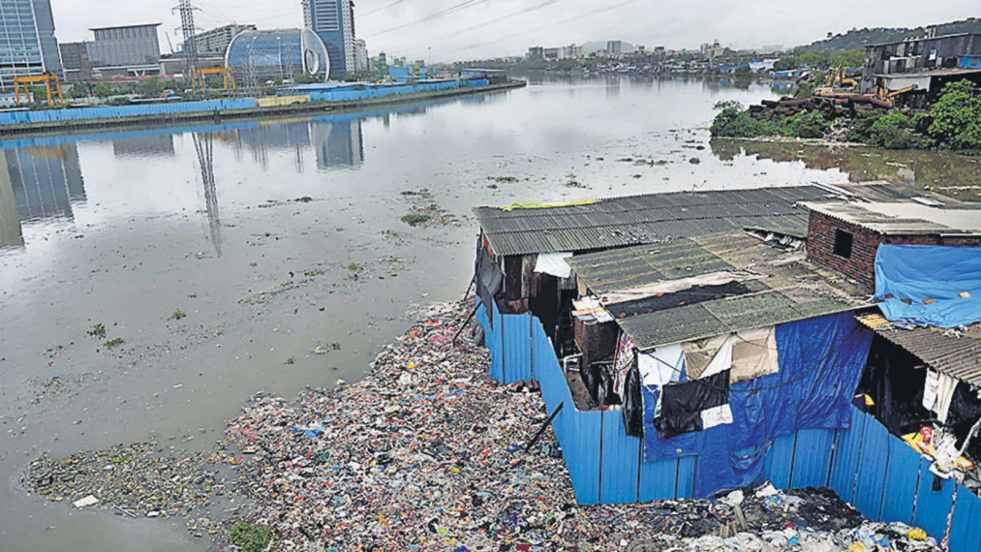
(Feature Image: The order is subject to the orders of the SC which is pending. NGT on Nov. 24, 2021ordered the BMC to deposit within three months an environmental penalty of ₹28.20 crores to the CPCB for discharging raw sewage into the city creeks, rivers and drains. HT Photo)

During past one year, the judicial bodies including National Green Tribunal, Supreme Court, various High Courts have passed several orders and made critical observation while dealing with multiple issues afflicting Urban Rivers in India. This report highlights top ten such judicial interventions across India. The stories underline that the responsible agencies particularly pollution control boards and district, state and union governments have been failing miserably in timely and efficient implementation of these judicial orders, some of which are quite remarkable. If the executive bodies do not show right spirit and seriousness in enforcing the existing rules and court orders the state of India’s urban river only go downhill.    

Continue reading “Top Ten Judicial Actions on Urban Rivers 2022: Executors Deliberately Delaying, Diluting, Defying orders”