Dams · DRP News Bulletin

DRP News Bulletin 22 Feb. 16 (Unprecedented water crisis in Delhi due to Jat quota stir)

Unprecedented water crisis in Delhi due to Jat stir Terming the water crisis in the national capital as “unprecedented”, Delhi minister Kapil Mishra has warned that the situation might worsen in the next few days if the supply from Haryana is not immediately restored. He said the Delhi Jal Board (DJB) had almost run out of water and advised people to use water judiciously. Delhi gets its bulk of water supply from Haryana and the stir has affected 65% of water supply in Delhi has been cut with the shutting down of seven water treatment plants— Wazirabad, Chandrawal, Dwarka, Okhla, Haiderpur, Nangloi and Bawana which provide around 500 million gallons per day (MGD). In all Delhi has nine water treatment plants which together produce 820 MGD of potable water. Of these, only two Sonia Vihar and Bhagirathi fed by water from Uttar Pradesh are operational. The current production is only 240 MGD. Among the areas affected were Dwarka, Janakpuri, Munirka, Palam, Rajouri Garden, Punjabi Bagh, Vasant Kunj, Saket, Green Park and Lodhi Colony, where residents complained of little or no water. In another news report DJB is reported to have made 140 water filling points functional to feed tankers which would be sent across the city, reeling under an unprecedented water crisis. Water Minister Kapil Mishra reviewed the contingency plan for water management in West, North, North-west, Outer and Central Delhi and said tankers will deliver water at 663 points to partially meet the shortage of 480 MGD. These points will keep rotating. Plan is to cover around 2,000 points by Monday evening. The DJB supplies around 900 MGD of water daily out of which around 600 MGD of raw water come from Munak Canal. Even if Haryana releases water immediately, it will take at least 24 hours to restore the supply. Meanwhile Supreme Court on 22 Feb.16 scolded Delhi government. for approaching the court instead of resolving the water crisis with Haryana. The Kejriwal government had approached the top court on in view of the severe water crisis in the national capital after Jat protesters blocked water supply through Munak canal in Sonipat. During the hearing on government’s plea, the court took strong objection to Water Minister Kapil Mishra’s presence inside the courtroom. On the other hand, the minister accuses Haryana & Central Government for providing no official information on the crisis He said the Delhi government was “repeatedly trying to communicate” with the two governments to find out when will the supply resume, but without much success. Also see Jat quota stir: Water supply cut, Delhi may go dry 

Continue reading “DRP News Bulletin 22 Feb. 16 (Unprecedented water crisis in Delhi due to Jat quota stir)”

Dams · DRP News Bulletin

DRP News Bulletin 15 Feb. 2016 (Govt plans National Water Commission)

Govt plans National Water Commission In one of the most significant reforms in the water sector in a long time, the govt is in the process of ordering a complete restructuring of the organisations responsible for regulating the use of water resources, with the objective of bringing in greater efficiency, better planning and increased emphasis on conservation of water. According to news report the Central Water Commission (CWC), which oversees irrigation projects, flood management and drinking water supply, and the Central Ground Water Board (CGWB) are likely to be disbanded, and a National Water Commission is proposed to be set up in their place. A few other smaller organisations with specialised mandate like data gathering and analysis are also likely to be created.

A team under Mihir Shah, a former member of the then Planning Commission of India, is already preparing a blueprint for better management of water resources. The idea of institutional restructuring is said to have the backing of this panel. It is likely to submit its report in the next two months. In the new scheme of things, more emphasis is being given to judicious use, and conservation, of ground water. It is estimated that despite elaborate irrigation projects, about 60 per cent of irrigation during the non-rainy season is still done by pumping out ground water. The large irrigation projects, meanwhile, have given sub-optimal results.

A large number of sewage treatment plants, being built as part of the Clean Ganga initiative that will eventually spread to other rivers as well, will provide a new source of water that is fit not only for industrial use but also for irrigation and many other purposes. The river rejuvenation plans, not just of Ganga but others as well, will become an integral part of overall water resources management. Apart from reducing pollution in the rivers, and maintaining a minimum ecological flow, the rejuvenation plans would also ensure that the rivers are able to adequately recharge the aquifers in its basins.

Allocation of water resources to each state is also on the agenda. But this process is likely to take time as it would involve extensive consultations with the state governments. Once a consensus emerges, a central legislation on allocation of water resources is planned to be brought in. This is aimed at reducing inter-state water disputes.

Continue reading “DRP News Bulletin 15 Feb. 2016 (Govt plans National Water Commission)”
Dams · DRP News Bulletin

DRP News Bulletin 01 Feb. 2016 (Experts suggest ways to revive Madurai’s dying rivers)

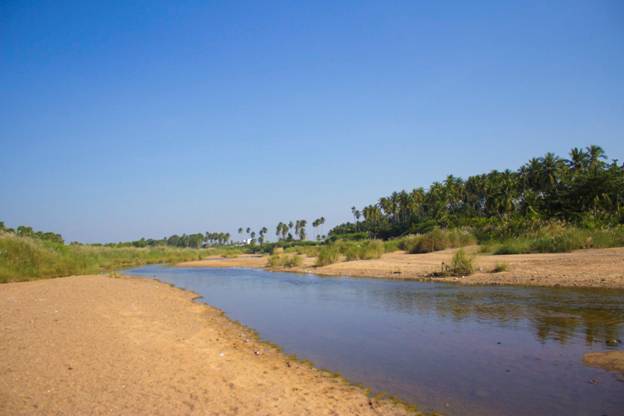
Tamil Nadu Experts suggest six ways to revive dying Madurai’s rivers According to a paper entitled Future Proofing Indian Cities: Towards an approach to spatial and social analysis for sustainable development of Madurai by Jayaraj Sundaresan Development Planning Unit, University College London J. Kanagavalli DHAN Foundation, Madurai their documentation has revealed the significant role of Kruthumal River in the historic, cultural, ecological and economic growth of Madurai. Centuries ago, Madurai city developed as a small urban settlement on the banks between the rivers Kruthumal and Vaigai. Appearing in epics and sacred texts such as Srimad Bhagavatham and Narayaneeyam, Kruthumal has significant presence in the written history of Madurai. It was also known as Narayana Cauvery. It supplied water to the Ahazhi (moat) around the Tirumalai Nayakkar palace in Madurai. The paper gave six methods to look after Vaigai and Kruthumal Rivers in Madurai.  Looking at the condition of the rivers one feels it is hopeless, but there is hope if together with the government, something is done to control the destruction of the river, by law. And with organizations like DHAN Madurai can hope for a clean Vaigai in the future.

Continue reading “DRP News Bulletin 01 Feb. 2016 (Experts suggest ways to revive Madurai’s dying rivers)”

Dams · DRP News Bulletin

DRP News Bulletin 18 Jan.16 (MoEF Expert Committee on Dams continues to ignore democratic norms)

MoEF Expert Committee on Dams continues to ignore democratic norms  The minutes of the 90th meeting of the Expert Appraisal Committee on River Valley and Hydropower projects held on Dec 22-23, 2015, made available today (January 18, 2016, see: http://environmentclearance.nic.in/writereaddata/Form-1A/Minutes/0_0_11118122212121Minutes-90EAC.pdf), shows how the committee continues to ignore basic democratic norms. Here are some key issues about the minutes of this latest meeting:

Continue reading “DRP News Bulletin 18 Jan.16 (MoEF Expert Committee on Dams continues to ignore democratic norms)”

Dams · DRP News Bulletin

DRP News Bulletin 11 Jan. 2016 (Punjab Villagers oppose Dam on Ghaggar River)

86 Villages rise in protest against dam on Ghaggar  A dam is proposed to be constructed on the Ghaggar, near Banur, at a cost of Rs 75 crore. An agreement was signed between representatives of various villages located downstream and the Irrigation Department in 2006 promising 200 cusecsto irrigate fields in thesevillages. Villagers now fear that they will not get the promised 200 cusecs after the construction of the dam. Their claim is that the water flow in the river is much lower than 400 cusecs, as claimed by the irrigation department. The department, on the other hand, sticks to its stand that the water flow in the river is sufficient enough to feed the canal and the villages downstream. However, a perusal of the monthly average discharge data of the river for the past 10 years, defies the department’s claim. It revealed that the average yearly discharge barely crossed 400-cusec mark over the past 10 years, excluding the peak period (July to September). Interestingly NABARD and the State Irrigation department had separately conducted studies of the project well before giving it a green signal.

Continue reading “DRP News Bulletin 11 Jan. 2016 (Punjab Villagers oppose Dam on Ghaggar River)”

Dams

DRP: 21 Dec. 2015 (100 people have a narrow escape as Ganga level rises after sudden release from Tehri Dam)

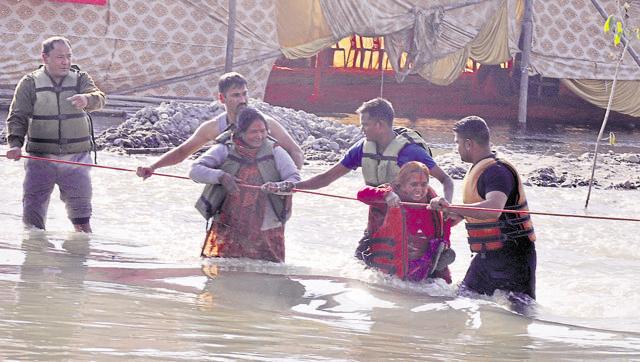
100 people have a narrow escape as Ganga level rises after sudden release from Tehri Dam More than a 100 people who were attending a religious discourse had a narrow escape when the water level rose suddenly in the Ganga River in the temple town of Rishikesh. According to the police, the water level increased after Tehri Dam released water, a routine exercise that is done after informing officials concerned. CD Anthwal, circle officer Rishikesh told HT that the people attending the religious discourse were rescued with the help personnel of the Jal Police (water police).

Continue reading “DRP: 21 Dec. 2015 (100 people have a narrow escape as Ganga level rises after sudden release from Tehri Dam)”

Dams · DRP News Bulletin

DRP: 14 Dec. 2015 (Your City can be Next Chennai?)

Our cities with their high population density and poor civic standards are vulnerable to the domino effect that can be set off by freak weather it happened in Mumbai in 2005. Last year, it was Srinagar. Now it’s happening in Chennai. Could it happen to your city?

Judging by the burgeoning urban population, and the uncontrolled growth of urban centres that fail on every parameter including drainage and garbage disposal, most of our cities are disasters waiting to happen.

As per global standards cities across the world should prepare for a 100-year flood recurrence period. In other words, they have to be ready for a severe flood situation, even if it has one-in-100 chance of occurring. But our cities guardians overlook larger flood cycle as freak weather events.

That exactly is happening in IT corridor Hyderabad which is sitting on a plan that lacks a storm-water drainage system and ‪‎Navi Mumbai International Airport in Maharashtra which will be built on the flood plains of Ghadi and Ulwe rivers. Amaravati the state capital of Andhra Pradesh is also doing away its underground water channels which drain out flood waters during stresses.

Continue reading “DRP: 14 Dec. 2015 (Your City can be Next Chennai?)”

Dams

Dams, Rivers & People – April-May 2015

HYDROPOWER

“Right now, hydel is almost stalled”: Piyush Goyal (18 May 2015)

Union Power Minister makes some candid comments on Hydro: “Right now, hydel is almost stalled. We have Teesta stuck for various reasons. Subansiri, Maheshwar, Lower Subansiri, all of them have different challenges. Small hydros are facing challenges of transmission, they are facing challenges of local area problems. So, by and by, the hydro sector will need a more holistic thinking. The courts have also taken up certain matters, particularly in Uttarakhand, post the tragedy (of floods in 2013). There is the mission of Ganga to ensure that there is a reasonable flow—Aviral Ganga, which we are committed to. We are working on all of these plans… For example, Subansiri had an issue where the local population had concerns. We immediately got an eight-member very, very high-level expert committee, including Central Water Commission, Central Electricity Authority, and experts from Assam. They are all working together to see the environmental impact, structural impact, riparian state impact and riverbed impact.

http://www.livemint.com/Industry/9HtQbGUG0v4rYIczIT21hJ/Time-is-now-ripe-for-a-power-fund-says-Piyush-Goyal.html Continue reading “Dams, Rivers & People – April-May 2015”

Dams

DRP from SANDRP: January 2015

DRP from SANDRP January 2015: The following developments are about dams, rivers & people, mostly from India but also some from South Asia and rest of the world. This is for the period Jan 1 to Feb 12, 2015, we hope to publish this more frequently in future. These were put up on daily basis on SANDRP Face book page: https://www.facebook.com/sandrp.in. If you want to get it regularly, you can like the FB page.

Feedback on usefulness of this is welcome.  Continue reading “DRP from SANDRP: January 2015”