Dams · DRP News Bulletin

DRP: 15 Feb. 2016 (Govt plans National Water Commission)

Govt plans National Water Commission In one of the most significant reforms in the water sector in a long time, the govt is in the process of ordering a complete restructuring of the organisations responsible for regulating the use of water resources, with the objective of bringing in greater efficiency, better planning and increased emphasis on conservation of water. According to news report the Central Water Commission (CWC), which oversees irrigation projects, flood management and drinking water supply, and the Central Ground Water Board (CGWB) are likely to be disbanded, and a National Water Commission is proposed to be set up in their place. A few other smaller organisations with specialised mandate like data gathering and analysis are also likely to be created.

A team under Mihir Shah, a former member of the then Planning Commission of India, is already preparing a blueprint for better management of water resources. The idea of institutional restructuring is said to have the backing of this panel. It is likely to submit its report in the next two months. In the new scheme of things, more emphasis is being given to judicious use, and conservation, of ground water. It is estimated that despite elaborate irrigation projects, about 60 per cent of irrigation during the non-rainy season is still done by pumping out ground water. The large irrigation projects, meanwhile, have given sub-optimal results.

A large number of sewage treatment plants, being built as part of the Clean Ganga initiative that will eventually spread to other rivers as well, will provide a new source of water that is fit not only for industrial use but also for irrigation and many other purposes. The river rejuvenation plans, not just of Ganga but others as well, will become an integral part of overall water resources management. Apart from reducing pollution in the rivers, and maintaining a minimum ecological flow, the rejuvenation plans would also ensure that the rivers are able to adequately recharge the aquifers in its basins.

Allocation of water resources to each state is also on the agenda. But this process is likely to take time as it would involve extensive consultations with the state governments. Once a consensus emerges, a central legislation on allocation of water resources is planned to be brought in. This is aimed at reducing inter-state water disputes.

Continue reading “DRP: 15 Feb. 2016 (Govt plans National Water Commission)”
Dams · DRP News Bulletin

DRP: 8 Feb.2016 (Hiding Environment Information-Against Sabka Sath, Sabka Vikas?)

SANDRP Open Letter to MoEF&CC Is Not Hiding Environment Information Against Sabka Sath, Sabka Vikas? Even as the Ministry of Environment, Forests and Climate Change has been sanctioning cascades of hydro power projects on here-to free flowing rivers in the Himalaya and North East India, Cumulative Assessment of the Impacts of these projects became a crucial area of concern. The cumulative impacts of these projects on the hydrology, downstream flow, sudden water releases, deforestation, muck disposal, influx of migrant workers, seismicity of the region etc. is huge as compared to individual impacts. The projects together stand to change the social and ecological fabric of these regions.

Cumulative Impact Assessment (CIA) studies are a part of the Environment Impact Assessment Process under the EIA Notification (2006) and Environment (Protection) Act 1986. The documents of these CIAs have been uploaded on the Environment Clearance website in the past, as was required under number of laws. However, as the EAC is slated to consider whopping 4 CIAs in its upcoming meeting on the 8 and 9th Feb, not a single CIA-related document is available on the MoEF and CC website! We are told that these may not be made available in the future.

Continue reading “DRP: 8 Feb.2016 (Hiding Environment Information-Against Sabka Sath, Sabka Vikas?)”

Rivers · Sand Mining

River Sand Mining in India in 2015

Unsustainable sand mining from riverbeds can have huge social, environmental, geomorphic and disastrous impacts for rivers. In this three part report, SANDRP is trying to provide a picture of what happened on this issue in 2015 in India.

This first part looks into 2015 putting together instances of illegal sand mining that occurred throughout the year in different Indian States. The successive blogs would make an attempt to cover all governmental measures and judicial interventions taken in 2015 to reign in uncontrolled extraction of this possibly most consumed natural resource after air and water.

Illegal mining of sand is profoundly linked to growth in construction industry that have accelerated in recent decades. Since then demand for this mineral is only going up. Today possibly there is not a single river in the country that is not ruined by sand mining. As a result, while the state of rivers has gone worse, the number of violent instances around illegal sand mining is on the increase.

Continue reading “River Sand Mining in India in 2015”

Dams · DRP News Bulletin

DRP: 25 Jan. 2016 (FAO supports SRI)

“Save & Grow” FAO supports SRI A new FAO book out on 18 Jan.16 takes a close look at how the world’s major cereals maize, rice and wheat can be grown in ways that respect and even leverage natural ecosystems.  FAO also underscores that “Save and Grow” farming systems are knowledge-intensive, and need to be built on local knowledge and needs, recognizing the important role of farmers as innovators. GREAT to see that this FAO publication (http://www.fao.org/3/a-i4009e.pdf ) contains a very detailed discussion and presentation on SRI, the first time that there has been such an endorsement of SRI (System Rice Intensification). With this publication, FAO joins the World Bank (http://info.worldbank.org/etools/docs/library/245848/) and IFAD (http://www.ifad.org/english/sri/  and http://www.ifad.org/english/sri/documents.html).

Continue reading “DRP: 25 Jan. 2016 (FAO supports SRI)”

Dams · DRP News Bulletin

DRP: 11 Jan. 2016 (Punjab Villagers oppose Dam on Ghaggar River)

86 Villages rise in protest against dam on Ghaggar  A dam is proposed to be constructed on the Ghaggar, near Banur, at a cost of Rs 75 crore. An agreement was signed between representatives of various villages located downstream and the Irrigation Department in 2006 promising 200 cusecsto irrigate fields in thesevillages. Villagers now fear that they will not get the promised 200 cusecs after the construction of the dam. Their claim is that the water flow in the river is much lower than 400 cusecs, as claimed by the irrigation department. The department, on the other hand, sticks to its stand that the water flow in the river is sufficient enough to feed the canal and the villages downstream. However, a perusal of the monthly average discharge data of the river for the past 10 years, defies the department’s claim. It revealed that the average yearly discharge barely crossed 400-cusec mark over the past 10 years, excluding the peak period (July to September). Interestingly NABARD and the State Irrigation department had separately conducted studies of the project well before giving it a green signal.

Continue reading “DRP: 11 Jan. 2016 (Punjab Villagers oppose Dam on Ghaggar River)”

Dams · DRP News Bulletin

DRP: 04 Jan. 2016 (Rivers are soul of India: PM Narendra Modi)

Rivers are soul of India: Prime Minister Narendra Modi  Excerpts From text of PM’s inaugural address at 103rd session of Indian Science Congress, Mysuru Rivers have played as important a role in human history as oceans. Civilisations have been nurtured by rivers. And, rivers will remain critical for our future. So, revival of rivers is an essential part of my commitment for a cleaner and healthier future for our society, economic opportunities for our people, and renewal of our heritage. We need regulations, policy, investments and management to achieve our objective. But, we will succeed only when we integrate technology, engineering and innovation into our efforts, not just to clean our rivers now but to keep them healthy in the future as well. For this, we also need scientific understanding of the impact of urbanisation, farming, industrialisation and groundwater use and contamination on the river eco-system. River is the soul of Nature. Their renewal must be an element of a larger effort to sustain Nature.

Continue reading “DRP: 04 Jan. 2016 (Rivers are soul of India: PM Narendra Modi)”

Dams

DRP: 30 Nov. 2015 (Delhi does not need Renuka Dam, Sharda-Yamuna linking: Kapil Misra, Delhi Water Minister)

Kapil Misra

Speaking during India Rivers Day- 2015 Kapil Misra said that Delhi does not require any more water from external sources such as the Renuka Dam or Sharda Yamuna River link.  The minister also assured that the Yamuna’s water will be improved within three years to make it good enough to bathe in. He raised doubts over expensive sewerage projects and felt need building of smaller and decentralised sewerage management system. The India Rivers Day brought together several individuals and organisations who have been working on the issues of river conservation in the country.

Continue reading “DRP: 30 Nov. 2015 (Delhi does not need Renuka Dam, Sharda-Yamuna linking: Kapil Misra, Delhi Water Minister)”

Dams

Dams, Rivers & People: Sep 14, 2015

SAD NEWS: SHRI RAMASWAMY IYER IS NO MORE:

He Watered the Arid Fields of Administration with Intellectual Rigour and Honesty: Amita Baviskar payes tribute to Ramaswamy Iyer Iyer’s critical view of large dams became stronger when he was appointed to review the Tehri project in 1996 and to head the India country study for the World Commission on Dams in 1997. Subsequently, studying trans-border river conflicts between India, Nepal and Bangladesh, he began to see dams as only one element in the larger mismanagement of water by engineers impervious to social and ecological impacts. In one more news report paying tribute to him R. Uma Mahashwari writes that Ramaswamy R. Iyer used to see rivers as inextricable parts of the lives of communities 

Continue reading “Dams, Rivers & People: Sep 14, 2015”

Dams

Dams, Rivers & People: Sep 07, 2015 (Narmada Canal, Salt Mining in Runn of Kutch a threat to endangered Asiatic Wild Ass)

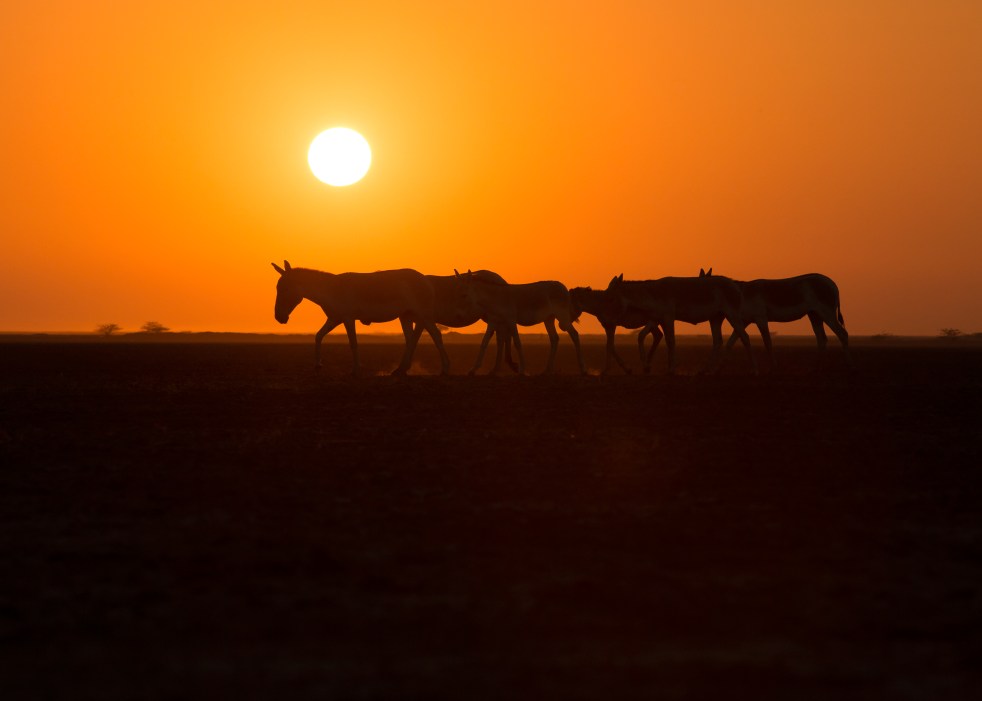
Asiatic wild ass now on endangered list; Population Down By 52% In 16 Years The IUCN report mentions that the Little Rann of Kutch faces direct threat from increasing human activities. The ecology of the wild ass sanctuary, for example, is threatened by a canal building project -the Sardar Sarovar Project of the Narmada Development Authority. It also points out how the rising numbers of grazing livestock leads to stiff competition for natural reserves. Salt mining, a major economic industry for local people, has increased 140% since 1958.
Dams

Dams, Rivers & People: July 13, 2015

HYDRO POWER

UTTARAKHAND: Vishnugad-Peepalkoti Hydroelectric Project affected protested against World Bank (09 July 2015) The affected people of Vishnugad-Peepalkoti Hydroelectric Project (VPHP) have surrounded the officers of World Bank with the slogan of “World Bank Go Back, Let Ganga free”. In even the bad weather and rain, almost 70-80 people have surrounded the hotel in which the team of World Bank was staying. Their officers were present there from 03rd July without the knowledge of villagers. After the incident, Ms.Sona Thakur of World Bank has came out and asked them to sit and talk inside the hotel. https://www.facebook.com/sandrp.in/posts/1083146828379656

Why Vishnuprayag and other Uttarakhand Hydro Projects continue to affect two years after the June 2013 disaster https://sandrp.wordpress.com/2015/07/09/why-vishnuprayag-and-other-uttarakhand-hydro-projects-continue-affect-two-years-after-the-june-2013-disaster/

Small Hydro: Kharadi in Yamuna Basin: when Small Hydro unleashes big destruction https://sandrp.wordpress.com/2015/07/10/kharadi-small-hydro-unleashing-big-destruction/

Jammu & Kashmir: NHPC’s Chutak power house submerged in Kargil: NHPC clueless two weeks after the disaster https://sandrp.wordpress.com/2015/07/11/nhpcs-chutak-power-house-submerged-in-kargil-nhpc-clueless-two-weeks-after-the-disaster/

DAMS

MHA to Monitor Landslide Dams to Avoid Any Disaster (10 July 2015) The threat of severe earthquakes in the Himalayan region close on the heels of the devastating one in Nepal, as indicated by several scientific studies, has prompted India to put hundreds of landslide dams or LSDs under constant monitoring so that they do not break with catastrophic consequences. The Centre has roped in the National Remote Sensing Centre, Central Water Commission and the Indian Air Force as part of the new SOPs to ensure continuous monitoring of the quantity of water flow of all major rivers in the upper reaches by visual, instrumental, aerial and satellite surveillance, and ascertaining the cause of a reduced water flow at the earliest. http://epaperbeta.timesofindia.com/Article.aspx?eid=31818&articlexml=MHA-to-Monitor-Landslide-Dams-to-Avoid-Any-10072015003067

NAPM Press Release: Frustrated over long delay in rehabilitation, Sardar Sarovar Project Affected Commits Suicide (10 July 2015) Yesterday, on 9th July 2015, in the village Chimalkhedy, barely 10 to 12 kms away from the Sardar Sarovar Dam, TembhryaKutarya consumed poison and committed suicide. This news reveals the actual dire reality underlying the false tall claims of rehabilitation by Maharashtra Government. While this press note is being drafted the dead body of the old man Tembhrya Kutarya is decaying on the banks of the river Narmada in the village Chimalkhedy and the Govt. is “still thinking” how to take MBBS doctor there to do postmortem. Dr. Anil Patil appointed on the riverine dispensary on the medical barge that is very irregular, in spite of being in Kevadia colony (the colony near SSP) since yesterday morning was apparently neither aware of nor was concerned about this incident. https://www.facebook.com/sandrp.in/posts/1083835098310829

Continue reading “Dams, Rivers & People: July 13, 2015”