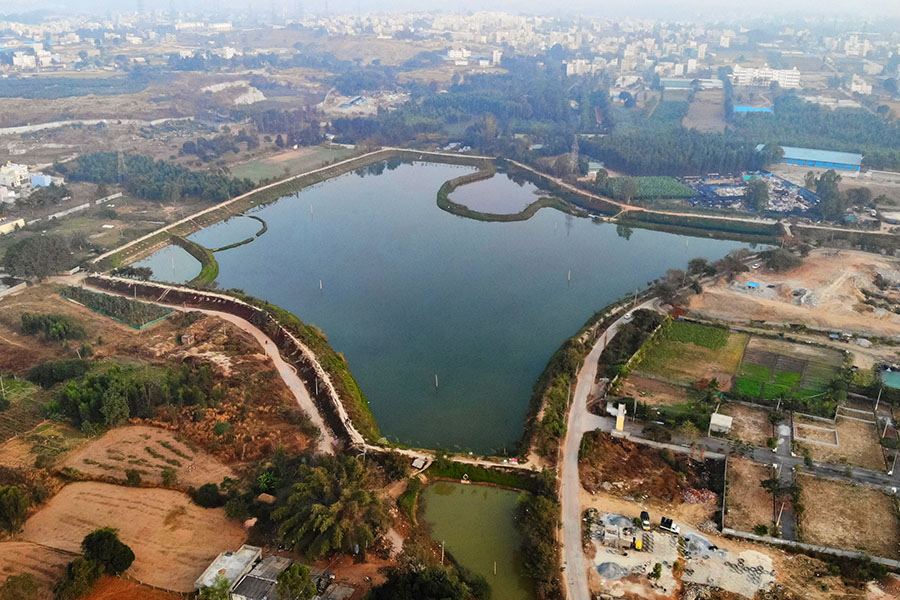
The World Water Day is celebrated on 22nd March annually across the globe. The theme selected for 2024 is ‘Water for Peace’. On this occasion, this report puts together the top ten positive water stories from Rural India during past one year. The compilation underlines the successful collective actions from village communities in the creation, protection and revival of local water sources including ponds, lakes, tanks etc. which are far better, sustainable and cost-effective measures for meeting potable and irrigation water requirements at local levels.
Continue reading “World Water Day 2024: Top Ten Positive Actions from Rural India”Tag: Ponds
DRP NB 050224: IMD needs to improve forecasting and sharing, but doing the opposite?
(Feature Image: Climate change catoon by Jug Suraiya & Partho Sengupta. ToI, 23 June 2018)
The decision of the IMD to shut down 199 of its district agromet units across India is disturbing on a number of counts. In the era of climate change when the key parameters are undergoing such rapid change, there is need for increasing monitoring and sharing of climate information by the IMD and need to in fact decentralize the whole effort. But this decision of IMD is going against this basic requirement.
In fact, the IMD has become a sort of holy cow, while in reality its performance in monitoring, forecasting and sharing information in time is far from satisfactory. This is increasingly evident every year when IMD fails to provide not only accurate, actionable, rainfall forecasts sufficiently in advance to help reduce the flood disasters and also take timely decisions on reservoir operations, IMD also fails to provide even timely information about the actual rainfall on ground and how that rainfall is going to get converted to inflows in rivers and reservoirs. Similarly, the district agromet units can provide farmer level and decentralized accurate rainfall monitoring and forecasting information that can help farmers take timely decisions.
Continue reading “DRP NB 050224: IMD needs to improve forecasting and sharing, but doing the opposite?”WWD 2024: Top Ten Citizens Actions for Wetlands Protection in India
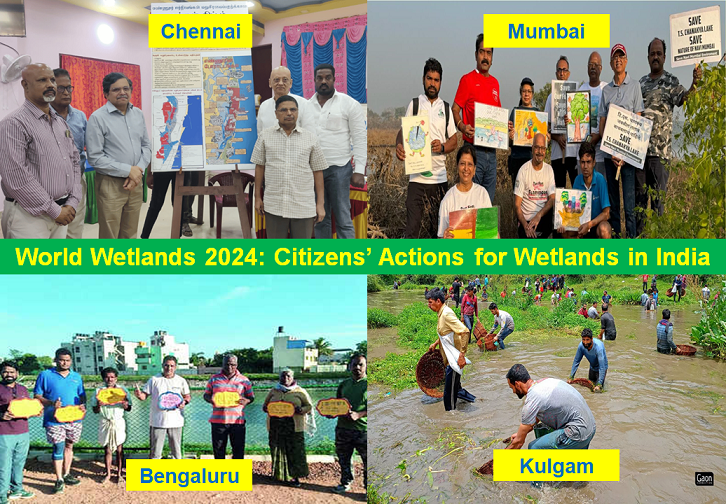
Celebrating World Wetlands Day (WWD) 2024, this article compiles top ten inspiring reports showcasing how the relentless efforts by individuals, citizen groups and community have been successful in protection and reviving of wetlands, mangroves, waterbodies and lakes in India during 2023. Please also see part 1, part 2, part 3 and part 4 of the yearend overviews documenting the status of Ramsar and other wetlands, relevant government decisions and judicial intervention regarding protection of wetlands in the country during the past one year.
Continue reading “WWD 2024: Top Ten Citizens Actions for Wetlands Protection in India”DRP NB 231023: Need to be a little serious about Dam Safety, Flood Forecasting, Use of Early Warnings
(Feature Image: Landslide warning board at Lakhwar dam site on Yamuna river. SANDRP, June 2015)
India need to relook the Dam Safety Act Experts say the Sikkim incident exemplifies blind spots in both legislation and implementation. The DSA does not promote risk-based decision-making and fails to incentivise transparency. Himanshu Thakkar, an environmental activist and coordinator of South Asia Network on Dams, Rivers and People, says that the frequency and scale of such disasters reveal a pattern of neglect: “It keeps happening regularly, people face disastrous consequences and we call these ‘natural disasters’. But there’s nothing natural about them.”
A robust DSA should allow different stakeholders to access information easily, but India’s framework falls short. “Dam safety is a public purpose function. Everything about dam safety, functions of all the institutions and committees and authorities, their reports, decisions minutes and agendas, everything should be promptly available to the public,” says Mr. Thakkar. “But nothing is in the public domain.” He adds that transparency is further obstructed when national and State bodies comprise government employees and engineers who worked on these projects, compromising objective decision making and lacking “people with a proven track record of taking independent decisions.”
Continue reading “DRP NB 231023: Need to be a little serious about Dam Safety, Flood Forecasting, Use of Early Warnings”DRP NB 010523: Water bodies census welcome, but how reliable?
While the publication by the Union Jal Shakti Ministry of the first water body census of India is not only welcome but urgently required, the usefulness of the census findings will depend on the quality of the information in the report. Firstly, such a census should have been conducted in a bottom up way, starting from villages in rural areas and ward in urban areas. That way, the census findings would have not only been more reliable, but also the process would have helped create greater awareness about the water bodies and issues surrounding them.
In case of Karnataka, as the report below shows the survey by the Tank Conservation and Development Authority and Karnataka Public Land Corporation in 2021 showed the state had 40483 water bodies, whereas the Jal Shakti Ministry census of 2022 says the state has just 26994 water bodies, a huge 13489 less than the 2021 census. Clearly so many water bodies cannot disappear in a year. As some experts from Karnataka have asked, is the Jal Shakti Census a deliberate attempt to show that a much lower number of water bodies exist, allowing encroachers to go ahead to destroy water bodies not registered in the census?
Continue reading “DRP NB 010523: Water bodies census welcome, but how reliable?”DRP NB 240423: The world is moving away from Big Dams: Are we?
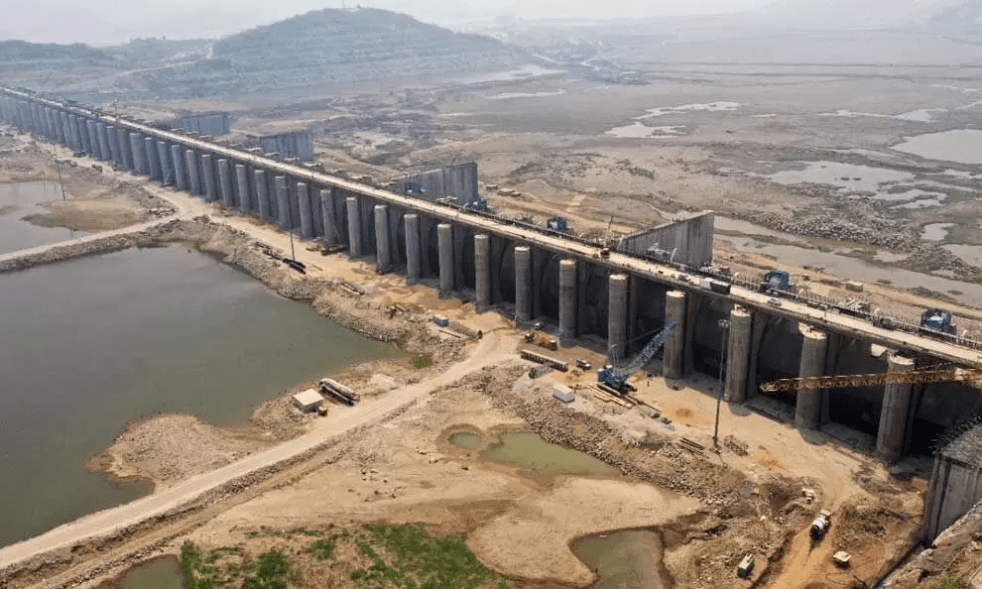
(Feature Image: Construction works going on at Polavaram Dam site. Source: The Hans Media, May 2021)
This well substantiated report from Yale School of Environment this week shows that the end of the big dam era is approaching. The well argued report from Jacques Leslie uses the reports from UN University, International Renewable Energy Agency, Oxford University, Inclusive Development International, China, among others to show how the pace of construction of dams and hydropower projects and also pace of financing such projects have hugely reduced in recent years and decades.
Even the International Hydropower Association, sensing the change, is now advocating pump storage hydro rather than conventional hydro and that too off stream version, to complement the power from solar and wind. Emerging economics with rising cost of hydropower projects and rising cost of power from such projects compared to solar, wind (onshore and offshore) are a major reason for the massively slowing pace of new hydropower projects.
Continue reading “DRP NB 240423: The world is moving away from Big Dams: Are we?”World Water Day 2023: Positive Urban Water Stories from India
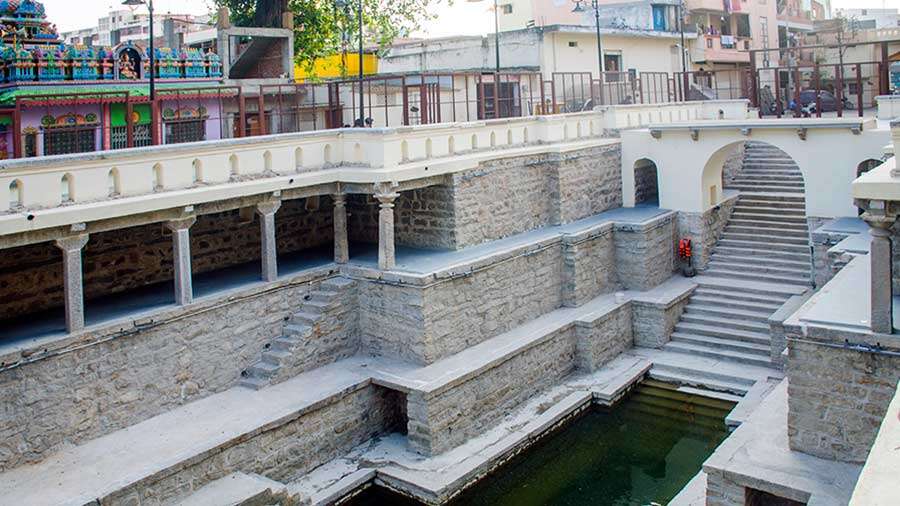
(Feature Image: Revived Bansilalpet stepwell in Hyderabad which has a capacity of over 20 lakh litres. Rangan Datta/Telegraph India.)
Marking World Water Day 2023; this compilation by SANDRP highlights top ten successful and worth replicable initiatives and actions being taken in Indian cities for revival of surface water sources and recharge of depleting groundwater table.
Continue reading “World Water Day 2023: Positive Urban Water Stories from India”World Water Day 2023: Positive Water Stories from India
This report highlights top ten positive water stories from rural India from last one year. SANDRP has been marking the World Water Day by presenting the stories of some remarkable efforts undertaken for protection, revival and management of water sources by individuals, local communities and governments.
Continue reading “World Water Day 2023: Positive Water Stories from India”DRP NB 270223: How much Pump Storage Hydro capacity is required in India?
(Feature Image: State steps up pumped hydro storage projects amid coal crisis. Source: EQ Mag Pro/ May 2022)
On Feb 15, 2023, Union Ministry of Power issued draft guidelines for Pump Storage Projects, inviting comments from stakeholders in 15 days to the email id – hydro2-mop@gov.in. The guidelines say that more Pump Storage Projects (PSPs) are required in view of increasing solar and wind power capacity connected to the grid, to stabilize the grid, store the power to make it available during non-solar and non-wind power hours and for peaking power, reactive power, etc. It describes the PSP as “clean, green, safe, and non-explosive” and “environment friendly” option. No studies or basis are provided for this sweeping conclusion.
Continue reading “DRP NB 270223: How much Pump Storage Hydro capacity is required in India?”WWD 2023: Top Ten Judicial Interventions to Improve Wetlands Governance
(Feature Image: Construction activities in Sukhatal lake area in Nainital, Uttarakhand. Source: Dainik Jagran, Nov. 2022)
In this third part of wetlands overview, SANDRP tracks top ten judicial interventions regarding protection of wetlands in India in 2022. The part one has highlighted general situation of wetlands and part two has covered some governmental actions for wetlands conservation.
Continue reading “WWD 2023: Top Ten Judicial Interventions to Improve Wetlands Governance”