Dams

शौचालय निर्माण से शुचिता की ओर-1 (जल-थल-मल पुस्तक समीक्षा)

खुले में शौच की आदत से निजात दिलाने के लिए केन्द्र सरकार शौचालय बनाने का काम 1980 के दशक से लेकर अब तक चलाती आ रही है। 1999 में इस अभियान का नाम टोटल सैनिटेशन कैंपेन और 2013 में निर्मल भारत अभियान हो गया। आज इसे स्वच्छ भारत अभियान के नाम से जाना जाता है। बदले नाम के साथ हाल में स्वच्छ भारत मिशन भी 2019 तक भारत को खुले में शौच से मुक्त कराने का बीड़ा उठाए हुए है। ऐसा करने वाले गाॅवों का निर्मल ग्राम पुरस्कार भी दिया जा रहा है। 2003 से लेकर अबतक करीब 28 हजार से ज्यादा गाॅवों को इस ईनाम से नवाजा जा चुका है।

सरकारी आॅकड़ो के मुताबिक देश में 10 में से 3 व्यक्ति आज भी खुले में ही शौच जाते हैं। जो सरकार के लिए अतंर्राष्ट्रीय स्तर पर बड़ी शर्मिंदगी का विषय है। सयुक्त राष्ट्र के अनुसार गरीबी में भारत से निचले पायदानों पर खडे़ देश नेपाल, पाकिस्तान, बांग्लादेश आदि पडौसी मुल्क शौचालय बनाने में भारत से कहीं आगे निकल गए हैं।

केंद्रीय पेयजल और स्वच्छता मंत्रालय के अनुसार इस अभियान के तहत अब तक 8 करोड़ 7 लाख शौचालय बनाए गए हैं। यानी 12 करोड़ 5 लाख शौचालयों के लक्ष्य का 70 फीसदी बन चुके हैं। परंतु 2011 की जनगणना के हिसाब से महज 5 करोड़ 16 लाख शौचालय ही पाए गए। मामला साफ है शौचालय ज़मी पर कम और कागज़ों में ज्यादा बने। 2008 के सर्वे में बड़ा खुलासा हुआ की 132 निर्मल गाॅव ईनाम पाने वाले में से केवल 6 गाॅव ऐसे निकले जिनमें कोई भी खुले में पखाना नहीं जाता था। योजना आयोग द्वारा तैयार 2013 की रपट इससे अधिक दिलचस्प है जो बताती है 73 फीसदी शौचालयवाले घरों में अब भी कम से कम एक सदस्य खुले में ही शौच जाता है।

इन सब के बीच प्रश्न उठता है, क्या शौचालय बनाना ही सैनिटेशन है और क्या मात्र शौचालय बनाने से ही भारत स्वच्छ हो जाएगा ? कहीं शौच मुक्त भारत के लक्ष्य का पीछा करते हम लोग प्राकृतिक संसाधनों का नाजायज दोहन और प्रदूषण तो नहीं कर रहे हैं ? मानव मल का प्रकृति और माटी से क्या संबंध है ? कहीं मात्र शौचालयी स्वच्छता के कारण ही तो पानी की बर्बादी और नदियों का प्रदूषण नहीं बढ़ रहा है? मल के जल और थल से बिखरे संबंधों से फिर रूबरू कराते हुए इन्हीं सब सवालों का जवाब तलाशती है, सोपान जोशी द्वारा लिखित जल-थल और मल पुस्तक!

Continue reading “शौचालय निर्माण से शुचिता की ओर-1 (जल-थल-मल पुस्तक समीक्षा)”

Dams · Urban Water Sector

Consume more, Pollute more, Pay less, Ask for more Dams: Pune City’s water policy

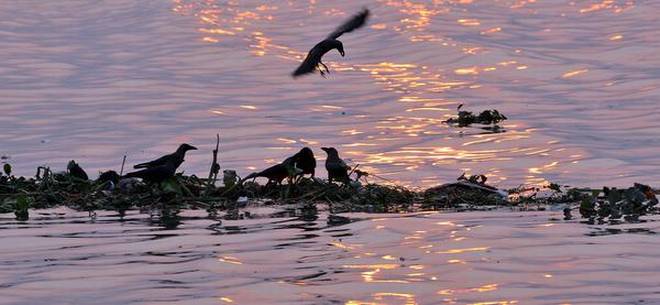
Above: Dying rivers, as they leave Pune Photo: Parineeta Dandekar

In May, decision of Pune’s Guardian Minister and head of canal committee of releasing 1 TMC (thousand million cubic feet) water from Khadakwasla Dam to downstream regions of Daund and Indapur saw huge protests from the city’s political parties and civic administration. Ensuring that Pune suffers no further water cut, even when downstream regions face historic drought, seems to have become the Mayor’s crusade. Keeping urban areas insulated and away from a terrible water crisis has its own major equity issues.

Pune is a water surplus city in upper riparian region of Krishna Basin. In a report “Reimagining Pune: Mission Smart City” submitted to Urban Development Department by Pune Municipal Corporation (PMC), it is admitted that Pune has water availability of 219 lpcd (liters per capita per day).[1] Even so, the city has been much reluctant to share its water with downstream villages. it has seen barely 20% water cuts since last October.

While discussions and debates about drought revolve around sugarcane, industries, rural water use, irrigation management etc, etc., the growing, unjustified footprint of urban areas generally is left scot free and Pune is a classic example if this.

Here, we take a brief look at PMC’s water supply approach with its monomaniacal supply-side focus. While sourcing much more water than allocated from four upstream dams, PMC has been shirking from its responsibility of treating waste water before releasing it for the downstream. PMC has taken the upstream dams for granted and is planning for expansion of water supply system with 24×7 water supply in near future, relying on more water from these dams. Continue reading “Consume more, Pollute more, Pay less, Ask for more Dams: Pune City’s water policy”

Dams · DRP News Bulletin

DRP NEWS BULLETIN 25 APRIL 2016 (One Year After Nepal Earthquake, Has the World Learnt Any Lesson ?)

On this day in 2015, the massive Nepal earthquake of 7.9 intensity (Richter scale) shook the scenic Himalayan Nation. The earthquake left a major trail of destruction affecting over 20 districts and killing over 9 thousand people.  According to expert Dave Petley, Langtang rock and ice avalanche was the most dramatic and significant landslide, that killed the most individuals. The earthquake killed over 9000 people, with 255 still missing. The severity of the quake can be gauged from the fact that more than a third of the disaster related deaths in 2015 occurred in Nepal’s April 25 earthquake. The earthquake-induced flash floods, landslides and aftershocks also damaged up to 15 hydropower plants, which has not been still restored fully. Surprisingly despite the increasing number of disasters taking place across the globe, world only spends less than a fifth of the money on Disaster Risk Reduction Compared to Disaster management.  Nepal will still take years from recovering socio-economic losses caused by the quake. But it is pertinent that in the wake of the quake and other disasters, human civilisation must learn its lesson. It’s true that development and disaster cannot be stopped but we must make our developmental decisions more informed, rule based and democratic so that it helps us deal better with disasters by decreasing their  intensity and velocity and our short-sighted developmental choices do not get translated into a disaster itself. Continue reading “DRP NEWS BULLETIN 25 APRIL 2016 (One Year After Nepal Earthquake, Has the World Learnt Any Lesson ?)”

Dams · DRP News Bulletin

DRP News Bulletin 18 April 2016 (Prior action & planning can reduce Drought impact: Uma Bharti says it’s pointless, Solapur shows it’s possible)

Union Water Resources Minister Uma Bharti in an interview tried to refute charges that the Centre reacted late to India’s drought crisis. Water minister makes strange statements that one cannot do any planning about drought & her govt is the first govt to provide water through tankers. However, Solapur, a chronically drought-hit district in Maharashtra was serviced with more than 200 tankers in 2013-14, even when the monsoon rainfall was better than this year. In this drought, there are only 16 tankers plying in Solapur. Drinking water sources have been secured, water from Ujani dam for and sugar cane has been disallowed. The district leads the way in Jal Yukta Shivar Program in the state, new avenues of Agricultural credit are opening, options to sugarcane are being developed, errant sugar factories are being fined for polluting drinking water sources. Will the Union Government accept its mistakes and make amends?

Continue reading “DRP News Bulletin 18 April 2016 (Prior action & planning can reduce Drought impact: Uma Bharti says it’s pointless, Solapur shows it’s possible)”

Dams

Smart Urban Water options: Recycle waste water

Recycling and reuse of wastewater is an important aspect of water management providing a way to increase available water while also preventing pollution of water bodies by sewage.

An estimated 62,000 million litres per day (MLD) sewage is generated in urban areas across India, according to the Environment Minister, while there is treatment capacity for only 23,277 MLD as of Dec 2015. A CPCB report further reveals that the actual amount of sewage treated stands at 18,883 MLD as only 522 out of 816 sewage treatment plants listed across India were operational, as of March 2015 (even this claim of 81.1% capacity utilization seems HIGHLY exaggerated). Thus, at least 70% of sewage generated in urban India is being dumped in rivers, seas, lakes and wells, polluting water bodies and contaminating fresh water sources. Partially treated or untreated sewage is responsible for large part of the pollution in streams and water bodies. Up to 80% of water bodies could be polluted.

Continue reading “Smart Urban Water options: Recycle waste water”

Dams · DRP News Bulletin

DRP News Bulletin 11 Jan. 2016 (Punjab Villagers oppose Dam on Ghaggar River)

86 Villages rise in protest against dam on Ghaggar  A dam is proposed to be constructed on the Ghaggar, near Banur, at a cost of Rs 75 crore. An agreement was signed between representatives of various villages located downstream and the Irrigation Department in 2006 promising 200 cusecsto irrigate fields in thesevillages. Villagers now fear that they will not get the promised 200 cusecs after the construction of the dam. Their claim is that the water flow in the river is much lower than 400 cusecs, as claimed by the irrigation department. The department, on the other hand, sticks to its stand that the water flow in the river is sufficient enough to feed the canal and the villages downstream. However, a perusal of the monthly average discharge data of the river for the past 10 years, defies the department’s claim. It revealed that the average yearly discharge barely crossed 400-cusec mark over the past 10 years, excluding the peak period (July to September). Interestingly NABARD and the State Irrigation department had separately conducted studies of the project well before giving it a green signal.

Continue reading “DRP News Bulletin 11 Jan. 2016 (Punjab Villagers oppose Dam on Ghaggar River)”

Dams · DRP News Bulletin

DRP News Bulletin 04 Jan. 2016 (Rivers are soul of India: PM Narendra Modi)

Rivers are soul of India: Prime Minister Narendra Modi  Excerpts From text of PM’s inaugural address at 103rd session of Indian Science Congress, Mysuru Rivers have played as important a role in human history as oceans. Civilisations have been nurtured by rivers. And, rivers will remain critical for our future. So, revival of rivers is an essential part of my commitment for a cleaner and healthier future for our society, economic opportunities for our people, and renewal of our heritage. We need regulations, policy, investments and management to achieve our objective. But, we will succeed only when we integrate technology, engineering and innovation into our efforts, not just to clean our rivers now but to keep them healthy in the future as well. For this, we also need scientific understanding of the impact of urbanisation, farming, industrialisation and groundwater use and contamination on the river eco-system. River is the soul of Nature. Their renewal must be an element of a larger effort to sustain Nature.

Continue reading “DRP News Bulletin 04 Jan. 2016 (Rivers are soul of India: PM Narendra Modi)”

Dams · Yamuna River

Happy Waste Free Yamuna!

In new year 2016, State Government of Uttarakhand must act against burgeoning amount of solid and liquid waste being put in Yamuna River in its home land.

River Yamuna appears flowing pollution and waste free in Himalayan stretch. But close observations go against this popular notion and paints grim picture of huge amount of waste finding its way in the river on a daily basis.  This account highlights the issue in detail and urges State Govt. of Uttarakhand (UK) to take remedial actions before it is too late to reverse the degradation of the River. 

Yamnotri is famous shrine and thousands of pilgrims and tourists frequent the place during Char-Dham Yatra held every year. These visitors, in absence of better options or for hygienic reasons prefer using bottled water, packaged foods (biscuits, snacks) and plastic disposals as food servings. As a result solid waste in massive amount is generated through the pilgrimage season which ultimately goes into the holy river. It’s worrying that this has become a norm for past many years.

Continue reading “Happy Waste Free Yamuna!”

Dams

GROUND WATER CRISIS DEEPENED IN INDIA IN 2015

Groundwater issues made news repeatedly in the year 2015. The year saw a 14 per cent deficit in southwest monsoon increasing the dependence on ground water for agricultural, industrial and domestic use. The falling water table and pollution of surface and ground water sources made the situation critical in various parts of the country. Competing demands on the ground water led to protests and litigation. The National Green Tribunal (NGT) tried to safeguard the ground water and pushed the State machinery into action through its orders in various matters. Towards the end of the year, the Central Ground Water Authority (CGWA) came up with revised guidelines for evaluation of proposals for ground water abstraction.

Continue reading “GROUND WATER CRISIS DEEPENED IN INDIA IN 2015”

Dams

Dams, Rivers & People News Bulletin, Sep 14, 2015

SAD NEWS: SHRI RAMASWAMY IYER IS NO MORE:

He Watered the Arid Fields of Administration with Intellectual Rigour and Honesty: Amita Baviskar payes tribute to Ramaswamy Iyer Iyer’s critical view of large dams became stronger when he was appointed to review the Tehri project in 1996 and to head the India country study for the World Commission on Dams in 1997. Subsequently, studying trans-border river conflicts between India, Nepal and Bangladesh, he began to see dams as only one element in the larger mismanagement of water by engineers impervious to social and ecological impacts. In one more news report paying tribute to him R. Uma Mahashwari writes that Ramaswamy R. Iyer used to see rivers as inextricable parts of the lives of communities 

Continue reading “Dams, Rivers & People News Bulletin, Sep 14, 2015”