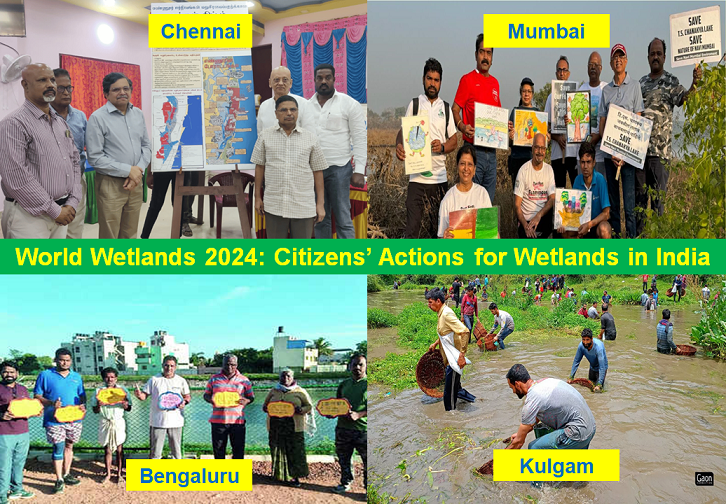
Celebrating World Wetlands Day (WWD) 2024, this article compiles top ten inspiring reports showcasing how the relentless efforts by individuals, citizen groups and community have been successful in protection and reviving of wetlands, mangroves, waterbodies and lakes in India during 2023. Please also see part 1, part 2, part 3 and part 4 of the yearend overviews documenting the status of Ramsar and other wetlands, relevant government decisions and judicial intervention regarding protection of wetlands in the country during the past one year.
Continue reading “WWD 2024: Top Ten Citizens Actions for Wetlands Protection in India”Tag: Pollution
WWD 2024: Lot of schemes for India’s Wetlands-Little Credible Action
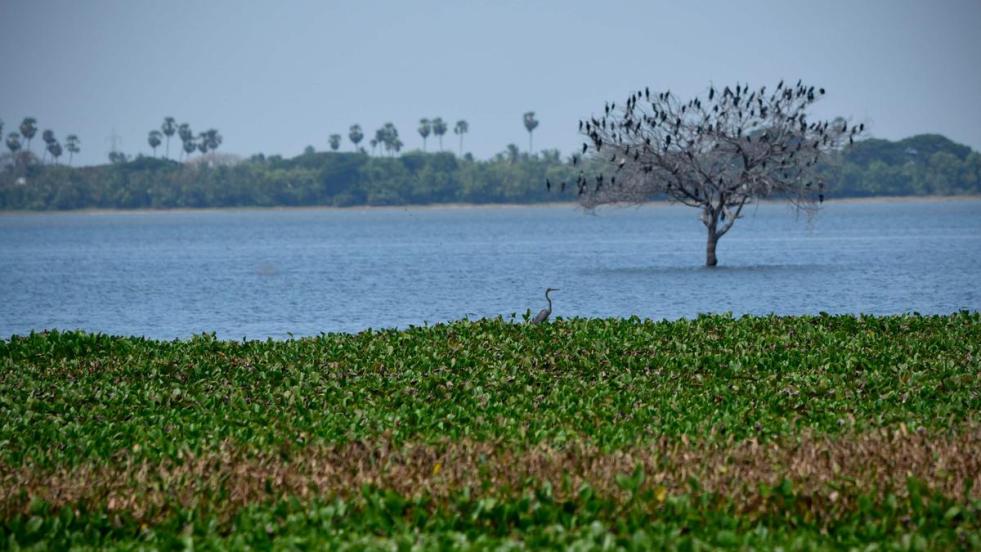
(Feature Image: A view of the Bahour Lake near Puducherry. Photo Credit: S.S. Kumar/The Hindu)
On the World Wetlands Day (WWD) 2024, this report compiles top ten developments related to Central and state govt actions for wetlands in India. The year 2023 has seen release of first water body survey and launch of Amrit Dharohar & MISHTI schemes by central govt. India has signed institutional framework agreement for the Central Asian Flyway (CAF) to strengthen conservation efforts for migratory birds and their habitats.
The state govts have announced more wetland plans which are becoming a routine with no change in ground situation. Despite judicial intervention the respective govts have not taken necessary actions to protect and restore Najafgarh jheel, Dhanauri wetlands and wetlands in Goa. Broadly, the year 2023 has passed with no remarkable achievement on govt front which provide hope for better future for India’s wetlands. Please see the first and second parts of yearend overviews covering the status of Ramsar sites and other wetlands in India.
Continue reading “WWD 2024: Lot of schemes for India’s Wetlands-Little Credible Action”WWD 2024: Both Wetlands & Human Beings Remain Neglected
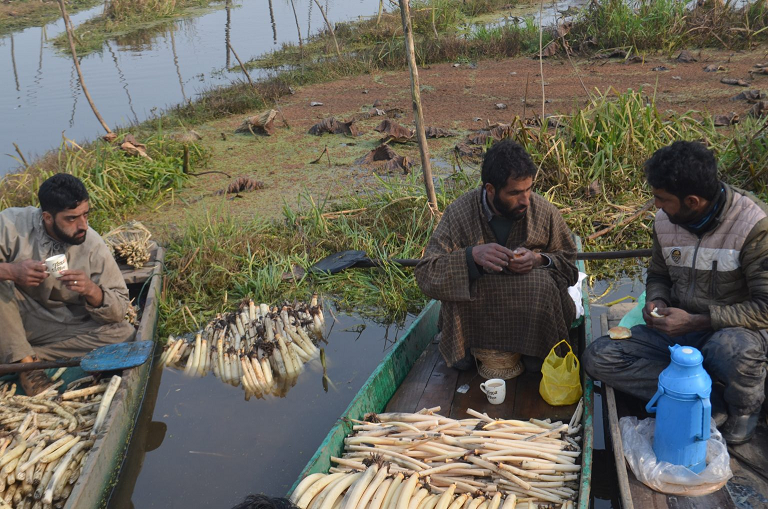
(Feature Image: Struggling for survival: The harrowing lives of Anchar Lake Nadru harvesters. The Nadru harvesters highlight the lack of safety measures, as they can only afford low-quality wetsuits. Haseeb Ibm Hameed/Greater Kashmir)
While the theme for World Wetlands Day (WWD) 2024 is Wetlands and Human beings, this compilation of top ten wetlands (other than Ramsar Wetlands) reports reveals that on ground most of the wetlands and dependent people in India continue to be subject of degradation and neglect primarily due to absence of holistic restoration plans and clearly defined wetlands governance. The first of the series covering the worrying condition of Ramsar Wetlands sites in the country can be seen here.
Continue reading “WWD 2024: Both Wetlands & Human Beings Remain Neglected”WWD 2024: Top Ten Ramsar Wetland stories from India: Participatory Decision Making needed but totally absent
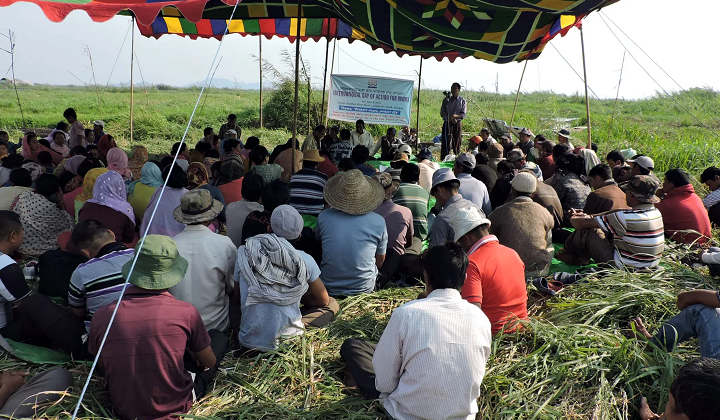
(Feature Image: Loktak fishers holding meeting at Champu Khangpok floating island village. Photo Credit: Vikalp Sangam)
World Wetland Day (WWD) is celebrated on February 2 annually to signify the environmental as well as socio-economic services and benefits provided by the wetlands both natural and man-made water bodies including rivers, lakes, ponds, reservoirs, swamps, marshlands deltas, coral reefs and mangroves. The theme of WWD 2024 is ‘Wetlands and Human Wellbeing’.
Ramsar Wetlands Convention selects Wetlands of International Importance, basically depending on nominations of the respective national governments and includes them under what is also known as the Ramsar List. However, it is not clear what exactly the Ramsar does for the protection of such designated wetlands. There are currently 75 Ramsar wetlands in India. In fact, the Ramsar sites have seen nearly a three-fold rise in the country in the past eight years decade (26 in 2014 to 75 in 2022). The complete list of 75 Ramsar wetlands in India can be seen here. The state of large number of these designated Ramsar Wetlands is pretty sad for years and decades and deteriorating, but it is not known if Ramsar convention is doing anything in this regard.
Continue reading “WWD 2024: Top Ten Ramsar Wetland stories from India: Participatory Decision Making needed but totally absent”DRP 290124: Wetlands and Human Wellbeing: So little reflected in wetlands governance
(Chest nut clutivators removing water hycinth from Giri taal of Kashipur in US Nagar, Uttarakhand in April 2023. Bhim Singh Rawat/SANDRP)
As the world approaches the World Wetlands Day on Feb 2, we notice a proliferation of news related to wetlands, but mostly bad news in this week’s DRP NB: Loktak lake in Manipur facing impact of inland waterways project, the Supreme Court having to intervene for the Futula lake in Nagpur, TN Govt telling NGT that 38% of Pallikaranai marshland is under encroachment, in Bangalore, NGT is asking for response from KSPCB and others regarding the lake buffer zone encroachment. There is also a lot of bad news about the worsening state of our rivers, including Ganga.
One piece of good news is that people have come out with their own plan for restoration of Ennore wetland in TN. In Assam, Maguri Motapung Bill is regaining biodiversity after earlier being polluted by oil spill, but that is only control of damage earlier. Similarly, while it is good news that SC has intervened to protect Futula lake in Nagpur, but the fact that the govt wanted to encroach on it in the name of “temporary” construction is not at all good news.
Continue reading “DRP 290124: Wetlands and Human Wellbeing: So little reflected in wetlands governance”GW Overview 2023: Top Ten Judicial Actions
(Feature Image: Filled with untreated industrial effluents Drain No. 6 in May 2023, passing through Kundli industrial area in Sonipat and causing groundwater pollution along its course. Bhim Singh Rawat/SANDRP)
This third and concluding 2023 yearend overview on Groundwater in India, compiles top ten judicial interventions dealing with the depletion and contamination of groundwater. The SC asking Punjab govt to review groundwater conservation law in the face of air pollution crisis in Delhi is the biggest judicial development of 2023. The Kerala HC directing state govt to bring selling of well water under Food Safety & Standards Act 2006 & Regulation 2011 comes next.
The NGT too on its part has taken note for groundwater depletion and contimination across the country and issued notices to central and state governments. Following NGT orders, there have been action against commercial and industrial units extracting groundwater without permission in Delhi and NCR areas. In another ongoing noteworthy case, the NGT has asked MoJS consider prohibiting groundwater use for cricket ground maintenance.
Continue reading “GW Overview 2023: Top Ten Judicial Actions”GW Overview 2023: Top ten Govt actions
(Feature Image: Drona Sagar Taal in Kashipur, Uttarakhand being filled with tubewell water in April 2023. Bhim Singh Rawat/SANDRP)
This second part of yearend overview on Groundwater issues in India lists top ten Government actions. While the groundwater has become backbone for all types of consumption including domestic water supply, irrigation, industrial use; depletion of the finite resource continue; the government efforts particularly of central government have been limited to mapping and monitoring. There is neither a recognition that groundwater is India’s water lifeline, nor is there any serious attempt at effective bottom up, decentralised regulation of groundwater.
The aquifer mapping scheme ongoing since 2012 has been extended till March 2026. The govt has planned to increase the number of monitoring wells and equipped them with digital sensors. Meanwhile the Parliament panel report has revealed that the National Water Mission (NWM) lacks adequate funds and autonomy. Several state governments have taken respective measures for protection of groundwater sources however they have largely shown no noteworthy results so far.
Continue reading “GW Overview 2023: Top ten Govt actions”India Groundwater 2023: Reaching Depletion Tipping Point?
Like previous years, 2023 too has not seen any significant governmental decisions addressing the two key problems of ongoing contamination and depletion of groundwater resources across the country. On the contrary, the new reports and studies published during the year indicate some areas reaching depletion tipping points, land subsidence and climate change impacts compounding the situation.
This first part of yearend overview through top ten developments highlights the status of existing and emerging problems related to groundwater in India. The second and third parts will focus on government and judicial actions related to the subject during 2023.
Continue reading “India Groundwater 2023: Reaching Depletion Tipping Point?”DRP 150124: The Catchment degradation in Cauvery Basin
The study by Indian Institute of Science (IISc), Bangalore has brought to light one of the key reasons for the water problems of Cauvery basin: 12850 Sq km of Cauvery basin has lost natural vegetation over the fifty years between 1965 and 2016. The trend is likely to have continued, possibly at an accelerated pace in the eight years since 2016. It may be useful to assess the hydrological implications of this massive destruction of the Cauvery basin.
SANDRP has been highlighting that the reason for the more frequent floods and followed by water scarcity and drought, in spite of somewhat increased rainfall under changing climate is exactly this, the degradation of the Cauvery catchment, including destruction of local water bodies, groundwater recharging mechanisms and natural vegetation.
Continue reading “DRP 150124: The Catchment degradation in Cauvery Basin”DRP 080124: Supreme Court stays Sham post facto clearances
(Feature Image: A Ramganga tributary before joining the river at Marchula, Ramnagar in Nov. 2022. Bhim Singh Rawat/SANDRP)
Post facto environment clearances are indeed a sham as the Hindustan Times Edit has said. It is welcome that the Supreme Court of India has stayed, on Jan 2, 2024, the MoEF memorandums allowing such post facto environmental clearances. Following a petition filed by the Mumbai based environmental group Vanashakti, the sham practice that has been going on since March 2017. Such clearances are clearly contradictory, in letter and spirit to the prior environment clearances as required under the EIA notification of 2006.
The Sham practice should have been stayed much earlier, for example when the Madras High Court gave an interim stay on the MoEF notification of 2017. But unfortunately, the Supreme Court then interpreted that the Madras High Court order will only be limited to Tamil Nadu. Or it may have been stayed earlier by NGT.
Continue reading “DRP 080124: Supreme Court stays Sham post facto clearances”