Dams · DRP News Bulletin

DRP News Bulletin 20 November 2017 (GLOBAL SLOW DOWN IN HYDRO POWER PROJECTS)

It is getting increasingly clear that days of large hydro power projects are coming to an end. While in India large numbers of big hydro power projects are stalled, this week there was news from Meghalaya, Arunachal Pradesh, Sikkim and rest of North East India of cancellation or stoppage of hydro power projects. http://www.sentinelassam.com/story/main-news/0/subansiri-project-not-to-see-light-for-4-years/2017-11-12/1/325720#.WgpysVuCzIV

https://arunachaltimes.in/index.php/2017/11/19/meghalaya-govt-cancels-power-project-pacts-with-pvt-firms/

https://www.kashmirmonitor.in/Details/136960/government-fails-to-make-mohra-power-house-operational

Pancheshwar project on India Nepal border continues to face opposition. https://timesofindia.indiatimes.com/city/dehradun/traders-oppose-pancheshwar-dam/articleshow/61705308.cms  

Nepal this week cancelled the agreement for 1200 MW Budhi Gandaki hydropower project. In Bhutan, the Prime Minister declared that they are in no hurry to go ahead with new hydropower projects. http://kathmandupost.ekantipur.com/news/2017-11-13/govt-scraps-budhigandaki-project-with-chinese-company.html  

In Pakistan, the agreement for the massive 4500 MW Diamer Bhasha hydropower company with China has fallen through. https://economictimes.indiatimes.com/news/defence/chinas-strict-conditions-force-pakistan-not-to-include-diamer-bhasha-dam-in-cpec-officials/articleshow/61660935.cms

In Mynmar, too the agreement with China for massive hydropower project stands cancelled. http://www.reuters.com/article/us-china-myanmar-energy/china-says-will-keep-talking-to-myanmar-over-stalled-dam-scheme-idUSKBN1D80X4?il=0

This is further reinforced by study by Dr. Luke Gibson, Honorary Assistant Professor of the School of Biological Sciences at the University of Hong Kong, which concludes that among so called green energy sources, hydropower is most dangerous. https://phys.org/news/2017-10-green-energy-hydropower-dangerous.html#jCp

Continue reading “DRP News Bulletin 20 November 2017 (GLOBAL SLOW DOWN IN HYDRO POWER PROJECTS)”

Dams · DRP News Bulletin

DRP News Bulletin 13 November 2017 (EAC Defers To Clear Pancheshwar Dam But Ignores People’s Voices)

The minutes of expert appraisal committee (EAC) shows that Environmental Clearance  (EC) for the Pancheshwar Multipurpose Project has been deferred. The minutes were uploaded after 16 days of EAC meeting conducted on Oct 24, 2017. http://environmentclearance.nic.in/writereaddata/Form-1A/Minutes/09112017PCU6UH80Finalminutesof9thEACmeeting1.pdf

In the minutes, the EAC said that it would require to study the Environmental Impact Assessment (EIA) report for the Nepal portion of the project to get a holistic view. It also directed the project proponent to obtain wildlife clearance as the project was located 300 metres from the Ascot Wildlife Sanctuary. 

It is worth to mention that the Pancheshwar dam with a height of 315 meters is world’s second tallest dam proposed in ecologically sensitive region. Scores of media reports have underlined the unfair and politically influenced Environment Public Hearing (EPH) process, conducted during peak monsoon month in landslide ridden and disaster prone region. The venue of the EPH was also several kms away from villages going to be affected thus depriving the local people participation in essential decision making process. As a result the concerns and voices of villagers to have their voices heard. The EIA report of the project has also not mentioned several grave environmental issues of GOLFs events, cloud bursts, earthquakes etc in the catchment of the dam let alone the question of impact on endangered wildlife like Mahseer fish. 

Continue reading “DRP News Bulletin 13 November 2017 (EAC Defers To Clear Pancheshwar Dam But Ignores People’s Voices)”

Dams · DRP News Bulletin

DRP News Bulletin 06 November 2017 (NGT Asks For Fresh Appraisal Of Lower Subansiri Hydro Project)

In a remarkable development, the National Green Tribunal (NGT) on October 24 has suspended the clearances given to the 1750-megawatt (MW) Demwe Lower Hydroelectric Project  (HEP) planned on the Lohit river in Arunachal Pradesh.

In its detailed order, released on October 27, the NGT ruled that the Environment Minister as Chairperson of the National Board for Wildlife (NWBL), a statutory body constituted under the Wildlife Protection Act, 1972, could not “just brush aside” the views of the majority of NBWL standing committee members.

Suspending the clearances given by the Centre and the state govt, the NGT order added that “the decision taken by the Standing Committee is not in accordance with established principles of law and hence the Standing Committee shall reconsider the issue and pass appropriate orders within a period of six months from the date of the judgment”.

Environmental clearance for the project was given by the Union environment ministry’s Expert Appraisal Committee (EAC) for river valley and hydroelectric projects back in 2009. An in-principle forest clearance for the Lower project was given in February 2012 and agreed upon in 2013.

However, the in-principle clearance of the project was opposed by a majority of the Standing Committee of the NBWL but subsequently cleared by the then-environment minister of state (independent charge), Jayanthi Natarajan, who was also the chairperson of the Standing Committee.

Natarajan is currently under the CBI’s scanner for alleged anomalies in clearance given for diversion of land in Saranda forest in Singhbhum district, Jharkhand to mining company Electrosteel during the previous UPA regime.

The NGT said that it is “of the view that either the Chairperson (Natarajan) should have given a proper reason for rejecting the objection of the majority of the non-official members or the decision ought to have been arrived at based on the opinion of the majority of the members. Even though the Standing Committee is a recommendatory body, the same being a statutory committee, is bound by the laudable principles of justice and fair play”.

Continue reading “DRP News Bulletin 06 November 2017 (NGT Asks For Fresh Appraisal Of Lower Subansiri Hydro Project)”

Dams · DRP News Bulletin

DRP News Bulletin 30 October 2017 (Residents of Chennai Rally & Form Human Chain to Protect Wetlands)

Over 250 residents along with environmentalists, activists and members of civil societies formed a human chain at Elliot’s beach on Oct 28, asking State Govt to protect the wetlands, rivers, environment in Ennore creek area from willful destruction of govt agencies and industries. The human chain was joined by all the walk of society irrespective of age group from kids to senior citizens who were holding placards that explain the sorry state of Ennore Creek. http://www.thenewsminute.com/article/residents-chennai-form-human-chain-save-ennore-creek-70724

The Coastal Resource Centre and members of the Save Ennore campaign organized the human chain to raise awareness in the city ahead of the monsoons about the encroachments in Ennore Creek, a backwater located in Thiruvallur district. Residents from all 52 villages in Ennore, who have witnessed the ecology die a slow death, also joined the rally, hoping that the govt would react.

Industrial effluents from the thermal power stations here and domestic sewage from North Chennai have killed various fish species. More than 1000 acres of Kosasthalaiyar River’s backwaters have already been lost due to the deposition of fly ash by the Tangedco units. http://chennai.citizenmatters.in/chennai-human-chain-ennore-creek-encroachment-2862

As per the online petition, ten Lakh Chennai residents are at higher risk of disastrous flooding because Govt of Tamil Nadu has allowed Kamarajar Port to convert 1000 acres of Ennore wetlands into industrial real estate. Chennai has barely recovered from the 2015 floods. Don’t let Chennai get flooded again.

Continue reading “DRP News Bulletin 30 October 2017 (Residents of Chennai Rally & Form Human Chain to Protect Wetlands)”

Dams · DRP News Bulletin

DRP News Bulletin 02 October 2017 (New Rules Disastrous For India’s Wetlands)

The wetlands are the hotspots of biodiversity, act as carbon sinks, act as buffers against floods and are essential for groundwater recharge. With groundwater reservoirs in the country heavily exploited, this last function has assumed greater importance. http://www.hindustantimes.com/environment/centre-notifies-wetland-rules-environmentalists-unhappy/story-3MoGp9D8eSzHI90zfOXWSO.html

Wetlands can be defined as lands transitional between terrestrial and aquatic eco-systems where the water table is usually at or near the surface or the land is covered by shallow water.

But they are threatened by reclamation and degradation due to activities like drainage and landfill, pollution, hydrological alteration (water withdrawal and changes in inflow and outflow), over-exploitation resulting in loss of biodiversity and disruption in ecosystem services provided by them.

DRP 12

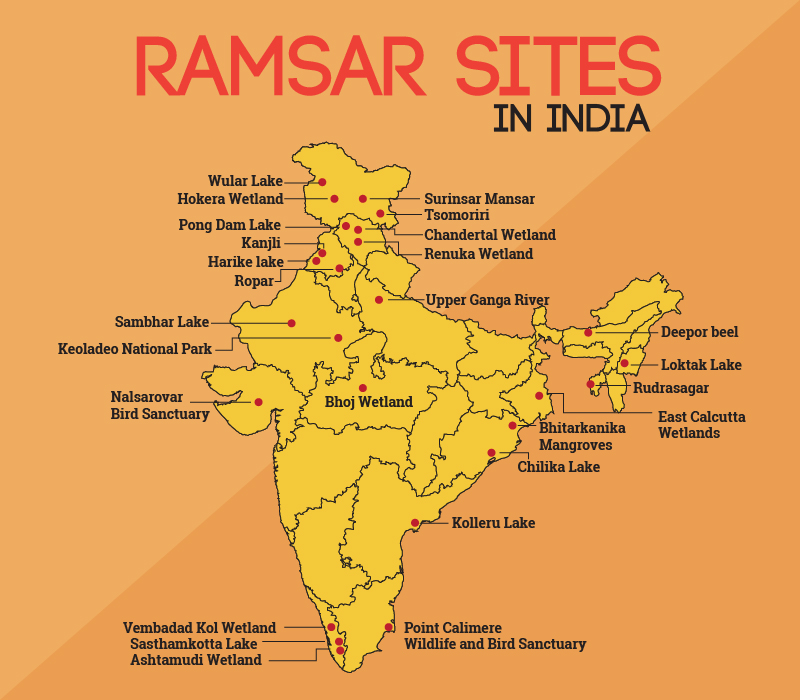
There are at least 115 wetlands that are officially identified by the central government and of those 26 are identified as wetlands of international importance under Ramsar Convention which is an international intergovernmental treaty for conservation of wetlands. India is a party to the treaty. http://www.livemint.com/Politics/y6Tr3tkrr3q28AmGKaBFII/Environment-ministry-notifies-new-wetland-rules.html

The Centre on September 26 notified a new set of rules under the head Wetlands (Conservation and Management) Rules, 2017 replacing the Wetlands (Conservation and Management) Rules, 2010. http://www.thehindu.com/news/national/kerala/new-wetland-conservation-rules-notified/article19779100.ece

It is worth to mention that under the 2010 rules, not a single water body was notified as a wetland over and above the ones already recognised as such by the Centre and the Ramsar Convention, defeating its purpose in a way. http://www.zeebiz.com/agencies/centre-notifies-new-rules-for-preservation-of-wetlands-26312

Similarly, despite country’s space agency ISRO had in 2011 mapped over two lakhs of wetlands across the country, the centre has, so far, notified only 115 wetlands and 63 lakes in 24 states and 2 UTs for conservation and management.

Continue reading “DRP News Bulletin 02 October 2017 (New Rules Disastrous For India’s Wetlands)”

Dams · DRP News Bulletin

DRP News Bulletin 25 September 2017 (Three Incidents of Canals & Dam Breach In Two Days, Who Is Responsible?)

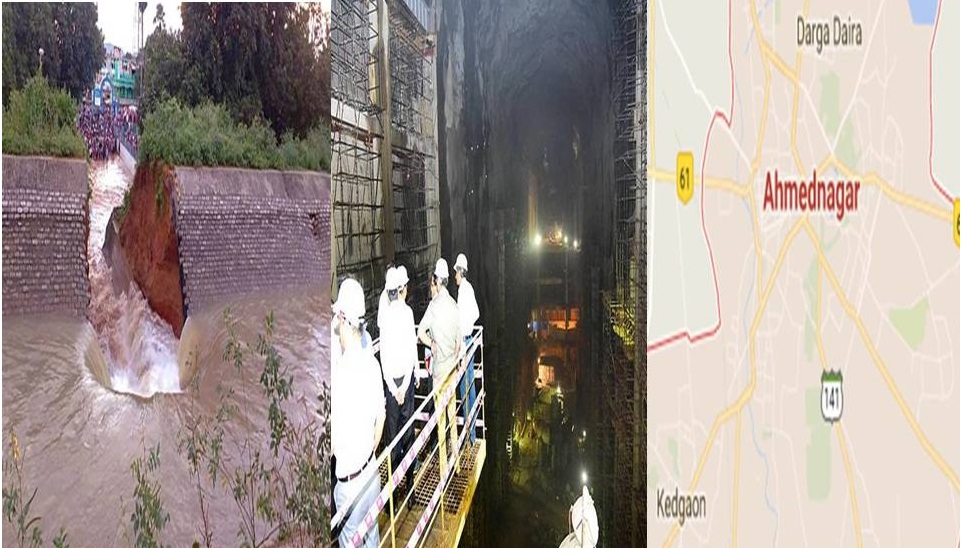
This week there have been three incidents of canals and dam breach in three States raising concern over quality of construction of dams and canals in India. 

All these incidents are a result of negligence exercised by concerned departments. These incidents also proves that the quality of construction of dams and canals in India is not as par standard. 

It is surprising that no government official or private contractor has been held responsible for these avoidable incidents. To avoid recurrence of such incidents, governments of these states bring the involved officials and persons to justice. It also strictly monitor the quality of construction to avoid wastage of public money. The safety of the public is also uncompromising and hence should not rush through the irrigation projects without proper consultation care. 

Continue reading “DRP News Bulletin 25 September 2017 (Three Incidents of Canals & Dam Breach In Two Days, Who Is Responsible?)”

Dams · DRP News Bulletin

DRP News Bulletin 18 September 2017 (Why Madhaya Pradesh Depleted Its Meagre Water Storage To Fill up SSP Dam For Sept 17?)

As per the Daily Status Reports of Narmada Control Authority[iv], inflow into SSP Dam suddenly jumped from 495 cumecs (Cubic Meters per second) on Sept 12, to 2518 cumecs on Sept 13, 2383 cumecs on Sept 14 and 2210 cumecs on Sept 15, 2384 cumecs on Sept 16, in anticipation of the birthday, so that when Narendrabhai visits the dam site to formally declare the project complete, the reservoir is seen to have substantial water. Expectedly, SSP water level rose from 126.19 m to 128.5 m by 8 am on Sept 15. How was this made possible?

Madhya Pradesh depletes its water storage so that SSP looks full on Sept 17? The increased inflow into SSP was made possible only by increased outflow from upstream Madhya Pradesh dams like Indira Sagar Project (ISP) on Narmada. ISP, incidentally is India’s largest reservoir in terms of storage capacity.

So the ISP storage level which was already very low (about 33%) on Sept 11 with monsoon almost coming to close, was depleted by further 450 MCM (Million Cubic Meters) from Sept 11 to Sept 16 (date for which latest information is available), while SSP water level rose by 750 MCM during the same period. All this, so that water level at SSP could look more respectable on Sept 17. Its not known why Madhya Pradesh is ready to lose water from its low storage levels (in fact, the water level at Omkareshwar Project on Narmada is below Minimum Draw Down level throughout this period).

Will Madhya Pradesh Chief Minister and MP Govt be held accountable for this by the media, judiciary and the people?

Continue reading “DRP News Bulletin 18 September 2017 (Why Madhaya Pradesh Depleted Its Meagre Water Storage To Fill up SSP Dam For Sept 17?)”

Dams · DRP News Bulletin

DRP News Bulletin 11 September 2017 (Why This Rally Won’t Help The Rivers?)

The news media is filled with this new kid on the block, trying to wake the nation about the need to save our rivers… amazing to see so many film stars, politicians, governments, and public personalities, many of them rather innocently joining the band wagon… some friends were pleading that see, he is able to take the message of rivers to so many people, including lakhs of children… let us try and see if there is something positive here… may be, may be this is just the entry point, but the guy and his team have bigger vision? May be we need to give him longer rope, be more charitable and not jump to negativity?

We have kept all this in mind while writing this.

We see nothing from the people who are leading the rally, or their websites or messages that they understand the real threats faced by and reasons for the state of our rivers, are ready to even list such causes or protest any further move to destroy our rivers. The website claims it is “a nationwide awareness campaign to revive our rivers”. Can missed call save our rivers?

Continue reading “DRP News Bulletin 11 September 2017 (Why This Rally Won’t Help The Rivers?)”

Dams · DRP News Bulletin

DRP News Bulletin 04 September 2017 (Uma Bharti Shifted, But Do Ganga Or India Have Better Hopes From Gadkari?)

In the Cabinet Reshuffle on Sept 3, 2017, Uma Bharti has been removed as Union Ministry of Water Resources, River Development and Ganga Rejuvenation, for what media is widely calling as her non-performance (http://indiatoday.intoday.in/story/uma-bharti-ganga-experts-cabinet-reshuffle/1/1039555.html).

Unfortunately, some in Media are rather valiantly trying to show that she did achieve something (see for example: http://indianexpress.com/article/india/nitin-gadkari-60-minister-water-resources-river-development-ganga-rejuvenation-ganga-clean-up-the-biggest-challenge-4827277/), when what they are showing only the claims of expenditure or achievement of the ministry, no real achievement on ground based on independent scrutiny or evidence.

Mr Nitin Gadkari has been given the charge of this ministry in addition to his current charge of Ministry of Surface Transport. The first thing that strikes about Mr Gadkari is that as minister in current government he has been strong advocate for use of rivers for inland navigation and he also achieved through an act in Parliament, listing of 111 main stretches of rivers for this purpose. In the initial few months of this government in power, he actually publicly said that he wants to build a barrage every 100 km along Ganga, which he latter said could be done every 50 km. The impact of one existing such barrage on Ganga for navigation, namely Farakka is well known, and it is so severe that MPs and now even Bihar’s current Chief Minister have been demanding decommissioning of the barrage. Indeed, there are huge social and environmental impacts of use of rivers for navigation, but Mr Gadkari’s ministry has been pushing the case that there is no need for even social and environmental impact assessment of the inland navigation plans or activities. Now it will be interesting to see what does Mr Gadkari says about this as Minister of Water Resources, River Development and Ganga Rejuvenation. If past is any guide, it does seem that Ganga, Brahmaputra and other rivers on the list of inland navigation could be in for greater deterioration rather improvement.

Continue reading “DRP News Bulletin 04 September 2017 (Uma Bharti Shifted, But Do Ganga Or India Have Better Hopes From Gadkari?)”

Dams · DRP News Bulletin

DRP News Bulletin 21 August 2017 (Unscientific Obsession With Dredging)

It seems the Chief Ministers of all the flood affected states are obsessed about dredging the rivers and reservoirs and are advocating massive scale dredging as a solution to flooding. This is partly triggered by the Rivers-as-waterways advocacy by Union Surface Transport Minister Shri Nitin Gadkari and partly by the need for showing to the people that they are doing something new to tackle floods, it seems. Bihar Chief Minister Nitish Kumar contributed to it in a way last year when he mentioned the accumulation of millions of tons of silt along Ganga due to the backwater impact of Farakka Dam. This year, the Assam Chief Minister Sarbananda Sonowal[i] has been talking about dredging Brahmaputra as a solution to floods in Assam.

Continue reading “DRP News Bulletin 21 August 2017 (Unscientific Obsession With Dredging)”