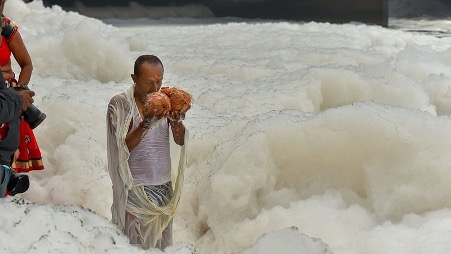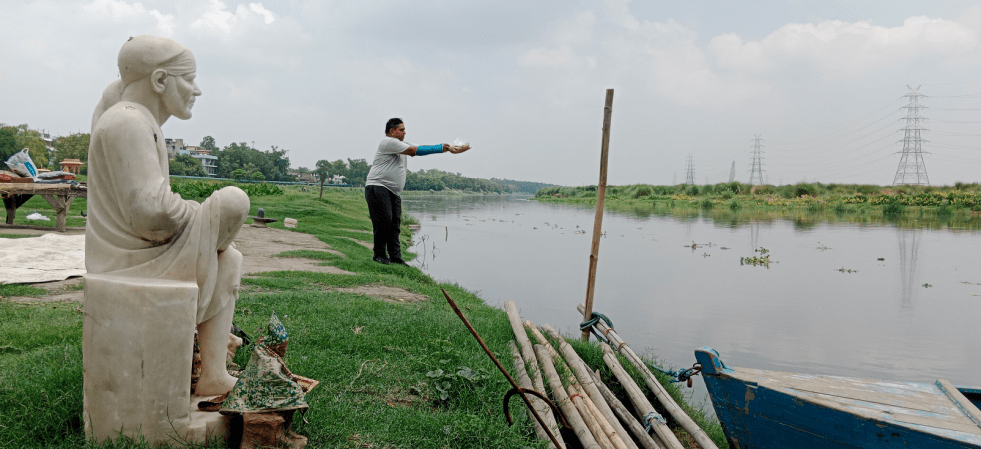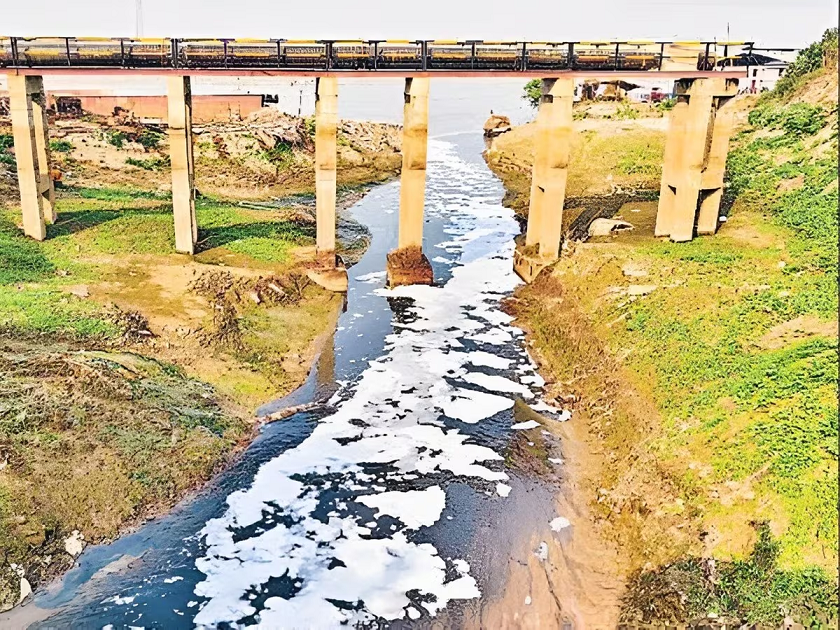
दिल्ली विधानसभा चुनाव प्रचार के दौरान यमुना नदी प्रदूषण एक महत्वपूर्ण राजनितिक मुद्दा बना। चुनाव जीतने के बाद स्वयं प्रधानमंत्री और भाजपा पार्टी के वरिष्ठ नेताओं ने ‘आप’ सरकार की हार के लिए यमुना की दुर्दशा को एक प्रमुख कारण बताया। साथ में यमुना को साफ करने की बात कही। ऐसे में क्या दिल्ली के नागरिक एक स्वच्छ बहती नदी की उम्मीद रख सकते हैं?
Continue reading “दिल्ली में नई सरकार: क्या अब निर्मल होगी यमुना?”Tag: NMCG
Yamuna Manthan 050225: River Needs Attention beyond Politics & Elections
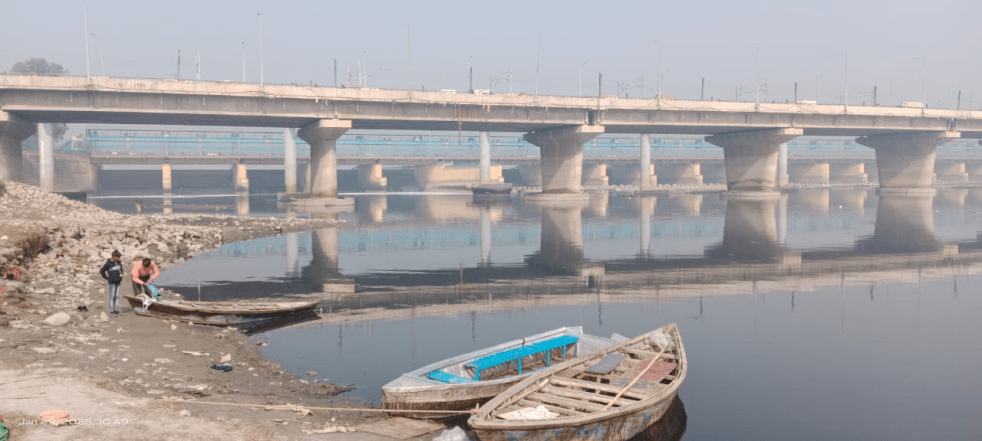
(Feature Image: Yamuna river downstream Okhla barrage in Delhi on Jan 29, 2025. Bhim Singh Rawat/SANDRP)
Political blame games surrounding the Delhi assembly election have brought Yamuna in focus for about past one month. Disappointingly, the central and all state govts in basin are responsible for continual degradation of river and none of the parties have offered practical solutions to improve the condition of the river in the national capital.
It’s a fact that the pollution from Haryana drains, namely Dhanaura Escape in Karnal, Drain No 2 in Panipat and Drain No. 6 and 8 in Sonipat have been bringing untreated effluents in increasing amounts in the river upstream of Delhi, ultimately severely crippling the Wazirabad barrage based potable water supply in the city. In addition to diversion of river waters for industrial, irrigational and potable demands from Hathni Kund Barrage, increasing unsustainable mechanized mining for about past eight years have been ruining lean season flows in the river in upper segment. The concerned central govt departments and Haryana government are required to address these issues effectively as part of a solution to improve the health of river in Delhi.
Continue reading “Yamuna Manthan 050225: River Needs Attention beyond Politics & Elections”DRP NB 181124: Kumbh 2025: Can we treat Ganga as River All Round the Year?
(Feature Image: Untreated effluents falling into Ganga river in Patna Bihar. Source: Live Hindustan 15 Nov. 2024)
The government website on Maha Kumbh (https://kumbh.gov.in/) has started the countdown to Mahakumbh 2025 to be held in Prayagraj from January 13 to Feb 26, 2025. It says today that it is 55 days to the beginning of Mahakumbh. But the Ganga is highly polluted in Prayagraj, and even upstream even in Uttarakhand, the state where it originates as the following reports this week say and as we all know.
The reason why the largest congregation on earth happens here every 12 years is because, as puranas say, Ganga water turns into Amrit on these holy days. So how will the Ganga water turned into Amrit at Prayagraj in 55 days?
Continue reading “DRP NB 181124: Kumbh 2025: Can we treat Ganga as River All Round the Year?”Yamuna Manthan 061124: Save River from ‘Illegal’ Sand Mining
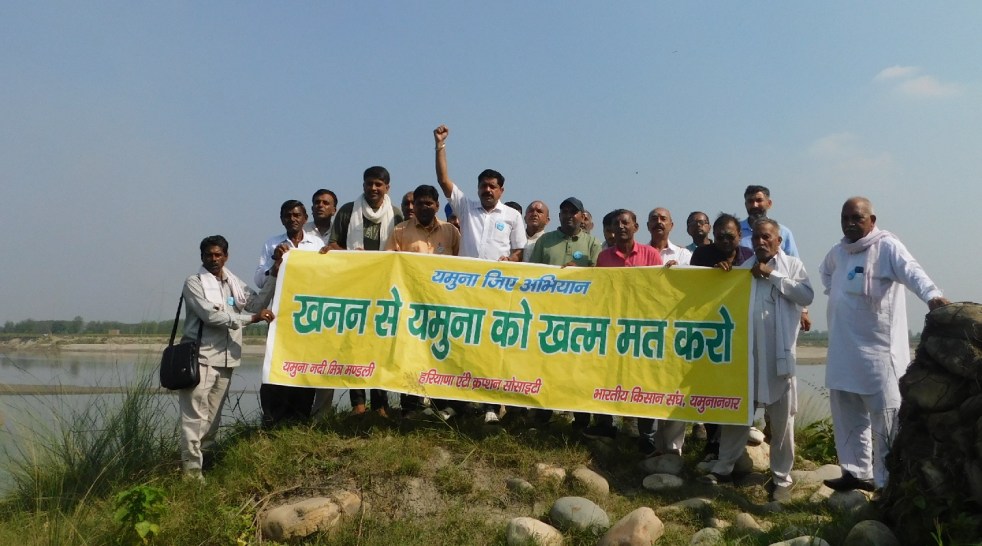
(Feature: Members of Haryana Anti Corruption Society, Yamuna Nadi Mitra Mandli, Bhartiya Kisan Sangh, Yamuna Nagar raising concerns over unabated unsustainable riverbed mining in Yamuna in Gumthala Rao, Karnal on Oct 07, 2024.)
Large scale riverbed mining has become most underestimated and least discussed threat for Yamuna rivers. While increasing pollution has turned the river stretch between Delhi and Agra ecologically dead, the rampant sand mining has been severely damaging the Yamuna eco-system in upper and lower segments.
Presently, the mining menace is quite rampant in Paonta Sahib, Yamuna Nagar, Saharanpur, Karnal, Shamili, Panipat, Sonipat, Baghpat and Ghaziabad districts along the river in upper segment. Similarly, in lower segment the main stem of river as well as its key tributaries Chambal, Sind, Betwa, Ken have been bearing the burnt of unsustainable sand mining.
Continue reading “Yamuna Manthan 061124: Save River from ‘Illegal’ Sand Mining”यमुना में पर्यावरणीय प्रवाह बढ़ाने के हों ठोस प्रयास
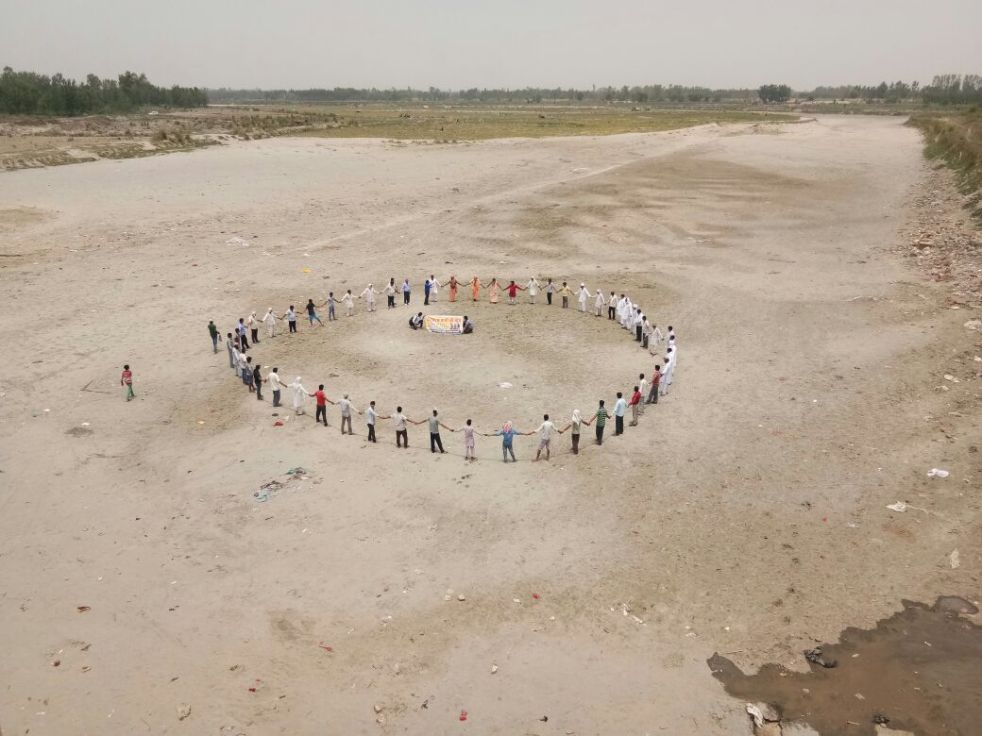
(Feature Image: Bone dry Yamuna riverbed at Mawi, Kairnana. (Image Bhim Singh Rawat, June 2010)
सर्दी शुरू होते ही दिल्ली में यमुना नदी में झाग की समस्या चरम पर पहुँच जाती है। इसी के साथ कई दिनों तक ओखला बैराज के नीचे नदी सतह पर तैरते ‘आइस बर्ग’ की भांति दिखने वाले झाग के बड़े-बड़े खंड लोगों के आकर्षण और मीडिया की सुर्ख़ियों का केंद्र बन जाते हैं। बढ़ते नदी प्रदुषण पर नागरिकों की बढ़ती चिंताओं और नदी प्रेमियों के बढ़ते सवालों के बीच राजनितिक दोषारोपण का दौर शुरू होता है। समस्या का फौरी निराकरण करते दिखने के प्रयास में संबंधित सरकारी विभाग आनन-फानन में कुछ आधे-अधूरे कदम उठाते हैं। त्यौहार और खास तौर पर छठ पर्व समाप्त होते ही, लोगों की नदी पर जाने वाले भीड़ कम हो जाती है और दो-तीन सप्ताह बाद सब यमुना नदी में बढ़ते प्रदुषण और झाग की समस्या को भूल जाते हैं। लगभग एक साल बाद फिर से यह क्रम दोहराया जाता है जब सर्दी के समय झाग के आगोश में लिपटी प्रदूषित यमुना, नागरिकों की उदासीनता और नदी सफाई योजनाओं की नाकामी को उजागर करती है।
Continue reading “यमुना में पर्यावरणीय प्रवाह बढ़ाने के हों ठोस प्रयास”DRP NB 28×24: Hydropower Impacts on Biodiversity
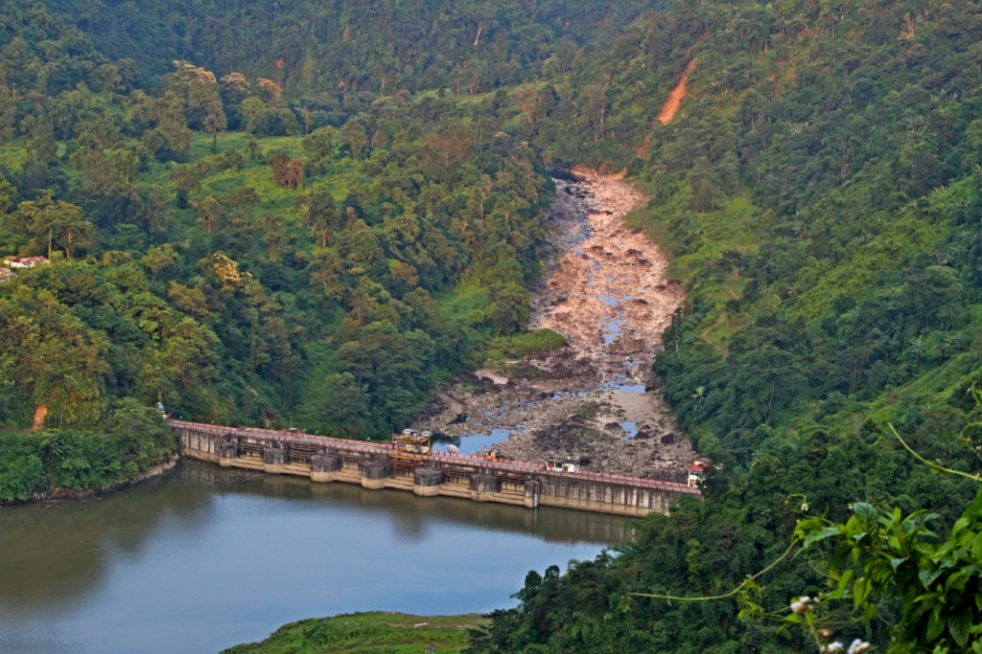
(Feature Image: The Ranganadi dam in Arunachal Pradesh. In February 2019 the dam released an unprecedented amount of silt, with severe impacts for the river’s biodiversity and the livelihoods of people who live along its banks. Image Credit: Karen Conniff / Flickr, CC BY-NC 2.0/Source: Dialogue Earth)
A new study of available scientific publications on impact of Hydropower projects on biodiversity provides a thorough review of the subject. The review does not directly give a call not to construct more such destructive projects. But it is useful for anyone concerned about the impact of dam projects on rivers.
The study discusses the impacts of hydropower projects on both aquatic and semi-aquatic species in riverine ecosystem and cumulative impacts spatially and temporally across river basins. Dams disrupt longitudinal connectivity and act as physical barriers in upstream-downstream movement of species. Upstream of dam, there is static water environment rather than flowing river environment. In the downstream, the hydropower projects adversely affect the water flow, sediment flow, thermal regimes, affecting water quality and environmental cues for the fish movement. All these also affect the floodplains both upstream and downstream.
Continue reading “DRP NB 28×24: Hydropower Impacts on Biodiversity”2024: Dams, Mining, Construction Damaging Gangetic Dolphin Habitats
(Feature Image: Dolphin corpse found along Ganga in Sahibganj, Jharkhand in Feb. 2024. Image source: ETV Bharat)
Despite declaring Gangetic Dolphin a National Aquatic Animal in May 2010, launching of Project Dolphin in August 2020 and recognizing October 05 as National Dolphin Day since 2022, the key species indicating river health continues to face unnatural deaths and threats from various developmental activities. This overview highlights the incidents of suspicious death of precious mammal and looming threats on its habitat along with some noteworthy steps being taken by conservationists and governments to protect the endangered species.
Continue reading “2024: Dams, Mining, Construction Damaging Gangetic Dolphin Habitats”DRP NB 230924: Role of rivers in the birth of governments
(Feature Image Source: The Economic Origins of Govt)
Interesting research published in 2023 suggests that archaeologists and economists are now learning that dynamic, shifting rivers also created conditions that triggered people to develop some of the first organized govts on the planet.
In the research published in The American Economic Review Robert Allen and two co-authors found that Agriculture and large settlements emerged alongside rivers because they could tap into the gifts of rivers: close access to water and fertile soil. But rivers can move and take those gifts away. So, society developed organized govts to work collectively to regain their access to those gifts.
Continue reading “DRP NB 230924: Role of rivers in the birth of governments”DRP NB 260824: Urban flooding plan welcome, Urban Water Sector needs attention
(Feature Image: Assam Floods: Commuters wade through a flooded road after incessant rains, in Guwahati, Friday, July 5, 2024. Image Source: PTI/ABP Live)
The Union Government plan to spend Rs 2517 Cr in 2 years in seven metro cities to mitigate floods is certainly welcome announcement. The key component of the plan, conservation and improving capacity of urban water bodies is noteworthy along with storm water drainage. Does it mean that the River Front Development projects that actually reduce the flood carrying capacity of the rivers will be closed, since one does not expect govt to be working at cross purposes in different schemes.
In fact, Urban Water Sector as a whole needs attention with National Urban Water Policy as a first step. This is because the groundwater aquifers that are fast being emptied out, can be least cost option for storing the excess rain water, serving the purpose of reducing storm water drainage load and also improving water conservation. There is huge scope for this in all the seven metros listed in the scheme as also in many other cities.
Continue reading “DRP NB 260824: Urban flooding plan welcome, Urban Water Sector needs attention”DRP NB 050824: Cities fail monsoon test
(Feature Image by Cartoonist Alok/ Sakal, July 25, 2024)
This monsoon has again shown how our cities have been failing the monsoon test for decades. As rightly suggested in the Indian Express Edit this week, main reasons are: outdated drainage systems, planning that is blind to local hydrology and pathetic state of civic agencies. The last factor in fact needs to change to failed governance at all levels. There is no water or flood policy that guides our cities, nor is there any reward for improving governance, nor any penalties for lack of it.
In fact, with better rainwater management, cities can convert this problem into a blessing, both in terms of water security and also improved state of urban landscape. This would be possible if it prioritizes the city’s capacity to hold, store, recharge and drain the rainwater. Instead, the cities are busying destroying such capacities by destroying the rivers, ridges, forests, local water bodies, groundwater recharge capacities and also the drainage capacity.
Continue reading “DRP NB 050824: Cities fail monsoon test”