Dams · DRP News Bulletin

DRP: 18 Dec 2017 (Also Needed To Mention This About Turial HEP)

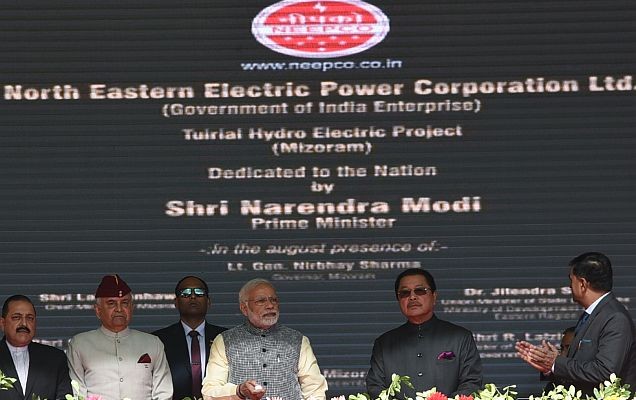
The Prime Minister, on Dec 16, 2017, while dedicating to nation the 60 MW Turial HEP, should have also mentioned:

– PUBLIC PROTESTS: The project faced strong protests from local people, so much so that work had to be stopped for over 7 years from 2004 to 2011. Even a day before PM dedicated the project, people took out a protest march.

– NO PUBLIC CONSULTATION:  One of the reasons people protested was that the project did not have any proper public consultation.

– NO PROPER IMPACT ASSESSMENT: Another reason for people’s anger was no proper environment or social impact assessment, or proper compensation and rehabilitation.

– HIGH COST: The project cost was Rs 368.72 Crores, but now already has gone above Rs 1441 crores officially, likely to go up further. That means per MW cost is already above Rs 24 crores, one of the highest in the country. WHO WILL PAY THE HIGH COST OF ELECTRICITY FROM THE PROJECT?

– HUGE COST ESCALATION from Rs 369 crores to over Rs 1440 crores

– HUGE TIME OVER RUN: The project was supposed to be completed many decades back but  has seen huge time over run, not only because of protests, but also because of inadequate mobilisation by the contractor, poor approach road, power house slope failure, among many other reasons.

This latest project once again shows that big hydro is no longer viable, one wishes, the Prime Minister would also highlight these realities in his speeches.

Continue reading “DRP: 18 Dec 2017 (Also Needed To Mention This About Turial HEP)”
Dams · Environmental Flow · Fish Sanctuaries · Free flowing rivers · Ganga · Inland Waterways · Interlinking of RIvers · Karnataka · Kerala

Riverine Fisherfolk as Mascots of flowing rivers and how 4 projects treat them today

When I was documenting a tiny, free-flowing river in Maharashtra Western Ghats named Shastri, the common thread from headwaters to estuary was Fishing! It was everywhere, in all forms, including dozens of fish species and fishing practices, including everyone: men, women, children, otters, crocs, storks. Across the country, buzzing, diversified fisheries with old, complex narratives indicate a rich river. And the palette just gets more vivid, nuanced and colorful with the size of the river.

More than 10 million Indians from some of the most vulnerable groups depend on rivers for their livelihood and nutritional needs. This staggering number can be an underestimate as several riverine fisherfolk do not bring their produce to the market and our livelihood census hardly captures the intricacies of riverine fisheries sector. Despite the huge dependence and critical importance of riverine fisheries, the sector continues being ignored and abused. The reasons behind the exploitation are at the heart of a deeper, more troubling discourse: ownership and appropriation of the river as a natural resource. Continue reading “Riverine Fisherfolk as Mascots of flowing rivers and how 4 projects treat them today”

Dams · DRP News Bulletin

DRP: 11 Dec 2017 (Shoddy EIA, People’s Opposition & Unviable Pancheshwar Project Highlighted In Documentary)

A brilliant coverage by NDTV INDIA at PRIME TIME (08 Dec 2017) on so many issues related to the proposed controversial Pancheshwar Dam, World’s tallest dam in the Himalayas that has neither credible impact assessment nor proper public hearings. Please watch and share.

Meanwhile, residents and various political organizations at Almora, Pithoragarh and Jhulaghat staged a protest against public hearings held for environmental clearance of Pancheshwar projec, saying that the sessions were unfair and flouted procedure. https://timesofindia.indiatimes.com/city/dehradun/pancheshwar-row-residents-protest-against-public-hearings/articleshow/61946615.cms

The wrong process of dam clearance for the Pancheshwar and Rupaligad Dams have been strongly condemned by Mahakali Lok Sangathan, Uttarakhand Parivartan Party, Uttarakhand Kranti Dal, the National Alliance of People’s Movements: Uttarakhand Akta Manch, Delhi Solidarity Group and others. https://www.facebook.com/sandrp.in/posts/1874936619200669

Continue reading “DRP: 11 Dec 2017 (Shoddy EIA, People’s Opposition & Unviable Pancheshwar Project Highlighted In Documentary)”
Dams · DRP News Bulletin

DRP: 27 Nov 2017 (India Rivers Day 2017: Hope For Restoring Urban Rivers)

From left Arti Kumar Rao, winner of first ever Anupam Misra Memorial Award, Mahavir Singh Sukarlai, of Prayavaran Kisan Sanghrash Samiti, Pali; Winner of BPS 2017 in individual category and S. Ramachandran and Eby Emmaunuel of Meenachil Nadee Samrakshana Samithi, Kerala; Winner of BPS 2017 in organization category. 

The eventful India Rivers Day (IRD) has just concluded. It was held on 25 November 2017 at INTACH Delhi office. The theme for this year was ‘Rivers in the Urban Context’. An exhibition on the issue is open till December 01, 2017. https://sandrp.wordpress.com/2017/11/26/exhibition-on-indias-urban-rivers-at-india-rivers-day-2017/

The program started with the welcome address by Manoj Misra. It was followed by an introductory speech on the theme by Himanshu Thakkar of SANDRP in which he described the deteriorating relationships between urban rivers and citizens and how urban areas are treating their rivers as parasite.

In the key note address by Dr. Ravi Chopra of PSI threw light on the lost, ignored and abused rivers in Delhi, Mumbai, Dehradun and Chennai.

Continue reading “DRP: 27 Nov 2017 (India Rivers Day 2017: Hope For Restoring Urban Rivers)”
Narmada

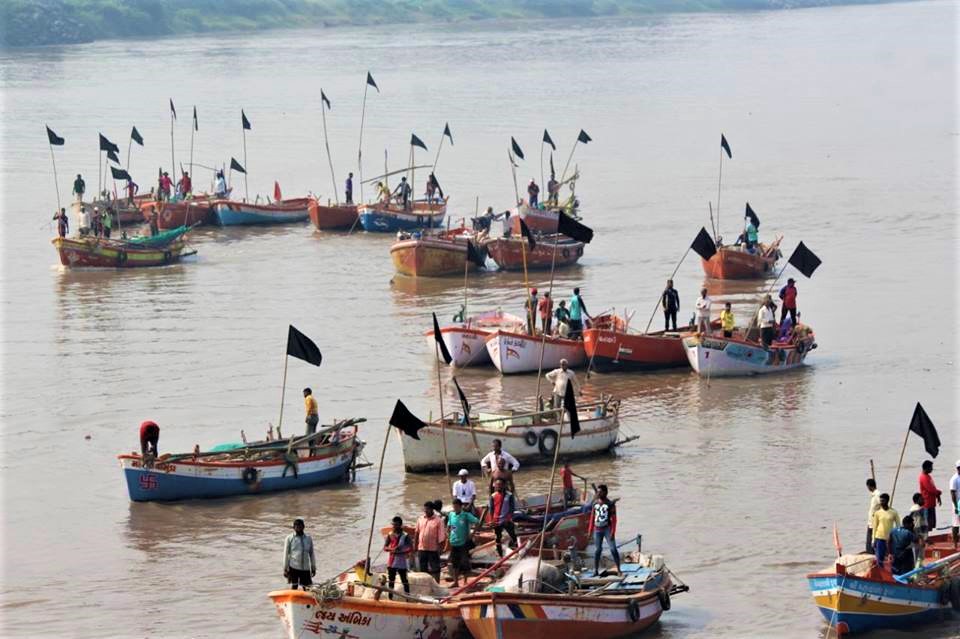
On World Fisheries Day Gujarat Fish workers dependent on Narmada River Demand cancellation of Bhadbhut Dam, rejuvenation of River

(Above: Fish workers protesting with black flags in boat rally on Oct 8, 2017 when Prime Minister came to lay foundation stone for the Bhadbhut Dam)

Guest Blog by MSH Sheikh

The Sardar Sarovar Narmada Nigam Ltd (SSNNL) is managing the Sardar Sarovar dam in Gujarat over River Narmada.  Recently the Narmada Control Authority has allowed the closing of all 30 gates of the Sardar Sarovar dam on the river Narmada at Kevadia Colony, which will help raise level of water in the reservoir to 138.68 meter from the present 121.92 metre. The decision will help swell the dam’s live storage from 1.27 million acre feet (MAF) to 4.73 MAF.

However, despite the increase in capacity of the dam the release of freshwater downstream from the dam is very less, when it is there, compared to the flow in the River 10 years back. The Dam authorities believe that the release in the downstream is wastage of the fresh water, they have no value for the 150 km of Narmada River downstream from the dam. Now they are building Garudeshwar Dam, downstream of the Sardar Sarovar Dam, so that they can stop even water released during power generation at River Bed Power House to flow downstream to the Narmada estuary. Continue reading “On World Fisheries Day Gujarat Fish workers dependent on Narmada River Demand cancellation of Bhadbhut Dam, rejuvenation of River”

Dams · DRP News Bulletin

DRP: 13 Nov 2017 (EAC Defers To Clear Pancheshwar Dam But Ignores People’s Voices)

The minutes of expert appraisal committee (EAC) shows that Environmental Clearance  (EC) for the Pancheshwar Multipurpose Project has been deferred. The minutes were uploaded after 16 days of EAC meeting conducted on Oct 24, 2017. http://environmentclearance.nic.in/writereaddata/Form-1A/Minutes/09112017PCU6UH80Finalminutesof9thEACmeeting1.pdf

In the minutes, the EAC said that it would require to study the Environmental Impact Assessment (EIA) report for the Nepal portion of the project to get a holistic view. It also directed the project proponent to obtain wildlife clearance as the project was located 300 metres from the Ascot Wildlife Sanctuary. 

It is worth to mention that the Pancheshwar dam with a height of 315 meters is world’s second tallest dam proposed in ecologically sensitive region. Scores of media reports have underlined the unfair and politically influenced Environment Public Hearing (EPH) process, conducted during peak monsoon month in landslide ridden and disaster prone region. The venue of the EPH was also several kms away from villages going to be affected thus depriving the local people participation in essential decision making process. As a result the concerns and voices of villagers to have their voices heard. The EIA report of the project has also not mentioned several grave environmental issues of GOLFs events, cloud bursts, earthquakes etc in the catchment of the dam let alone the question of impact on endangered wildlife like Mahseer fish. 

Continue reading “DRP: 13 Nov 2017 (EAC Defers To Clear Pancheshwar Dam But Ignores People’s Voices)”
Gujarat · Narmada

India’s Dam Mania gives acche din for Dam lobby and Gando Vikas

(Above: Protest in Bharuch on Oct 8, 2017 when Prime Minister laid foundation stone for Bhadbhut Dam on Narmada)

“Vikas Gando Thayo Chhe” is these days a super hit song in Gujarati, which literally means “Development has gone mad”. In the just concluded Garba (form of traditional social dance in Gujarat) festival, this was hugely popular this year through out Gujarat. The song became popular, even before Prime Minister of India celebrated his birthday on Sept 7 by declaring completion of an incomplete Sardar Sarovar Project, heaping totally unnecessary, unjustified and unjust displacement on 40 000 families of Narmada Valley and killing the largest west flowing river of India. So much for the river rejuvenation claims his government has been making since May 2014. As if to complete the process, they have started another dam on Narmada, few kilometers downstream of Sardar Sarovar Dam, at Garudeshwar, even without any environmental impact assessment. Continue reading “India’s Dam Mania gives acche din for Dam lobby and Gando Vikas”

Dams · DRP News Bulletin

DRP: 18 September 2017 (Why Madhaya Pradesh Depleted Its Meagre Water Storage To Fill up SSP Dam For Sept 17?)

As per the Daily Status Reports of Narmada Control Authority[iv], inflow into SSP Dam suddenly jumped from 495 cumecs (Cubic Meters per second) on Sept 12, to 2518 cumecs on Sept 13, 2383 cumecs on Sept 14 and 2210 cumecs on Sept 15, 2384 cumecs on Sept 16, in anticipation of the birthday, so that when Narendrabhai visits the dam site to formally declare the project complete, the reservoir is seen to have substantial water. Expectedly, SSP water level rose from 126.19 m to 128.5 m by 8 am on Sept 15. How was this made possible?

Madhya Pradesh depletes its water storage so that SSP looks full on Sept 17? The increased inflow into SSP was made possible only by increased outflow from upstream Madhya Pradesh dams like Indira Sagar Project (ISP) on Narmada. ISP, incidentally is India’s largest reservoir in terms of storage capacity.

So the ISP storage level which was already very low (about 33%) on Sept 11 with monsoon almost coming to close, was depleted by further 450 MCM (Million Cubic Meters) from Sept 11 to Sept 16 (date for which latest information is available), while SSP water level rose by 750 MCM during the same period. All this, so that water level at SSP could look more respectable on Sept 17. Its not known why Madhya Pradesh is ready to lose water from its low storage levels (in fact, the water level at Omkareshwar Project on Narmada is below Minimum Draw Down level throughout this period).

Will Madhya Pradesh Chief Minister and MP Govt be held accountable for this by the media, judiciary and the people?

Continue reading “DRP: 18 September 2017 (Why Madhaya Pradesh Depleted Its Meagre Water Storage To Fill up SSP Dam For Sept 17?)”
Dams · DRP News Bulletin

DRP: 21 August 2017 (Unscientific Obsession With Dredging)

It seems the Chief Ministers of all the flood affected states are obsessed about dredging the rivers and reservoirs and are advocating massive scale dredging as a solution to flooding. This is partly triggered by the Rivers-as-waterways advocacy by Union Surface Transport Minister Shri Nitin Gadkari and partly by the need for showing to the people that they are doing something new to tackle floods, it seems. Bihar Chief Minister Nitish Kumar contributed to it in a way last year when he mentioned the accumulation of millions of tons of silt along Ganga due to the backwater impact of Farakka Dam. This year, the Assam Chief Minister Sarbananda Sonowal[i] has been talking about dredging Brahmaputra as a solution to floods in Assam.

Continue reading “DRP: 21 August 2017 (Unscientific Obsession With Dredging)”
Dams · DRP News Bulletin

DRP: 31 July 2017 (Dams Turn Floods into Disasters, Yet We Continue to Push Big Dams)  

All through the month, several states in the country have been battling severe flood situation. The Northeastern (Arunachal Pradesh, Assam), Western (Rajasthan Gujurat), Central (Madhya Pradesh, Uttar Pradesh) and Eastern (Bihar, Odisha, West Bengal) regions have been particularly affected by floods following incessant rain.

Till July 28, 2017, 293 people have succumbed to flood related accidents. As per govt sources, the economic cost of flood damages has reached 53894.634 lakh.  http://www.ndmindia.nic.in/flood-2017/floodsJuly-2017.htm

Superficially water deluge seems a natural disaster occurring on annual basis. But a closer observation of flood monitoring mechanisms and scores of media reports reveal that most of the flood crisis is man-made and dams have been playing a bigger role in creating a disaster out of a natural phenomenon.

So far there have been more than a dozen reported incidents across country where breaching of aged or unmaintained dams have led to inundation of human habitation. On July 06, 2017 breaching of Shiv Sagar dam was such an incident causing severe floods in several villages in Mirzapur district, Uttar Pradesh. http://amritprabhat.com/mirzapur-mirzapur-floods-with-heavy-rain-dozens-of-houses-and-five-people-of-the-same-family-found-dead-body-of-two-shivsagar-dam-broke/

Similarly, there is information from reliable sources proving that the wrong operation of dams end up creating flood situation in downstream areas which were already facing heavy rains. The devastating floods in Lakhimpur Assam around July 09, 2017, were a result of release of huge amount of water from Ranganadi dam in Arunachal Pradesh. https://scroll.in/article/844509/severity-of-assam-floods-heightens-old-fears-about-dams-in-the-brahmaputra-basin

In one more similar and latest incident, untimely release of water by Damodar Valley Corporation (DVC), Jharkhand resulted in flood disaster in Birbhum, Purulia, West Medinipur and Hoogly districts. As per West Bengal Govt the DVC officials discharged the around 2 lakhs cusec of water on 25 July 2017, from many dams built on Damodar river without intimating it.  https://scroll.in/latest/845268/mamata-banerjee-blames-west-bengal-floods-on-centre-run-damodar-valley-corporation  

The third dimension in the flood tragedy is the fact that responsible authorities like Central Water Commission (CWC), concerned state department have failed to issue timely warning in so many incidences which could have otherwise been avoided or mitigated. There are also reports suggesting that there was no prior forecast and warning for ongoing floods in Gujarat and Rajasthan.

Similarly there have been dozens of incidents in different parts where flood situation has been either caused or aggravated by faulty dam operation, breach in dams and lack of timely warning by responsible authorities.

The breach in Jaitpura dam and over spilling of Jawai dam in Jalor Rajasthan has inundated several villages. http://indiatoday.intoday.in/story/jawai-dam-pali-disrict-floods-rajasthan-heavy-rains-rescue-operations-ndrf-food-material/1/1012924.html The breach in Narmada canal has led to floods in Badmer districts. http://timesofindia.indiatimes.com/city/jaipur/narmada-canal-damaged/articleshow/59762317.cms

The sudden discharge from Seepu dam on West Banas River, Dharoi dam on Sabarmati river has created severe flooding in downstream districts killing many villagers. http://indianexpress.com/article/india/aerial-survey-of-banas-river-to-be-undertaken-as-death-toll-in-gujarat-floods-touch-111-4768335/ , http://timesofindia.indiatimes.com/city/vadodara/gujarat-sabarmati-waters-flood-anand-villages/articleshow/59786379.cms  

Further, the latest Comptroller and Auditor General (CAG) latest report only goes on reinforcing all these issues. The shocking report tells us that out of 4,862 large dams, emergency action plans or disaster management plans of only 349 (seven per cent) large dams had been prepared till March 2016. http://www.newindianexpress.com/nation/2017/jul/22/huge-delay-in-completion-of-flood-control-projects-in-country-cag-1632017.html

In a similar development another CAG report has put onus on Hirakud dam officials for 2011 floods. http://www.newindianexpress.com/states/odisha/2017/jul/23/cag-puts-onus-on-hirakud-officials-for-2011-flood-1632412.html 

The CAG has also presented scathing indictment of India’s CWC’s shoddy flood forecasting system. https://www.dailypioneer.com/todays-newspaper/indias-flood-forecast-capability-a-washout-cag.html

The efficiency of flood monitoring can be judged from the fact that Irrigation Department Uttar Pradesh still relies on blade runners to convey flood information in the digital era. http://timesofindia.indiatimes.com/city/varanasi/in-e-age-runners-alert-officials-about-flash-floods/articleshow/59676066.cms

The DAM FLOOD sanction of this update is full of such reports proving that dams have turning the floods into disasters.

Continue reading “DRP: 31 July 2017 (Dams Turn Floods into Disasters, Yet We Continue to Push Big Dams)  “