DRP News Bulletin

DRP 01 Aug 2022: Dams reduce sediment load in rivers leading to higher coastal erosion

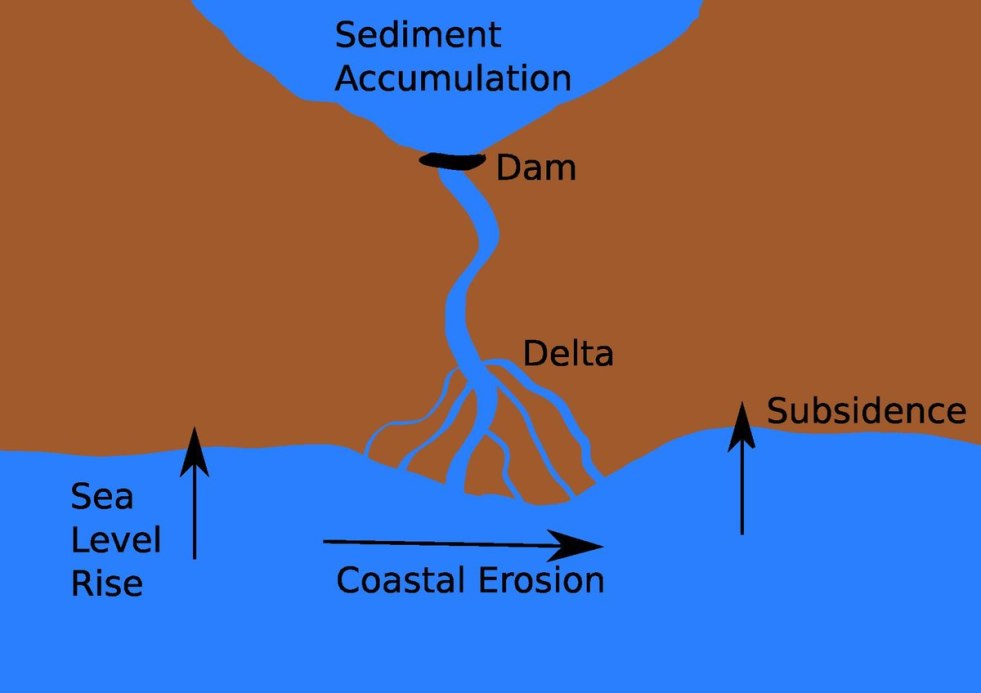
(Feature image: Delta Land Loss Mechanisms. Source Wikimedia Commons)

A new study this week has reminded us what has been known for long. Dams not only store water but also trap the sediment flowing in the river. Whatever smaller quantity of water flow from dams to downstream areas, has much lower or no silt. A lot of that silt was supposed to reach the coast, helping fight against the erosion of the coast due to sea tides and waves. With drastically lower sediment reaching the coasts, higher coastal erosion is the result. While climate change is definitely contributing to the increased coast erosion due to more frequent and higher intensity storms from the sea, the role of dams tend to work as force multiplier in increasing the coastal erosion due to less sediment reaching the coasts from river.

While a new study by a Pune University has highlighted this phenomena in case of Godavari river, peninsular India’s biggest river, this is also happening at most other rivers and where they meet the coasts. As in case of Farakka, closer the terminal dam is to the coast, greater is its effectiveness to trap the river sediment and higher is its contribution likely to be to the increase in coastal erosion.

Continue reading “DRP 01 Aug 2022: Dams reduce sediment load in rivers leading to higher coastal erosion”
DRP News Bulletin

DRP 250722: State of Yamuna River ignored by NMCG and MoEF

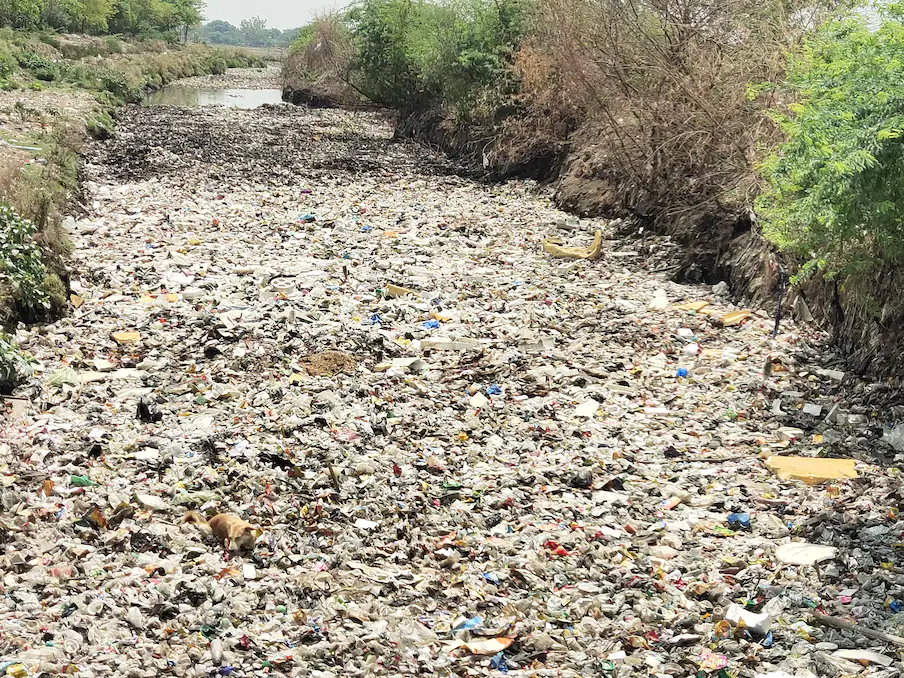
(Feature Image:- A drain choked with solid waste and untreated effluents running through Yamuna floodplains in Mathura. Source: News 18, 13072022.)

This year, even in the middle of monsoon, the Yamuna river in the national capital is in such a pathetic state, there is insufficient flows in the most of the days. The govt may jump to blame it on poor monsoon rains, ignoring that the upstream dams like the recently commissioned Vyasi dam not releasing water in the downstream is also a major reason beside the unsustainable riverbed mining and also dumping of solid waste in the upstream, including due to the building of mindless projects like the Char Dham highway, all in the news this week. Both National Mission on Clean Ganga (NMCG) and Union Ministry of Environment and Forests (MoEF) should be concerned about this lack of flows downstream from the dam and other issues listed above, but they clearly seem least bothered.

Continue reading “DRP 250722: State of Yamuna River ignored by NMCG and MoEF”
Urban Rivers

Top Ten Judicial Actions on Urban Rivers 2022: Executors Deliberately Delaying, Diluting, Defying orders

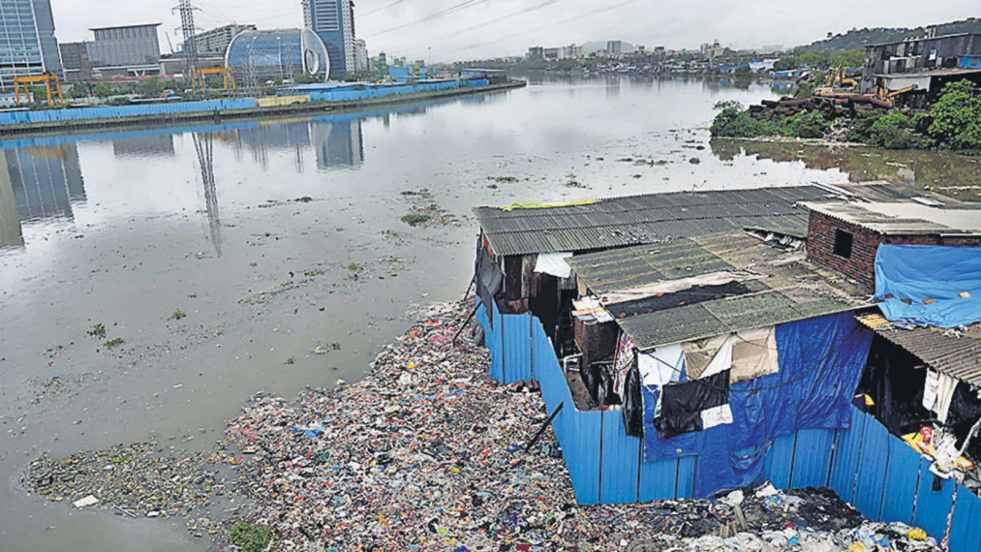
(Feature Image: The order is subject to the orders of the SC which is pending. NGT on Nov. 24, 2021ordered the BMC to deposit within three months an environmental penalty of ₹28.20 crores to the CPCB for discharging raw sewage into the city creeks, rivers and drains. HT Photo)

During past one year, the judicial bodies including National Green Tribunal, Supreme Court, various High Courts have passed several orders and made critical observation while dealing with multiple issues afflicting Urban Rivers in India. This report highlights top ten such judicial interventions across India. The stories underline that the responsible agencies particularly pollution control boards and district, state and union governments have been failing miserably in timely and efficient implementation of these judicial orders, some of which are quite remarkable. If the executive bodies do not show right spirit and seriousness in enforcing the existing rules and court orders the state of India’s urban river only go downhill.    

Continue reading “Top Ten Judicial Actions on Urban Rivers 2022: Executors Deliberately Delaying, Diluting, Defying orders”
DRP News Bulletin

DRP 040722: Stalled, delayed, cancelled Hydro in Bhutan

(Feature Image: Stretch of Punatsangchu River that will be diverted through the tunnel when the dam is commissioned Photo: SANDRP)

Puncturing the prevalent notion about India Bhutan Cooperation on hydropower projects, there is news this week (in fact the news on this score has been coming for more than a couple of years, but Indian media seems to be practicing a self-imposed ban on putting out such stories – but that is another story as they say) that hydropower projects have been stalled, delayed, reconfigured, and even cancelled in Bhutan. This is broadly in line with the increasing economic non viability of hydropower projects.

Kuensel, Bhutan’s national newspaper, has reported about such projects quoting the National Council recommendation to the government of Bhutan to expedite the decisions about the stalled projects like the massive Punatasanchchu-I HEP and the Kholongchu HEP. It has also reported that the government of India conveying to Bhutan that India has sufficient electricity supplies, suggesting that the proposed Nu 200 Billion Sunkosh Hydropower project may not have any definite dateline and hence likely to not go forward. The happenings at the geologically unstable site selection for Punatsanchchu project involving India’s Central Water Commission, Wapcos and Geological Survey of India among others is in fact major scandal and how the whole issue has been dealt with so far. The happenings at the Kolongchu HEP being executed by the SJVN (erstwhile Sutlej Jal Vidhyut Nigam Ltd) as the first ever joint venture project in Bhutan in terms SJVN not giving the promised contracts to Bhutanese companies also does not bode well for Joint Venture projects in future. Both Punatsanchchu and Kholongchu HEPs are stalled and delayed for long, increasing the cost of the projects and power from the projects. While all this is broadly in line with increasing economic non viability of hydropower projects, a lot of this can be avoided by increasing transparency and accountability in governance of these projects.

Continue reading “DRP 040722: Stalled, delayed, cancelled Hydro in Bhutan”
DRP News Bulletin

DRP 200622: Erratic onset & progress of SW Monsoon in India

It is great to see an EDITORIAL on monsoon progress in one of India’s National newspapers, THE TIMES OF INDIA on June 20, 2022. The editorial figure of monsoon deficit of 32% at all India level is hugely outdated as it was for rainfall till 8.30 am on June 15. According to the latest figures of rainfall till 0830 am on June 19 available as we write this, the deficit is DOWN to just 8% as rainfall has been above normal on each of the last five days. The deficit in NW India has also reduced from 77% reported in TOI edit to 63% now. The monsoon has also covered much larger area except in North West India. The rainfall so far has already broken several records in terms of intensity of rainfall.

Nevertheless, the key message of the TOI EDIT, about our wrong cropping pattern and urgent need of the govt to come up with schemes to incentivise farmers to change to more appropriate cropping pattern is very important.

Continue reading “DRP 200622: Erratic onset & progress of SW Monsoon in India”
DRP News Bulletin

DRP 30 May 2022: Govt not serious about Rain Water Harvesting

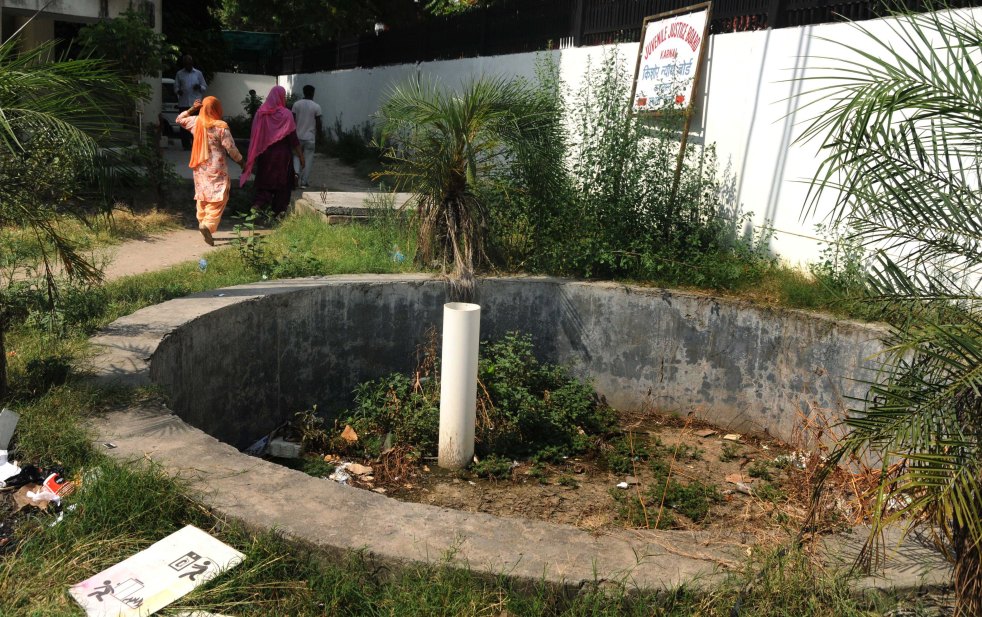
(Feature image: Condition of a RWH structure in Karnal. The Tribune)

As India Meteorological Department (IMD) declared onset of 4 month South West Monsoon in Kerala on May 29, 2022 and published map of monsoon onset in rest of the country, key highlight of the news this week is how callous, non-serious is the govt in harvesting the rain where it falls. This is in spite of all the sloganeering about harvesting rain where and when it falls right from Prime Minister to downstairs. As they say, our actions speak louder than our words. The news came from Delhi and Karnal (Haryana) that in both states the rainwater systems even in government premises are lying defunct if all built.

The story would be similar from rest of the country. This also shows how serious is the government in working towards sustaining groundwater, India’s water lifeline as the biggest help GW can get is from harvesting rain where it falls, when it falls. This is particularly pertinent in the context of changing rainfall pattern with changing climate. If we had systems in place to harvest rain when and where it falls, it would also help reduce the flood peaks significantly. But until the government shows it is serious through demonstrable evidence of functioning rain water harvesting systems all across the river basins across India, there will be little morale authority in government pushing rest of us working to harvest rain, where and when it falls.

Continue reading “DRP 30 May 2022: Govt not serious about Rain Water Harvesting”
DRP News Bulletin

DRP 16 May 2022: Welcome effort at Groundwater monitoring in India’s villages

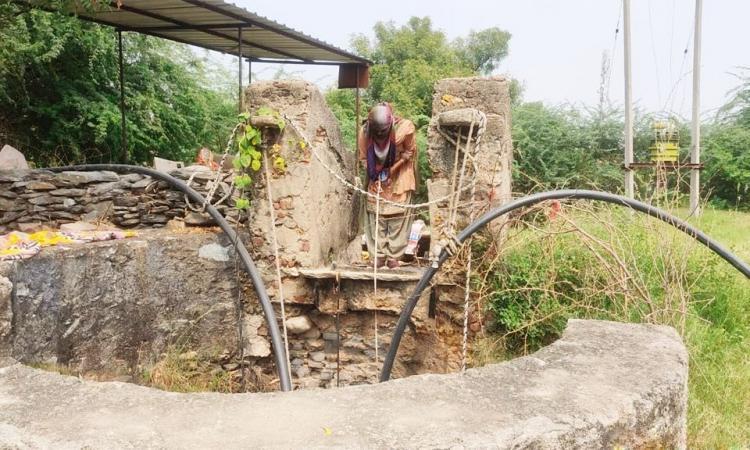
(Feature Image: Women use an open source groundwater monitoring tool that enables collection of water level data of wells and its collation on a web platform for easy access by all. Source: FES/IWP)

The Groundwater (its closer to dug well monitoring than full GW monitoring) Monitoring Campaign using the Groundwater Monitoring Tool (an App) across the villages in India started two years ago by the Foundation for Ecological Security (FES) as reported by the India Water Portal seems like a much needed kind of campaign to monitor groundwater levels (& quality where that is also being monitored) across the villages in India. The presentation on the India Observatory (an initiative of FES) website lists some 40 very highly credible organisations from across India in 2020 when the GWM campaign started. This is certainly very welcome initiative that has huge potential to improve India’s groundwater management.

Continue reading “DRP 16 May 2022: Welcome effort at Groundwater monitoring in India’s villages”
DRP News Bulletin

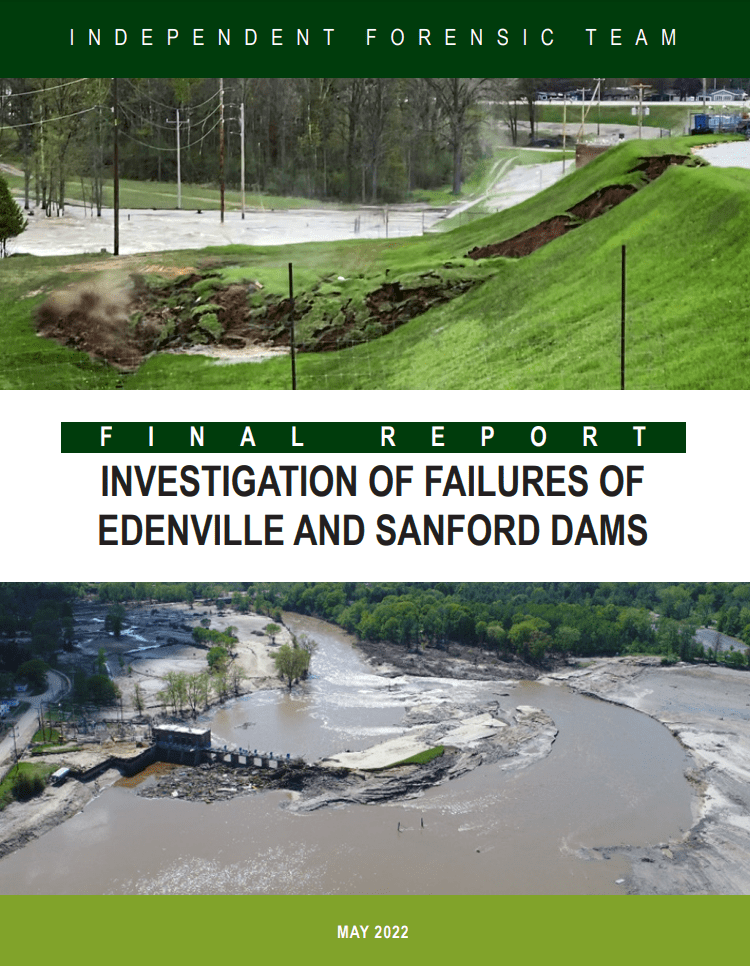
DRP 09 May 2022: Forensic Team report: Michigan 2020 Dams failures were preventable

A Forensic engineering Team appointed by the USA’s Federal Energy Regulatory Commission post the May 19, 2020 failure of Edinville and Sanford Dams in Michigan state of USA has published a 502 page comprehensive report on the dam failure within less than two years of the disaster. The full report published on May 4, 2022 is in public domain and has concluded that the dam failures were foreseeable and preventable.

There are a number of things we can learn from this. Firstly that there are such credible independent assessment of dam failures, we have none in India even after multiple dam failures each year. Secondly, such assessments are promptly in public domain. Thirdly, the reports are completed in less then two years. We have none of these. Even the Dam Safety Act passed by the parliament does not have provisions for any of these.

There are a lot of implications for India here. It means for example that we will never know the real reasons for the dam related disasters. Secondly, we won’t be able to learn any lessons. Thirdly we will never be able to improve the governance of our dams and rivers. Fourthly, we won’t be able to fix accountability.

There is so much at stake related to governance of our dams, but we seem completely unconcerned about it. There is a lot we can learn from others here.

Continue reading “DRP 09 May 2022: Forensic Team report: Michigan 2020 Dams failures were preventable”
DRP News Bulletin

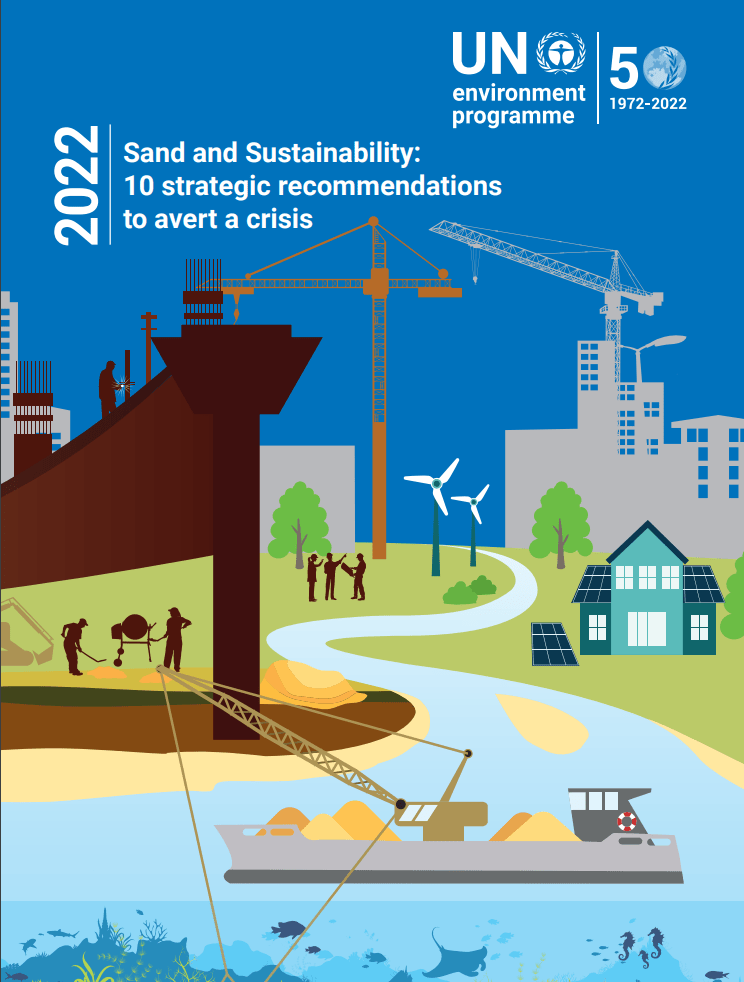
DRP 02 May 2022: Sand a strategic resource like water, rethink its exploitation: UN

A United Nations report released this week on Apr 26, 2022 has recommended that river sand needs to be considered by the governments as a strategic resource like water for its multiple roles in the environment and its extraction and use needs to be rethought. The UNEP report says sand is the second most exploited resource. And yet there are no credible governance guidelines or policies for the exploitation and use of this report, nor assessment of impact of unsustainable exploitation.

The report says: “Extracting sand where it plays an active role, such as rivers, and coastal or marine ecosystems, can lead to erosion, salination of aquifers, loss of protection against storm surges and impacts on biodiversity, which pose a threat to livelihoods through, among other things, water supply, food production, fisheries, or to the tourism industry.”

Continue reading “DRP 02 May 2022: Sand a strategic resource like water, rethink its exploitation: UN”
DRP News Bulletin

DRP 18 April 2022: Clean Hydro does not make much sense in India: Experts

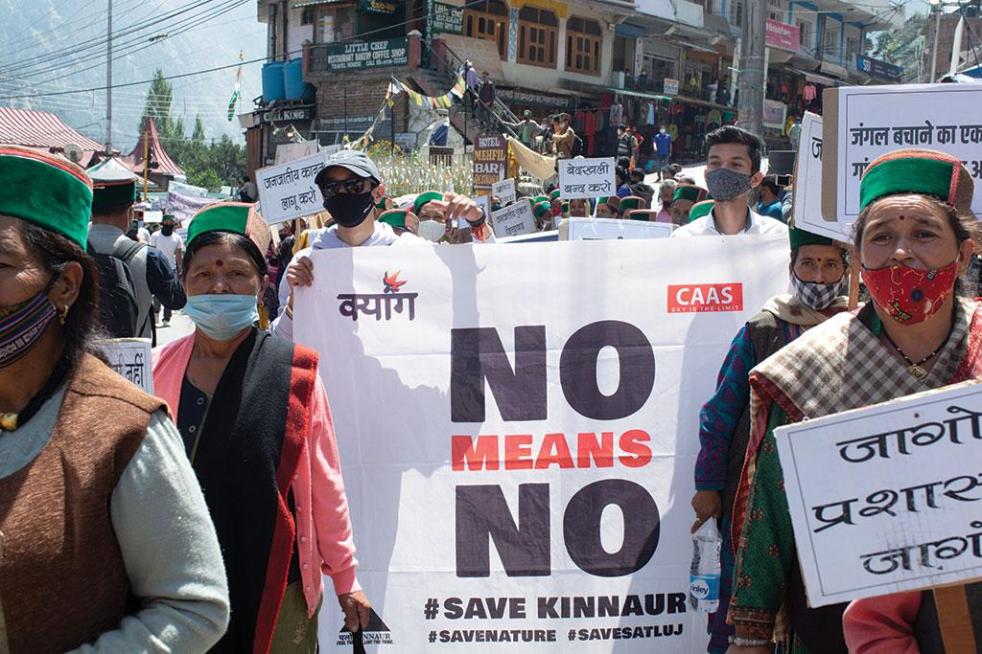
(Feature image:- Following massive landslides in Kinnaur, Himachal Pradesh sees growing protests against hydropower projects. DTE)

As the following report from Energy Monitor this week says, according to international experts, the idea that hydro is clean does not make sense. They say that for a number of reasons including for the social risks, environmental risks and the increased emissions of methane due to rotting of organic matter flowing in the river and settling in the reservoirs. In spite of some apparent inherent misconceptions, this part of the report is sound and should be a wakeup call for the supporters of big hydro in India. As the report suggests this is particularly true in the context of climate change. Indeed, this has been our own experience in India with increasing disasters related to hydro projects and the increasing unviability of the hydro projects in India.

Continue reading “DRP 18 April 2022: Clean Hydro does not make much sense in India: Experts”