Groundwater

2022: Judicial Interventions in India for Groundwater Conservation

In this yearend overview, we highlights some remarkable judicial decisions particularly by National Green Tribunal (NGT) and some ongoing legal disputes regarding violation of groundwater norms and its pollution in India in 2022. The NGT not only criticized MoJS (Ministry of Jal Shakti) new groundwater guidelines but also ordered penalizing Pepsi’s and Coke’s bottling plants in Uttar Pradesh for operating without NOCs. These were unfortunately later stayed by Supreme Court. Though the judicial interventions have once again revealed the sheer ineffectiveness of concerned bodies at central and state level however these orders have failed to bring any change in their functioning so far. NGT proceedings into allegations of groundwater pollution by liquor factory in Firozpur, Punjab has remained inconclusive while affected villagers and farmers have been staging protest for months.   

In the first part of the overview, we have tracked the worsening situation of groundwater depletion and contamination in the country while in second part, we have covered some positive efforts and initiative taken by various governments for its management in 2022.     

Continue reading “2022: Judicial Interventions in India for Groundwater Conservation”
Groundwater

2022: Some positive reports on groundwater management 

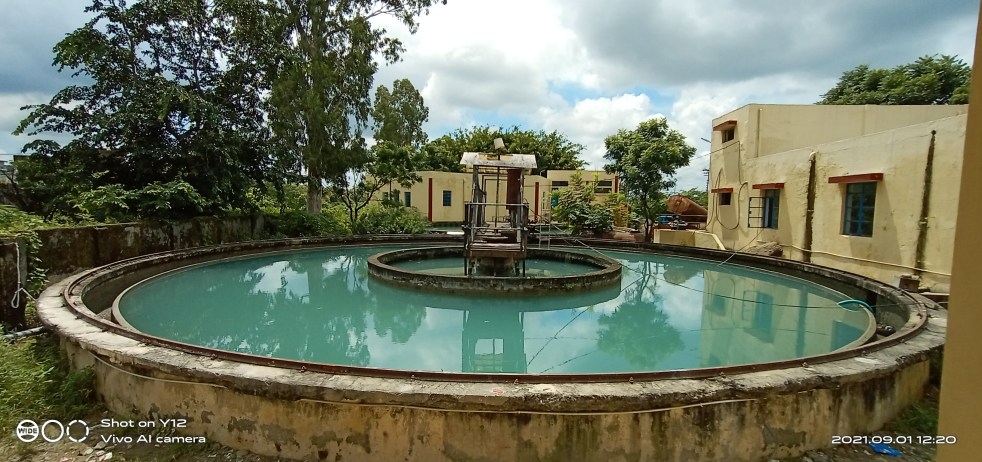
This second part of yearend overview, SANDRP highlights some positive reports and steps taken by various state governments in India for management and conservation of groundwater in 2022. In first part of the overview, we have tracked the situation of groundwater depletion and contamination in the country and in third part covered some remarkable judicial interventions regarding groundwater conservation in 2022.

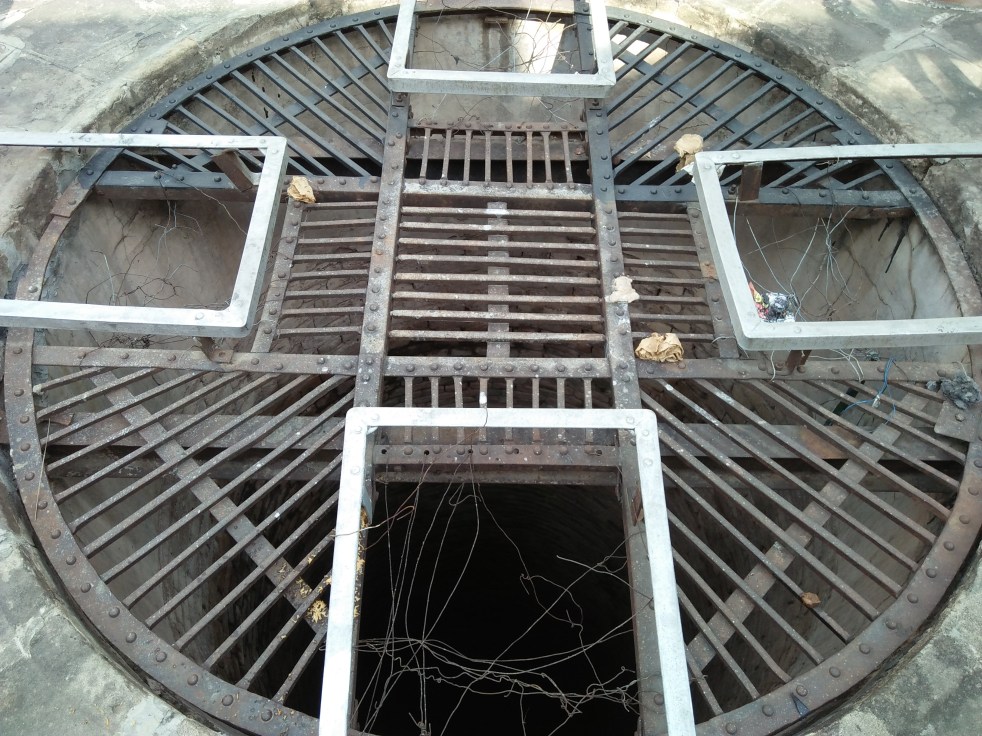
Centre Recharge wells to power multi-city groundwater project. A pilot project on shallow aquifer management, initiated by the Union Ministry of Housing and Urban Affairs for 10 cities, under the Atal Mission for Rejuvenation and Urban Transformation (AMRUT), has identified recharge wells as key to improving groundwater availability. Experts have cited the non-availability of space to allow the percolation of rainwater as a major hurdle to recharging Bengaluru’s groundwater table. The Million Wells programme was launched by Biome Environmental Trust in 2015 to encourage citizens and communities to dig and maintain their own recharge wells. It also opened up employment for the traditional well-digger community, the mannu vaddars.

In Bengaluru, the Bruhat Bengaluru Mahanagara Palike (BBMP) will be the nodal agency for the project. Biome Environmental Trust and Advanced Centre for Water Resources Development and Management (ACWADAM) will be technical partners in the project, which is led by the National Institute of Urban Affairs, a national think-tank on urban planning and development. The pilot project also covers Chennai, Dhanbad, Gwalior, Hyderabad, Jaipur, Kolkata, Rajkot, Thane, and Pune. https://www.deccanherald.com/city/recharge-wells-to-power-multi-city-groundwater-project-1157262.html  (28 Oct. 2022)

Continue reading “2022: Some positive reports on groundwater management “
Groundwater

2022: Groundwater Depletion, Contamination Continue amid Govts’ Efforts

This first part of the annual overview, SANDRP tracks some of the important developments regarding groundwater depletion and contamination in India and ongoing efforts, new steps taken by Central and various state governments in 2022 for the protection and conservation of the finite natural resource. Overall, these developments show no significant improvement in governance and management of groundwater resources which is also the water lifeline of the country amid its rising depletion and contamination. In second and third parts of the yearend roundup we have tracked some positive initiative for groundwater management by various governments in the country and some remarkable judicial interventions for groundwater governance and conservation in 2022.

Continue reading “2022: Groundwater Depletion, Contamination Continue amid Govts’ Efforts”
Dam floods

Dam Floods, Failures and Disasters in 2022

This annual overview highlights the dam induced flood disasters, dam failure incidents in India during 2022. This year, the massive floods in Godavari have exposed the flood vulnerability of giant projects like Polavaram and Kaleshwaram. Also there have been multiple dam failures and dam induced floods in Madhya Pradesh, Tamil Nadu and Kerala. In absence of coordination and data sharing Hirakud induced floods in Mahanadi basin have affected several villages in Odisha and Chhattisgarh. There have been several instances of unscientific operations of dams and the operators continue to hide behind TINA (There Is No Alternative) excuse. The functioning of CWC as key flood forecasting and management agency has not shown any significant improvement. However, now it has accepted that faulty dam operations can lead to flood in downstream areas. Please see links to our 2018, 2019, 2020 and 2021 annual compilations on the subject.    

Continue reading “Dam Floods, Failures and Disasters in 2022”
DRP News Bulletin

DRP NB 14 Nov 2022: Jal Shakti Ministry says: Groundwater extraction down, recharge up???

(Feature Image: The report also states that the monitoring of the groundwater resources was affected by the Covid-19 outbreak in the country. Source: Bloomberg/TIE)

This sounds so counter intuitive. The Ministry Jal Shakti on Nov 9, 2022 made some findings of its latest “National Compilation on Dynamic Ground Water Resources of India, 2022 public, strangely, without making the report public. It is not clear why the govt did not make the report public, though the counter intuitive nature of the findings provide some hint. The report claims that at all India macro level, the ministry claimed that the groundwater extraction is the lowest in 2022 since 2004, or 18 years and that the groundwater recharge has gone up.

These are counter intuitive findings, even if at macro level for a number of reasons. It is also unclear what methodology is used to arrive at these conclusions and if there has been any independent scrutiny of the same. Since groundwater extraction has been going up for over six decades now, this reversal will need plausible reasons. There are no indications that there is any reduction in this groundwater use. Secondly, the groundwater recharge mechanisms are under attack all over India, and thus the finding that there is increase in recharge raises questions. Particularly since the efforts at groundwater recharge through rainwater harvesting are far from convincing.

More importantly, the real story is at micro level, since groundwater occurs in decentralised aquifers and any significant reduction in use, increase in recharge has to happen at the aquifer level and the assessment also needs to be done and made available at aquifer level for it to have any impact on future regulation of groundwater. In fact the only regulatory body working for groundwater regulation, the CGWA, works in a centralised way and its work has been far from confidence inspiring. That makes this whole findings questionable. Moreover, it would also be useful to see if the extraction has reduced in over exploited areas and if the recharge has increased where it is required most: in over exploited areas. Too many questions and no answers, unfortunately.

Continue reading DRP NB 14 Nov 2022: Jal Shakti Ministry says: Groundwater extraction down, recharge up???
DRP News Bulletin

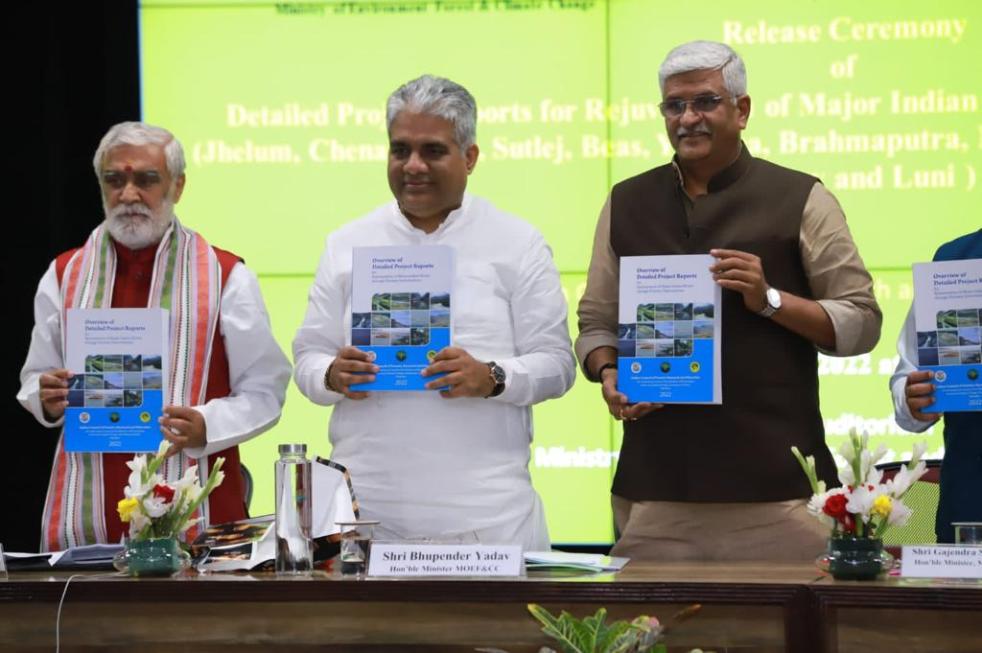
DRP NB 21 Mar 2022: Centre’s unconvincing Plan to rejuvenate 13 major rivers

The government of India, through joint announcement of Union Ministries of Jal Shakti & Environment and Forests (such joint addresses are rather rare events) this week announced its plans to rejuvenate 13 major rivers of India (excluding Ganga but including some of the key Ganga tributaries!) through the limited activity of plantations is not every convincing on many counts. Firstly it is welcome to see that the government sees a role of forests as a hydrological asset. Unfortunately, this is clearly and completely absent in government’s forest management, both in policy and practice. If we see the forest governance of India through the functioning of the Forest Advisory Committee of MoEF, we see absolutely no sign of acknowledgement of this reality that forests are major hydrological assets. So for example when a decision is taken to allow diversion of major chunks of existing forests, there is never any discussion, assessment or counting of hydrological eco system services that forests provide. This is apparent in many cases, but most recently in the case of Ken Betwa project where the Supreme Court’s Central Empowered Committee too has acknowledged this reality. So again it seems government’s mind or heard does not seem to know what the tongue is conveying!

Continue reading “DRP NB 21 Mar 2022: Centre’s unconvincing Plan to rejuvenate 13 major rivers”
DRP News Bulletin

DRP NB 03 Jan 2022: Are we any safer from Dam Disasters?

In the 2021 year-end review by the Ministry of Jal Shakti (Ministry of Water Resources), the passage of the Dam Safety Bill by the parliament figures in headlines. The question is are we any safer from dam disasters due to this? If we take a quick review of the numerous dam disasters just this year and also look at the dam disasters mentioned in this Bulletin that happened just in the last week of the passing year, the answer is clear no. Such disasters include ones in Himachal Pradesh, Nepal and Brazil.

There is also the news here of the Uttarakhand agency report about the Feb 2021 Chamoli disaster, about which the official govt agency has said failure of Early Warning System was a factor in the disaster. The bigger disaster is that the state govt has promptly issued show cause notice to the authors of the paper blaming the lack of EWS!

Continue reading “DRP NB 03 Jan 2022: Are we any safer from Dam Disasters?”
Hydropower

Judicial Interventions in Hydro Projects in India in 2020

This report is about the interventions by various judicial bodies in India in the hydro power projects related issues in 2020. This also covers judicial decisions either delaying the justice or facilitating the projects thus unhelpful for the public interest cause and paving way for financially unviable and environmentally destructive projects. The account first looks at judicial interventions at the National level and then in states in North, North East and South Zones. 

Continue reading “Judicial Interventions in Hydro Projects in India in 2020”
Agriculture · Climate Change · Economy · Water

Water-Environment Sectors disappointment in Budget 2020

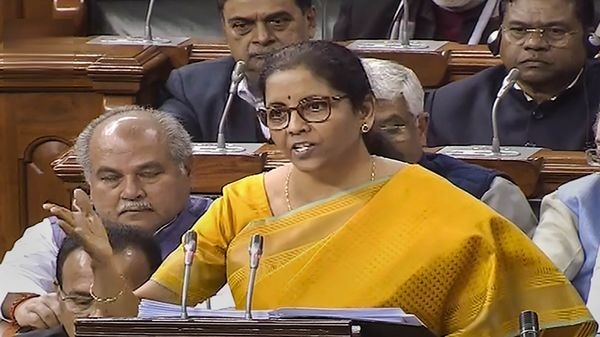
The Water & Environment sector, including the Agriculture, Environment & Forests, Urban Development, Ganga and & Other Rivers, Water Resources Ministry, Rural Employment Program and Rural Drinking Water Mission, seems to have seen disappointment from the allocations in Union Budget 2020-21 presented by the Union Finance Minister Smt Nirmala Seetharaman to the Parliament on Feb 1, 2020, most independent observers have concluded. The Budget has proposed some welcome measures in solar power and rural infrastructure sector. But on the whole, considering the situation in Water Sector & Climate Change impacts already upon us, and considering the various statements from the government, these sectors have not received the priority they deserve. Continue reading “Water-Environment Sectors disappointment in Budget 2020”