Irrigation · Maharashtra

Maharashtra Irrigation Act 1976 exists for 49 years without Rules!

Guest Article by: Pradeep Purandare

A PIL (152 / 2014) has been filed by this author before the Aurangabad bench of Mumbai High Court way back in 2014. Maharashtra Irrigation Act, 1976 (MIA 1976) is not being implemented in letter & spirit, thanks to the absence of Rules of MIA 1976. It is needless to add that Act/Law states the general principles and Rules give the necessary details required for the actual implementation of the Act. For example, Act only says that Water Use Rights may be given to all farmers in the command area as prescribed. Rules of the Act, however, give the details to answer the usual questions like How? How much? When? Where? To whom? Application / Agreement required? Applicable terms & conditions? etc. Rules reduce the scope for discretion and chances to interpret the Act in different manner by different individuals at different times & places. Rules facilitate smooth & uniform implementation of the Act.

Continue reading “Maharashtra Irrigation Act 1976 exists for 49 years without Rules!”
Maharashtra · Rivers

Beyond technological failure: Examining the role of religious organisations in water conservation

Guest Blog by Sachin Tiwale

Introduction 

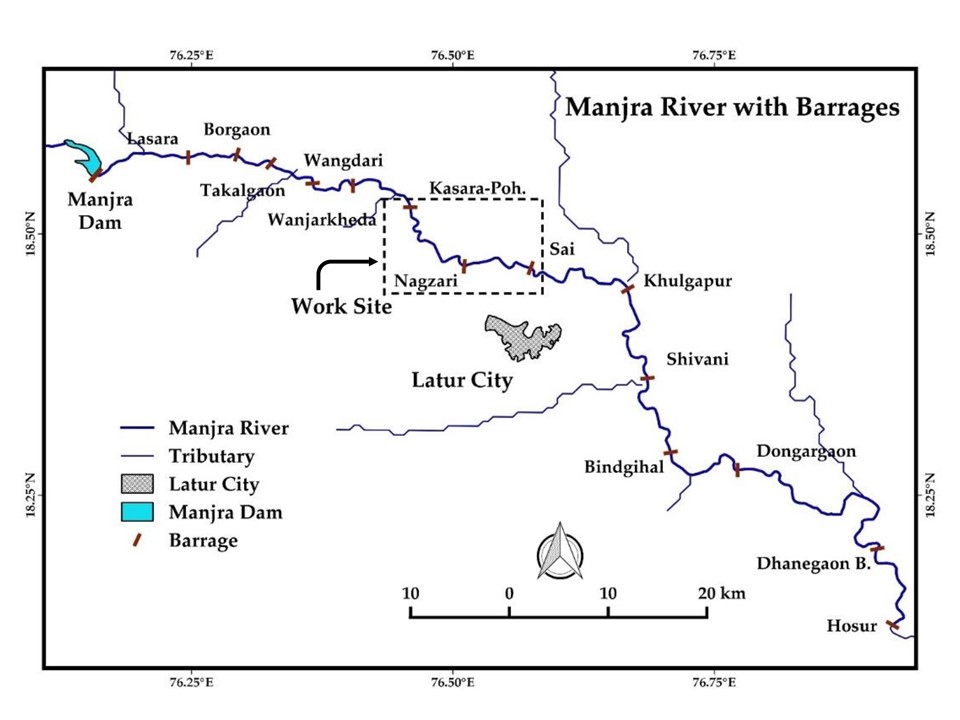
In summer of 2016, after witnessing two consecutive droughts, Art of Living (AoL) along with RSS Jankalyan Samiti, (RSS-JS) initiated Manjra River Rejuvenation program with the involvement of local leaders and residents. As a part of this program, the Manjra River channel was deepened and widened to create additional storage to meet the drinking water demand of parched Latur city of Marathwada, Maharashtra. During implementation, the leading organisations AoL and RSS-JS proclaimed rejuvenation project as a permanent measure resolving the crisis by creating storage of 18 million cubic metre (MCM) enough to meet Latur city’s water demand (Ghadyalpatil  2016; Thomas 2016). With a promise of supplying piped water every alternate day, they collected around Rs. 70 million from the people[1]. However, as described below, even after completion of massive excavation damaging river ecology, this project failed miserably. It could not even supply one drop of water to the citizens of Latur. Surprisingly, this failure is never revealed or discussed and on the contrary, the project was celebrated as a success (Samvada, 2016). Continue reading “Beyond technological failure: Examining the role of religious organisations in water conservation”