The news this week that the Union Ministry of Jal Shakti, not known for any concern for rivers, has set up the National River Research Centre (NRRC) is welcome with usual caveats. The fact that NRRC has been set up under the Wildlife Institute of India (WII), a body under Union Environment Ministry is not necessarily as positive sign since MoEF too is not known for any concern for rivers. Moreover, setting up of NRRC through NMCG and NRCD also does not provide any hopeful sign for the same reason. WII, where the NRRC has been situated for now itself has had at best mixed track record as far as rivers are concerned.
Continue reading “DRP 160226: National River Research Centre Welcome, will it help the cause of rivers?”Tag: Krishna
DRP 090226: NGT Critiques Shoddy CGWA report
The criticisms of the National Green Tribunal (NGT) on January 30 about the report of the Central Ground Water Authority (CGWA), set up under the Environment Protection Act 1986 in late 1990s is rather mild and seems symbolic, but it has the potential of open up a pandora’s box since CGWA has essentially totally failed in doing anything effective about groundwater regulation in India.
Continue reading “DRP 090226: NGT Critiques Shoddy CGWA report”DRP 020226: Karnataka High Court Monitored Probe into sand mining menace?
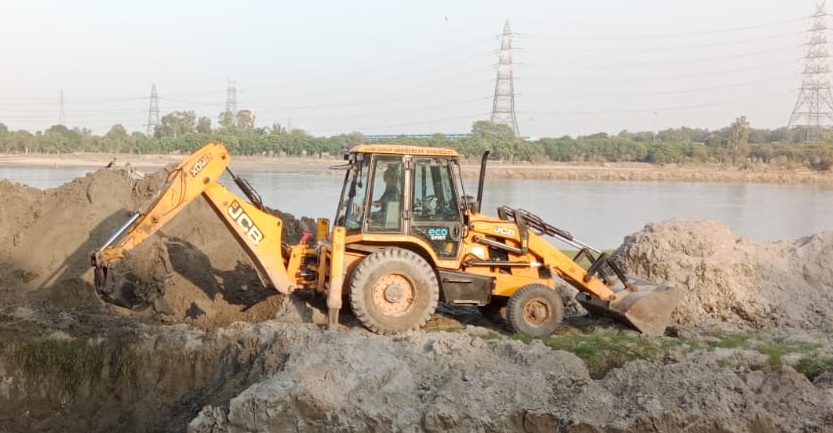
An interesting sequence of events in Karnataka has led to the High Court Chief Justice taking up a suo moto case and suggesting a court monitored probe into the illegal sand mining menace in the state. One hopes this leads to a proper independent investigation, monitored by the High Court, culminating in ensuring community have the key role in monitoring and compliance of sand mining in their respective area, since that is the most important missing link in governance of sand mining.
Continue reading “DRP 020226: Karnataka High Court Monitored Probe into sand mining menace?”DRP 291225: Looking back on 2025, Looking forward to 2026
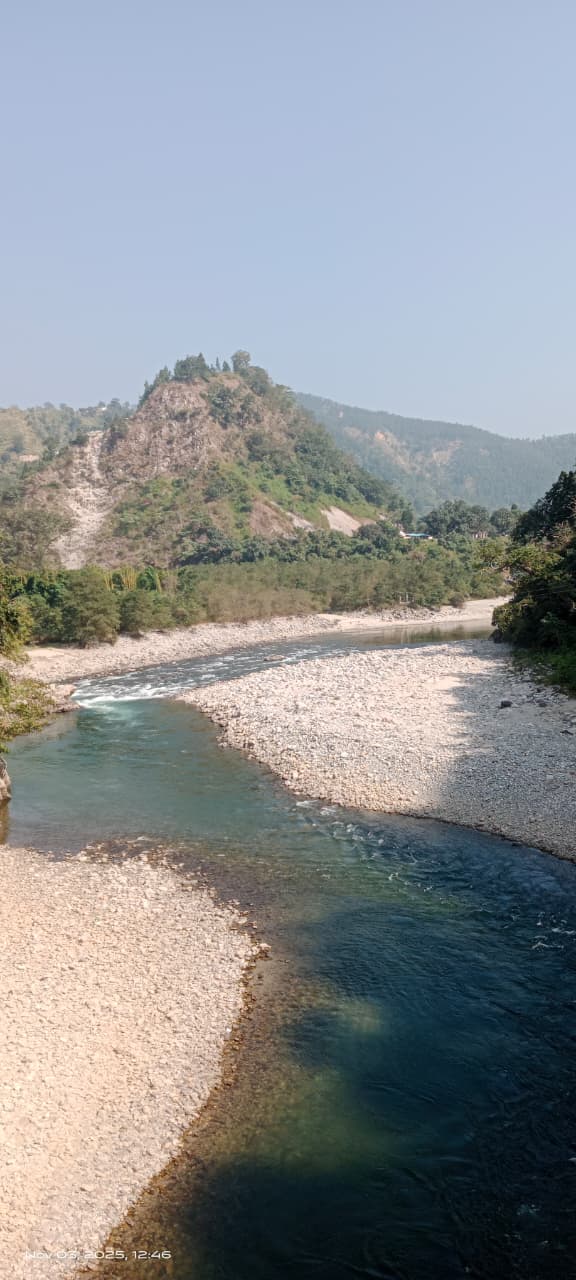
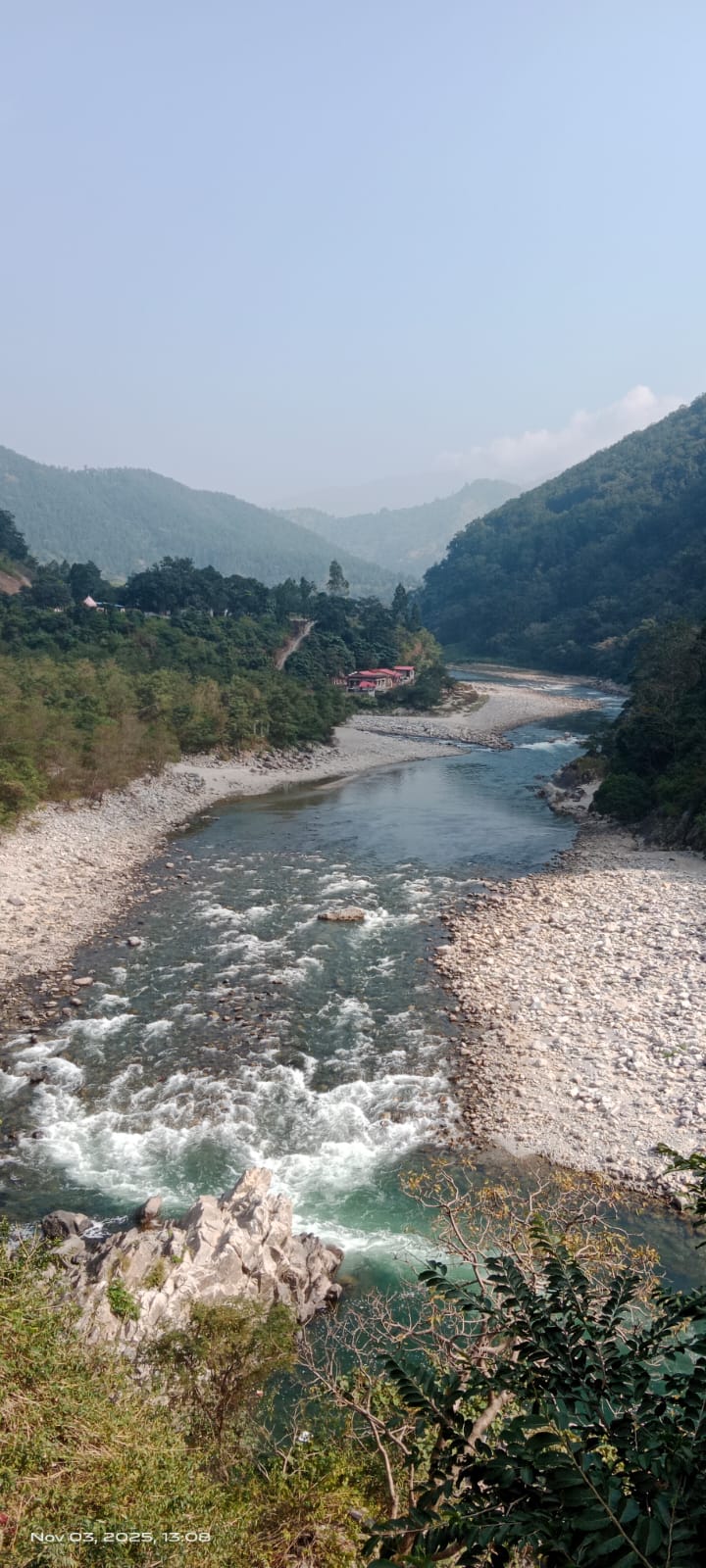
(Feature Image: Ramganga river at Marchula on Nov. 03, 2025. SANDRP)
As the year 2025 ends, reflecting on the DRP related developments over the year and even in this last DRP of 2025, one cannot but see largely pessimistic situation for India’s Rivers, Water Bodies, Hills and Mountains, Floodplains, and for the environment in general. As we saw during South West Monsoon 2025, the flood disasters have been so severe that the number of deaths in South Ais are the highest among all climate disasters of 2025 according to the just released Christian Aid report. The spread, intensity and frequency of the disasters are only going to increase, but we, including the government and the society seems to show little sincerity in dealing with this.
Continue reading “DRP 291225: Looking back on 2025, Looking forward to 2026”DRP 221225: Is it so difficult to understand the importance of Aravalli Mountains?
(Feature Image: Aravalli mountain ranges along the Bewar-Jaipur stretch. Credit.)
Why is it so difficult, for the Union Govt, MoEF, its experts, but most shockingly, for the Supreme Court to understand the importance of Aravalli Mountains – India’s most ancient and ecologically sensitive range? What exactly is driving the unacceptable decision of the apex court? According to the Forest Survey of India, applying the new definition would result in only around 8.7% of the mapped Aravalli landforms being eligible for protection, leaving a substantial portion unregulated.
Continue reading “DRP 221225: Is it so difficult to understand the importance of Aravalli Mountains?”DRP 151225: Hydro Projects continue to provide troubling news
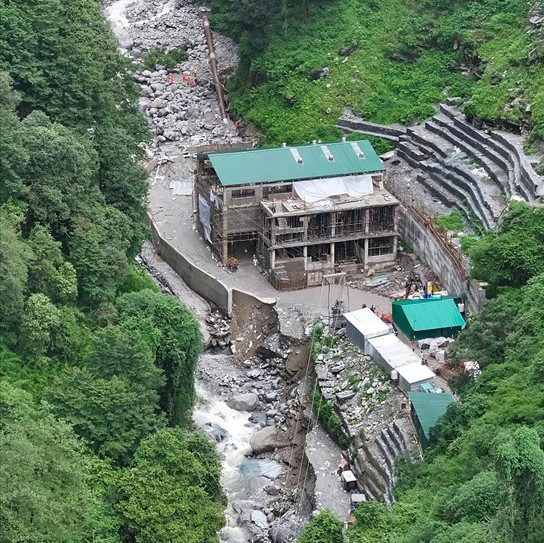
(Feature Image: Ongoing work at Ratle HEP in June 2025. Source)
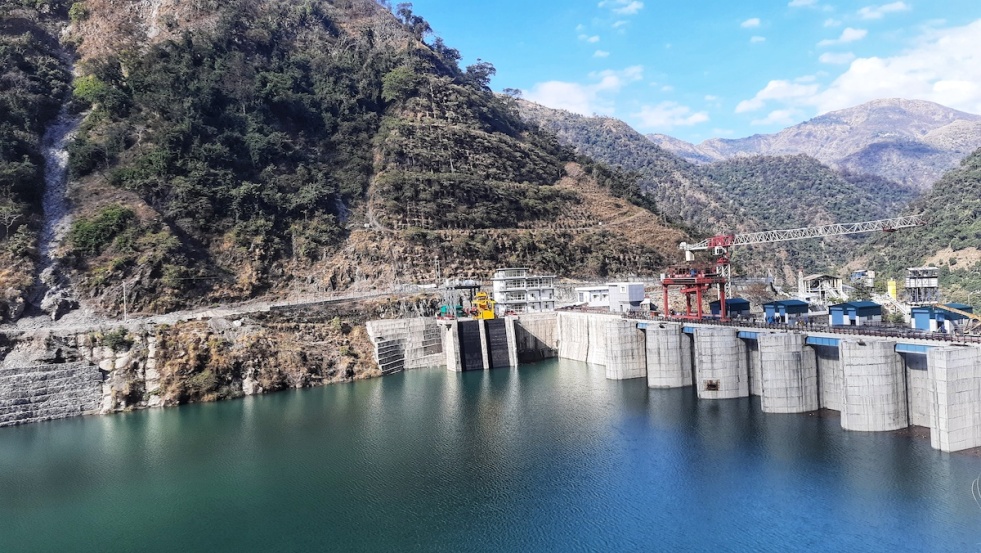
There are troubling news reports about a number of hydropower projects, even as the hydro industry tries its best to present a positive picture. NHPC tries to say that one of its 250 MW units at the Subansiri Lower HEP is good news. However, the fact that WII’s several years old recommendation that project should not be used for peaking power generation till studies about its impact on elephant corridor are complete. But the WII recommendation presented at the National Wildlife Board over 22 months ago is yet to be implemented. The serious financial trouble that the project is in, is also apparent from its desperate attempt to use the forest land as collateral, rejected by MoEF. The closing down of the NHPC office for the Subansisi Upper HEP in Upper Subansiri district came following agitation by the students Union and others there opposing the project.
Continue reading “DRP 151225: Hydro Projects continue to provide troubling news”2025: Dam Safety Issues in India
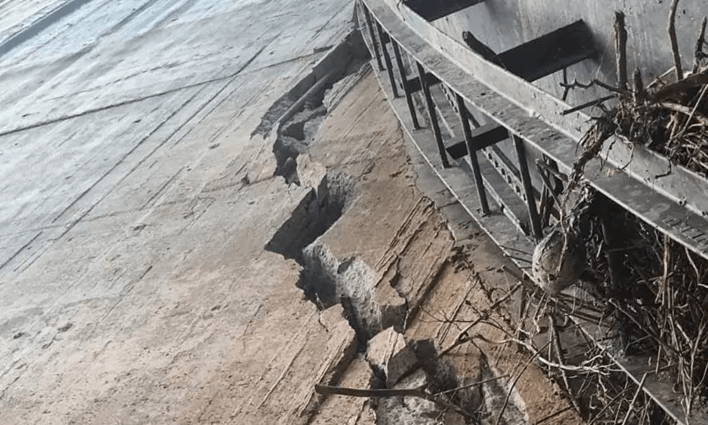
(Feature Image: A worn out portion of Singur dam embankment. Source)
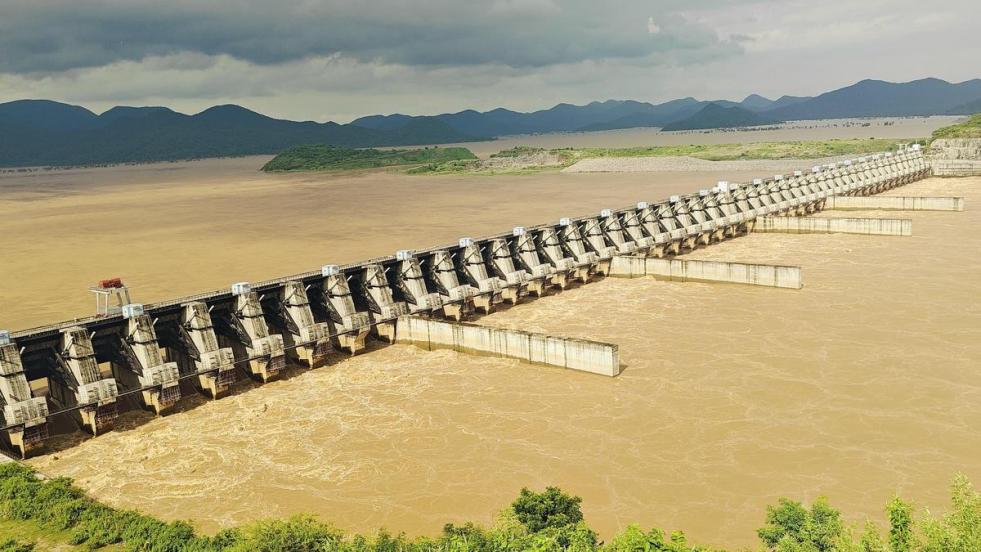
This annual overview presents top ten reports highlighting the dam safety issues in India. Worryingly, the central govt in Oct. 2025 itself has revealed that safety audit of about 5000 large dams is pending. Before this, the NHRC in Feb. 2025 sought a report on safety of the dams across the country. The plea rightly demanded a transparent, accountable and participatory dam safety mechanism to prevent disasters. Indeed, the aging infrastructure, inadequate maintenance, slow progress of rehabilitation and fast changing climate are among the key issues putting our dams under threats.
Continue reading “2025: Dam Safety Issues in India”DRP 081225: India Needs Effective Measures to Check Sedimentation of Dams
(Feature Image: Despite HC orders, NHAI, Railways continue illegal dumping of landslide debris. Source)
In a reply in Lok Sabha on Dec. 04, the Ministry of Jal Shakti has revealed that 24 reservoirs in Punjab (14), Himachal Pradesh (9) and Haryana (1) have collectively lost about one fifth of their storage capacity due to sedimentation. Indeed, for years the sedimentation has become a major problem reducing the storage capacity of dams across the country. As a solution the respective governments have mainly relied on desilting which has largely remained limited to plans and in some cases have not achieved the intended purpose. In case of Bhakra the central govt has again mainly focused on desilting as solution.
Continue reading “DRP 081225: India Needs Effective Measures to Check Sedimentation of Dams”DRP 011225: Do we know how big is the GLOF threat in the Himalayan states?
(Feature Image: Thousands of Glacial lakes dot the Himalayas. Source: NYT)
The following brilliant report on the threat of GLOFs (Glacial Lake Outburst Floods) is noteworthy from many perspectives. But possibly the most important one is to show the unknown but huge dimensions of the threat. Each of the thousands and thousands of glacial lakes in the Himalayas could pose such a threat. Alarmingly, no one can predict in most of these cases, when this threat will materialize, how big the floods it will bring and what will be the dimensions of the downstream impacts.
Continue reading “DRP 011225: Do we know how big is the GLOF threat in the Himalayan states?”DRP 241125: Judiciary’s ineffectiveness on Rivers Pollution issues
(Feature Image: Luni river filled with untreated effluents from Balotra dyeing industries on Nov. 12, 2025. Source: Earth Warrior)
While there is no success story of water pollution control in India, where pollution control boards can claim credit for such success, the judiciary also has a significant role in ensuring pollution control in rivers and other water bodies. The state of rivers and other water bodies in India shows how ineffective has been the judiciary in India. Two cases from this week again provides an opportunity to correct this situation: one a suo moto case in the Supreme Court related to Rajasthan Rivers like Jojari, Bandi and Luni and another one in the Delhi High Court related to Yamuna river in the National Capital.
Continue reading “DRP 241125: Judiciary’s ineffectiveness on Rivers Pollution issues”