Wetlands

Uttarakhand 2023: Drona Sagar another Neglected Lake of Kashipur

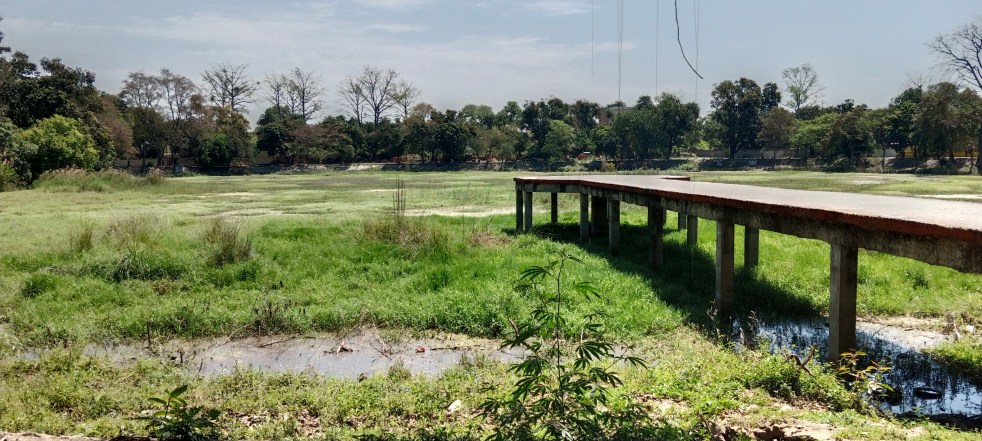
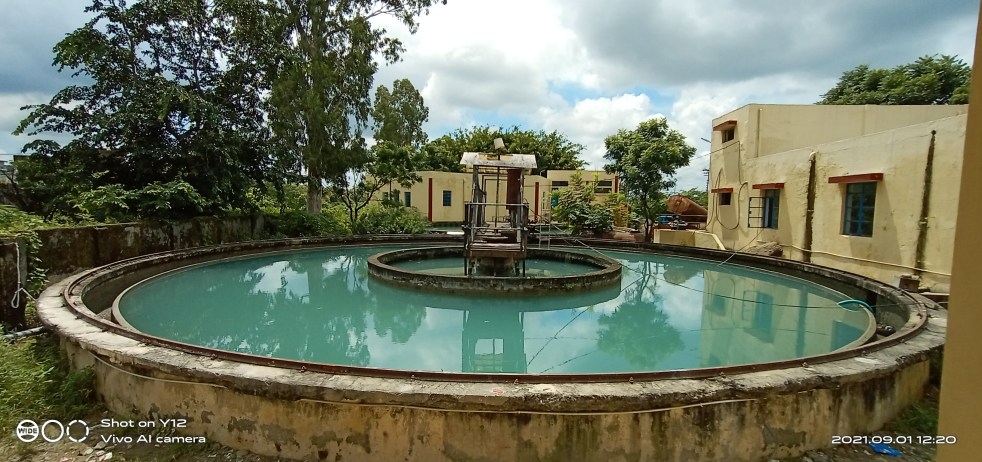
Like Giri taal, the Drona Sagar (29.12’24 N & 78.58’15 E) is another lake in Kashipur town succumbing to official neglect. The circular water body is spread over about 3 hectare of land and is hardly 1.5 km away from Giri taal in south east direction.

In recent past, both the lakes were fed by a distributary canal originating from Tumria dam on Phika river in Ramganga basin. Presently the canal portion between these lakes has been replaced with giant RCC hume pipes and a RCC road has been laid over it. The inlet of the canal joining Drona Sagar has also been cemented.

Continue reading “Uttarakhand 2023: Drona Sagar another Neglected Lake of Kashipur”
DRP News Bulletin

DRP NB 030423: IRENA confirms bleak future of Large Hydro globally

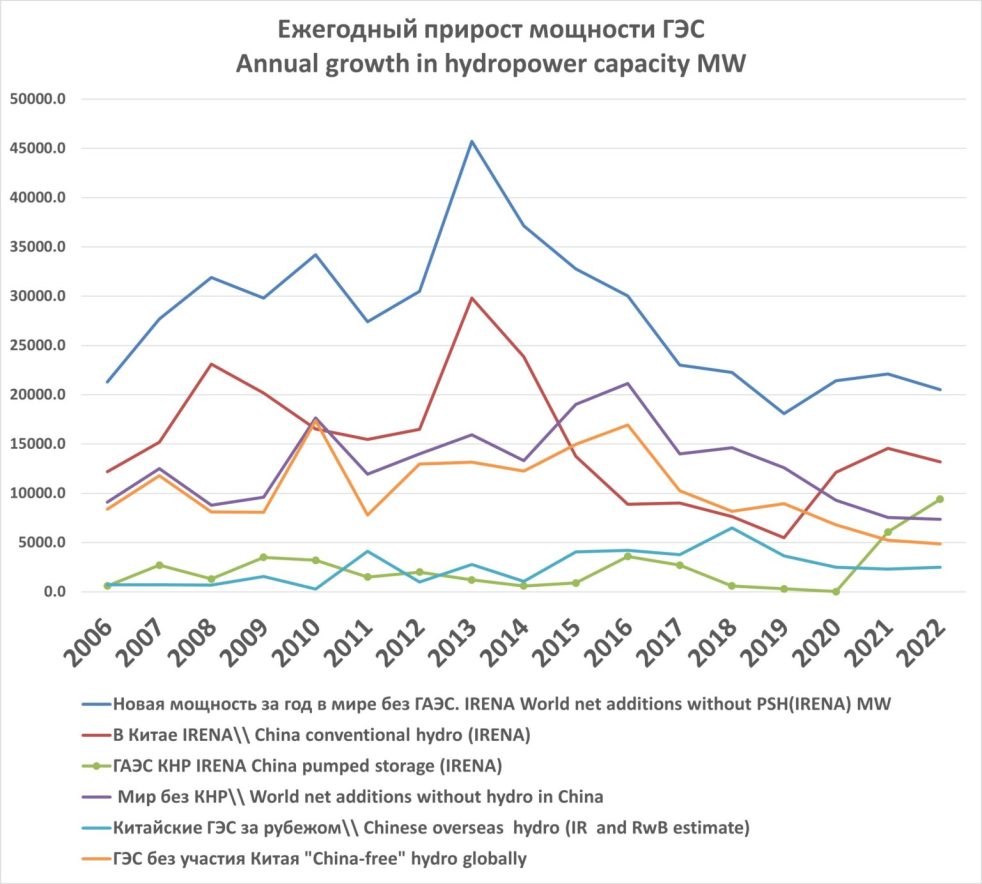
(Feature Image: Graph showing annual growth in hydro power capacity in MW. Source: Rivers Without Boundaries, April 01, 2023)

The annual Renewable Statistics 2023 report from IRENA (International Renewable Energy Agency) says that globally, only 1.6% was added to the hydropower capacity in 2022, that too two thirds in non-democratic China. The capacity added in rest of the world outside China in 2022 was 7.3 GW, lowest figure in last 15 years. Similarly 99% of additional capacity added in pump storage projects in 2022 was in China. The report from IRENA also says that 97% of hydropower finance comes from public or government sources and private sector seems to have little enthusiasm for this sector. The projections for future painted in the report is no better. This is broadly in line with our lead story in DRP News Bulletin last week (dated March 27 2023) painting bleak future of large hydropower projects.

Continue reading “DRP NB 030423: IRENA confirms bleak future of Large Hydro globally”
DRP News Bulletin

DRP NB 060323: India’s regulators blind to increasing threats in Himalayas

This week the weekly DRP bulletin brings news of increasing threats from changing climate in inherently disaster prone Himalayas. The news come from Ladakh in the NW to Nagaland in the NE, and includes Uttarakhand among others. The news is about retreating glaciers, increasing threats of Glacial Lake Outburst floods and landslides. The news also notes that factors like indiscriminate infrastructure development and lack of drainage are worsening the disaster potential of the Himalayan states. Most importantly, implicitly more than explicitly, the news reports highlight complete inattention of the regulators to these increasing threats and risks in inherently vulnerable Himalayas while considering new infrastructure projects like Highways, Railways, Hydropower projects, Dams and urbanization and also in terms of disaster management laws and practices.

It underlines that the threats and risks in the Himalayan states is also increasing due to changing rainfall patterns due to changing climate. This trinity of inherent vulnerability, changing climate and inattention to the risks of indiscriminate infrastructure projects is clearly very very dangerous, but there is little hope for any immediate change. One clear indication is the handling of the Joshimath disaster, a clear case of how not to handle communication as Dave Petley has noted. The Prime Minister’s office is sitting on the report submitted by the investigating agencies several weeks ago. Why should this report be a secret or will we get a negotiated report?

Continue reading “DRP NB 060323: India’s regulators blind to increasing threats in Himalayas”
DRP News Bulletin

DRP NB 270223: How much Pump Storage Hydro capacity is required in India?

(Feature Image: State steps up pumped hydro storage projects amid coal crisis. Source: EQ Mag Pro/ May 2022)

On Feb 15, 2023, Union Ministry of Power issued draft guidelines for Pump Storage Projects, inviting comments from stakeholders in 15 days to the email id – hydro2-mop@gov.in. The guidelines say that more Pump Storage Projects (PSPs) are required in view of increasing solar and wind power capacity connected to the grid, to stabilize the grid, store the power to make it available during non-solar and non-wind power hours and for peaking power, reactive power, etc. It describes the PSP as “clean, green, safe, and non-explosive” and “environment friendly” option. No studies or basis are provided for this sweeping conclusion.

Continue reading “DRP NB 270223: How much Pump Storage Hydro capacity is required in India?”
Groundwater

2022: Some positive reports on groundwater management 

This second part of yearend overview, SANDRP highlights some positive reports and steps taken by various state governments in India for management and conservation of groundwater in 2022. In first part of the overview, we have tracked the situation of groundwater depletion and contamination in the country and in third part covered some remarkable judicial interventions regarding groundwater conservation in 2022.

Centre Recharge wells to power multi-city groundwater project. A pilot project on shallow aquifer management, initiated by the Union Ministry of Housing and Urban Affairs for 10 cities, under the Atal Mission for Rejuvenation and Urban Transformation (AMRUT), has identified recharge wells as key to improving groundwater availability. Experts have cited the non-availability of space to allow the percolation of rainwater as a major hurdle to recharging Bengaluru’s groundwater table. The Million Wells programme was launched by Biome Environmental Trust in 2015 to encourage citizens and communities to dig and maintain their own recharge wells. It also opened up employment for the traditional well-digger community, the mannu vaddars.

In Bengaluru, the Bruhat Bengaluru Mahanagara Palike (BBMP) will be the nodal agency for the project. Biome Environmental Trust and Advanced Centre for Water Resources Development and Management (ACWADAM) will be technical partners in the project, which is led by the National Institute of Urban Affairs, a national think-tank on urban planning and development. The pilot project also covers Chennai, Dhanbad, Gwalior, Hyderabad, Jaipur, Kolkata, Rajkot, Thane, and Pune. https://www.deccanherald.com/city/recharge-wells-to-power-multi-city-groundwater-project-1157262.html  (28 Oct. 2022)

Continue reading “2022: Some positive reports on groundwater management “
Groundwater

2022: Groundwater Depletion, Contamination Continue amid Govts’ Efforts

This first part of the annual overview, SANDRP tracks some of the important developments regarding groundwater depletion and contamination in India and ongoing efforts, new steps taken by Central and various state governments in 2022 for the protection and conservation of the finite natural resource. Overall, these developments show no significant improvement in governance and management of groundwater resources which is also the water lifeline of the country amid its rising depletion and contamination. In second and third parts of the yearend roundup we have tracked some positive initiative for groundwater management by various governments in the country and some remarkable judicial interventions for groundwater governance and conservation in 2022.

Continue reading “2022: Groundwater Depletion, Contamination Continue amid Govts’ Efforts”
DRP News Bulletin

DRP NB 090123: Atal Bhujal Yojana just chaff without any wheat?

According to this detailed report, possibly the first independent review of the Atal Bhujal Yojana, a 5-year program of the Union govt for management of groundwater, India’s water lifeline, with over half of the project period completed, seems bereft of the fundamental aspects that the scheme itself says are necessary for any sound foundation of the scheme. The review describes it as a dish full of chaff, without almost any kernels of wheat for some sound reasons. It says hardly 18% of allocated money has been spent on Gram Panchayat level community-led Water Security Plan. Only 4% of the planned Gram Panchayat level trainings have been held, with Gujarat and Haryana holding none. Only 27% of money allocated for Gram Panchayat level Hydrogeological monitoring network has been spent. The data gathering instruments that were required from the beginning of the program have not been installed in over half the planned locations. On Information, Education and Communication activities, only 16% of allocated amount is spent.

More detailed independent review of the program implementation will help, but from the available information so far, the signs do not look particularly promising. Is it due to ineptness or lack of intention? Only time will tell.

Continue reading “DRP NB 090123: Atal Bhujal Yojana just chaff without any wheat?”
DRP News Bulletin

DRP NB 020123: Looking Back to Look forward to 2023

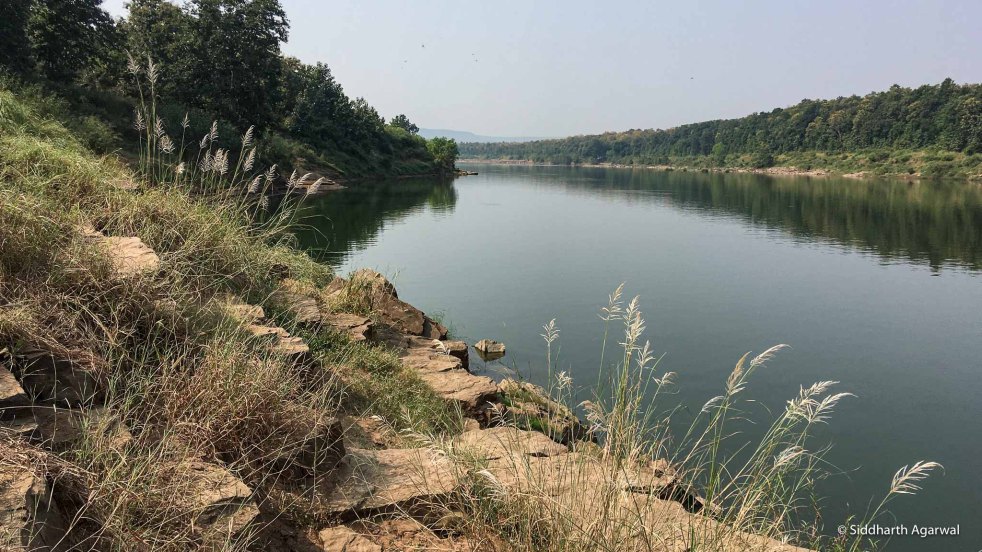
(Feature Image:-River Ken inside Panna National Park from River Stories, Walking Across India-I by Siddharth Agarwal)

This is the first DRP bulletin of 2023 and we would like to begin on a positive note. But to remain grounded in reality we also need to look back at the events in 2022. We see a number of positives in 2022 and we hope that trend continues. The number of new dams and hydropower projects being started has remained on a declining trend. People and civil society has continued its protests against destructive projects and for more decentralised projects and governance.

Continue reading “DRP NB 020123: Looking Back to Look forward to 2023”
DRP News Bulletin

DRP NB 261222: People on roads against hydro projects that govt is pushing

(Joshimath residents staging protest against land sinking and damages to their homes demanding rehabilitation & halt in NTPC’s Tapovan Vishnugad HEP tunnel work on Dec. 24, 2022. Image source: Atul Sati, Joshimath)

People of at least four states are opposing hydropower projects that the central and state governments are pushing, ignoring all the ground realities. In Uttarakhand, the Joshimath residents are on roads to wake up the government that seems deaf to their protests due to their houses cracking and land subsiding due to the tunnels being blasted for hydropower projects and Char Dham highway being built ignoring the voices of not only the affected people, but also the experts.

In Arunachal Pradesh, people have been writing to the central govt authorities against the Etalin and Dibang projects being pushed in Dibang valley of Brahmaputra basin.

In Himachal Pradesh, the people of Kinnaur and Lahaul Spiti districts have made it an election issue the destructive hydropower projects being pushed there both by the state and central governments.

In Andhra Pradesh too people have been protesting against the pump storage projects being given permission in schedule tribe areas without their prior informed consent and ignoring the statutory requirements.

2022 is thus ending with people’s active protests across the country against destructive, disaster prone and unviable projects being pushed against their wishes and in violation of any proper consultations or even any credible impact assessments. In the escalating impacts of climate change, these projects are even more problematic as they not only worsen the adaptive capacity of people and invite more frequent, intense and spread of the disasters, but they also destroy the mitigation tools like forests and flowing rivers. This when all these projects are not even economically viable, and when better, cheaper options are available. It would be best if sooner the government listens to the people and stop pursuing such projects.

Continue reading “DRP NB 261222: People on roads against hydro projects that govt is pushing”
DRP News Bulletin

DRP NB 191222: Question marks over viability of pump hydro projects

(Feature Image: 1772 Mw PSHPs Spain. Photo courtesy of Iberdrola/ ENR)

The question marks over viability of huge number of pump storage hydro projects (PSHP) being pushed forward in India currently were flowing in the rivers for long. This week, Moody’s investors Service (MIS) seems to have strengthened this after it downgraded Greenko Energy Holdings’ corporate family rating. It may be noted that Greenko is the biggest investor in PSHPs in India from private sector and a major part of Greenko’s new investments are in PSHP.

This makes the implications of MIS’s downgrade all the more interesting. MIS has noted that PHSPs are capital intensive and each PHSP will generate cash flow only after at least 2-3 years of construction (in reality it can be much longer than 2-3 years, the operative phrase here is at least). It also noted that the additional debt to be raised from Greenko’s capital spending, coupled with a rising interest environment will put further pressure on “GEH’s already weak financial metrics” and that Greenko’s high financial leverage due to its substantial capital spending program will keep its financial metrics below its downgrade trigger “for an extended period of time”.

Continue reading “DRP NB 191222: Question marks over viability of pump hydro projects”