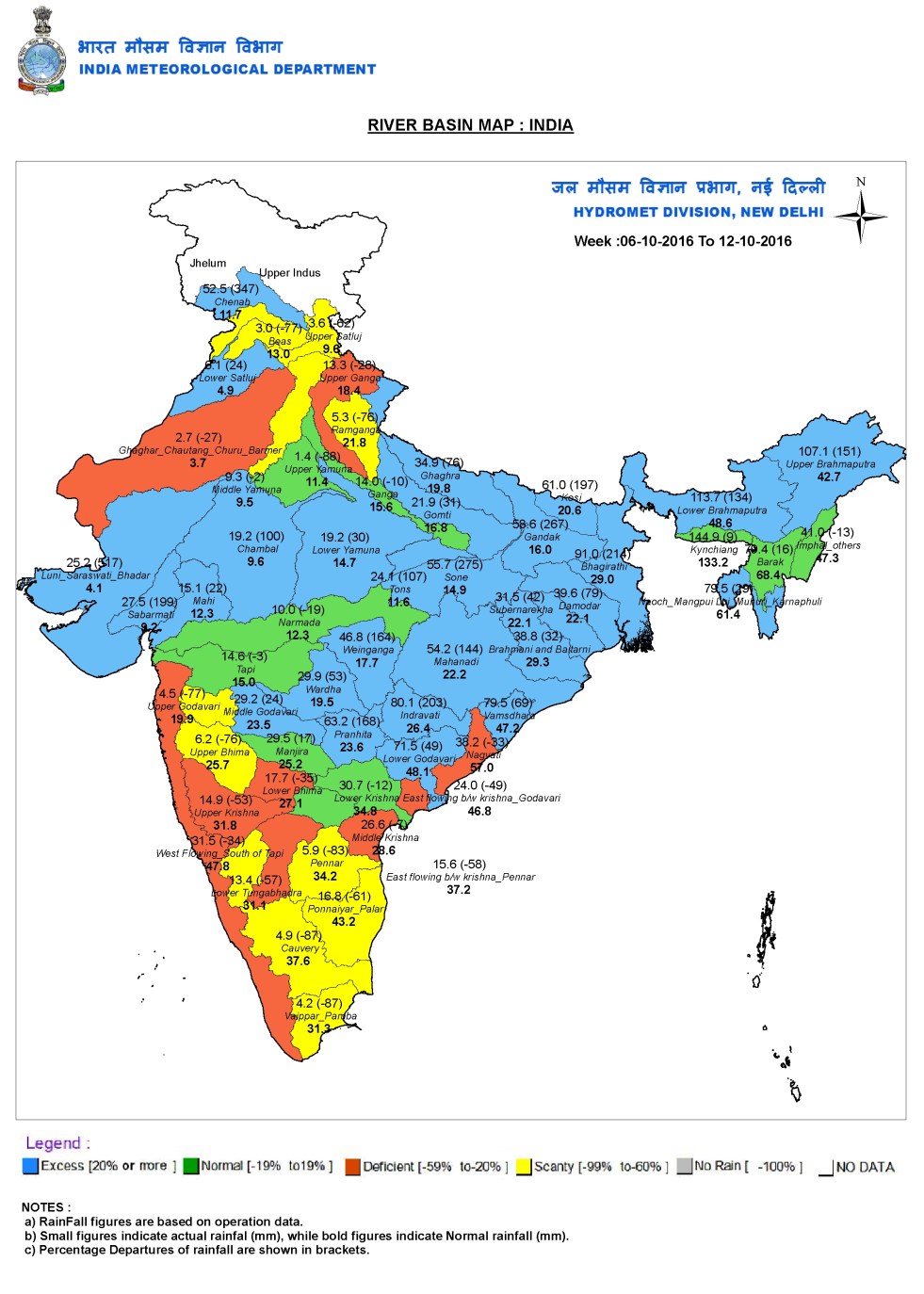
SANDRP Blog IMD’s River Basin Rainfall Maps Useful But Needs Improvement We have noticed during just concluded South West monsoon season that IMD has started a new and welcome feature in rainfall data reporting. The Data is available in maps, on daily, weekly and seasonal basis. We are not sure when this practice started, we noticed it only during 2016 monsoon season. This is most welcome development, since getting rainfall data at basin level is most appropriate and useful, since basin is the hydrological unit that will experience the impact of rainfall or lack of rainfall in the basin, in form of floods or droughts. There a number of limitations as of now. We hope IMD will take necessary steps to remove these limitations and improve the availability and access of basin wise rainfall maps and data in coming years.
Tag: IMD

DRP News Bulletin 25 July 2016 (Tawang residents protest against unfulfilled promises)
Arunachal Tawang residents protest against unfulfilled promises Hundreds of residents on July 22 marched through the streets of Tawang, the home district of newly elected CM Pema Khandu, in protest against non-fulfillment of their demand for jobs to kith and kins of two anti-dam activists killed in police firing on May 2. During the protest march they also led a signature campaign against large dams planned in Tawang, where the predominantly Buddhist Monpa tribe feared that many of the proposed hydro-power projects would damage sacred Buddhist sites in the district. At least 13 large hydro-power projects have been planned in the district, which shares border with China’s Tibet region. On June 21 the Lamas-led Save Mon Region Federation had issued six-point charter of demand to the state government for fulfillment in 30 days. Arunachal comprises a fragile, rich parcel of wildlife and ecosystem, among the richest ecosystems in India. But planning & building of hydro projects has been and will cause irreversible environmental damage. Perhaps it’s time for an aggressive freeze on all the un-built projects and an evaluation of other models of energy. Mr Prema Khandu must consider why Arunachal should become India’s mitochondria-the country’s energy provider, while losing its own enormous wealth. But contrary to this new while addressing a press conference, the new CM, on July 18 said that the govt would find ways to tap the petroleum resources & harness the hydropower potential which could be a money spinner for the state. On the 2000Mw Lower Subanisiri HEP at Gerukamukh, Mr Khandu has emphatically said he would discuss the issue with the Assam govt as well as the Centre for a solution. He said that in all the hydropower projects the affected people should be taken into confidence by both the executing agencies as well as the state govt. The new CM elected from Tawang, seeing the hydropower projects as money spinner does not sound very encouraging. Let us see how far he actually goes to take people into confidence as promised by him.

Odisha Drought Profile-2016
Odisha has many rivers, vast forest cover and it receives above average rainfall annually. But, greed for minerals beneath the land and destruction wreaked by industries hungry to exploit the resources of the state have slowly choked the natural environment of the state. Most farm holdings are small or marginal dependent on the rains for irrigation. The deficit rains in 2015-16 pushed the state over the edge. The state is facing extensive crop loss and severe water shortage. Even after exploiting its resources to the hilt, the people of the state have not been provided with piped water supply. In many ways, the drought in Odisha is man made.
Discrepancies in rainfall figures for Andhra Pradesh’s drought hit districts
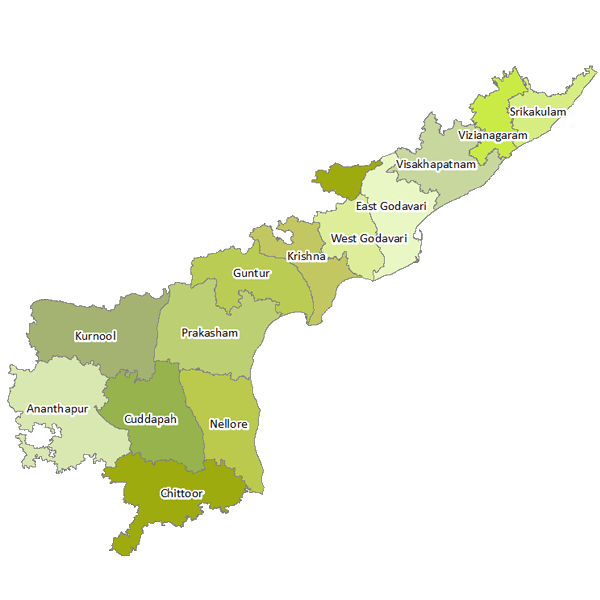
On October 28, 2015, the government of Andhra Pradesh declared drought[1] in 196 mandals in seven of the thirteen districts of the state. Having seen the serious discrepancies (between IMD and state government) in the rainfall figures of districts in Maharashtra[2] and Madhya Pradesh[3] where the respective state governments declared drought earlier, we decided to check the same for these seven districts of AP too. The IMD figures[4] for the monsoon (June 1 to Sept 30) rainfall for these seven districts are given in terms of Normal Rainfall, Actual Rainfall and how much actual rainfall departure was there from Normal Rainfall. During 2015 monsoon, IMD figures say that Coastal Andhra Pradesh (nine districts, three of which are declared drought affected now) received 642 mm rainfall, compared to normal rainfall of 581.1 mm, so a surplus of 10%. Rayalseema (comprising of four districts, all drought hit now) received 358.3 mm rainfall, 10% below the normal figure of 398.3 mm. In the previous year, both regions had 23% deficient rainfall, with actual rainfall of 448.7 mm in Coastal AP and 308.6 mm in Rayalseema. Continue reading “Discrepancies in rainfall figures for Andhra Pradesh’s drought hit districts”
IMD & MP govt provide shockingly different district rainfall figures: Will they explain, please?
On Oct 26, 2015, Madhya Pradesh declared drought[1] in 33283 villages in 228 tehsils in 35 districts (of total of 50 districts), affecting 4.4 m ha area and 4.8 m farmers. It sounded a bit strange since Western MP, comprising of 30 districts, had above average rainfall as per IMD (India Meteorology Department[2]) figures for the 2015 monsoon (rainfall during June 1 to Sept 30).
So we decided to cross check district wise rainfall figures. We found that as per IMD, in 29 of the 50 districts in the state, rainfall was Normal or Excess. In case of 21 districts, the rainfall was deficient, that is more than 20% below normal. Continue reading “IMD & MP govt provide shockingly different district rainfall figures: Will they explain, please?”

State says 59.9% rainfall, IMD says 73%: Highlights and discrepancies of Maharashtra’s Monsoon 2015
30th September marks the end of June-September South West summer monsoon in India and Maharashtra. The 2015 summer monsoon has proved to be the worst monsoon in the last six years for India. Rainfall deficits are seen in all major food-producing regions like UP (47% deficit), Bihar (28% deficit), Punjab and Haryana (32% deficit). This is India’s second successive year of high rainfall deficit, and only the fourth time this has happened since 1901.

Monsoon retreats from the country and the states on various dates. Some welcome showers are falling and are further expected in Maharashtra in the coming weeks, but the summer monsoon figures are now set. According to meteorologist Akshay Deoras. “Rain counters are refreshed on 1st October and new count of post monsoon season or winter monsoon season will start now.”
First week of October calls for an analysis of the summer monsoon, its performance in June, July, August and September and the implications this holds for various sectors.
People of Maharashtra have heard about, seen and experienced the dismal monsoon of 2015. Marathwada fared the worst, and was number one deficit state in the country at 52% deficit for a long time. However, at the end of monsoon, deficit of Marathwada is 40%. This is more worrisome as it comes piggybacking the 42% rainfall deficit in Marathwada in 2014, with rainfall of just 398.8 mm.
But, in order to understand the situation better, if one tries to analyse rainfall figures from various reputed official sources, one is taken aback by the disparities. We looked at official Indian Meteorological Department[i] figures, official Maharashtra Agriculture Department[ii] (Rainfall Recording and Analysis) figures and numbers from the 49th Cabinet Committee Note of the Government of Maharashtra dated 30th September 2015 accessed by SANDRP[iii].
All are concerned with Monsoon rainfall from 1-6-2015 to 30-9-2015. All of these contain different figures!
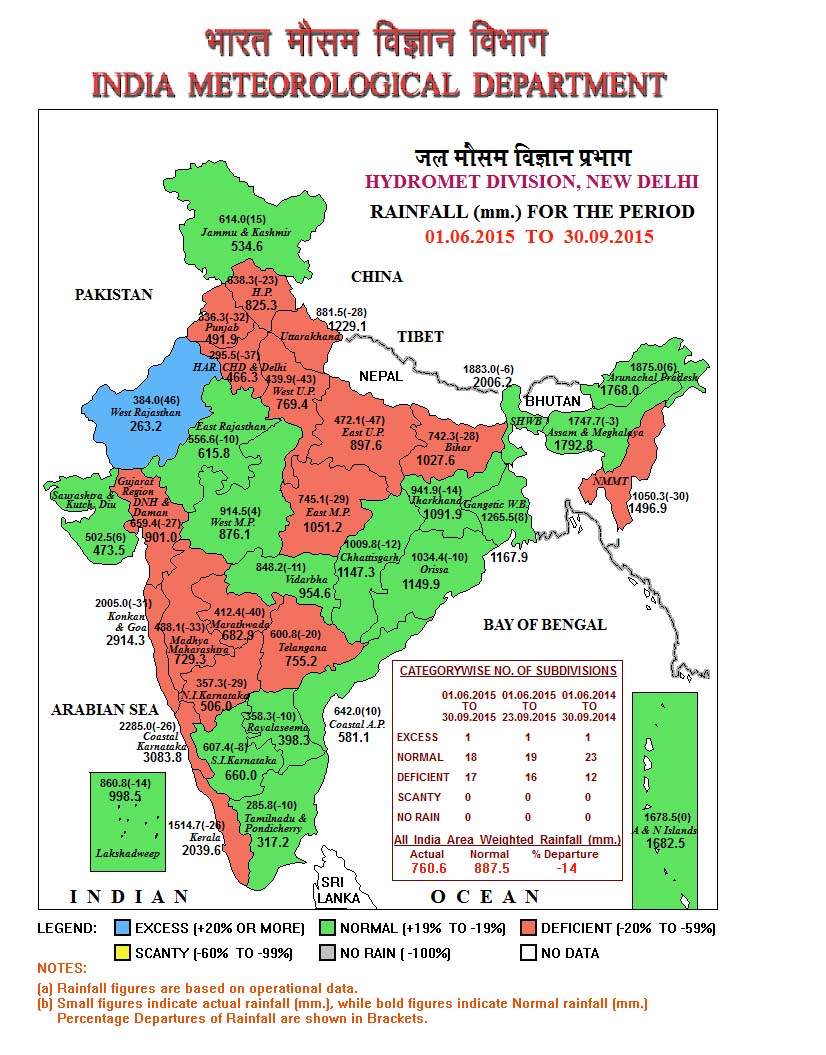
Indian Meteorological Department: IMD generates its rainfall data for Maharashtra based on its approximately 878 rain gauging stations spread across the state[iv]. According to IMD, regions of Maharashtra fall in rainfall deficit this year of varying proportions. Konkan region shows deficit of 31% with 2914 mm rainfall, Madhya Maharashtra shows deficit of 33% with 488.1 mm rainfall, Vidarbha shows deficit of 11% with 848.2 mm rainfall, but the highest deficit is Marathwada at 40% with 412.4 mm rainfall.
 According to IMD, between 1st June to 30th September, Maharashtra has received 732.5 mm rainfall of its 1007.3 mm average normal rainfall, which is 73% of average rainfall (27% deficit).
5 Districts that have received 50% or less of the average rainfall include
Kolhapur (803.4mm, -54%)
Solapur (231.8 mm, -51%)
Beed (287.4 mm, -50%)
Latur (372 mm, -51%) and
Parbhani (344.9 mm, -54%)

The region-wise, month-wise rainfall in Maharashtra this monsoon, as per IMD figures was as per following table.
| Rainfall, mm | Konkan-Goa | Vidarbha | Madhya Maharashtra | Marathawada | |
| June | Normal | 663 | 161 | 140 | 138 |
| Actual | 781 | 254 | 177 | 119 | |
| July | Normal | 1147 | 318.9 | 247.8 | 192.5 |
| Actual | 581.5 | 137.8 | 111.7 | 26.8 | |
| Aug | Normal | 759.6 | 305.7 | 289.1 | 188.2 |
| Actual | 388.7 | 288.9 | 56 | 112.2 | |
| Sept | Normal | 344.7 | 169 | 152.4 | 164.2 |
| Actual | 253.8 | 167.5 | 143.4 | 154 | |
| Monsoon | Normal | 2914.3 | 954.6 | 729.3 | 682.9 |
| Actual | 2005.0 | 848.2 | 488.1 | 412.4 | |
Where is Madhya Maharashtra? Incidentally, IMD classifies the country in various categories. Maharashtra includes Konkan, Madhya Maharashtra, Marathwada and Vidarbha. Madhya Maharashtra includes Nashik and Pune Divisions of whopping 10 districts, from Nandurbar, Dhule, Jalgaon, Nashik, Pune, Ahmednagar, Satara, Solapur, Sangli and Kolhapur. This region is not uniform in any sense, neither rainfall-wise, nor geographically nor is it “Madhya (Central) Maharashtra”. Any assessment based on a Madhya Maharashtra is meaningless in a sense as it clubs Kolhapur, at the southern tip of Maharashtra whose normal rainfall is more than 1500 mm with Dhule at the northern end of the state whose normal rainfall is about 500 mm and includes areas of Tapi, Narmada, Krishna and Godavari basins. It is time IMD adds some rationale to its meteorological divisions in India.
Maharashtra Agriculture Department: Agriculture Department of GoM runs a very useful website: maharain.gov.in which displays detailed data from its Rainfall Recording and Analysis Department. It states: “The department of Agriculture, Maharashtra State initiated the project for recording daily rainfall in the state in year 1998. Initially rainfall data was recorded at tehsil level and subsequently same functionality was extended to circle level from 2013 as GoM has installed rain gauge at every circle. Circle officer sends daily rain data using mobile through SMS. In addition to SMS rain data can be entered directly on the web portal.”
Prima facie it appears that Agriculture Department may have a better spread in the over 40,000 villages in Maharashtra than IMD’s 878 rain gauging stations. According to Agriculture Department, of the 353 administrative blocks in the state (taluks):
- 65 bocks have received rainfall less than 50% rainfall (18.4% blocks). Most of these are concentrated in Solapur and Marathwada region.
- 174 blocks have received rainfall between 50-75% rainfall.
- Just 23 blocks have received 100% or above of normal, and these are concentrated in Vidarbha and Nandurbar, Northern Maharashtra.


Cabinet Note of Government of Maharashtra, 49th Meeting, 30th Sept 2015: It reports that state has received 678.5 mm rain of the avergae 1131 mm, that is 59.9% or 60% of the average. But as we saw above, IMD says its 732.5mm of average 1007.3 mm, 73% of the average. There is no explanation for such widely different figures in the cabinet note.
Agricultural experts like Nishinkant Bhalerao states that the 60% magic figure will make any drought aid difficult and that it masks the monthly disparities which very badly affected this season’s Kharif. For example, Marathwada received barely 14% of its July average rainfall, a mere 28 mm, but cumulatively mainly due to late Spetmeber rains, this anamoly is hidden.
According to the note:
- 13 districts of Dhule, Nandurbar, Pune, Aurangabad, Buldana, Akola, Washim, Amravati, Wardha, Nagpur, Bhandara, Gondia, Gadchiroli received between 76-100% average rainfall,
- 17 districts of Thane, Palghar, Raigad Ratnagiri, Sindhudurga, Jalgaon, Ahmednagar, Satara, Sangli, Jalna, Beed, Latur, Osmanabad, Nanded, Hingoli, Yavatmal, Chandrapur eceived between 51-75% average rainfall and
- In 4 districts, rainfall has been less than 50%, these include Nashik, Solapur, Kolhapur and Parbhani.
- Strangely, IMD states Nashik received 729 mm rainfall till 30th Sept and has just 20% rainfall deficit but for the same period, Agriculture Department shows Nashik has received just 484.8 mm rainfall, and shows a rainfall deficit of about 52%! The difference between the two values is whopping 244.2 mm, more than entire seasonal rainfall of Solapur!!
- IMD note also includes Beed (just about here at -50%) and Latur (-51%) in less than 50% rain, these are not included in the cabinet note.
- Agriculture Department statistics includes Osmanabad in less 50% rainfall bracket, but it is not included in Cabinet Note
Cabinet note talks about 355 blocks, while Agri Dept considers 353 blocks and Government of India[v] considers 351 blocks in Maharashtra!
| Sr. No | Cabinet Note, 30th September 2015 | Agricultural Department Government of Maharashtra, 1st October 2015 |
| Blocks with less than 25% rainfall | 1 | 1 |
| Blocks with 26-50% rainfall | 49 | 64 |
| Blocks with 51-75% rainfall | 171 | 174 |
| 76-100% Rainfall | 105 | 91 |
| 100% or more | 29 | 23 |
While discrepancies in these sources is not the subject matter of this discussion, there is definitely a need to streamline and improve monsoon rainfall reporting. This is especially important at a time when policies, drought assistance, insurance payment to farmers and water allocation decisions are heavily dependent on rainfall figures. If we cannot get our rainfall figures right, it raises a lot of questions about our capacity to monitor and understand the most important weather event of the year, on which lives of over 50% of the population directly depend! There is a vast difference not only in observed rainfall, but also supposed normal rainfall figures, which skew up the percentages.
Below: Notable differences between IMD and State Govt Data
| District | IMD (mm) | State Agriculture (mm) | Difference in Actual Rainfall (mm) | ||||
| Normal | Actual Rainfall | % of Normal | Normal | Actual Rainfall | % of Normal | ||
| Dhule | 523.5 | 533.5 | 101.9% | 530.5 | 448.2 | 84.5% | 85.0 |
| Nashik | 912.2 | 729.0 | 80% | 1013 | 484.8 | 47.9% | 244.2 |
| Satara | 723.8 | 455.7 | 63% | 834.2 | 539.5 | 64.7% | 83.3 |
| Solapur | 474.2 | 231.8 | 49% | 488.8 | 193.9 | 39.7% | 37.9 |
| Kolhapur | 1737.6 | 803.4 | 46% | 1772.4 | 634.8 | 35.8% | 168.6 |
| Yavatmal | 855 | 663.3 | 78% | 911.4 | 479.1 | 52.6% | 184.2 |
| Nagpur | 923.9 | 970 | 105% | 988.5 | 938.2 | 94.9% | 31.8 |
- Solapur gets less than 1972 rainfall: According to Agriculture Dept, Solapur has received low rainfall of barely 193.9 mm from June-Sept. This is on top of 25% rainfall deficit in 2014 monsoon. In the epic drought of 1972 also, Solapur received more than this at 224.9 mm rainfall.[vi] This year, Solapur has received less than half of the rainfall Rajasthan received! This also seems to be the lowest monsoon rainfall Solapur received since 1901!
- For two consecutive years, Parbhani has received less than 50% rainfall (326.9 mm this year). In fact it’s June –July August Rainfall this year is lowest in the century.
- The district which has shown the highest deficit is Kolhapur. As per Agriculture Department data, it has received just 634.8 mm rainfall, 35.8% of its normal average monsoon rainfall. Strangely, IMD shows 803.4 mm rainfall this monsoon for Kolhapur, which is 46% of normal. The difference of 168.6 mm is too huge to be ignored and needs to be explained.
Reservoir Storages:
- Reservoirs storages at Maharashtra state level are at 56% of live storage capacity right now. But this is again masking the regional disparities. Marathwada has just 15% storage and 9 months ahead before the next monsoon. Four of its reservoirs are at 0 Live Storage (Mazalgaon, Manjara, Nimn Terna, Nimn Dudhna). The biggest Dam Jayakwadi is at a mere 7% storage.
- Nashik division upstream of Marathwada also has relatively low storage at 59%.
- Pune is slightly better at 61%.
- Nagpur, Amravati and Konkan divisions are above 70%.
Some Contingency Planning steps:
- Even in this situation, westward diversion of water from drought-hit Bhima-Krishna basin to high rainfall Konkan region and down to sea by Koyna and Tata dams continues, with no attempt to stop this completely wasteful diversion in this dry season.
- No information is available in public domain about district-wise planning of available water resources till the commencement of next monsoon
- No strong decision has been taken by the government about restricting or regulating sugarcane crushing which will commence from 15th October and which will consume lakhs of liters of water in the most severely drought-affected parts of the state.
- No strong decision on limiting new area under sugarcane in Solapur and Marathwada regions, which will be planted after this harvesting and crushing season.
While IMD states that Maharashtra has received more than 70% average rainfall and State Government pegs it at around 60%, the reality is that water situation in Maharashtra especially Western Maharashtra, Nashik region and Marathwada is dismal. Erratic rainfall with long dry spell in July and August has affected Kharip crops, groundwater levels and surface water storages. There is a need to immediately work on a participatory contingency planning of the available water resources for the coming year.
This planning cannot happen in a closed door manner by the cabinet or group of ministers, but should include and respond to water users and farmers and should be built on the principles of equity and sustainability. MWRRA also needs to get into its act. The people of the state are waiting for such an initiatives from the government and MWRRA.
– Parineeta Dandekar, with inputs from Himanshu Thakkar
END NOTES:
[i] http://www.imd.gov.in/section/nhac/dynamic/Monsoon_frame.htm
[iii] Shared by Shri. Nishikant Bhalerao, Editor of Adhunik Kisan
[iv] http://www.imdpune.gov.in/research/ndc/rainfall/DRF_STN.htm
[v] http://indiawater.gov.in/IMISReports/NRDWPDistrictMain.aspx?IState=018&StName=MAHARASHTRA

Sugarcane in Marathwada: A Syrupy debate amidst Lowest June-Aug Rainfall in the Century
Above: Ashok Pawar’s motorbike cruises right inside his dry field, even after recent showers in Marathwada Photo: Ashok Pawar
After a heartbreaking gap, retreating monsoon is now blessing Marathwada with some showers. Small water harvesting structures and those built under the Jal Yukta Shivar Abhiyan, a flagship project of CM Devendra Fadnavis, are clocking an increase in water levels. 96.3% of average September rains in just the first 10 days of September (Dept of Agriculture, Govt of Maharashtra) is indeed a respite for a region that stands at the doorstep of an epic drought. What is lost in June-July-August in terms of crops failures, water scarcity, dismal dam storages etc., cannot be compensated by September rains, which are a fraction of total monsoon (June-July-Aug-Sept) rainfall. But if the rains continue, they can help drinking water situation and possibly Rabi crops. It is heartening to see the farmers celebrating this downpour. Continue reading “Sugarcane in Marathwada: A Syrupy debate amidst Lowest June-Aug Rainfall in the Century”

Six regions of India facing prospects of crop failure and drought?

At least six of the 34 Meteorological divisions of India seems to be facing the prospects of crop failure and drought, if we look at the rainfall in these divisions in last 18 prime monsoon days from June 25, 2015 (monsoon had set in almost all over India by that date) to July 13, 2015, the latest date for which division wise rainfall are available. In these six sub-divisions, the rainfall during these 18 prime monsoon days has been between 0.1 mm to 12.8 mm. Continue reading “Six regions of India facing prospects of crop failure and drought?”
 SANDRP