A detailed review of functioning of Union Ministry of Environment and Forests’ (MoEF) Expert Appraisal Committee (EAC) on River Valley Projects (RVP) for 2024 by SANDRP shows that the committee or for that matter MoEF has almost non-existent rejection rate. Even when a project is not cleared, when it applies again, it gets clearance, whether the application if for stage I (Terms of Reference) or Stage II (Environment Clearance- EC) clearance. Even in some cases like Pump Storage Projects (PSP) in Western Ghats or the Hydropower projects in disaster prone Himalayas, including the disaster-stricken projects like the 1200 MW Teesta III projects in Sikkim, the scrutiny including field visits by the EAC Sub committees is minimal, not worthy calling even scrutiny.
Continue reading “DRP 200125: Whither Env Clearance Rejection rate from Expert Appraisal Committee or MoEF?”Tag: Ganga
DRP 060125: Concerns about & Contradictions in CGWB’s Reports
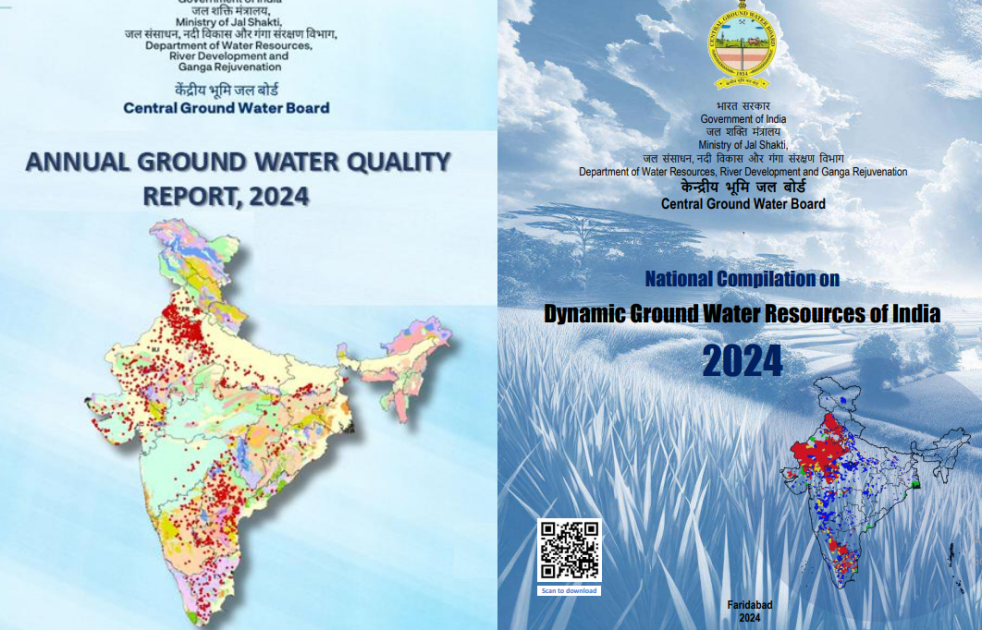
The Central Ground Water Board (CGWB) released two important reports last week. While the Annual Ground Water Quality Report 2024 reveals rise in nitrate fluoride, arsenic and uranium contimination of groundwater resource in India, the Dynamic Groundwater Resource Assessment Report 2024 claims substantial rise in annual groundwater recharge and decline in extraction of the resource.
As per the first report, the number of districts affected by high nitrate levels in groundwater has gone up to 440 (near 56% of all 779 districts in country) from 359 found in 2017 assessment which means in 7 years 81 more districts have been found having excessive nitrate levels in groundwater. This should concern us from a number of points of view.
Continue reading “DRP 060125: Concerns about & Contradictions in CGWB’s Reports”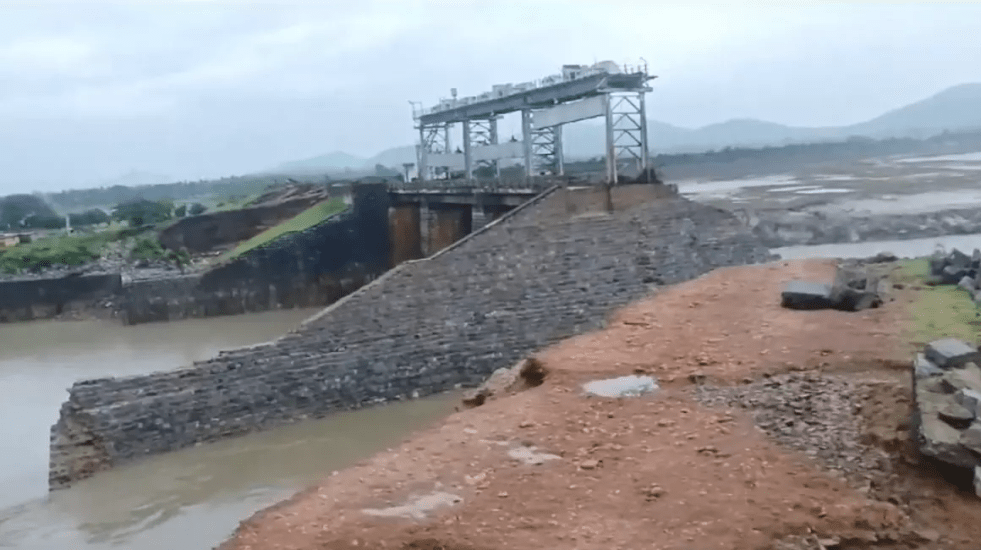
2024: Dam Induced Floods in India
(Feature Image: Breach in the earth dam of Peddavagu project flooded several villages in Telangana & Andhra Pradesh on July 17, 2024. Source: DC)
India has seen several manmade flood disasters during the 2024 monsoon. The mismanagement of dams in Narmada valley including Bargi, and SSP inundated several dam affected villages despite adequate actionable advance warnings. The uninformed excess releases from DVC dams have led to flooding in large areas in West Bengal as repeatedly raised by the state government. The extensive floods in Tripura have revealed glaring loopholes in flood prevention and disaster management.
The floods in the year have also washed away or damaged several earthen dams, tanks in Madhya Pradesh and Rajasthan affecting human population, agricultural lands in their vicinity. Even during Northeast monsoon, the sudden releases from Sathanur and Veedur dams in Tamil Nadu created avoidable flood damage in downstream areas. Similarly, the states of Gujarat, Telangana, Haryana and Delhi have seen deluge due to mismanagement or breaches in the canals. The case of Narmada canal waters flooding large areas of Little Runn of Kutch is quite concerning.
Continue reading “2024: Dam Induced Floods in India”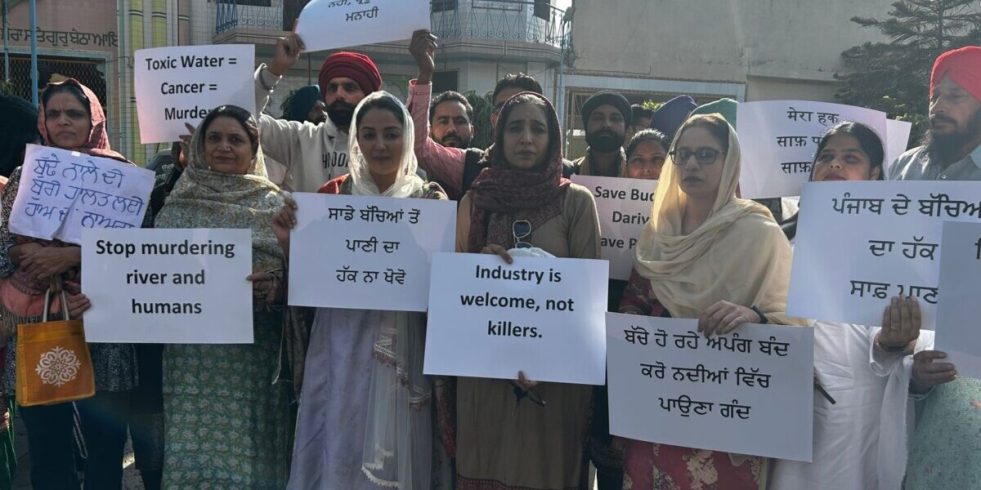
DRP 091224: “Kale Pani Da Morcha”: A Landmark people’s movement
(Feature Image: Women activists who were standing and displaying placards were detained by the Ludhiana police during the protest. Photo: By special arrangement/The Wire)
‘Kale Pani da Morcha”, the people’s movement against Pollution of Buddha Nallah, a tributary of Sutlej River in Ludhiana (Punjab) is a landmark movement in more than one sense. Firstly, while severe pollution of rivers is the usual story from across the country, a courageous people’s movement to address is the issue is such a rare event.
The fact that the industries association actually threatened this movement with a counter from the industries and their workers is shocking and shows the impunity of these industries. While the state government has to take quick action to address the issue, there is also a huge role for the central government, which has abjectly failed to perform its basic duty of providing credible governance of rivers, including their pollution in India. They including CPCB and MoEF know since decades that CETPs are completely failed model, and no worthwhile action has been taken to address the failure, including by the World Bank which has funded many of them. The filthy rivers all over India are violating the fundamental rights of millions of people, without any credible action even by the judiciary.
Continue reading “DRP 091224: “Kale Pani Da Morcha”: A Landmark people’s movement”
DRP 021224: Why Ken Betwa Link should not go forward
A detailed report this week based on extensive field visit and interview of the concerned persons shows once again why there is no justification for Ken Betwa Link starting from lack of hydrological justification: There is no credible evidence or are not credible figures proving that Ken has surplus water and Betwa is deficit. The project will actually facilitate export of water from drought prone Bundelkhand in addition to bringing massive adverse impacts and as a former Panna collector said, will keep the upstream Ken Basin area permanently backward. This was also proved during the SANDRP initiated Ken Yatra from Ken Yamuna confluence upstream to the origin of the river.
The whole exercise of getting clearances for the project has been an exercise in manipulations at each step of the way, including EIA, Public Hearings, EAC process, Environment Clearance, Forest Clearance, Wildlife clearance and gram sabha clearances. This is also true as this report shows, for the people to be displaced by the project. The scathing CEC (Central Empowered Committee appointed by the Supreme Court) report on its wildlife related issue has not even been considered by the Supreme Court. We hope the Supreme Court will soon consider this and put a stop to the mindless project.
Continue reading “DRP 021224: Why Ken Betwa Link should not go forward”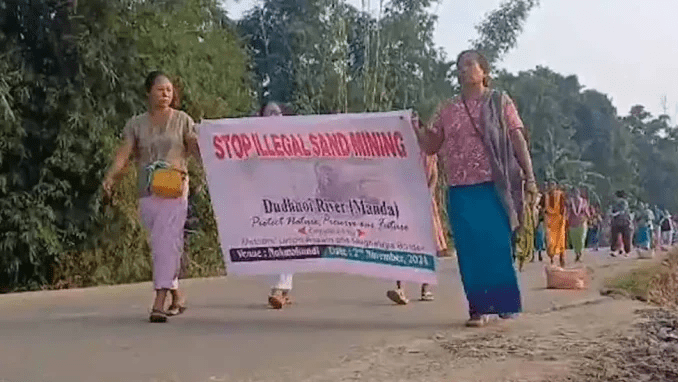
DRP 251124: Protest by Mothers Union against sand mining along Assam-Meghalaya border
(Feature Image: Mother’s Union protest rally against sand mining. Image Source: Nagaland Post, 03 Nov 2024)
The ongoing protest by the Mother’s Union against sand mining in Dudhnoi River along the Assam Meghalaya border has brought to focus the serious implications of unsustainable sand mining, whether legal or illegal. The campaign has wide based support from the Garo Students Union, All Bodo Students Union, Krishak Mukti Sangram Samiti and other groups.
The campaign has highlighted that due to use of motorized equipment to extract sand, the water level in the Dudhnoi river is dropping hugely, including during rainy season. The campaign has also pointed out that the forest, mining, transport and police departments have been allowing over loaded sand laden dumpers with or without proper challans.
Continue reading “DRP 251124: Protest by Mothers Union against sand mining along Assam-Meghalaya border”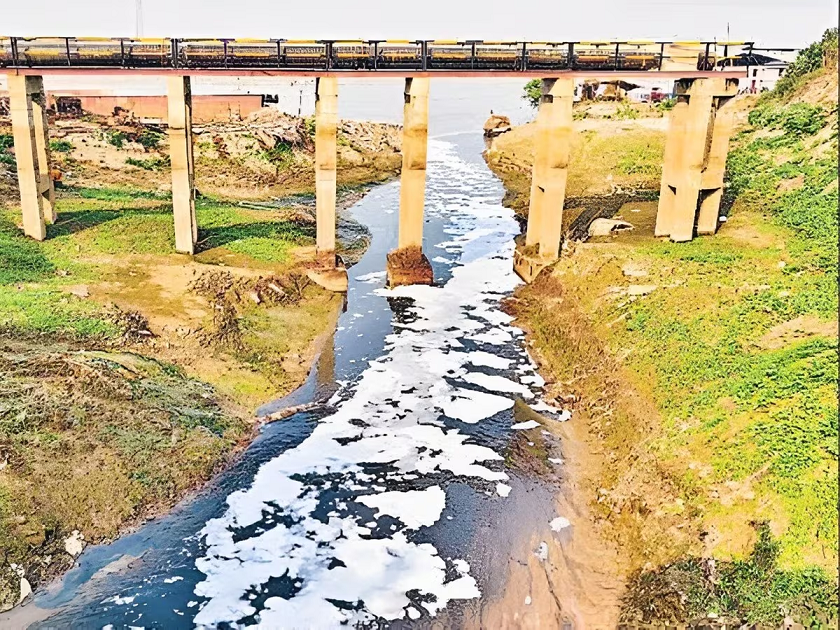
DRP 181124: Kumbh 2025: Can we treat Ganga as River All Round the Year?
(Feature Image: Untreated effluents falling into Ganga river in Patna Bihar. Source: Live Hindustan 15 Nov. 2024)
The government website on Maha Kumbh (https://kumbh.gov.in/) has started the countdown to Mahakumbh 2025 to be held in Prayagraj from January 13 to Feb 26, 2025. It says today that it is 55 days to the beginning of Mahakumbh. But the Ganga is highly polluted in Prayagraj, and even upstream even in Uttarakhand, the state where it originates as the following reports this week say and as we all know.
The reason why the largest congregation on earth happens here every 12 years is because, as puranas say, Ganga water turns into Amrit on these holy days. So how will the Ganga water turned into Amrit at Prayagraj in 55 days?
Continue reading “DRP 181124: Kumbh 2025: Can we treat Ganga as River All Round the Year?”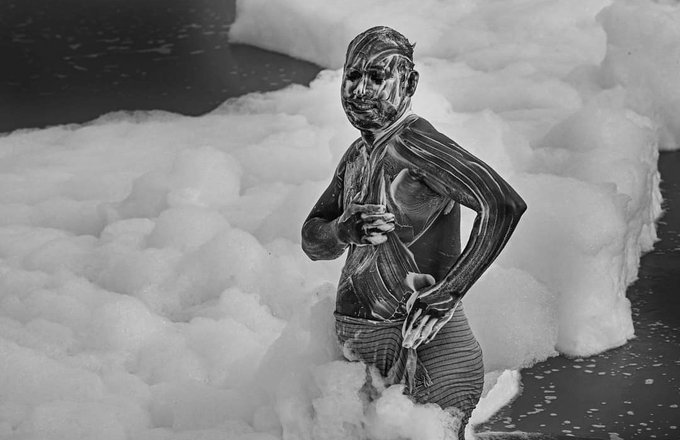
DRP 111124: URBAN RIVERS in focus this week
(Feature Image: A man bathing with toxic foam in polluted Yamuna in Delhi. Image is taken by Anindya Chattopadhyay @ANINDYAtimes Deputy Photo Editor,The Times Of India, Delhi and shared on X by Somreet Bhattacharya @Somreetb on Nov. 06, 2024)
This week there is some interesting news about a number of Urban rivers including Pune Rivers, Musi (Hyderabad), Chennai Rivers, Budha Dariya (Ludhiana), Gomti (Lucknow). All the news underlines some serious existential issues for Urban Rivers and raising of voices about it by local communities, governments or legal authorities.
In fact, this is part of a trend that is going on for some years. This sounds like a positive development. But unfortunately, it is not. In fact, this is sign of deteriorating condition of Urban Rivers and increasing Urban footprint on our rivers, going far beyond the boundaries of the cities. Closer examination shows that in spite of some efforts from environmental groups, local communities, some elements in the governments and the courts, the condition of our Urban Rivers is getting worse, much worse than the state of our rivers in general. More worryingly, there are almost no success stories, except some temporary respites at some places.
Continue reading “DRP 111124: URBAN RIVERS in focus this week”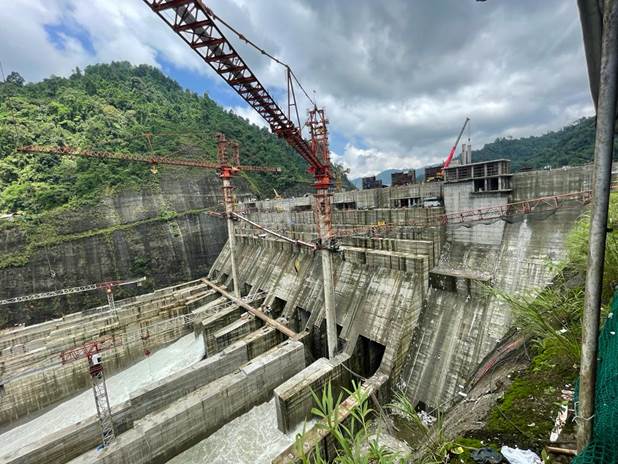
DRP 041124: Study says Big Dams are costly gambles or frauds?
(Feature Image: Lower Subansiri HEP dam. Source: PIB, June 2023)
An interesting study reported this week reveals Big Dams are costly gambles and explains why this is so. In fact, the explanations go on to reveal that this is by design, the costs are systematically under estimated and benefits are exaggerated, so the dams fail to provide the promised benefits. So Big Dams are actually not gambles, but frauds. They get away with all this due to lack of transparency and accountability in the governance, the study reveals.
For those following the global debate on big dams over the decades know that there is nothing new here. A number of studies earlier exposed all this, including the Independent Review of the Sardar Sarovar Project instituted by the World Bank, the World Commission on Dams report, the India Country study done for WCD, among others.
Continue reading “DRP 041124: Study says Big Dams are costly gambles or frauds?”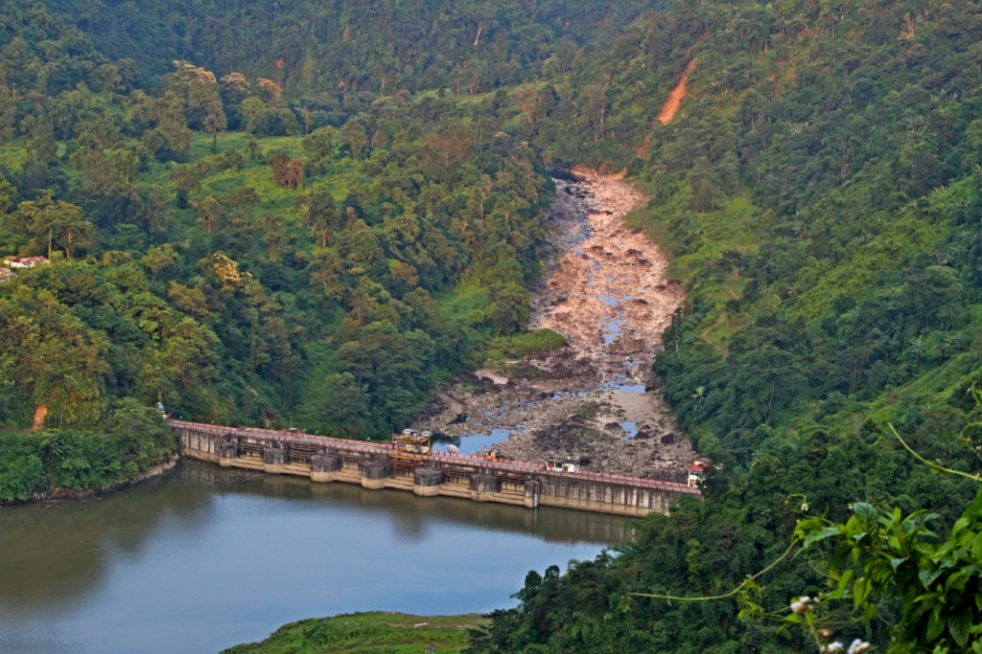
DRP 28×24: Hydropower Impacts on Biodiversity
(Feature Image: The Ranganadi dam in Arunachal Pradesh. In February 2019 the dam released an unprecedented amount of silt, with severe impacts for the river’s biodiversity and the livelihoods of people who live along its banks. Image Credit: Karen Conniff / Flickr, CC BY-NC 2.0/Source: Dialogue Earth)
A new study of available scientific publications on impact of Hydropower projects on biodiversity provides a thorough review of the subject. The review does not directly give a call not to construct more such destructive projects. But it is useful for anyone concerned about the impact of dam projects on rivers.
The study discusses the impacts of hydropower projects on both aquatic and semi-aquatic species in riverine ecosystem and cumulative impacts spatially and temporally across river basins. Dams disrupt longitudinal connectivity and act as physical barriers in upstream-downstream movement of species. Upstream of dam, there is static water environment rather than flowing river environment. In the downstream, the hydropower projects adversely affect the water flow, sediment flow, thermal regimes, affecting water quality and environmental cues for the fish movement. All these also affect the floodplains both upstream and downstream.
Continue reading “DRP 28×24: Hydropower Impacts on Biodiversity” SANDRP