DRP News Bulletin

DRP NB 240423: The world is moving away from Big Dams: Are we?

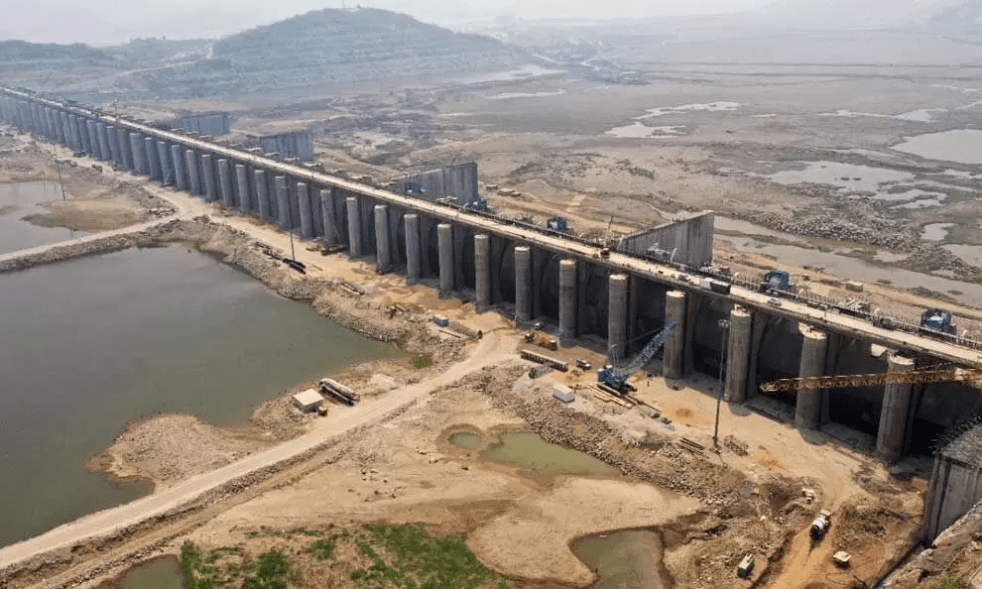
(Feature Image: Construction works going on at Polavaram Dam site. Source: The Hans Media, May 2021)

This well substantiated report from Yale School of Environment this week shows that the end of the big dam era is approaching. The well argued report from Jacques Leslie uses the reports from UN University, International Renewable Energy Agency, Oxford University, Inclusive Development International, China, among others to show how the pace of construction of dams and hydropower projects and also pace of financing such projects have hugely reduced in recent years and decades.

Even the International Hydropower Association, sensing the change, is now advocating pump storage hydro rather than conventional hydro and that too off stream version, to complement the power from solar and wind. Emerging economics with rising cost of hydropower projects and rising cost of power from such projects compared to solar, wind (onshore and offshore) are a major reason for the massively slowing pace of new hydropower projects.

Continue reading “DRP NB 240423: The world is moving away from Big Dams: Are we?”
DRP News Bulletin

DRP NB 170423:Forecast of Indian SW Monsoon & definition of normal monsoon

The India Meteorological Department (IMD) has on April 11, 2023 forecast that rainfall at national level in four months of June-Sept 2023 Southwest Monsoon will be 96% of Long Period Average (LPA). IMD considers Indian Monsoon rainfall as normal based on just one parameter of total rainfall in these four months at national level is between 96% and 104% of LPA, with model error of +/- 5%. This raises large number of questions as media has rightly raised post the IMD announcement.

Firstly, in a strange turn of events, on April 12, an update jointly by US weather agencies under the National Oceanic & Atmospheric Administration (NOAA), contradicted a number of assumptions of IMD the previous day, including the period when El Nino will become active and probability of it being a strong event, both of which have a strong bearing on the Indian Monsoon in an adverse way. So the first question that arises is, did the IMD not have the benefit of the observations on April 11 based on which NOAA made the forecast very next day? Or was it an attempt at providing an unjustified feel good monsoon forecast? This question arises as in the past too questions have been raised about such attempts by IMD. This question also becomes important as only a day or two before IMD’s forecast, private forecaster had predicted that monsoon rainfall is likely to be deficient and not normal.

Continue reading “DRP NB 170423:Forecast of Indian SW Monsoon & definition of normal monsoon”
Wetlands

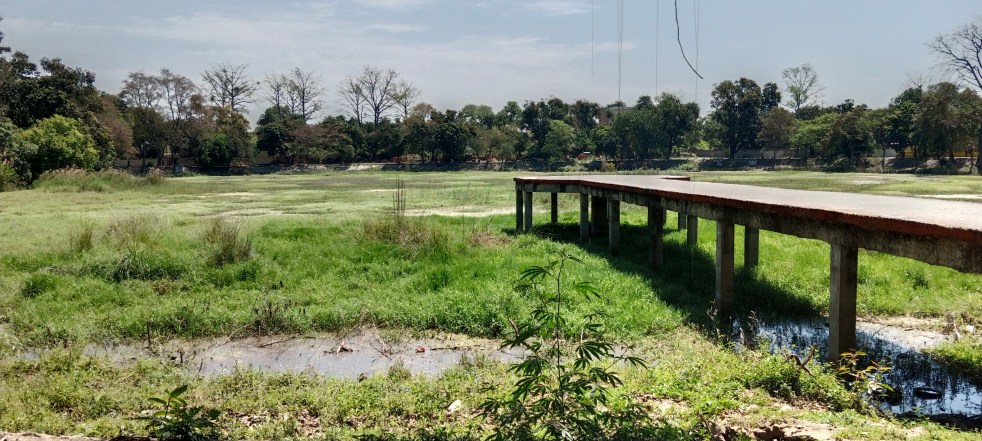
Uttarakhand 2023: Drona Sagar another Neglected Lake of Kashipur

Like Giri taal, the Drona Sagar (29.12’24 N & 78.58’15 E) is another lake in Kashipur town succumbing to official neglect. The circular water body is spread over about 3 hectare of land and is hardly 1.5 km away from Giri taal in south east direction.

In recent past, both the lakes were fed by a distributary canal originating from Tumria dam on Phika river in Ramganga basin. Presently the canal portion between these lakes has been replaced with giant RCC hume pipes and a RCC road has been laid over it. The inlet of the canal joining Drona Sagar has also been cemented.

Continue reading “Uttarakhand 2023: Drona Sagar another Neglected Lake of Kashipur”
Culture · Ganga

The Eternal Ganga: A Journey Through Artistic Depictions of India’s Sacred River

(Feature photo above: “… But I go on forever” The pristine Ganga flowing through the mountains (Rishabh Gagneja, June 2021))

Guest Article by Anantaa Ghosh

The Ganga, often termed as the ‘River of Heaven’ has always been deemed as the purest and most sacred of all rivers. In the west, Ganga was believed to be Phison, a river flowing in Eden. The river has found its place in the works of several famous authors, including Kalidasa who describes the river in words of unique grace.

Then in familiar Alaka find rest,
Down whom the Ganges’ silken river swirls
Whose towers cling to her mountain lover’s breasts,
While clouds adorn her face like glossy curls.[1]

Continue reading “The Eternal Ganga: A Journey Through Artistic Depictions of India’s Sacred River”
DRP News Bulletin

DRP NB 030423: IRENA confirms bleak future of Large Hydro globally

(Feature Image: Graph showing annual growth in hydro power capacity in MW. Source: Rivers Without Boundaries, April 01, 2023)

The annual Renewable Statistics 2023 report from IRENA (International Renewable Energy Agency) says that globally, only 1.6% was added to the hydropower capacity in 2022, that too two thirds in non-democratic China. The capacity added in rest of the world outside China in 2022 was 7.3 GW, lowest figure in last 15 years. Similarly 99% of additional capacity added in pump storage projects in 2022 was in China. The report from IRENA also says that 97% of hydropower finance comes from public or government sources and private sector seems to have little enthusiasm for this sector. The projections for future painted in the report is no better. This is broadly in line with our lead story in DRP News Bulletin last week (dated March 27 2023) painting bleak future of large hydropower projects.

Continue reading “DRP NB 030423: IRENA confirms bleak future of Large Hydro globally”
DRP News Bulletin

DRP NB 200323: Time to Focus on Natural Water Storages

(Feature Image: Cover page of World Bank report titled What the Future Has in Store: A New Paradigm for Water Storage)

On the occasion of World Water Day 2023, the United Nation will be organizing a conference (March 22-24) in New York, USA. In its latest report the World Bank has also raised concern over decline in fresh water storages and underlined the need of a new approach for integration of built and natural water storages as a measure to adapt to climate change related water challenges and better management of water resources.

There is no doubt that large parts of the world are facing water scarcity and insecurity from existing and looming threats both from man made reasons and changing climates. Given the omnipresent & increasing shortages of cumulative storage capacity and adverse impacts of built water storages especially big reservoirs and dams; it is time global bodies like UN, World Bank, policy makers and governments at large must focus on conservation and replenishment of natural water storages, which are far better, cost effective options available to address and mitigate ever increasing and evolving climatic threats on human water security and sources.

Continue reading “DRP NB 200323: Time to Focus on Natural Water Storages”
Sand Mining

2023: Riverbed Mining Deaths & Violence in East India

(Feature Image: A sand loaded truck overturned on a passenger auto killing 5 people & injuring 5 others in Motihari, Bihar in Sept. 2022. Image Source: Dainik Jagran)

In this second part, SANDRP present summary report on riverbed minerals mining related human deaths and violent incidents in East Indian states of Bihar, West Bengal, Odisha, Jharkhand, Chhattisgarh and in North Eastern states of Assam and Manipur during April 2022 to February 2023. The detailed tabular report compiling all these incidents in past 11 months can be seen here. The first part of the series tracking the human death toll on account of illegal, unsustainable sand mining activities in North Indian states for the same period can be seen here

Continue reading “2023: Riverbed Mining Deaths & Violence in East India”
Sand Mining

2023: Riverbed Mining Death & Violence in North India

( A dumper driver being rescued from smashed cabin of a dumper after it rammed into a stationary sand loaded truck causing death of a mechanic in Varanasi in May 2022. Source: Amar Ujala)

The unsustainable and unlawful riverbed mining activities in India have not only been damaging the precious river eco-systems, livelihoods of riparian communities and crucial public infrastructures but also have been causing untimely, avoidable deaths of innocent people including common citizens, villagers, farmers, activists, reporters and government officials.

For the past five years, SANDRP has been trying to track the sand mining related deaths and violence in India. Like previous years, we have prepared a compilation of reports and this summary report on human death toll due to sand mining related violence and accidents during April 2022 and February 2023 in North Indian states and Union Territories including Uttar Pradesh, Uttarakhand, Himachal Pradesh, Haryana, Punjab, Jammu & Kashmir and Delhi. We would publish similar reports for North East & East, West, South Zones and final summary report on the topic soon. 

Continue reading “2023: Riverbed Mining Death & Violence in North India”
Betwa River

Uttar Pradesh: Satellite Images Reveal Betwa River Ravaged by Mining

(Feature Image: Screen shot of undated google earth image showing multiple vertical, horizontal bunds created by deep, mechanized riverbed mining across Betwa near Bheri Dariya in Sarila tehsil of Hamirpur district.)

The comparison of Sentinel satellite images dated February 20, 2023 with images of September-October 2022 reveal large scale riverbed mining operations along Betwa river at multiple sites in Jhansi, Jaluan and Hamirpur districts. The details of some of the sites is given in table below followed by the satellite imageries and time lapse animation of few sites.

Continue reading “Uttar Pradesh: Satellite Images Reveal Betwa River Ravaged by Mining”
DRP News Bulletin

DRP NB 200223: US EPA starts reporting methane emissions from dams

(Feature Image:-Vyasi HEP dam reservoir on Yamuna river in Dehradun. Credit: Varsha Singh/Third Pole, Jan. 2022)

In a landmark move, United States Environment Protection Agency has started reporting methane emissions from dams and hydropower projects in its annual reporting to UN in 2022. It needs to go a step further and make it mandatory for all dams and hydropower projects to annually report such emissions on their websites. This will not only help clear the mistaken notion that hydropower projects are climate friendly, it will also help take right policy measures and project construction or decommissioning decisions. It will also lead to more scientific accounting of global warming causing emissions. It will also give the consumer right picture about GHG emissions from such projects when they look at options for electricity supply. There is a lot that India and rest of the world that needs to learn from this and implement on urgent basis as US EPA seems to be the first agency to do this.  

Continue reading “DRP NB 200223: US EPA starts reporting methane emissions from dams”