Wetlands

Maharashtra Wetlands Overview 2021: Mumbai Civil Societies’ Untiring Efforts to Protect Wetlands, Mangroves

(Feature image source: FPJ https://www.freepressjournal.in/mumbai/navi-mumbai-nmmc-chief-writes-to-forest-department-to-take-action-if-any-destruction-found-in-two-wetlands-in-nerul)

Civil Society groups in Maharashtra and particularly in Mumbai and Navi Mumbai have been doing exemplary work protecting the wetlands and mangroves for past several years. In 2021 too, the citizens kept raising multiple issues impacting the threatened wetlands and mangroves. The year also saw some positive outcomes.

This report highlights the significant efforts by the civil society groups, relevant steps by the state government and judiciary during 2021. We have already published three part series on India wetlands overview 2021. Part 1 covers important reports on current situation of wetlands in India, part 2 carries relevant reports on governmental actions and part 3 deals with significant judicial decisions. On World Wetlands Day 2022, we also published a collection of positive actions for protection of wetlands in 2021. We had also earlier published the Maharashtra Wetlands Overview for 2020.[i]

Continue reading “Maharashtra Wetlands Overview 2021: Mumbai Civil Societies’ Untiring Efforts to Protect Wetlands, Mangroves”
Wetlands

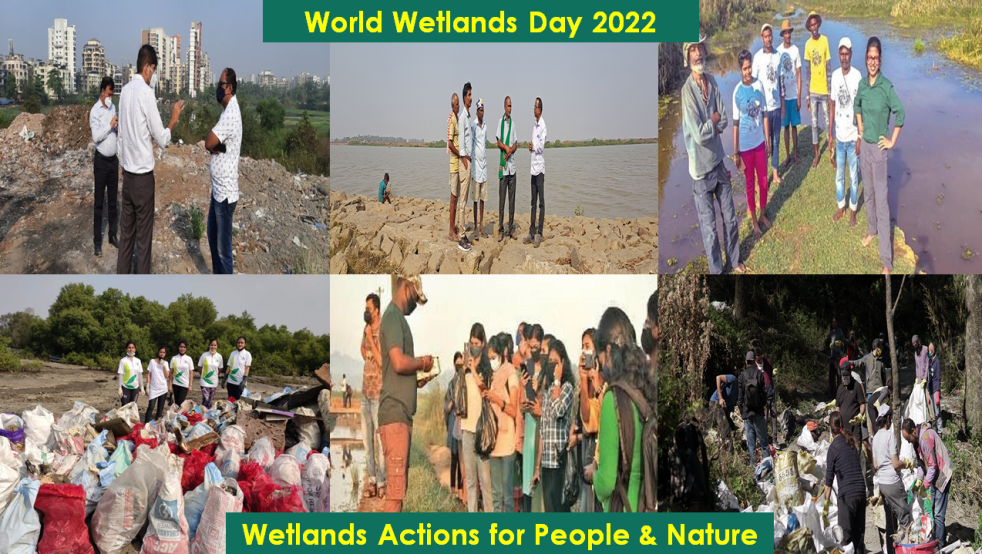
World Wetlands Day 2022: People’s Actions for Wetlands in India

World Wetlands Day is celebrated on February 02 annually to highlight the importance of wetlands around the world. The theme for 2022 is Wetlands Action for People and Nature. As part of our annual overview; we have compiled here positive initiatives by individuals and groups for wetlands in India in 2021.

Continue reading “World Wetlands Day 2022: People’s Actions for Wetlands in India”
Wetlands

Maharashtra Wetlands Overview 2020

[The feature photo of Flamingos at NRI colony in Navi Mumbai above is by Vidyasagar Hariharan, from The Guardian Dated March 26, 2019.]

In 2020, Maharashtra has seen some interesting developments around wetlands, driven by initiatives by activists like D Stalin among many others, and at times supported by judiciary. After an example of some individuals’ courage to save an 80 ha of wetland, we look at state level wetlands issue, followed by some interesting developments around some specific wetlands like Dhamapur Lake (Sindhudurg dist) and Lonar (Buldana dist). Maharashtra govt claimed in High Court that in three districts of Nandurbar, Nagpur and Parbhani, there are no wetlands at all. The flip flops here is tragic as the ISRO report had shown over 2000 wetlands in these districts. Next is the Mumbai wetlands, Uran wetlands, Panje wetland and two other wetlands where CIDCO has been pushing real estate projects. The overview ends with some Supreme Court petitions. There is lot of action, but no very optimistic trends in spite of some individual actions and positive developments at some individual wetlands.

Continue reading “Maharashtra Wetlands Overview 2020”
Delhi · Rivers · Urban Rivers

NAJAFGARH JHEEL – SAGA OF A FORGOTTEN RIVER

Guest Article by: Ritu Rao

A short drive on the Golf Course Road in Dwarka followed by a turn towards Goyla Dairy and subsequently a sharp left just short of Goyla Dairy brings us to the famous Inspection Road /Embankment Road. Flanked by Najafgarh Drain on one side and the arable lands of Delhi on the other, the embankment road was constructed after the 1964 floods of Delhi. The thick mud embankments are covered with trees and shrubs which provide the much-needed habitat for the local flora and fauna to thrive. This thicket starts clearing off after Jhatikara crossing (say after about a half an hour drive on this road) and the Najafgarh drain suddenly transforms into a vast expanse of water known as the Najafgarh jheel. This spectacular sight continues for a good 5-6 kms before it once again narrows down into a stream. The road meets the now extinct Sahibi Nadi and Outfall from Drain No.8 at Dhansa, 5 km upstream of the jheel. The Sahibi Nadi which originates in Jaipur district and drains parts of Rajasthan, Haryana and Delhi, now has diminished flow and disappears in the arid soil near Dharuhera after the Masani Barrage in Haryana. Once fed by the Sahibi nadi and storm water runoff from the surrounding areas, the Najafgarh jheel is now fed primarily by the waste water from the Badshahpur Drain and the Outfall Drain No.8 and the rain water in monsoons.

Continue reading “NAJAFGARH JHEEL – SAGA OF A FORGOTTEN RIVER”