Dams · DRP News Bulletin

DRP: 9 May 2016 (Welcome initiative by Lok Sabha Speaker on draught and ILR)

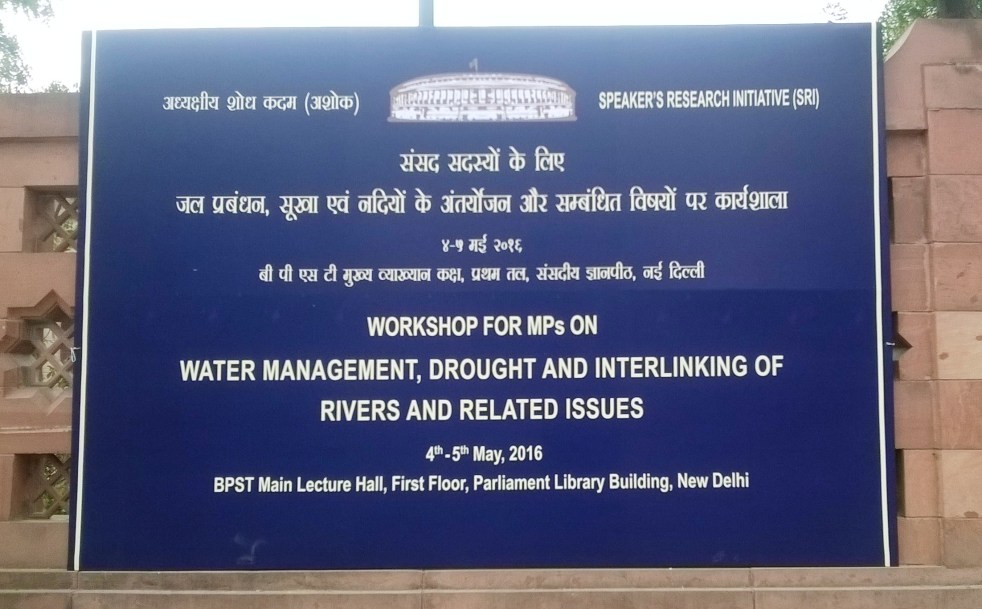
On May 4-5, 2016, Lok Sabha Speaker Smt Sumitra Mahajan took the lead in organising a workshop for Members of Parliament on Drought, Agrarian Crisis and ILR. As part of the newly constituted Speaker’s Research Initiative’s (SRI for short) work, Smt Mahajan inaugurated the workshop at 4 pm on May 4, 2016, where a panel of eight speakers were invited (4 on each day, SANDRP coordinator was one of the invited speakers on 1st day) to share their views, followed by questions from Members of Parliament. The idea was that on these important issues, Parliament Members are better equipped to raise the relevant issues when debating and raising questions in Parliament. It was heartening to see that at least 90 MPs (88 from Lok Sabha and 2 on Rajya Sabha) were present for 2.5 hours on first day, and they wanted to ask so many questions that there was not sufficient time to allow all of them to ask, nor sufficient time for speakers to make full presentations or answer all the questions. Similarly on second day too Speakers showed lot of interest on these issues. While inaugurating the workshop, Smt Mahajan mentioned how in Solapur, Maharashtra, because of the work of the collector and his team of officials, the impact of drought is lower than that in other districts. This was certainly heartening since it was SANDRP Associate Coordinator Parineeta Dandekar who first wrote on this issue, following her visit to Solapur and interview with the district collector. The workshop highlighted the need for many such workshops, possibly more focussed, but the impact of the workshop was already visible in the (as yet unfinished) debate under section 193 that started in Lok Sabha on May 5, 2016, hopefully to be continued in current week.

Continue reading “DRP: 9 May 2016 (Welcome initiative by Lok Sabha Speaker on draught and ILR)”
Dams · DRP News Bulletin

DRP: 18 April 2016 (Prior action & planning can reduce Drought impact: Solapur shows)

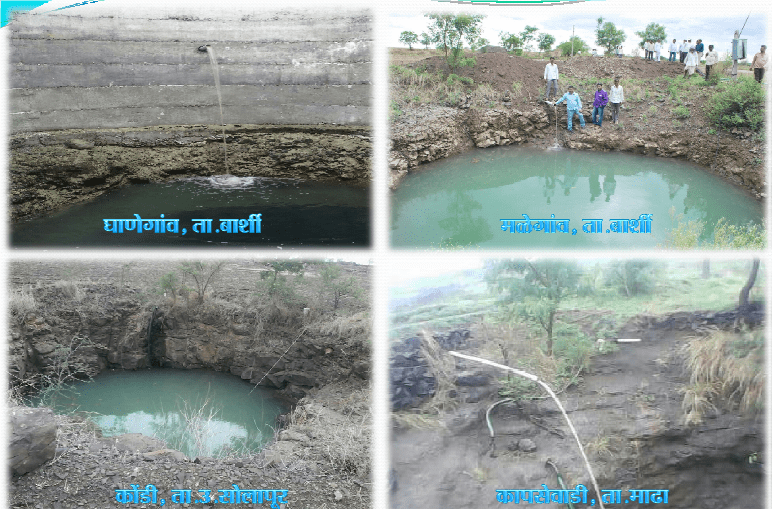
Union Water Resources Minister Uma Bharti in an interview tried to refute charges that the Centre reacted late to India’s drought crisis. Water minister makes strange statements that one cannot do any planning about drought & her govt is the first govt to provide water through tankers. However, Solapur, a chronically drought-hit district in Maharashtra was serviced with more than 200 tankers in 2013-14, even when the monsoon rainfall was better than this year. In this drought, there are only 16 tankers plying in Solapur. Drinking water sources have been secured, water from Ujani dam for and sugar cane has been disallowed. The district leads the way in Jal Yukta Shivar Program in the state, new avenues of Agricultural credit are opening, options to sugarcane are being developed, errant sugar factories are being fined for polluting drinking water sources. Will the Union Government accept its mistakes and make amends?

Continue reading “DRP: 18 April 2016 (Prior action & planning can reduce Drought impact: Solapur shows)”

Dams · DRP News Bulletin

DRP: 4 April 2016 (India Water Week shows absence of fresh thinking from water resources establishment)

SANDRP Comments India Water Week continues to show absence of any fresh thinking from water resources establishment The 4th India Water Week being organized by Union Ministry of Water Resources, River Development and Ganga Rejuvenation during April 4-8, 2016 in Delhi shows continued absence of any fresh thinking from water resources establishment.

The Information Brochure of the event says: “Ministry of Water Resources, RD & GR is to organize the India Water Week -2016 between April 4-8, 2016 to use it as a platform to elicit ideas and opinions from global level decision makers, politicians, researchers and entrepreneurs in the ­field of water resources for mutual benefi­t and goodwill… This is the fourth event of its kind with the theme “Water for all : Striving together” focusing on improving efficiencies of water use across all sectors… ”

Continue reading “DRP: 4 April 2016 (India Water Week shows absence of fresh thinking from water resources establishment)”

Dams · DRP News Bulletin

DRP: 28 March 2016(Is India facing its worst-ever water crisis?)

Is India facing its worst-ever water crisis? On 11 March first time in 30 years history power generation at Farakka power plant in West Bengal was suspended for 10 days due to non-availability of water in Ganges. Nobody is sure why but the evidence about the declining water levels and waning health of the 2,500km long Ganges is mounting. Monsoon rains have been scanty for the second year in succession. The melting of snow in the Himalayas has been delayed. Water tables have also been declining in the Ganges basin due to the reckless extraction of groundwater. The 3-month-long summer is barely weeks away but water availability in India’s 91 reservoirs is at its lowest in a decade, with stocks at a paltry 29% of their total storage capacity, according to the Central Water Commission. Thousands of villagers in drought-hit region of Maharashtra depend on tankers for water & authorities in Latur district, fearing violence, have imposed prohibitory orders on gatherings of more than 5 people around storage tanks. Tens of thousands of farmers and livestock have moved to camps providing free fodder and water for animals in parched districts. The govt has asked local municipalities to stop supplying water to swimming pools. States like Punjab are squabbling over ownership of river waters. In water-scarce Orissa, farmers have reportedly breached embankments to save their crops. Realy the waning health of the sacred river underscores the rising crisis of water in India.

Continue reading “DRP: 28 March 2016(Is India facing its worst-ever water crisis?)”

Dams · DRP News Bulletin

DRP: 21 March 2016 (‘Towards Noyyal’ A people’s initiative to restore a river’s glory)

Tamil Nadu A people’s initiative to restore a river’s glory The Noyyal River Restoration Federation will launch ‘Noyyalai Nokki’ (Towards Noyyal), a people’s initiative to restore the Noyyal river system on 26 March. Social activist Anna Hazare will launch the project at Kooduthurai in Alandurai in Coimbatore district. The river originates in the Western Ghats and runs through the four districts to join the Cauvery at Noyyal village. Known as Jungle stream, in olden times as many as 34 streams used to feed water into it and the river would flow throughout the year with two or three annual flood spell.  But now, just 4 or 5 streams feed the river. In many places, the river is encroached upon, sewage is let into it, or the river needs to be desilted. The river is all set to regain its glory with the ‘Noyyalai Nokki’ initiative. What is encouraging is the willingness of the public to be part of it. The project proposes to divide the river into segments of 500 metres for restoration and maintenance. Ownership groups will be formed for every 500 metres and it will consist of the local people, experts and patrons (divide-distribute-develop model).

Continue reading “DRP: 21 March 2016 (‘Towards Noyyal’ A people’s initiative to restore a river’s glory)”

Dams · DRP News Bulletin

DRP: 14 March 2016 (No Rain Dance, Only Dry Holy This Time: Pune District Administration)

Dam levels down, ‘rain dance’ for Holi dropped Pune district, where a water cut is in effect due to depleting water levels in the dams, will not have any kind of “rain dance” functions this Holi. As water reserved in the dams is to be used only for drinking purposes as per the district administration’s instructions, the collectorate has urged people to go for a “Dry Holi” this year and will ensure that there are no such functions during Holi. With dam levels coming down to as much as 23% of their capacity, the entertainment department of the collectorate will ensure that permissions are not given for events like the “rain dance” during the festival. Meanwhile, a BJP legislator in Mumbai has written to the Brihanmumbai Municipal Commissioner seeking a ban on “rain dance” functions in Mumbai in the metro during Holi. Ameet Satam, in a letter to the BMC, said that the civic body should ban rain dance and even asked the corporation to slap a fine of Rs 50,000 on those who indulge in waste of water.

Continue reading “DRP: 14 March 2016 (No Rain Dance, Only Dry Holy This Time: Pune District Administration)”

Dams · DRP News Bulletin

DRP: 7 March 2016 (Sudden water discharge from Chamera-II hydro Project in Himachal killed 2 Air Force jawans)

Sudden water discharge from Chamera-II hydro project killed 2 IAF jawans  In the evening of 05 March, 2 Indian Air Force (IAF) personnel posted at the Pathankot airbase were washed away by sudden rise in Ravi’s water level from Chamera-II hydro project in Chamba, Himachal Pradesh while 3 other personnel had a close shave. According to Sudesh Mokhta Deputy Commissioner Chamba the 5 IAF personnel on a weekend holiday trip were clicking pictures on the river bank at the time of the incident when the water of the river rose suddenly after discharge from upstream Chamera-II project. The incident happened around 6.30 pm and due to darkness, the search operation remained unsuccessful. It was only on 06 March that the bodies were fished out. Mokhta further stated that a magisterial probe has been ordered to ascertain if the NHPC authorities, which man the Chamera-II project, followed the guidelines laid down by the high court for the discharge of water.  On 08 June 2014 also during a similar accident, 24 students from Hyderabad were killed by sudden discharge of water from Larji hydel project dam in Mandi district.

Continue reading “DRP: 7 March 2016 (Sudden water discharge from Chamera-II hydro Project in Himachal killed 2 Air Force jawans)”

Dams · DRP News Bulletin

DRP: 22 Feb. 16 (Unprecedented water crisis in Delhi due to Jat quota stir)

Unprecedented water crisis in Delhi due to Jat stir Terming the water crisis in the national capital as “unprecedented”, Delhi minister Kapil Mishra has warned that the situation might worsen in the next few days if the supply from Haryana is not immediately restored. He said the Delhi Jal Board (DJB) had almost run out of water and advised people to use water judiciously. Delhi gets its bulk of water supply from Haryana and the stir has affected 65% of water supply in Delhi has been cut with the shutting down of seven water treatment plants— Wazirabad, Chandrawal, Dwarka, Okhla, Haiderpur, Nangloi and Bawana which provide around 500 million gallons per day (MGD). In all Delhi has nine water treatment plants which together produce 820 MGD of potable water. Of these, only two Sonia Vihar and Bhagirathi fed by water from Uttar Pradesh are operational. The current production is only 240 MGD. Among the areas affected were Dwarka, Janakpuri, Munirka, Palam, Rajouri Garden, Punjabi Bagh, Vasant Kunj, Saket, Green Park and Lodhi Colony, where residents complained of little or no water. In another news report DJB is reported to have made 140 water filling points functional to feed tankers which would be sent across the city, reeling under an unprecedented water crisis. Water Minister Kapil Mishra reviewed the contingency plan for water management in West, North, North-west, Outer and Central Delhi and said tankers will deliver water at 663 points to partially meet the shortage of 480 MGD. These points will keep rotating. Plan is to cover around 2,000 points by Monday evening. The DJB supplies around 900 MGD of water daily out of which around 600 MGD of raw water come from Munak Canal. Even if Haryana releases water immediately, it will take at least 24 hours to restore the supply. Meanwhile Supreme Court on 22 Feb.16 scolded Delhi government. for approaching the court instead of resolving the water crisis with Haryana. The Kejriwal government had approached the top court on in view of the severe water crisis in the national capital after Jat protesters blocked water supply through Munak canal in Sonipat. During the hearing on government’s plea, the court took strong objection to Water Minister Kapil Mishra’s presence inside the courtroom. On the other hand, the minister accuses Haryana & Central Government for providing no official information on the crisis He said the Delhi government was “repeatedly trying to communicate” with the two governments to find out when will the supply resume, but without much success. Also see Jat quota stir: Water supply cut, Delhi may go dry 

Continue reading “DRP: 22 Feb. 16 (Unprecedented water crisis in Delhi due to Jat quota stir)”

Dams · DRP News Bulletin

DRP: 15 Feb. 2016 (Govt plans National Water Commission)

Govt plans National Water Commission In one of the most significant reforms in the water sector in a long time, the govt is in the process of ordering a complete restructuring of the organisations responsible for regulating the use of water resources, with the objective of bringing in greater efficiency, better planning and increased emphasis on conservation of water. According to news report the Central Water Commission (CWC), which oversees irrigation projects, flood management and drinking water supply, and the Central Ground Water Board (CGWB) are likely to be disbanded, and a National Water Commission is proposed to be set up in their place. A few other smaller organisations with specialised mandate like data gathering and analysis are also likely to be created.

A team under Mihir Shah, a former member of the then Planning Commission of India, is already preparing a blueprint for better management of water resources. The idea of institutional restructuring is said to have the backing of this panel. It is likely to submit its report in the next two months. In the new scheme of things, more emphasis is being given to judicious use, and conservation, of ground water. It is estimated that despite elaborate irrigation projects, about 60 per cent of irrigation during the non-rainy season is still done by pumping out ground water. The large irrigation projects, meanwhile, have given sub-optimal results.

A large number of sewage treatment plants, being built as part of the Clean Ganga initiative that will eventually spread to other rivers as well, will provide a new source of water that is fit not only for industrial use but also for irrigation and many other purposes. The river rejuvenation plans, not just of Ganga but others as well, will become an integral part of overall water resources management. Apart from reducing pollution in the rivers, and maintaining a minimum ecological flow, the rejuvenation plans would also ensure that the rivers are able to adequately recharge the aquifers in its basins.

Allocation of water resources to each state is also on the agenda. But this process is likely to take time as it would involve extensive consultations with the state governments. Once a consensus emerges, a central legislation on allocation of water resources is planned to be brought in. This is aimed at reducing inter-state water disputes.

Continue reading “DRP: 15 Feb. 2016 (Govt plans National Water Commission)”