Dams · DRP News Bulletin

DRP: 10 April 2017 (Activists from 40 countries & all continents meet for RIVER GATHERING in Georgia)

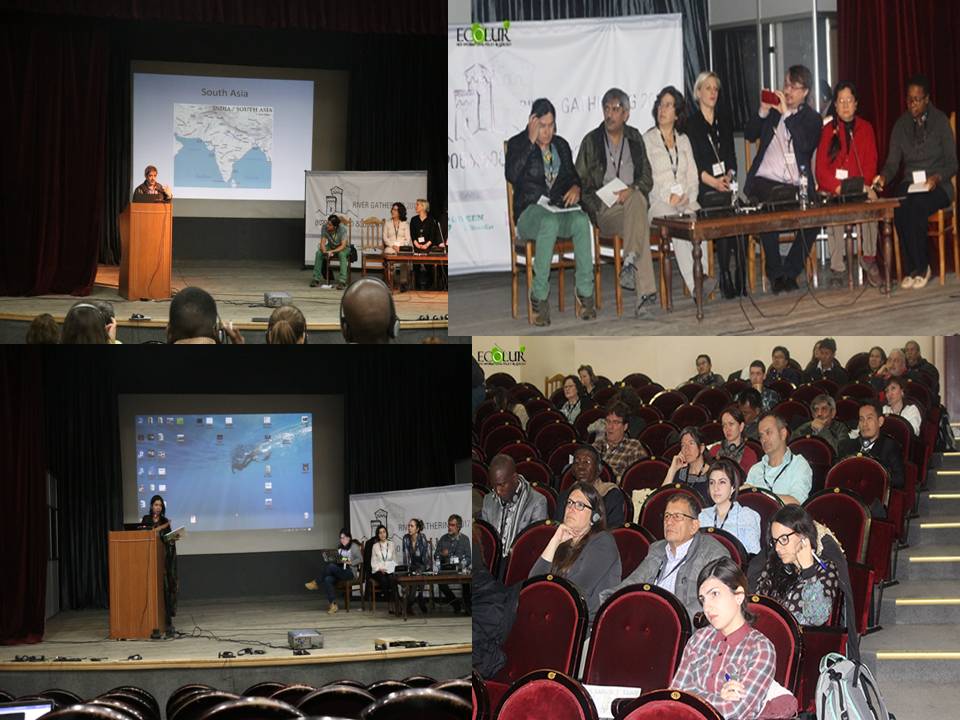
In a most significant event, some 85 river and dam activists from 40 countries and all continents gathered in Tbilisi, Georgia (on border between Asia and Europe, between Black and Caspian Sea) during March 27-31, 2017 to share experiences about their efforts to protect the world’s rivers and join their struggles against destructive hydropower projects. The meeting was organized by CEE BankWatch Network (active in 12 countries in Eastern and Central Europe) and International Rivers.

dahlich

Eight persons from South Asia, including those from India, Pakistan, Nepal and Bangladesh joined the meeting to share experiences from the region. Indian participant included SANDRP coordinator (who was also in steering committee of the meeting) and Associate Coordinator Parineeta Dandekar. A number of participants from neighboring and nearby countries like China, Myanmar, Thailand, Cambodia, Mongolia and Russia also participated. Issues related to trans-boundary rivers, small hydropower projects and multiple projects on the same rivers, decommissioning of the dams, how to achieve free flowing rivers and importance of rivers in changing climate were some of the key issues discussed at the meeting.

Continue reading “DRP: 10 April 2017 (Activists from 40 countries & all continents meet for RIVER GATHERING in Georgia)”
Dams · DRP News Bulletin

DRP: 3 April 2017 (India: Power Surplus & Exporter, Record Solar-Wind Growth, Need Not Push Destructive Hydro)

Power surplus, power exporter India, with record solar& wind wind generation trend, why push more destructive hydro projects According to power ministry statement on March 29, 2017, India for the first time became NET EXPORTER OF ELECTRICITY during 2016-17, it exported 4% more power during last 11 months (April-Feb), that what it imported from Bhutan. At the same time, power plants, on a national average, are opera ting at roughly 60%, down from nearly 65% in 2014-15.

Meanwhile, the Cabinet Committee on Economic Affairs has approved the amendments in the Mega Power Policy to push 31 GW stuck projects entailing an investment of Rs 1.5 lakh crore. The stuck projects in mega power policy include hydro projects of above 350 Mw in designated states (J&K and eight NE states) and above 500 Mw in other states.

Amid this, New and Renewable Energy Ministry has added over 5400 Mw wind energy capacity in 2016-17 against the target of 4000 Mw. This year’s achievement surpassed the previous higher capacity addition of 3.423 Mw achieved in the previous year. The leading States in the wind power capacity addition during 2016-17 are Andhra 2190 Mw, followed by Gujarat 1275 Mw and Karnataka 882 Mw.

In the last couple of years, India has not only seen record low tariffs for solar power but wind power too has seen a significant drop in tariffs. The onshore wind power potential alone is about 302 Gw. Preliminary estimates show the Gujarat coastline has the potential to generate around 106,000 Mw of offshore wind energy and Tamil Nadu about 60,000 Mw.

Continue reading “DRP: 3 April 2017 (India: Power Surplus & Exporter, Record Solar-Wind Growth, Need Not Push Destructive Hydro)”
Dams · India Rivers Week

North-East India (Excluding-Brahmputra) Rivers Profile

The River system in North East, other than the Brahmaputra, can be classified as the Barak River system and minor Rivers flowing to Bangladesh and Burma. The Barak River, Gumti River, Myntdu River etc are some of the major Rivers flowing to Bangladesh, while the Kaladan River, the Manipur River, Tizu River etc flowing  in the States of Mizoram, Manipur and Nagaland are main Rivers flowing to Burma.

The Barak River basin covers parts of India, Bangladesh and Myanmar. In India it spreads over states of Meghalaya, Manipur, Mizoram, Assam, Tripura and Nagaland having an area of 41,723 Sq.km.

The Barak River originates from the Manipur hills, from Liyai Village in Senapati district in Manipur at an elevation of 2,331 m and flows through Assam and further down to Bangladesh, where it is known by the  name of the Surma and the Kushiyara and later called the Meghna before receiving the combined flow of the Ganga and the Brahmaputra. The principal tributaries of Barak joining from north bank are the Jiri, the Chiri, the Modhura, the Jatinga, the Harang, the Kalain and the Gumra whereas the Dhaleswari, the Singla, the Longai, the Sonai and the Katakhal joins from south bank. The Barak sub-basin lies in the States  of Meghalaya, Manipur, Mizoram, Assam, Tripura and Nagaland.

Continue reading “North-East India (Excluding-Brahmputra) Rivers Profile”

Dams · DRP News Bulletin

DRP: 20 March 2017 (South India Reeling Under Severe Drought)

The drought has extended its grip in the South, with the South-West (S-W) monsoon falling significantly short and the North-East monsoon proving a total failure. Reeling under the impact of failed monsoons, Kerala, Karnataka, Tamil Nadu and Puducherry have declared themselves as drought affected. Kerala and Karnataka, which are the worst affected, are already contemplating actions such as cloud seeding to tide over the situation.

In Kerala, the S-W monsoon deficit stood at -34 per cent, and the North-East monsoon, -61 per cent. Similarly, in Tamil Nadu, the deficits were -19 per cent and -62 per cent (North-East monsoon). For Coastal Karnataka, the shortfall stood at -21 per cent and -63 per cent, respectively. Drought-like conditions are also prevailing in parts of Andhra Pradesh and Telangana.

Water levels in key reservoirs in the region are at their lowest. The water tables have declined further even as the civic administration in many cities, small towns and panchayats has been increasingly tapping groundwater to ensure supplies. The situation is so dire that the Kerala govt has directed PepsiCo to cut down drastically on the use of groundwater for its Palakkad plant. Traders in Tamil Nadu are also boycotting these fizzy after claims that foreign firms are exploiting the country’s water resources.

Continue reading “DRP: 20 March 2017 (South India Reeling Under Severe Drought)”
Dams · DRP News Bulletin

DRP: 13 March 2017 (20 Big Hydro Projects Costing Over 30K Crore, Stalled & Stressed: Piyush Goyal)

20 hydro projects stalled or stressed  The Power Minister Piyush Goyal on March 09, 2017 in a written statement has informed the parliament that as many as 20 under construction HPPs totalling 6,329 MW are either stalled or stressed in the country and Rs 30,147.08 crore has already been spent on them. These projects include 2,000 MW Subansiri Lower of NHPC Ltd, 500 Mw Teesta VI of Lanco Teesta Hydro Power Ltd, 120 MW Rangit-IV of Jal Power Corp, 300 Mw Panan of Himagiri Hydro Energy Pvt Ltd, 850 MW Ratle of GVK Ratle HEP Pvt Ltd, 100 Mw Sorang of Himachal Sorang Power Ltd and 960 MW Polavaram of Polavaram Project Authority.

Continue reading “DRP: 13 March 2017 (20 Big Hydro Projects Costing Over 30K Crore, Stalled & Stressed: Piyush Goyal)”
Dams · DRP News Bulletin

DRP: 6 March 2017 (Farm Ponds In Maharashtra Causing Groundwater Decline)

SANDRP Blog Farm ponds in Maharashtra Causing Groundwater Decline Farm ponds recognized as a drought proofing measure have received a great push from the central Govt recently. On the flip side however serious concerns are being raised over implementation of the farm ponds and more importantly –their use. Civil society organizations like Watershed Organization Trust and also SANDRP have been pointing out that the use of farm ponds has long drifted from its objective of storing rainwater for protective irrigation. Most of the farm ponds are instead being used as storage tanks for pumped out groundwater exposing this underground resource to losses through evaporation, etc. In the process they are accelerating the rate of groundwater exploitation multi fold.

Continue reading “DRP: 6 March 2017 (Farm Ponds In Maharashtra Causing Groundwater Decline)”
Dams · DRP News Bulletin

DRP: 6 Feb 2017 (MSPCB Directs Reduction in Water Supply to Polluting Industries)

Maharashtra SPCB cuts 40% water supply to Taloja industries After the pollution board identified that chemical effluents from common effluent treatment plant (CETP) at Taloja were polluting the Kasadi river, the Maharashtra Pollution Control Board (MPCB) have directed to Maharashtra Industrial Development Corporation (MIDC) to cut 40 per cent of the water supply to industrial plants from February 1.

According to the letter issued to the industrial plants, earlier they were receiving 24-hour water supply but after MPCB’s directive, the plants would not receive water from 12am to 8am, effective from February 1.

Last year fishermen from the local Koli community had complained of decline in 90 per cent of fish catch from Kasadi river due to pollution. They had also alleged of inaction by authorities despite several complaints.

To highlight their plight, the fishermen then collected water samples in August 2016 from the Taloja CETP pipeline areas discharging treated waste and samples from the banks of the Kasadi river, and submitted them for a water quality test at Navi Mumbai Municipal Corporation’s (NMMC) environmental laboratory.

The samples were found failing several crucial parameters and having high levels of chloride , which is toxic to aquatic life and impacts vegetation and wildlife. Several reports had also mentioned that the pumping of industrial waste into the river had raised pollution levels 13 times higher than the safe limit. 

Taking cognizance of the complaints, MPCB issued a notice to MIDC highlighting the pollution problem on Jan. 31 2017 and informing the MIDC that until the Taloja industrial area does not start online pollution monitoring, adequate water supply would not be provided to them. The plants have two months to comply or else further action would be taken.

Continue reading “DRP: 6 Feb 2017 (MSPCB Directs Reduction in Water Supply to Polluting Industries)”
Dams · DRP News Bulletin

DRP: 26 Dec 2016 (Corruption & Fraud in 600 MW Kameng HEP in NE India)

In addition to allegations of fraud related to inflated bills, the officials report of Satish Verma the former chief vigilance officer (CVO) of North Eastern Electric Power Corporation (NEEPCO) mentioned that there have been numerous instances of top government officials allegedly accepting hospitality and gifts that cost the PSU lakhs of rupees. These include gifts for officials in the Ministry of Power: a teak wood cabinet for the Personal Secretary to the Union Power Minister; an iPad Air 2 for the Secretary; payment of a Vodafone bill for a Special Secretary; and a mobile handset for an Additional Secretary.

Continue reading “DRP: 26 Dec 2016 (Corruption & Fraud in 600 MW Kameng HEP in NE India)”
Dams · Free flowing rivers

अनुपम मिश्र जी का अंतिम वक्तव्यः नदियों को बचाने का अर्थ है समाज को बचाना

अत्यधिक दुखःद समाचार है कि अनुपम मिश्र जी नहीं रहे।  19 दिसंबर 2016 को प्रातः 05:27 पर दिल्ली के एम्स अस्पताल में  उनका देहांत हो गया।

पानी के मुद्दों और भारत की नदियों पर स्पष्ट विचारों वाले, सरल किंतु प्रभावशाली भाषाशैली के धनी, अत्यंत उदार और विनम्र अनुपम जी समान व्यक्तित्व दुर्लभ है।  जैसा रवि चोपड़ा जी ने कहा है वे सही में अनुपम थे।

अनुपम जी भारतीय नदी सप्ताह 2016 के आयोजन समिति के अध्यक्ष थे और वर्ष 2014 भगीरथी प्रयास सम्मान चुनाव समिति के सदस्य थे और वर्ष 2015 में इस समिति के अध्यक्ष बने।

खराब स्वास्थ्य के बावजूद वे भारतीय नदी सप्ताह की आयोजन समिति की बैठकों में वे लगातार उपस्थित रहें, अंतिम बार सितंबर 2016 की बैठक में वे मौजूद थे और भारतीय नदी सप्ताह 28 नवंबर 2016 के शुभांरभ के समय भी वे उपस्थित  रहे , जहॉ पर हमेशा की तरह उन्होने अपना सरल, स्पष्ट किंतु मर्मस्पर्शी व्याख्यान दिया। वे शाररिक रूप से थके और कमजोर थे , इस सबके बावजूद वे आए जो पर्यावरण के प्रति उनके समर्पण की मिसाल है।

व्यक्तिगत तौर पर वे मेरे (हिमांशु ठक्कर) प्रति बहुत उदार थे और मुझे हमेशा प्रेरित करते रहते थे। हमने कभी भी नहीं सोचा था कि एक दिन हमें उनसे अलग होना पडेगा। उनके चले जाने से देश और पर्यावरण को हुई क्षति की भरपाई नामुमकिन है। परंतु उनकी प्रकृति शिक्षा और अनुभव उनके द्वारा रचित स्पष्ट, सरल और सारंगर्भित लेखों और पुस्तकों के माध्यम से हमेशा हमारा मार्गदर्शन करती रहेंगी।

किताबों के समान उनके व्याख्यान भी ज्ञान और अनुभव से भरे हुए प्ररेणास्रोत है। उनके दिखाए मार्ग पर आगे बढ़ते रहने के लिए, दुख की घड़ी में हम, उनके द्वारा भारतीय नदी दिवस (28-30 नवंबर 2016) में दिए गए उनके अंतिम व्याख्यान को, उन्हें श्रृद्धांजलि के तौर पर अर्पित करते हुए, आपके साथ सांझा कर रहे हैं ।

Continue reading “अनुपम मिश्र जी का अंतिम वक्तव्यः नदियों को बचाने का अर्थ है समाज को बचाना”

Dams · DRP News Bulletin

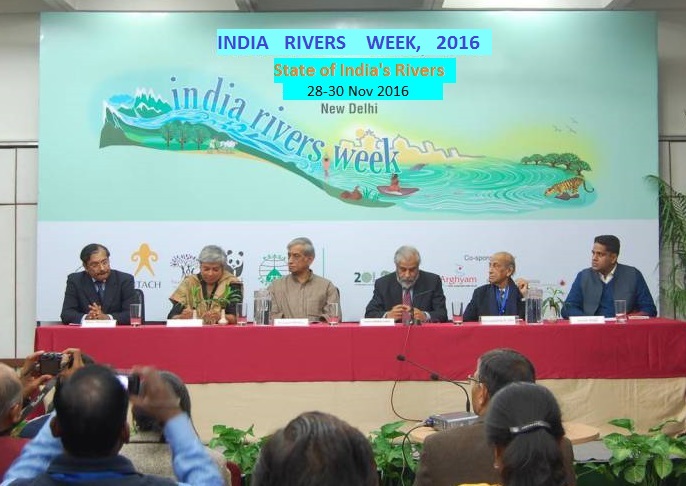
DRP: 21 Nov 2016 (India Rivers Week to be Held in Delhi from Nov 28th)

India Rivers Week 2016 to be organised at WWF-India during Nov 28-30 is just a week away. The theme of the event this year is STATE OF INDIA’s RIVERS. Groups from all the different states have put together reports about the status of rivers in their states with a view of classify rivers as Healthy (blue), Threatened (Pink) and Destroyed (Red) after assessing their health based on a large number of parameters, including Dams, Pollution, biodiversity, encroachment, mining, among others. This is the first ever attempt at such an exercise. The Event will also feature announcement of Bhagirath Prayas Samman Awards for exemplary work in river conservation, River Lecture Preview of a feature film and prominent speakers in inaugural and valedictory functions. Individuals and groups working for better future of our rivers will be travelling to the event from all over India.

Continue reading “DRP: 21 Nov 2016 (India Rivers Week to be Held in Delhi from Nov 28th)”