Dam levels down, ‘rain dance’ for Holi dropped Pune district, where a water cut is in effect due to depleting water levels in the dams, will not have any kind of “rain dance” functions this Holi. As water reserved in the dams is to be used only for drinking purposes as per the district administration’s instructions, the collectorate has urged people to go for a “Dry Holi” this year and will ensure that there are no such functions during Holi. With dam levels coming down to as much as 23% of their capacity, the entertainment department of the collectorate will ensure that permissions are not given for events like the “rain dance” during the festival. Meanwhile, a BJP legislator in Mumbai has written to the Brihanmumbai Municipal Commissioner seeking a ban on “rain dance” functions in Mumbai in the metro during Holi. Ameet Satam, in a letter to the BMC, said that the civic body should ban rain dance and even asked the corporation to slap a fine of Rs 50,000 on those who indulge in waste of water.
Tag: DRP News Bulletin

DRP: 15 Feb. 2016 (Govt plans National Water Commission)
Govt plans National Water Commission In one of the most significant reforms in the water sector in a long time, the govt is in the process of ordering a complete restructuring of the organisations responsible for regulating the use of water resources, with the objective of bringing in greater efficiency, better planning and increased emphasis on conservation of water. According to news report the Central Water Commission (CWC), which oversees irrigation projects, flood management and drinking water supply, and the Central Ground Water Board (CGWB) are likely to be disbanded, and a National Water Commission is proposed to be set up in their place. A few other smaller organisations with specialised mandate like data gathering and analysis are also likely to be created.
A team under Mihir Shah, a former member of the then Planning Commission of India, is already preparing a blueprint for better management of water resources. The idea of institutional restructuring is said to have the backing of this panel. It is likely to submit its report in the next two months. In the new scheme of things, more emphasis is being given to judicious use, and conservation, of ground water. It is estimated that despite elaborate irrigation projects, about 60 per cent of irrigation during the non-rainy season is still done by pumping out ground water. The large irrigation projects, meanwhile, have given sub-optimal results.
A large number of sewage treatment plants, being built as part of the Clean Ganga initiative that will eventually spread to other rivers as well, will provide a new source of water that is fit not only for industrial use but also for irrigation and many other purposes. The river rejuvenation plans, not just of Ganga but others as well, will become an integral part of overall water resources management. Apart from reducing pollution in the rivers, and maintaining a minimum ecological flow, the rejuvenation plans would also ensure that the rivers are able to adequately recharge the aquifers in its basins.
Allocation of water resources to each state is also on the agenda. But this process is likely to take time as it would involve extensive consultations with the state governments. Once a consensus emerges, a central legislation on allocation of water resources is planned to be brought in. This is aimed at reducing inter-state water disputes.
Continue reading “DRP: 15 Feb. 2016 (Govt plans National Water Commission)”
DRP: 8 Feb.2016 (Hiding Environment Information-Against Sabka Sath, Sabka Vikas?)
SANDRP Open Letter to MoEF&CC Is Not Hiding Environment Information Against Sabka Sath, Sabka Vikas? Even as the Ministry of Environment, Forests and Climate Change has been sanctioning cascades of hydro power projects on here-to free flowing rivers in the Himalaya and North East India, Cumulative Assessment of the Impacts of these projects became a crucial area of concern. The cumulative impacts of these projects on the hydrology, downstream flow, sudden water releases, deforestation, muck disposal, influx of migrant workers, seismicity of the region etc. is huge as compared to individual impacts. The projects together stand to change the social and ecological fabric of these regions.
Cumulative Impact Assessment (CIA) studies are a part of the Environment Impact Assessment Process under the EIA Notification (2006) and Environment (Protection) Act 1986. The documents of these CIAs have been uploaded on the Environment Clearance website in the past, as was required under number of laws. However, as the EAC is slated to consider whopping 4 CIAs in its upcoming meeting on the 8 and 9th Feb, not a single CIA-related document is available on the MoEF and CC website! We are told that these may not be made available in the future.
Continue reading “DRP: 8 Feb.2016 (Hiding Environment Information-Against Sabka Sath, Sabka Vikas?)”
DRP: 1 Feb 2016 (Experts suggest ways to revive Madurai’s dying rivers)
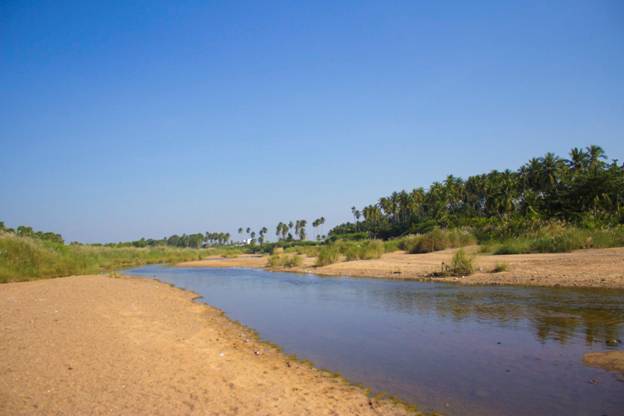
Tamil Nadu Experts suggest six ways to revive dying Madurai’s rivers According to a paper entitled Future Proofing Indian Cities: Towards an approach to spatial and social analysis for sustainable development of Madurai by Jayaraj Sundaresan Development Planning Unit, University College London J. Kanagavalli DHAN Foundation, Madurai their documentation has revealed the significant role of Kruthumal River in the historic, cultural, ecological and economic growth of Madurai. Centuries ago, Madurai city developed as a small urban settlement on the banks between the rivers Kruthumal and Vaigai. Appearing in epics and sacred texts such as Srimad Bhagavatham and Narayaneeyam, Kruthumal has significant presence in the written history of Madurai. It was also known as Narayana Cauvery. It supplied water to the Ahazhi (moat) around the Tirumalai Nayakkar palace in Madurai. The paper gave six methods to look after Vaigai and Kruthumal Rivers in Madurai. Looking at the condition of the rivers one feels it is hopeless, but there is hope if together with the government, something is done to control the destruction of the river, by law. And with organizations like DHAN Madurai can hope for a clean Vaigai in the future.
Continue reading “DRP: 1 Feb 2016 (Experts suggest ways to revive Madurai’s dying rivers)”

DRP: 18 Jan. 2016 (MoEF Expert Committee on Dams continues to ignore democratic norms)
MoEF Expert Committee on Dams continues to ignore democratic norms The minutes of the 90th meeting of the Expert Appraisal Committee on River Valley and Hydropower projects held on Dec 22-23, 2015, made available today (January 18, 2016, see: http://environmentclearance.nic.in/writereaddata/Form-1A/Minutes/0_0_11118122212121Minutes-90EAC.pdf), shows how the committee continues to ignore basic democratic norms. Here are some key issues about the minutes of this latest meeting:

DRP: 30 Nov. 2015 (Delhi does not need Renuka Dam, Sharda-Yamuna linking: Kapil Misra, Delhi Water Minister)

Speaking during India Rivers Day- 2015 Kapil Misra said that Delhi does not require any more water from external sources such as the Renuka Dam or Sharda Yamuna River link. The minister also assured that the Yamuna’s water will be improved within three years to make it good enough to bathe in. He raised doubts over expensive sewerage projects and felt need building of smaller and decentralised sewerage management system. The India Rivers Day brought together several individuals and organisations who have been working on the issues of river conservation in the country.

Dams, Rivers & People: Oct 12, 2015
Arunachal:- Siang People’s Forum writes to MoEF to not allow mega dam on Siang River, State Govt. supports the cause
Assam:- Locals, CM show stiff resistance to Lower Subansiri power project
Himachal:-Jispa Dam project faces opposition
Uttarakhand:- From 60 to 7000 patients in 3 years, Uttarakhand floods play havoc with mental health
Maharashtra:- Drought-Hit Maharashtra to generate 400 mw hydropower
Himalaya:- Dams, Hydro projects & other development works may wipe out many unknown species being discovered in Eastern Himalaya
Climate Change :- The Hydropower Methane Bomb No One Wants to Talk About

Dams, Rivers & People: Oct 05, 2015 (On Climate Agenda Govt. scale down targets but on ground still pushing hard many hydro projects)
HYDROPOWER
Hydro fast loosing sheen in renewable energy basket and the share of hydro is likely to decline further as through the past three years, the installed capacity of hydropower projects has remained around 40,000 Mw. While the report superficially may appear as a sigh of relief nevertheless on ground Indian Govt. is still in a hurry to push many big hydro power projects particularly in North-Eastern States. Last month only Piyush Goyal Power Minister cleared the Teesta-III and spoke of clearing Subansiri too. In Siang basin Pauk, Heo, Tato-I are recently approved by MoEF Panel. Protest against 780 Nyamjang Chhu HEP is going on. Similarly several projects in Ganga, Barhamputra and Satluj basin are being cleared and constructed in plain violation of stipulated green norms. Public and private developers are repeatedly ignoring environmental concerns and not addressing the issues raised by local people.
Dams, Rivers & People: Sep 07, 2015 (Narmada Canal, Salt Mining in Runn of Kutch a threat to endangered Asiatic Wild Ass)
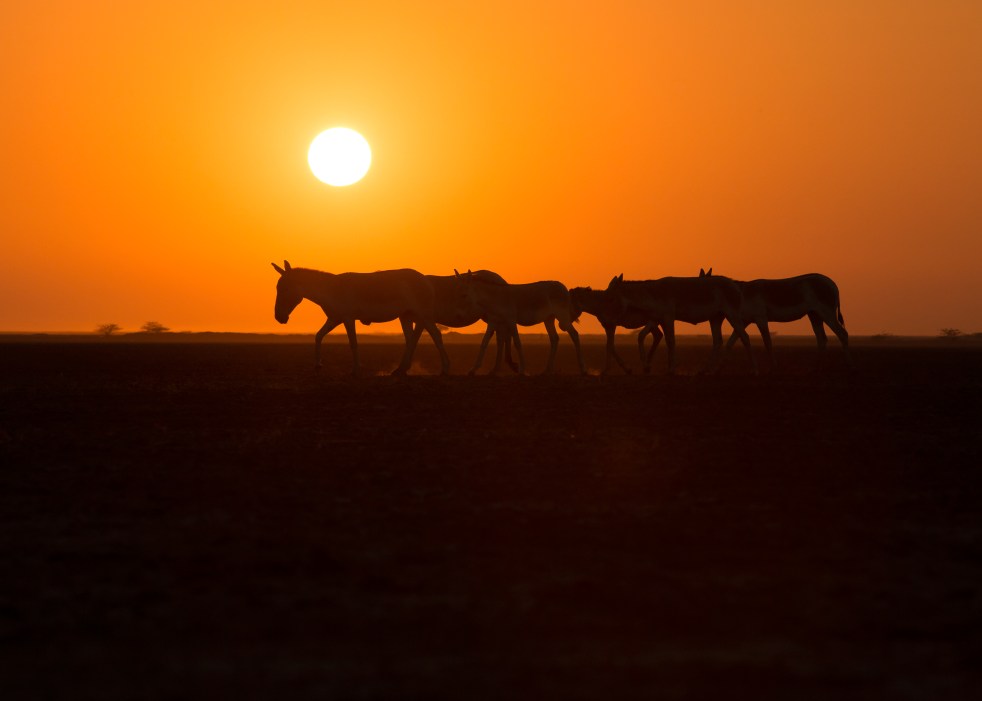
Asiatic wild ass now on endangered list; Population Down By 52% In 16 Years The IUCN report mentions that the Little Rann of Kutch faces direct threat from increasing human activities. The ecology of the wild ass sanctuary, for example, is threatened by a canal building project -the Sardar Sarovar Project of the Narmada Development Authority. It also points out how the rising numbers of grazing livestock leads to stiff competition for natural reserves. Salt mining, a major economic industry for local people, has increased 140% since 1958.

Dams, Rivers & People: August 17, 2015
HYDROPOWER
UTTARAKHAND: National Institute of Disaster Management asks Govt. to make disaster study must for Uttarakhand hydel projects (17 Aug. 2015) This is good to see, it uses almost the exact language some of us having using since the disaster.
SIKKIM: Lanco in talks to sell Sikkim hydro power project (11 Aug. 2015) The Lanco group confirmed that it is in talks with strategic investors to sell its 500 megawatt (MW) hydro-electric power plant in Sikkim, as part of an effort to consolidate its businesses and reduce debt.
ARUNACHAL PRADESH: Neha Sinha (BNHS) in her article titled A bird, a dam and a belief explores the ethical and environmental aspects intertwined with construction of Nyamjang Chhu dam which will destroy the habitat of the Black-necked crane at Zemithang in Arunachal Pradesh. The Save Mon Region Federation (SMRF), a group spear-headed by local Buddhist Lamas, has challenged the environmental clearance in the NGT. LIFE are the lawyers for petitioners. Sanjay Upadhyay and Raj Panjwani are lawyers for Bhilwara group.
MANIPUR: Why Manipur is flooded (12 Aug. 2015) Interesting to see Down to Earth sees role of dams in Manipur floods: On the other hand continuing their agitation Mapithel dam affected downstream people hold protest meet (16 Aug. 2015) Joint Action Committee (JAC) for Mapithel Dam Downstream Affected People organized a protest meeting at Tumukhong Village, Imphal East District. The meeting demanded immediate rehabilitation and resettlement of Mapithel Dam affected people in the downstream areas. Also get to see a special news report on 26 years long protest of Chandog village against Mapithal Dam.
 SANDRP