
At a well-attended meeting at India International Centre in Delhi on Feb 20 2025, organised by VIDHI Centre for Legal Policy, a panel of speakers including Shri Shashi Shekhar (former secretary, Union Ministry of Water Resources) and Shri Jasbir Singh Chauhan (former Principle Chief Conservator of Forests, Madhya Pradesh) and Himanshu Thakkar of SANDRP, a number of fundamental questions were raised about the controversial Ken Betwa River Link Project. Unfortunately, no clear answers are forth coming from the authorities.
Continue reading “DRP 240225: Unanswered questions on Ken Betwa Project”Tag: Drought
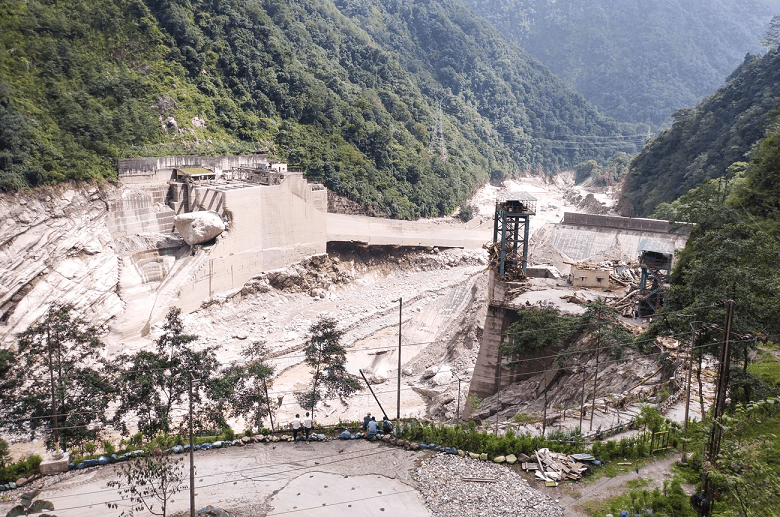
DRP 100225: EAC & MoEF’s shocking decision to clear Teesta 3 Dam raises a stir
(Feature Image: Teesta III HEP dam was washed away on the intervening night of Oct. 3-4, 2023 on account of a GLOF. The flood in the downstream was magnified by the dam disaster. Photo: Mayalmit Lepcha/Source: Sanctuary Nature Foundation)
The decision of Union Ministry of Environment and Forests (MoEF)’s Expert Appraisal Committee (EAC) on River Valley Projects on Jan 10 2025 has understandably raised a stir and earlier the EAC and MoEF reviews and reverses this decision, better it will be. The decision is shocking on a number of counts. The EAC itself had raised a number of issues related to the project in its earlier meeting, but decided to clear the project without getting satisfactory resolution of the issues.
Continue reading “DRP 100225: EAC & MoEF’s shocking decision to clear Teesta 3 Dam raises a stir”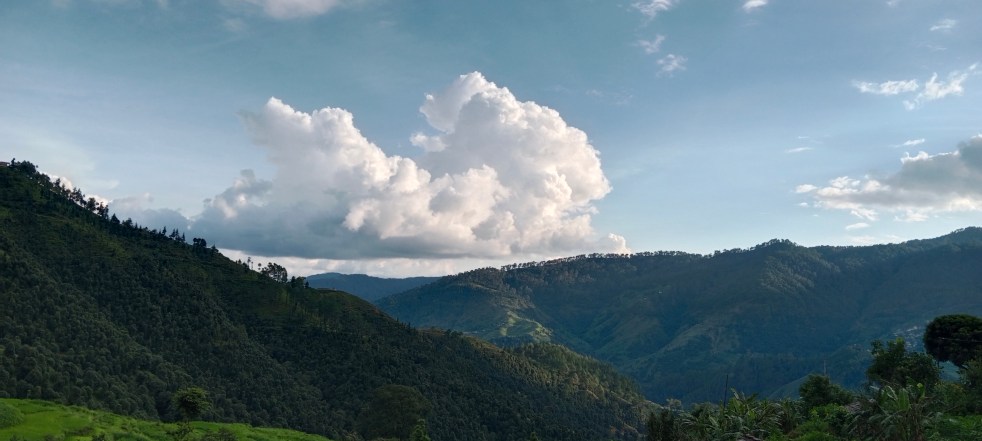
Groundwater 2024: Increasing Impacts of Climate Change
Several studies and reports published during 2024 have underlined the rising adverse impacts of changing climate on groundwater resources in India and globally in multiple ways which will continue to accelerate in future. While the groundwater greatly contributes to river baseflows during lean period, its role in flooding is miniscule comparatively with surface flows in Peninsular India. In North India the drying northwest monsoon and warmer winters have been found driving groundwater depletion by raising demand for irrigation water.
The groundwater is getting warmer, also impacting subterranean aquatic ecosystems. Besides, the rising temperatures are causing more evaporation losses and leading to pumping of more groundwater to compensate for the losses. The extreme rainfall events might speed up fertilizers seeping into groundwater table contaminating it. Similarly, the rising sea level is found fueling erosion in coastal areas and facilitating seawater intrusion of the coastal aquifers. At the same time the decline in low and medium intensity rainfall and warmer weather patterns are reducing groundwater recharge, increasing seawater ingress.
Continue reading “Groundwater 2024: Increasing Impacts of Climate Change”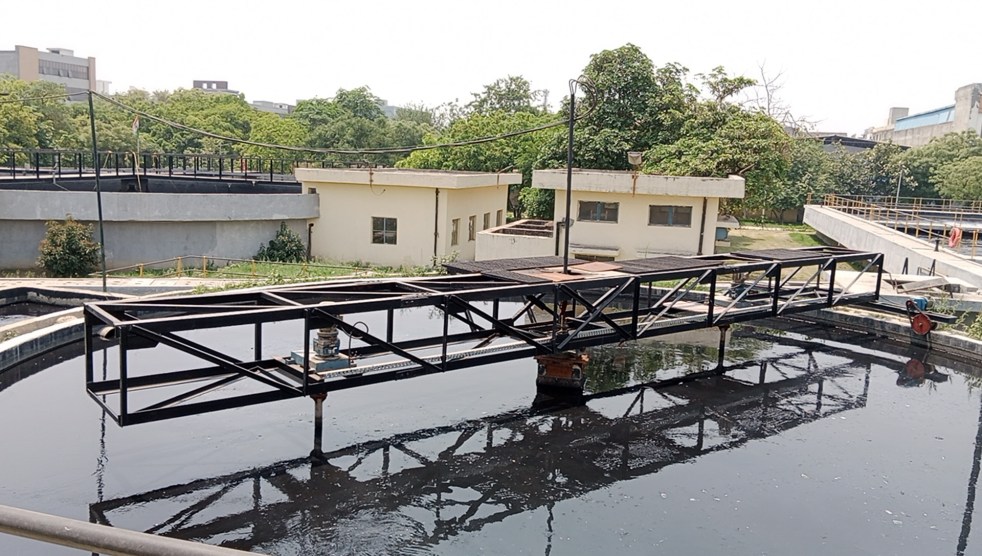
DRP 270125: India’s non-functional Sewage Treatment Plants
(Feature Image: 10 MLD Kundli CETP in Sonipat. BS Rawat/SANDRP/May 2023)
A detailed report in this week’s DRP News Bulletin below shows how India’s Sewage Treatment Plants (STPs), Govt’s main weapon against pollution of rivers in Urban areas, have been a failure for decades. It is pertinent to note that this is the golden jubilee year of Water Pollution Control Act of 1974, that led to the formation of Central, state Pollution Control Boards, and the whole water pollution control bureaucracy, institutions and legal architecture. There should be little doubt that whole architecture has abysmally failed in achieving basic objective for which it was created, including ensuring proper treatment of urban sewage.
India has spent thousands of crores of rupees on these STPs, mostly, mega, centralized projects. But there has been little effort to address governance of the STPs, to ensure that they function as required and provide the results that they have been set up for. Whether they function or not, qualitatively or quantitatively, year after year and decades after decades, there are no consequences! In fact, if treated properly, sewage can become a asset rather than nuisance that it now is. The Judiciary too, right up to the apex court, have badly failed in achieving any improvement in this eminently justiciable issue.
Continue reading “DRP 270125: India’s non-functional Sewage Treatment Plants”
DRP 200125: Whither Env Clearance Rejection rate from Expert Appraisal Committee or MoEF?
A detailed review of functioning of Union Ministry of Environment and Forests’ (MoEF) Expert Appraisal Committee (EAC) on River Valley Projects (RVP) for 2024 by SANDRP shows that the committee or for that matter MoEF has almost non-existent rejection rate. Even when a project is not cleared, when it applies again, it gets clearance, whether the application if for stage I (Terms of Reference) or Stage II (Environment Clearance- EC) clearance. Even in some cases like Pump Storage Projects (PSP) in Western Ghats or the Hydropower projects in disaster prone Himalayas, including the disaster-stricken projects like the 1200 MW Teesta III projects in Sikkim, the scrutiny including field visits by the EAC Sub committees is minimal, not worthy calling even scrutiny.
Continue reading “DRP 200125: Whither Env Clearance Rejection rate from Expert Appraisal Committee or MoEF?”
DRP 130125: Will Judiciary take these matters to logical conclusion?
There are at least four cases in this past week where the judiciary has used strong words or taken up crucial issues in water, dams, hydropower projects, wetlands and riverbed mining related issues. In the case related to the safety of Mullaperiyar dam on Kerala-TN border, the Supreme Court has prodded the Centre to wake up from the slumber to ensure that National Dam Safety Authority quickly forms a panel to examine the project. This case has wide ranging repercussions not only about this project, but also functioning of NDSA and other bodies under the Dam Safety Act 2021. Indeed, there is huge question mark as to what extent NDSA and DSA has made our dams any safer.
Continue reading “DRP 130125: Will Judiciary take these matters to logical conclusion?”
DRP 301224: We are not studying our rivers, Global North is studying
(Feature Image: Ramganga river at Marchula, Uttarakhand. Bhim Singh Rawat/SANDRP/Sept. 2024)
Exactly three months back, on Sept 30 2024, we had highlighted the urgent need for credible river studies in India (https://sandrp.in/2024/09/30/drp-nb-300924-focus-on-river-studies/). A new research report published last week in Nature has corroborated this, showing that volume of research across global south is disproportionately small compared to need based on basic population, water withdrawals and water consumption.
Based on review of 4237 publications using machine learning and desk review of 325 publications, analysis of 4713 case studies across 286 basins, it shows that river research currently in global south is predominantly led by global North institutions, thus the river research is shaped by selection of theme and locations done by such institutions.
Continue reading “DRP 301224: We are not studying our rivers, Global North is studying”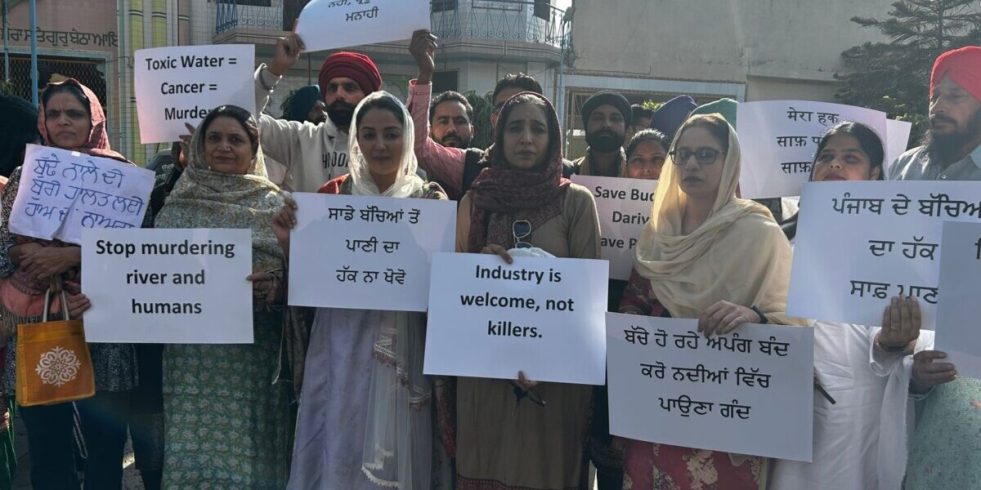
DRP 091224: “Kale Pani Da Morcha”: A Landmark people’s movement
(Feature Image: Women activists who were standing and displaying placards were detained by the Ludhiana police during the protest. Photo: By special arrangement/The Wire)
‘Kale Pani da Morcha”, the people’s movement against Pollution of Buddha Nallah, a tributary of Sutlej River in Ludhiana (Punjab) is a landmark movement in more than one sense. Firstly, while severe pollution of rivers is the usual story from across the country, a courageous people’s movement to address is the issue is such a rare event.
The fact that the industries association actually threatened this movement with a counter from the industries and their workers is shocking and shows the impunity of these industries. While the state government has to take quick action to address the issue, there is also a huge role for the central government, which has abjectly failed to perform its basic duty of providing credible governance of rivers, including their pollution in India. They including CPCB and MoEF know since decades that CETPs are completely failed model, and no worthwhile action has been taken to address the failure, including by the World Bank which has funded many of them. The filthy rivers all over India are violating the fundamental rights of millions of people, without any credible action even by the judiciary.
Continue reading “DRP 091224: “Kale Pani Da Morcha”: A Landmark people’s movement”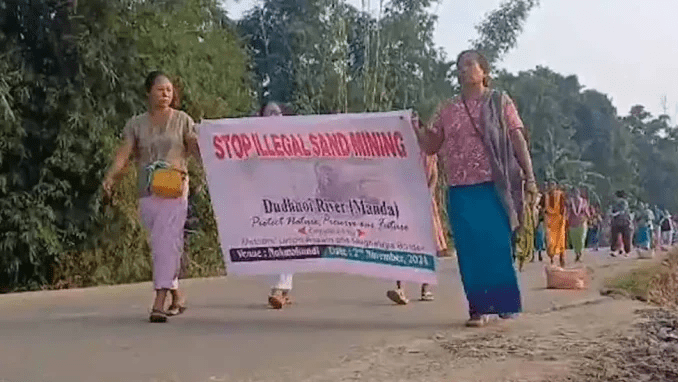
DRP 251124: Protest by Mothers Union against sand mining along Assam-Meghalaya border
(Feature Image: Mother’s Union protest rally against sand mining. Image Source: Nagaland Post, 03 Nov 2024)
The ongoing protest by the Mother’s Union against sand mining in Dudhnoi River along the Assam Meghalaya border has brought to focus the serious implications of unsustainable sand mining, whether legal or illegal. The campaign has wide based support from the Garo Students Union, All Bodo Students Union, Krishak Mukti Sangram Samiti and other groups.
The campaign has highlighted that due to use of motorized equipment to extract sand, the water level in the Dudhnoi river is dropping hugely, including during rainy season. The campaign has also pointed out that the forest, mining, transport and police departments have been allowing over loaded sand laden dumpers with or without proper challans.
Continue reading “DRP 251124: Protest by Mothers Union against sand mining along Assam-Meghalaya border”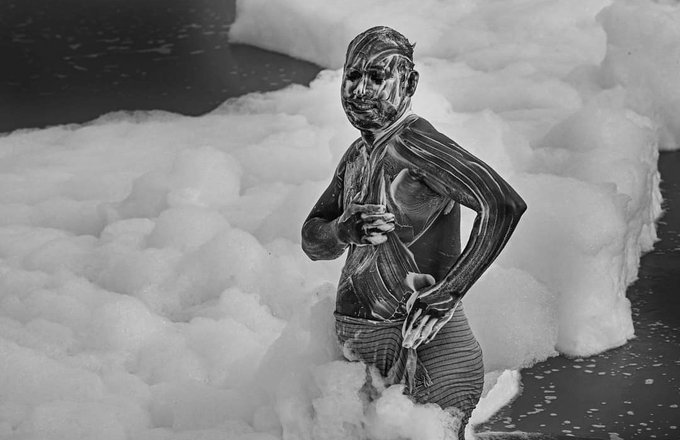
DRP 111124: URBAN RIVERS in focus this week
(Feature Image: A man bathing with toxic foam in polluted Yamuna in Delhi. Image is taken by Anindya Chattopadhyay @ANINDYAtimes Deputy Photo Editor,The Times Of India, Delhi and shared on X by Somreet Bhattacharya @Somreetb on Nov. 06, 2024)
This week there is some interesting news about a number of Urban rivers including Pune Rivers, Musi (Hyderabad), Chennai Rivers, Budha Dariya (Ludhiana), Gomti (Lucknow). All the news underlines some serious existential issues for Urban Rivers and raising of voices about it by local communities, governments or legal authorities.
In fact, this is part of a trend that is going on for some years. This sounds like a positive development. But unfortunately, it is not. In fact, this is sign of deteriorating condition of Urban Rivers and increasing Urban footprint on our rivers, going far beyond the boundaries of the cities. Closer examination shows that in spite of some efforts from environmental groups, local communities, some elements in the governments and the courts, the condition of our Urban Rivers is getting worse, much worse than the state of our rivers in general. More worryingly, there are almost no success stories, except some temporary respites at some places.
Continue reading “DRP 111124: URBAN RIVERS in focus this week” SANDRP