
This report on World Water Day 2022 highlights the positive impacts of initiative taken by individual, communities, civil societies and government schemes towards revival and protection of water sources in India over the past one year. These efforts show how conservation, restoration and management of water resources including springs, step-wells, ponds, lakes, tanks etc. at local level are far better, cost effective and efficient solutions in comparison to big water projects which in immediate and long term cause more damages than benefits to hydrological cycle, local community, environment apart from incurring huge construction and operating costs. SANDRP has also published media compilation on positive groundwater stories and urban water options on World Water Day 2022 occasion.
Continue reading “World Water Day 2022: Positive Water Stories from India”Tag: Dams
DRP 21 Mar 2022: Centre’s unconvincing Plan to rejuvenate 13 major rivers
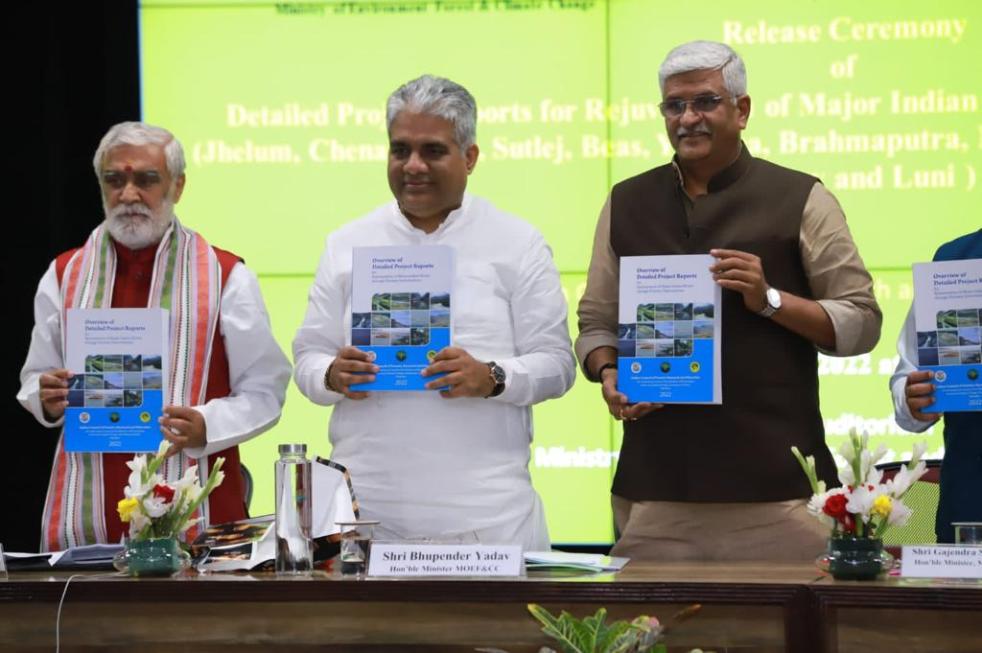
The government of India, through joint announcement of Union Ministries of Jal Shakti & Environment and Forests (such joint addresses are rather rare events) this week announced its plans to rejuvenate 13 major rivers of India (excluding Ganga but including some of the key Ganga tributaries!) through the limited activity of plantations is not every convincing on many counts. Firstly it is welcome to see that the government sees a role of forests as a hydrological asset. Unfortunately, this is clearly and completely absent in government’s forest management, both in policy and practice. If we see the forest governance of India through the functioning of the Forest Advisory Committee of MoEF, we see absolutely no sign of acknowledgement of this reality that forests are major hydrological assets. So for example when a decision is taken to allow diversion of major chunks of existing forests, there is never any discussion, assessment or counting of hydrological eco system services that forests provide. This is apparent in many cases, but most recently in the case of Ken Betwa project where the Supreme Court’s Central Empowered Committee too has acknowledged this reality. So again it seems government’s mind or heard does not seem to know what the tongue is conveying!
Continue reading “DRP 21 Mar 2022: Centre’s unconvincing Plan to rejuvenate 13 major rivers”
DRP 14 March 2022: 25th Anniversary of International Day of Action for Rivers!
14th March is celebrated as International Day of Action for Rivers since 1997 after the resolution at the 1st International meeting of People Affected by Dams in Curitiba, Brazil. At this meeting of Dam affected people from 20 countries (including India) it was decided to celebrate this day as the International Day of Action Against Dams and For Rivers, Water and Life. It is thrilling to see the celebration continuing and spreading on 25th anniversary of that meeting. The focus this years is on Rivers for Biodiversity. To illustrate how the celebration of this day has spread, in 2021, even during pandemic, the day was celebrated with over 120 events in 32 countries. For details, see: https://www.internationalrivers.org/take-action/international-day-of-action-for-rivers/.
Continue reading “DRP 14 March 2022: 25th Anniversary of International Day of Action for Rivers!”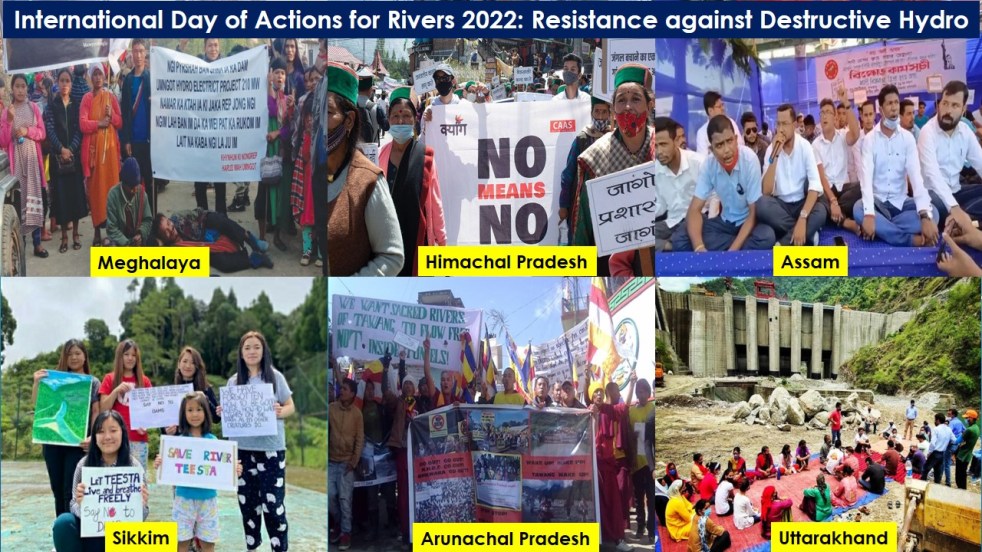
International Day of Actions for Rivers 2022: Resistance against Destructive Hydro
March 14 marks 25th anniversary of International Day of Actions for Rivers, a unique campaign dedicated to indigenous communities striving to protect and preserve their rivers from a whole range of destructive anthropogenic activities. The Hydro Electric Projects (HEPs) are among key threats affecting rivers eco-system and riverine communities greatly, in multiple ways.
The resistance against destructive, unviable HEPs growing stronger in India. Over the past one year there has been several protests against hydro projects across the country particularly in Himalayan states. On the occasion of International Day of Actions for rivers celebrating people’s resistance, SANDRP has compiled top ten stories of such community led opposition during the year, along with relevant additional stories. .
Continue reading “International Day of Actions for Rivers 2022: Resistance against Destructive Hydro”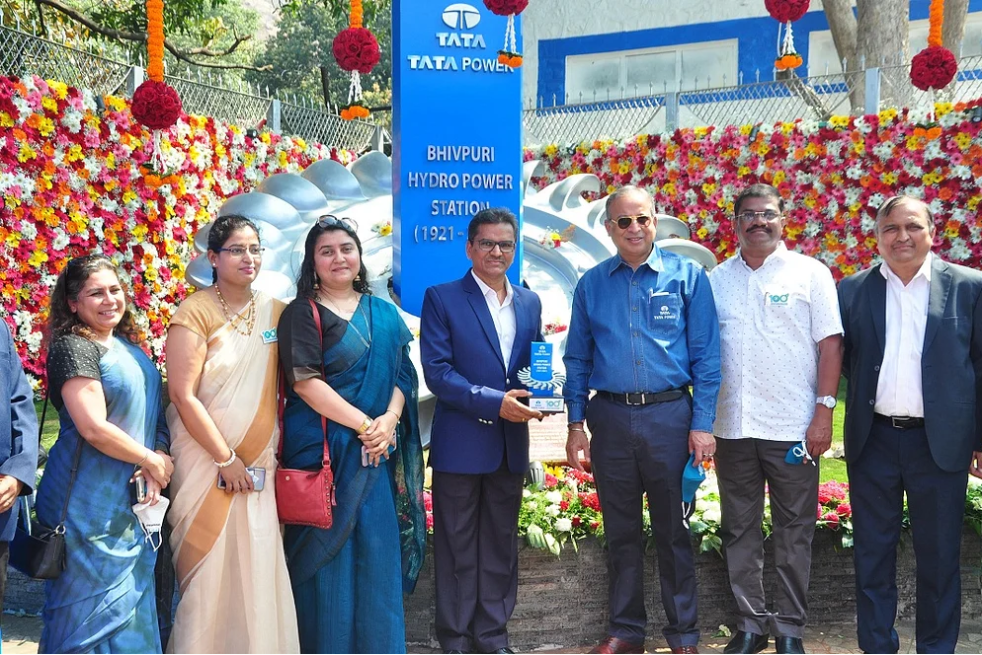
DRP 070322: As Tata celebrates century of Bhivpuri HEP operation, time to return the project to government and review it?
On March 5, 2022, Tata Power celebrated 100 years of operation of the Bhivpuri hydropower project in Raigad district of Maharashtra. It is possibly right time to consider by the government to ask Tata Power to return all the hydropower projects of Tata Power in that region to the government. Tatas got the right to develop these projects under a colonial agreement that handed over the public resources of land, river and rights over the project benefits to a private company like Tatas almost for free, for the company to profit from these public resources. This arrangement should have been reviewed long back, but possibly it is right time to review it now. Possibly it will be a good move in the year when India celebrates Azadi ka Amrutmahotsav!
The project transfers water from drought prone, water deficit Krishna basin to high rainfall area of Konkan. And such disastrous transfer continues even in drought years. It is high time this is reversed and the water is allowed to flow in the Krishna basin. From this perspective, the project also needs to be reviewed if at all it should continue to operate and if so under what terms and conditions.
Continue reading “DRP 070322: As Tata celebrates century of Bhivpuri HEP operation, time to return the project to government and review it?”
DRP 28 Feb 2022: Climate Change intensifying water cycle at double the predicted rate
This should be worrying all water managers, particularly in monsoon driven climate like India. New Research by New South Wales University Science and published in Nature in Feb 2022, based on changes in salinity of sea, a new method, says that the climate change is intensifying the water cycle at more than double the predicted rate. This is also likely to have huge impact on the rainfall pattern and possible increase in frequency of high intensity rainfall events and storms, besides other impacts. This will also have impact on the Probable Maximum Precipitation and Probable Maximum Floods in the dam catchments, and would mean the current spillway capacity of many of our dams wont be adequate. All this also means increased frequency high intensity floods and disasters. Unfortunately, CWC or state dam managers in India are not even looking at these figures. India also needs to urgently take up research into all these aspects for assessing India specific impacts.
Continue reading “DRP 28 Feb 2022: Climate Change intensifying water cycle at double the predicted rate”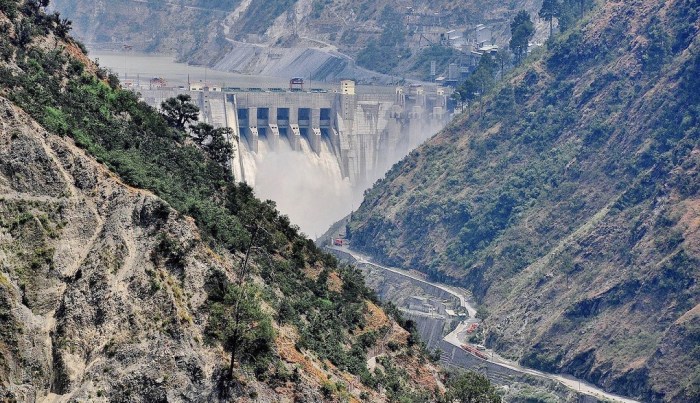
DRP 21 Feb 2022: UNVIABLE HYDRO STORIES FROM INDIA, BHUTAN, NEPAL, US
One of the key underlying theme of several stories this week is about more resounding evidence from several parts of the world including India (Kerala, Arunachal Pradesh, Kashmir, NHPC), Bhutan, Nepal, USA and Canada among others, that hydropower projects are no longer even economically viable, besides being socially and environmentally destructive and unacceptable. It is high time that our authorities wake up and realise this soon rather than spending massive amounts of scarce resources on such unviable projects that also work as force multipliers in the changing climate.
Continue reading “DRP 21 Feb 2022: UNVIABLE HYDRO STORIES FROM INDIA, BHUTAN, NEPAL, US”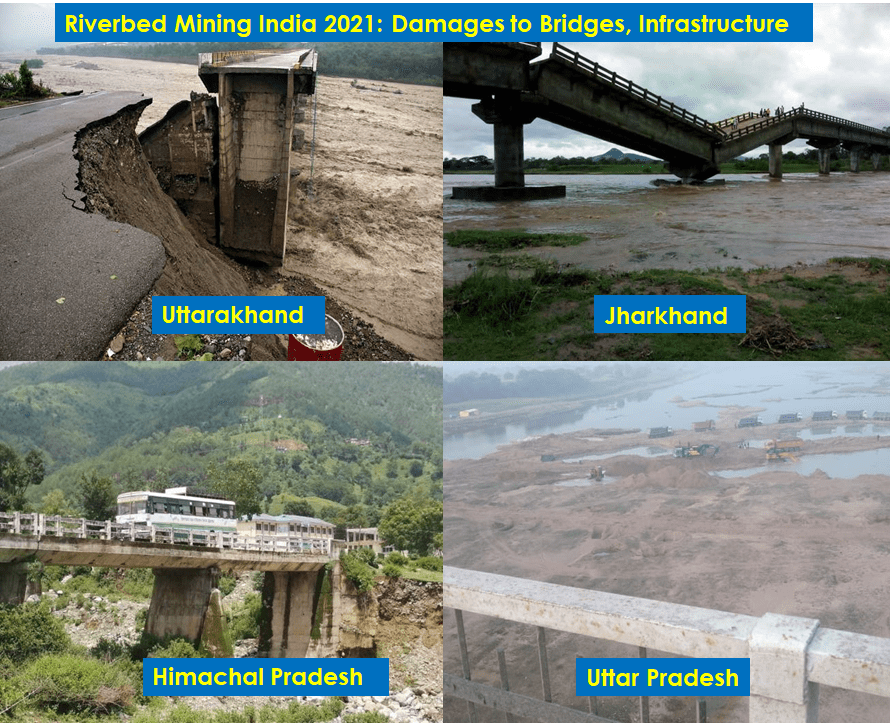
Riverbed Mining India 2021: 2 Bridges Collapsed, 23 Threatened
Riverbed mining activities in India has not only been affecting river ecology, geo-morphology in multiple adverse ways but also leading to collapse of crucial infrastructures along rivers. This includes dams, barrages, bridges, drinking water projects, embankments etc. In 2021, there have been several of such incidents particularly damaging or threatening the bridges across the country most of which we have tried to compile here.
Continue reading “Riverbed Mining India 2021: 2 Bridges Collapsed, 23 Threatened”
DRP 14 Feb 2022: Wake up call: Chairman of Supreme Court HPC Chopra Resigns
(Feature Image: Pillars of elevated road eating into Ganga’s actual riverbed at Rishikesh. Bhim Singh Rawat/SANDRP, 08 Oct. 2021)
The resignation of Shri Ravi Chopra, chairman of the Supreme Court appointed High Powered Committed to report about the implications and dimensions of the Char Dham Highway in fragile Himalayan region is yet another wake up call for all concerned, including the Supreme Court. Chopra has said that following the Dec 14, 2021 order of the Supreme Court in the Char Dham case, the panel “has been shattered”. Chopra’s resignation letter dated Jan 27, 2022 has only now being made public. The order of Dec 14, 2021 was not only contrary to the order of Sept 8, 2020, but also limited the HPC’s role even in monitoring to less than 30% of the road, that too when the Ministry of Road Transport and Highways have consistently ignored the recommendations of the HPC. Will the resignation have any impact on the apex court of the project or the MoRTH?
Continue reading “DRP 14 Feb 2022: Wake up call: Chairman of Supreme Court HPC Chopra Resigns”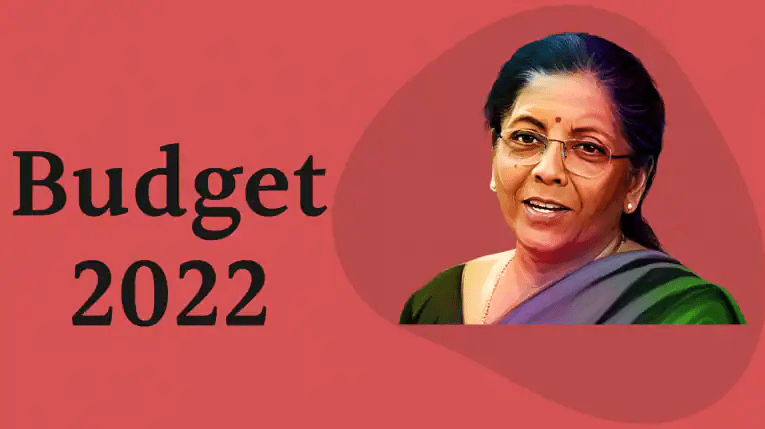
DRP 070222: Union Budget provisions for ILR inappropriate, shows disrespect to statutory clearances and processes
(Feature image source Money Control:- https://www.moneycontrol.com/news/business/economy/union-budget-2022-live-updates-nirmala-sitharaman-crypto-bill-rail-itr-pf-contribution-cryptocurrency-income-tax-news-custom-duty-relief-gold-etf-8006461.html)
The Union Finance Minister (FM) Smt. Nirmala Seetharaman in her budget for 2022-23 presented in the parliament on Feb 1, 2022 provided Rs 4300 Cr for the controversial Ken Betwa Project in Revised Estimates for 2021-22 and Rs 1400 Cr in Budget estimates for 2022-23. The KBP has not received the final forest clearance. In fact its stage I forest clearance conditions cannot be implemented without changing the project and its cost benefits and impacts. Its wildlife clearance has been questioned by the Central Empowered Committee of the Supreme Court of India and the comprehensive scathing report of the CEC Is yet to be heard by the SC. Its environmental clearance is under challenge before the National Green Tribunal. The hydrological figures that are supposed to provide the scientific basis for the project are neither in public domain, nor has it gone through any independent scrutiny. In this situation, the allocation of the funds for the project in the Union Budget and inclusion of a statement about the project in the speech of the President of India before the Joint Session of Parliament on Jan 31, 2022 are inappropriate. They seem to be timed in view of the upcoming Uttar Pradesh elections.
Continue reading “DRP 070222: Union Budget provisions for ILR inappropriate, shows disrespect to statutory clearances and processes” SANDRP