Dam Safety · Dams, Rivers & People · Hydro Power Projects

2025: Corruption in Dams and Hydro Projects in India

Continue reading “2025: Corruption in Dams and Hydro Projects in India”
Forest Advisory Committee · Free flowing rivers · Irrigation · Maharashtra · Ministry of Environment and Forests · Western Ghats

Dabhil Mauli: Stories and Struggles of a Small River in the Western Ghats

At the window of his new house, in a crowded suburb of Pune sits Aba Gawas. He looks out at the traffic and talks of his river Dabhil, more than 400 kms away from him. For years, Aba has fought hard to protect the river. He calls it Dabhil Mauli, a term of endearment reserved for mothers and deities. He is not keeping very well and longs to return to Dabhil Mauli. I realize with a sudden pang, rivers are home.

Continue reading “Dabhil Mauli: Stories and Struggles of a Small River in the Western Ghats”
Dams · Hydro Power Projects

2022: People’s Resistance against Unviable HEPs, Destructive Dams

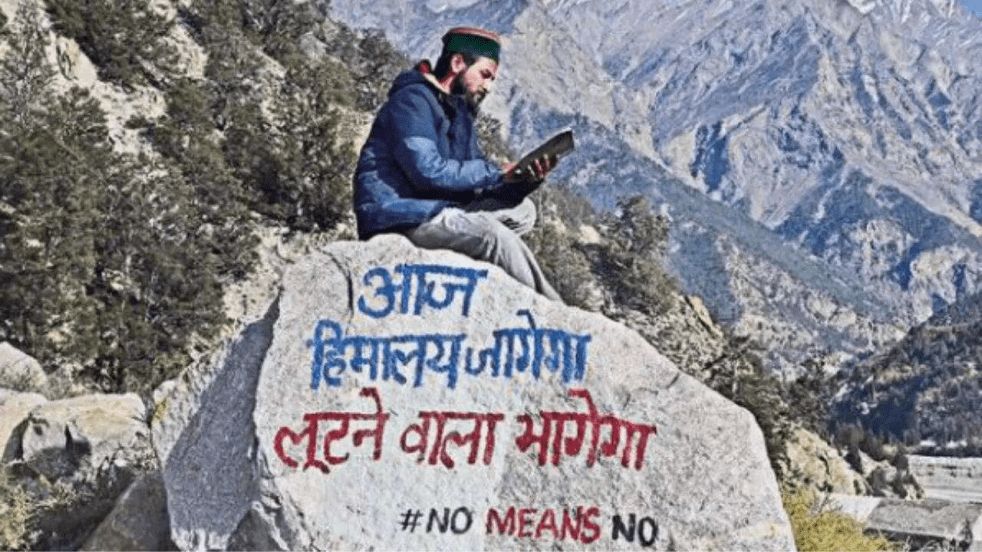
(Feature Image: No Means No Campaign message against hydro projects on a rock in Kinnaur. Source: ToI)

There have been many instances of opposition by local people, organizations and experts against unviable hydroelectric power (HEP) and destructive dam projects in 2022. Such instances of the resistance from across the country have been successful in a number of ways including leading to the funding agencies, corporate houses and government agreeing to withdraw from the project in many cases. This overview presents top ten stories highlighting successful opposition to hydro and dams projects in 2022 in India followed by some relevant reports on the issue. In first part of the annual overview, SANDRP has tracked the dam failures and dam induced floods incidents in India in 2022, along with separate report on unraveling of Polavaram project and another one on breaches of fly ash dams.

Continue reading “2022: People’s Resistance against Unviable HEPs, Destructive Dams”
Dams · Maharashtra

Maharashtra Water Sector Review of 2016: Revival of scam tainted dams

When the Chief Minister of Maharashtra told the state Assembly on July 21, 2015, “We pushed large dams, not irrigation” he had raised much hopes for the state with a fresh memory of worst ever dam scam and drought termed as “worse than 1972”.[1]

Even though the CM unequivocally said in the state Assembly “Large Dams are not the road ahead”, looking back at year 2016 reveals that the approach of the new government remained as large dam centric. Year 2016 in Maharashtra has been all about reviving the corruption ridden controversial irrigation projects. Continue reading “Maharashtra Water Sector Review of 2016: Revival of scam tainted dams”

Dams · Maharashtra

Tracing the Maharashtra Irrigation Scam: From 2012 to 2016

Above: Retaining wall of Gosikhurd RBC slid down from its location  Photo: Jan Manch

Aftermath of the irrigation scam exposed in 2012 in Maharashtra still continues. Roots of the scam were pointed out time and again by Comptroller & Auditor General of India (CAG) and also by several other committees set up by the Government. The scam was finally unveiled in May 2012 with a combined effort of several whistle blowers from inside & outside the government as civil society groups including SANDRP. Unjustified cost overruns, forged tenders, tweaking the norms of tendering process, incomplete projects laden with inferior quality work were brought to light and the unholy nexus of corrupt leaders, government officials and contractors became visible like never before.
Continue reading “Tracing the Maharashtra Irrigation Scam: From 2012 to 2016”

Marathwada

Release water sitting idle in Bhama Askhed Dam: It can help ameliorate drought in Solapur and Marathwada to some extent

Writing about drought in Marathwada can give a feeling of deja vu. But, what makes drought this year different is that we are writing about drought not in December or March or April, but in August, bang in the monsoon. Last monsoon wasn’t very generous to Marathwada, but the picture was much better than what it is today with dam storages at dismal 8% this year as against 26% this time last year. Marathwada had 344.5 mm rainfall as on Sept 3, 2014 (deficit of 37%) compared to 250.9 mm on Aug 28, 2015, with much higher deficit of 50%.  (Our detailed analysis of Marathwada drought: https://sandrp.wordpress.com/2015/08/18/drought-and-marathwada-an-oft-repeated-tragedy/)

On the 28th of August 2015, reservoir storages in Marathwada stand at 8%, with the largest Jayakwadi Dam at 5%, 4 dams at 0% (Mazalgaon, Majara, Lower Terna and Seena Kolegaon) and 3 more at less than 5% storages (Purna Siddheshwar at 1%, Yeldari at 3% and Manar at 3%). Of the average June-August rainfall of 525.2 mm, Marathwada has received only 250.9 mm, 50% of the average so far. Kharif crop is lost for most and Rabi is under cloud.

By now, the issue is not only about irrigation, but drinking water for humans and cattle.  How can this situation improve? Where can the region get water from? It seems even retreating monsoon will help only to an extent now. Dams in Nashik and Nagar districts which are upstream of Marathwada, themselves have low storages, with Nashik region at 45% as against 69% storage last year. Still, Bhandardara Hydroelectric project in Ahmednagar District, which is about 74% full with about 224 MCM of water and can afford releasing some to the downstream Jayakwadi and areas beyond. (It is not clear if the Ghatghar pump storage project, upstream from Bhandardara HEP, is actually operating in pump storage mode or generation mode and releasing water to the west, in which case it needs to be stopped). It will be better to take the decision about such releases soon, without waiting for a major conflict to arise. MWRRA needs to proactively perform its main duty of equitable water distribution, without waiting for October end, till which time any releases will become hugely contentious.

Similarly, dam storages in Pune Division are generally low at 52% as against 89% last year. However, there are a few dams which are literally sitting idle with a lot of water.

One such Dam is Bhama Askhed, which has a whopping 86% storage now at 187 MCM.

In April 2013, based on an order from Hon. High Court of Mumbai, 84.9 MCM (3 TMC) water from this very same Bhama Askhed Dam for the parched Ujani in the downstream. Back then, MWRRA was dysfunctional. The Authority could not take any decision on water releases from upstream dams even on court orders as it was simply non-functional then, with almost all of its posts vacant! (Read our detailed piece on Bhama Askhed: https://sandrp.wordpress.com/2013/06/08/dams-as-pawns-bhama-askhed-pune/)

Bhama Askhed Reservoir Photo: Parineeta Dandekar

Why water release from Bhama Askhed makes sense now

Bhama Askhed Dam on Bhama River, tributary of Bhima River, epitomizes nearly all the problems of Maharashtra Water Resources Department. It has seen huge costs escalations, delays in its construction, it has not rehabilitated the 7000+ people that it has displaced. Most of the oustees are today without a reliable source of drinking water, irrigation or land based rehabilitation.

But the most damming fact is that it has absolutely no canal network.

The dam with live storage capacity of 217 MCM (7.5 TMC) was to have two canals: a right bank canal (RBC) of 105 kilometers and a left bank canal (LBC) of 14 kilometers. Construction on the dam started in 1995. When I visited the site in May 2013 to observe the impacts of High Court order, I saw that canal-work has not been undertaken even according to the claims of the WRD in the White Paper.

Right Bank Canal is barely 18 kilometers complete that too, in disjoint patches, making any use impossible. Left Bank Canal work is not even initiated. The 18 kms of Right Bank Canal is a dead investment as the canal is not even connected to the dam: that part is still not constructed.

In short, Bhama Asked dam does not irrigate a single hectare of its envisioned command till date. It has not used an inch of canals.

Bhama Askhed received administrative sanction in 1992 and was to irrigate 37 villages in Khed, 18 villages in Haveli and 9 villages in Daund talukas of Pune district with a total command area of 29,465 hectares, as per the White Paper on Irrigation Projects brought out by the WRD. All of its original command remain unirrigated, 20 years after undertaking the project.

I talked with the Deputy Engineer of Bhama Askhed on Aug 28, 2015 and he told me that the situation I saw in 2013 still prevails. No irrigation in command, no new work on canals initiated, no progress in canal work. The reason being that according to a Government Resolution (GR) of 2011, about 1.3 TMC water from Bhama Askhed has been allocated to Pune Municipal Corporations. Pimpri Chinchwad Municipal Corporation also wants roughly same quantity of water share from the dam. There are many issues with the GR and this allocation. But leaving that discussion aside for now, the fact remains that none of these Municipal Corporations are taking water from this dam at this moment and will not do so this year. Pune’s ambitious scheme of getting water from Bhama Askehd, funded by the erstwhile Jawaharlal Nehru National Urban Renewal Mission (JNNURM) remains unrealized and incomplete.

Deputy Engineer of Bhama Askhed Division told me that it will take at least 2-3 years more before these schemes materialize.  He says “What’s the point of making canals if the water is anyway to be allocated to cities? As it is the first priority is for Drinking Water.”  There is a huge irony in equating the unsatiated water demand of these metros with protective, livelihood irrigation needs of the downstream region. Pune or Pimpri Chinchwad Municipal Coporations waste and pollute water with impunity and have not taken  any credible steps for using available water effectively. But this is not the time to raise all this with the officer.

When I ask him why water is not being released from this idle dam to the downstream which is suffering right now? “In any case, City allocations will not happen this year as you say”. He brushed this off saying that it needs to be a policy decision.

While touring Marathwada, Chief Minister Devendra Fadnavis has publicly accepted that water needs to be released from the upstream dams for the region now. But theer are very few dams in the upstream which can do this. At the same time, a simple mention of sending water trains from Pandharpur (in Solapur district, on the boundaries of, but not in Marathwada) to the parched Latur District has sparked a political conflict in Solapur with one group saying they will not allow a drop of water to go from Solapur. It is understandable to an extent as the largest dam in Bhima Basin, the Ujani Dam in Solapur, is below dead storage already and the prospect of a whole year with severely rationed water availability is prompting aggressive reactions.

At such a critical time, any release from Bhama Askhed, if carefully monitored, can reach Ujani directly and help to a considerable extent. There needs to be very strict monitoring of this release, ensuring that it is not siphoned off enroute or once it reaches Ujani. Any groundwater recharge that may happen along the way need not be grudged. It will help someone, rather than that water sitting idle in Bhama Askhed reservoir, open to evaporation losses.

From Ujani Dam, water can reach fringes of Marathwada through Seena-Madha Link Tunnel, which reaches Paranda Taluk of Osmanabad. Water from Ujani will also reach parched cities of Osmanabad and Latur for drinking water through pipeline supply. If only the half-completed Shirala Lift Irrigation scheme was completed by now, this water could have helped a different part of Osmanabad. But Shirala is a part of the Dam Scam. If at all trains need to be deployed for sending water to Latur, or water needs to be reserved in Ujani for drinking water needs of Solapur like 2013, additional water in Ujani from Bhama Askhed will be invaluable.

But for this to be effective, we need the will and discipline from both the politicians and the communities along the river. We simply cannot afford this water being siphoned off for water hungry sugarcane cultivation, as is happening with Pune division dams, in collusion with some officials.

So the water sitting idle in the Bhama Askhed, if released, right now can ameliorate the problems of a deeply troubled region. If water is not released now, but is released closer to cane crushing season in Oct-Nov-December, we will know that the real beneficiaries are not thirsty people, but sugar factories.

We request the Government of Maharashtra and the Maharashtra Water Resource Regulatory Authority to order releases from Bhama Askhed urgently along with stoppage of westward diversion of Krishna basin water by Tata and Koyna dams and to devise a plan to monitor and utilize these releases most effectively for this drought hit region.

parineeta.dandekar@gmail.com, SANDRP

Climate Change · Dams · Maharashtra

We pushed large dams, not irrigation, this has to change: CM Fadnavis’ Assembly Speech

“Maharashtra has the country’s 40% large dams, but 82% area of the state is rain fed. We have moved away from our vision of watershed and conservation…We did not think about hydrology, geology and topography of a region before pushing large dams everywhere. But this has to change”

These are not the words of an activist or water researcher. This was said by Maharashtra’s Chief Minister Devendra Fadnavis, during Monsoon Assembly Session of Maharashtra on 21st July 2015. Continue reading “We pushed large dams, not irrigation, this has to change: CM Fadnavis’ Assembly Speech”

Maharashtra

Open Letter to Maharashtra Chief Minister Devendra Fadnavis

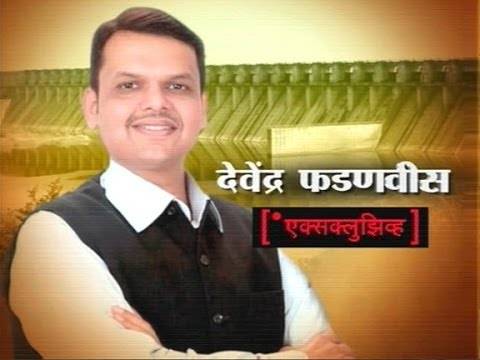
Above: CM Devendra Fadnavis Photo from: IBN Lokmat

Dear Chief Minister of Maharashtra,

Congratulations for becoming the Chief Minister of one of the progressive States in the country.

We would have felt better if this greeting was without the smudge of Voice Vote in confidence motion. We would have liked to see that while coming into power, you and your government had no links whatsoever with tainted politics of National Congress Party, which was named in a scam that affected Maharashtra’s weakest, but in many senses, its bravest populace: its farmers. But Voice vote has raised a question mark on this. Leader of your party had called NCP as Naturally Corrupt Party!

Nonetheless, you are known to have a great public image as a proactive, scholarly leader with integrity and intelligence.The last CM we had also had a scholarly and clean image, but after resigning from the CM’s post, which he held for more than four years, he admits to his mea culpa that he did not take the firm action in the irrigation scam because he wanted to save his government from collapsing. Maharashtra’s people, besides his own party, paid the price for this.

The crucial qualities the state seeks right now as it stands on the crossroad of political upheaval and natural calamities are not only a clean image, but forthrightness, commitment to democratic & accountable governance and, more importantly, capacity for an independent and clear judgement which is not swayed by the orders of higher ups or peers.

Natural calamities made worse by government’s mismanagement and inaction have racked Maharashtra in the past few years. Right on the heels of the dam scam, came the 2012-13 drought, dubbed by some (somewhat erroneously) as the worst drought in past forty years. After this came the delayed rains, droughts and excessive rainfall in Vidarbha, the hailstorms of February and March 2014, several agricultural diseases, crash of market prices of agricultural produce and fruits. In July 2014, the Malin Tragedy underlined how vulnerable, unprepared and fragile is our Western Ghats Region. Even now, Vidarbha region is reeling from late rains and extremely poor yield of soybean.

The calamities have affected the social and political milieu of the state; they have also literally broken the backs of its farmer. You have experience in disaster management and can appreciate how meagre our response has been to the natural calamities. To the manmade calamities, too, our response has been far from satisfactory. After more than two years after the so called exposé of the irrigation scam, we still have not brought a single irrigation official or politician or contractor to book. This scam and the sheer callousness of Congress-NCP government in handling the issue was one of the main factors behind its collapse. BJP did play an important role in following up with the issue in several parliament sessions and also with the media, but its actions and demands lacked conviction and seemed to save some of the culprits that were close to the BJP.

Irrigation Scam

Isn’t it surprising that being an opposition for 15 years, the BJP played such little real role in unearthing the scam? In fact, it was reported that when some people approached Nitin Gadkari with evidence of illegalities and irregularities, they were told that he is unable to take action against Congress–NCP as “Woh hamare char kaam karte hai, aur hum unke char kaam karte hai”.

The scam came into focus due to efforts of the then-serving chief engineer of Maharashtra Engineering Training Academy (META), Vijay Pandhare, media reports, CAG, courts, civil society and activists of the then-India Against Corruption (later renamed Aam Aadmi Party or AAP)—Anjali Damaniya, Mayank Gandhi, and others. The sheer extent and the impact of the unprecedented scam shocked the nation, after spending more than Rs 70,000 crore for over 10 years there was practically no increase in area under irrigation in Maharashtra. It needs to be remembered here that the scores of mega irrigation projects which were sanctioned and received their first administrative approval even without requisite water availability studies were initiated in the period when Sena-BJP was in power.

It needs to be acknowledged that Eknath Khadse, as the leader of opposition, and you, played a significant role in following up on the scam and pressurising the government.

At the same time, there were some notable contractors, close to BJP or even MPs and MLAs of BJP who were reportedly involved in the scam. Notable examples include Ajay Sancheti of SMS Infrastructure who is also the permanent National Executive Committee Member of the BJP. Media reports showed that Sancheti was not only implicated in Irrigation Scam, but in coal block allocation scam and Adarsh scam, too!

Damaniya, member of AAP, showed through RTI that Sancheti bagged 10 contracts from VIDC worth more than Rs 3,000 crore between his older company, new company and joint ventures with others (in 2005, Sancheti’s firm, Shaktikumar M Sancheti Ltd, changed its name to SMS Infrastructure Ltd and got a fresh certificate of incorporation, Vidarbha Irrigation Development Corporation was informed of this name change. But the two companies continued to exist together, bagging contractor between them and also additionally). These include almost all big projects in Vidarbha, including Gosi Khurd, Lower Penganga, Purna Barrage, Wardha Barrage, and Pedhi Project. This was when awarding more than three contracts to one contractor was illegal. Rules were bent, huge mobilisation advances were given, scope of work was increased and cost escalations were approved to help contractors. But BJP did not seem to take any action about this.

In case of BJP MLC Mitesh Bangadiya, it was his company MG Bangadiya Infrastructure which constructed the hugely flawed 23 left bank canal section of Gosi Khurd Project, which was recommended for complete demolition by Mendhegiri Committee in their report.

It is unfortunate that BJP took no action in this regard. It is also reported that in the midst of these exposures, it was Gadkari who specifically wrote to the water resources ministry at the Centre and sought early release of funds for these very contractors. It was stated that when BJP submitted “bullock cart full of evidence” to the Special Investigation Team headed by Madhav Rao Chitale to investigate the scam, incriminating evidence against these two groups were left out.

We hope that once in power, you will immediately order a judicial or CBI probe into the scam and full enquiry into the contractors who benefitted out of it, including the ones close to BJP, as also demanded by others.

SIT and White Paper

There was a need to reject the SIT Committee Report under the chairpersonship of Chitale as it was not an SIT—it had diluted TORs and Chitale is known to biased in favour of such projects, the department bureaucracy and status quo. The constitution of the committee was only a ploy to buy more time and show a semblance of taking action on the scam. We hope that you do order an immediate CBI probe into this or a judicially appointed SIT with independent members having track record of being able to take on issues upfront, with clear TORs and with power to summon and question.

The white paper brought out by the Water Resources Department (WRD) was also a shield for guilty to hide behind, and, unfortunately, other political parties, including BJP, failed to critically analyse it.

  • We hope that after coming to power, you will hold public consultations on the irrigation scam, white paper, at the dams in question to understand the local issues and real situation. There is also a need to include several dams left out of the white paper.
  • Post facto analysis of the performance and impacts of large dams is a need for the state as we continue to hanker behind more such projects for political and contractor benefit. Maharashtra, with the largest number of big dams in the country, has one of the lowest areas under irrigation.
  • We hope that you will take action against those involved in the projects named in the SIT Report (like Gosikhurd), responsible officials, ministers and contractors who benefitted unduly from the scam. Work on all such projects should be suspended till there is logical end to scam issue.
    Equity in water distribution

Maharashtra has the nation’s largest water infrastructure in terms of projects completed. There is a need to use this existing infrastructure in an optimum way for the benefit of the poorest, neediest, farmers and in a sustainable, equitable and democratic way.

  • We hope the new government will support equitable, sustainable cropping pattern, scrap secretive diversions to urban areas, industries and unplanned water intensive crops from dams meant for agriculture, and dismantle bodies like High Powered Committee immediately.

Environmental Governance

CAG report on irrigation projects in Maharashtra 2013-14 has exposed that works of more than Rs 7,000 crore were initiated by the WRD on nearly 249 projects without requisite forest and environmental clearances. Not only did it result in locking thousands of crores of public funds, it also damaged the meagre forest cover and environment of the state without justification or informed decision making process.

  • We hope the new government takes immediate action against projects mentioned unambiguously in CAG report and officials who initiated such projects.

Implement Gadgil report on Western Ghats

The Coalition’s stand on Western Ghats report under the leadership of Madhav Gadgil was escapist. The misinformation spread about Eco Sensitive Zone and the push for self-benefitting industries in the Konkan region seems to be one of the primary reasons for Narayan Rane’s defeat.

  • We hope the new government accepts the Gadgil report without losing more time and takes steps as per the report to democratise environmental governance in the Western Ghats. As Gadgil has reiterated many a time, the report is not a blueprint but a framework which can be modified by the people themselves.
    De-politicise sugar

Depoliticize Sugar

Water politics of Maharashtra is linked to the sugar politics. We grow sugarcane in the most drought affected regions, benefitting generations of political masters of NCP and Congress.

Maharashtra’s sugar crop is most inefficient user of water as per a study of Commission for Agricultural Costs and Prices (CACP). Although the sugar barons make the right noises about working for farmers’ benefit, that is a lame argument when you take into account thousands of poor farmers who are deprived of ANY irrigation benefits because of concentration of water in the hands of the sugar lobby. Apart from creating deep schisms in the social fabric of the state, it is also making the cane farmer vulnerable to climate change and the whims and fancies of sugar barons. Per tonne rates of cane are not commensurate with the cost of water, labour and fertilisers. Significant to note here that factories in Vidarbha belonging to politicians like Gadkari reportedly offer the lowest cane rates in the state to the farmer at around Rs 1,650 tonne when the average rate are about Rs 2,200 tonne.

  • There is a need to break the sugar shackles chaining the water and agriculture sector, to give more autonomy to the proposed Sugar Development Board, with more farmers on board, not sugar barons. There is also need to stop new licences of sugar industries in the drought belt; at present, the Sugar Commissioner has no such powers. Flow irrigation to sugarcane needs to be stopped, audit of sewage treatment of sugar factories needs to be carried out and the factories have to be made zero discharge, full water reuse models. SANDRP has witnessed that even factories of powerful politicians do not have functioning effluent treatment plants despite sugar industry being in the grossly polluting category (GPI).
    There was a time when the people concerned turned a blind eye towards ills of sugar factories as they were the engines of cooperative movement in Maharashtra. That is nearly in the past now. More and more cooperative sugar factories, set up with money from government, farmers and shareholders became dens of political manipulation and are being converted into private mills at a price which is a joke of their valuation. We have 168 cooperative sugar factories, but about 36 are being liquidated, 26 have been converted from cooperative to private entities and here too there is a strong political presence.
  • We hope that once in power, BJP conducts an audit of sugar industry including water efficiency of sugarcane in Maharashtra with respect to water use, release of water for sugarcane by dams, especially in drought affected Marathwada and western Maharashtra like Ujani, Lower Terna, Manjara, Mazalgao, lift irrigation schemes on Ujani and other scarcity-hit rivers, etc.
    Climate action plan

Action on Changing Climate?

While disasters like the February 2014 hailstorms affected more than 10,000 farmers in vulnerable Marathwada and Vidarbha, we still do not have a State Action Plan on Climate Change which should have been ready years ago through people’s participation.

  • We look forward to your government to complete work on State Action Plan for Climate Change in a community driven, bottom-up, transparent and democratic manner.

The problems of climate becoming more uncertain, extreme weather events increasing in frequency and rainfall failing when due, protective irrigation is becoming a dire need. Despite absence of irrigation, dryland farming and horticulture in limited water is thriving in Maharashtra. The recent example is of the phenomenal success of pomegranate cultivation which is nearly completely on drip and is grown in some of the driest regions of the state. However, the farmers still suffer losses in the absence of processing plants and state support, which is skewed in favor of sugarcane. Same is the case with oilseeds like groundnuts, coarse millets like jowar and bajra which offer livelihood and nutritional security.

We look to the new government in supporting marginal farmers and other farmers who grow such crops as ambassadors of climate change adaptation. We also hope your government will encourage system of rice intensification for various crops.
Urban areas continue to guzzle more water, polluting and killing rivers in their wake. Unfortunately, State Pollution Control Board (SPCB) does not have a single success story to its credit. It has not cleaned a single river since its inception although receiving hundreds of crores every year from state as well as the Centre.

  • We expect the new government to conduct an immediate and open audit of the work of Maharashtra SPCB and fix responsibility for this resounding failure, order complete change of the functioning of the SPCB to make its governance directly accountable to the victims of pollution and also involving participation of the vulnerable communities and independent groups.
    Revive rivers.

River Rejuvenation

In your city, Nagpur, too, the Nag River is chronically polluted and reduced to an open drain. It could not be rejuvenated although you were a Mayor of the city twice. Now there is a move to denotify the river, which will aid setting up category red industries at its very origin, killing the river. We don’t see any political party talking about this issue.

We hope you will stop this killing of rivers as your government at the Centre has been saying that river rejuvenation is their priority, we hope it is yours too.

Incidentally, Nagpur is one of the very few cities in the state with an operational PPP water supply model. There have been too many problems and protests on this issue, we will not go into the details here, but it is again notable that the Orange City Water Supply Limited is a joint venture between Veolia and Vishvaraj Infrastructure, which is closely linked to BJP leadership. There have been no post facto studies of the efficacy of this model and the way through which tendering was done was suspicious.

  • We hope the BJP Government will democratise the governance of water supply and waste water department of the municipal bodies rather than pushing for water privatisation.
    Innovative solutions

Encouraging Local Initiatives

The 2012 and 2014 drought saw some inspiring local initiatives from farmers across the state in terms of working on new watershed structures, desilting older structures and improving distribution systems. These emerged as more equitable and even efficient solutions than larger dams. A compilation of success stories with a clear view to support local led water conservation efforts will be a shot in the arm for the water sector in Maharashtra. Although the past government tried to support smaller structures by passing government resolutions (GRs) and building strings of cement nalla bunds, watershed management is more than just a quick fix solution.

There are several other issues ailing the water-environment-agriculture milieu of the state. The Congress-NCP alliance in power earlier was lampooned because of the absolute autocracy practised in the party, the insult of public opinion and concerns, and the leaders of the coalition proving too weak to steer the state into secure and transparent governance.

We hope that through you, Maharashtra will be astride on this path. We hope that together we can work towards equitable, sustainable, corruption-free, pro-people development and governance of Maharashtra.

All the very best.

Parineeta Dandekar parineeta.dandekar@gmail.com

(A slightly edited version of this was published in Down to Earth. Please find it here: http://www.downtoearth.org.in/content/open-letter-devendra-fadnavis)

CAG Report · Maharashtra

Clean chit by the Chitale SIT Report on Maha Irrigation Scam?

 Ye jo Public hai, Ye sab Jaanti hai!

The much debated SIT Committee Report headed by Dr. Madhavrao Chitale was finally tabled in the State Assembly on the last day of the Assembly in the evening on the 11th June 2014, reading it one gets a feeling of déjà vu. Following the uproar due to unprecedented dam scam in 2012, GOM constituted Special Investigation Team (SIT) on the last day of the promise, on 31 December 2012. Members of the Special Investigation Team (SIT), chaired by Dr. Madhavrao Chitale include AKD Jadhav, retd. IRS official and also the past Chairperson of MWRRA, Dr. Krishna Lavekar, Retd. Agriculture Commissioner, GOM and Dr. V. M Ranade, Retd. Secy, Command Area Development, WRD, GOM.

The committee report was submitted in March 2014, after some extensions and was kept under wraps for past three months by the government possibly keeping the Loksabha elections in mind. Not that it mattered as Congress and NCP fared terribly in Maharashtra, winning just 6 of the 48 seats in Maharashtra, and the irrigation scam seems to have had a massive role in this. Now the government, especially NCP’s former and current water resources ministers Ajit Pawar and Sunil Tatkare are claiming that they have got a clean chit from the report, keeping the State Assembly elections in mind.

These claims will not help the political parties. On the other hand, they are likely to harm their political prospects.

But first let us look at some basic aspects of the report. Does it really give a clean chit to the political parties? Is it above shortcomings? Will it play an important role in overhauling dam-centric water management in Maharashtra?

TORs of SIT The TORs of the SIT, laid down by the Water Resources Department of the GOM were as follows:

  1. Investigate irrigation potential created, actual irrigated area (pratyaksha sinchit kshetra) and water use for non-irrigation use. In the actual irrigated area, find the irrigated area by wells, farm ponds, water conservation department and water resource department
  2. To ascertain if the revised administrative approvals given to projects by Irrigation Development Corporations (IDCs) are according to the existing rules and regulations.
  3. Investigate the reasons for delay in completing projects
  4. Investigate reasons behind change in scope from original administrative approval and increase in cost due to change in scope
  5. Suggests measures to increase the usefulness of Lift Irrigation Schemes (LIS)
  6. Suggest ways for quality enhancement in WRD
  7. Suggest ways so that project is completed in said time span and costs
  8. Suggest measures to increase irrigated area
  9. If irregularity found in the inquiry, investigate it, fix responsibility and suggest suitable action

Are TORs inadequate? The Chairperson Dr. Chitale has reiterated over and over again, in face of requests and submissions from media, civil society, petitions filed in court (there are at this moment about 23 PILs (Public Interest Litigation) filed in Bombay High Court about irrigation projects between 2009-2013), that it was not a part of their mandate to look at the modus operandi of the corruption involved in the scam, in the process of calling tenders and accepting contracts. As per section 9.8 of  SIT report, issues it has NOT looked at include: Misuse of clause 38 in tenders for addition of component in the main tender without re tendering, Sanctioning mobilization advances without appropriate justification, Manipulating estimates for accepting tenders, inclusion of unjustified and unrelated additional expenses and Dam Designs made by contractors. The Committee says that these irregularities are outside their TORs but there is ‘scope for doubt’ and the “government would need to investigate into this separately within the legal boundaries.” This is not true and the SIT should have gone into these issues, particularly when it has found ‘scope for doubt’ in these issues because per se the TORs are broad enough to include these.

The committee also says that going into these would have been difficult due to absence of man power, resources and time at the committee’s disposal. However, looking at the centrality of these issues in the Dam Scam, due to which the committee was set up in the first place, and the respect Dr. Chitale garners in the WRD (Water Resources Dept) and political circles, it would not have been impossible to get the TORs modified if at all necessary and very easy to get additional resources. But there is no evidence of the committee asking anything in this regard, indicating that this was not even attempted by the committee.

Apart from that, the committee could have addressed many of these issues being in their TORs as corruption, political-influence and contractor-led processes have affected nearly all the aspects covered in the TORs. Not looking at these issues has resulted in a situation where Dr. Chitale says one of the main reasons for cost escalation of projects has been rise in market prices. Now consider this: costs of Kondane dam increased from Rs 57 crores to Rs 614 cores in just six months, and market prices had nothing to do with this. There are several such examples, where cost escalations, time increase, technical problems had nothing to do with the issues looked at by the committee. The  exclusion of political and corruption issues have affected the quality of conclusions and recommendations of the report.

The committee notes that it relaxed the TORs in accepting submissions from organizations and NGOs, keeping the bigger picture in mind. Strange to see that committee did not think of doing so in issues related to corruption and political links.

CONCLUSIONS OF SIT:

Some of the good conclusions:

  • Environmental and Forest Violations: The report says that there are 2 projects without EC (Environment Clearance) and 31 projects without FC (Forest Clearance) and which did not get FC for more than 5 years. Without clearance, work on some projects stopped midway or dragged on, resulting in a dead investment. If work was started only after permissions, these expenses could have been avoided and money instead could have been spent only on those projects with permissions. The SIT has recommended strict action against officials who floated tenders and issued work orders without these clearances, which is welcome.
  • It has also recommended action to be taken against officials responsible for starting working without acquisition of land for the project as well as canals. (9.3.2)
  • Initiating work without detailed design: Recommends action should be taken against the officials. (9.3.3)
  • Initiating work in the absence of finance: Committee recommends Strict action against IDC, Chief Auditor and Executive Director of the IDC (9.3.4.) which started work without requisite finances.
  • River plugging without creation of irrigation potential: There are around 23 projects where the river plugging (ghal bharni) was done but there was no irrigation potential created then or even two years later. Committee recommends strict action against officials.
  • Projects with serious faults, suspicious transactions: Committee recommends that projects with multiple flawed parameters should be checked by an independent committee and recommends action against Executive Director for the respective IDC. Such projects include: Ujani, Krishna Koyna LIS, Seena Medium Project, Bembla Project, Lower Painganga, Jigaon, Kurka Wadoda Project (TIDC), Sulawade, Bodhawad Praisar, Lower Tapi, Mukatinagar LIS, Manjra, Vishnupuri (Godavari Barrages), Brahmangaon LIS, Upper Godavari Project, Krishna Marathawada project
  • The committee also notes serious irregularities in the following projects: Dhamani (Kolhapur) Kukadi (Seena Tunnel), Jigaon (Buldana, Kondane (Thane) and Chanera (Thane) and recommends special attention and investigation into these projects.

But many conclusions are flawed, unacceptable and some are even illegal:

  • Irrigated area in the State: The report relies only on data collected by WRD. It also states that WRD collects seasonal field data. However, this is not true. The WRD currently has no system in place for admeasuring irrigated area. Irrigation Status Reports and Benchmarking reports are also not available for the past three years. Chitale Committees’ conclusions based on data from WRD are not reliable.
  • TOR 9: Investigation and fixing responsibility The committee holds the entire state machinery including the Planning and Finance Department for not providing enough checks and balances on the work of WRD and classifies most blunders as “systemic errors” (9.04). While fixing clear responsibilities of these sectors could have helped, sweeping generalizations and repeated conclusion of “systemic errors” ensure escape route to all offenders.
  • The punishments are classified into mild and strict punishments, but even strict punishment is limited to departmental inquiries. The committee has also taken the circuitous route of not naming the offenders, but alluding to their posts and duration. Even this is extremely vague. So while the committee refuses to look at most contentious issues, it also refuses to name offenders and also does not name political hand behind the decisions. It does not seem to be an investigation team in any way. Also, when fixing responsibility is a part of the TOR, the committee cannot shirk from the responsibility and state that it will not name offenders. This is a public issue and committee does not have the privilege of overriding the TORs for its idea of leniency.
  • The committee says that investigation into irregularities indicates that major driving force has been stress to reduce backlog, pressure from ‘local’ political leadership, centralized decision making in the IDCs and conscious ignorance of rules and social responsibility. This lenient generalization washes any responsibility from the political leadership of the state and the contractor-engineer nexus.
  • Section 10.9 of the report states that the blunders committed by decision makers were not intentional and were mostly ‘errors of judgment’.
  • MWRRA: Committee reports that 12 Projects are without MWRRA permission. Mild action is recommended against responsible Executive Director. (9.4) While the committee recommends action even against Finance and revenue departments, it does not mention any strict action against MWRRA, which, as pointed out by the CAG Report 13-14 cleared 189 projects during 2007-2013 though the State Water Resource Plan, based on which the projects were required to be cleared, was not prepared, violating the MWRRA Act (2005). Significantly, CAG mentions that: “Authority also failed to perform its role as a regulator as envisaged in the Maharashtra Water Resources Regulatory Authority Act, 2005.”
  • On functioning of IDCs The report states that in 2004, at a meeting of the governing council and IDC members, it was decided that the rights of giving Revised Administrative Approval (RAA) will be given to the Chairperson (WRD Minister). Only a few members of the governing council were present for this meeting. The SIT notes that while the IDCs should have been going towards decentralization, this was a regressive step towards centralization and concentration of power and authority, however, the committee does not suggest ANY action against the Chairman!
  • As per a 2003 GR (Government Resolution) regarding Krishna, Godavari and Vidarbha IDC, all rights to provide RAA were given to the Chairperson and Executive Director by the Governing Council of the IDCs, thus concentrating power (and also scope of corruption related to RAA hikes).
  • CAG Report (2013-14) says regular monthly meetings of the Governing Council of IDCs were not held, in violation of Maharashtra Irrigation Development Corporation Acts. The Chairman (WRD Minister) is directly responsible for this. But the SIT Report does not mention this!

Action Suggested with respect to Specific Projects:

GoseKhurd: There should be action against respective officials who did not visit the canal works due to which concretization was to be done again. The SIT does not suggest any departmental inquiry or anything new other than the recommendations of the Mendhegiri committee report.

Barrages on Godavari: Several question marks have been raised about these projects, their utility and safety. Kulkarni Committee appointed to look into irregularities has come up with strong measures against defaulting officials. But rather than upholding Kulkarni Committee’s recommendations, the SIT asks for constituting one more committee to look into the irregularities!

Illegal suggestion of SIT Shockingly the committee says: (Page 210) for Human Project Forest and Forest Clearance was incorporated in project tender and recommends “it would have been good if a separate tender was issued for this” This is very disturbing. The entire process of Forest Clearance happens through the State Government Forest Department and there is NO role for any other agent here. Any such role indicates violation of the Forest Conservation Act, and SIT recommends precisely such a violation!

Similarly, Environmental Appraisal is supposed to be an unbiased process looking at the social and environmental impact of projects. There is again no scope for tendering here. The SIT’s recommendations in this regard are illegal.

WHY THE PEOPLE OF MAHARASHTRA WILL REJECT THIS REPORT

After pursuing the 600 pager main report and its 32 pager Executive summary made by WRD[1], and keeping in mind all the other available information, one is left with little doubt that Chitale Committee has not only refused to unravel the truth, but has tried to protect political parties.

The unprecedented Dam scam in Maharashtra highlighted massive corruption in tendering process, a collusion of politicians contractors, engineers and bureaucrats, shockingly poor quality of work endangering lives of people in the downstream, a huge number of incomplete projects, nonexistent increase in irrigated area, etc. Some of the main whistle blowers of this scam included Anjali Damaniya of erstwhile IAC, organisations like Shramik Mukti Sangathana and SANDRP and most notable, Vijay Pandhare,  who was then the serving Chief Engieer of META, WRD. Mr. Pandhare’s letters to Chief Minister, WRD Officials, his engagement with the media etc., was remarkable and helped people of Maharashtra in understanding the scope and impact of the scam. In the past too, reports from forthright officials like Kulkarni, Vadnere and Upase had exposes parts of the scam and raised public awareness. This is apart from the systemic problems of dam-based water management in Maharashtra on which many individuals and organisations like Lokabhimukh Pani Dhoran Manch, NAPM, etc have been working for many years.

Considering this, people of Maharashtra are not going to look kindly upon any vague report that gives escape route to corrupt politicians, engineers and bureaucrats, without seizing the opportunity available to it. Unfortunately Chitale Committee Report (referred to as Chitale report) does just that. 

In fact, in the minds of people of Maharashtra who have followed this scam and listened to people in power insulting the plight of the common man in the absence of water (like Ajit Pawar’s remark about urinating in the dry dams or cutting water supply of villages that do not vote for NCP),  the report has seriously discredited Dr.  Madhavrao Chitale and the team of past bureaucrats themselves for:

  • not being clear and forthright about the main causes of the problems,
  • basing their data on the same WRD which has proved to be incorrect,
  • not seizing the historic opportunity available which could have altered the course of the Maharashtra irrigation through exemplary recommended actions,
  • not questioning the merits of mega irrigation projects which have been eating into Maharashtra’s public expenditure, concentrating water and power, impacting communities and ecosystems without benefits,
  •  being shockingly protective of the political class that was at the driving seat of this scam at public expense, by ignoring proofs against political leaders and parties even when it was available to the committee,
  • by maintaining escape routes in the report through which political leaders can escape
  • mollycoddling most of the issues as ‘systemic failures’ when it was their responsibility to fix precise responsibility and there were specific known culprits and institutions,
  • making some suggestions which are in fact illegal.

The committee shows how protective it is of the status quo in irrigation department when it talks of possible negative impact of exemplary punishments (and even departmental inquiries!) on the morale of WRD officials and says that irregularities other than financial ones are due to systemic failures and a large scale investigation into these will affect the morale of the officials. What will really affect the morale of good officials in WRD is NOT fixing responsibility on the guilty, thus maintaining a poor public image of the entire department, while putting the burden of political decisions exclusively on WRD officials. This will foster the feeling that no one can touch the political class and hence, officials better toe the line. This is sending a completely wrong signal.

All Political Parties in it together: While members of BJP are saying that the SIT Report indicts some leaders like Ajit Pawar and Sunil Tatakare, these parties too are not stating upfront that there are serious flaws in the report & the projects, processes and systems the report was supposed to investigate and that neither the report, nor the flawed projects can be accepted. Neither do they raise the basic questions of the merits or lack of merits of having hundreds of irrigation projects without benefits at such huge expenses, and mostly unassessed social and environmental costs.

Nor do they talk about the real changes needed with the Water Resource Department, MWRRA (Maharashtra Water Resources Regulatory Authority), IDCs (Irrigation Development Corporations like the Konkan, Tapi, Kirshna Valley & Godavari basin) and related government machinery, to make them accountable, transparent and participatory.

The reasons for this are clear. The opposition parties are not untouched in this scam. Right now, they want to score political brownie points through the chaos while not aiming for any lasting changes or suggesting measures in the interest of people of Maharashtra. It should also be remembered that many of the current 600+ on-going irrigation projects under investigation were initiated at the time of Shiv Sena- BJP rule in the state.

The report protects political parties: While it has been shown by several reports, individuals and organisations that many decisions affecting projects were driven by financial and political interests, the report does not utter a word about political influence on WRD officials.

It should also be remembered Dr. Chitale, through his various roles as Chairman of Maharashtra Irrigation Commission, Secretary Water Resources for Government of Maharashtra & India, Secretary General of International Commission on Irrigation and Drainage, Chairperson of the Expert Appraisal Committee (EAC) of River Valley and Hydropower Projects MoEF[2] has been entirely pro dam in his approach. He has never questioned the basic need and merits of large dams, despite their poor performance, multiple safety issues, environmental and social impacts, hazy and unattained benefits, etc. His pro-dam attitude is very convenient for and coincides with government of Maharashtra’s push for large dam agenda: pushing dams at each and every possible location, without a thought about their performance and impacts. As a result, as pointed out by CAG report 2013, in June 2013, WRD has as many as 601 projects under execution with estimated balance cost of Rs 82,609.64 crore which is nine times the capital grant of the Water Resources Department for the year 2012-13.But the Chitale Committee Report does not say a word about  this.

The report protects the Central Government In sanctioning, monitoring and financing irrigation projects in Maharashtra, there is a huge role for several arms of the Central Government, including Union Ministry of Water Resources, Central Water Commission, Planning Commission and Union Ministry of Environment and Forests. Thousands of crores of money comes from the Center to this state each year. The scam could go on unhindered also due to the failure of these agencies. For example, large irrigation projects are funded through Accelerated Irrigation Benefits Programme that is supposed to be monitored by CWC and Planning Commission. The Planning Commission is supposed to release first installment only after projects have all the clearances and every next installment only after previous installment has been used as per required norms and necessary results achieved. The SIT should have looked into the role of these agencies and their failures, but by not doing so, SIT has again favoured status quo and protected these bodies.

Dr Chitale, Ignorance of law is not a valid legal defense In the most crucial section of the report, dealing with fixing responsibility in grating Revised Administrative Approvals (RAAs), the report says that the Irrigation Development Corporation (IDC) does not have the right to sanction RAA and the Managing Director and CAFO (Audit and Finance Officer) of the IDC did not bring this to the notice of the IDC and hence the responsibility lies with them. In addition it says that: “Permission of Finance Department is needed for issuing RAA and it seems improbable that the GOM does not know this. This clearly implies that although the committee knows that Chairperson of the IDC knows this, being a part of the GOM, it is not ready to say so, shifting the responsibility on the officials.

In the very next point on action suggested, however, the report says: “In cases where expense made exceed approval, the Executive Director of IDC did not have power to grant RAA. CAFO and Executive Director of IDC are responsible for not bringing this fact to the attention of the Governing Council. If they had brought this to the notice of the governing council of the IDCthen responsibility comes to members and Chairperson. GOM should take appropriate decision in this regard.”

This is the only place where the SIT mentions the Chairperson of the IDC (Water Resources Minister) in the entire report!

This is possibly the most dishonest part of the report. The committee implies that WRD Minister of the State not knowing the norms of WRD is fine, and the responsibility for minister’s ignorance should lie with the officials. But, ignorance of laws and orders is not an excuse for violating laws. It is clear that SIT should have firmly indicted the WRD Ministers and recommended strong action against them. The SIT has done nothing of this sort and has transferred the responsibility on the WRD officials, also keeping a clever escape route for the politicians. Sunil Tatkare is already exploiting this escape route. (Interview)

This is shocking, blatant and unacceptable.

RECOMMENDATIONS OF SIT The Chitale Committee has made following recommendations, translated by SANDRP from original Marathi:

1. Through Remote Sensing (RS) find the actual siltation of major, medium and some minor projects

2. Cities and industries should treat their sewage and effluents to 100% level to reduce non-irrigation water demand

3. Water charges should be levied on wells in command which have not been handed over to WUAs

4. Performance evaluation of minor irrigation projects and recommendations for betterment

5. In cases where perennial crops like sugarcane are taken on major projects and canals their area should ascertained by RS and water charges levied accordingly.

6. Revenue and Agriculture Department is causing extreme delay in collating irrigated area. This needs to be looked into urgently.

7. In depth assessment of why water use is less in Konkan, Amravati and Marathwada and undertake works accordingly

8. Study through MERI: why has carrying capacity of canals decreased?

9. Do not declare irrigation potential created unless distribution systems are in place and ascertained

10. Proper account of irrigated area should be kept with the Agriculture Commissioner

11. Any fraudulent use of non-irrigation water should be checked and detailed audit published every year

12. Methods of collecting data for Economic Survey Report should be improved.

13. Data in benchmarking report should be collated at project level and not Division level as it is done now.

14. The actual cost of projects (original cost + escalation) should be considered as Administrative Approval cost and if cost of the project exceeds 12% of this only then it should be considered for Revised Administrative Approval (RAA) according to CWC guidelines

15. In RAA while finding the benefit ratio, the expenses should be modified as per the escalation

16. WRD needs to have its own code of conduct and rulebook

17. LIS Projects should have a separate rate list, separate from the contractor

18. The WRD should publish escalation rates based on rates every year

19. Construction work should be audited at various stages.

20. After the project construction has been completed, the project should be handed to the management division, WUAs, distributaries work should be done asap (As soon as possible)

21. Some period before and after the project should be designated as project related time

22. Before clearing any further LIS, it should be checked whether it has complete financial support and its electricity expenses should also be considered

23. Separate maintenance fund for pumps, rising mains and other LIS equipment should be considered

24. Rather than giving water to PA’s through LIS, smaller WUAs should be formed and water should be given through smaller LIS

25. Manual for LIS needs to be developed which includes all aspects of LIS management, implementation and command area development

26. Quality control parameters for WRD Department are now out of date and new ones should be developed

27. Damaged and dysfunctional equipment on states dams should be immediately made functional and it should be seen if any changes in these are needed

28. A committee should be formed under MERI to implement and manage the recommendation of the Dam Safety Organization

29. Special training session on Colgrout masonry should be organized by META and only the certified employees should be used for overlooking related works.

30. Proper management of projects as per methods like PERT or CPM should be undertaken at Project formulation stage. Activity time considered should be from the start of initial work to the initiation of irrigation from the project

31. Limits of the five year plan should also be laid on project

32. Work on large projects needs to be broken down in smaller pieces and projects with irrigation potential higher than 1 lakh ha should be termed as Mega projects.

33. Investment made for non-irrigation use should be clearly indicated as such

34. Irrigation potential of the project should be adjusted as per the water used for non-irrigation uses.  Requisite area should be reduced from irrigation potential of the project. Not doing so bloats the irrigation potential created.

35. A separate cell should be set up for coordinating mandatory clearances in IDCs (Irrigation Development Corporations)

36. Help should be taken from Social scientists, NGOS etc in rehabilitation, water distribution and WUA formation

37. Completion report of the project should be prepared in which the responsible officer writes the history of the project and looks at future. A separate cell for this need to be created

38. Separate set up for Project related survey and this should have responsibility of awareness creation in beneficiaries.

39. All IDCS should have separate rules as they have separate regional needs.

40. To achieve the scope and participation of IDCS, noted non-government representatives heading financial institutions/ orgnaistiaons, MLAs and MPs etc should be deputed. There should be a quorum for IDC decision making meetings.

41. Steps should be taken to make IDCs self-sufficient through things like fisheries sale, water charges for HEPs, the water charges should be deposited with the IDCs. This will encourage the IDCs

42. High tech and region specific irrigation methods should be used like drip, sprinkles, piped supply, cropping pattern and volumetric water supply norms.

Suggestions Offered: Can they improve the current situation? While some suggestions of the SIT are indeed good, they still continue with the same status quo,  doing tinkering here and there.  When there was a need for substantive increase in transparency, accountability, independent oversight and participation in WRD, the suggestions largely remain at the superficial level. They follow the same system that was so easily manipulated by the officials as well as politicians, while blacking out the affected communities as well as local stakeholders from the decision making processes.

As it was pointed out by several groups (Example: Manch, NAPM, SANDRP, experts like Pradeep Purandare) at the time of appointing the committee, there were several fundamental flaws in the appointment of the members, the TORs of the Committees, the powers it had to take any meaningful action against the guilty. It was clear from the outset, and also vindicated by the report that the SIT committee Report under Dr. Chitale mainly protects the political masters.

However, after witnessing and sometimes even bearing the burden of the irrigation scam and political interference in water management,the people of Maharashtra know how deep the roots of this scam go. They also understand that any report which the political parties use as an escape route is not credible. To that effect, the SIT Committee Report under the chairpersonship of Dr. Chitale will not help the political parties. Ye jo Public hai, ye sab jaanti hai…

Parineeta Dandekar (parineeta.dandekar@gmail.com)

END NOTES:

[1] Exe Summary by WRD and not the SIT committee. Strangely committee report does not have an executive summary

[2] The EAC under the chairpersonship of Dr. Chitale gave environmental clearance to 2000 MW Lower Subansiri Project in Arunachal in 2002, which has been stalled for more than 2 years now for the want of comprehensive studies. When the EAC sanctioned the project, it was designed to release 6 cumec water for nearly 20 hours and suddenly 2000 cumeces for 2-4 hours to generate electricity, which would have disastrous impacts on downstream Assam. The environmental clearance and approval to this project caused a huge uproar and protests in downstream Assam and these are still continuing.
CAG Report · Forest Advisory Committee · Maharashtra · Ministry of Environment and Forests

Press Release:21.06.14: RAMPANT ENVIRONMENTAL VIOLATIONS OF MAHARASHTRA WATER RESOURCE DEPARTMENT

Press Release:                                          ___________                                                                21.06.14

RAMPANT ENVIRONMENTAL VIOLATIONS OF MAHARASHTRA WATER RESOURCE DEPARTMENT: STATE FOREST AND ENVIRONMENT DEPT AND CENTRAL MOEF NEED TO TAKE URGENT ACTION

A shocking expose by the CAG Report on Management of Irrigation Projects in Maharashtra, 2014, highlights the repeated and rampant Environmental Violations in Maharashtra which have led to huge impacts, environmental issues, stoppage of work, wastage of funds and violations of multiple laws.

CAG states that as many as 249 projects in Vidarbha Irrigation Development Corporation (VIDC) alone started work without receiving the legally required Environmental Clearance (EC) from the Central Ministry of Environment and Forests or the State Environment Department. There are large number of projects also from Konkan IDC, Tapi IDC, Godavari Marathawada IDC and Maharashtra Krishna Valley Dev Corporation. In test cases, an expenditure of Rs 376.96 crore was incurred up to March 2013 without obtaining EC by VIDC alone. In addition, work was started in 89 projects and Rs. 7,129.76 crore were spent without Forest Clearance, in violations of Forest Conservation Act by all IDCs. Issues due to this led to an additional expense of nearly Rs. 2000 Crores. Some of the important CAG findings:

  • There was no mechanism in the WRD to monitor compliance of environmental clearance conditions. However, the responsibility of monitoring compliance also falls with the State and Central Environment Departments and Ministries and the Pollution Control Board. They too have violated the laws by not taking any action against the WRD and are to blame for the terrible state of affairs. Following indicates that some of these agencies refused to take action even when SANDRP and other organisations pointed out the violations in the past.
  • Some examples of projects without Environmental clearance are: Surya, Virdi, Nardawe, Kondane: Konkan IDC, Janai Shirsai LIS and Chaskaman extension by MKVDC (Maharashtra Krishna Valley Development Corporation), Katepurna barrage, Lower Dnyanganga, Januna, Pangrabandhi, Warajahangir, Sukli and  Lower Wardha Major Project by VIDC, Kurha Vadoa project by Tapi IDC and Vishnupuri Project Phase II by Godavari Marathawada IDC which includes 13 barrages on the Godavari.

After the CAG report, the Environment Department, GOM has issued notices to 38 projects without EC. Director, Environment Department told SANDRP that Forest Department may issue a separate notice to projects violating the FC Act.

Violations of Forest Conservation Act (1980). Some of the important CAG findings:

  • 188 projects valuing Rs 46,652.44 crore under the jurisdiction of five IDCs remained incomplete (June 2013) because of pending forest clearances by GoI and GoM. 18 projects were not granted forest clearance due to violation of Forest Act.
  • 139 projects from above mentioned 188 projects needed 19,489 hectares of forest land.
  • An expenditure of Rs 7,129.76 crore was incurred on 89 projects out of these pending clearances under the Forest Act in violation of Forest Conservation Act (1980). For 61 projects and 7636 ha land, no NPV (Net Present Value, required to be deposited for use of forest land) was deposited.
  • In 19 out of 89 projects, commencement of work without forest clearances necessitated changes, stoppage of work etc. resulting in blocking of funds to the extent of Rs 1,944.92 crore.

While the CAG report has done a comprehensive assessment of the violations of Environmental Act, Chitale Committee Report, also brought out around the same time misses many of these projects and violations. However, the Chitale Report also recommends strict action to be taken against Executive Engineers for starting working without clearances.

SANDRP had tried to bring several such violations from bigger projects to the notice of both Govt of Maharashtra and Ministry of Environment and Forests, Government of India consistently. However, most shockingly, no action was taken about these violating projects by these bodies. Letter about irregularities in Nardawe Medium Irrigation Project to Mr. A. Rajeev, Principal Secretary Environment Department, GOM in July 2013, as also to the MoEF, has been unanswered till date.

  • Additional HUGE projects which have commenced without EC include the Krishna Marathwada Lift Irrigation Scheme in Solapur, Lower Tapi Project in Dhule, and as many as 9 lift irrigation schemes based on Ujani.
  • SANDRP had sent relevant information on the above projects in form of submissions to MoEF time to time, but NO ACTION WAS TAKEN BY THE MINISTRY.
  • The State Wildlife Board, Maharashtra, under the Chairpersonship of the Chief Minister has cleared violating projects in its last meeting which were under construction and had already violated the Supreme Court Orders as well as the Environment Protection Act 1986. These projects include Nardawe Medium Irrigation Project and Alewadi and Ar Kacheri Nallah Projects in Buldana. Here too, SANDRP had pointed out the violations to the SWB, but it chose to take no action.
  • Additional Environmental and Forest violations are documented by SANDRP in projects including: Balganga, Kalu, Shai, Talamba and Sarambale Dams of KIDC, Upper Godavari Interbasin Transfer and Manjarpada Phase I project and Components of Gosi Khurd in GMIDC.
  • Lift Irrigation Schemes like Shirapur LIS, Sangola LIS, Barshi LIS, Bhima Seena Link Canal, Dahigain LIS and Seena Madha LIS based on Ujani. All information about these has been given by SANDRP in January 2013 to the Expert Appraisal Committee of the MoEF which grants Environmental Clearance to these projects. But no action has been taken by MoEF.

This points to the inescapable conclusion that the state forest and environment department and ministry as well as the MoEF, Delhi, are equally responsible for consciously turning a blind eye towards violations by WRD, Maharahstra.

Any action taken  by these agencies following the CAG report is only to save face and is too little too late, as environment and forests are already impacted and huge amounts of public funds are already spent or locked in these projects without even basic impact assessments or appraisals. This shows that the government, politicians and bureaucrats have no respect for environment and forest clearances, appraisals, impact assessments & affected community’s opinion through public consultations. Strict action should be taken against all those ministers, officials, engineers & contractors, who are responsible for sanctioning and starting such work. Action also needs to be taken against agencies which have looked the other way and have failed to take necessary action, along with WRD Maharashtra for violating laws of the land and affecting forests, environment, people, society and economy of the state.

While the responsibility of ruling coalition of Congress and NCP is greater, the opposition alliance of BJP and Shiv Sena is also equally to blame for not raising these important issues which are crucial for the people of Maharashtra.

-Parineeta Dandekar (9860030742) parineeta.dandekar@gmail.com, Himanshu Thakkar (09968242798) ht.sandrp@gmail.com

South Asia Network on Dams, Rivers and People (SANDRP), https://sandrp.wordpress.com/, https://sandrp.in/