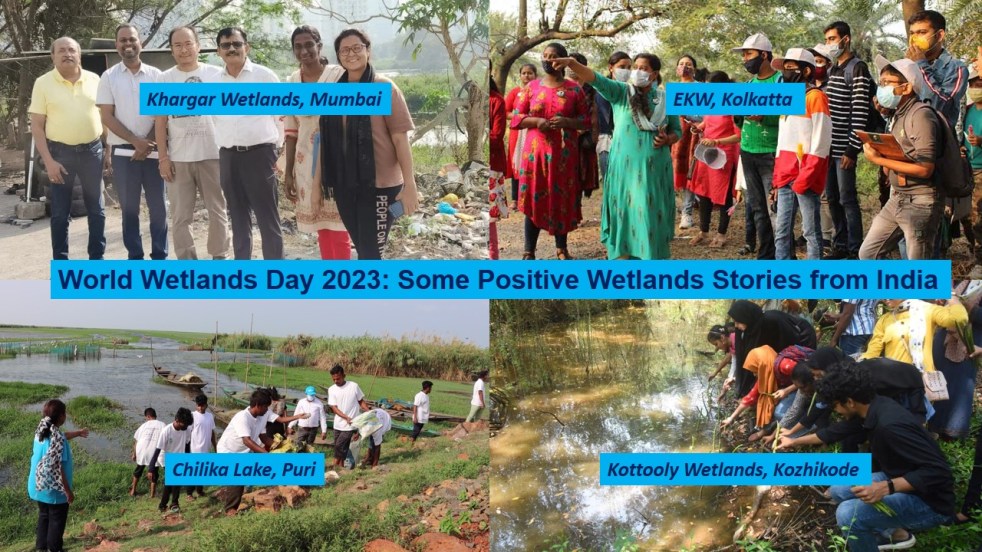
In final part of annual World Wetlands Day overview, SANDRP highlights ten positive actions, efforts made by local communities, citizens groups for protection and conservation of wetlands in India in 2022. In earlier parts of the series, SANDRP has covered the general scenarios of wetlands (Part 1); steps taken by various governments (Part 2); judicial interventions (Part 3) and status of some of the Ramsar wetlands sites in the country (Part 4).
Continue reading “WWD 2023: Some Positive India Wetlands Stories”Tag: Climate Change
WWD 2023: Top Ten Judicial Interventions to Improve Wetlands Governance
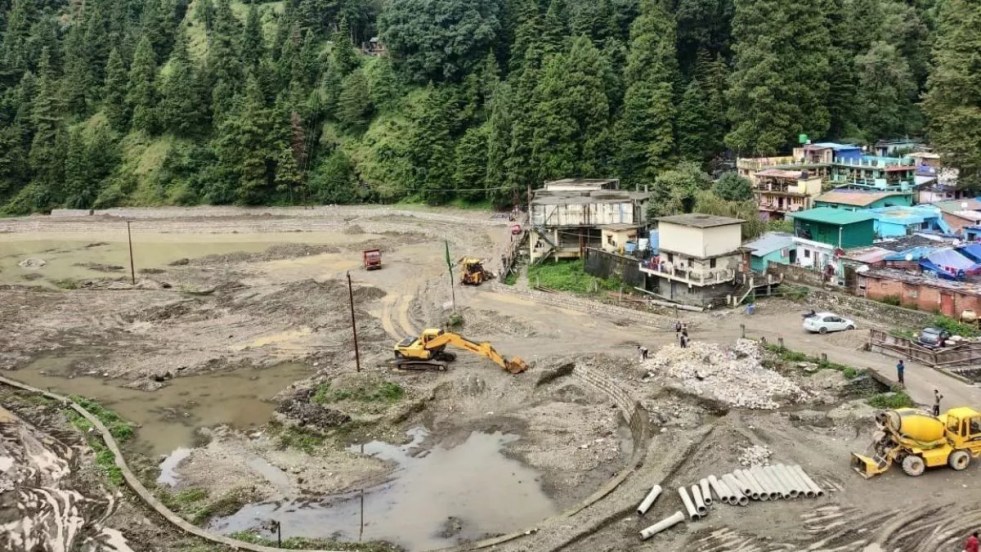
(Feature Image: Construction activities in Sukhatal lake area in Nainital, Uttarakhand. Source: Dainik Jagran, Nov. 2022)
In this third part of wetlands overview, SANDRP tracks top ten judicial interventions regarding protection of wetlands in India in 2022. The part one has highlighted general situation of wetlands and part two has covered some governmental actions for wetlands conservation.
Continue reading “WWD 2023: Top Ten Judicial Interventions to Improve Wetlands Governance”WWD 2023: India’s Wetlands continue to face Rising Threats and Misgovernance
(Feature Image: Giri tal of Kashipur, Uttarakhand succumbing to govt’s apathy. Bhim Singh Rawat/SANDRP Nov. 2022.)
World Wetlands Day is celebrated every year on February 2. The theme for year 2023 is Wetlands Restoration. Marking the occasion, SANDRP has been presenting annual overviews on various governance aspects of wetlands in India including general scenario, governments’ plans, judicial interventions and positive efforts to save these crucial eco-systems. This first part of the 2023 series covers the overall situation of wetlands in the country in 2022. The reports show that the wetlands continue to face rising threats and misgovernance.
Continue reading “WWD 2023: India’s Wetlands continue to face Rising Threats and Misgovernance”DRP NB 230123: Welcome decision of FAC to deny clearance to Etalin HEP
(Feature Image:- Upper Dibang Valley District, Arunachal Pradesh, India (Source: Wikipedia Commons/IWP)
It’s rather rare that we get a hydropower project related decision from official decision makers that can be welcomed. It has happened this week when the MoEF’s (Ministry of Environment, Forests & Climate Change) Forest Advisory Committee declined to give forest clearance to the controversial 3097 MW Etalin Hydropower Project in Dibang sub basin of Brahmaputra basin in Arunachal Pradesh and North East India. The project was under consideration for this clearance since 2014 and finally in the meeting on Dec 27, 2022, FAC conveyed that the current proposal cannot be considered for the clearance and revised proposal may be submitted. It is not a blanket rejection of the project, but considering the history of consideration of this project in FAC, it is closest we can come to that.
It is also welcome to know that the FAC has also looked at the poor track record of compliance of conditions of earlier forest clearances for the hydropower projects in Arunachal Pradesh among the many reasons why the project is rejected in current form. Arunachal Pradesh may do well to improve its track record before applying for forest clearance to any new projects in the state.
This decision is also a lesson for the MoEF’s Expert Appraisal Committee on River Valley Projects and also for MoEF itself for not even looking at the track record of compliance of the conditions of environment clearances that the EAC and MoEF give to the river valley and hydropower projects. They also never look at the implementation of the Environment Management Plans. Same is the case with the MoEF’s National Board of Wildlife.
Continue reading “DRP NB 230123: Welcome decision of FAC to deny clearance to Etalin HEP”DRP NB 090123: Atal Bhujal Yojana just chaff without any wheat?
According to this detailed report, possibly the first independent review of the Atal Bhujal Yojana, a 5-year program of the Union govt for management of groundwater, India’s water lifeline, with over half of the project period completed, seems bereft of the fundamental aspects that the scheme itself says are necessary for any sound foundation of the scheme. The review describes it as a dish full of chaff, without almost any kernels of wheat for some sound reasons. It says hardly 18% of allocated money has been spent on Gram Panchayat level community-led Water Security Plan. Only 4% of the planned Gram Panchayat level trainings have been held, with Gujarat and Haryana holding none. Only 27% of money allocated for Gram Panchayat level Hydrogeological monitoring network has been spent. The data gathering instruments that were required from the beginning of the program have not been installed in over half the planned locations. On Information, Education and Communication activities, only 16% of allocated amount is spent.
More detailed independent review of the program implementation will help, but from the available information so far, the signs do not look particularly promising. Is it due to ineptness or lack of intention? Only time will tell.
Continue reading “DRP NB 090123: Atal Bhujal Yojana just chaff without any wheat?”DRP NB 020123: Looking Back to Look forward to 2023
(Feature Image:-River Ken inside Panna National Park from River Stories, Walking Across India-I by Siddharth Agarwal)
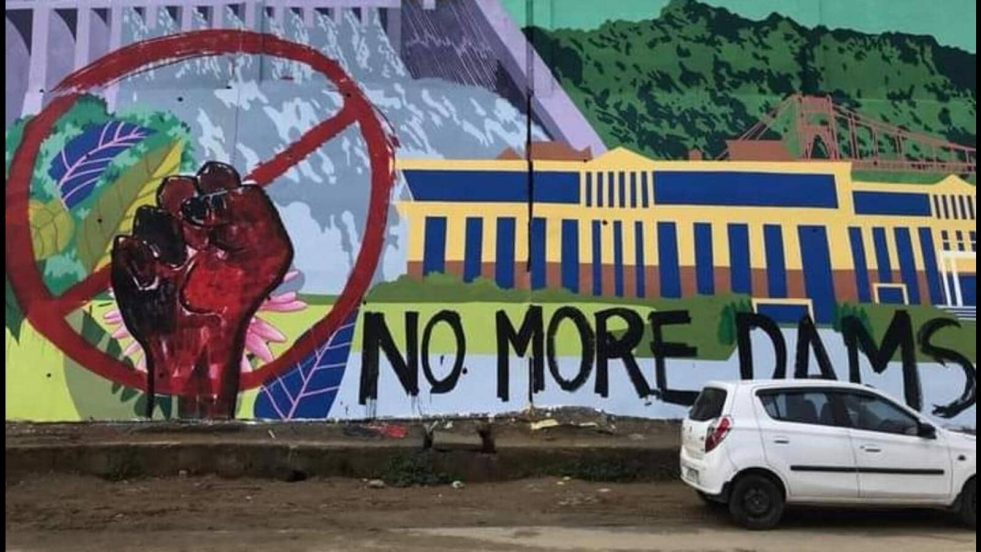
This is the first DRP bulletin of 2023 and we would like to begin on a positive note. But to remain grounded in reality we also need to look back at the events in 2022. We see a number of positives in 2022 and we hope that trend continues. The number of new dams and hydropower projects being started has remained on a declining trend. People and civil society has continued its protests against destructive projects and for more decentralised projects and governance.
Continue reading “DRP NB 020123: Looking Back to Look forward to 2023”2022: Hydro Power Projects Disasters, Damages & Concerns in South Asia
(Feature Image:- The residential quarters established alongside the Ichar Nullah by the Chinese workers of the Dasu hydropower project were swept away along with their machinery, trucks and dumpers in the swollen nullah. Image: Pamir Times, Text:Dawn. Aug. 2022)
In addition to India, the local people in Himalayan countries of South Asia have been resisting against the hydro power projects. These countries have also been facing accidents and disasters caused by the hydro power projects. At the same time, the increasing construction as well as operational cost and climate change threats have been making the future of hydro power projects risky and uncertain in the region. This annual overview highlights the hydro power projects related accidents, disasters and concerns in South Asian countries.
Continue reading “2022: Hydro Power Projects Disasters, Damages & Concerns in South Asia”DRP NB 261222: People on roads against hydro projects that govt is pushing
(Joshimath residents staging protest against land sinking and damages to their homes demanding rehabilitation & halt in NTPC’s Tapovan Vishnugad HEP tunnel work on Dec. 24, 2022. Image source: Atul Sati, Joshimath)
People of at least four states are opposing hydropower projects that the central and state governments are pushing, ignoring all the ground realities. In Uttarakhand, the Joshimath residents are on roads to wake up the government that seems deaf to their protests due to their houses cracking and land subsiding due to the tunnels being blasted for hydropower projects and Char Dham highway being built ignoring the voices of not only the affected people, but also the experts.
In Arunachal Pradesh, people have been writing to the central govt authorities against the Etalin and Dibang projects being pushed in Dibang valley of Brahmaputra basin.
In Himachal Pradesh, the people of Kinnaur and Lahaul Spiti districts have made it an election issue the destructive hydropower projects being pushed there both by the state and central governments.
In Andhra Pradesh too people have been protesting against the pump storage projects being given permission in schedule tribe areas without their prior informed consent and ignoring the statutory requirements.
2022 is thus ending with people’s active protests across the country against destructive, disaster prone and unviable projects being pushed against their wishes and in violation of any proper consultations or even any credible impact assessments. In the escalating impacts of climate change, these projects are even more problematic as they not only worsen the adaptive capacity of people and invite more frequent, intense and spread of the disasters, but they also destroy the mitigation tools like forests and flowing rivers. This when all these projects are not even economically viable, and when better, cheaper options are available. It would be best if sooner the government listens to the people and stop pursuing such projects.
Continue reading “DRP NB 261222: People on roads against hydro projects that govt is pushing”2022: Growing Concerns over Dam Safety, Sustainability & Impacts
(Feature image: Breach in Karam dam, MP in Aug. 2022. Dainik Jagran)
This annual overview is focused on issues concerning structural and operational safety of dams that arose in 2022. It includes issues related to how climatic threats and siltation is making the large dams unsustainable. It also highlights the impacts of dams on river eco-system and riverine people amid some corrective measures being taken by the various state and central governments including the formation of National Dam Safety Authority.
Please see for links to SANDRP’s analysis on the issues in 2022 in India covering: (1) Dam induced floods, (2) Dam safety and related issues of Polavaram project, (3) Disasters and accidents caused by hydro power projects in Himalayan states, (4) Growing and ongoing resistance against destructive dams and hydro projects, (5) Fly ash dam breaches.
Continue reading “2022: Growing Concerns over Dam Safety, Sustainability & Impacts”2022: Accidents & Damages related to Hydro projects in India
In this annual review, SANDRP compiles the hydro power related accidents, disasters and damages in North West and North East Himalayan states during 2022. It also covers relevant reports revealing gradual decline in power generation by hydro power projects amid growing concerns over physical and financial viabilities of new projects. There are also reports highlighting the looming climatic and geological threats over these projects. It is good to see that taking lessons from Chamoli disaster in Feb. 2021, NDMA has officially asked central govt not to rely on hydro power.
In previous parts of yearend roundups, we have covered (1) Dam induced floods & damages, (2) Fly ash dam breach incidents, (3) Impact of floods on Polavaram project, (4) People’s resistance against dams and hydro projects. Please see links for reports tracking hydro power projects related accidents and disasters in 2021 and 2020.
Continue reading “2022: Accidents & Damages related to Hydro projects in India”