Dams · Wetlands

Uttarakhand Wetlands 2017: Nainital Lake Needs Urgent Attention

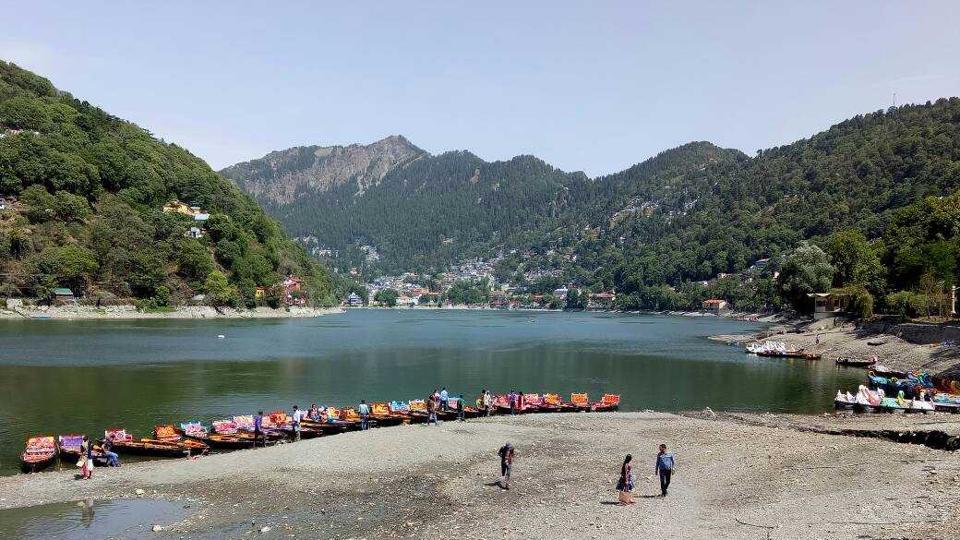
Uttarakhand is a land of picturesque landscape encompassing mountains, forests, rivers. The state also has many beautiful lakes which includes Bheem Tal, Devaria Tal, Dodi Tal, Roopkund, Hemkund, Kashni Tal, Kagbhushandi Lake, Kedar Tal, Naukuchia Tal, Naini Lake, The Nachiketa Tal, Satopanth Lake, Shyamla Tal, Sahastra Tal, Masar Tal, Sat Tal,  Vasuki Tal etc. http://www.uttarakhandtourism.net/lakes_of_uttarakhand.htm ­(Uttarakhand Tourism Web, as on 10 January 2018)

 As per National Wetlands Atlas 2011, there are 994 wetlands of various categories of which including 816 are small wetlands of less than 2.25 hectare area. The total area under the wetlands in the state is 103882 hectare which is 1.92 per cent of its total geographic area. River/stream is the most dominant one with 77.14 per cent share of wetlands with area 81033 hectare. Reservoirs/ Barrages are the second largest wetland category. http://www.moef.nic.in/downloads/public-information/NWIA_Uttarakhand_Atlas.pdf http://wetland.u-sac.in/uttar_wetland.html
Continue reading “Uttarakhand Wetlands 2017: Nainital Lake Needs Urgent Attention”

Dams · Wetlands

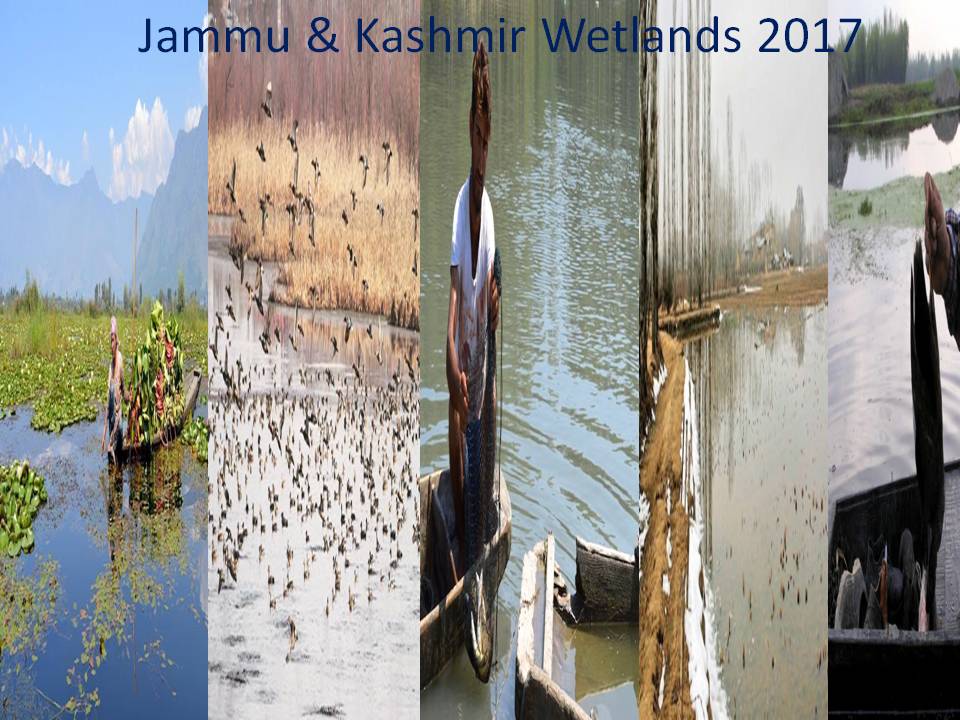
Siltation, Encroachment & Pollution Choke Jammu & Kashmir Wetlands in 2017

Captivating images of lakes and wetlands strike the imagination of general masses when the name of Jammu and Kashmir is mentioned. For years, the aquatic wonders have been the main attraction of tourists, at the same time supporting livelihood of local communities in multiple ways. These water bodies also provide safe habitats to the lakhs of migratory birds.

However, over the years, gradual siltation, steady encroachment and increasing pollution have put the wetlands eco-system and associated socio-economical benefits at receiving ends. And, in 2017 the situation only got worse.

Continue reading “Siltation, Encroachment & Pollution Choke Jammu & Kashmir Wetlands in 2017”

Dams · Wetlands

Wetlands Review 2016: Legal Interventions

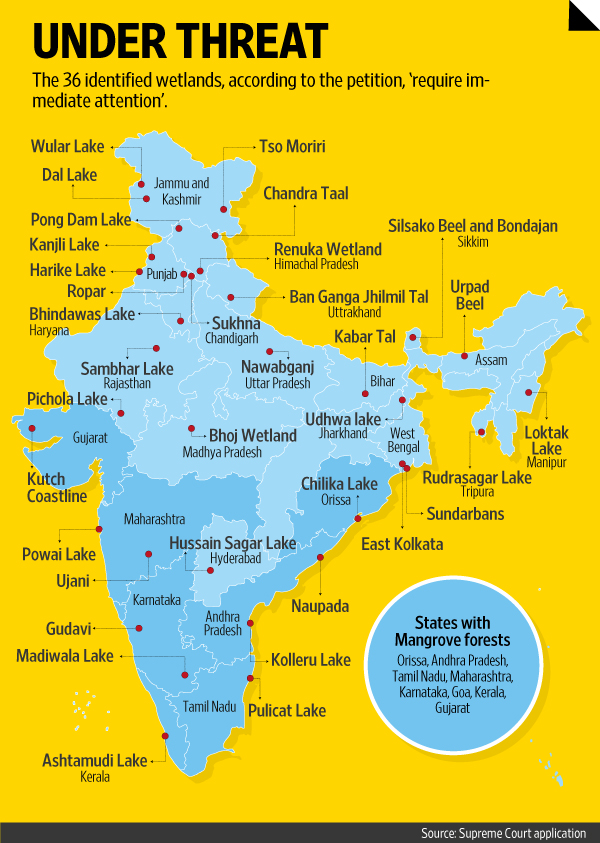
Featured image showing  36 Wetlands in India requiring urgent attention as per a 2014 petition filed in apex court (Image Source: Live Mint

In the third part of Wetlands Review 2016, SANDRP presents an account of major decisions taken by respective Courts for the protection of Wetlands in India. 

In a significant development in April 2016, the National Green Tribunal (NGT) directed all State Governments to submit a complete list of Wetlands[1] under their jurisdiction. The green court was hearing a plea alleging commercial conversion and resultant destruction of several large ecologically important Wetland areas across the country in absence identification and notification by respective State Governments. 

The court also asked the Ministry of Environment, Forest and Climate Change (MoEF&CC) to submit the list of States that had approached it with Wetlands conservation plans.

Continue reading “Wetlands Review 2016: Legal Interventions”

Dams · Wetlands

Wetlands Review 2016: Government Actions

India is one of the 169 signatories to the Ramsar Convention on Wetlands, signed in Ramsar, Iran, in 1971, an intergovernmental treaty that provides the framework for national action and international cooperation for the conservation and wise use of Wetlands and their resources. There are 2,241 Ramsar sites across the world, including 26 spread across India from Wular Lake in Jammu and Kashmir to Ashtamudi Wetland in Kerala, and from Deepor Beel in Assam to Nal Sarovar in Gujarat.

Despite their vital importance to humans, across India, Wetlands are seriously threatened by reclamation and degradation through processes of drainage, land filling, discharge of domestic and industrial effluents, disposal of solid waste, and over-exploitation of the natural resources that they offer.

Here is an account of major decisions and actions by Central as well as State Governments on wetlands related issues in 2016.

Continue reading “Wetlands Review 2016: Government Actions”

Dams · Wetlands

India’s Wetlands 2016: Encroached and Polluted

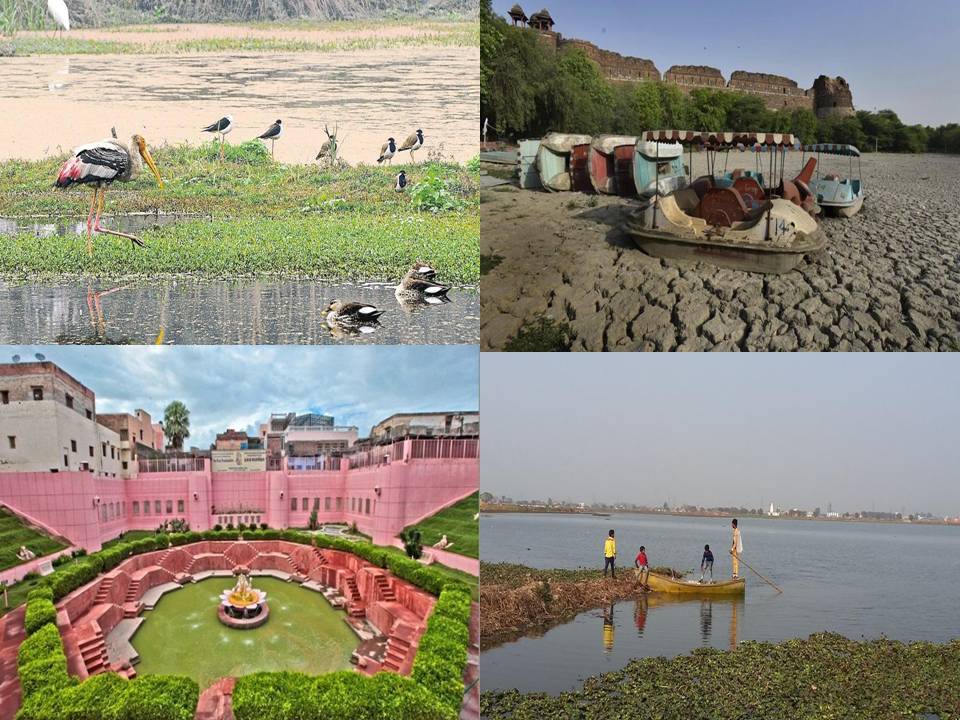
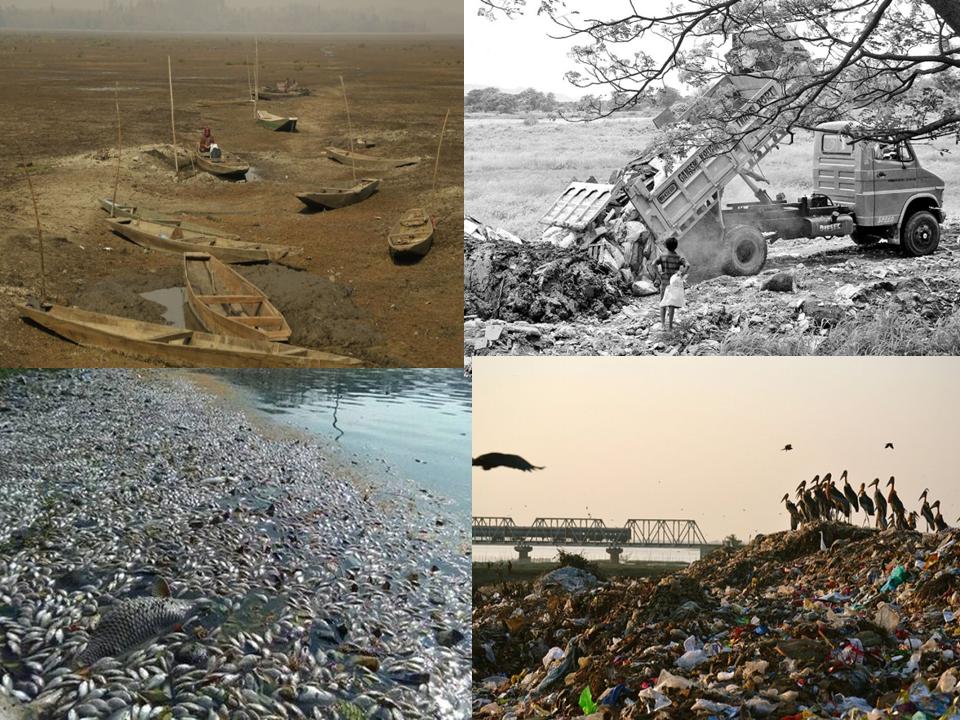
In the picture-Drying Wular lake in  J&K; Mass dish death due to pollution in Ulsoor Lake, Karnataka; Filling up of Wetlands in Maharashtra and Waste dumping on  Deepor Beel in Assam

Wetlands are vital for human survival. They are among the world’s most productive eco systems[1]. Wetlands are crucial for the survival of variety of plants and animals. They are indispensable for the countless services ranging from freshwater supply, food, sustainable livelihood options and groundwater recharge. They also host a huge variety of life, protect our coastlines, provide natural sponges against river flooding and store carbon to regulate climate change.

Here is an account on status of India’s wetland in 2016 underlining their ecological importance and urgent need of conservation of Wetlands across the country. 

Continue reading “India’s Wetlands 2016: Encroached and Polluted”

Dams · Wetlands

WORLD WETLANDS DAY 2017: Man made Disaster for Wetlands that protect us from Disasters

The World Wetlands Day, celebrated around the world on 2nd February each year, marks the adoption of Ramsar Convention on Wetlands in Iran in 1972. The Convention came into force in India since 1982. The theme for this year’s World Wetlands Day is “Wetlands for Disaster Risk Reduction.”[i]

During floods, wetlands can act as natural sponges and absorb intense runoff and discharge, holding more water than most soil types.[ii] This role of wetlands has been demonstrated most powerfully in India in the past few years. Chennai deluge in Nov-Dec 2015 highlighted what happens when wetlands in a city reduce by 2/3rds in just 20 years. Similarly, Kashmir valley lost 50% of its riverine wetlands in just over 30 years, which was one of the main reasons behind the extensive losses during the Sept 2014 Jhelum floods, as corroborated by Dr Asam Rahmani of Bombay Natural History Society (BNHS)[iii]. In 40 years, Bangalore has lost 79% of its wetlands, similar is the case with Mumbai, Hyderabad, Kolkata and New Delhi. Bhopal, a city of relatively sloping profile, faced floods twice in 2016, and wetlands, including the rivers in the city are facing existential risks in terms of encroachments[iv].

Continue reading “WORLD WETLANDS DAY 2017: Man made Disaster for Wetlands that protect us from Disasters”

Wetlands

Threats to East Kolkata Wetlands are threats to Kolkata: Majhi jo nau dubaaye…

Guest Blog by: Chicu Lokgariwar (chicu.l@gmail.com), Usha Dewani (usha.dewani7@gmail.com)

‘Majhi jo nau dubaaye, to usey kaun bachaaye’ laments a popular song[i]. It literally translates as: ‘If an oarsman sinks his boat, who can save it?’

This is a question that concerned citizens of Kolkata are asking themselves today in connection with the famed East Kolkata Wetlands. A notified Ramsar site, this extensive wetland spread over 12,500 Ha has been protected for decades by the communities who live within it and by The East Kolkata Wetlands (Conservation and Management) Act, 2006. Today, it is the Environment Minister of West Bengal who has taken it upon himself to destroy the wetlands. Continue reading “Threats to East Kolkata Wetlands are threats to Kolkata: Majhi jo nau dubaaye…”

Wetlands

An undiscovered wetland thriving under looming threats

In April 2016, the Central Government presented Wetland (Conservation and Management) Draft 2016 for comments which has been vigorously contested by leading experts as deliberate attempt to weaken key steps of Wetland (Conservation and Management) Rule 2010. Various organizations, community groups, NGOs including SANDRP has objected to the dilution of key norms and urged the government to discard Draft 2016 Rules and fully implement the 2010 Rules till new effective wetland protection rules are formed.  

Now, highlighting the neglected state of our wetlands, SANDRP again urges the responsible authorities to come forward and take steps to protect a thriving wetland which is facing threats from none other than Government itself.

Naya Bans Wetland The Holambi Kalan and Khera Khurd are among several villages dotting North West Delhi’s agriculturally dominated landscape. Between the Railway Station of these two villages lies a flourishing wetland spread on the either side of the railway track which has intercepted two local storm water drains passing though the area.

Whether the area was originally a wetland or the interception of rain water carried during laying down of railway lines has resulted in accumulation of waste water is unknown. Yayati Bhardwaj a resident of nearby Alipur village recalls his childhood days when he used to frequent the area to have a glimpse of Lotus like flowers blooming in the wetland which now has disappeared. The 32 years old youth raising voice for local environmental issues still remembers his father talking of the marshland on few occasions. So the marshy land may or may not be artificial but over the time it has evolved into a living wetland in concretized capital providing refuge to large numbers of flora and fauna.

Continue reading “An undiscovered wetland thriving under looming threats”

Dams · Ministry of Environment and Forests · Wetlands

REJECT Draft Wetland Rules 2016: Designed to destroy wetlands

While the Ministry of Environment, Forests and Climate Change never implemented Wetland (Conservation and Management) Rules 2010, it has now brought out a new and seriously watered down Draft Wetland Rules 2016. The New Rules can jeopardise wetland conservation in the country and need to be rejected in entirety. Following is a submission made by SANDRP to the Secretary, MoEF and CC about the same. Last date for sending comments is 6th June 2016. Emails are b.sikka@gov.in, ram.jindal@nic.in,  c.singh@nic.in.

We request you to kindly make similar submissions. Feel free to use our letter below. Our Wetlands need protection, not degradation! Continue reading “REJECT Draft Wetland Rules 2016: Designed to destroy wetlands”

Urban Water Sector · Wetlands

Urban Wetlands and Floods

In city after city wetlands are being built over, for houses, markets and offices to meet the demands of an increasing urban population. As agriculture is being rendered unviable because of soaring costs of inputs, declining prices of farm products, lack of water arising from water diversions and drought conditions and low support prices, there is increasing scale of urban migration. Availability of cheap, migrant labour alongwith the government’s policies to invite investment in the manufacturing sector, opening up of more sectors for foreign direct investment and weakening of labour laws have led to ‘development’ of many suburbs into industrial corridors, manufacturing hubs and economic zones. This suburban expansion has translated into a take over of wetlands which, until recently, were tilled by farmers or were the abode of birds or covered by mangroves. The development of the suburb is usually accompanied by a property boom in the new area which leads to complete destruction of the local ecology and construction of offices, residential complexes, shopping malls, educational institutions, parking spaces and other infrastructure for the urban elite and middle class.

Continue reading “Urban Wetlands and Floods”