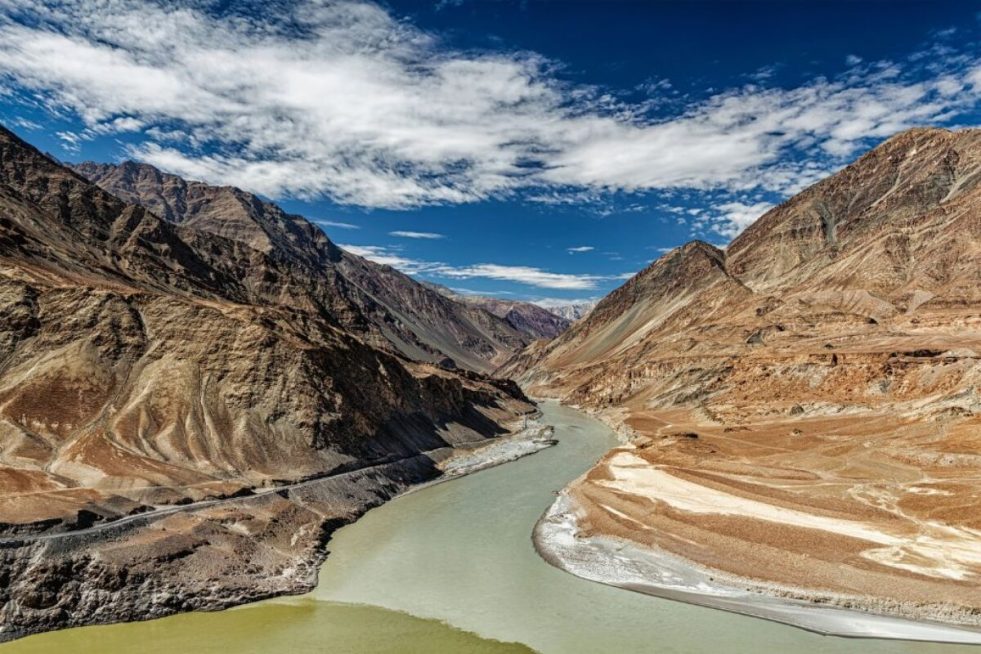
INDUS RIVER: Stephen Alter, in his article “With the River by My Side” says about Indus River that some rivers are older than the landscape through which they pass: “Nowhere is this clash between hydrological and geological history more apparent than along the Indus, as it passed through Ladakh. This seemingly eternal river has followed its winding course since long before the Himalaya were formed, tossing and tumbling over. Boulders, stones and pebbles that the water polishes and grinds into sand. Eroded flanks of the mountains on either side of the river are scarred and twisted by tectonic forces that lifted giant slabs of rock more than eight kilometres into the clouds but failed to block the persistent flow of the Indus. Driving along the highway that runs parallel to the river, from Leh to Kargil, it feels as if the landscape is a timeless epic that the waters of the Indus have etched in stone.”
Continue reading “DRP 16 June 2025: “Indus River older than its landscape, Himalayas””Category: Water
DRP 020625
HYDRO POWER PROJECTS
Jammu & Kashmir In Kupwara district the 12 Mw Karnah in Kishan Ganga sub basin has joined the long list of HEP projects facing reoccurring damages, repeated delays and cost escalation in Himalayan states. The flash flood, landslides and cloudburst disasters in Feb and May 2025 have further damaged the project and extended its completion date.
Continue reading “DRP 020625”World Water Day 2025: Top Ten Studies on Wastewater Treatment
(Feature Image: The NTU research team behind the solar-powered method to convert sewage sludge into green hydrogen and animal feed. Source: Science Tech Daily)
On the occasion of World Water Day 2025, SANDRP compiles ten studies and research papers revealing the various cost effective and efficient methods to treat sewage and recover nutrients from sewage sludge. The first part of the series highlights water efficient practices being adopted by farming communities in India and the second part covers the water sources conservation efforts being made by the rural communities in the country. The third part has focused on sewage treatment and rainwater harvesting efforts being made in various cities in the country.
Continue reading “World Water Day 2025: Top Ten Studies on Wastewater Treatment”World Water Day 2025: Smart Cities, Rain & Sewage
(Feature Image: Members of Mount Rain drops Appartment residential Association posing for a picture at STP set up at a private gated community in Coimbatore. Source: EPS)
Rains and sewage are biggest resources available to Indian cities which can be harvesting and treated to meet the ever-increasing water needs. This can not only help significantly in checking groundwater depletion but also reduce pollution levels in urban water bodies. On the World Water Day 2025, we compile top ten media reports highlighting progress in utilizing these viable alternatives in urban India. The reports suggest that while some south Indian cities particularly Bengaluru and to some extent Chennai is taking some positive steps in this direction, there is very little action happening in the rest of cities. Interestingly, 6 of the ten top stories here are from South India and only one each from Central and North India.
Continue reading “World Water Day 2025: Smart Cities, Rain & Sewage”World Water Day 2025: Top Ten Positive Initiatives from Rural India
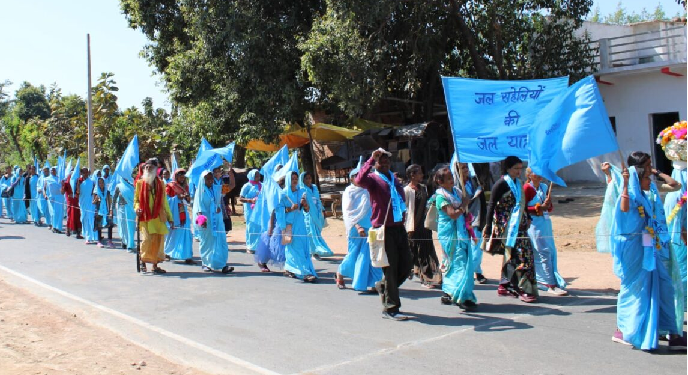
(Feature Image: The Jal Saheliyon ki Jal Yatra or the ‘Water walk of Women friends of Water,’ an over 300 km-long march for water conservation started in Feb 2025. Source: Global Bihari)
Marking World Water Day 2025, this compilation highlights top ten positive efforts made during last one year by village communities and women groups in India for restoration and protection of their water resources. The report also shares some important water conservation initiatives being taken by the various governments in India. The first part of the series has covered water efficient practices being adopted by the Indian farmers.
Continue reading “World Water Day 2025: Top Ten Positive Initiatives from Rural India”World Water Day 2025: Positive Farmer Efforts in India
(Feature Image: Horticulture cultivation in Punjab records a 42% increase in area and four-fold increase in produce value in a decade. Source: Express File Photo)
Aiming to advocate sustainable management of freshwater resources, the day of March 22 is annually celebrated as World Water Day across the world since 1993. The theme for this year’s 33rd such event is Glacier Preservation. Since agriculture sector is biggest user of surface as well as groundwater, SANDRP marks the day by presenting top ten reports which highlight the water efficient practices being adopted by farmers and some of these also being supported by the governments in India during 2024.
Continue reading “World Water Day 2025: Positive Farmer Efforts in India “Becoming water smart holds the key to our water secure future
As somewhat belated summer in North India reaches its peak, with ongoing heat wave in Delhi and surrounding areas, there is increasing fear of water scarcity. The media generally uses one figure to highlight this situation, namely Live Storage in some 150 reservoirs in Central Water Commission (CWC)’s Weekly Reservoir Bulletin (WRB) that is published every Thursday afternoon (why cannot this be given on daily basis is a mystery).
Continue reading “Becoming water smart holds the key to our water secure future”World Water Day 2024: Top Ten Positive Actions from Rural India
The World Water Day is celebrated on 22nd March annually across the globe. The theme selected for 2024 is ‘Water for Peace’. On this occasion, this report puts together the top ten positive water stories from Rural India during past one year. The compilation underlines the successful collective actions from village communities in the creation, protection and revival of local water sources including ponds, lakes, tanks etc. which are far better, sustainable and cost-effective measures for meeting potable and irrigation water requirements at local levels.
Continue reading “World Water Day 2024: Top Ten Positive Actions from Rural India”World Water Day 2023: Positive Water Stories from India
This report highlights top ten positive water stories from rural India from last one year. SANDRP has been marking the World Water Day by presenting the stories of some remarkable efforts undertaken for protection, revival and management of water sources by individuals, local communities and governments.
Continue reading “World Water Day 2023: Positive Water Stories from India”World Water Day 2022: Positive Water Stories from India
This report on World Water Day 2022 highlights the positive impacts of initiative taken by individual, communities, civil societies and government schemes towards revival and protection of water sources in India over the past one year. These efforts show how conservation, restoration and management of water resources including springs, step-wells, ponds, lakes, tanks etc. at local level are far better, cost effective and efficient solutions in comparison to big water projects which in immediate and long term cause more damages than benefits to hydrological cycle, local community, environment apart from incurring huge construction and operating costs. SANDRP has also published media compilation on positive groundwater stories and urban water options on World Water Day 2022 occasion.
Continue reading “World Water Day 2022: Positive Water Stories from India”