Dams

River Sand Mining in India in 2015 – II – Government acts of omissions and commissions

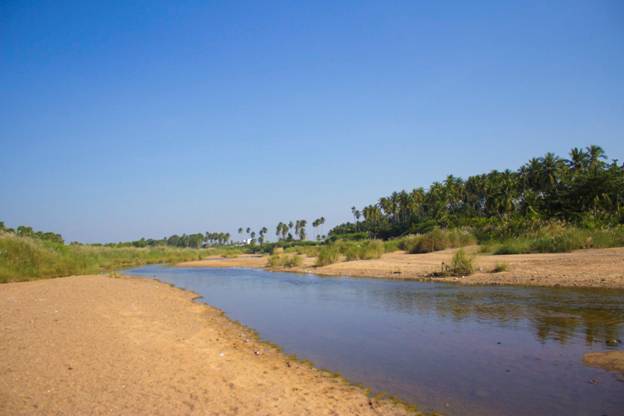
Unsustainable sand mining from riverbeds can have huge social, environmental, geomorphic and disastrous impacts for rivers. In this three part reports; SANDRP is trying to provide a picture of what happened on this issue in 2015 in India.

In the first part SANDRP has published the detail of illegal sand extraction that was found rampant across many Indian States in 2015. It specifically covered the increased numbers of attacks on Govt. officials including common men against their attempt to expose and oppose illegal removal of sand from riverbeds. 

This second part presents detail of some of the significant steps taken by Central and various State Governments (Govt.) to control and regulate unsustainable excavation of riverbed sand mining.
Continue reading “River Sand Mining in India in 2015 – II – Government acts of omissions and commissions”

Dams · DRP News Bulletin

DRP: 1 Feb 2016 (Experts suggest ways to revive Madurai’s dying rivers)

Tamil Nadu Experts suggest six ways to revive dying Madurai’s rivers According to a paper entitled Future Proofing Indian Cities: Towards an approach to spatial and social analysis for sustainable development of Madurai by Jayaraj Sundaresan Development Planning Unit, University College London J. Kanagavalli DHAN Foundation, Madurai their documentation has revealed the significant role of Kruthumal River in the historic, cultural, ecological and economic growth of Madurai. Centuries ago, Madurai city developed as a small urban settlement on the banks between the rivers Kruthumal and Vaigai. Appearing in epics and sacred texts such as Srimad Bhagavatham and Narayaneeyam, Kruthumal has significant presence in the written history of Madurai. It was also known as Narayana Cauvery. It supplied water to the Ahazhi (moat) around the Tirumalai Nayakkar palace in Madurai. The paper gave six methods to look after Vaigai and Kruthumal Rivers in Madurai.  Looking at the condition of the rivers one feels it is hopeless, but there is hope if together with the government, something is done to control the destruction of the river, by law. And with organizations like DHAN Madurai can hope for a clean Vaigai in the future.

Continue reading “DRP: 1 Feb 2016 (Experts suggest ways to revive Madurai’s dying rivers)”

Dams · DRP News Bulletin

DRP: 25 Jan. 2016 (FAO supports SRI)

“Save & Grow” FAO supports SRI A new FAO book out on 18 Jan.16 takes a close look at how the world’s major cereals maize, rice and wheat can be grown in ways that respect and even leverage natural ecosystems.  FAO also underscores that “Save and Grow” farming systems are knowledge-intensive, and need to be built on local knowledge and needs, recognizing the important role of farmers as innovators. GREAT to see that this FAO publication (http://www.fao.org/3/a-i4009e.pdf ) contains a very detailed discussion and presentation on SRI, the first time that there has been such an endorsement of SRI (System Rice Intensification). With this publication, FAO joins the World Bank (http://info.worldbank.org/etools/docs/library/245848/) and IFAD (http://www.ifad.org/english/sri/  and http://www.ifad.org/english/sri/documents.html).

Continue reading “DRP: 25 Jan. 2016 (FAO supports SRI)”

Agriculture · Dams · Groundwater · Interlinking of RIvers · Krishna River · Maharashtra

Maharashtra’s Water Sector in 2015: Did anything change with the government?

Above: A huge protest march against water release to Marathwada Photo: Zee 24 Taas

In 2015, with the change in the ruling party after 15 long years, Maharashtra had a massive opportunity to break free from the crisis-ridden and scam-ridden image of its water sector. Water and dams have been central behind the embarrassing loss of Congress-NCP government in the 2014 Loksabha elections. But could the ruling BJP government actually deliver such a “Paradigm Shift” as it likes to call it? Is there light at the end of the tunnel for the state that is facing not only management scams, but repeated droughts and extreme weather events?

We try to review happenings around water, dams and rivers in Maharashtra for the past year 2015 and to look for a possible direction where the sector is heading, trying to fathom what it holds for the rivers and the people of the state. Continue reading “Maharashtra’s Water Sector in 2015: Did anything change with the government?”

Dams · DRP News Bulletin

DRP: 18 Jan. 2016 (MoEF Expert Committee on Dams continues to ignore democratic norms)

MoEF Expert Committee on Dams continues to ignore democratic norms  The minutes of the 90th meeting of the Expert Appraisal Committee on River Valley and Hydropower projects held on Dec 22-23, 2015, made available today (January 18, 2016, see: http://environmentclearance.nic.in/writereaddata/Form-1A/Minutes/0_0_11118122212121Minutes-90EAC.pdf), shows how the committee continues to ignore basic democratic norms. Here are some key issues about the minutes of this latest meeting:

Continue reading “DRP: 18 Jan. 2016 (MoEF Expert Committee on Dams continues to ignore democratic norms)”

Dams · Groundwater · Marathwada

Beautiful but Dry: Dug-Wells of Marathwada in the times of drought

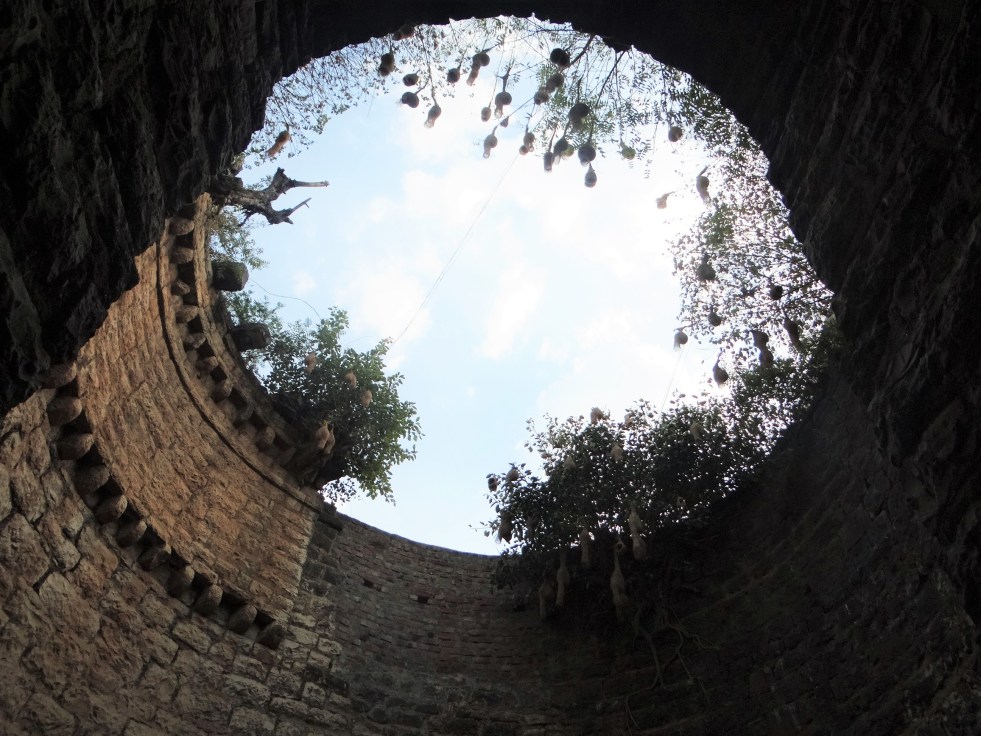
I was looking at a piece of blue sky, from the insides of a step-well. The well was stunning. Perfect. An example of appropriate technology which blended with its surroundings while enhancing it. “This is beautiful” I exclaimed as I climbed up, exhibiting all my city-bred exuberance. An old lady sunning herself next to the well looked at me with sad eyes.  “Yes. But a well is not a well without water. This well has not seen water for the past two years.” 

Wells in Marathwada, like the region itself, are beautiful and poignant. Marathwada’s dry wells are also a reminder of the mistakes we’ve committed, of how we’ve plundered with what we have or had. Continue reading “Beautiful but Dry: Dug-Wells of Marathwada in the times of drought”

Dams · Maharashtra

MWRRA orders release of less than 3 TMC water for Ujani Dam: Too Little, Too Late

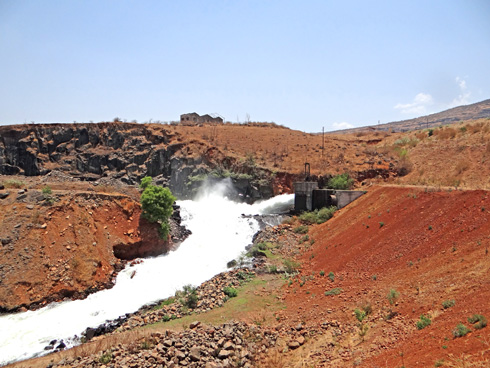
Above: Water released from Bhama Askhed Dam for Ujani Dam, April 2013  Photo:Author

Today (14th January 2016) Maharashtra’s Marathi AgroDaily announces[i]: “ 3 TMC Water will be released from Bhama Askhed and Chaskaman Dam for Ujani Dam from tomorrow, 15th January 2016. Looking at the opposition to this by farmers in Pune district, the release will happen under strict police protection. Electricity to farm pumps near the river will be disconnected for 7 days between 15th-22nd January to avoid water theft”.

Sounds a bit ominous, doesn’t it? Continue reading “MWRRA orders release of less than 3 TMC water for Ujani Dam: Too Little, Too Late”

Dams · DRP News Bulletin

DRP: 11 Jan. 2016 (Punjab Villagers oppose Dam on Ghaggar River)

86 Villages rise in protest against dam on Ghaggar  A dam is proposed to be constructed on the Ghaggar, near Banur, at a cost of Rs 75 crore. An agreement was signed between representatives of various villages located downstream and the Irrigation Department in 2006 promising 200 cusecsto irrigate fields in thesevillages. Villagers now fear that they will not get the promised 200 cusecs after the construction of the dam. Their claim is that the water flow in the river is much lower than 400 cusecs, as claimed by the irrigation department. The department, on the other hand, sticks to its stand that the water flow in the river is sufficient enough to feed the canal and the villages downstream. However, a perusal of the monthly average discharge data of the river for the past 10 years, defies the department’s claim. It revealed that the average yearly discharge barely crossed 400-cusec mark over the past 10 years, excluding the peak period (July to September). Interestingly NABARD and the State Irrigation department had separately conducted studies of the project well before giving it a green signal.

Continue reading “DRP: 11 Jan. 2016 (Punjab Villagers oppose Dam on Ghaggar River)”

Dams

Hydropower projects commissioned in 2015 in India: What do they tell us?

ABOVE: Rangit River in Sikkim Downstream of Jorethang Loop Hydropower Project (Photo: Mona Chettri)

Indian government continues to have very ambitious hydropower targets, even though all the evidence suggests why we should be reviewing the way we are taking decisions about hydropower projects. As per Central Electricity Authority, India has 42641 MW of installed capacity from large hydropower projects at the end of Dec 2015. The installed capacity from projects below 25 MW is not included in this figure.

CAPACITY ADDITION IN 2015: Troubled projects

During 2015, India added 1824 MW of large hydropower capacity. Some of the important projects commissioned during the year include: 800 MW Kol Dam in Himachal Pradesh (one unit each on 30.03, 31.03, 10.04, 12.06), 450 MW Baglihar II in Jammu and Kashmir, 80 MW at Lower Jurala Project in Telangana, 330 MW Srinagar HEP in Uttarakhand and 96 MW Jorethang Loop Project in Sikkim. The first project is in Central Sector, next two in state sector and the last two in private sector. Except for the 80 MW from Lower Jurala, rest of the capacity is all in Himalayan states.

If we look closely, all of these projects have had a very troubled track record and most continue to face serious problems even after commissioning. Continue reading “Hydropower projects commissioned in 2015 in India: What do they tell us?”

Dams · DRP News Bulletin

DRP: 04 Jan. 2016 (Rivers are soul of India: PM Narendra Modi)

Rivers are soul of India: Prime Minister Narendra Modi  Excerpts From text of PM’s inaugural address at 103rd session of Indian Science Congress, Mysuru Rivers have played as important a role in human history as oceans. Civilisations have been nurtured by rivers. And, rivers will remain critical for our future. So, revival of rivers is an essential part of my commitment for a cleaner and healthier future for our society, economic opportunities for our people, and renewal of our heritage. We need regulations, policy, investments and management to achieve our objective. But, we will succeed only when we integrate technology, engineering and innovation into our efforts, not just to clean our rivers now but to keep them healthy in the future as well. For this, we also need scientific understanding of the impact of urbanisation, farming, industrialisation and groundwater use and contamination on the river eco-system. River is the soul of Nature. Their renewal must be an element of a larger effort to sustain Nature.

Continue reading “DRP: 04 Jan. 2016 (Rivers are soul of India: PM Narendra Modi)”