Dams · DRP News Bulletin

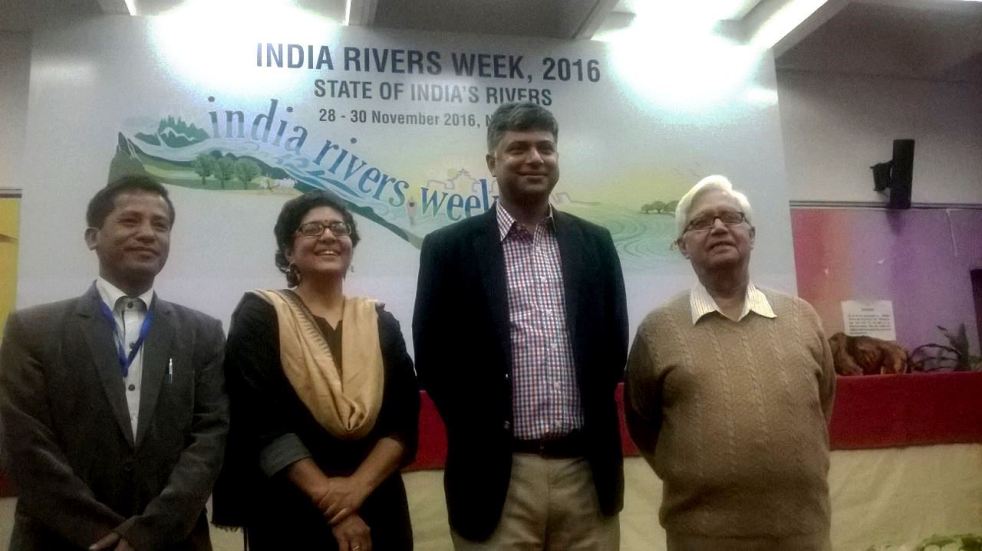
DRP: 28 Nov 2016 (Bhagirath Prayas Samman honors 2016 four water heroes during IRW)

India Rivers Week 2016: River health assessments highlighted during this year’s discourse

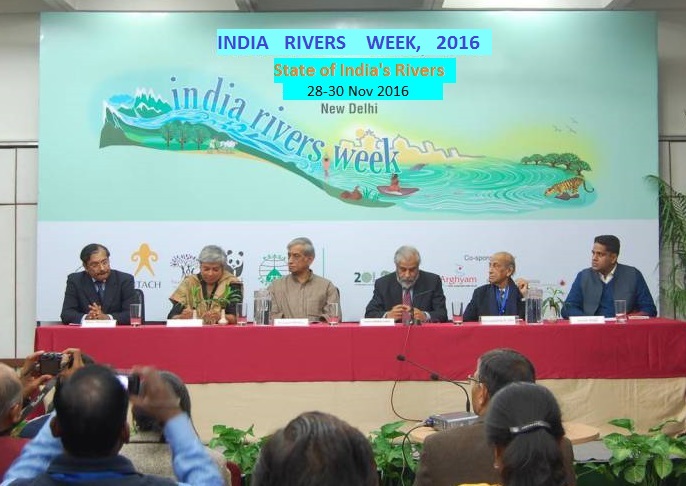
The second edition of India Rivers Week that took place from November 28- 30th 2016 witnessed a gathering of stalwarts in the field of river conservation, including activists, academicians and practitioners from across the country.

This year’s theme ‘State of India’s Rivers’ highlighted the importance of arriving at a comprehensive way of understanding and assessing the health of our rivers. Over the three days, experts in the field discussed the methodology of river health assessment and deliberated on state wise reports prepared, with the aim of arriving at a list of rivers graded blue for wild/pristine, pink for threatened and red for critical or destroyed. 290 rivers across the country were assessed out of which 205 figured in the red list indicating that 70% of our country’s rivers are in a critical state, warranting immediate action.

Continue reading “DRP: 28 Nov 2016 (Bhagirath Prayas Samman honors 2016 four water heroes during IRW)”
Dams · Ganga

Haryana Rivers Profile: (Part-II – Ganga Basin)

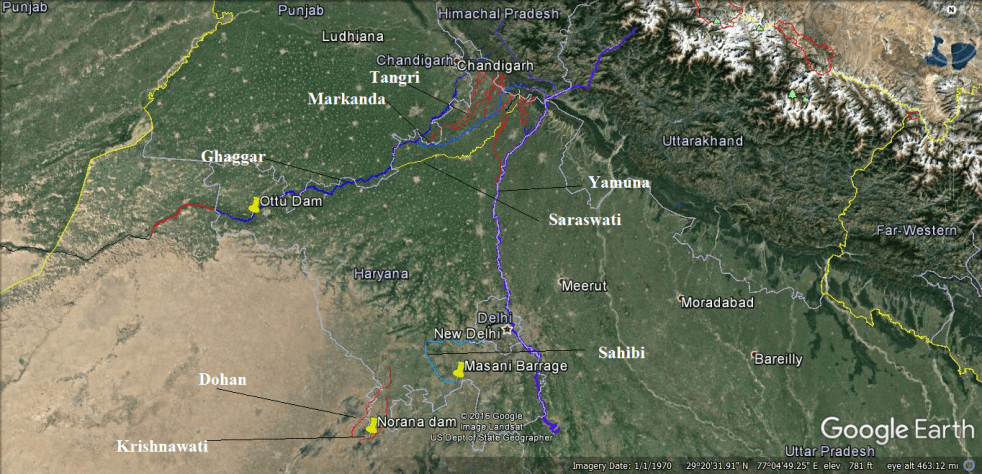
Yamuna Basin:  River Yamuna[1] accounts for 7.10 % of the total geographical area of the country. The Haryana state forms 6.5%[2] of the river basin. It drains an area of 366,223 square km in the Gangetic plain and constitutes 40.2% of Ganga Basin. The river annually carries 10,000 cubic billon meters (CBM) of water of with 4400 cbm is used for irrigation.  Yamuna river basin forms the upper sub-basin of Ganga river[3] the total area of which is 35798.19 square km comprising of 47 water sheds. 

Yamuna river originates from Bandar Punch glacier in Uttarkashi district of Uttarakand. The river flows through about 200 kilometers before reaching Haryana State at Shivalik Hills in Yamuna Nagar district. In the same district the river is trapped in Hathini Kund Barrage located in Kalesar National Park.

Continue reading “Haryana Rivers Profile: (Part-II – Ganga Basin)”

Dams · Indus

Haryana Rivers Profile: (Part-I – Indus Basin)

India is a land of several great rivers[1]. Haryana[2] the 20th Indian state has also been enriched by numbers of rivers, streams and rivulets.  These rivers only strike public discourses during monsoon when they flood human habitations although pollution and sand mining incidents are routinely covered. Moreover there is no Government Department in the State which is in control or possession of complete information on the rivers of the State, as the various State Government Agencies in limited manner deal with specific issues affecting the rivers and there are Government Agencies also whose plans or projects impact the rivers in adverse manner. This two part blog report from SANDRP strives to present a picture on the rivers of Haryana. The State is broadly divided by two basins: Indus and Ganga. This first part of the blog mainly focuses on rives which are part of Indus basin. The second part will bring information of other rivers in the State which join the Ganga basin.  Apart from putting together the basic facts, the blog series also highlights the key issues and present day status of these river systems.

Continue reading “Haryana Rivers Profile: (Part-I – Indus Basin)”

Dams

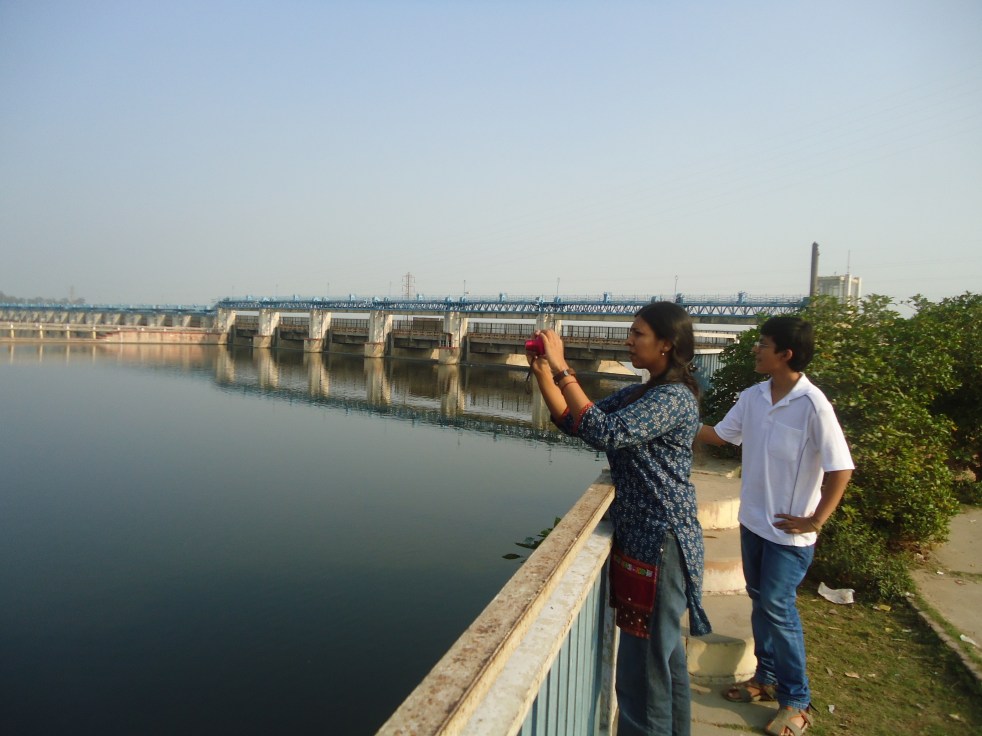
Narora Barrage, fish ladder, Ganga and memories

Nov 24, 2011, exactly five years ago from today was memorable for many reasons. On a not so cold winter morning, we (our son Hriday, my colleague Parineeta, whom we picked up from the airport, she arrived that morning from Pune and myself) started in Amir Singh’s car. Amir Singh has been driving us around for over a decade now. Continue reading “Narora Barrage, fish ladder, Ganga and memories”

Dams · DRP News Bulletin

DRP: 21 Nov 2016 (India Rivers Week to be Held in Delhi from Nov 28th)

India Rivers Week 2016 to be organised at WWF-India during Nov 28-30 is just a week away. The theme of the event this year is STATE OF INDIA’s RIVERS. Groups from all the different states have put together reports about the status of rivers in their states with a view of classify rivers as Healthy (blue), Threatened (Pink) and Destroyed (Red) after assessing their health based on a large number of parameters, including Dams, Pollution, biodiversity, encroachment, mining, among others. This is the first ever attempt at such an exercise. The Event will also feature announcement of Bhagirath Prayas Samman Awards for exemplary work in river conservation, River Lecture Preview of a feature film and prominent speakers in inaugural and valedictory functions. Individuals and groups working for better future of our rivers will be travelling to the event from all over India.

Continue reading “DRP: 21 Nov 2016 (India Rivers Week to be Held in Delhi from Nov 28th)”
Dams

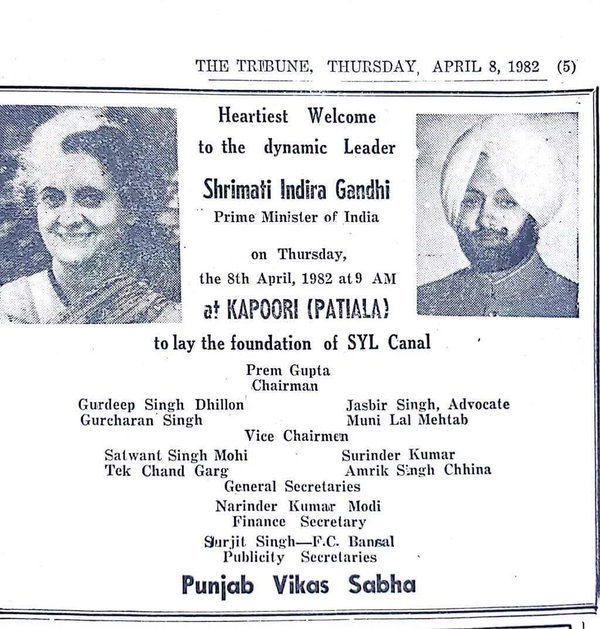
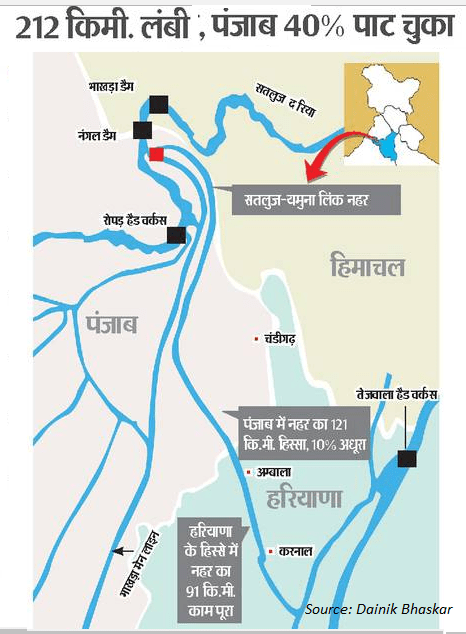
Sutlej Yamuna Link Row:  Chronology of Events

The SYL Row has been going on inconclusively for over last about 50 years. The matter also has been languishing in SC for last 40 years without any resolution. The seemingly unending disputes have been raising questions in the mind of many as to why the issue remains undecided and for how long the controversy will go on. To have better understanding of the issue we have put together a chronology of the events around the SYL dispute.

On November 10, 2016, Honorable Supreme Court (SC) of India has pronounced its judgment on Sutlej Yamuna Link Canal (SYL). In the decision, the apex court has termed the Punjab Termination of Agreements Act 2004 invalid and ruled that Punjab is bound to share Ravi-Beas river waters with Haryana and Himachal Pradesh, Rajasthan, Jammu and Kashmir and Delhi. The court has also ordered Punjab to comply with its two judgments for completion of the SYL canal.

Continue reading “Sutlej Yamuna Link Row:  Chronology of Events”

Dams

एसवाइएल विवाद:  जल संरक्षण में पिछडे़  पंजाब ओर हरियाणा

Guest Blog by Manoj Thakur 

सतलुज यमुना नहर (एसवाइएल ) पर हरियाणा के पक्ष में निर्णय आते ही पंजाब ओर हरियाणा में राजनीति तेज हो गई। पंजाब का कहना है वें अपनी जान दे देंगे लेकिन पानी नहीं देंगे। इधर हरियाणा का कहना है कि उन्हें पानी चाहिए क्यांकि यह पानी उनका हक है। अब सवाल यह उठ रहा है कि दोनों राज्यों में से कोई एक राज्य तो गलत बोल रहा है। लेकिन हकीकत यह है कि एसवाइएल पर दोना ही राज्य झूठ बोल रहे हैं।

Continue reading “एसवाइएल विवाद:  जल संरक्षण में पिछडे़  पंजाब ओर हरियाणा”

Dams · DRP News Bulletin

DRP: 14 Nov 2016 (Northeast Monsoon Failing, Water Crisis in South India to Become Worse)

To provide much-needed succour to those reeling under severe drought and facing acute drinking water shortage, as part of temporary drought-mitigation measures, the district administration has established helplines in all seven taluks.

A look at impacts of failing Northeast Monsoon on 4 South Indian States 

South India Northeast Monsoon Failing; Water Crisis To Become Worse Andhra, Tamil Nadu, Kerala & interior Karnataka generally receives good rains during the Northeast Monsoon period that commences from Oct until Dec. However, this year, rains have remained scanty over entire Southern India region. Northeast Monsoon has also set in quite late during Oct end. As of now excluding scattered rain events, Monsoon like heavy rains are still far from coming to the southern region of the country. This is a clear indication of possibility of drought-like conditions that might prevail over south peninsula during Northeast Monsoon. In a nutshell, the picture is not very encouraging for next few days and also any significant increase in rains are not foreseen over the southern regions of the country.

Continue reading “DRP: 14 Nov 2016 (Northeast Monsoon Failing, Water Crisis in South India to Become Worse)”
Dams · DRP News Bulletin

DRP: 7 Nov 2016 (India Rivers Week 2016 – Presenting the Positive & Beautiful side of India’s Abused Rivers)

India River Week-2016 to focus on State of India’s Rivers Since time immemorial, rivers have held a coveted place in the mindscape of Indians. Rigveda has dedicated suktas on mighty rivers like Sindhu describing not only the river, but its tributaries, its flow, its myriad paths, the glaciers and lakes which feed it. Across India, local cultures are replete with evocative river stories, river festivals and several rituals which bring rivers in the homes and hearts of people. And yet, Indian rivers remain some of the most abused in the world.

It’s natural for rivers to be in the news during the monsoon or a drought, but that is not the only reason why rivers are being discussed these days.

Rivers are indeed grabbing headlines, be it Cauvery or the Indus or the mindless plan of River Interlinking. But while that happens, are we discussing rivers at all? We are discussing conflicts and interstate issues, even geopolitics, but we have very successfully cut our rivers and the hydrological systems including the catchment, headwaters, groundwater, wetlands, lakes and estuaries into convenient pieces: water supply, water sharing, irrigation, hydro-power, drinking water supply, sanitation, pollution, flood control. It seems, most of the time, rivers are in the news for all the wrong reasons!

For example, the Cauvery is in the news for the never-ending dispute between Karnataka and Tamil Nadu on sharing of its waters, a conflict that keeps rearing its head whenever there is a deficit year. Unfortunately, the dispute is about the Cauvery, but the poor river’s condition is on no one’s radar. Everyone is only talking about its water!

Similarly, Mahanadi is in the news for interstate water disputes. But none of states is particularly worried about the condition of the river. In the case of the Mahadayi, again, the states seem least bothered about the river itself, with Goa planning to allow navigation on it without any assessment of its impact on the river. Telangana and Andhra are locked in Krishna and Godavari water-sharing disputes, which are bound to spill over to Maharashtra and Karnataka, among other basin states.

Continue reading “DRP: 7 Nov 2016 (India Rivers Week 2016 – Presenting the Positive & Beautiful side of India’s Abused Rivers)”
Dams · DRP News Bulletin

DRP: 31 Oct. 2016 (North to South India: Pharma Firms’ Waste Poisoning Rivers, People & Animals)

National The cost of cheap drugs The Bollaram-Patancheru region in Hyderabad, Telengana is famous for being one of the most polluted industrial areas in India. The periphery around the area has become so toxic one that 2001 article recommended that “most of the soils should be removed from agricultural production” in Patancheru. There is an increase in higher abortion rates to birth defects and stunted growth in children, as well as greater incidence of skin diseases in the region. In the district of Medak in the state of Telangana, Greenpeace in its several reports has identified that people, animals, crops and land have been afflicted by the pollution of industrial waste. Villagers report many serious health issues, including miscarriages, skin disorders, cancers and intestinal problems. The livestock suffer from the same problems. Most, not to say all, food grown in the village is unfit for human consumption. An inspection report published by CSE in November 2015 noted that most companies in Pattancheru-Bollaram were manufacturing pharmaceutical ingredients for which they did not have permission; using more water than the permitted limit and dumping more hazardous waste than allowed. Two of the units were operating without clearance from authorities.

In the case of the Ghaggar river in Punjab, all along its river course, one can witness foul smell, contamination of subsoil water, spread of water borne diseases and chances of damage of crop due to the presence of industrial chemical waste due to industrial waste from the industries in Punjab and Himachal. Media reports report similar occurrences around the Bhiwadi belt, where pharmaceutical companies discharge untreated effluents into drainages which then seep into the groundwater, making way into drinking water supply and agricultural land, resulting in environmental and health risks of unimaginable proportions.

In many low and middle income countries, weak laws and ineffective regulatory bodies have led to rising incidences of industrial waste flowing into ponds, lakes and rivers. If we examine the causes, the role of the pharmaceutical industry is similar to printing, chemical and paint industries. Pharma effluents contain hazardous chemicals which are leading to antimicrobial resistance or AMR where the human body is resistant to antibiotics, and thus, becomes susceptible to common infections. The very same ingredients used to manufacture antibiotics get mixed up with the bacteria during waste disposal, through our waters. Studies have shown that high levels of antibiotics are found in streams and lakes in the area close to many plant than in the body of human beings. The phenomenon is such that it is assuming the form of a serious public health issue in developing as well as developed countries. Over 700,000 people die every year because of antimicrobial resistance (AMR) all over the world. If this trend persists and resistance continues, McKinsey studies has shown that by 2050, around 10 million people globally will die because of AMR (Antimicrobial Resistance)

It is pertinent to note that New Delhi metallo-beta-lactamase superbug (NDM-1), a bacteria, first found in New Delhi’s public water supply in 2008, is resistant to almost all known antibiotics and has spread to over 70 countries in the world.

On the other hand, scientists from multiple institutes having done a detailed study on river pollution concluded that arsenic in the study areas poses potential health risk to the residents and indicates that the “ingestion of water over a long time could magnify the probabilities of cancer.  They collected and assessed concentrations of 27 trace elements in surface water samples from 48 sites of waterways (lakes, canals, and tributaries of major rivers) in four states: Karnataka, Tamil Nadu, Kerala, and Telangana. Analysis revealed that elements such as chromium, selenium, arsenic, iron, and manganese are the major pollutants, as their concentrations exceeded the acceptable national and international water quality standards in several sites of Vrishabhavathi, Ennore, Adyar, Cooum and Periyar rivers. Further, statistical analysis revealed that the Cauvery, Ennore, Adyar, Cooum and Periyar river basins are affected by various anthropogenic activities, leading to moderate-to-high pollution by arsenic, chromium, manganese, iron, and selenium. According to the scientists, potential pollution sources are industrial waste, sewage intrusion, paint industry waste, and automobile runoff. 

Continue reading “DRP: 31 Oct. 2016 (North to South India: Pharma Firms’ Waste Poisoning Rivers, People & Animals)”