Dams

Chennai: Playing With Water  

Guest blog by The Coastal Resource Centre, Chennai

This stories of Adyar and Kosasthalaiyar Rivers from Chennai is fifth in the series of online stories of urban rivers from across India. Please share your feedback and provide us with suggestions (read more in appendix). If you have any urban river stories or images that you might want to share, please send them to ht.sandrp@gmail.com and asid@veditum.org.

INTRODUCTION:

The South Indian coastal city of Chennai is home to more than 5 million people. The city is predominantly flat and consists of sandy coastal plains drained by three major rivers the Adyar, Cooum and Kosasthalaiyar. The latter is the largest and empties through a backwater and estuary at the Ennore Creek.

Because of its flat topography, early settlements in the region were possible only after making arrangements to hold rainwater through harvesting structures like Eri’s or irrigation tanks. Surplus from the tank network was designed to drain into rivers and thence to the Bay of Bengal.

Between 1980 and 2010, the built up area inside the city has grown from 47 square km to 402 sq km. During the same period, area under waterbodies declined from 186 square km to 71 square km.

Degrading land-use change and the abuse of the three rivers in the name of urbanisation is a major factor in the city’s increased vulnerabilities to droughts and floods.

Continue reading “Chennai: Playing With Water  “

Dams · Sand Mining

Sand Mining Review 2017- 3 – Judicial Interventions Fail To Restore Damage

In the first part we have seen, countless reports from 2017 revealing unabated riverbed mining,   exposing some politicians-officials-mafia nexus and showing no let up in violent attacks on many villagers, activists, government officials possibly by sand mafia across the country.

In the second part of Sand Mining Review of 2017, reports have highlighted several State Governments failing to effectively reign in unsustainable sand mining business despite sometimes prompt administrative actions. Interestingly, while several States want the Centre to form a uniform mechanism, the Central Government on the contrary has proposed further dilution of mining laws.

Now, here is third and concluding part of this review, highlighting judicial interventions on the issue.

Continue reading “Sand Mining Review 2017- 3 – Judicial Interventions Fail To Restore Damage”

Dams · DRP News Bulletin

DRP: 1 Jan 2018 (NGT Ordered Com on Subansiri: MoEF Again Fails To Understand Conflict of Interest)

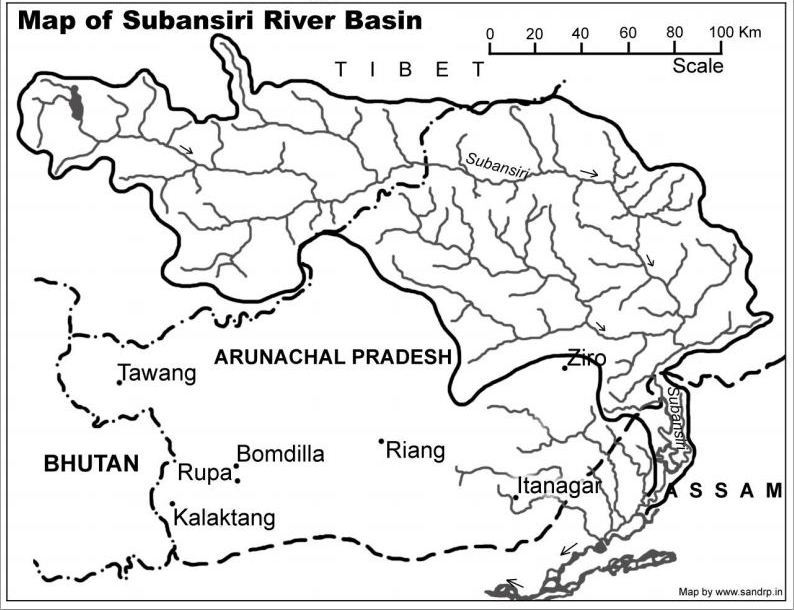
As per NGT’s October 16, order, the Ministry of Environment & Forest (MoEF) was asked to set up a “neutral” panel to objectively consider conflicting recommendations that have stalled the 2,000-MW Subansiri Lower Hydroelectric Project (HEP) on the Arunachal Pradesh-Assam border and come up with an “independent opinion” in three months.

The NGT said this was the only way to break the six-year logjam that has stalled a project vital to the “national interest.”

Contrary to this, MoEF on November 16, 2017 has set up a three-member panel with experts -who or their organisations- have all backed NHPC’s positions on the project in the past: Prabhas Pande, I D Gupta and P M Scott.

Continue reading “DRP: 1 Jan 2018 (NGT Ordered Com on Subansiri: MoEF Again Fails To Understand Conflict of Interest)”
Dams · DRP News Bulletin

DRP: 25 Dec 2017 (CAG Report Shows Ganga River Has No Hope Under NMCG)

Apart from mentioning Govt failure in checking Ganga pollution, the Comptroller & Auditor General’s (CAG) performance audit report on Ganga rejuvenation tabled in Parliament on December 19, 2017 specifically mentions that National Mission for Clean Ganga (NMCG) “could not finalize the long-term action plans even after more than six-and-a-half years of signing of agreement with the consortium of Indian Institutes of Technology”. The fact that NMCG does not have a “river basin management plan even after a lapse of more than 8 years of National Ganga River Basin Authority notification”, mentioned in the report also has great significance. 

It is surprising that NMCG is working without a river basin management plan or a long-term action plan. The CAG performance audit is also lacking. It rightly mentions that infrastructure to treat pollution has not been created but does no assessment whether the creation of infrastructure alone would revive the river.

Further, CAG audit does not look into the issues if lessons from past failures have been learnt, corrections done, independent scrutiny institutionalised, participatory governance achieved, and if this business as usual approach is going to achieve any better results even if all the money were spent, all the DPRs were sanctioned, all the meetings happened, all the manpower available and all the STPs constructed?

Hence it critical that CAG performance audit should have tried to address these issues. Can the state of Ganga improve without improving the state of tributaries? CAG does not even look at this issue.

The CAG report shows that this programme provides no real hope for better future of Ganga and Modi and his government will have a lot to answer when they go to polls in less than 1.5 years. It’s a serious indictment for the govt in general and Modi in particular since he has said right from the beginning that Ganga is their priority and all that they have tried is audited here. http://www.livemint.com/Politics/KW6MIOrOvMvZvEGeozwifJ/CAG-slams-Centre-for-failing-to-utilize-funds-for-Ganga-reju.html;                                 http://indianexpress.com/article/india/ganga-pollution-hc-orders-uttarakhand-govt-to-seal-establishments-polluting-rivers-4991923/; https://timesofindia.indiatimes.com/city/dehradun/building-of-ghats-crematoria-on-ganga-misses-nov-deadline/articleshow/62234114.cms https://www.nationalheraldindia.com/environment/pm-modi-fails-to-clean-up-his-mother-ganga

Continue reading “DRP: 25 Dec 2017 (CAG Report Shows Ganga River Has No Hope Under NMCG)”
Dams

Godavari: Worshiped, Destroyed & Forgotten River of Nashik

Guest Blog by Shilpa Dahake

One of the youngest participants of the river walk along the Godavari, which happened on 10th December 2017, asked – “आपली गोदावरी खरच मेली का?” (Is our river Godavari, really dead?)

Such an innocent query, but it raises multiple issues and questions – Why we worship, and simultaneously pollute our rivers? Do we abuse rivers because we haven’t understood them? To deliberate upon these questions, I present a case study of Godavari River in Nashik city. In a span of about 30 km from its origin at Brahmagiri Mountain, the Godavari encounters a fast developing and urbanizing city of Nashik.

Continue reading “Godavari: Worshiped, Destroyed & Forgotten River of Nashik”

Dams · Sand Mining

Riverbed Mining 2017 -II- States Look To Centre, Centre Dilutes Norms

In the first part we see, how under business as usual scenario, incidences of illegal riverbed mining going on unabated across the country. Reports suggest that Uttar Pardesh, Uttarakhand, Punjab, Madhya Pradesh, Maharashtra, Tamil Nadu, Karnataka, Andhra Pradesh, Telangana and Goa have emerged leading states affected by illegal sand mining.

In 2017, countless reports have exposed politicians-officials-mafia nexus responsible behind mindless plundering of scarce natural resource in open violations of norms. Similarly, throughout the year, there have been several violent attacks on villagers, activists, government officials by sand mafia. In a whole more than 26 people are killed in incidences involving illegal extraction of sand.

In this detailed second part, SANDRP presents account of various measures taken by different State Governments and Central Government to check the unsustainable riverbed mining practices. The third and concluding part would cover legal interventions initiated by respective Judicial bodies to reign in the unsustainable, unlawful sand mining activities across India.

Continue reading “Riverbed Mining 2017 -II- States Look To Centre, Centre Dilutes Norms”

Dams

Hindon River Gazetteer: An Introduction

Guest Blog by Manu Bhatnagar, INTACH

During India Rivers Day on Nov 25, 2017, a Gazetteer on Hindon River, part of Yamuna River basin in North India, was released by Shri Shashi Shekhar, former secretary, Union Ministry of Water Resources, Govt of India. It is first in a series of River Gazetteer that India Rivers Week hopes to bring out. Each Gazetteer is expected to provide a overview of various aspects of the concerned river basin. The Hindon River Gazetteer, titled “Reviving Hindon River: A Basin Approach” has been brought out by INTACH. This is the first attempt at building a basin level picture of a medium river. The document, we hope, would serve as a first template subsequent gazetteers on other rivers. We invite feedback from all concerned.

This article provides an overview of the contents of the Hindon River Gazetteer. For hard copy of the Gazetteerr, please contact: Manu Bhatnagar manucentaur@hotmail.com. It’s a 248 + xi page report in addition to additional maps provided for pull out viewing. The report is divided into five chapters has five annexures, 158 images, 75 maps (pullout maps are additional) and 77 tables. One of the short comings of the quickly brought out publication is that it does not contain list of acronyms used in the report. 

Continue reading “Hindon River Gazetteer: An Introduction”

Dams · Sand Mining

Illegal Sand Mining 2017: Rivers Continue To Lose Mindless Mining Battle

Undoubtedly sand is essential part of river ecosystem. Like flow and fish it helps rivers stay healthy. It’s critical for ground water recharge, replenishes the nutrients in moving water, supplies lean season flow to rivers and provides habitat to numerous forms of aquatic and riparian fauna.

Despite all this, illegal and unsustainable mining of sand and boulders is widespread across the country taking heavy toll on the lifelines of modern civilization. Continuing our effort to assess the scale of threat and level of devastation illegal sand mining is posing to our rivers, SANDRP presents State wise 2017 year end review on the issue. This is third straight year that we are doing this after 2015 and 2016. The subsequent reports would cover Governments’ role and Judicial interventions to reign in the unsustainable, unlawful sand mining activities across India.

Continue reading “Illegal Sand Mining 2017: Rivers Continue To Lose Mindless Mining Battle”

Dams · DRP News Bulletin

DRP: 18 Dec 2017 (Also Needed To Mention This About Turial HEP)

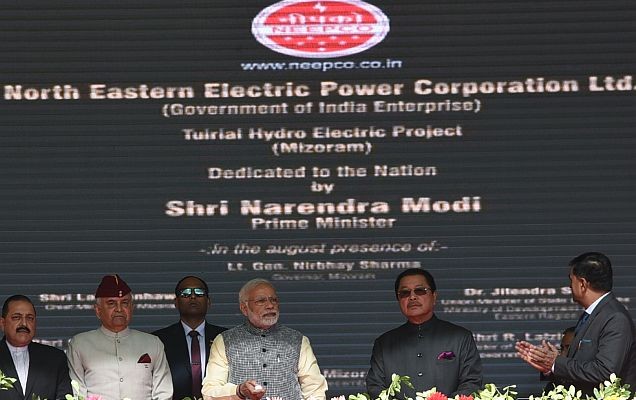
The Prime Minister, on Dec 16, 2017, while dedicating to nation the 60 MW Turial HEP, should have also mentioned:

– PUBLIC PROTESTS: The project faced strong protests from local people, so much so that work had to be stopped for over 7 years from 2004 to 2011. Even a day before PM dedicated the project, people took out a protest march.

– NO PUBLIC CONSULTATION:  One of the reasons people protested was that the project did not have any proper public consultation.

– NO PROPER IMPACT ASSESSMENT: Another reason for people’s anger was no proper environment or social impact assessment, or proper compensation and rehabilitation.

– HIGH COST: The project cost was Rs 368.72 Crores, but now already has gone above Rs 1441 crores officially, likely to go up further. That means per MW cost is already above Rs 24 crores, one of the highest in the country. WHO WILL PAY THE HIGH COST OF ELECTRICITY FROM THE PROJECT?

– HUGE COST ESCALATION from Rs 369 crores to over Rs 1440 crores

– HUGE TIME OVER RUN: The project was supposed to be completed many decades back but  has seen huge time over run, not only because of protests, but also because of inadequate mobilisation by the contractor, poor approach road, power house slope failure, among many other reasons.

This latest project once again shows that big hydro is no longer viable, one wishes, the Prime Minister would also highlight these realities in his speeches.

Continue reading “DRP: 18 Dec 2017 (Also Needed To Mention This About Turial HEP)”
Dams

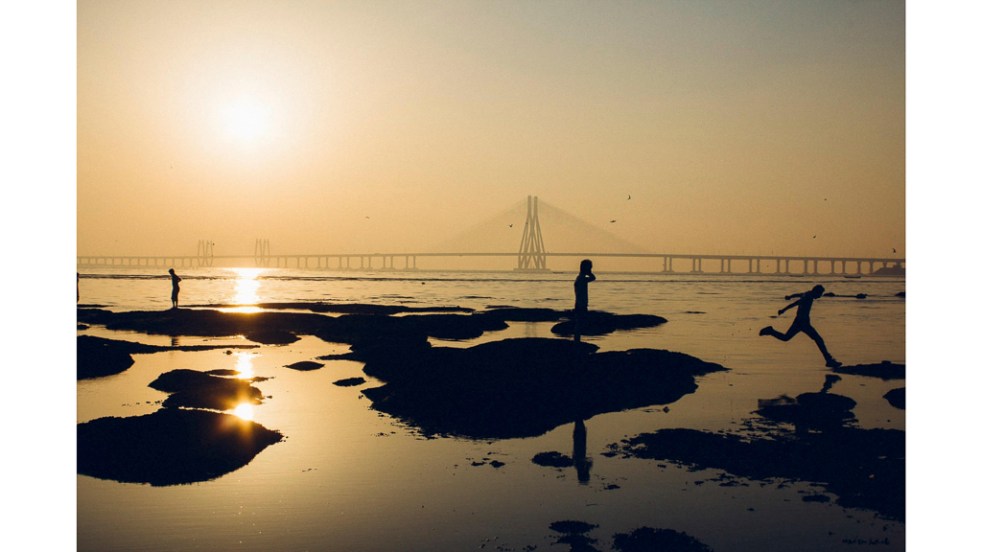
Mithi – Walking Along A Running River

 Guest Blog by Gopal MS aka Slogan Murugan

This story of Mithi River from Mumbai is third in the series of online stories of urban rivers from across India. Please share your feedback and provide us with suggestions (read more in appendix). If you have any urban river stories or images that you might want to share, please send them to ht.sandrp@gmail.com and asid@veditum.org.

PLZ DO WATCH THE AMAZING 43 frame slide show.

Continue reading “Mithi – Walking Along A Running River”