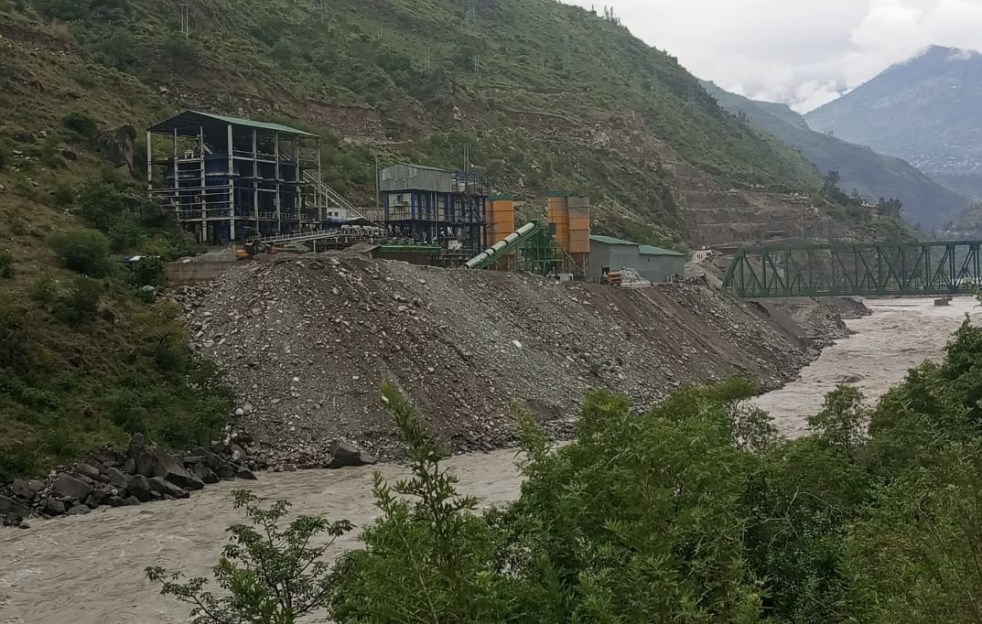
(Feature Image: Luhri-I HEP muck dump along Satluj river. Credit HNA, Aug 2024)
This annual overview highlights the critical issue of siltation in dams across India. Silt accumulation is defeating the very ‘multi-purposes’ for which they were built. While the reduced storage has been hampering dam-based water supplies, it is also leading to their fast filling up and untimely releases in monsoon season thus creating avoidable floods. It is in some case has also been resulting in plans to construct additional reservoirs and increase in dam height.
Unfortunately, once silt is inside the large dam storage, there is no economically viable way to remove it. But the governments seem least bothered about reducing the entry of silt into the reservoir by maintaining better catchment health and ensuring that upstream projects do not dump silt into the river. Talking, planning about silt removal from the dams have remained just that so far: Talks. We still lack a national silt management policy and credible action plan. The siltation will be affecting the utility of more dams in coming years, making even more convincing case for decommissioning of dams. Our previous overview on the subject can be seen here.
Study Dams are not permanent assets, siltation makes them unsafe The IISER study delivers a clear warning: India must stop viewing dams as permanent assets. Storage capacity of dams and reservoirs across India have been reduced due to heavy silt accumulation, which is eroding their capacity to generate power and protect communities from floods and droughts, says a new study by the Indian Institute of Science Education and Research (IISER) Bhopal. The study, published in the international journal Stochastic Environmental Research and Risk Assessment (SERRA), examined government records for more than 300 large reservoirs with storage exceeding 100 million cubic metres.
By 2050, many more dams, in the Himalayan region, the Narmada-Tapi basin, the Western Ghats, and Indo-Gangetic Plains, are expected to reach this level. “India’s Dam Safety Act, 2021, was enacted to strengthen structural inspections and prevent failures across more than 5,700 large dams. But our study highlights that safety cannot be limited to walls and gates alone. A reservoir that loses half its storage may not collapse but becomes functionally ‘unsafe’,” said Dr Somil Swarnkar, assistant professor at IISER Bhopal, who led the study. Prof. Rajiv Sinha of IIT Kanpur said that the study provides very useful & actionable insights.
The study analyzed data from the Central Water Commission’s recent report, ‘Compendium on Sedimentation of Reservoirs in India’, and found that a majority of the dams have lost over 50% of their total reservoir capacity. Researchers Uma Madhuri Mogili and Somil Swarnkar looked at nearly 370 large reservoirs in 7 regions. Most of the analysed reservoirs were found to have become operational between 1939 and 1991.
National and State Level Plans for desilting rivers and streams A “National Framework on Sediment Management (NFSM), October 2022” has been published by Department of Water Resources, River Development & Ganga Rejuvenation, Ministry of Jal Shakti, for comprehensive and holistic management of sediment in rivers, stream including reservoirs sedimentation. It emphasises on reducing silt generation rather than silt removal. (We see no impact of the National Framework on minimizing silt generation, in fact NHAI and other organisations have been accused of dumping silt into rivers by courts among others.)
The NFSM is a guiding document for handling the issues of sediment management across the river basins of the country including Punjab, and to assist various stakeholders such as State Governments/UTs, Ministries, and Departments in formulating strategies and executing projects with due consideration for environmental and ecological factors. NFSM also includes the relevant references of existing guidelines/notifications issued by departments/ministries of central agencies.
Desilting of rivers is not considered a technically viable solution for flood control as it can marginally minimize the magnitude of floods and is effective only for a short period. Selective dredging in specific reaches such as tidal rivers, confluence points with narrow constrictions, etc., sometimes may have to be undertaken based upon local site conditions; however, the same should be backed by proper scientific study.
Flood management and anti-erosion schemes are formulated and implemented by concerned State Governments as per their priority. The Union Government supplements the efforts of the States by providing technical guidance and also promotional financial assistance for management of floods in critical areas.
Govt of India is implementing “Flood Management and Border Areas Programme (FMBAP)” for providing Central Assistance to States for works related to river management, flood control, anti-erosion, drainage development, anti-sea erosion, etc. A total Central Assistance of Rs 8737.66 Crore has been released to the States/UTs since the inception of the scheme including a Central Assistance of Rs 67.51 Crore to the State Govt. of Punjab. The information was provided by the minister of Jal Shakti Shri CR Patil in a written reply to a question in Rajya Sabha on Dec 15 2025.
Siltation in dams North India Siltation has choked the water storage capacity of reservoirs across Punjab, Himachal Pradesh, and Haryana, with 24 dams collectively losing 4,183.6 MCM of storage, nearly 20% of their original capacity. The figures were presented by the Union ministry of Jal Shakti in the Lok Sabha in response to a question by MP Manish Tewari.
Himachal Pradesh shows the largest absolute reduction with sedimentation taking up 3,960.37 MCM (20.97%) of its original gross storage capacity of 18,882.974 MCM. The Bhakra reservoir alone has lost 2,568 MCM (26.02%), while the Beas reservoir has lost 1,190 MCM (13.88%). Smaller dams such as Baira (81.33%) and Chamera-I (50.1%) have also experienced sharp declines.
| State | Original storage | Present storage | Loss of storage | % loss |
| Punjab | 3,479.7 | 3,257.5 | 222.3 | 6.4% |
| Himachal | 18,883 | 14,922.6 | 3,960.4 | 21% |
| Haryana | 13.7 | 12.4 | 1.3 | 9.2% |
Punjab Silt choking dams, rivers Decades of silting have also drastically reduced the storage capacity of headworks and dams. For example, the Ferozepur Headworks, which was built in 1928, had a water storage capacity of 24,000 acre feet (one acre-foot is water with one foot depth on one acre). Today, it has been reduced to only about 5,000 acre feet.
The Harike Headworks’ water storage capacity is down from 67,900 acre feet to about 10,000 acre feet. The Bhakra Dam (1956) on the Sutlej, Pong Dam (1972) on the Beas and Ranjit Sagar Dam on the Ravi (1999) were designed with the water storage capacity of 9.34, 8.57 and 3.28 BCMs, respectively. Their storage capacity is down by 20%. Today, the condition is such that even moderate releases of 1.5 lakh cusecs in the Sutlej and Beas cause devastation, compared to past floods when much higher flows were absorbed.
The solution lies in effective flood management, which depends on keeping the riverbeds silt-free and maintaining downstream river carrying capacity, river embankments. Silt coming from mountains through rivers and accumulating in the plains is a natural phenomenon. But with dams, headworks and other structures built on rivers, silt accumulation has increased. (Kahan Singh Pannu is ex-Secretary, WRD, Punjab.)
HC asks MoEF to decide on Percha dam desilting plea in 45 days The check dam, located in the Shivalik foothills, has accumulated significant amount of silt, reducing its water-carrying capacity and leading to a dry bed. It has also witnessed the death of hundreds of wild animals on the dry bed. The dam had not been de-silted for several years. A division bench of the Punjab and Haryana High Court in Jan. 2025 passed these orders while disposing of a suo motu petition on the issue. The bench issued orders after it was informed by the state of Punjab that an application for permission to de-silt the dam was made by Punjab as early as April 12, which is under consideration by the Union ministry.
Earlier, the de-silting of dams was permitted without clearance from the ministry. However, based on the report of the environment advisory committee (EAC) as well as the directions by the NGT, the MoEF directed that the exemption from environment clearance (EC) provided via SO 1224(E) dated March 28, 2020, for dredging and desilting of dams, reservoirs, weirs, barrages, rivers, and canals shall be subject to environmental safeguards as proposed in the National Framework for Sediment.
Assessment sedimentation rate in Chohal Dam Abstract: Over a 32-year period, the Chohal reservoir exhibited declines in live storage capacity, with Landsat data indicating a loss of 30.2% and Sentinel data indicating 25.2%. The annual sedimentation rates, estimated at 0.94 and 0.79% for Landsat and Sentinel datasets, respectively, underscore the correlation between superior satellite data quality and reduced sedimentation rates. In conclusion, this study emphasizes the critical role of advanced remote sensing techniques, particularly utilizing high-resolution satellite data, in informing sustainable reservoir management practices to combat sedimentation challenges and ensure long-lasting water resource availability in the Chohal reservoir area and beyond.

Karnataka Dams’ storage shrinking As per Oct. 2025 report, of the 74 reservoirs and dams in Karnataka, the WRD has studied the silt accumulation of only 14 over the last decade and has found increasing sedimentation in them, resulting in 3% to 28% loss of overall storage. Officials at Karnataka Engineering Research Station (KERS), the department’s nodal wing studying silt accumulation, said that a proposal to assess silt accumulation in 48 reservoirs during the next cycle of the National Hydrology Project (NHP) was sent nearly seven months ago, and so far, the state hasn’t received any response from the Centre.
The exercise is expected to cost Rs 7.45 crore. Based on this study, the government prepared action plans to manage the reservoir. The study requires three years for completion.
Accumulation of 32 tmcft of silt at the Tungabhadra reservoir has forced the govt to consider balancing the reservoir at Navali. The sheer quantity and cost involved have thwarted several attempts by farmers and the govt to remove the silt. “Every year, nearly 0.45 tmcft of silt gets accumulated in the TB dam. The periphery of the reservoir has stagnant silt, which gets flushed downstream,” said Hanumangouda Belagurki, former chairman of the Agriculture Pricing Commission. He blamed poor maintenance for the breaking away of its crest gate. “Had we implemented catchment area treatment plans and de-silted reservoirs on time, there would have been no need to build other dams,” he said.
A member of the Upper Krishna Project Land Losers’ Agitation Committee said increasing the Almatti reservoir’s height could have been avoided had officials properly managed the flood inflow and outflow. “The quantity of silt at Almatti and Narayanpur is too high to be cleared,” he said. The govt dropped a plan to desilt the Harangi dam (0.83 tmcft of silt) as it was not economically feasible. KERS director K G Mahesh said most of the Krishna basin reservoirs are getting silted due to black cotton soil and floods in Maharashtra.
Dams lose 12.5% capacity A recent analysis by the WRD revealed that the state’s top ten dams have silted up by 4% to 28%, with average 12.49%. In terms of quantity, Tungabhadra dam in Vijaynagar district received 0.42 TMC silt annually and has accumulated 31.61 TMC silt in 75 years since it was commissioned in 1950. The Basavasagar (Narayanpur) dam in Yadgir district, commissioned in 1982, has the highest siltation in terms of %, at 28%, it has 10.55 TMC silt, second highest in the state.
The TB dam is 21 km long north to south, it its silt was removed and spread to the height of 10 feet in farm land, it will need 73462 acres of land. Even with 1000 tractors removing 1 TMC silt, the task is unviable. In 2017, farmer groups tried to desilt using 125 tractors for two weeks and they could remove only 0.75 TMC silt at an expense of Rs 15 lakhs on diesel and food. The silt was dumped in 10 km radius in Vijayanagar and Koppal districts. The state govt proposed to centre removal of 26 TMC silt at cost of Rs 13695 Cr, but no approval has come.
Currently, active desilting is happening only in case of Harangi dam in Cauvery basin, where 0.031 TMC of silt out of 1.23 silt in the dam is being removed from the confluence point in the backwaters at a cost of Rs 39 Cr.
Ecologists have blamed reckless development activities in the catchment areas and rampant degradation of land. They advocate for increased green cover in catchment areas to combat soil erosion and protect these vital water resources.
Siltation reduces Almatti capacity by 7.55 tmcft According to KERS 2023 study, the Almatti dam has accumulated 7.556 tmcft of silt bringing down the water holding capacity of the reservoir to 115.552 tmcft as against its maximum storage of 123.081 tmcft. The KERS, in a report to the govt, has claimed that the water holding capacity of Almatti dam has gone down by 6.1% since its commissioning over two decades ago.
Siltation concerns at Harangi dam In 2018, the dam was filled with approximately 1.2 tmcft inflow of silt. Currently, projects amounting to Rs 130 cr are under way to bolster the reservoir’s resilience. Among these, Rs 50 crore has been allocated for the construction of a gabion wall intended to prevent further siltation. Additional measures include strengthening the catchment areas and initiating the long-overdue removal of the deposited silt.
Telangana Govt’s desiltation plan sight ₹10K cr revenue potential The govt has already finalized agencies for taking up the exercise on a pilot basis in the Lower Manair, Mid Manair and Kaddam projects. The overall plan aims to dredge approximately 1,696.78 lakh tonnes of silt across all three reservoirs over the 20-year period, with more than Rs.10,000 crore expected to be raked in.
From the Kaddam project, approximately 2.8 million cubic metres of material will be removed. Some 2.2 million cubic metres of silt is to be lifted from the Lower Manair project. Mid Manair, where the storage capacity is to be reclaimed by some seven TMCs, may yield about 41.85 million cubic meters. The overall cost involved would be Rs.1440 crore, with the revenue generated, according to officials, to be much higher.
The implementation agencies are not yet ready to take up the work immediately. They are still in the process of making their arrangements. The work may take off in time only with regard to Lower Manair dam. The govt is ready with 50 acres to be handed over to the agency for silt dumping. In the other two projects, the process is still on for acquiring land.
However, only 20-30% of the total yield could be coarse enough for use as sand, while the rest will be fine silt or clay, not usable directly for construction. Field experiences from reservoirs like Nagarjuna Sagar and Tungabhadra suggest that about 25 % of total desilted material could be construction-grade sand. It is estimated that 1.2-1.3 MCM sand could be potentially recovered from the Kaddam and Lower Manair projects.
While surveys of siltation levels have been completed for some projects, comprehensive studies remain pending across the State’s 159 projects with a gross storage capacity of 929 TMC. In contrast, the success of Mission Kakatiya demonstrates the immense potential of desilting minor irrigation tanks. Over 27,713 tanks were restored, enhancing groundwater recharge and stabilizing irrigation for 20 lakh acres. The initiative improved crop yields, with cotton, maize & paddy showing significant increases, while boosting fishermen’s income by 30-35%.
3 major reservoirs to be desilted over 20 years In Jan. 2025 the Irrigation department invited tenders for the de-siltation of these three reservoirs – Mid Manair in Sircilla district, Lower Manair in Karimnagar district and Kadam in Nirmal district – under the NFSM. The estimated cost of de-silting these three dams is Rs 1439.55 crore over the next 20 years. De-silting will be carried out without altering the existing features of the reservoirs.
The govt is expecting over 1,696.78 lakh tons of silt to be dredged from these three reservoirs over the next 20 years. The govt estimated that 84 lakh tons of dredged silt will be generated each year from 2025 to 2034, another 85 tons each year from 2035 to 2043 & 91.78 lakh tons in 2044. Around 25% of the dredged silt is expected to be sand.
The dredged material will be sieved and the silt and sand will be stored at different places. The govt is likely to sell the sand through Telangana Mineral Development Corp to generate revenue. If farmers are willing to use silt for their fields, it would be provided free of cost.
Maharashtra Vidarbha reservoirs face severe siltation crisis Research conducted by Maharashtra Engineering Research Institute reveals that reservoirs across the region lose between 0.164 to 1.135 % of their original capacity annually due to siltation. This figure significantly exceeds the national average of 0.4 % annual storage loss recorded by the CWC’s national compendium on reservoir sedimentation.
Major water bodies like Khadakpurna reservoir in Buldhana district have repeatedly touched dead storage levels, effectively holding zero per cent capacity. The Gosikhurd dam in Bhandara, despite being one of the largest water infrastructure projects in eastern Maharashtra, reported only 30.2 per cent storage by April 2025. In Chandrapur district, the Erai dam faces an annual capacity loss rate of 1.135 per cent due to sedimentation, a figure that officials describe as “very serious” and requiring urgent intervention.
The Totladoh dam, which supplies water to Nagpur city, shows sedimentation at a rate of 2.66 MCM per year, representing 0.25 % annual loss of its original live storage of 1,091 MCM. While engineers classify this rate as “not alarming” compared to other regional projects, the cumulative effect over decades substantially reduces available water during critical periods.
Govt documents reveal systematic shortcomings in desilting efforts across Maharashtra. Budget allocations remain insufficient for comprehensive desilting programs. Corporate Social Responsibility initiatives provide sporadic relief but cannot address systemic requirements. Catchment area treatment, recognized as essential for controlling sedimentation, receives inadequate attention in project planning and execution. The interstate basins complicate coordinated watershed management necessary for sediment control.
The CWC’s dam safety protocols require regular sedimentation assessments, but implementation remains inconsistent. Forest clearances and environmental approvals create additional delays for maintenance projects. Legal interventions increasingly highlight administrative failures. Climate change exacerbates existing problems through altered rainfall patterns and increased extreme weather events.
TAMIL NADU: WRD initiates measures for desilting Amaravathy Dam after decades The WRD is learnt to have drawn up an estimate of minimum expenditure on overheads for arriving at the ‘revenue model’ through selling the sediment in the Amaravathy Dam, in order to scale up the storage. The expenditure would be towards constructing the road till the location in the dam from where the sediment with high fertility value could be removed.
The current storage capacity of the dam is 4.047 tmc. An analysis by the department during 2017 indicated that the water spread area had 22.8 MCM silt. The Tiruppur district administration had then notified removal of 1,31,400 cubic metre of silt in the first phase. The Water and Power Consultancy Services Ltd has prepared a report based on which the dept will be readying a Detailed Project Report through a consultant.
The initiative to desilt the dam was taken in 2014, but had to be shelved due to intervention by the NGT. The contention of the dept was that new approval would not be necessary as desilting of the dam could be categorized under maintenance work and not any new project. But, it was not accepted by the NGT. The consultancy appointed now for preparing the DPR has been entrusted with the responsibility of securing environmental approval.
‘Conduct survey to remove silt from Panshet, Varasgaon dams’ WRD Minister Radhakrishna Vikhe Patil on April 26 told irrigation officials to conduct a sediment survey to assess the amount of silt in Panshet and Varasgaon dams.
Kerala 7k ton sediment removed from Aruvikkara reservoir Gujarat-based Divine Shipping Services removed 7,000 tons of silt from the reservoir and is expected to take out 93,000 tons more. The agency divided the reservoir into ten pockets using the earth taken from it and 7,000 tons of silt was removed from just one pocket. The removal of silt from the other nine pockets is expected to be completed in 10 months. The reservoir has a capacity to store 2 MCM, but due to silt deposition, only less than 1 MCM space is available for use.
KWA awarded the work to Kerala Irrigation Infrastructure Development Corp (KIIDC) and the corp entrusted it to the Gujarat agency. “The agency has to pay Rs 12.7 crore to KIIDC for the work and Rs 1 crore was paid in advance. Half of the silt comprises sand and clay contribute the remaining portion. The extracted sand is not good to be used for construction, but mixing it with some materials makes it fit for construction,” Shobha KS, GM of KIIDC, said.
The removed silt is kept on land owned by KWA at Aruvikkara and the segregation of sand and clay from the silt is progressing. It is learned that Adani Port agreed to buy the sand from the agency for the construction of a godown, and clay will also be sold by the agency to some other parties. The officials of KWA informed that the reservoir was built on forest land in 1933 and it has not been desilted since then.
More sediment, silt will be removed from dams WRD Minister Roshy Augustine in June 2025 said that Idukki Malankara dam had to be opened this monsoon due to reduced storage capacity. He said the aim is to solve this issue through desilting. Augustine mentioned that tender procedures to similarly renovate a few other dams will commence soon.
MoJS Dam desilting status in Haryana, Punjab & Himachal According to the National Register of Specified Dams, 2025 compiled by the National Dam Safety Authority, Haryana has 3 specified dams, Punjab has 15, and Himachal Pradesh has 24.
Under the ongoing externally funded DRIP Phase-II & III, provision has been made for de-siltation of selected dams, subject to the techno-economic viability. At present, the Punjab WRD and the Bhakra Beas Management Board (BBMB) are the implementing agencies under DRIP-II & III, whereas Haryana and Himachal Pradesh are not part of this Scheme.
The Govt of Punjab has conveyed that it has undertaken the de-siltation of 13 dams in the Kandi area using its own financial resources. At present, de-siltation works are in progress at four dams namely Chohal, Siswan, Saleran, and Thana. For the remaining 9 dams, the Govt of Punjab has submitted proposals to the Government of India seeking forest clearance.
BBMB has, till date, not initiated de-siltation activities in Bhakra and Pong. However, BBMB has contemplated a pilot project for de-siltation of the Bhakra reservoir under the DRIP Phase-II & III Scheme. This initiative is envisaged in a revenue-generation mode; accordingly, no separate fund requirement for the de-siltation of the Bhakra reservoir is anticipated.
In Himachal Pradesh, most dam-owning agencies undertake silt removal from reservoirs through periodic flushing operations, carried out in accordance with the provisions of the Operation & Maintenance (O&M) Manual, typically during the monsoon season.
Centre constitutes panel for Bhakra desilting The Union Jal Shakti Ministry has formed a 10-member committee for the Bhakra desilting project and the state govt reportedly granting in-principle approval. Under the proposed plan, proceeds from the mineral-rich silt will be shared among HP, BBMB and other member states as per a fixed formula. Himachal is expected to receive the largest share because the dam and its reservoir lie within the state. BBMB officials said the reservoir’s storage capacity has already fallen by about 26% since the dam was built. Each year, an estimated 39.01 MCM silt enters the reservoir, higher than the 33.61 MCM projected at the time of impoundment in 1958.
According to the proposal, HP will receive its standard royalty from sand mining, while BBMB will retain any additional revenue. “If sand is sold at ₹100, the state gets its royalty—say ₹65—and the remaining ₹35 goes to BBMB,” an official explained. “This will boost income for HP, BBMB, and partner states while addressing the siltation challenge.” If approved, BBMB plans to execute the desilting as a one-year pilot project. BBMB has identified a site at Bilaspur because here water levels remain low for 8–9 months each year, as the most feasible point for excavation. The site sits along an NHAI corridor, enabling easy loading and transportation of extracted sediment across North India. Authorities have also requested NHAI to use the material for road embankments and earth filling to reduce construction costs.
Himachal Pradesh Despite HC orders, NHAI, Railways continue illegal dumping In a brazen violation of the Himachal Pradesh high court orders, the National Highway Authority of India (NHAI) and the Railways continue to dump landslide debris and muck illegally in the rivers and rivulets along the Kiratpur-Manali highway, including in the Bhakra dam reservoir and the Beas river as per this Sept 2025 report. The Fourlane Visthapit and Prabhavit Samiti (FVPS) has complained to the Bilaspur deputy commissioner and the forest department with proof about the illegal dumping in the Bhakra dam.
As per the FVPS complaint, the ongoing work on the Bhanupali-Bilaspur-Beri rail line has been causing pollution in the Bhakra reservoir. Along the highway at Bharari, a cofferdam, a temporary structure built by the Railways on the bank of the Bhakra reservoir to create a dry work area, along with huge amounts of debris, has submerged into the lake due to rising levels. The cofferdam was built for building bridges that would connect Railways tunnel No 16 Portal-1 with tunnel No 15 Portal-2. “The Railways dumped muck in the cofferdam to make the wetland dry for building bridges. However, as the water level increased due to heavy rainfall, all the muck submerged in the river along with the cofferdam,” said FVPS.
Landslide debris is also being dumped in the Beas river and rivulets along the highway between Pandoh and Aut in Mandi district. This highway stretch has seen more than three dozen landslides this monsoon. It may be mentioned that in a series of orders, the Himachal Pradesh high court last year lashed out at the NHAI and the state govt departments for failing to stop illegal muck-dumping in the Bhakra dam reservoir and forest areas.
The high court not only ordered the NHAI and the state govt to ensure that muck was not dumped illegally into the rivers and forest areas but also ordered the Himachal Pradesh Pollution Control Board and the govt agencies to lift the illegally dumped muck in Bilaspur district. Following the court orders, the Bilaspur police last year registered eight FIRs against companies hired by the NHAI for the Kiarapur-Manali highway widening work. However, despite the high court orders and police cases, illegal muck-dumping continues unabated.
Uttarakhand HC questions muck dumping by Vishnugad Pipalkoti HEP A division bench of the High Court Chief Justice G Narendar and Justice Subhash Upadhyay, hearing a PIL on muck dumping in and around the 8th-century Laxmi Narayan Temple built in Haat village, Chamoli, directed the state’s chief secretary and culture secretary to inspect the site and submit a report by the next hearing on Oct 17. The Tehri Hydro Development Corp India Ltd was also ordered to file an affidavit detailing an action plan and roadmap for debris removal. Expressing serious concern over the dumping, the court directed THDCIL to conduct an environmental impact assessment of the site and submit the report.
Haat village has been acquired for muck dumping related to the Vishnugad Pipalkoti hydroelectric project. The petitioner submitted a report from the ASI, which recommends that muck dumping around the temple complex be stopped. In a previous hearing, the court noted that prima facie, the dumping could affect not only the temple complex but also the surrounding ecology. It further directed that muck dumping should cease within a 100-meter radius of the temple complex and along its approach road.
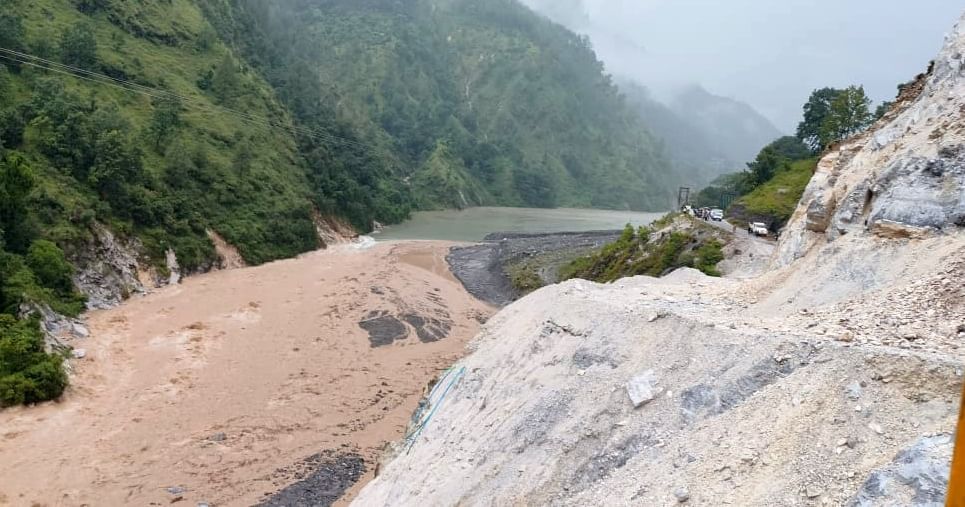
DRP National Silt Management Policy Needed While a National Silt Policy is necessary as a first step, by itself, it won’s suffice. (The National Framework on Sediment Management of 2022, mentioned above clearly seems non serious effort considering its lack of impact on even national organisations like NHPC, NHAI or Railways.) We also need an action plan to ensure that minimum amount of silt enter the rivers and reservoirs, since once they enter the rivers and large reservoirs, it is not economically viable to desilt them. To achieve this objective, we will not only need a well thought out action plan, but also credible monitoring and compliance. Unfortunately, we have neither good track record nor the will to achieve any of these. Maybe we can start by creating pilots in this direction as soon as possible, as a first step.
Stopping and reversing the degradation of catchments of rivers around the country has many advantages, including improving local and river basin scale water security, reducing disasters, reducing reservoir siltation, reducing river silt accumulation, reducing disastrous floods, improving biodiversity, improving resilience to climate change impacts, improving agriculture production, among others. All these are also part of the prudent silt management, if only we were ready to wake up!
India Needs Effective Measures to Check Sedimentation The de-siltation is a short-term measure involving complex processes making it economically unviable and practically futile exercise. First of all, India still lacks a National Silt Management Policy backed up by credible action plan. Secondly, as part of their integral functions, rivers naturally carry silt which has multiple benefits. However, large scale anthropogenic interventions in river catchments in terms of deforestation, infrastructure construction, dumping, riverbed mining etc. have resulted in sharp increase in sedimentation rate & degradation of rivers catchment areas.
Study Reuse of bottom sediment from reservoirs to cropland is a promising agroecological practice that must be rationalized Abstract: In semi-arid areas, intermittent streams are often equipped with small reservoirs to store water for irrigation and/or groundwater recharge, and to capture sediments lost through erosion. These reservoirs must be periodically desilted to maintain their storage capacity. While bottom sediments are generally considered waste, their reuse in agricultural fields is a centuries-old practice in India. Our study aimed to test the hypothesis that local farmers’ knowledge and current practices can help in understanding and rationalizing this practice. The study relied on both interviews of farmers and physico-chemical analysis of soil and sediment samples collected in a cultivated watershed in South India.
Report The role of sediments in river hydrology Sediments play a crucial role in river hydrology, influencing flow, flooding, and ecosystems. However, human activities on rivers such as the construction of dams and barrages, sand mining, solid waste dumping, encroachments hampers the flow of sediments, which affects the rivers’ energy and flow, and consequently its floodplain. Dams trap a lot more than just water in their reservoirs – they also trap sediment. This deprives areas downstream of sediments and soil nutrients, as the sediment accumulates within the dam reservoir.
SANDRP

 SANDRP