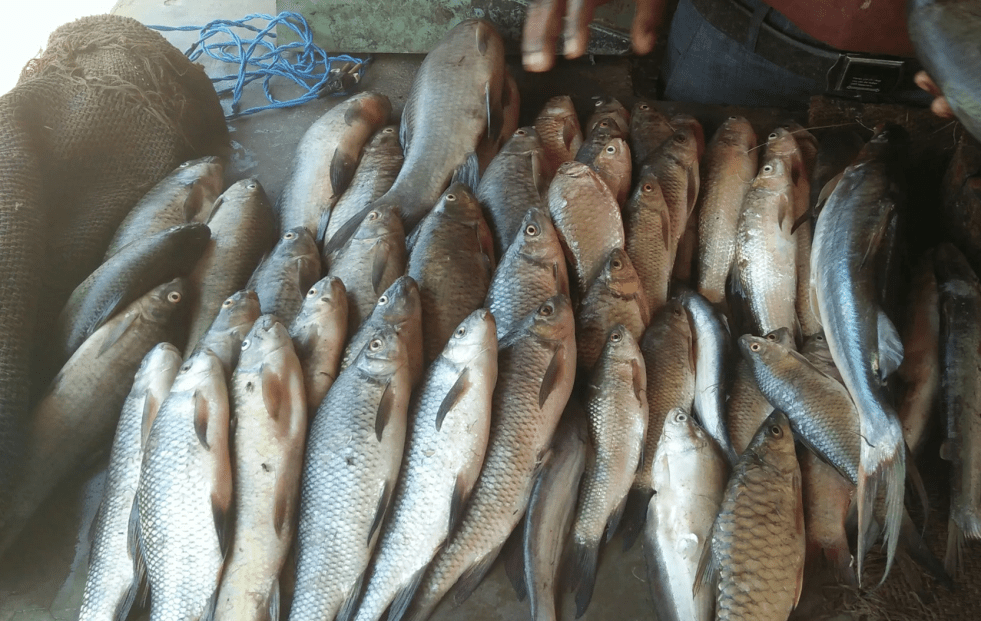
Recognizing the fisherfolks’ valuable services to the society, the annual World Fisheries Day (WFD) will be celebrated on Nov. 21 with the theme “We have not caught anything, but at your word I will let down the nets”. On this occasion SANDRP compiles top 10 positive developments that took place during last one year regarding protection of inland fisherfolks’ rights and also protecting the habitats of freshwater fish species in India.
Amid growing threats over inland fishers and habitats of freshwater fish species, India remains second largest fish producing country. Undoubtedly, the rise in inland fisheries output has largely been happening in reservoirs, aquaculture, artificial waterbodies by introducing selective fingerlings and seeds in large volume which often are reared in hatcheries & even imported from abroad. At the same time the native fisherfolks & freshwater fish diversity have been facing existential crisis on account of dams, hydro projects, increasing pollution, riverbed mining, encroachments & exotic fish invasion activities as per some judicial orders covered here and will also be highlighted in following parts of our annual overviews on WFD 2025.
1 1st International Fisherwomen’s Day to demand equal rights “Fisherwomen have always held the coastline together. They wake up before dawn to carry fish to market, manage homes through storms and loss, and are the first to rebuild after every cyclone. Yet, their names do not appear in government records. They are still called ‘helpers’ or ‘dependents’, while laws, schemes, and cooperatives continue to be written in the masculine lens.
This erasure, the women declared in Kerala on Nov 5, 2025 (in the first India Fisherwomen Assembly), must end. They demanded recognition not as “wives of fishers,” but as fishers themselves — rightful claimants of the seas, keepers of knowledge, and protectors of coasts, writes Jesu Rethinam and Vijayan MJ in this article on 5th November, the first International Fisherwomen’s Day locating the fisher women’s struggle in a feminist political economy and justice frame.
Apatani women sustain Ziro’s aquaculture In the terraced paddy fields of Ziro Valley in Arunachal Pradesh’s Lower Subansiri district, the tribal Apatani community has nurtured a unique farming tradition that blends rice cultivation with fish rearing. Known locally as Aji-Nii, this centuries-old practice turns paddy fields into fishponds, where indigenous rice varieties like Emo, Mipya, and Pyaping grow alongside common carp (Cyprinus carpio), a fish highly valued in the local markets. For generations, this farming system has fed families, conserved biodiversity, and demonstrated how people and nature can thrive together. But here’s another remarkable detail: nearly 80 percent of the farmers keeping this tradition alive are women.
2 India’s Fisheries at a Glance India stands as the second largest fish producing nation in the world, contributing around 8% of global output. From 2013-14 to 2024-25, the country’s total fish production has grown by an impressive 104% comprising both marine and inland sectors. Output has increased from 9.6 MT to 19.5 MT. Much of this growth has come from inland fisheries, which have expanded by 142% in the same period. Production in this segment has risen from 6.1 MT to 14.74 MT.
The Union Budget 2025-26, proposed the highest ever total annual budgetary support of Rs. 2,703.67 crores for the fisheries sector.
As of April 2025, ₹11.84 crore has already been sanctioned under The Pradhan Mantri Matsya Kisan Samridhi Sah-Yojana (PM-MKSSY) to support early implementation.
As of June 2025, 4.76 lakh KCCs have been issued to fishers and fish farmers across all States and Union Territories, with a total disbursement of ₹3,214.32 crore.
As of 22 July 2025, Department has approved fisheries development projects worth ₹21,274.16 crore under the Pradhan Mantri Matsya Sampada Yojana (PMMSY).
As of 29 July 2025, the Department of Fisheries has supported infrastructure projects under the Pradhan Mantri Matsya Sampada Yojana with a total outlay of ₹17,210.46 crore.
As of August 2025, a total of more than 26 lakh stakeholders including fishers, micro-enterprises, Fish Farmer Producer Organisations and private companies have registered on National Fisheries Digital Platform (NFDP).
3 Harnessing reservoir fisheries It is now also the second-largest nation globally in aquaculture production. The country has witnessed a 92 % increase in the national fish production since 2013-14, which stands at a record 18.4 MT in 2023-24. Interestingly, 75 % of our fish production comes from inland fisheries that include freshwater, brackish and saline resources. Reservoirs, spread over an area of more than 31.50 lakh ha, are a major source of freshwater fisheries and aquaculture. The fish production from these water bodies is approximately 1.8 MT. While Madhya Pradesh has the maximum area under reservoirs (approximately 6 lakh hectares), Tamil Nadu has the highest number, with over 8,000 reservoirs. For the purposes of fisheries management, reservoirs are categorised as small (less than 1000 ha), medium (1000-5,000 ha) and large (more than 5,000 ha).
A key factor in the rise of the country’s fish production is the increase in fish productivity in reservoirs to 100 kg per ha compared to 50 kg per ha in 2006. This has been made possible by the application of cage culture technology with sufficient stocking of quality seed backed by requisite budgetary support under flagship programs such as Blue Revolution (BR) and the PMMSY. While the Indian Major Carps (Catla, Rohu, Mrigal) form the core species for stocking, need-based stocking of additional species (Tilapia, Pangasius, etc) in consultation with beneficiaries is provided in the above programmes. These reservoir cages, floating or stationary, are typically made of synthetic netting or mesh with a frame or structure for support. The mesh allows for natural water flow, ensuring oxygen and nutrient exchange with the surrounding environment. Additionally, these cages are anchored to the bottom or suspended from buoys to maintain their position and depth.
Kerala project boosts income of Idukki dam’s tribal fishers Malsyaranyakam, an initiative launched by Forest department officials in the Idukki Wildlife Sanctuary in 2019, is now providing a steady income for the Oorali tribespeople who fish in the Idukki reservoir. The tribespeople are descendants of Chemban Karuvellayan Kolumban, who played a key role in the realisation of the Idukki dam.
M.G. Vinod Kumar, a former range officer of the sanctuary and the present Flying Squad Divisional Forest Officer (DFO) in Idukki, said the tribespeople used to fish from the reservoir and sell it to middlemen cheaply. “With the guidance of the Forest department, we started a 12-member Kolumban Unnathi Fishermen Subgroup and opened a stall at Vellapara. The move transformed the lives of tribespeople in the settlement,” said Mr. Kumar.
4 West Bengal: First hilsa catch double that of last two years together Fishermen and officials of the state fisheries department attributed the improved haul to the reduced salinity in coastal waters because of timely monsoon rain and stricter enforcement of the two-month fishing ban before the start of the June season. The ban allowed the hilsa to breed and mature. A coordinated ban in Bangladesh implemented during the same period also played a role. In the past few years, unchecked illegal fishing had disrupted the spawning cycle.
Fishermen and fisheries officials explained that high salinity in seawater typically keeps hilsa away from the coast, but early monsoon rain in the second week of June had helped reduce the salt content, attracting the fish. A delayed monsoon in the past two years had meant the water remained too saline for a good haul. Most boats from harbours in South 24-Parganas and East Midnapore had to return empty-handed.
The drastic drop in hilsa catch in the past two seasons caused alarm in both the fishing community and government circles as around 30,000 people directly depend on this seasonal livelihood. Experts said the confluence of the Hooghly and the Bay of Bengal near the Sunderbans in South 24-Parganas was a favourite spawning ground for hilsa. During June and July, mature fish swim from the deep sea towards freshwater rivers to lay eggs, making this the prime season for fishing.
“Hilsa swim near the surface in search of fresh water. In the past 2 years, inadequate rainfall meant there was no change in salinity and the fish swam towards the Odisha coast. But this year, nature has favoured us,” Patra said. “There has been substantial rain in both north and south Bengal. The rivers are swollen with fresh water, which has flown into the sea and reduced salinity in coastal areas. This has encouraged hilsa to come and lay eggs,” he added.
Mapping Bengal’s Hilsa heritage From the Padma to the Rupnarayan, food anthropologist Amrita Bhattacharya traces the journey of Bengal’s most beloved ‘silver crop’.
5 Meghalaya: EKH bans chemical fishing in 2 rivers The District Magistrate of East Khasi Hills issued a prohibition order against illegal fishing practices that threaten local river ecosystems. The Apr 24 2025 order under Section 163 BNSS, targets the use of poisonous chemicals and explosive substances in the Rynsha and Lawmei rivers near Lawmei village.
Officials took action following reports of widespread fish kills caused by hazardous fishing methods. Prohibited materials include bleaching powder, ammonium-sulphate, pesticides, and dynamite. The use of certain fishing nets has also been banned. Authorities noted these methods “can cause irreversible damage to the river and endanger the aquatic lives therein unless prevented.”
6 Activists rejuvenate a Trout bearing stream in J&K The illegal riverbed mining in the Doodh Ganga, Shaliganga and Sukhnag was halted in the last two to three years. “The joint committee will ensure that committee constituted by Deputy Commissioner, Budgam by the order dated 27.08.2025 assesses the damage caused due to mining/short-term permit/illegal mining by taking into account all the relevant factors and consideration and also ascertain the persons responsible without showing any favour or bias towards any person. If need arises, a joint committee formed by the Tribunal can send its representative to the spot when the verification is done by the five members joint committee appointed by Deputy Commissioner, Budgam. Let report be submitted by the joint committee within 10 weeks,” reads the NGT’s order following petitions by the author of this report before the NGT, paving the way to rejuvenation of the streams. (By Raja Muzaffar Bhat)
7 Manipur achieves first-ever Mahseer breeding success Researchers at Manipur University have successfully bred the Mahseer (Neolissocheilus stracheyi cf), locally known as Ngara, for the first time in Northeast India. A team of fishery scientists led by Dr. Rameshori Yumnam, head of the Freshwater Ichthyology and Sustainable Aquaculture (FISA) Laboratory in the Department of Zoology at Manipur University, achieved the milestone in collaboration with Dr. M.S. Akhtar of the ICAR-Central Institute of Coldwater Fisheries Research (CICFR), Bhimtal, Uttarakhand, and Mr. Somirin Varam, a young professional involved in the university’s Mahseer Project. The team carried out the successful breeding at the newly established Mahseer Hatchery at Manipur University, marking a significant step forward in conserving one of India’s most iconic and endangered freshwater fish species.
Critically endangered Haragi fish released into Tunga reservoir The scientists of the Central Institute of Freshwater Aquaculture (CIFA) and Dept of Fisheries of Keladi Shivappa Nayaka University of Agricultural and Horticultural Sciences, released 50 adult pairs and 5,000 fingerlings of Haragi fish, Hypselobarbus pulchellus, a critically endangered carp, into Tunga reservoir near Shivamogga on Feb. 24, 2025. The International Union for Conservation of Nature (IUCN) classified Haragi as a critically endangered carp in 2011. Considering its conservation, the Regional Research Centre of ICAR—CIFA reared the species at its hatchery in Hesaraghatta in Bengaluru. Gangadhar Barlaya, principal scientist of RRC Bengaluru, spoke about the fish habitat and stated that it was known to consume aquatic weeds. The species was necessary in controlling aquatic vegetation in reservoirs.
8 Kerala HC moots single, unified body to tackle Periyar pollution Justice Devan Ramachandran & Justice MB Snehalatha emphasised on the need for a comprehensive and centralised oversight for protecting the Periyar river from pollution & degradation. “It is viable to have an authority in charge of Periyar as a whole and not in units as now being practiced. It would bring viable changes, at least for the protection of its future flow,” the Bench said.
The Court was hearing a batch of petitions filed by NGOs including Green Action Force, Periyar Malineekarana Virudha Samithi and others, highlighting the severe environmental degradation of the river. The petitions were filed following the death of fish and other marine animals in Periyar due to severe pollution caused by unchecked waste dumping from industries along its banks. The matter was to be heard again on January 29, 2025.
9 Odisha: NGT forms panel to probe river pollution by fish unit The alleged illegal operation of a 15,800 tonne per annum capacity fish meal and scrap fish processing unit at Tundura under Remuna block in Balasore district has come under the NGT scanner. The tribunal constituted a high-level fact-finding committee on Apr 17 and asked it to submit report within four weeks. The district magistrate of Balasore has been made the nodal officer for all logistic purposes and for filing the report on affidavit. The next hearing on May 22.
In a petition, Bipin Bihari Das, resident of the nearby locality, had alleged that the unit has been operating since 2023 with an annual processing capacity of 5,000 tonne fish meal and 10,800 tonne surimi (fish paste). The petitioner alleged the factory operates on the banks of a natural creek locally known as Kantachira river which connects the green fields with the Orissa coast canal and Bay of Bengal and releases untreated water into the sea through the river after washing huge quantity of rotten scrap fish.
The petitioner claimed that due to huge extraction of ground water by the fish processing unit, hundreds of small and medium bore wells which supply drinking water to around 2 lakh people residing in the gram panchayats, deep bore wells of the government used for agriculture and private small shallow tube wells have started drying up creating a water scarcity. The Kantachira river is the only way to drain rainwater of around 20 to 25 gram panchayats into the sea as there is no river or large creek from Soro to Remuna at a stretch of around 30 km.
Considering the long-standing demand of the conservationists & fishermen and the directives of the Orissa High Court, the state govt had approved the proposed Odisha Regulation of Fishing and Fisheries in Chilika Bill, 2017 to take on the illegal prawn farming in the lagoon and vest the fishing lease power with the Chilika Development Authority (CDA). Though the Bill was tabled in the state Assembly a few times, it was put cold storage subsequently.
10 NGT issues notice on use of invasive fish for mosquito control The tribunal was hearing a plea about two fish species -Gambusia Affinis (Mosquitofish) and Poecilia Reticulata (Guppy) – being released in water bodies to control mosquitoes in various states. The states which stored and released Mosquitofish were Assam, Arunachal Pradesh, Gujarat, Karnataka, Mah, Rajasthan, Tamil Nadu, Uttar Pradesh, Odisha, Punjab and Andhra Pradesh, while Guppy species had been released in Maharashtra, Karnataka, Punjab & Odisha, the plea said.
It said the National Biodiversity Authority declared these two fish species as “invasive and alien” as they adversely impacted the local aquatic ecosystems by causing food scarcity for the indigenous fish species.
“Issue notice to the respondents for filing their response/reply,” a bench comprising NGT chairperson Justice Prakash Shrivastava and expert member A Senthil Vel said in an order dated January 24. The respondents in the matter include the Union Ministry of Health and Family Welfare, the National Biodiversity Authority, and the National Centre for Vector Borne Diseases Control. Further proceedings on May 6.
Some Relevant Reports
Odisha govt to bring new fisheries policy for Chilika The govt has started work on formulating a comprehensive fisheries policy for Chilika Lake, Asia’s largest brackish water lagoon, to safeguard its fragile eco-system. The policy will focus on regulating fishing practices, preventing over-exploitation of aquatic resources and promoting sustainable livelihoods for the fishing communities around the lake.
The policy is being prepared by the Fisheries department with the help of former advisor to the Ministry of Earth Sciences V Sampad. Sampad has already handed over the preliminary report to the department and based on his recommendation, inputs related to formulation of the policy have also been received from officials of other departments concerned. They are being examined for drafting the final policy. The policy proposal will soon be submitted to the state government for approval.
Maharashtra: 12 lakh fishermen likely to get ‘farmer’ status Maharashtra govt is working on a policy to grant “farmer” status to 12 lakh fishermen across the state. According to sources within the fisheries department, the draft policy is in the final phase of administrative approval. Once it receives the green signal from the finance department and the chief minister’s office, it will be tabled before the state cabinet for final approval, likely within the coming week. If approved, Mah will be the first state to implement this measure.
Restored Janawada lake offers new lease of life to fishermen Rejuvenation of the 57-acre Janawada lake in Bidar district was taken up between Nov 2022 and Apr 2023 at a cost of ₹5 lakh, as part of the Mission Amrit Sarovar program under the MGNREGA. Janawada lake, which was drained a few years ago, was brought back to life during the last two monsoon seasons. At present, two societies comprising 65 members are engaged in fish farming, cultivating four primary species of fishes — goldfish, catla, mrigal and rohu. The harvested fish is sold in Bengaluru, Hyderabad and Pune. The lake has been leased out to Sagar society for fish farming. In the last two years, they have harvested around 10 quintals of fish.
Telangana wins national award for fisheries The Telangana fisheries department hosts 5,901 fisheries and cooperative societies, with a total membership of 4,13,120. Since December 2023, 225 new societies have been established, enrolling 8,069 new members.
Further strengthening the cooperative network, under the Group Accidental Insurance Scheme, a premium of Rs 139.77 lakh was paid to insure the lives of 4.16 lakh fishers, setting a notable example. Additionally, the construction of new fishponds was sanctioned, covering an area of 195.94 ha with a project cost of Rs 2145.44 lakh.
To conserve and promote striped murrel fish, a Center of Excellence is being set up at the Yellampalli Reservoir in Mancherial district in collaboration with ICAR-Central Institute of Freshwater Aquaculture (CIFA). In 2024, Telangana achieved fish production of 4.56 lakh tons, generating a revenue of ₹7,059.04 crore, significantly contributing to the state’s economy.
Haryana farmers leading fish revolution Haryana faces the challenge of salty groundwater affecting regular agriculture but shrimp farming is thriving on this very factor. The salty water provides a suitable environment for shrimp growth.
Fish farming is the latest addition to this list as thousands of farmers, aided by PM Matsya Sampada Yojana, find a new source of income and rewrite their fate. More than 5,000 farmers across the state are now part of a flourishing industry that is attracting doodhwalas, debt-ridden farmers, and landless Dalits. Katla, Rohu, Mrigal, Pangas, Shrimp, and Singhi from Hisar, Sirsa, Bhiwani, Rohtak, Karnal are finding customers in Japan, US, China and different markets of India. The state now ranks second in average annual fish production per unit area in the country.
Haryana’s annual fish production stands at 11,000kg/ha whereas the national average is 3,000-5,000 kg/ha. The state is producing more shrimps than Punjab, its biggest competitor in north India. Sirsa alone is farming on 1,700 acre of land whereas the whole of Punjab has dedicated around 1,300 acres.
J&K: Fish production at all time high The rise in production has been particularly notable in trout farming, with output increasing from 598 tonnes in 2019 to 1,990 tonnes in 2022-23. Overall, trout production has increased by more than 300 % in the last four years, rising from 650 tonnes in 2019 to 2,100 tonnes in 2023. The introduction of Recirculating Aquaculture System (RAS) and Biofloc technologies in 2020-21 has been instrumental in enhancing fish production efficiency. These technologies optimize water and land usage, making fish farming more sustainable and environmentally friendly.
Rainbow trout, which was introduced to Kashmir over 100 years ago, is now produced on a large scale in the region, with seeds being supplied to other areas as well, further cementing Kashmir’s reputation as an important center for fish production in India.
Earlier, the govt planned to reintroduce the brown trout fish in cold water streams in the Kashmir. In first week of Nov. 2025, Agriculture Minister Javed Ahmad Dar released over three lakh imported Brown Trout seeds from Denmark into the streams at Kulgam. The seeds, reared with care at the Trout Hatchery in Chanser, will be stocked across the Union Territory to enhance fish production and strengthen aquaculture.
Wular supplies 60% of fish consumption: Director Fisheries Director of Fisheries, Showkat Ahmad Bhat, stated that approximately 60 percent of fish consumed in the valley comes from Wular Lake. He mentioned that there are over 12,000 registered fishermen who depend on fishing in the lake for their livelihoods. He emphasized that for those fishermen who earn their livelihoods from Wular Lake, the department has implemented various schemes, including central government initiatives, through which the department is providing financial aid of 3,000 per year. Additionally, there are other schemes available for registered fishermen.
The officer mentioned that the department is continually striving to support these fishermen, and this year, around 13 three-wheelers have been provided to facilitate their marketing efforts. He also noted that the department has stocked around 600,000 fish this year, and that number is expected to increase in the future to promote more fishing and improve the income of these fishermen.
SANDRP

 SANDRP