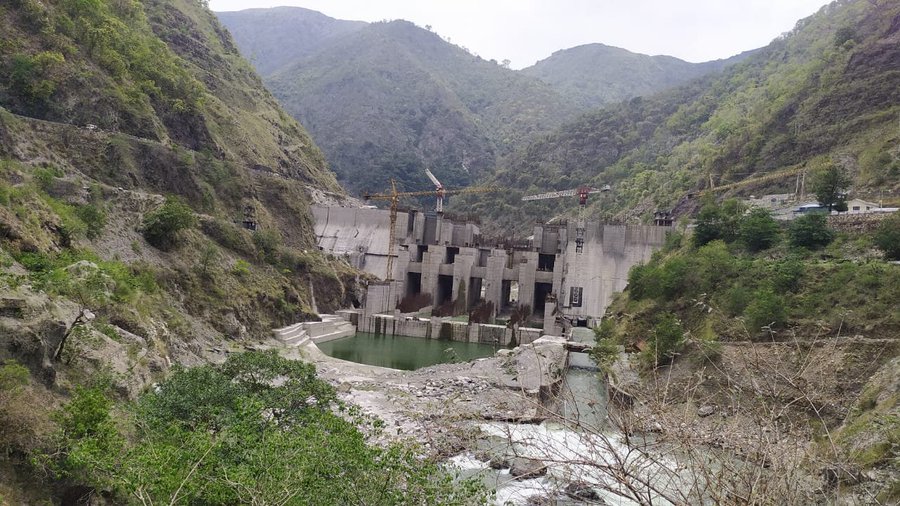
On the Occasion of World Fisheries Day (WFD) 2025, SANDRP shares the top ten reports underlining the growing impacts of river obstruction projects on freshwater fish species and dependent fisherfolks in India. Indeed, damming free flowing rivers has become the single biggest reason behind growing extinction rate of aquatic life by severely disrupting their migration routes. The iconic hilsa and mahaseer fish in Ganga and Narmada have declined sharply due to construction of Farakka and Sardar Sarovar dams respectively, among others.
The decline in fish diversity in Yamuna is also attributed to dams as CIFRI informed the NGT in July 2025. Though the NGT in Nov. 2024 expressed concerns over impacts of hydro projects on mahaseer habitats in Uttarakhand and Himachal Pradesh and sought responses from concerned central and state govt departments, but except an affidavit by a private company in Oct. 2025, there is no further updates available on the case so far.
The flushing of toxic silt by the hydro projects have become a grave threat to fish species and riverine communities as seen in the case of Ranganadi HEP in Arunachal Pradesh, Barot and Shanan HEPs in Beas basin in Himachal Pradesh. Amid this the new research has revealed gradual decline in oxygen levels in rivers due to damming and pollution which has been causing a collapse of aquatic ecosystem. The first part of the overview covering top ten positive fish, fisheries and fisherfolks developments can be seen here.
1. Over 60% of world’s rivers diverted or dammed Rivers are being cut by dams and urban growth is putting food, water, biodiversity and livelihoods at risk unless urgent action is taken, said the report. The report reveals stark findings. More than 60 per cent of the world’s rivers have been diverted or dammed. It cites the striking example of Asia’s Mekong, which was once the world’s most productive inland fishery and has now been fragmented by dams, disrupting fish migrations and threatening the food security of millions.
The report says healthy ecosystems are nature’s own infrastructure. They keep water flowing, protect communities from extreme weather and secure food and drinking water supplies. “When landscapes are restored at scale, they also lock away carbon, reduce disaster risks, protect biodiversity and create jobs,” it states.
2 New Impact of Big dams: Increased oxygen intake in inland waters New research reveals a startling change: the oxygen levels in inland waters have been dramatically reducing since 1900, due to human activities including big dams and pollution. This condition leads to dead fish, collapsing food chains and reducing water quality, among other impacts.
The Global oxygen consumption in inland waters, net production has gone up by over 100% from 0.26 Pg/year in 1900 to 0.53 Pg/ year in 2010. While earlier climate change was considered a major contributor to this reduction, new research shows it is big dams and pollution that are much bigger contributors. Inland waters now pull nearly 1 billion tons of oxygen from the atmosphere every year — half as much as the entire ocean emits back.
The prolonged water residence time due to damming has not only enhanced increases in simulated oxygen and internal organic production but has also increased oxygen consumption. This is because damming increases organic matter trapping and prolongs the time for biogeochemical processes within inland-water systems, which largely enhances oxygen consumption. Consequently, the contributions of lentic (still freshwater) waters to global inland-water oxygen consumption increased nearly threefold, from 22% in the 1900s to 60% in 2010. This research thus throws fresh light on this little understood impact of Big dams.
Dramatic alteration in global oxygen cycle Their findings are clear: inland waters now consume more oxygen than they produce. As a result, they’ve become massive sinks of atmospheric oxygen – an unexpected twist in Earth’s oxygen balance. “More farming, more wastewater, more dams, and a warmer climate – they all change how our freshwater ecosystems function,” says Wang. With excess nutrients flowing in, algae blooms thrive — only to die off and suck up oxygen as they decay.
According to Middelburg, two main human activities are accelerating this crisis: nutrient runoff from over-fertilization and the slowing of freshwater flows caused by dams and reservoirs. These changes have quietly but profoundly altered the way oxygen moves and vanishes in freshwater. Rising temperatures, while a factor, are less to blame than once thought. “Until now, the consensus in the scientific literature has always been that the rise in temperature is primarily causing this acceleration. But our model shows that warming only contributes about 10–20% to this phenomenon,” Wang explains.
The scale is staggering. Though they cover only a small slice of Earth’s surface, inland waters now pull nearly 1 billion tons of oxygen from the atmosphere every year – half as much as the entire ocean emits back. “We can’t ignore inland waters in global climate and oxygen budgets anymore,” Wang warns. “They’re changing faster than we thought, and they’re crucial pieces of the Earth system puzzle.”
3 Time to review Farakka Dam? The 2304 m long Farakka dam on Ganga in Murshidabad district in W Bengal was commissioned on Apr 21, 1975, and completes 50 years on April 2025. The dam needs an independent review to assess the costs, benefits & impacts of the dam, both projected & actual, to decide about the need and form of its continued existence.
When a proposed dam is assessed, typically the cost benefit ratio is calculated for 50 years. That useful life, if it is accurate to use that term for this dam, is over. Many individual groups, experts and even the Bihar CM Nitish Kumar has rightly demanded to make such an assessment to decide about the decommissioning of the dam. This is because there is a huge question if the dam has been able to deliver the main benefit for which the dam was proposed: to make the Kolkata port navigable. It has been established that the quantum of dredging to keep the Kolkata port navigable has actually increased since the dam was commissioned.
There is also no doubt that the dam has destroyed the livelihood of thousands of fisherfolks in the upstream as Hilsa, the key lucrative fish species is no longer able to migrate upstream from the dam. The spread, intensity and frequency of floods in the upstream has also significantly increased post Farakka, a key reason for Nitish Kumar’s advocacy for decommissioning of the dam. The erosion along the banks of Ganga in Malda & Murshidabad areas post Farakka has also increased, besides the complaints from Bangladesh. The review can look at the all the projected and incidental benefits the dam may be providing.
Impact of Farakka barrage on Hilsa The Farakka Barrage poses a major barrier to Hilsa migration. By altering flow regimes and salinity, it has had complex, far-reaching effects on Hilsa production by disrupting migratory pathways, according to the CIFRI study. Another study in the peer-reviewed Frontier blames altered water flow regimes and salinity in the Hooghly-Bhagirathi river system due to the Farakka Barrage, rendering these rivers unsuitable for Hilsa to lay eggs.
Due to the barrage, the fish can’t travel further upstream places for egg laying in the Ganga river. The Hilsa fishery production upstream of the barrage has effectively collapsed: landings at Prayagraj in Uttar Pradesh, Buxar and Bhagalpur in Bihar fell to negligible levels, with reported declines of up to 92%. As a result, Hilsa now largely persists only downstream of Farakka in West Bengal.
Indiscriminate harvesting of juvenile Hilsa fish (jatka), discharge of industrial effluents and urban waste into the river, siltation are among other prominent factors behind declining Hilsa production in West Bengal.
4 Centre blames dams, pollution for Yamuna fish decline The NGT had taken suo motu cognisance of a May 9 Amar Ujala report that flagged the growing presence of exotic species in the river, and subsequently sought responses from relevant departments on the measures being taken. In March, the Hindustan Times had reported in a six-part series how fishermen at Wazirabad were struggling to find native species such as Rohu, Singhara, Catla and Malli, with most of the catch now comprising invasive species like Thai Magur and Tilapia, which have adapted to the altered ecosystem.
In a report dated July 4, the fisheries department cited dam construction, pollution, and inter-species competition as primary causes of the decline. “Dams fragment rivers and block migration routes, preventing fish from reaching spawning grounds, which can lead to local extinctions. Poor water quality from nutrient pollution and other contaminants poses a serious threat to aquatic life. Overexploitation, indiscriminate harvesting, and the use of illegal fishing gear also contribute to the depletion of native fish stocks. Additionally, encroachment of riverine land and climate change have worsened the situation,” it said.
Dominance of exotic fish species in Yamuna The green body was hearing the issue of the decreasing population of Indian fish species in the Yamuna. It had earlier sought a response from authorities, including the Central Inland Fisheries Research Institute (CIFRI) in Prayagraj. It further said that the Tenualosa Ilisha (Hilsa/ Ilish) fishery had been totally wiped out from the riverine stretch in Prayagraj since 2010 due to the construction of the Farakka barrage.
Referring to the studies about their composition, the report said, “These indicate an overall dominance of exotic fish species in the river Yamuna.” NGT sought a response from the secretaries of the Union ministries of Jal Shakti and Fisheries & Animal Husbandry. Further hearing on March 3. 53 Indigenous fish varieties in Narmada before SSP This clip and report provide a list of traditional varieties of fish in the river Narmada before it turned into a reservoir of stagnant water due to the building of the massive Sardar Sarovar Dam. This listing is narrated by Girdhar Guruji, founding member of Narmada Jeevanshalas/ schools and an adivasi leader of the NBA. It is important that there is a record of the traditional varieties of fish, as per the memory of the people, particularly since the Sardar Sarovar Dam has had a huge adverse impact on the freshwater fish once available in abundance in the free-flowing Narmada. This listing is also important because the government has failed in conducting proper and detailed studies of fisheries/ the fish available in Narmada and the impact of building of a series of dams on the river has had on them.
The devastating impact the Sardar Sarovar dam has had on fresh water fish in the river Narmada and on the life of fishing community, explained is in a 2 min. video with subtitles in English. The list of some of the fish variety impacted is given.
5 NGT notice to Centre, state, hydel cos over golden mahaseer habitat The NGT has sought responses from the Centre (the union ministries of MoEF; fisheries, animal husbandry & dairying), state authorities (the fisheries departments of Uttarakhand & Himachal Pradesh), & private hydroelectric companies (including Birahi Ganga Hydro Power Project Ltd & Alaknanda Hydro Power Corp Ltd) about measures to conserve the habitat of the golden mahaseer, a protected fish species facing threats from ecological damage. The tribunal issued notices to all parties on Nov 19, 2024 before the next hearing on Mar 10, 2025. In its order, NGT called the petition’s concerns “substantial issues” involving compliance with environmental regulations.
On Oct. 13, 2025 Sarda Energy parent company of Parvatiya Hydro filed affidiavit for its 4.8 Mw Loharkhet HEP located in Kapkot tehsil of Bageshwar stating that the project is not located on stream habituating Mahaseer fish and the company has not violated any norms. It also demanded requirement of a study to establish the Mahaseer fish habitats and requested to dispose of the petition. Further updates not available.
6 Fishes die downstream of Ranganadi hydro dam The Ranganadi (Panyor) river downstream of the 405 Mw hydroelectric project is once again witnessing mass fish death, with the water turning turbid and emitting a foul odour. This recurring environmental crisis has left locals alarmed and demanding answers. The murky black water and dead fishes along the banks have raised questions about water contamination and its potential impacts on human health and the aquatic ecosystem.
The blackening of the water and mass death of fishes occur around every five years due to maintenance activities at the dam. Although the NEEPCO claims to maintain the natural water flow during maintenance, the discoloured water and the death of fishes suggest lapses in ensuring adequate water quality. Over the years, downstream communities have repeatedly voiced their concern over reduced water flow, heavy siltation, and the destruction of the aquatic ecosystem. The lack of proper silt management and water quality monitoring remains a persistent issue.
The Arunachal Pradesh State Human Rights Commission (APSHRC) initiated suo moto action regarding a report on the Ranganadi River turbidity, mass fish deaths, water contamination linked to the 405 MW Ranganadi HEP, spreading a threat to the life of local communities. As a result, the commission instructed the DC Keyi Panyor and Papum Pare districts to carry out a joint assessment of the project’s effects on downstream populations. The APSHRC has also directed the Chief General Manager of the North East Electric Power Corporation, Yazali, to conduct an inquiry into the matter and submit an action taken report within four weeks. Also see: NEEPCO’s dam repair under scrutiny
Dam construction needs to be considered carefully Ranganadi HEP was put into operation in 2002. Villagers in Upper Cher village (Papum Pare district), downstream of RHEP said, “After the completion of the dam, water flows in the river have gone down drastically. Our fish are totally gone. Earlier even outsiders used to come here to fish; now there is no fish even for us. Our fields are also affected badly as the channels we had made to take water to the fields have become dry. Horticulture, which is a very important source of livelihood for our village and includes banana, oranges, pineapple and spices like black pepper and cardamom, has almost finished along the riverbanks.”
Arunachal is preparing to develop 13 hydropower projects. Once construction of these projects begins, the livelihoods of the villages downstream of the projects will be severely affected, while thousands of hectares of land and forests will be submerged or otherwise destroyed.
55 MW Kulsi HEP opposed Members of 19 organisations hit the streets in a southwestern Assam town on June 25, 2025 to oppose a 55 MW hydropower project planned jointly by the governments of Assam and Meghalaya on the Kulsi River, a natural habitat of the endangered Gangetic river dolphin. People from both states agreed that the dam plan was “unreasonable” and would kill the lifeline of the cultivators and fishermen in the area, apart from harming the environment irreparably.
The organisations said the natural vegetation & crops are dependent on the Kulsi River, whose water level falls significantly during the dry season. “The proposed Project Ukiam will affect the southern Kamrup district areas from Ukiam to Nagarbera,” they said, adding that release of excess water from the dam during the monsoon would also create havoc.
The organisations stated that the dam-controlled ebb and flow of the river would impact at least 12 wetlands in the area, including Chandubi, which is known as the fifth-largest tectonic lake in the world. Chandubi, they pointed out, would be 3 km from the site of the proposed 62-m-high dam. The protest against Kulsi Dam escalates; joint committee plans awareness drive.
7 Barot dam releasing toxic silt in Uhl river Narendra Saini, State President of the Devbhoomi Environment Protector Forum, Mandi District, stated that toxic and dirty silt is being released into the Uhl River from the Barot Dam at night. The silt has reached the Beas River, affecting all drinking water projects. The Uhl River is also the source of Mandi city’s drinking water supply. He stated that written information regarding this matter has been provided to the state government and the relevant department on Dec 3, 2024. The toxic silt is causing the death of all living creatures in the river.
The Uhl River is home to trout, and the Fisheries Department has imposed a ban on trout fishing from Nov 1, 2024, to Feb 28, 2025, as this is the trout’s breeding season. During this time, dirty and toxic silt should not be released into the river. Last year, the Fisheries Dept released 10,000 rainbow and brown trout seeds into the Uhl River near Kamand. These were also destroyed by toxic silt. Toxic silt is also harmful to irrigation fields. In 2018, they also released silt during the winter, causing significant environmental damage & killing aquatic life.
Shanan dam polluting Uhl river Himachal Pradesh HC in Jan. 2025 issued notices to Shanan HEP, Punjab Elec Board, HPPCB, HP Fisheries Dept, HP Chief Secretary among others about the impact of silt water released from the HEP. The Court converted a letter sent to HC CJ into a petition. The notices are to be replied by Mar 22, 2025. The letter addressed to the Chief Justice stated that the silt has affected the water’s purity and is adversely affecting aquatic life. HC has also asked the HPPCB to prepare a report about the impacts of such water releases.
8 Riverine Fisheries impacts of Oct 2023 Sikkim GLOF Besides destroying a hydropower project, damaging many others and killing 55 people, the October 2023 glacial lake outburst flood in Sikkim also left significant changes in water depth, quality, and floodplain structure, finds a new study. The study by researchers from the Indian Council of Agricultural Research (ICAR)-National Bureau of Fish Genetic Resources (NBFGR) published in the journal Ecohydrology in May compared the health of the river pre- and post-flood, and noted that the disaster resulted in the “simplification” of the Teesta river’s complex ecology. The changes in the river flow regime could harm keystone species like the snow trout via destruction of spawning grounds, reduced species abundance, and challenges for species migration.
The gush of water and debris from the GLOF caused the floodplain area to expand by 138% and the width to increase from 88 metres to 147 metres in Tanak, the highest elevation point in the study. These impacts taper further downstream. The study found that water depth decreased significantly across all study sites. Deep pool habitats, which are “unique microhabitats that support rich fish diversity owing to their favourable functional properties,” had disappeared in multiple places. Higher turbidity after the flood in places like Joyee Bridge (West Bengal) and Rangpo (Sikkim) lowers transparency and affects the “overall net primary productivity of the system,” the study says.
Story of a char dweller Boalmari is a char or riverine island in the floodplains of the Teesta. The name suggests that once upon a time, fisherfolk here would routinely get rich hauls of boal, a kind of freshwater fish known for its delicate flavour. That was in the late 1940s.
In October 2023, Boalmari was lashed by a flash flood. It was caused by a lake burst upstream in Sikkim. The raging waters of the Teesta swept away homesteads, farmlands and livestock. Since the flash flood was induced by climate change, char dwellers couldn’t anticipate it. Neither could any weather forecasting system provide advance warning.
After the debacle, Alladi realised that life on the char would only get more fragile. After all, multiple dams and barrages had the Teesta twisting and turning in ways that were unpredictable. She rented a shop at faraway Helapakri Bazar. These days, she and her husband run the shop there & stay in a small house beside it; the flagship store is managed by her sons & daughters-in-law.
Gopa Samanta, who has done extensive research on Bengal’s char dwellers and written the book titled Dancing with River, tells The Telegraph, “I have seen people in chars who build an alternative base in nearby towns. They know the home on the char can be swept away any day. But they don’t forsake their home on the char altogether nor snap ties with char life.”
9 A quarter of freshwater species risk extinction A study has found that around 24% of more than 23,000 freshwater animal species are threatened with extinction, because of pollution, dams, agriculture and the invasion of other species. The findings could help plan conservation efforts to reduce freshwater biodiversity loss, says an international team of ecologists.
Dams and water extraction endanger 46% fish, by blocking their migration routes and degrading habitat. Invasive species and disease threaten 33% fish and overfishing endangers 27%. These threats, along with overharvesting, drive extinctions and increase the number of threatened species in various parts of the world, including the Western Ghats in India and Sri Lanka’s Wet Zone, the researchers say.
10 Vanishing Paradise of the Indus Delta When we look back at the past, the Indus Delta was once prosperous & free; the 17 creeks of the delta were considered to be paradise on earth. However, that paradise is rapidly being lost to unchecked development and climate change. Our destruction began when dams were built on the Indus, blocking its natural flow. The Indus’ final destination is the sea and according to both natural and international law, the people living at the end of the river, particularly the people of the delta, have the first right to its waters. The river’s water is very important for the ecology of the sea and the mangrove forests.
In Pakistan, particularly in Sindh, the effects of climate change are the most severe on the coastal belt. Due to global climate change, not only has coastal erosion increased, but the sea level has also risen. The sea, which would return to its normal position in mid-August, now brings towering waves and high winds throughout Sept and Oct We now only have two seasons (summer and winter), with a shorter winter and a longer summer. The fishing season, which previously lasted from August to November, has shrunk, as by the time the sea settles, the season is over. Rains are either scarce or excessive and untimely. These changes have resulted in severe repercussions on the fishermen’s livelihoods as well as the environment.
The destruction caused by the lack of river water and the impact of climate change can be gauged from the fact that we once proudly proclaimed that we lived in a land where the river flows into the sea. But now, with much pain, suffering and grief, we say that we live in a land where the sea flows into the river. (By Fatima Majeed)
Some More Reports
Dam flood in Manipur worsened On the afternoon of September 14, four gates of the Mapithel dam in Manipur were suddenly opened, leading to flooding in the downstream villages across the Thoubal river basin. The sudden release of water inundated paddy fields, fish farms, and households, sweeping away two elderly persons who later died.
The president of the Manipur Congress and an elected representative of the Manipur Legislative Assembly, Keisham Meghachandra, accused the WRD for creating a “man-made disaster” and noted that there was no proper communication between the government institutes and the people residing downstream. But the clarification issued by the WRD signals that the discharge was mandatory in light of the “extraordinary natural inflow” and that adequate “mobile communication” was completed by field staff to communities downstream.
Asia’s longest free flowing river now under threat The Salween River, at around 3,300 kms, is Asia’s longest free-flowing river, running from Tibet through Myanmar to the Andaman Sea. But Indigenous groups and communities living along its banks in China, Myanmar and Thailand say they fear hydropower development might cause the river to suffer the same fate as the Mekong River, Mongabay’s Gerald Flynn reported in June. The Salween is home to more than 200 fish species, a quarter of them endemic to the river. As it irrigates farmland, the Salween is crucial for food security, livelihoods and drinking water for many Indigenous communities across the three countries.
At least 20 dams have been proposed along the Salween: 13 in China and seven in Myanmar. Many were first suggested decades ago and have since stalled. None of those planned in China were ever built, or even mentioned since 2016. As for the dams in Myanmar, eyed by Chinese and Thai investors, their fate is tied to the outcome of the ongoing conflict between the military junta, rebel factions and armed ethnic groups, Flynn reported.
SANDRP

 SANDRP