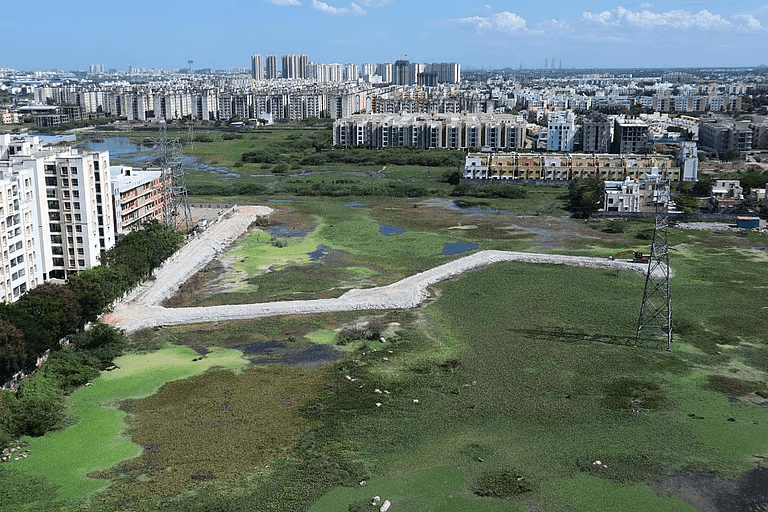
(Feature Image: A road is being laid allegedly by a private realtor inside the Perumbakkam marshland. Photo Credit: TNIE, June 2023)
‘Protecting Wetlands for Our Common Future’ is the theme for World Wetlands Day 2025. Wetlands are ecosystems, in which water is the primary factor controlling the environment and the associated plant and animal life.
Indian government seems focusing more on increasing Ramsar wetlands number than ensuring the protection and conservation the existing Ramsar sites in country. Over the past one decade the numbers of Ramsar wetlands in India have sharply gone up from 26 in 2014 to 89 as of January 2025. Amid the thrust to increase the number, several existing or even recently declared Ramsar wetlands across the country have been facing multiple threats mainly due to governmental projects and constant negligence from the concerned authorities as can be seen from the reports from 2024 in this annual overview.
Due to abject failure of govts, the various judicial bodies including High Courts, NGT benches and even Supreme Court have been dealing with a number of pleas seeking to safeguard and ensure proper management of Ramsar Wetlands in India.
NORTH INDIA: J&K, Ladakh HC asks amicus curie to file response to govt report The High Court of J&K & Ladakh has asked the Amicus Curiae in its suo moto PIL on wetlands in Kashmir to respond by Sep 18 govt’s status report regarding conservation, protection & management of the wetlands besides alleged violations and encroachments in 7 wetlands declared to be Ramsar Sites. Seeing the failure of the govt to file the status report as a “serious lapse”, the court on Nov 20, 2023, granted a final opportunity to the govt to file the report.
There are now seven wetlands covered under the Ramsar Convention including Hokersar, Wular Lake, Shalbugh and Haigam in Kashmir Valley, Tso Moriri and Tso Kar in Ladakh, and Surinsar-Mansar lakes in Jammu. J&K High Court in compliance with directions by the Supreme Court on a PIL on April 3, 2017, had treated an affidavit filed by the petitioner M K Balakrishnan before the apex court regarding certain wetlands which were covered under the Ramsar Convention. https://www.greaterkashmir.com/front-page-2/high-court-asks-amicus-curie-to-file-response-to-govt-report-on-wetlands/ (22 Aug. 2024)
Jammu & Kashmir EPG writes to CM about ‘Ramsar wetlands destruction’ In a letter addressed to CM Omar on Nov 8, the Environmental Policy Group (EPG) highlighted the dire conditions of internationally recognised wetlands like Hokersar, Haigam, Shallabugh, and Mirgund, which are facing “systematic destruction and mismanagement”. The EPG’s findings from on-the-ground visits present a grim picture of these vital ecosystems. The group is demanding a high-level inquiry into the mismanagement and degradation of these wetlands, as well as urgent steps to restore water levels, investigate illegal activities, and hold those responsible accountable. https://www.greaterkashmir.com/kashmir/epg-writes-to-cm-omar-about-wetland-destruction/ (9 Nov. 2024)
Wular Lake Prevent siltation Due to pressures & haphazard construction in catchments, Wular is facing several problems especially siltation and pollution. Though authorities are taking measures to restore it, the pace of conservation is slower than its deterioration. https://m.greaterkashmir.com/article/prevent-siltation-of-wular-lake/324375/amp (26 Aug 2024)
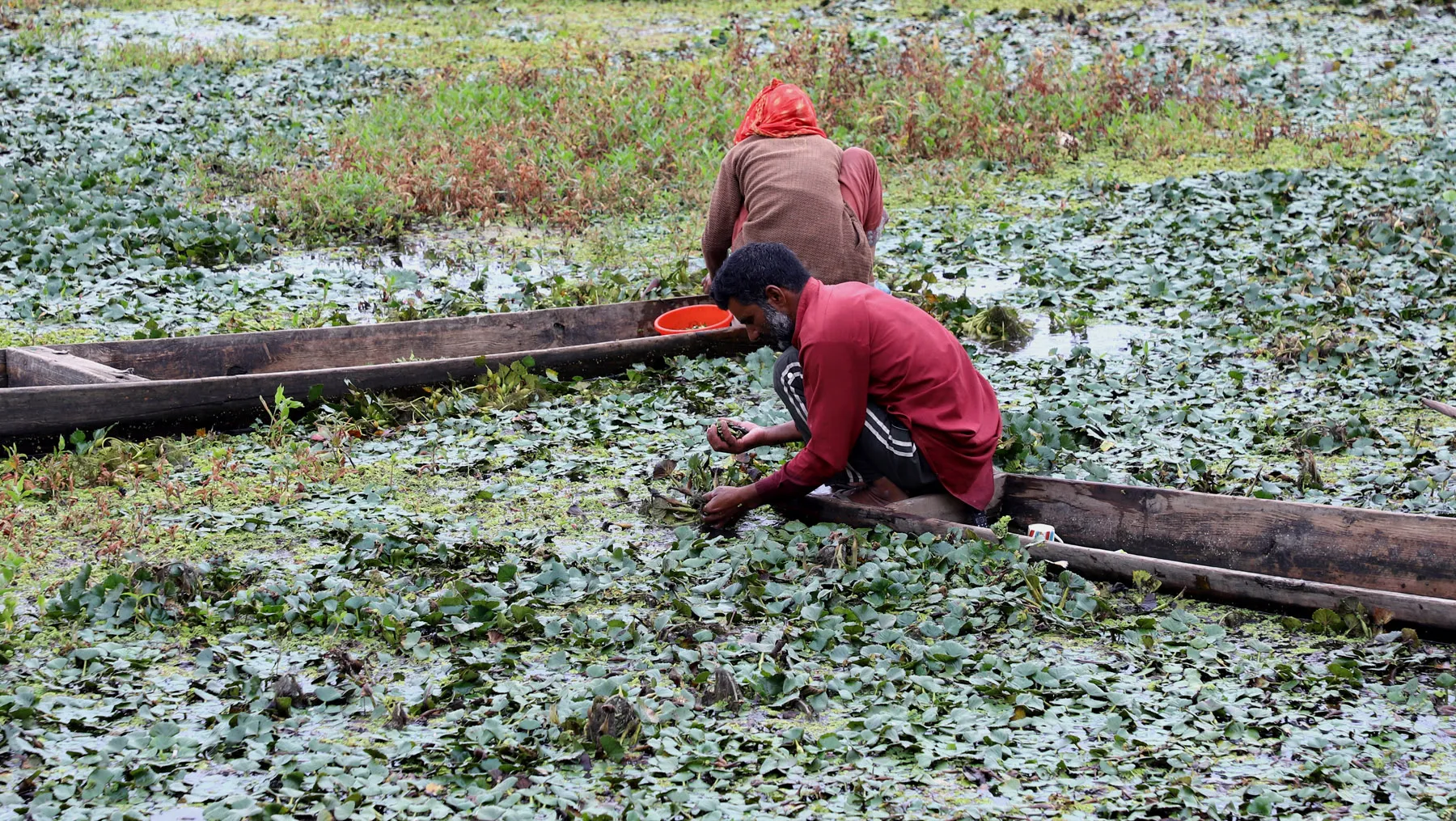
Rising pollution Animal carcasses, polythene, plastic, drainage from the nearby towns and the capital Srinagar flows into the Wular, polluting it to the extent where its aquatic life is threatened and with it the livelihoods of thousands of people, said Mohammad Ashraf, a chestnut farmer from Bandipora. https://www.greaterkashmir.com/latest-news/photo-essay-harvesting-livelihood-from-dying-kashmir-lake/ (28 Aug. 2024)
Hundreds of geese found dead Hundreds of native geese, locally known as ‘Kashur Aenz’, were found dead along the banks of Wular Lake, south Asia’s largest freshwater lake, officials said on Nov 11. The sudden deaths have sparked concerns among wildlife experts, conservationists & officials. https://thekashmiriyat.co.uk/hundreds-of-native-geese-found-mysteriously-dead-along-wular-lake/ (12 Nov. 2024)
Hygam Wetland Gasping for breath Siltation, pollution and encroachments are severely affecting its carrying capacity and flora and fauna. Hygam wetland is an important part of Jhelum floodplains and one of the associated wetlands of Wullar lake comprising an important habitat for lakhs of migratory water birds in the Central Asian Flyway. Over 40,000 migratory & resident birds visit the wetland annually. https://www.greaterkashmir.com/opinion/hygam-wetland-conservation-reserve-gasps-for-breath/ (16 Sept. 2024)
Hokersar Wetland Damaged by sewage, mining Experts said that the lack of rainfall alone is not responsible for impacting the arrival of migratory birds. Reyan Sofi, a bird watcher said, “The shortage of water usually occurs post Dec-Jan as water recedes. But this year, it has been observed from Oct itself,” he observed. Sofi explained that illegal sand mining, degradation of habitat and encroachment have added to the woes of the region, which is already experiencing deficit rainfall. “The water from upstream Doodhganga (from the east) and Sukhnag Nallah (from the west) that provide water to the wetland has reduced. Also, mining activity has resulting in opening up a nullah that drains the water from the wetland,” he and Raja Muzaffar Bhat, an RTI activist from Kashmir said. https://www.downtoearth.org.in/wildlife-biodiversity/lack-of-rainfall-impacts-arrival-of-migratory-birds-in-kashmir-valleys-hokersar-wetland (10 Nov. 2024)
Mansar Lake Thousands of dead fish The Wildlife department attributed the cause of the huge number of dead fish to the consumption of hailstones during recent rains, they said. “They have died within a few days during rains. They probably mistook hail for flour balls and consumed them. People feed them with flour balls on a daily basis for religious purposes,” said Dheeraj Rampal, block officer, Wildlife department, Mansar.
There was a hailstorm in the Mansar, the largest freshwater lake in the Shivalik mountain range, on Feb 1, he said. The officials put the figures of dead fish at 2,500 to 3,000. In the past years too, fish have died of cold or oxygen deficiency, he said. Protected under the Ramsar Convention, shocked locals and tourists have been witnessing dead carp fish floating on the water surface for the past one week. https://www.tribuneindia.com/news/j-k/thousands-of-fish-found-dead-in-mansar-lake-589672 (20 April 2024)
Himachal Pradesh HC steps up wetlands protection efforts The High Court has instructed the State Government to file a status report by July 1, 2024, as per Rule 4 of the Wetlands Rules, 2010. This report must detail compliance with various prohibitions and restrictions aimed at preventing damage to Ramsar wetlands like Renuka, Pong, Chander Tal. HC was following up on a SC directive in wetlands matter in 2017. https://himbumail.com/bar-and-benches/high-court-directs-state (22 May 2024)
Pong Dam Illegal farming continues despite SC ban Despite a Supreme Court ban imposed in Feb 2000 on all non-forestry activities in wildlife sanctuaries across India, illegal cultivation has resumed on wildlife sanctuary land near the Pong wetland in the lower Kangra hills. Local wildlife authorities have struggled to prevent influential individuals from cultivating this land, resulting in growing frustration among residents of about a dozen gram panchayats surrounding the Pong wetland. Environmentalists allege that political influence enables these offenders to continue cultivating sanctuary land with impunity. https://www.tribuneindia.com/news/himachal/illegal-farming-continues-in-pong-wetland-despite-sc-ban/ (02 Nov. 2024)
Farming to be allowed soon: CM “First the process of pre-determination of the wildlife sanctuaries will be done and then the notification for declaring it as an eco-sensitive zone (ESZ) will be issued. The guidelines of the Centre are very strict, and we are ascertaining the decline in various bird species and then we will take a call on it,” said Sukhu while replying to a query by Dehra MLA Hoshiyar Singh. He said from this year, agriculture would be allowed in the area falling under Pong Dam. Agriculture Minister Chander Kumar pointed out that the notification of the ESZ was issued without public consultation and inviting objections. “It has become mandatory to obtain permission for construction of houses and the rules for the Wetland Ramsar area are being enforced,” the minister said. He said the notification must be withdrawn. https://www.tribuneindia.com/news/himachal/farming-to-be-allowed-in-pong-dam-area-soon-cm-593956 (24 Feb. 2024)
Revised draft proposal of ESZ to be finalised The officials say a revised draft proposal will be ready by this month’s end, before the expiry of the previous ESZ notification on April 28. It would be published in the gazette and a timeline of 60 days will be given to all stakeholders to register their objections. https://www.tribuneindia.com/news/himachal/revised-draft-proposal-of-pong-wetland-eco-sensitive-zone-to-be-finalised-soon-607983 (06 April 2024)
₹24-cr project to tap tourism The state govt has submitted Rs 24-crore tourism infrastructure development project for the Pong Wetland under the Centrally-sponsored ‘Swadesh Darshan-2’ scheme to the Ministry of Tourism for final approval. As per the project’s first phase, key initiatives include the introduction of solar boats and the launch of an online tourism portal for the wetland. Despite being a world-renowned Ramsar Wetland Site, the Pong wetland has long suffered from neglect, with existing infrastructure lying unused due to poor maintenance. https://www.tribuneindia.com/news/himachal/rs-24-crore-project-to-tap-tourism-potential-of-pong-wetland/ (18 Dec. 2024)
Neglect ruins tourism infra at Pong wetland The neglect of tourism infrastructure at Pong Wetland has highlighted serious lapses in maintenance and management by the concerned authorities. While new initiatives like the Wildlife Interpretation Centre are commendable, restoring and maintaining existing facilities is crucial to attracting tourists and promoting eco-tourism in the region. https://www.tribuneindia.com/news/himachal/paradise-lost-neglect-ruins-tourism-infra-at-pong-wetland/ (03 Feb. 2025)
Asan Wetland-Uttarakhand Aquatic insects choke as heavy metals poison A paper ‘The impact of heavy metal concentrations on aquatic insect populations in the Asan Wetland’ published in Nature Scientific Reports discusses the findings of a study in the Asan Wetland of Dehradun. https://www.indiawaterportal.org/articles/aquatic-insects-choke-heavy-metals-poison-asan-wetland (23 June 2024)
Punjab Migratory bird numbers falling amid rising pollution in Ramsar wetlands The major threats to wetlands, in general, are due to man-made factors, leading to habitat degradation and declining biodiversity. In Punjab, industrial waste discharge from factories near Harike, Ropar, and Kanjli wetlands contaminates water bodies. Illegal sand mining in riverbeds further disrupts water retention and aquatic life. Pesticides and fertilisers used in agricultural fields near wetlands also affect wildlife. In Ludhiana, the polluted Budha Nallah’s water is discharged into the Sutlej river, eventually reaching the Harike Wetlands. The negative impact of climate change and rising temperatures is also being felt. https://indianexpress.com/article/explained/everyday-explainers/world-wetlands-day-threats-punjab-conservation-9813737/ (02 Feb. 2025)
Sultanpur National Park-Haryana NBWL to study impact of construction Concerned about the potential impact of several housing and infrastructure projects in areas surrounding the Sultanpur National Park, the NBWL has ordered the setting up of a committee to study their cumulative impact on the wetland. Discussing a proposal for the use of land within the ESZ of the Sultanpur National Park for the construction of a low-cost housing project, the standing committee of the NBWL noted that the construction of such projects is impacting the Ramsar site, according to the minutes of a meeting on Feb 28. https://www.theweek.in/wire-updates/national/2024/03/04/del124-env-haryana-wetland.html (04 March 2024)
Govt starts survey on impact of infra projects This comes in response to the rapid development of the area. Govt will soon submit its findings to the standing committee of the NBWL following the standing committee’s directive on Feb 28. It was issued while the panel was considering a proposal to use nearly 3.7 ha for an affordable group housing colony at Garhi Harsaru in Sector 95B, 4km away from the national park’s boundary and falls within its ESZ. https://timesofindia.indiatimes.com/city/gurgaon/govt-starts-survey-on-impact-of-infra-projects-on-sultanpur-park/articleshow/109016081.cms (4 Apr 2024)
Threats from housing, infra projects The Sultanpur National Park is under threat due to violations of the ESZ zonal plan and notification, stated by a panel set up by the standing committee of NBWL. The committee’s report, submitted at the end of July, provided evidence of stresses affecting the national park, which include shrinking of Sultanpur Jheel and dependence on the Gurgaon canal for maintaining water levels. The report concluded that preserving biodiversity and ecosystem in Sultanpur National Park is crucial for the region’s ecological and economic security. https://timesofindia.indiatimes.com/city/gurgaon/housing-infra-projects-around-sultanpur-park-a-threat-to-its-ecosystem-wildlife-says-panel/articleshow/113009273.cms (3 Sep 2024)
NBWL flags farmhouses, high-rises The standing committee of the NBWL has directed Haryana govt to submit an action-taken report after a district panel flagged at least 70 violations, including illegal construction of housing societies and farmhouses, near the Sultanpur wetland. Construction and other non-forest activities are barred or restricted in a 5km radius around the Sultanpur National Park, called the ESZ which acts as a buffer. The intergovernmental panel found several violations including encroachments on the Sultanpur Jheel, construction of an affordable housing colony in Garhi Harsaru, another multi-storey residential project in Dhorka village & farmhouses in Farrukhnagar, the panel said in July. https://timesofindia.indiatimes.com/city/gurgaon/wildlife-panel-flags-illegal-construction-near-sultanpur-wetland-urgent-action-required/articleshow/114598808.cms (26 Oct 2024)
Wetland is being deliberately dried up Drying up the water bodies, officials said, was essential. In Jan this year, the wildlife department shut off water supply from the Gurgaon canal to Sultanpur, a designated Ramsar site. It was because they had spotted catfish last year. Catfish is an invasive species that consumes smaller fish rapidly. Though the monthly supply of 10-15 cusecs water was stopped, officials didn’t expect large parts of the wetland to dry up completely & rapidly. They suspect the lack of non-monsoon rainfall might be to blame this year. https://timesofindia.indiatimes.com/city/gurgaon/ecosystem-under-siege-why-sultanpur-wetland-is-being-deliberately-dried-up/articleshow/109705614.cms (30 Apr 2024)
Sur Sarovar-Uttar Pradesh Govt reducing ESZ Protests have started in the city against the decision of the State Wildlife Council headed by the CM to declare the eco sensitive zone of Sur Sarovar Bird Sanctuary (Keetham) as zero km. City activists called this decision fatal for the bird sanctuary. The petition of activist Dr. Sharad Gupta related to the re-determination of the area of Sur Sarovar Bird Sanctuary is pending in the NGT. The state govt has sought time for its notification. The ESZ can be determined only after the notification of the area of the bird sanctuary. The next hearing is in Jan 2025. On the petition of Dr. Sharad, the Supreme Court had directed the state govt to increase the area of the bird sanctuary from 403 ha to 799 ha. He had filed a contempt petition in NGT when no action was taken by the state govt. https://www.inextlive.com/uttar-pradesh/agra/agra-news-zeroing-the-eco-sensitive-zone-is-fatal-for-keetham-1726423311 (16 Sep 2024) https://www.youtube.com/watch?v=j9vxpUFbhD8 (15 Sept. 2024)
Admin opposes CEC recommendations The Central Empowered Committee (CEC) has given recommendations in the Supreme Court to increase the boundary of Sur Sarovar Bird Sanctuary. In the NGT hearing, Additional Chief Secretary of Environment and Forest Dept Manoj Singh filed a status report. The report of Tehsildar Kiravali and SDM is against the boundary extension. Both have reported that the extension will affect the development plans. https://www.amarujala.com/uttar-pradesh/agra/sur-sarovar-bird-sanctuary-district-administration-sdm-protest-against-cec-recommendations-2024-08-11 (11 Aug. 2024)
Decide on ESZ in 1 month: NGT On 24 Apr 2018, under the National Chambal Sanctuary Project, the MoEF&CC had issued a pre-gazette notification regarding the ESZ of the 799 ha Sur Sarovar Bird Sanctuary. But, in the final gazette issued on 10 Oct 2019, this scope was reduced to 403 ha. Environmentalist Dr. Sharan Gupta registered his objection to this. https://www.livehindustan.com/uttar-pradesh/agra/story-ngt-directs-ministry-to-expand-keetham-bird-sanctuary-area-and-set-eco-sensitive-zone-201723219909097.html (9 Aug 2024) Hearing the plea of Dr Sharad Gupta and following CEC recommendations, the SC in Sept. 2022 had ordered to increase the Sur Sarovar Bird Sanctuary area from 403 ha to 800 ha. The state govt changed its stand repeatedly in the matter, but after the recommendation of the CEC, it agreed by giving an affidavit. Now new boundaries of the sanctuary located in Keetham will be decided & the ESZ will be decided accordingly. https://www.amarujala.com/photo-gallery/uttar-pradesh/agra/supreme-court-orders-to-increase-the-area-of-sur-sarovar-bird-sanctuary-in-agra (27 Sept. 2022)
Hundreds of fish die overnight People who had come to visit the lake on the occasion of ‘World Wetland Day’ on Feb 2 to look at the migratory birds nesting there saw hundreds of dead fish floating on the water. The forest dept has filed a complaint with the irrigation and pollution control depts. https://www.indiatoday.in/india/story/hundreds-of-fish-die-overnight-in-agra-keetham-lake-due-to-pollutants-2497283-2024-02-04 (04 April 2024)
EAST & NORTH EAST INDIA: Assam-Deepor, Beel Govt plans to denotify The govt has decided to denotify the Deepor Beel and Pobitora sanctuaries in a cabinet meeting on Mar 10. The decision, however, has not been officially announced. This move by the govt has been met with criticism from environmentalists and wildlife experts. “The proposal for denotification of any sanctuary or national park requires the recommendation of the National Board for Wildlife as per the Wild Life (Protection) Act, 1972, followed by approval from the Supreme Court,” explained a wildlife activist. Deepor Beel, a 900-ha natural wetland and wildlife sanctuary, is situated near the Brahmaputra River. https://nenow.in/north-east-news/assam/assam-govt-plans-to-denotify-deepor-beel-pobitora-wildlife-sanctuaries-faces-flak.html (12 March 2024)
HC halts denotification The Guwahati High Court intervened to stall a decision made by the Assam cabinet last month to denotify Deepor Beel, a vital wildlife sanctuary and Ramsar site on the outskirts of Guwahati. A division bench of the HC deemed the cabinet’s decision regarding Deepor Beel as unjust and improper. The state govt has been directed to refrain from issuing any notification for denotifying the wildlife sanctuary. The HC instructed authorities to suspend development and construction activities in and around Deepor Beel until the demarcation notification of the Ramsar wetland site is issued. Further hearing on May 27. https://www.msn.com/en-in/news/India/gauhati-high-court-halts-denotification-of-deepor-beel-wildlife-sanctuary/ar-BB1la92M (07 April 2024)
Fishers loss livelihoods While the fishing community wants their rights within Deepor Beel to be defined, they said this should not be at the cost of denotifying the wetland as a wildlife sanctuary. The fishing community said members were aware their livelihood rights remain protected under the Wildlife Protection Act. According to Section 26 A of the Act, the limits of the area of a water body to be included within the sanctuary will be determined in consultation with the chief naval hydrographer, “after taking adequate measures to protect the occupational interests of the local fishermen”.
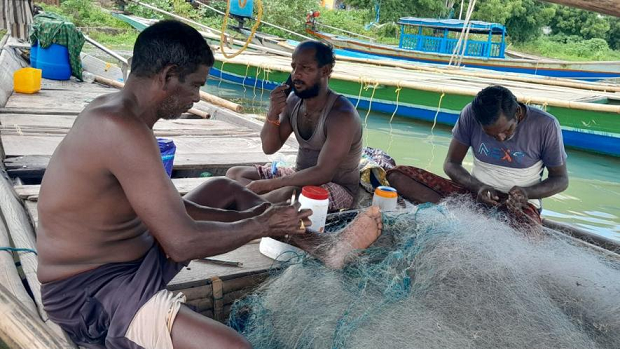
In fact, the fishermen often end up cleaning the wetland. They see large quantities of plastic floating on the wetland when they are fishing and try to collect the plastic, said Golak Das, president of the Deeporbeel Paaspara Samabay Samiti. Also, the fishermen still use traditional wooden boats, not motorboats. According to Seema Talukdar of 7Weaves, more comprehensive studies need to be done on the fishing community of Deepor Beel. https://article-14.com/post/as-assam-s-only-wetland-protected-under-global-treaty-deteriorates-local-fishing-community-faces-loss-of-livelihood-66bc2476cfc17 (14 Aug. 2024)
Loktak Lake-Manipur ‘Will remove Loktak from Montreux record’ Loktak Development Authority (LDA) chairman Asnikumar Moirangthem has assured to work for the welfare of fish workers of Loktak while also committing to remove Loktak from the Montreux record. He made the statement during the International Day of Wetland observed by the All Loktak Areas Fishers Union Manipur (ALLAFUM) and Champu Khangpok Floating Village Welfare Committee at the Champu Khangpok Floating Elementary School on Feb 2. Montreux Record is a register of wetland sites on the Ramsar list that are threatened by technological developments, pollution, or human interference. This year saw the participation of Loktak Development Authority (LDA) and the Bishnupur District Administration. https://www.ifp.co.in/manipur/will-remove-loktak-lake-from-montreux-record (04 Feb. 2024)
LDA nod must for activities The state govt has asked all administrative secretaries, heads of depts, cooperative societies and NGOs to take prior approval from the LDA for taking up any activity within Loktak Lake and its associated wetlands, according to an order issued by chief secretary PK Singh on Jan 21.The order stated that the govt came to learn that certain departments, agencies, cooperative societies, and NGOs are undertaking programmes and activities in and around Loktak Lake without obtaining the mandatory approval from LDA. The meeting also set a clear deadline for finalising the determination of Loktak Lake’s boundary with the task entrusted to LDA, the revenue dept & the respective DCs, for carrying out the process in consultation with the MLAs of the area. https://e-pao.net/GP.asp?src=26..240125.jan25 (23 Jan 2025)
Kanwar Lake-Bihar NGT committee to look into encroachment The NGT has directed that “four member committee shall inspect the site in question and submit its report within four weeks on affidavit with regard to the allegations made”. The allegations of encroachment and degradation of the Ramsar Site were made by environmental activist Subhas Dutta who approached the NGT. The wetland is stated to contain a cluster of 16-17 waterbodies in total but the same has been encroached over a period of time and it has been alleged that this area has been allowed to be reduced. Environmental experts had expressed concerns that encroachment and drying of the lake has badly affected birds who have lost their habitat. https://www.thehindu.com/news/national/bihar/ngt-sets-up-committee-to-look-into-encroachment-at-bihars-karbatal-wetland/article68406110.ece (15 July 2024) The NGT order was passed on July 8. Datta claimed that no “integrated management plan” for the lake, a mandatory requirement for a Ramsar site, was prepared over the last 35 years. “At present, certain threatening activities through draining in and draining out of water, obstruction of water by damming and canalisation have become rampant,” the petitioner said. The activist also complained about several constructions, including a large temple complex and a police station, coming up in the wetland area and amassing waste with no management system in place. https://www.telegraphindia.com/india/national-green-tribunal-directs-bihar-government-to-form-fact-finding-committee-to-probe-wetland-takeover/cid/2032897 (11 July 2024)

Land survey opposed After the news of transferring the land of Kawar Lake to the Forest Dept post the land survey exercise, a group of farmers is continuously opposing it. Kawar Lake has been the source of livelihood for many farmers and fishermen of 16 villages. According to the research of scientist Ashok Ghosh of SPCB, Kawar Lake, which was spread over about 6,786 ha in 1984, has reduced to 2,032 ha by 2012. Mohammad Nawazjoha, a researcher said that there is water in only 89 ha of the lake. Due to the gradual disappearance of the lake, there has been a constant conflict between farmers and fishermen. Fishermen want to protect the lake because it is their source of livelihood, while farmers want to use the land around it for agriculture. https://hindi.downtoearth.org.in/river/bihar-dispute-over-survey-of-kawar-lake-land-farmers-open-front (10 Sept. 2024)
Kanwar lake faces challenge Kanwar Lake the only Ramsar site in Bihar has been deteriorating and the drying area has been increasing. More and more the lake has been encroached upon for agricultural purposes and the waterbody’s bird population has been on the decline. https://www.downtoearth.org.in/news/wildlife-biodiversity/kanwar-lake-bihar-s-only-ramsar-site-faces-challenge-of-survival-but-not-a-poll-issue-96172 (15 May 2024)
Charting the decline of Kabartal wetland The study employed an integrated approach, utilising LANDSAT data, statistical tools, and field analyses to examine the changes in land use and land cover (LULC), vegetation indices, soil and water quality, and the correlation between core and buffer zones of the wetland.
The study identified agriculture and urbanisation as the primary drivers of wetland degradation. Agricultural expansion, particularly into wetland areas, has led to increased runoff of fertilisers and pesticides, introducing high concentrations of nitrate and phosphate into the ecosystem. This nutrient loading promotes eutrophication, resulting in oxygen depletion and affecting aquatic life.
Encroachment by built-up areas has altered natural hydrological patterns and reduced water retention capacity. Urban sprawl and infrastructural development have contributed to habitat fragmentation, reducing biodiversity and ecological balance. Groundwater extraction for irrigation purposes further exacerbates the water deficit in the wetland, particularly during the pre-monsoon season. https://www.indiawaterportal.org/rivers-and-lakes/charting-the-decline-of-kabartal-wetlandv (26 Jan. 2025)
Satkosia Wildlife Sanctuary-Odisha NGT seeks fresh affidavit on plea against ‘harmful tourism’ The NGT has directed the state govt to file a fresh counter affidavit within four weeks to the petition challenging “ongoing harmful tourism activities” in the Satkosia Tiger Reserve and Satkosia gorge of the Mahanadi river “under the garb of eco-tourism”. The NGT expressed dissatisfaction over the state govt’s affidavit submitted as it was silent on the structures allegedly built in the ecologically sensitive area.
While granting the Centre 4 weeks and posting the matter for further hearing on July 22, the bench said, “The ministry (of environment, forests and climate change) is directed to file its counter affidavit, particularly with reference to the Satkosia Wildlife Sanctuary and the issues involved in the present case.” Satkosia gorge is one of the largest river gorges in Odisha, which is almost 22.5-km-long and runs through the tiger reserve. It is a natural habitat for about 500 endangered gharials who use the sand banks for laying eggs. https://timesofindia.indiatimes.com/city/cuttack/ngt-directs-state-to-file-fresh-affidavit-on-plea-against-harmful-tourism-in-satkosia/articleshow/110063763.cms (13 May 2024) The area was declared as a Ramsar Site in 2021. https://www.newindianexpress.com/states/odisha/2024/May/13/ngt-rejects-affidavit-of-odisha-government-on-satkosia-tourism (13 May 2024) The Wildlife Society of Orissa filed the application challenging construction of tents and sheds for tourists in the ecologically sensitive area on the ground they will cause irreparable damage to local environment and biodiversity. https://www.newindianexpress.com/states/odisha/2024/Mar/24/ngt-issues-notices-to-centre-state-on-eco-tourism-in-satkosia-tiger-reserve (24 March 2024)
Hirakud Dam Juggling between human needs & environment protection Hirakud Reservoir, one of India’s largest man-made wetlands and a recently designated Ramsar site, stands between conservation success and mounting environmental challenges. Serious challenges threaten this ecological haven. Industrial fly ash from nearby factories and agricultural pesticides are polluting the reservoir’s waters. “Plastic pollution is a major concern,” says Ranjan Panda, known as the Water Man of Odisha. “Tourists litter picnic spots, affecting the reservoir’s beauty and ecosystem,” he said. nter-state water disputes add another layer of complexity. The reservoir’s water level depends on Chhattisgarh’s Kalma barrage, and polluted water released upstream affects Hirakud’s ecosystem. “The conflict between Odisha and Chhattisgarh over water release needs urgent resolution,” Panda emphasizes.
The reservoir also supports over 7,000 fishermen’s livelihoods, but the impact of cage culture fishing on water quality remains understudied. Experts stress the need for comprehensive research to address these emerging challenges and maintain Hirakud’s ecological balance. As this vital wetland faces mounting pressures, the success of conservation efforts will depend on balancing human needs with environmental protection, making Hirakud a test case for sustainable wetland management in India. https://timesofindia.indiatimes.com/city/bhubaneswar/hirakud-juggles-between-human-needs-environment-protection/articleshow/117839727.cms (1 Feb 2025)
Chilika Lake Poor catch forcing fisherfolk to migrate Villagers blame state government focus on tourism and the new sea mouth for polluting the lagoon’s water, ruining its ecology and disrupting fish life (Rakhi Ghosh). https://www.newsclick.in/odisha-poor-catch-chilika-forcing-fisherfolk-migrate (12 Oct. 2024)
Opposition to the proposed NH Environmentalists across Odisha have expressed serious concerns over the plans to construct a two-lane national highway (NH-516A) over Chilika Lake, as announced by the NHAI recently. They said the project will potentially damage the rich biodiversity of Asia’s largest brackish water lake and leave a trail of destruction of the region’s fragile ecosystem. Secretary of Orissa Environmental Society, Jaya Krushna Panigrahi said that the construction of the highway would pose imminent threats to the livelihood of fishing communities, and would also endanger existence of migratory birds, who consider Chilika a haven during winter. https://www.orissapost.com/environmentalists-oppose-proposed-nh-over-chilika/ (8 Dec. 2024) Two bridges spanning 3.55-km are proposed to be built over the lake as part of the connectivity, subject to environmental clearance and approval of the state govt. The alignment approval committee (AAC) of the ministry has already cleared it along with the land acquisition plan. https://www.newindianexpress.com/states/odisha/2024/Dec/10/chilika-lake-highway-gets-nod-sparks-fears-over-biodiversity-loss (10 Dec. 2024) The proposed highway will further degrade the lake ecosystem and its biodiversity by increased air, water & noise pollution, said the panellists. https://www.newindianexpress.com/states/odisha/2024/Dec/16/proposed-nh-project-to-hurt-chilikas-fragile-ecosystem-experts (16 Dec. 2024)
Proposed bridge faces opposition The proposed bridge over Chilika Lake threatens the lake’s ecosystem, including its rich biodiversity and the livelihoods of over 100,000 people. https://www.downtoearth.org.in/environment/proposed-bridge-on-odishas-chilika-lake-faces-opposition-over-environmental-concerns (23 Dec. 2024)
Save Chilika ecosystem This part of the Ramsar site is also on the Central Asian Flyway used by several migratory waterbirds; about a million avian guests arrive at the lagoon every year to escape harsh Eurasian winters. Chilika is already under pressure from climate change – its growing siltation is a major cause for concern. The central and state govts should plan to conserve the fragile coastal ecosystem and not add to its burden. The need is to explore sustainable connectivity, not look for shortcuts. https://www.newindianexpress.com/editorials/2024/Dec/16/save-chilika-ecosystem-from-highway-concerns (17 Dec. 2024)
EKW-Kolkata 30-yr journey of EKW: Degraded & diminished The wetlands have been allowed to shrink by almost 40%. The single, dominant reason for Kolkata losing large sections of its vital wetlands is govt inaction. The inaction can be attributed primarily to three reasons: absence of political commitment, low level of community engagement, and market forces.
Poor funding starves the Management Authority of resources, including staff, which leads to unmonitored encroachment and continuing inaction. But resources aside, the fact that to date even the boundaries of the wetlands have yet to be fully demarcated is a sad testimony to the lack of political commitment on the part of the govt. Without demarcation, it is open season for wetland hunters. The lack of political commitment is also reflected in the extremely low level of community engagement by the govt. (Bonani Kakkar, Pradeep Kakkar PUBLIC) https://thewire.in/environment/a-30-year-journey-of-the-east-kolkata-wetlands-degraded-and-diminished (27 March 2024)
60 demolition notices pending, EKWMA cites lack of squads About 60 demolition orders issued by the East Kolkata Wetlands Management Authority (EKWMA) have been pending for two years, sources in the state govt said. These include orders against filling of water bodies, new construction (no permanent structure is allowed in the wetlands) and an attempt to build a bridge on a canal. Most of these violations have been reported from mouzas close to EM Bypass — from places such as Dhapa, Jagadipota and Mukundapur.
Officials of the EKWMA said they do not have any squad to execute the demolition orders. The authority has informed the district authorities in South and North 24-Parganas, and the Kolkata Municipal Corp (KMC) about the violations. An official said the KMC and the district authorities often did not respond to demolition orders. The wetlands authority, too, did not pursue the matter to ensure demolition. The last time any demolition of a walled structure took place inside the wetlands, which act as the city’s kidneys by recycling sewage naturally, was in July 2022. https://www.telegraphindia.com/my-kolkata/news/wetland-structures-untouched-60-demolition-notices-pending-authority-cites-lack-of-squads/cid/2010534 (2 Apr 2024) The KMC has two wards — 35 and 36 — parts of which are within the East Kolkata Wetlands. The two wards, behind Sukantanagar, have bheris such as Khasmahal, Kulipara and Chhainabi that are within the wetlands. According to an official of the civicbody, over 100 of concrete buildings have come up without any sanction from the authorities in Khasmahal, Kulipara and Chhainabi. Many of these are within the EKW. https://www.telegraphindia.com/my-kolkata/news/bidhannagar-municipal-corporation-move-over-buildings-in-wetlands/cid/2010307 (01 April 2024)
WEST INDIA Bhoj Wetlands-Bhopal SC upholds ban on cruise, motorboats on Upper Lake A division bench of Supreme Court on Mar 4 dismissed an appeal by MP Tourism Development Corp (MPTDC) against a NGT order banning cruise and motor boats on Bhopal’s Upper Lake. Petitioner in the case before NGT, Subhash C Pandey, said that the apex court expressed surprise at MPTDC, a public sector undertaking, challenging an NGT order. He said the cruise was polluting Upper Lake, which is part of Bhoj wetlands, a Ramsar site. He also pointed out that a large section of Bhopal’s population is supplied drinking water from the lake. The NGT restrained the authorities from operating cruise boats and other motorboats in Upper Lake and other designated wetlands and ordered demolition of ‘any permanent construction’ (restaurant). https://timesofindia.indiatimes.com/city/bhopal/sc-upholds-ban-on-cruise-motorboats-on-upper-lake/articleshow/108251749.cms (06 March 2024)
Threats from controversial road project The Bhoj wetlands in Bhopal city is a fountainhead of environmental services and a designated Ramsar wetlands site. The wetlands eco-system has been facing gradual degradation on account of growing encroachments, pollution and extravagant tourist projects. A new road project cutting through the catchment area of Bhoj wetlands and forest land around Bhopal city has raised alarm bells among concerned citizens who term it unnecessary & suggest better options. https://sandrp.in/2024/04/15/controversial-road-project-threatens-bhopals-bhoj-wetlands-forest-wildlife/ (15 April 2024)
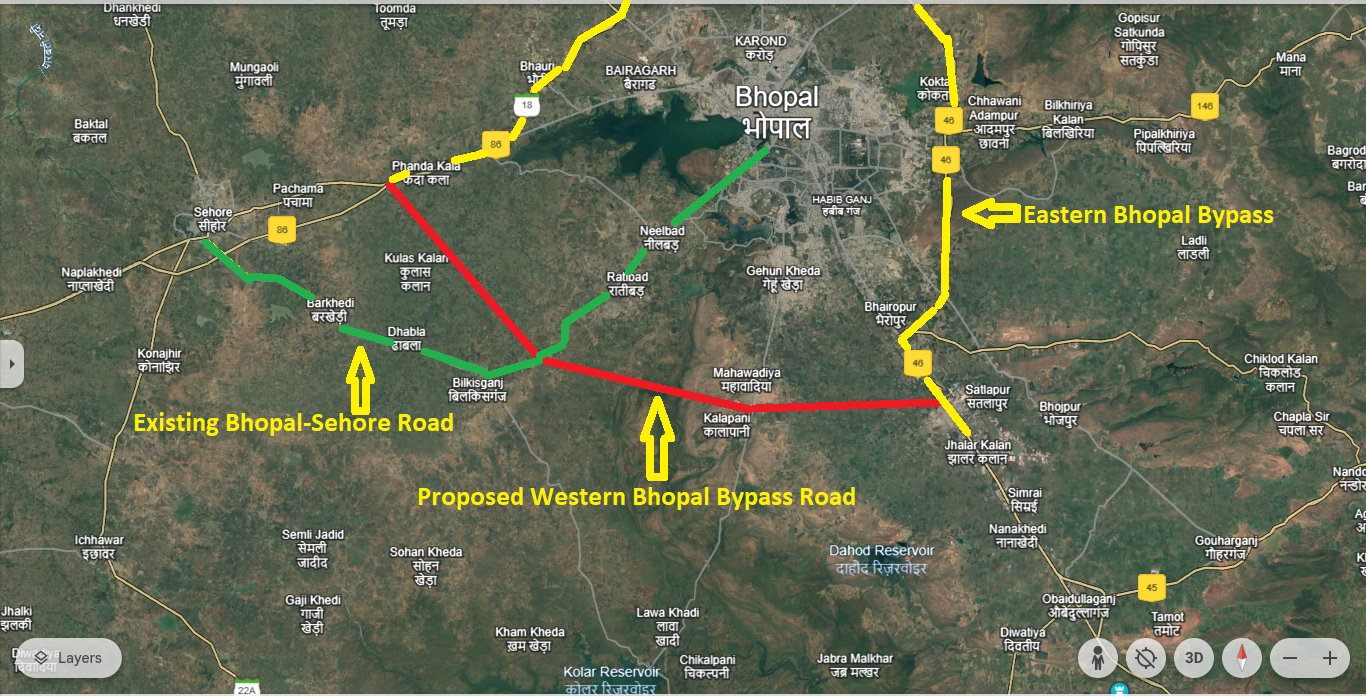
Bhoj to be delisted as Ramsar site? Last week it was reported that Bhoj wetland faces the risk of being delisted from the prestigious global list due to possible damage to its ecological character. Concerned citizens reported the matter to the Ramsar Convention secretariat, flagging how the proposed road project cutting through the catchment area will threaten not only the wetland but also the wildlife and other water bodies. The Switzerland-based secretariat said last week that it’s still waiting for a response from the Indian govt on this matter.
Experts at the secretariat will examine India’s clarification and send its report to a standing committee. Delisting will happen only if India fails to convince the Committee based on the ground report. It is learnt that the issue may also impact Bhopal’s proposed nomination for ‘Wetland City Accreditation’ (WCA) under the Ramsar Convention. https://timesofindia.indiatimes.com/india/india-faces-uphill-task-to-save-bhoj-wetland-from-being-delisted-as-ramsar-site/articleshow/111890045.cms (20 July 2024) “You may find an update of your report (complaint) on Bhoj wetland in the next report (of the committee),” Beom-Sik Yoo, senior advisor (Asia/Oceania) at the Convention secretariat wrote. Another official at the secretariat informed the complainant that they were “in contact with the govt of India” regarding the wetland. The environment ministry, however, did not respond to questions on the issue despite reminders. https://timesofindia.indiatimes.com/city/delhi/bhoj-wetland-faces-delisting-from-ramsar-convention-list/articleshow/111617154.cms (10 Jul 2024) The Union Govt has refuted claims that the Bhoj Wetland is under threat of delisting from the Ramsar Convention’s list of wetlands of international importance. https://www.newindianexpress.com/nation/2024/Aug/06/bhoj-wetland-in-bhopal-faces-no-threat (6 Aug 2024) Bhopal was nominated for Wetland City Accreditation (WCA) in Jan. 2024. https://www.newindianexpress.com/nation/2024/Jan/05/indore-bhopal-udaipur-selected-for-wetland-city-accreditation-scheme-under-the-ramsar-convention-2648135.html (5 Jan 2024) The concerned citizens had last year reported the matter to the Convention secretariat, flagging how a certain proposed road project cutting through the catchment area of the Bhoj wetland may threaten the lake, wildlife and the other water bodies. https://timesofindia.indiatimes.com/india/indore-and-udaipur-become-the-first-two-indian-cities-to-join-the-global-list-of-wetland-accredited-cities/articleshow/117558751.cms (26 Jan 2025)
Trees cut in wetlands forest An incident of tree-cutting in Bhoj wetland area has come to the fore. Green activists have complained to collector and DFO. Trees were cut in Nathu Bharkheda village, which comes under Bhoj wetland project. As per complaint, the land from where the trees have been illegally felled, and its adjoining plots are full of trees and look like a forest. The Google earth image and other photographs clearly show that the entire area is as good as forest qualifying the meaning of forest. https://www.freepressjournal.in/bhopal/madhya-pradesh-trees-cut-in-bhoj-wetland-forest-department-orders-probe (20 Oct. 2024)
Maharashtra HC initiates suo motu PIL for Ramsar sites conservation The Bombay High Court on Jan 10 initiated a suo motu proceeding to monitor the conservation and preservation of three Ramsar sites in Maharashtra- Nandur Madhyameshwar Wildlife Sanctuary, Lonar Lake, and Thane Creek Flamingo Sanctuary. A bench of Chief Justice DK Upadhyaya and Justice Amit Borkar took cognizance of the matter following a Supreme Court order of Dec 11, 2024, which had called for the protection of Ramsar sites across the country. The apex court bench in Dec 2024, comprising justices Sudhanshu Dhulia and Ahsanuddin Amanullah, directed suo motu monitoring of 85 Ramsar sites, asking high courts to initiate the proceedings. https://www.hindustantimes.com/cities/mumbai-news/hc-initiates-suo-motu-pil-for-ramsar-sites-conservation-in-maharashtra-101736536541802.html; https://www.livelaw.in/high-court/bombay-high-court/bombay-high-court-suo-moto-cognisance-preservation-wetlands-280544 (10 Jan. 2025)
Sambhar Lake; Rajasthan Over 40 migratory birds died Over 40 migratory birds, belonging to two to three different species, have been found dead around Sambhar Lake in Jaipur district over the past fortnight, prompting concerns among the officials. The exact cause of the deaths remains under investigation, with viscera samples sent for analysis expected to provide clarity by the end of the week. Initial examinations suggest that the birds may have succumbed to avian botulism, a severe neuromuscular illness caused by the bacterium Clostridium botulinum, which thrives in low-oxygen environments. Earlier in 2019, more than 18,000 migratory birds from 13 to 15 species perished in the same region due to botulism. https://www.hindustantimes.com/cities/jaipur-news/over-40-migratory-birds-died-at-sambhar-lake-in-rajasthan-officials-101730032038799.html (27 Oct. 2024)
SOUTH INDIA Pallikaranai Marshland-Chennai Not in a position to transfer marshland: GCC The Greater Chennai Corp has informed the NGT that it has appointed a consultant to demarcate the total land under its possession in the Pallikaranai marshland and prepare a master plan of land usage indicating solid waste management facilities and creation of an eco-park. The Corp also informed the Forest Dept that it was not in a position to return its share of the marsh and would continue to maintain it, promising that it would ensure better maintenance.
A survey submitted before the NGT in Jan 2024 revealed that of the total extent of 1,206.59 ha of the Pallikaranai marshland, the Forest Department has 749 ha and the Corporation 173.56 ha besides other public and private institutions. On Jan 22, the Bench directed the Corporation to furnish a report on the land reclaimed so far and hand over the land, as and when reclaimed, to the Forest Department. However, in a recent report filed by the Corporation before the NGT, the civic body made it clear that it would not be able to hand over the land.
According to the Corporation’s report, 445 acres of land is under its possession of which around 250 acres have been in use for solid waste management works for over three decades.
Pallikarani marsh is the first wetland in Chennai, and one of the few wetlands in urban spaces in India, to get the Ramsar tag. https://www.thehindu.com/news/cities/chennai/not-in-a-position-to-transfer-pallikaranai-marsh-to-forest-department-corporation-tells-ngt/article68196605.ece (20 May 2024)
NGT impleads real estate developer The NGT was informed by the government pleader on Jul 12 that although the building constructed by Casagrand in Perumbakkam was on a private patta land, the access road, which was created by dumping construction materials and sand, was on the wetland. As the Perumbakkam wetland is contiguous to the Ramsar-designated Pallikaranai marshland, the Bench had earlier directed the Chennai Metropolitan Development Authority to file a report on whether any changes had been made in the Second Master Plan for the Chennai Metropolitan Area after taking the eco-sensitive wetlands in and around the region into consideration. https://www.thehindu.com/news/cities/chennai/ngt-impleads-real-estate-developer-in-case-against-construction-of-road-on-perumbakkam-wetland/article68396912.ece (12 July 2024)
Perimeter wall to protect marshland Construction work on the perimeter walls of the Pallikaranai marshland is advancing swiftly, with the project divided into two key phases. The NGT has ordered govt to take action to evict IT parks, govt buildings and private apartments occupying the Pallikaranai marshland if they lack rightful ownership or title. The tribunal, following a report in Jan 2022 that highlighted debris dumping in Pallikaranai, instructed the govt to survey the marshland, and remove encroachments. Two years later, a Differential Global Positioning System survey by the land survey dept identified the occupants of the marshland spaning 1,206 ha. https://timesofindia.indiatimes.com/city/chennai/perimeter-wall-construction-at-pallikaranai-marshland-in-chennai/articleshow/111911104.cms (22 Jul 2024)
Coordinate with SWA before issuing building permits: NGT The NGT has directed the CMDA to coordinate with the State Wetland Authority (SWA) before granting any building approval, even on patta land. Hearing a suo motu case on a road laid inside the Perumbakkam wetland by a private builder, the Bench, comprising Justice Pushpa Sathyanarayana and expert member Satyagopal Korlapati, in a recent hearing said as per the SWA, the road was within the zone of influence and adjoining the boundary of the Pallikaranai marshland. The CMDA, in its report, informed that laying a road adjoining the Ramsar site could adversely affect the hydrological, ecological, and socio-economic parameters of the wetland. Next hearing on Aug 20. https://www.thehindu.com/news/cities/chennai/coordinate-with-wetland-authority-before-issuing-building-permits-ngt-tells-cmda/article68489257.ece (6 Aug 2024)
NGT orders comprehensive survey NGT on Sep 17 directed the Dept of Survey & Settlement to conduct a comprehensive survey of the Pallikaranai marshland. This survey should be based on the 1911 revenue records & the current extent of the marshland. Observing discrepancies in reports classifying lands around the Pallikaranai marshland, the NGT wanted the Chengapattu Collector to clarify the issues & provide supporting documents. https://www.thehindu.com/news/cities/chennai/ngt-orders-comprehensive-survey-of-pallikaranai-marshland-based-on-1911-revenue-records/article68652107.ece (17 Sep 2024)
Bathymetric study underway In a first, a bathymetric study is under way in and around Pallikaranai marshland to assess the volume of sludge that can be dredged to enhance the marsh’s water holding capacity and ecological functions. Incidentally, the study is being conducted amidst the NGT’s insistence on clearly defining the boundaries of the marshland to prevent further encroachments. Pallikaranai marsh, which received the Ramsar tag in 2022, continues to face significant anthropogenic pressures, including encroachments and sewage discharge. M.V. Ramana Murthy, National Centre for Coastal Research Director, explained that the study addresses two critical issues — wetland degradation and inadequate flood water drainage. By analysing entry and exit points, the study aims to restore natural inlets and outlets, identifying bottlenecks to maintain optimal water levels. The dredged sludge will be carefully assessed and disposed of in suitable locations, Mr. Murthy said. https://www.thehindu.com/news/cities/chennai/bathymetric-study-underway-in-pallikaranai-marsh-to-improve-ecological-functions/article68668064.ece (22 Sept. 2024)
‘Restore Kodungaiyur, Perungudi dump yards as wetlands’ The sprawling space of Kodungaiyur dump yard that stinks up the area was a lush green coastal wetland named Pulpannai some 30-35 years ago. With the bio-mining works in Perungudi dump yard, which was a part of the Pallikaranai Marshland, nearing completion, and residents in the south of the city demanding to leave the reclaimed land as marsh, Kodungaiyur residents also want Pulpannai to be restored to its original state – a wetland. TD Babu, a marine biologist and a member of the district green committee confirmed that the land on which the Greater Chennai Corporation has been dumping garbage in Kodungaiyur for decades was indeed a coastal wetland. Perungudi landfill is spread over 225 acres on Pallikaranai marshland and had 30.62 lakh cubic meters of legacy waste before the commencement of biomining. https://www.dtnext.in/news/city/restore-kodungaiyur-perungudi-dump-yards-as-wetlands-765915 (06 Feb. 2024)
GCC may alter design of Perungudi eco-park Following protests by residents at a recent public hearing, the Greater Chennai Corporation (GCC) has decided to alter the design of the proposed eco-park in Perungudi inside Pallikaranai marshland. It could even drop the plan as it is studying the feasibility of increasing the water spread area to 100%, sources said. The work on implementing the revised design for the eco-park is expected to be taken up only after brainstorming sessions involving engineers and environment experts and another round of public consultation with the residents. At a meeting of public stakeholders last week, residents had opposed the eco-park project. https://www.thehindu.com/news/cities/chennai/greater-chennai-corporation-may-alter-design-of-perungudi-eco-park-in-pallikaranai-marshland/article67835714.ece (11 Feb. 2024)
Residents fighting against city corp The residents in capital city are up against the Chennai Corporation over conservation of the Palikkaranai marshland. The residents have claimed that the Chennai Corporation is set to build a public park that would disturb the entire ecosystem in the region. They also said that the marshland serves as a shield during the monsoons that can secure the entire area from heavy flooding and subsequent disaster. The residents said the region has suffered a lot from the encroachments by both private and public use. Reacting to these claims, the Chennai Corporation stated that they have no such plans to put the citizens’ lives at risk. The civic body added that they have taken recommendations from various environmentalists and are fully dedicated to conserving the marshland in the region. https://www.timesnownews.com/chennai/why-chennai-residents-are-fighting-against-city-corporation-for-pallikaranai-wetland-a-ramsar-site-tamil-nadu-article-111404988 (01 July 2024)
Perumbakkam marshland on fire The recent fire that swept through the Perumbakkam marshland in Chennai has left the city deeply concerned. This ecological tragedy underscores the urgent need for better protection and management of our urban wetlands, which are critical habitats for various wildlife species and act as vital lungs for our cities.
On the evening of June 1, 2024, a fire ignited in the Perumbakkam marshland, rapidly spreading across 5 hectares of grassland. The fire is suspected to be man-made, possibly caused by burning waste in adjacent private lands. The fire’s spread was exacerbated by the marshland’s current dry state. The area did not receive sufficient rainfall, leading to a predominance of dry grasses that easily catch fire. Additionally, the marshland faces anthropogenic pressures, including domestic sewage inflow and the unregulated construction of residential apartments on nearby lands, further stressing this delicate ecosystem. https://lakesofindia.com/2024/06/12/the-perumbakkam-marshland-fire/ (12 June 2024)
Fire twice over the past two days Nearly two hectares of the Perumbakkam wetland was engulfed in fire over the past two days. Located on Sholinganallur-Medavakkam Road, the wetland, which is part of the Perumbakkam Reserve Forest, attracts several species of ducks and waders. On Thursday (May 30), a fire was reported by locals around 9 p.m., soon after which the Tamil Nadu Fire and Rescue Services (TNFRS) personnel and the Forest Department officials reached the spot. The team, with the help of locals, put out the fire within two hours, said V.A. Saravanan, District Forest Officer, Chennai. https://www.thehindu.com/news/cities/chennai/perumbakkam-wetland-catches-fire-twice-over-the-past-two-days/article68236918.ece (31 May 2024)
Debris watch at Perumbakkam wetland The recent fire at the Perumbakkam wetland caught many eyeballs, underlining its vulnerability. But there is an insidious danger that does not easily show up on the radar. It takes some effort to identify this danger, and even more to address it. For years, debris from infrastructure work on Perumbakkam Main Road has slipped into the wetland.
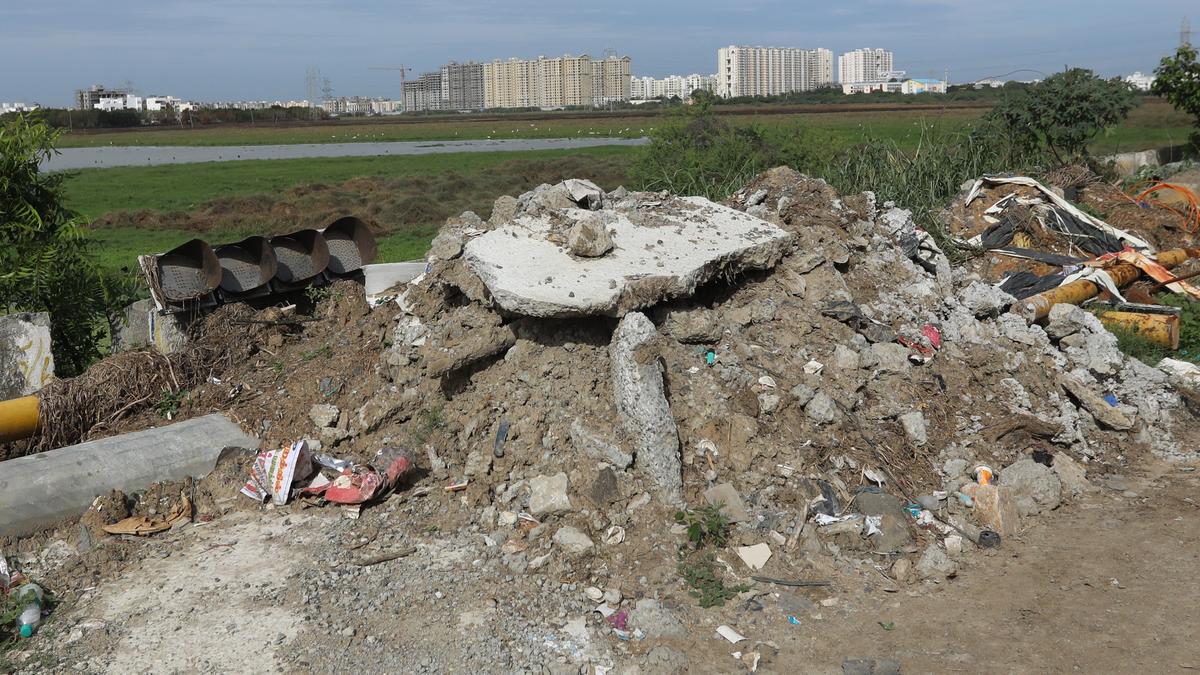
Accumulation of concrete debris in the wetland detracts from its essential character. Besides, due to infrastructural work including road-relaying, the restraining wall of the wetland has sunk, making it easy for concrete debris dumped along the wall to tip over and fall into the wetland. Metro rail construction is in full swing on the road, and concrete debris is generated regularly. And one finds mounds of concrete debris near the wall, causing concern. https://www.thehindu.com/news/cities/chennai/debris-watch-at-perumbakkam-wetland/article68299475.ece (17 June 2024) Debris is again being dumped in the Perumbakkam marshland though the NGT had suo motu taken up the case in July 2023. Residents said debris was again being dumped in the marshland near the Global Hospitals. When TOI visited the spot, machinery was still in operation levelling the debris to form a road. “They are laying an access road to transport machinery for constructing a gated community nearby,” said Gayathri D, who spotted the debris dumping from her fourteenth floor apartment. https://timesofindia.indiatimes.com/city/chennai/debris-dumping-in-perumbakkam-marshland/articleshow/112434948.cms (11 Aug. 2024)
Changing water dynamics Water dynamics at the Perumbakkam wetland have changed to the point that some sections are not sufficiently filled up at the height of the monsoon; and some others witness quick water drainage. The cumulative effect of these two realities is that the migratory season is threatened with an abrupt end. https://www.thehindu.com/news/cities/chennai/is-perumbakkam-wetland-witnessing-a-premature-close-to-the-migratory-season/article67884516.ece (25 Feb. 2024)
Ashtamudi Lake-Kerala Lawyer plea to HC over water pollution A plea has been filed with the High Court of Kerala by Advocate Boris Paul, President of Kollam Bar Association, against dumping of waste and illegal encroachments into Ashtamudi Lake causing water pollution and destruction of mangrove forests. The Division Bench of Chief Justice AJ Desai & Justice VG Arun has forwarded the case to July 5. The court also issued notice to Kollam Municipal Corp and related to Grama Panchayaths.
The plea said that Lake Ashtamudi is not managed or cared for by the govt. The plea points out that the NGT imposed a fine of Rs 10 crore on the state govt in March 2023 for failing to protect Ashtamudi and Vembanad lakes. The plea also seeks the appointment by the Court of an independent monitoring committee to implement the remedial measures and ensure compliance. The Court directs to ensure continuous monitoring by the authorities to ensure the long-term conservation of Ashtamudi Lake. https://www.livelaw.in/high-court/kerala-high-court/kerala-high-court-ashtamudi-lake-water-pollution-and-mangrove-forest-destruction-259406 (01 June 2024) The Kerala High Court has directed the Kollam Sub Collector to initiate action to remove illegal encroachers from in and around Ashtamudi Lake within a period of six months. https://www.livelaw.in/high-court/kerala-high-court/kerala-high-court-remove-encroachers-ashtamudi-lake-kollam-boris-264360 (24 July 2024) “It is high time that we need to secure this ‘kayal poramboke’ for future generations and also ensure free flow of water in the Ashtamudi lake,” it said. The observation and directions of the court came on a plea by a lawyer alleging that the corporation was permitting discharge of effluents into the lake. https://indianexpress.com/article/india/ashtamudi-lake-waste-kerala-hc-9472353/ (24 July 2024)
Vembanad Kole Wetland Urgent action needed A study by the Karunya Institute of Technology and Sciences for Ramsar Bureau-East Asia, on “Impact of climate change on Kole wetlands” highlights alarming trends threatening this vital ecosystem, which was designated as a Ramsar Site in 2002. The research reveals that escalating urbanisation around the wetlands, rising salinity levels, excessive use of agrochemicals, declining mangroves, and increasing contamination are sounding a death knell for the Kole fields.
The study shows significant urban encroachment over the past two decades, particularly in areas like Puzhakal, Cherpu, and Irinjalakuda, where built-up zones have doubled. Alarmingly, three-fourth of the wetland could be inundated due to a predicted sea level rise of 0.5 m linked to global warming. The salinity model identifies Mullesary, Cherpu, and Irinjalakuda as “highly vulnerable.” While crop production may see a slight uptick by 2030, it is expected to systematically decline by 2060, with maximum temperatures projected to rise by 1.5-2° C by 2040s. https://www.thehindu.com/news/national/kerala/as-climate-change-threatens-kole-wetlands-urgent-action-needed-to-preserve-biodiversity-livelihoods-study/article68783626.ece (22 Oct 2024)
Farmers of Kole wetlands are in trouble While the farmers in the Thrissur-Ponnani Kole wetlands are urging the state govt to compensate them for the crop loss this year and to release the study report jointly conducted by the Kerala Agriculture University and the agriculture department, experts have pointed out that intense heat may have caused the low yield. A Latha, chief of the Agriculture Research Station in Mannuthy, said in the Kole wetlands, paddy is harvested mainly in Mar-Apr: “However, the scorching heat at the time of the paddy spikes (kathir) formation led to the poor harvest. In some regions, even the pollination process was affected”. https://www.newindianexpress.com/states/kerala/2024/May/14/around-30000-farmers-of-kole-wetlands-in-kerala-are-in-trouble-agriculture-expert (14 May 2024)
Water woes in wetland As Kuttanad, known for idyllic backwaters, rivers, canals, and vast paddy fields, faces the dire consequences of changing weather patterns, for the people of the region who live across 62 gram panchayats in Alappuzha, Kottayam, and Pathanamthitta districts, fluctuating weather patterns, alternating between torrential downpours and drought, and intrusion of saline water from the sea are at the forefront. Adding to their woes is the worsening drinking water problem caused by water pollution, high salinity, and drought. https://www.thehindu.com/news/national/kerala/water-woes-in-keralas-wetland/article67998225.ece (29 March 2024)
Aghanashini Estuary-Karnataka Authority for streamlining development of Aghanashini needed Declaration of Aghanashini Estuary as Ramsar site is not enough, work now needs to be done to protect the site, ensure ecological and economical balance. For this to happen, there is a need to set up a Aghanashini Ramsar Wetland Conservation Authority, said Prof TV Ramachandra from Centre for Ecological Sciences, IISc. Ramachandra said, formation of the authority is needed for management of estuary marine life, creating sustainable eco- tourism based on carrying capacity and having a proper waste management mechanism is needed. The Authority should include experts and locals. https://www.newindianexpress.com/states/karnataka/2024/Mar/14/authority-for-streamlining-development-of-aghanashini-needed (14 March 2024)
Some Relevant Reports
Supreme Court Demarcate & protect wetlands The bench, comprising justices Sudhanshu Dhulia and Ahsanuddin Amanullah further directed suo motu monitoring of 85 Ramsar sites. In April 2017, the top court passed a direction asking high courts where 59 Ramsar sites were identified to initiate suo motu proceedings to conserve these water bodies. The petitioners urged the court that an additional 26 sites also need to be monitored. According to the note submitted by the petitioners, there are around 5,55,557 wetlands which are less than 2.25 ha in area as identified in the National Wetland Inventory & Assessment (Space Application Centre, SAC) 2011, that also need to be notified and protected. The court is yet to consider this suggestion and is expected to take it up in March. https://www.hindustantimes.com/india-news/demarcate-and-protectwetlands-sc-tells-states-101733943349942.html (12 Dec. 2024)
Opinion Ramsar sites rise, wetlands care fall The govt has done well in floating the Indian wetlands website to update the water bodies. This remains more of a statistics site than anything else. But so far so good. Now, we know that of the 2.5 lakh major wetlands, just 1,304 are notified. That means only these 1,304 wetlands are eligible for protection. Consider this pathetic situation in the backdrop of the official definition of wetlands. As per the ISRO Atlas, Wetlands are submerged or water-saturated lands, natural or man-made, inland or coastal, permanent or temporary, static or flowing, vegetated or non-vegetated, which necessarily has a land-water interface. (BN Kumar) https://www.freepressjournal.in/mumbai/green-paradox-ramsar-sites-rise-wetland-care-falls (16 Aug. 2024)
Opinion Wetlands under threat The Harike wetland in Punjab, meanwhile, serves as a stark example of wetland-area reduction caused by agricultural land expansion: it shrunk by 13% between 1989 and 2010. Sewage effluents that contain fibres and microplastic fragments are increasingly entering the wetland environments. Kerala’s Vembanad-Kol Wetland has revealed high levels of microplastic accumulation in water and sediments, often associated with organic matter. Similarly, a study of mangrove sediments in Mumbai, published earlier this year in the Journal of Hazardous Materials Advances, documented an alarming average of 6,730 microplastic pieces per kilogram of dry sediment.
In Assam’s Deepor Beel, wetlands are being filled for habitation, while pollution, fishing, and poaching of migratory birds further threaten this ecosystem. In addition to these challenges, changes in precipitation patterns and the increase in drought frequency due to climate change are disrupting wetland ecosystems. Alterations in river flows and evaporation rates can destabilise hydrological cycles, leading to habitat degradation. An IIT Indore study on Thane Creek, Kolleru Lake, Pallikaranai Marsh Reserve Forest, and Tampara Lake, published in 2024, indicates a high risk from extreme precipitation events.
Currently, two Ramsar wetlands: Loktak Lake and Keoladeo National Park are in the Montreux Record – a record of those Ramsar sites where unfavourable changes in ecological character have occurred, are occurring or are likely to occur. This underscores the need for integrated approach, innovative strategies, long-term planning, effective policies and strict laws to protect these systems. (Pradeep M S & Dr Anushiya J) https://scroll.in/article/1078643/urbanisation-sewage-microplastics-why-many-indian-wetlands-are-under-threat (02 Feb. 2025)
Report Wetlands conservation needs more than notifying Ramsar sites Experts say that if real conservation is to be practised, much more needs to be done beyond notifying a site under the international convention. A Ramsar site gets international attention and potentially a spurt in tourism. The jury is still out on whether tourism can aid in the conservation efforts or adversely affect it. The notification also helps in securing finance for development of the site through soft loans. But does all of this offer real avenues for conservation? “While it is a welcome move to notify a Ramsar site, a bigger step for the government towards more effective conservation options for the site is following of the Wetlands (Conservation and Management) Rules, 2017,” says urban planner Prakhar Rathi.
The Wetlands (Conservation and Management) Rules, 2017, notified under the Environment (Protection) Act, 1986, are still to be effectively implemented in Madhya Pradesh. For instance, the SWA set up under the rules has met only thrice in the past seven years. Also, under the rules, the state government had decided to notify all reservoirs larger than 2.25 ha. This would ensure their protection as it would also involve identification of their boundaries to prevent encroachments. This too has not been taken up. https://www.indiatoday.in/india-today-insight/story/why-conservation-of-water-bodies-needs-more-than-notifying-ramsar-sites-2585189-2024-08-20 (20 Aug. 2024)
‘Don’t just chase numbers but invest in conserving & managing’ Declaring a wetland as a Ramsar site and fixating over the number of Ramsar sites in India is not the ideal way to conserve the country’s wetlands, member of Parliament and former Union environment minister Jairam Ramesh said on World Wetlands Day (February 2, 2025). Instead, the emphasis should be on quality, scientific underpinning and local involvement as well as stewardship, said Ramesh. He was speaking at an event organised by non-profit Wetlands International South Asia at the India International Centre in the national capital on the occasion of World Wetlands Day.
Having said that, Ramesh pointed out that he had seen wetlands, including some very important ones across the country, under grave threat. He cited the examples of Deepor Beel in Guwahati, Assam, Chilika Lake in Odisha, Kolleru lake in Andhra Pradesh, the SACON campus in Coimbatore, and Kolkata. According to the former minister, four grave and pressing threats face Indian wetlands. The single biggest threat is from effluents and sewage, both industrial and human, flowing into wetlands. They are also under severe pressure from local municipalities. https://www.downtoearth.org.in/water/dont-chase-numbers-on-ramsar-sites-advises-former-environment-minister-jairam-ramesh-at-world-wetlands-day-2025-event (02 Feb. 2025)
MoEF India to increase number of Ramsar wetland sites to 100 India will soon take the Ramsar sites number to 100. An announcement to this effect was made on Tuesday (Oct. 29) by minister of state for environment Kirti Vardhan Singh while delivering the country’s statement at the ongoing 16th session of the UN Convention on Biological Diversity (COP16) at Cali in Colombia. India, at present, is at the top among Asian countries for having the highest number of such designated wetlands in the continent and at number three globally after the UK (175) and Mexico (144). There are 2,522 such sites in the world. India has increased Ramsar sites numbers from 26 to 85 in the past 10 years. https://timesofindia.indiatimes.com/india/india-to-soon-increase-number-of-ramsar-wetland-sites-to-100/articleshow/114801679.cms (31 Oct. 2024)
4 more Ramsar wetlands in India Ahead of the World Wetlands Day on Sunday (Feb. 02), four more wetlands have got an international tag of Ramsar Convention sites, taking the total number of such globally recognised wetlands in the country to 89. The four new sites in the list are: Sakkarakottai Bird Sanctuary and Therthangal Bird Sanctuary in Tamil Nadu; Khecheopalri wetland in Sikkim, and Udhwa Lake in Jharkhand. Of the 89 Ramsar sites, Tamil Nadu has become the state with the maximum number of such Ramsar sites (20) in India. Sikkim and Jharkhand have added their first Ramsar sites with the new additions in the list. https://timesofindia.indiatimes.com/india/4-more-wetlands-in-india-get-ramsar-tag-jharkhand-and-sikkim-get-their-first-ones-in-the-list/articleshow/117798408.cms (31 Jan. 2025)
3 more wetlands get Ramsar tag Ahead of the 78th Independence Day, India has added three new Ramsar sites to its network, bringing the total to 85 Ramsar sites across the country. The total area under these sites now stands at an impressive 1,358,068 hectares. The new additions include two sites in Tamil Nadu viz Nanjarayan Bird Sanctuary (125. 865 Hectares) and Kazhuveli Bird Sanctuary (5151.6 Hectares), both of which are vital for bird conservation and biodiversity. Additionally, Madhya Pradesh has joined the ranks with the inclusion of Tawa Reservoir (20050 Hectares), a crucial wetland for supporting local wildlife. https://pib.gov.in/PressNoteDetails.aspx?NoteId=152029&ModuleId=3 (14 Aug. 2024)
Tamil Nadu State with highest 18 Ramsar sites With two more wetlands being added to the Ramsar list, Tamil Nadu leads in the network of protected areas in India with the total number now at 18. Kazhuveli bird sanctuary in Villupuram and Nanjarayan bird sanctuary in Tiruppur are the latest additions to the list. The state government had sent proposals seeking Ramsar recognition for Kazhuveli and Nanjarayan, which were accepted by the Union environment ministry and Ramsar secretariat on the Independence Day eve.
These two sanctuaries, with a combined area of 5,277 ha, lie in the Central Asian Flyway and are vital breeding and foraging grounds for water bird species. The sites are home to over 750 species of flora and fauna and near-threatened bird species like Spot-billed Pelican, Black-headed Ibis and Oriental Darter. https://www.newindianexpress.com/states/tamil-nadu/2024/Aug/15/two-more-wetlands-added-tamil-nadu-tops-ramsar-list-with-a-total-of-18-sites (15 Aug. 2024)
Bihar 2 more Ramsar wetlands Nagi and Nakti Bird Sanctuaries are newest Ramsar wetlands. These sites are both man-made reservoirs situated in the Jhajha forest range of Jamui District. Nakti Bird Sanctuary (Site no. 2546 on the “Ramsar List”) was developed primarily for irrigation through the construction of Nakti Dam. In 1984, the wetland was designated as a Bird Sanctuary. Nagi Bird Sanctuary (Site no. 2545) was created following the damming of the Nagi River, which enabled the gradual formation of water bodies with clear water and aquatic vegetation. The Site was recognized locally as a Bird Sanctuary in 1984, and internationally as an Important Bird and Biodiversity Area (IBA) by BirdLife International. https://www.ramsar.org/news/india-names-its-81st-82nd-wetlands-international-importance-occasion-world-environment-day (05 June 2024)
Telangana Efforts on to secure Ramsar wetland tag for Manjeera WS While a team of experts from the Ramsar Convention on Wetlands was expected to visit Telangana on July 11 and 12, the Forest department was preparing to send a proposal to the Ramsar Convention shortly. The Manjeera wetland site was spread over 20 sqkm from Manjeera Dam and Singur dam, both built across river Manjeera in Sangareddy district 20 km apart. It had six islands where most of the bird species were found. https://telanganatoday.com/efforts-on-to-secure-ramsar-wetland-tag-for-manjeera-wildlife-sanctuary (24 June 2024)
Compiled by Bhim Singh Rawat (bhim.sandrp@gmail.com)

 SANDRP