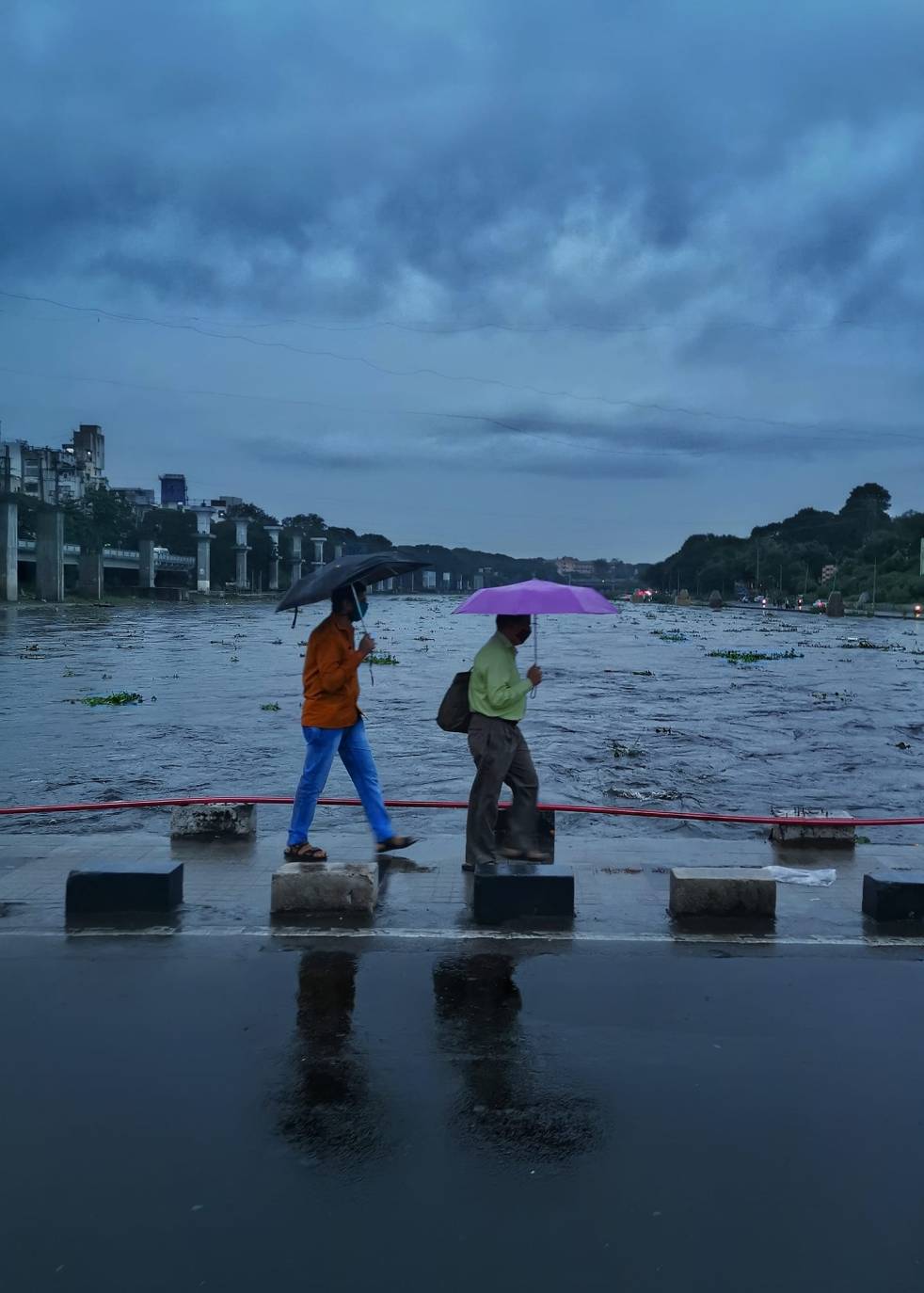
If a city deserved beautiful rivers only through the sheer will and efforts of its civil society, Pune would be a strong contender.
For decades Pune’s civil society has been remarkably active in protecting its rivers. Organizations like Gomukh, Parisar, Soppecom, ACWADAM, Vanrai, Jal Biradari, Ecological Society and newer, powerful people-led groups like Jeevit Nadi and Pune River Revival have put up studies, reports and protests at times. Experts, academics, musicians, poets, writers, historians, students have held the cause of Pune’s rivers high. At any given time, several public interest litigations are being fought by the weary yet hopeful groups, fueled by personal funds, time and passion.
Just last year, on a rainy day in August, Pune saw a historic turn out of over 5000 people marching for the protection of trees along their rivers. On the 25th August 2024, hundreds of Punekars marched silently for the cause of floodplains and the people affected by recent floods.
Having looked at and lived in places with active citizen involvement, I can confidently say that the intelligent and brave public engagement in Pune is at par with any city in the world.

Above: People coming together for rivers through Pune Rivers Revival
And yet, Mula Mutha, Dev Nadi, Ramnadi, Pawana and Indrayani, rivers that make the metropolis, are in tatters.
In 2019, 26 people died when a heavily encroached urban stream: Ambil Odha flooded. Pune’s rivers are some of the most polluted in the country, roads encroach upon the rivers, Municipal Corporation permits skyscrapers inside flood zones, supposed River Front Development Project blatantly dumps debris inside the river, pollution control plan worth thousands of crores has become a puppet in the hands of politicians and administrators. It’s a long list.
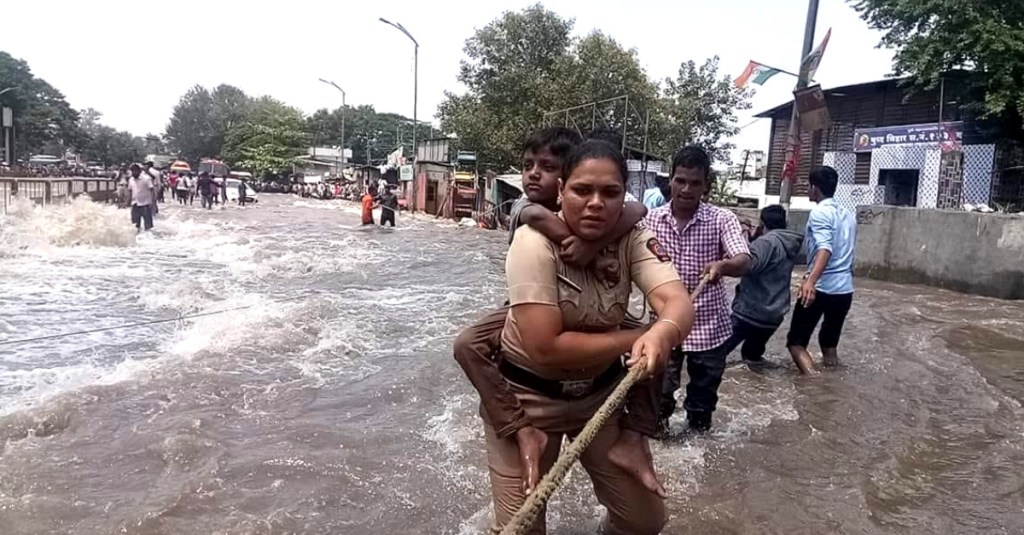
While I am aware that river protection is a constant fight, the successes in Pune, despite long and hard public engagement, are nearly invisible.
How can we make sense of this?
In many senses, story of Pune’s rivers is a representation of India’s urban rivers.
Let us look at Pune’s rivers through the lens of Urban floods and the Heroes who relentlessly work towards changing the game. Specifically, Sarang Yadwadkar, a fiery-and-gentle architect who, on any given day, is fighting multiple river litigations. The article benefits from a long association with Sarang and then a long telephone call. We are also looking at brilliant citizen-led groups like Jeevit Nadi and Pune River Revival.
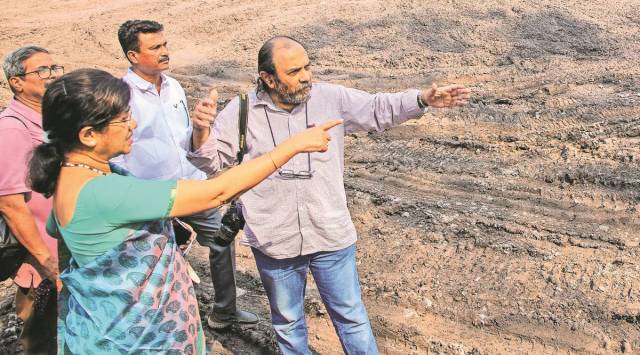
Issues central to Pune Floods are Flood lines, Riverfront Development Project, encroachments in the river, dam releases and related governance. This chaos is surrounded by bigger issues like Climate Change, changing precipitation patterns and increasing urbanization. Let us look at some of these issues.
Flood Lines: Bigger floods after lesser rains
Maharashtra is one of the few states in the country which has defined Flood Lines along rivers. This is because of a Circular issued by the Water Resource Department (WRD) back in 1989.
Two types of Flood Lines need to be identified downstream a dam: Blue Line and Red Line. Blue Line represents the level of the flood likely to occur “once in 25 years”. Red Line is the level of the flood likely to occur “Once in 100 years”. Area inside the Blue Line is a Prohibitive zone and no construction is allowed in this zone. The zone between blue and red line is Restrictive zone with construction under certain conditions is allowed. Red Line was marked corresponding to 100 years flood or the Maximum Spillway Discharge from the dam (maximum water that can be released from the dam). Though we say ‘marked,’ these lines are nowhere to be seen on the ground. All this sits on the maps inside the locked cupboards of the WRD.

Today there are hundreds of buildings, even government structures, inside the Blue Line. If this Circular came out in 1989, how is this be possible?
Well, the local bodies and the Planning Authorities need to ‘implement’ the law and link building permissions with flood lines. This was not done. Rampant development happened jostling the river. These encroachments reduced the river’s ability to carry floods and made the city flood prone.
Come 2011. The first Flood Line study with surveys was conducted by WRD and flood line maps of Pune City were drawn. These lines corresponded to floods following dam releases. However, a river does not contain only dam releases. Between the dam and the city, huge quantities of water joins the river through streams, tributaries and paved surfaces. This is the free catchment flow. These massive flows from an area of around 1300 Sq. Km. in Pune were not accounted for while identifying the flood lines. Thus, 2011 Flood Lines are severely handicapped. But so far, so good.
In the meantime, in 2013, Municipal Corporation initiated work on Pune Development Plan (DP). This was a crucial step because now, building permissions would be issued according to the DP. But shockingly, Pune DP did not show any flood lines! Municipal Corporation said at the time that WRD did not give them any benchmarks hence they did not demarcate them!
Then in 2015, Maharashtra Engineering Research Institute issued a Circular which stated that Flood Lines should include, in addition to the dam discharge, flow from the free catchment and also consider “Confluence Effect” (At a busy junction where streets meet, traffic slows down. Similarly, where two rivers meet, flows of the rivers slow down leading to back pressure and rise in water levels in both rivers. This confluence effect has to be considered scientifically while demarcating flood lines.) The Circular also highlighted that Flood Line maps could be approved only by the Chief Engineer of WRD and that too after survey on the ground.
Sound suggestions, but these have remained on paper for the past nine years!
Now the WRD did indeed demarcate flood lines in Pune in 2016. However, like in a cheap thriller movie, Flood Lines were not shifted away from the river banks, but brought 50 to 60 meters inside! Nor were they approved by the Chief Engineer! A junior official, an Executive Engineer prepared these flood line maps which were very convenient for the builders and Pune Municipal Corporation!
Nexus, collusion, corruption, lack of integrity, accountability and transparency, many phrases come to mind.
Corporation accepted these fraudulent flood line maps happily. These were used in the DP and the State Government approved this DP in 2017. Falsehood was certified and approved.

Section of the sanctioned Pune Flood Line Map showing Blue and Red Lines and encroachments From: https://wrd.maharashtra.gov.in
In the meantime, Pune was ravaged with floods several times. Even a fraction of dam release would paralyze the city. People died in a developed metro. This should have been shameful.
Several litigations were on-going: about road in the riverbed, (I am proud to be a co-petitioner with Sarang in this case) which led to a demolishment order from the National Green Tribunal, floods management in tributaries like Ram Nadi, inventorying and protection of streams in the city, etc.
But the rivers were the same. In fact, WRD was making moves to scrap the concept of Flood Lines altogether for the entire state.
In 2018, Sarang filed a petition in the National Green Tribunal which was disposed off unsatisfactorily two years later. Again correspondence, meetings, heated words and saner arguments continued. However, persistence paid off and a new Chief Engineer at the WRD stated that flood lines drawn in 2016 were unscientific. But building permissions were already given according to the fraudulent flood lines and 15-20 storey buildings, basements of 2, 3 floors below the ground mushroomed inside the Blue Line.
Parallelly, NGT started weakening gradually, its powers eroded. Municipal Corporation conveniently said that they only followed the WRD advice. These are the very typical gridlocks encountered by the civil society. In 2021, Sarang again filed a petition in the Mumbai High Court under the Maharashtra Regional and Town Panning Act. This time persistence paid off. Well, sort of.
A particularly upright Executive Engineer in the WRD filed an affidavit stating both the 2011 and 2016 flood lines were unscientific as they neither considered flows from free catchments nor the confluence effect.
In a clinching Interim Order, on the 26th June 2024, the High Court has asked the Water Resources Dept. to redraw the flood lines and has constituted a committee to help this process. Sadly, no civil society representative is a part of this committee. We hope this picture would change. More than 10 years have gone in ensuring that Flood Lines are adhered to, and the battle is still on.
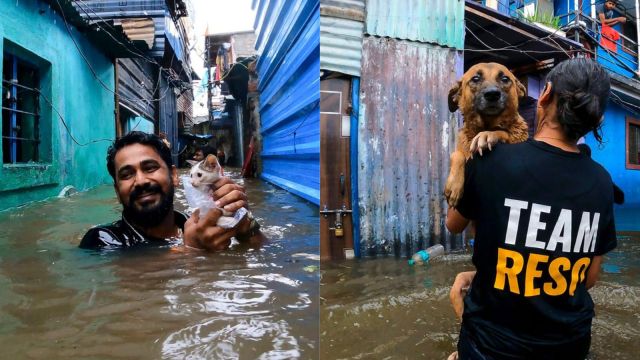
Floods of July 2024 Following a week of consistent rainfall in July 2024, the 8 dams upstream of Pune filled fast. On 25th of July, following over 115 mm rainfall in 24 hrs., 35,574 Cusecs water was released from Khadakwasla, the last and the smallest of the cascade of Pune Dams, more like a regulating reservoir on Mutha River. Even with this discharge, Pune flooded dramatically. Low lying areas like Ekta Nagari, Sinhagad Road, Kamgar Vasti were waterborne.
Blue Line, which was supposed to be breached after a release of 60,000 cusecs of water was breached just by the release of 35,574 cusecs. In 2019, blue line was breached at 45,474 cusecs. It can be seen that lesser and lesser dam releases are resulting in bigger and bigger floods.
Sinhagad Road and adjoining areas which faced the brunt of floods the most are notorious for constructions inside the Flood Lines. Innumerable building permissions have been given without checking their location with respect to river. These areas suffered flood fury. Rampant building permissions have been given to skyscrapers here, 16 stories high INSIDE the blue lines.
Encroachment is and has been a major reason behind Pune Floods.
Riverfront Development Project: How can a government project dump debris inside the river?
The Riverfront Development Project of Pune, rather than protecting and securing rivers width to accommodate floods, pinches the river further, reduces its width and proposes to construct three barrages inside Pune city. It is unthinkable how such a Plan, which does not even mention the term “Climate Change” in its DPR, can be forced on Punekars.
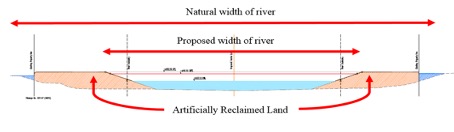
Petitions have been filed against the RFD too. Sarang Yadwadkar, Pune River Revival Group, Jeevit Nadi and several Punekars have opposed the project, have even suggested solutions. But the Rs 4,700 Crore project is being pushed and forced possibly only because it is so lucrative for the politicians and bureaucrats.
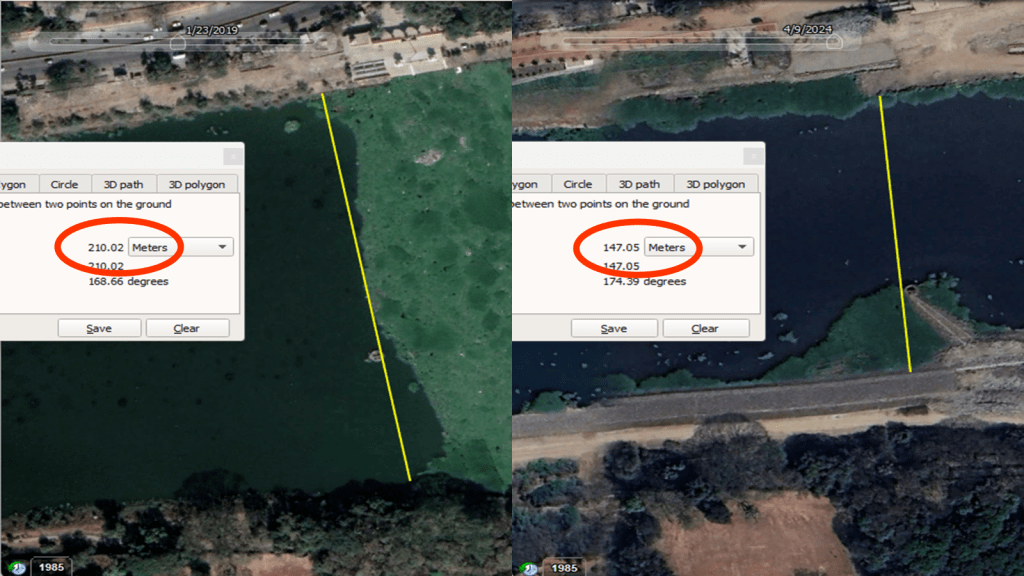
Environment Clearance given to RFD Project was challenged in the NGT by Sarang. The Hydraulic Report of the project itself shows steep rise in flood levels after the project is complete. This rise will occur even without considering flows from the free catchments and the Confluence Effect! The project entails reducing the width by 60 meters or more at places! How can such a project be sanctioned? Where is the accountability?

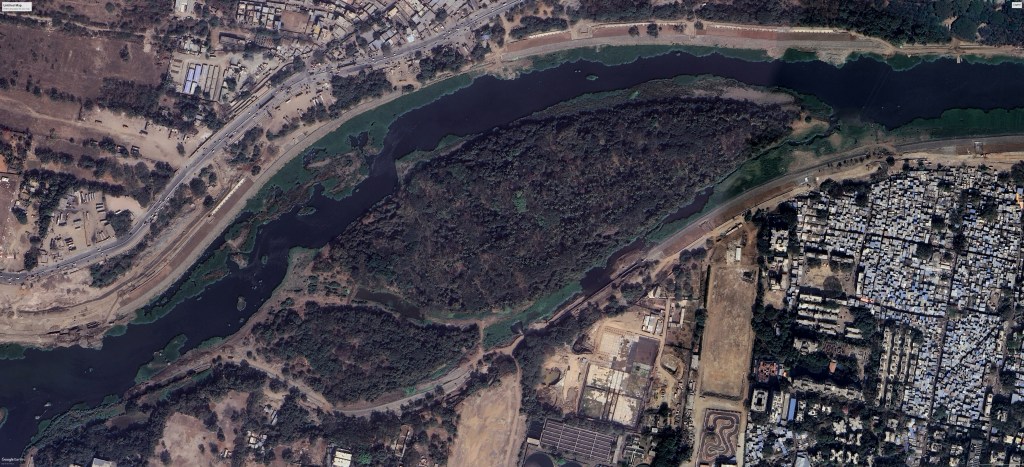
Even when the case against Riverfront Development Project was subjudice and the Hon. Court asked for a stay order, work did not stop for a single minute. As of now, of the 11 stretches of RFD Project, work is stayed on 8 stretches and continues in 3 stretches. In these regions, the river has been pinched, its width reduced by dumping thousands of truckloads of debris inside the river. Honorable Court thinks that it will be a loss of public resources to stop a project which has gone this further. However, we respectfully request a rethink as this constriction by RFD has clearly resulted in higher flood impact and public losses.
The State Impact Assessment Authority has asked the Pune Corporation to furnish clearance from an expert body (CWPRS) and show that the project and its confluence will not cause floods and the embankments are as per the IS codes (which need the embankment to be on higher grounds, which they are not here). This again has only been in response to the PIL filed by Sarang.
Power of Citizen Groups
In response to flooding of a tributary called Ram Nadi, Jeevit Nadi, GIS expert Shrikant Gabale and Viraj Rajguru, water management expert from ACWADAM worked on an 800 meter stretch of a river. The plan is to restore this stretch, but while the larger plan materializes, primary work done by this group like securing river’s width, taking off debris dumped by Municipal Corporation, (ironically unused equipment from River pollution control project caused the most obstruction!) demolishing unused infrastructure, taking out unused pipelines alone resulted in spectacular reduction in floods for this stretch.

The Cumulative Impact of all the obstacles laid by the city in the way of a river is severely hampering the flow and is increasing the impacts of floods. Components of the cumulative impacts are:
- Not respecting Flood Lines and flood plains which are the biggest flood protection insurance policy of the city and constructing buildings right inside the Flood Lines
- Multiple obstacles in the way of the river in the form of debris dumping, drainage lines and chambers, Metro pillars, roads, etc.
- Riverfront Development Project that is actually pinching the river.
- Climate Change and increasing extreme weather events which lead to intense rainfall over a short period of time
- No integration of green storm water management works like green roofs, rainwater harvesting, rain gardens, bio swales, permeable pavements etc. in town planning.
These issues are increasing the frequency as well as intensity of floods and its impact on Pune. Despite being an aware, educated and involved city, Pune is yet to see the fruits of its engagement. While Climate Change does make the situation worse, it will be a stretch of imagination not to blame the obvious bad planning, implementation, greed and lack of political will on Climate Change.
The reason why Pune’s Rivers have not seen better days as yet is that the encroachments and riverfront development projects and fraudulent building permissions are not pushed by some petty actors. One of the main actors is the administration itself! No wonder the battle is uphill. While some government officials are proactive and forthright, that does not change the bigger picture. Changemakers in Pune should not lose heart as the change they are aiming at is systemic. Through multiple petitions, protests, studies and marches, the gradual change that occurs is a change in the governance of rivers, in the mindset of the people inside and outside the governance systems. This is a painstaking work, but a work which will have lasting impacts for decades to come.

Meanwhile, People of Pune marched for a better river and better floodplains on the 25th Aug 2024, amidst pouring rain and a raging river. Every Sunday, groups meet to clean the river, Pune River Revival comes up with newer plans, Jeevit Nadi organizes river walks while working on river restoration, Sarang prepares for his case late in the night.
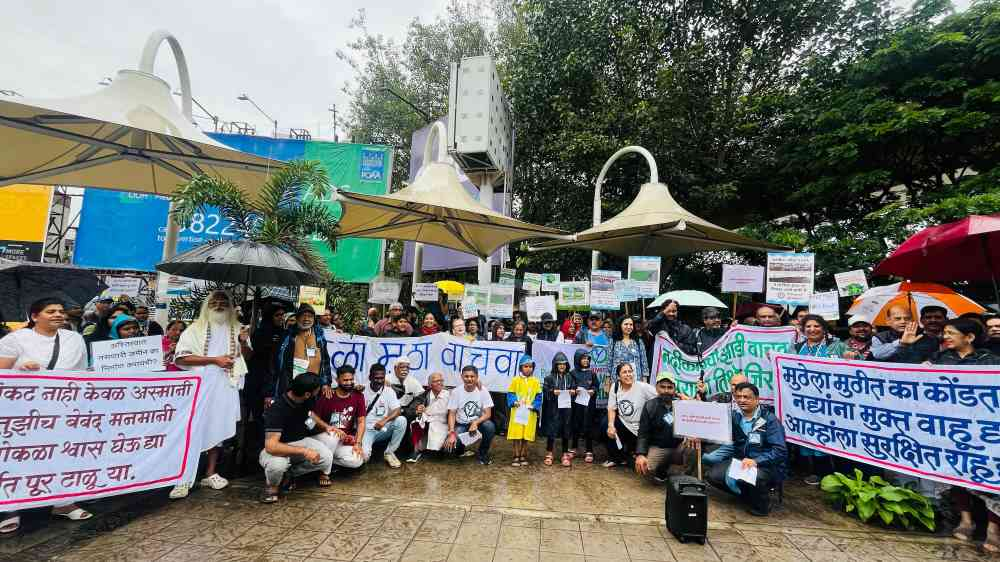
It is through the work of these heroes that some changes have happened in Pune. The battle has been hard, against delays, inefficiencies, willful ignorance, bureaucratic chaos. But they go on as each person loves the river in their own unique and indefatigable way.
With so many heroes, change could be just around the bend in the river.
Parineeta Dandekar (parineeta.dandekar@gmail.com)-SANDRP,
based on an interview with Sarang Yadwadkar

 SANDRP