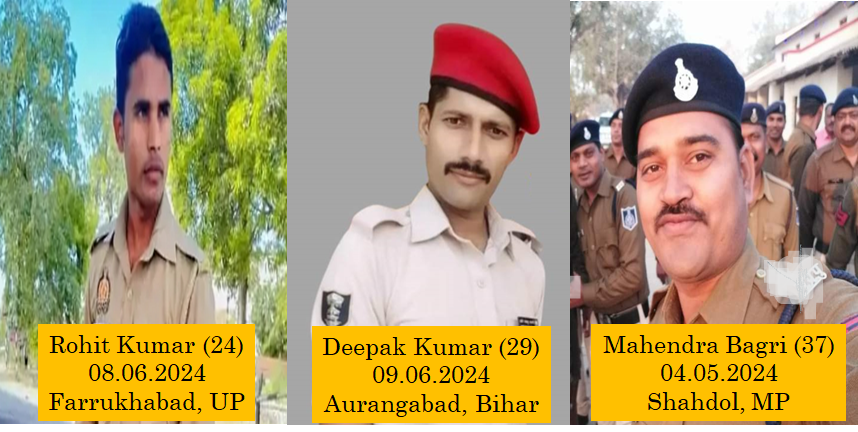
Three policemen have lost their lives in three different incidents related to illegal sand mining activities in May-June 2024. In the first incident a policeman Rohit Kumar Pancholi was killed at night on June 8 in Uttar Pradesh. The 24-year-old Constable was trying to stop a tractor-trolley involved in illegal sand mining in Nagla Chandan area of Farrukhabad district.
Continue reading “May-June 2024: Sand Mafias Mowed Three Policemen to Death”Month: June 2024
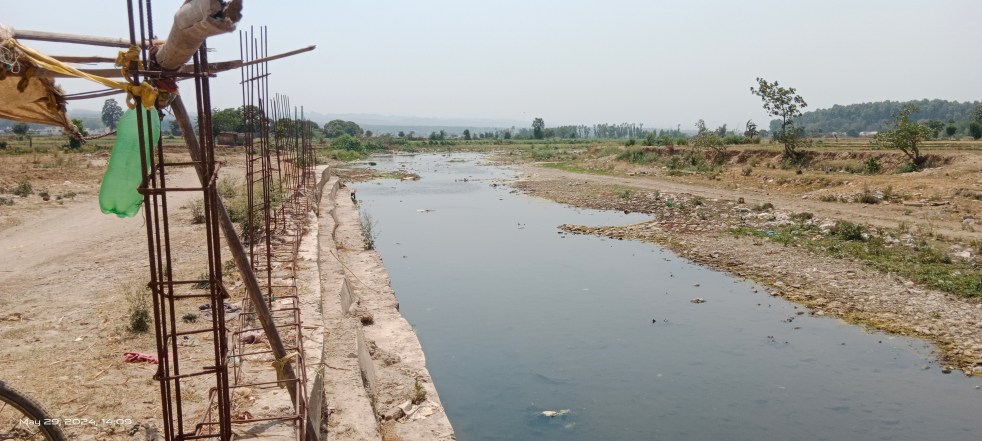
Photo Blog II: Asan Rivers Struggling to Survive in Dehradun
(Feature Image: Asan river being trained near Sumeru Enclave to reclaim river space for road & real estate actvities. Bhim Singh Rawat/SANDRP, May 29, 2024.)
The first part of the photo blog has tried to shed some light on the pathetic condition of water sources, springs and streams forming the Asan River in Dehradun. This second part of the series covers the state of affairs all along remaining length of the river till it joins the Yamuna River.
Continue reading “Photo Blog II: Asan Rivers Struggling to Survive in Dehradun”
DRP 240624: India to help Bangladesh conserve Teesta River
The news this week that India and Bangladesh have agreed for India to help Bangladesh conserve the Teesta River that flows from India to Bangladesh. We hope this development is taken to its logical conclusion soon in terms of implementation of the project as soon as possible. This has the potential to not only two nations working together on conservation and rejuvenation of the Teesta River, but also possibly other 53 shared rivers. However, it would have been better if the W Bengal government would have been briefed, taken into confidence and involved in the discussions. History tells us that the cooperation efforts do not succeed without the involvement of all the stakeholders.
The formation of Joint Technical Committee to initiate discussions for the renewal of the Ganges Water Sharing treaty 1996 that will expire in 2026. One hopes that all these happen with a benevolent disposition from India as this has the potential of creating a much stronger bond between the two countries. A good example is the 1996 Ganga treaty that was also signed with a benevolent disposition. This move can also help strengthen the relations across South Asia as both Nepal and Bhutan are hoping to export hydro-electricity to Bangladesh via India.
Continue reading “DRP 240624: India to help Bangladesh conserve Teesta River”
Causes and consequences of increasing worldwide land subsidence
Last month, when news came that half of China’s major cities, including coastal and inland are sinking[i], to many it sounded like some minor obscure event in some far off corner of the world. But the event is not only major and worrying, also relevant to many parts of the world, including many parts of India. Our situation may even be worse in some areas. But first let us understand what was this news about. (Feature Photo above of recent Land Subsidence in Kashmir. Photo from The Times of India).
Continue reading “Causes and consequences of increasing worldwide land subsidence”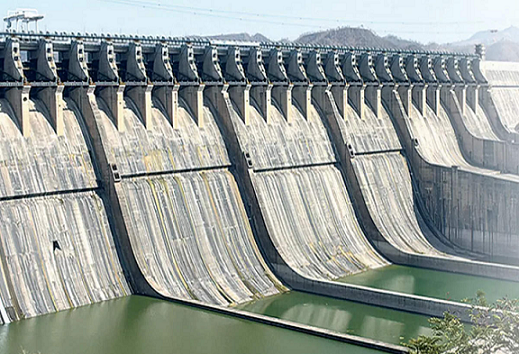
DRP 170624: Sardar Sarovar Power House to operate to reduce Dam Water level in anticipation of surplus rains: Welcome, but…
(Feature Image: Sardar Sarovar Dam. Image Source: The Economic Times, Sept. 2022)
The news this week that SSNNL has decided to operate the 1200 MW River Bed Power House and the 250 MW Canal Head Power house to reduce the water level in Dam from 122.28 meters on June 14 to around 115 m before the monsoon inflows start, in anticipation of the above average rainfall anticipated during SW Monsoon 2024 is welcome. One hopes this is sign of SSNNL, Gujarat Government and the Narmada Control Authority have learnt some lessons after the avoidable flood disasters brought by SSP in 2023 and earlier in 2019 and 2020, as revealed by SANDRP’s analysis in each of these years.
One hopes this is not just one-off ad-hoc decisions, but part of a systemic change. This will require an integrated basin level reservoir operation policy including all the major dams of the Narmada Valley and put it out in public domain along with clearly defined Standard Operating Procedure, and names of the responsible officials for each of such major dam in the basin. The Central Water Commission will also need to be held accountable for its flood forecasting including the 7-day advance forecasts.
Continue reading “DRP 170624: Sardar Sarovar Power House to operate to reduce Dam Water level in anticipation of surplus rains: Welcome, but…”
Secret of Goa River Network’s success: Fight Collectively, Consistently to stop the menace of illegal sand mining
(Feature Image: Illegal sand extraction in Mandovi river in late evening hours at Amona village on Dec. 12, 2022. Image Credit: GRSPN)
The Goa River Sand Protector Network (GRSPN) has been doing exemplary work in checking adverse impacts of unsustainable and illegal sand mining in Goa rivers. This interview with Adv. Viraj Bakre, one of its key members, highlights the impact of the network’s work, struggle, successes and suggestions for river activists fighting against riverbed mining menace in the country.
Continue reading “Secret of Goa River Network’s success: Fight Collectively, Consistently to stop the menace of illegal sand mining”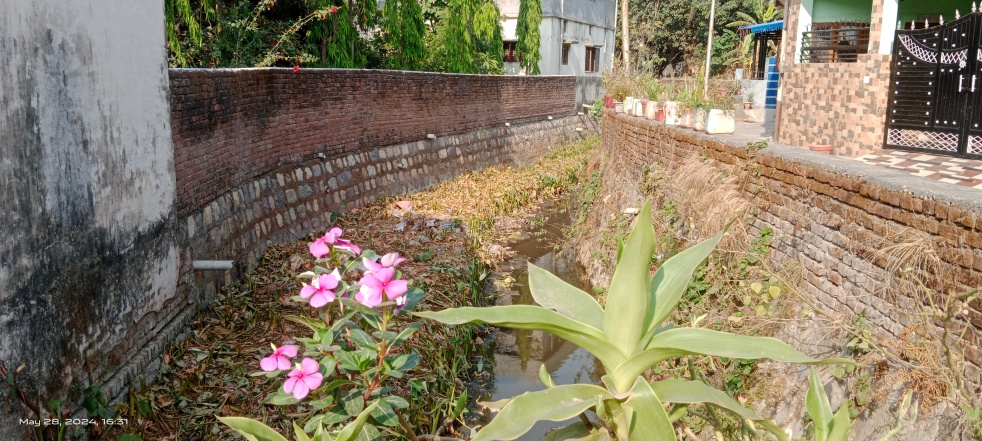
Photo Blog: Chasing Streams, Springs of Asan River in Dehradun
(Feature Image: Asan river flowing through residential areas of Sevala Kalan upstream Chandrabani temple)
Despite being an important tributary to the Yamuna River in Shivalik hills of Dehradun, the Asan appears among the least explored and documented rivers. While, most of the people believe and even available online maps depict Chandrabani temple as origin place of the Asan, a field visit to track the river course reveals some interesting information.
This part one of photo blog documents the river course in its founding catchment sharing pictures and our field observations about the river’s origin place, past history and present situation. The second part of the photo blog will cover the remaining length of the river lying between Chandrabani temple and Asan barrage.

DRP 100624: Global research suggests: shun big dams, big hydro
(Feature Image: 120 Mw Vyasi HEP dam on Yamuna river in Vikas Nagar, Dehradun. SANDRP/June 2024)
Two separate reports this week shows why we need to shun big dams, big hydro. The New York Times, based on several research papers have said that unstable water cycles are making big hydropower projects unreliable. This is clear this year from a number of countries, including India, China, Canada, Turkey and Ecuador among others. The report also emphasizes the loss of biodiversity, methane emissions, submergence, among other issues plaguing the hydropower projects.
Another report quoting Stanford University study says that big reservoirs cannot meet future water storage needs and we need to go for alternative, nature-based storage options. Alternative storage options like soil moisture, aquifers and local water systems. Such storage options also provide “the critical synergy between water infrastructure, climate adaptation, and agricultural resilience.”
Both are highly eminently relevant for India. When will we start adopting such options?
Continue reading “DRP 100624: Global research suggests: shun big dams, big hydro”
Yamuna Manthan 050624: Time to review UYRB to address Delhi water crisis & save river
(Feature Image: River Yamuna at Panipat on June 05, 2024. Photo by Rakesh Gautam)
In the wake of water crisis in Delhi, the Supreme Court on June 3, 2024 has directed Upper Yamuna River Board (UYRB) to convene urgent meeting on June 5, 2024 and submit status report in the court by June 6, 2024. The direction came following Delhi government claim that the state of Himachal Pradesh is ready to share surplus water with it and for that it required cooperation from Haryana government. The outcome would hopefully be known by the evening on June 5 2024.
Given the prevailing political equations among the basin states, there is uncertainty whether the board would be able to effectively resolve the issue. The UYRB suffers from some flaws in formation and functioning. The board is working in an opaque manner. Presently its website is inaccessible and meeting minutes are not in public domain. It is also reportedly crippled by shortage of staff as against originally sanctioned post of 58, it is currently functioning with just 5 officials.
Continue reading “Yamuna Manthan 050624: Time to review UYRB to address Delhi water crisis & save river”
DRP 030624: Ecological challenges before the new govts in Sikkim & Arunachal
(Feature Image: Anti dam graffiti on the wall of the civil secretariat building in Itanagar, Arunachal Pradesh in July 2022. Source: Social Media)
As the Hindustan Times Editorial today (June 3, 2024) has rightly underlined, a major challenge before the newly elected state governments in Sikkim and Arunachal Pradesh is to urgently review the existing, under construction and planned mega hydropower projects in the fragile Himalayan ecology in these border states.
These states are inherently vulnerable to large kinds of disasters including landslides, earthquakes, erosion, floods, GLOFs and also multi hazard disasters. These inherent vulnerabilities are already hugely increased under climate crisis. The large hydropower projects being taken up here are acting as force multipliers for disasters in these states as recent experience including the Oct 2023 events in both states have shown.
Continue reading “DRP 030624: Ecological challenges before the new govts in Sikkim & Arunachal” SANDRP