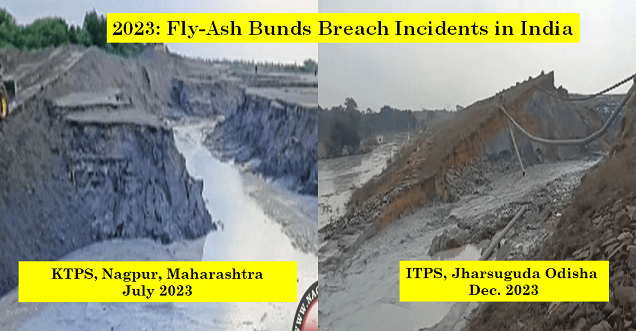
During 2023, we have found two incidents of fly ash bund breach in India. The first incident occurred in Waregaon under Kamptee taluka of Nagpur, Maharashtra in morning hours of July 19, 2023. The fly ashy pond belonged to Khaparkheda Thermal Power Station (KTPS) which is owned by Maharashtra State Power Generation Co Ltd (MAHAGENCO) a state-run power company.
The fly ash pond was brimful following heavy rainfall when a portion of its wall collapsed around 08:00 am. Resultantly, about 15 agricultural farms were flooded with toxic slurry damaging the crops. About 100 acres of agricultural land were filled with fly ash sludge which also entered the Kanhan River.
The affected villagers lamented that they have for long been complaining about the air, water pollution from the plant and about such breaches making their lives miserable but the concerned officials have taken no effective solution to protect their lives.
It is worth mentioning that even in July 2022, a breach in Khasala fly ash pond belonging to Koradi Thermal Power Station had flooded three villages with fly ash sludge. The incident also contaminated the water sources in the area including the Kanhan river a potable water source to Nagpur city, and Kolar River.
Following the incident, Manthan Adhyayan Kendra and Centre for Sustainable Development (CFSD) in a complaint to Maharashtra State Pollution Control Board (SPCB) and Central Pollution Control Board (CPCB) termed the incident a result of the callous attitude of MAHAGENCO officials. The complaint further said that the disaster could have been avoided had MAHAGENCO been cautious of mitigation measures and complying to the legally binding requirement of 100% fly ash utilization.
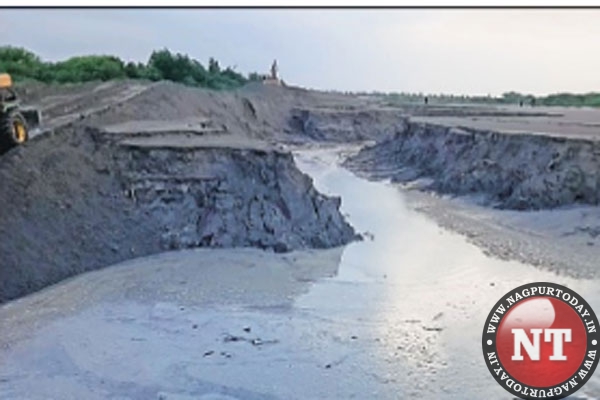
In the complaint letter, environmentalists Shripad Dharmadhikary and Leena Buddhe stated that even before this catastrophic event, ash had been leaking from the power plant and its associated infrastructure, contaminating water bodies. They also revealed that the matter was so serious that some time back, Nagpur Municipal Corp & Orange City Waterworks were forced to stop lifting water for drinking purpose from one side of the Kanhan river due to fly ash contamination.
The second fly ash pond breach incident happened on 09 Dec. 2023 in Lakhanpur block of Jharsuguda district in Odisha. A 50 metre long portion of fly ash pond dyke collapsed around 8.15 am flooding farm areas of nearby Kantatikra and Saradhapalli villages under Kumharbandh Panchayat. The fly ash pond belonged to Ib Thermal Power Station (ITPS) which is owned by Orissa Power Generation Corporation Limited (OPGC) which is also a state-run power company.
The fly ash deluge damaged crops on several farmlands impacting 32 families and 41 farmers. The people were forced to vacate the villages and take refuge atop a nearby ash pond. The local fishermen also feared that the sludge flood could contaminate water in Hirakud dam and affect the fisheries. Citing similar incidents in past which were ignored by OPGC, the locals demanded compensation and relocation to a safer place.
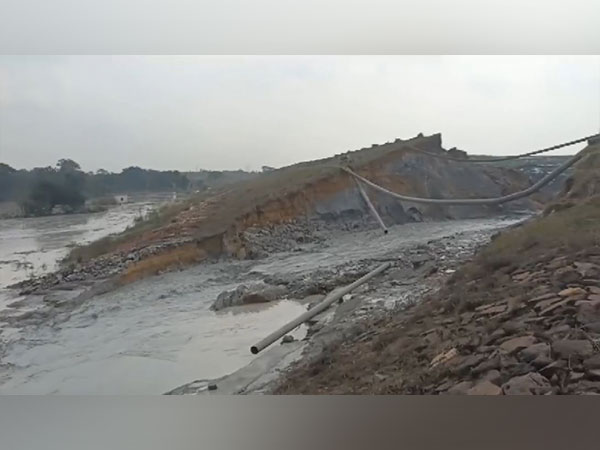
The affected ash pond (C), spanning 110-120 acre, collects ash from units 1 & 2 & residual ash from units 3 and 4, reportedly accumulating 4,600-7,000 cubic metre daily. Accepting the breach, OPGC’s senior manager, HB Behera stated that the repair work would take 2-3 days.
Preliminary investigation by the regional office of SPCB revealed that the pond’s C-block was breached due to which surface water leaked first and then ash slurry was discharged, which spilled into nearby barren and agricultural land. OPGC attributed the dyke wall collapse to incessant rain. It was also alleged that the breach occurred due to negligence of the OPGC authorities for not maintaining the embankment.
As per Down to Earth report, the slurry flood from the pond breach impacted paddy fields spread across 150 acres of land of Sardhapali and Kantatikira. The report further mentions that a Vedanta Group ash pond at Katikela in the district had breached in Aug. 2017 damaging crops over 200 acres of land for which the affected farmers have not been compensated so far.
As per the report, apart from over 100 illegal ash ponds in the name of ‘low land filling’, officially, there are around 15 ash ponds of different industries in Jharsuguda district. Breaches keep occurring in these ash ponds constantly polluting the rivers feeding Hirakud Dam but no penalty is paid for these.
Some Relevant Reports
Mismanagement of fly ash has not been just causing the fly ash ponds breach incidents but also contaminating the air and water sources and adversely affecting the health, livelihoods of local people in areas around the thermal power plants. Some relevant reports compiled below reveal that the several of these plants have openly been violating environmental norms across the country and the law enforcers as well judiciary have not been able to address the issue in efficient manner.
Thermal power plants are still not disposing fly ash properly Despite the MoEFCC 2021 notification mandating 100 per cent utilization of fly ash by coal-fired thermal power plants, several cases have been registered with the NGT alleging its improper disposal.
In April 2023, failed compliance and inaction by coal power plants regarding pollution from fly ash slurry were brought to the attention of the NGT. In the matter of Mohan Singh vs State of Haryana, the applicant told the tribunal that the Panipat Thermal Plant in Haryana, owned by the state, failed to scientifically manage fly ash and its effluents. The failure caused damage to the adjoining agricultural fields. As compensation, the power plant provided tube wells to the project-affected parties. It is alleged that where the state was prompt in severing the electricity connections to these tube wells due to non-payment of electricity bills, the slurry from the plant continued to overflow into the fields.
Similarly, in another case filed before the NGT in May 2023, a non-operational power plant was found to be in breach of its obligation to manage fly ash. In the matter of Ajay Shrivastava vs State of Haryana, it was brought to the tribunal’s attention that Faridabad Thermal Power Station, unit of Haryana Power Generation Corporation Limited, was in violation of MoEFCC’s Aravalli notification dated May 7, 1992. The Aravalli notification restricts certain activities that cause environmental degradation in a specific area of the Aravalli range. The court observed that the thermal power station did not present any concrete plan to lift coal ash from the ash dyke.
The lack of seriousness of the power plants to manage the fly ash despite the court’s intervention cannot be more evident than in the matter of Ashwani Kumar Dubey vs Union of India. The NGT formed a committee in August 2018 while hearing the matter to assess the damage caused by thermal power plants located in Singrauli district in Madhya Pradesh and Sonebhadra district in Uttar Pradesh. These plants were found to have discharged mercury beyond prescribed limits and causing various ailments to the inhabitants. The plants also caused pollution due to the storage of fly ash beyond the capacity of the dyke, its transportation by trucks without any safeguards and its improper disposal. https://www.downtoearth.org.in/blog/environment/thermal-power-plants-are-still-not-disposing-of-fly-ash-properly-ngt-cases-show-93479 (20 Dec. 2023)
Tamil Nadu Powering the Pollution: Study A study by Poovulagin Nanbargal and Manthan Adhyayan Kendra in the Neyveli and Parangipettai regions of the Cuddalore between Dec 2022 and July 2023 found that Neyveli Lignite Corporation of India Limited (NLCIL) thermal power plants have contaminated surface and groundwater sources in 8 km radius area. The study also states that The ITPCL (IL&FS Tamil Nadu Power Company Ltd.) operates a sea-water based power plant in the same district. Both NLC and ITPCL have had a history of serious social and environmental impacts in the area.
The study was released in Aug. 2023. “The study has shown that the water sources in the area – including drinking and domestic use water, air quality and soil have all been severely affected by fly-ash, coal dust and high concentration of heavy metals in surface and groundwater due to discharge of mine water and effluents from the thermal power plants. This has led to serious health problems for local communities. The study makes several recommendations for addressing these issues including monitoring and addressing the problems through a joint effort of NLC and ITPCL, affected communities, civil society organizations and independent experts.” https://www.manthan-india.org/poweringpollution/ (08 Aug. 2023)

The southern bench of NGT on Thursday (Aug. 10) took suo motu cognisance of the alleged ground and surface water pollution caused by NLCIL, formerly known as Neyveli Lignite Corporation. The case was registered based on the report published by TNIE titled ‘Huge Pollution risk in 8 km around NLCIL’ on August 9. The NGT bench comprising judicial member Justice Pushpa Sathyanarayana and expert member K Satyagopal admitted the case and issued notices to managing director of NLCIL, union environment ministry, Tamil Nadu Pollution Control Board, Municipal Administration and Water Supply Department and Cuddalore district collector. The matter has been posted for August 28 for next hearing. https://www.newindianexpress.com/states/tamil-nadu/2023/aug/11/ngt-takes-suo-motu-cognisance-of-nlcil-water-pollution-2604097.html (10 Aug. 2023) The SPCB on Aug. 28 told the NGT Bench that a five-member committee has already collected water and soil samples from the locations mentioned in the survey and has sent them for analysis. A detailed report on the analysis will be submitted to the Bench once the results are out, the TNPCB said. https://www.thehindu.com/news/national/tamil-nadu/tnpcb-forms-five-member-panel-to-probe-allegations-of-pollution-around-nlcil-thermal-plants-in-neyveli/article67245034.ece (28 Oct. 2023)
Madhya Pradesh NGT can’t rely upon expert committee without hearing parties: SC While hearing a case related to violations of norms by Singrauli Super Thermal Power Plant, the Supreme Court said that the NGT, being a judicial body, should give an opportunity of discussion and rebuttal to the parties in compliance to the principle of natural justice, if it relied upon reports of an experts committee formed by it to adjudicate a matter. It also said factual information which comes to the knowledge of NGT on the basis of the report of the committee constituted by it, must be disclosed to the parties for their response if it is to be relied upon by the NGT. A reasonable opportunity must be afforded to the parties to present their observations or comments on such a report to the tribunal, it added.
The court’s judgment came on a batch of appeals against a common order passed by NGT, principal bench, New Delhi, directing Singrauli Super Thermal Power Plants to install air pollution control, monitoring devices and also timely utilization & disposal of fly ash as remedial measures. In the instant case, the court noted the NGT has simply accepted the recommendations as remedial action suggested by the committee without giving any chance to the appellants to respond.
The bench said it would be useful to refer to what is known as the ‘official notice’ doctrine, which is a device used in administrative procedure. “Although an authority can rely upon materials familiar to it in its expert capacity without the need formally to introduce them in evidence, nevertheless, the parties ought to be informed of materials so noticed and be given an opportunity to explain or rebut them,” the bench said. The bench remanded the matter back to the NGT for reconsideration and decide the matter after giving reasonable opportunity to all the parties. https://www.deccanherald.com/india/ngt-cant-rely-upon-expert-committee-without-hearing-parties-sc-1236704.html (13 July 2023) https://www.livelaw.in/pdf_upload/524-singrauli-super-thermal-power-station-v-ashwani-kumar-dubey-5-jul-2023-481515.pdf
Andhra Pradesh A village fights coal dust in their lungs For more than six months, the residents of Palavasa-Nakkavanipalem in Visakhapatnam, which is less than a km from the Hinduja power plant, allege that despite repeated requests, the management has not taken action to prevent the careless disposal of coal waste in the ash pond located barely 350 meter from their houses. The village residents approached the SPCB which issued a show cause notice to the Hinduja plant in April this year. However, as not much was done, they finally approached the High Court which now has now converted their petition into a PIL.
Before the Hinduja National Power Corporation Ltd (HNPCL) started operations, residents of Palavalasa were dependent on farming, dairying, and cattle breeding. Because of groundwater pollution, there is no cultivation and natural vegetation has been destroyed. Groundwater samples collected from two locations in the village also indicate pollution. However, officials of the Hinduja plant contend that the groundwater is getting contaminated because of proximity to sea.
Babu Rao, member of Scientist for People, told TNM that the amount of ash in Indian coal is higher. “The mechanism to keep the ash in a slurry state needs water, where will the sprinklers get water from? “Ash ponds are set up at a higher ground everywhere, to avoid mixing up with the groundwater but, since HNCPL is located in the coastal region, the water table is higher in the area. This allows seepage of chemicals. “Why did the pollution control board officials approve the setting up of the ash pond near residential colonies,” asks Babu Rao. https://www.thenewsminute.com/andhra-pradesh/we-cant-breathe-a-village-in-visakhapatnam-fights-coal-dust-in-their-lungs (28 Oct. 2023)
Bhim Singh Rawat (bhim.sandrp@gmail.com)
You may also like to see our earlier reports on this issue:
2022 Fly ash dam breaches in India
Singrauli Fly Ash Dam Breach: Who regulates these dams in India?
And SANDRP’s 2023 yearend overview on dams & hydro power projects related issues
2023: Accidents & Damages to Hydro, Dam Projects in India
2023: People’s Protests Against Hydro & Dam Projects in India
2023: Incidents of Dam Induced Floods in India
2023: Safety & Sustainability Concerns on Dams & Hydro Power Projects in India
2023: EAC & FAC Decisions on Dams, Hydro, Irrigation Projects

 SANDRP