
All large dams have finite life. What happens to the dams once the useful life of a dam is over? It would need to be decommissioned. Decommissioning of a dam generally refers to[i] complete removal of the dam and its associated structures. This is a very relevant question for India as the third largest dam builder of the world. It becomes even more important as large dams are no longer required or are no longer viable and importance of a flowing river is increasingly appreciated. It needs to be kept in mind that a dam cannot be allowed to remain on the river, without proper maintenance, as such a dam would remain a huge safety hazard for society and economy downstream from the dam.
Benefits of restored Rivers Here it should be added that while dams are claimed to provide benefits like irrigation, hydropower, domestic and industrial water supply, water storage and flood management, research including by the report of the World Commission Dams, the benefits are always much lower than promised and even these benefits reduce as the dams age and reservoir get silted up. Moreover, these benefits come at a huge cost and massive impacts.
So when a dam is decommissioned and river flow is restored, it reverses some of the adverse impacts that the construction of the dam had created. Some of the benefits of a restored river can include restoration of fish migration, restoration of river ecosystem, restoration of flow of water, silt, sand and nutrients in the river, both upstream of the dam and downstream of the dam, among others. The restored flows also provide for water needs of the river bank communities, livelihoods to fisherfolks and also water for cultural needs. These restored flows in turn create further positive impacts upstream and downstream of the dam. The decommissioned dam also means reduction in risks of disasters and floods for the downstream river and also opening up of the submerged lands for alternative uses. Free flowing rivers are also more resilient to the impacts of climate change and help adapt to climate change. The quality of water in restored rivers also can improve.
So for society and economy, a point comes in the life of the dam when the costs and impacts hugely over weigh the benefits, when it may be better to decommission the dam. This can only be known if there is a periodic process of independent assessment of costs and benefits of a dam. Similarly, it may be better for the society and economy to decommission an unsafe dam. However, currently India has no policy or program around these issues related to decommissioning of dams.
While planning for dam decommissioning, it may be kept in mind that it will involve costs and some impacts on the riverine ecosystem are likely. Sudden release of sediments accumulated behind the dam for instance can impair feeding and spawning grounds of aquatic species. Riparian roots and stems can get buried below the sediments and damaged by abrasions. If there are pollution sources in the catchment of the reservoir, contaminated sediments can pose a health hazard when released downstream. Hence, dam decommissioning options and strategies need to be planned based upon studies of the character of the river, its geology, ecology, climate and other related aspects.
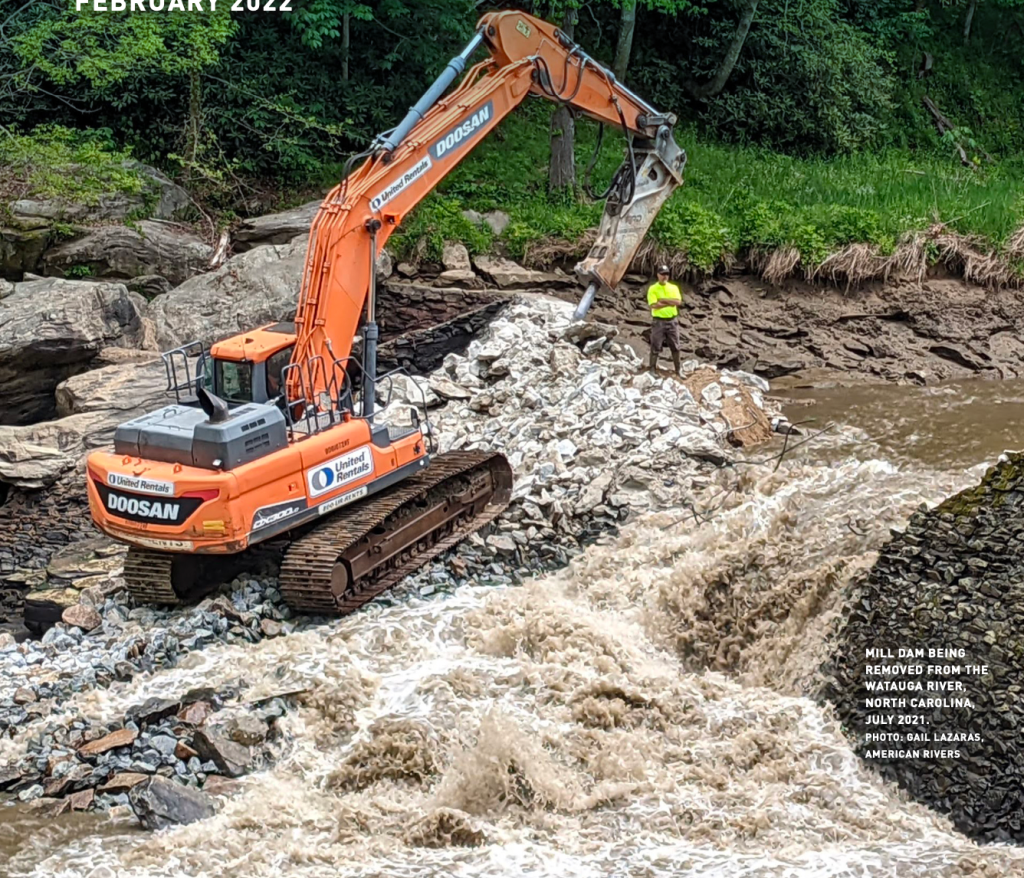
Why Decommission dams? There are a number of reasons that would lead to decision to decommissioning a dam. As more and more dams are decommissioned and benefits of dam removal becomes apparent, the pace of dam removal is likely to keep going up globally.
– Unsafe Dams: When dams become unsafe due to lower than required spillway capacity, silt accumulation, aging, damage, lower carrying capacity of the river downstream, it may be prudent to decommission such dams before the floods decommission them and create a disaster. The phenomena of increased flood inflows under climate change situation, which may be due to intensifying of rainfall, Glacial Lake Outburst floods, landslide dams or avalanches in the upstream could also make the dams unsafe.
– Economically unviable dams: it may become too costly to maintain the dam due to reduced benefits, increased costs or a combination of both. The costs could increase due to increased regulatory requirements for ensuring environment flows, fish migration up and downstream from the dam, need for retrofitting to increase spillway capacity, etc. In such cases even after taking into account the cost of decommissioning a dam, it may be cheaper to decommission the dam rather than maintain the dam.
– Stop Green House Gas (GHG) emissions: Reservoirs behind dams, particularly in tropical and semi tropical climate, are known source of emission of methane (one molecule of methane is about 24 times more potent GHG than one molecule of carbon dioxide) and carbon dioxide, both major GHGs. By decommissioning the dam, we also stop such emissions. Moreover by reforesting parts of the submergence area and connecting the river with floodplain and wetlands post decommissioning, we also create new carbon sinks. Dam removal thus can be an important part of climate mitigation and adaptation strategy.
More than a century old experience in dam building has revealed that dams have a limited lifespan, poor designs can reduce the lifespan, dams can underperform, they can silt up, dam safety can pose threat to lives and dams can lead to the death of rivers and wipe out fisheries. While India does not have policy or program related to dam decommissioning, there is a lot we can learn from what is happening elsewhere in the world on this front.

Dam decommissioning Globally The United States leads the world in dam removal projects. The process in USA started[ii] with a raft of federal legislation, such as the Wild and Scenic River Act of 1968 and the National Environmental Policy Act of 1969, forced developers to take rivers’ ecological benefits into account. Demolitions surged in the past 3 decades starting from early 1990s, peaking at more than 100 per year before the COVID-19 pandemic slowed work. As per American Rivers[iii], 2025 dams have been removed in US so far, including 57 in 2021, 65 in 2022. The highest dam removal years were: 2017 (99), 2018 (111) and 2019 (102).
In the USA, most dams are licensed by the Federal Energy Regulatory Commission (FERC) or its state equivalent, usually on a 30-50 year cycle. At the end of that license cycle they have to be re-evaluated and can then be retired. There are also emergency procedures for de-licensing dams in the event of safety concerns (such as earthquake damage, etc). Through the relicensing process, FERC has mandated new operating conditions to meet environmental concerns, including increased minimum flows, added or improved fish ladders, periodic high flows, and protection measures for riparian land.[iv]
The American Rivers document notes the 1999 turning point in Dam decommissioning in USA: “The Edwards Dam removal was a turning point because it was the first time the Federal Energy Regulatory Commission ordered a dam removed because its costs outweighed its benefits. The Edwards Dam removal helped turn the once radical concept into an accepted, proven tool for addressing outdated infrastructure and restoring rivers. Today, dam safety offices, fisheries managers, dam owners and communities are taking a second look at the benefits and impacts of dams. Many are deciding that removal is the best option— one that can bring significant benefits to the environment, community and economy.”
Interestingly, American Rivers notes that two states, Pennsylvania (364 total dams removed) and Wisconsin (152 total dams removed) have long led the country in the removal of dams. A major factor contributing to their success is close collaboration between the state fisheries and dam safety programs. State of Vermont has decommissioned a huge 13% of state regulated dams, more than any other state in terms of proportion of total state regulated dams removed.
American Rivers, the group that leads the dam removal advocacy and wok in USA has the target of achieving removal of 30 000 dams by 2050[v]. It is noteworthy here that US Congress first authorized the Army Corps of Engineers to inventory dams with the National Dam Inspection Act of 1972. In India, there is no such legal backing for creating a credible inventory of large dams.
USA President Biden in 2022 signed the Infrastructure Investment and Jobs Act, which includes $2.4 billion for the removal, retrofit and rehabilitation of dams. It’s notable that investment for dam removal was included in an infrastructure bill— acknowledging that free-flowing rivers are vital to economy, public safety and quality of life.
In Europe too Dam removal is picking up, where about 325 dams, culverts, and other river-blocking structures were removed in 2022[vi], according to Dam Removal Europe, a coalition of environmental groups. In July 2023, the European Parliament approved a draft of a nature restoration law with a target of making at least 20,000 kilometres of rivers free flowing by 2030. If the law is enacted, “all European countries [will] have to start thinking about this,” says Herman Wanningen, director of the World Fish Migration Foundation.
In 1998, two small tributaries of the Upper Loire in France were demolished to help protect the Loire Salmon. A dam in Kernansquillec on the Leguer River in France was also dismantled in 1996 after rapid sedimentation had reduced the reservoir capacity by 50%. In Thailand decommissioning campaigns were initiated as a result of social and ecological disruptions to the downstream fishing and rice farming communities by the Pak Mun Dam constructed on the Mun River in 1994, the largest tributary of the Great Mekong River. In 2001 the Thai government relented to international pressure and ordered the dam’s gates to be opened for a one year study of its impact on fisheries and communities.
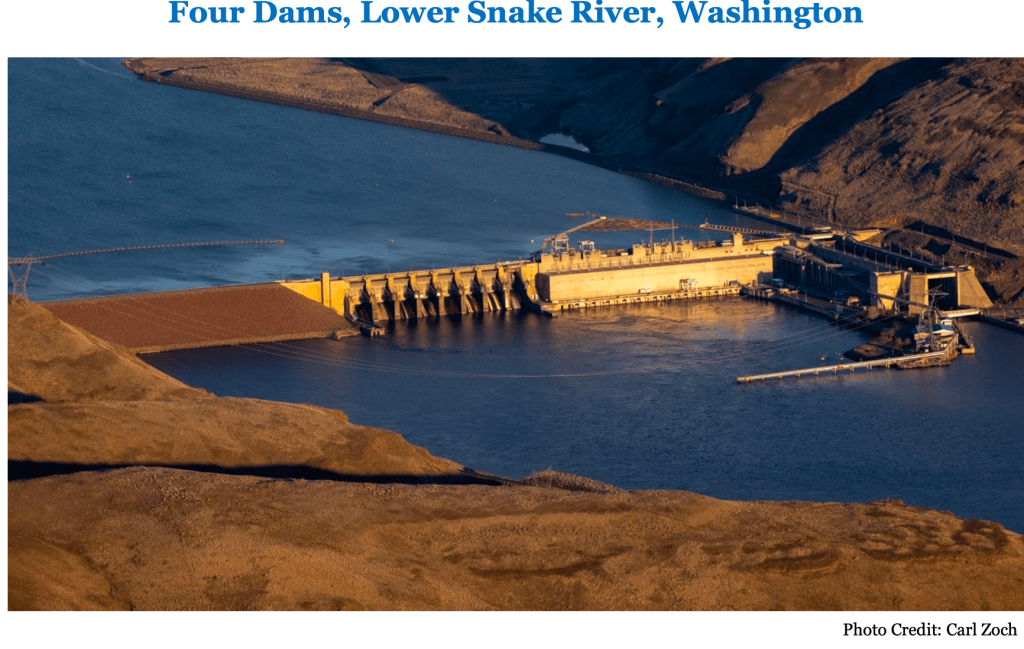
USA’s and the world’s largest dam removal[vii] has started with the removal of Copco 2 dam in Nov 2023 and will re-start in early 2024 with decommissioning of second of the Klamath Dam, the 49 m high, 60 years old Iron Gate Dam. 420 km long Klamath River that starts from Oregon hills and drains to Pacific Ocean in California in western USA has six dams, the first of them with 36 m height was built starting 1918. Four of the six dams are now slated to be removed before the end of 2024, freeing about 600 km of the river including its tributaries, for fish migration.
This is how the process of decommissioning of Klamath began in early 2000s as described in the Science article, when: “the federal license for many of the dams was approaching its expiration date. Under pressure from tribes, environmentalists, and anglers, the Federal Energy Regulatory Commission signalled that before the license could be renewed, the dams would need to be renovated to help fish (Salmon) get upstream. Facing hundreds of millions of dollars in construction costs, the owner—PacifiCorp—agreed in 2010 to relinquish the dams and allow them to be torn down instead, setting in motion what has become the world’s largest dam removal project, a $450 million to $500 million effort funded by the state of California and PacifiCorp.”
Klamath River Renewable Corporation[viii], which is in charge of safe and efficient removal of the four Lower Klamath dams declared through a press release on Nov 2 2023[ix] that work on the Copco 2 dam removal work has come to a close.
This also shows that decommissioning a dam can also involve huge costs. Obviously, such costs should be included in the dam cost when a dam is proposed, but that is never the case. Alternatively, we need a regulatory licensing system that will ask the project developer to bear such costs when the project comes for relicensing. We have neither of them in India. In India, the clearances like the environment clearance are given to dam projects in perpetuity, there is no periodic review. Nor is there any mention of the costs, benefits, impacts or process of decommissioning in the environment impact assessment or clearances. Inherent in such regime is the assumption that dams are permanent infrastructure!
The restoration group for the Kamath dam has created a seed bank with 30 000 kg of seeds of 90 local species that they want to be planted. The team leader has experience of ecological restoration of decommissioning of two Elwha river dams in western USA (one of them 64 m high Glines Canyon Dam) starting in 2011.
Post Decommissioning Ecological restoration of the catchment and river, with involvement of the local communities including fisher people from planning stage follows the decommissioning of the dam. The Science article quoted above about the Klamath dam removal hopes: “And with thousands of dams targeted for removal worldwide, more and larger efforts are likely to follow.” Such Ecological restoration requires firstly a plan that is formed long before the decommissioning starts and involves experts from various fields to formulate and implement such plan that will involve not only populating the former reservoir area with selected native plants, but also ensuring that invasive plants are not spread and those that exist are eradicated.
Himanshu Thakkar (ht.sandrp@gmail.com, https://sandrp.in/)
NOTE: An edited version of this, translated in Hindi, has been published by https://www.srotefeatures.in/ at: https://t.ly/HMIj6
[i] http://www.incold.co.in/conf_2022/Papers/Dam%20decommissioning%20An%20option%20for%20India%E2%80%99s%20ageing%20water%20storage%20infrastructures.pdf
[ii] https://sandrp.in/wp-content/uploads/2018/03/dam_decommissioning_as_env_piroirty_india_march2013.pdf
[iii] https://www.americanrivers.org/wp-content/uploads/2023/02/DamList2021_Report_02172022_FINAL3.pdf
[iv] Auer, N. A. 1996. Response of spawning lake sturgeons to change in hydroelectric facility operation. Transactions of the American Fisheries Society 125:66 –77. In Bednarek. T, Angela. 2001. Undamming Rivers: A review of ecological impacts of dam removal. Environmental Management Vol. 27, No. 6, pp. 803–814
[v] https://www.americanrivers.org/threats-solutions/restoring-damaged-rivers/dam-removal-map/
[vi] https://damremoval.eu/dam-removal-map-europe/
[vii] https://www.science.org/content/article/historic-dam-removal-poses-challenge-of-restoring-both-river-and-landscape
[viii] https://klamathrenewal.org/project-materials/
[ix] https://www.internationalrivers.org/news/press-release-removal-of-diversion-dam-restores-flows-to-klamath-river-canyon-for-the-first-time-in-nearly-a-century/

 SANDRP