Dams

Hydropower projects commissioned in 2015 in India: What do they tell us?

ABOVE: Rangit River in Sikkim Downstream of Jorethang Loop Hydropower Project (Photo: Mona Chettri)

Indian government continues to have very ambitious hydropower targets, even though all the evidence suggests why we should be reviewing the way we are taking decisions about hydropower projects. As per Central Electricity Authority, India has 42641 MW of installed capacity from large hydropower projects at the end of Dec 2015. The installed capacity from projects below 25 MW is not included in this figure.

CAPACITY ADDITION IN 2015: Troubled projects

During 2015, India added 1824 MW of large hydropower capacity. Some of the important projects commissioned during the year include: 800 MW Kol Dam in Himachal Pradesh (one unit each on 30.03, 31.03, 10.04, 12.06), 450 MW Baglihar II in Jammu and Kashmir, 80 MW at Lower Jurala Project in Telangana, 330 MW Srinagar HEP in Uttarakhand and 96 MW Jorethang Loop Project in Sikkim. The first project is in Central Sector, next two in state sector and the last two in private sector. Except for the 80 MW from Lower Jurala, rest of the capacity is all in Himalayan states.

If we look closely, all of these projects have had a very troubled track record and most continue to face serious problems even after commissioning. Continue reading “Hydropower projects commissioned in 2015 in India: What do they tell us?”
Dams · DRP News Bulletin

DRP News Bulletin 04 Jan. 2016 (Rivers are soul of India: PM Narendra Modi)

Rivers are soul of India: Prime Minister Narendra Modi  Excerpts From text of PM’s inaugural address at 103rd session of Indian Science Congress, Mysuru Rivers have played as important a role in human history as oceans. Civilisations have been nurtured by rivers. And, rivers will remain critical for our future. So, revival of rivers is an essential part of my commitment for a cleaner and healthier future for our society, economic opportunities for our people, and renewal of our heritage. We need regulations, policy, investments and management to achieve our objective. But, we will succeed only when we integrate technology, engineering and innovation into our efforts, not just to clean our rivers now but to keep them healthy in the future as well. For this, we also need scientific understanding of the impact of urbanisation, farming, industrialisation and groundwater use and contamination on the river eco-system. River is the soul of Nature. Their renewal must be an element of a larger effort to sustain Nature.

Continue reading “DRP News Bulletin 04 Jan. 2016 (Rivers are soul of India: PM Narendra Modi)”

Dams · Yamuna River

Happy Waste Free Yamuna!

In new year 2016, State Government of Uttarakhand must act against burgeoning amount of solid and liquid waste being put in Yamuna River in its home land.

River Yamuna appears flowing pollution and waste free in Himalayan stretch. But close observations go against this popular notion and paints grim picture of huge amount of waste finding its way in the river on a daily basis.  This account highlights the issue in detail and urges State Govt. of Uttarakhand (UK) to take remedial actions before it is too late to reverse the degradation of the River. 

Yamnotri is famous shrine and thousands of pilgrims and tourists frequent the place during Char-Dham Yatra held every year. These visitors, in absence of better options or for hygienic reasons prefer using bottled water, packaged foods (biscuits, snacks) and plastic disposals as food servings. As a result solid waste in massive amount is generated through the pilgrimage season which ultimately goes into the holy river. It’s worrying that this has become a norm for past many years.

Continue reading “Happy Waste Free Yamuna!”

Dams · Indus · Pakistan

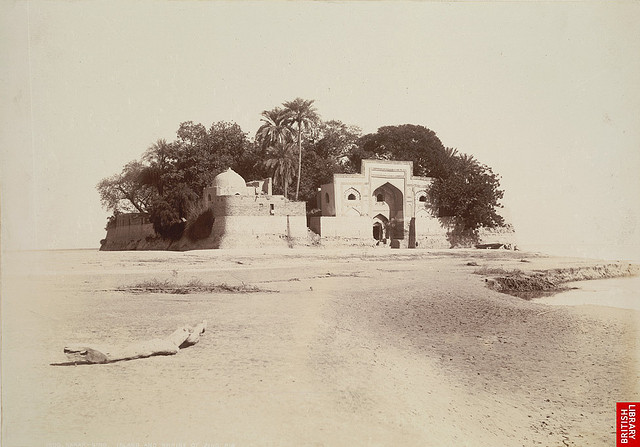
Jhulelal or Zindapir: River Saints, fish and flows of the Indus

Above: Zindapir Shrine at Sukkur Photo from: British Library

Perhaps we all have our pet projects which we wish would go on forever. I have been working on a Primer on Riverine Fisheries of South Asia for some years now (my office may disagree with the definition of ‘some’). Like a magpie collecting shiny knick-knacks, I keep collecting (quite serendipitously, or so I think) anecdotes and interviews and snippets on the subject. Continue reading “Jhulelal or Zindapir: River Saints, fish and flows of the Indus”

Dams

GROUND WATER CRISIS DEEPENED IN INDIA IN 2015

Groundwater issues made news repeatedly in the year 2015. The year saw a 14 per cent deficit in southwest monsoon increasing the dependence on ground water for agricultural, industrial and domestic use. The falling water table and pollution of surface and ground water sources made the situation critical in various parts of the country. Competing demands on the ground water led to protests and litigation. The National Green Tribunal (NGT) tried to safeguard the ground water and pushed the State machinery into action through its orders in various matters. Towards the end of the year, the Central Ground Water Authority (CGWA) came up with revised guidelines for evaluation of proposals for ground water abstraction.

Continue reading “GROUND WATER CRISIS DEEPENED IN INDIA IN 2015”