Year-end provides a wonderful opportunity for us to take stock of siatuations. If we look at India’s water sector, the above-average rainfall in 2013 monsoon would mean good agricultural production.
But the water sector as a whole is showing increasing signs of trouble.
Let us take few examples. The most striking crisis of 2013 was the unprecedented flood disaster in Uttarakhand in June where thousands perished. Experts and media called it a man-made disaster with a significant role played by existing and under construction hydropower projects and other unsustainable infrastructure. (SANDRPs Report) The Supreme Court order of Aug 13, 2013 directed the Union Ministry of Environment and Forests to set up a committee to look into the role played by existing and under construction hydropower projects in the disaster and also directed that no further clearance to any hydropower projects be given till further orders. This order was possibly the only hopeful sign since Uttarakhand government, other Himalayan states or the central agencies including NDMA and MoEF, seem to have learnt no lessons from the disaster.
Earlier in 2012-13 we saw triple crisis in Maharashtra in the form of worst drought in 40 years, worst irrigation scam in independent India and agitation against diversion of huge quantity of water from agriculture to non agriculture sector without any participatory process. In Andhra Pradesh too, a massive irrigation scam was exposed by the CAG report. In fact inequity in the distribution of costs and benefits related to water sector project lies at the heart of the bifurcation of the troubled state.

In Chhattisgarh and downstream Orissa, thermal power plans of massive capacities are going to impact the water situation so fundamentally that big trouble is likely to erupt there, which may impact several other sectors. Madhya Pradesh government is on a big dam building spree in all its river basins, including Narmada, Chambal and also the water scarce Bundelkhand. All of these projects are for canal irrigation when canal irrigation has failed to add any area to the total net irrigation at national level for over two decades now. We could see a new massive irrigation scam in MP in coming years, in addition to agitations and interstate disputes. Gujarat too saw a very bad drought in 2012-13, and there is increasing perception that Gujarat government is by design not building the distribution network to take the Narmada Dam waters to Kutch and Saurashtra, for whom the project was justified and built.
In North East India it is now two years since massive agitation has led to stoppage of work at ongoing 2000 MW Lower Subansiri hydropower project. This is India’s largest under construction hydropower project on which over Rs 5000 crores have been spent without putting in place basic studies or participatory decision making process. Similar fate awaits if the government goes ahead with other hydropower development projects in the region without learning lessons from this episode. During the year, Forest Advisory Committee’s rejection to grant forest clearance to 3000 MW Dibang and 1500 MW Tipaimukh projects in the region was a good sign, so is the stoppage of work at Maphithel dam in Manipur by the National Green Tribunal.
Photo: Neeraj Vagholikar
But we have seen no sign of improvement in environment governance. The year saw the questionable appointment of former Coal Secretary as chairman of the Expert Appraisal Committee on River Valley Committee, by Union Ministry of Environment and Forest. In fact, several of the new appointees in the committee do not have any background in environmental issues. The year also began on the wrong note with the environment clearance to the 620 MW Luhri hydropower project in Himachal Pradesh, designed to destroy the last flowing stretch of SutlejRiver in the state. In April 2013, the Forest Advisory Committee took the most shocking decision of approving the completely unjustifiable Kalu dam for Mumbai Metropolitan Region, without any assessments. The same FAC had rejected the proposal one year back and the reasons for that rejections stand even today.
In Western Ghats, the decision of the Union government of dumping the Western Ghats Expert Ecology Panel Report (Gadgil Report) and instead in principle accepting the-much criticized Kasturirangan committee Report has already led to full blown crisis in Kerala and is threatening to engulf more areas. This crisis was completely avoidable if the MoEF, in stead had used last two years to encourage public education on the need for implementing the Gadgil panel recommendations.
While relatively poorer states like Rajasthan, Madhya Pradesh, Chhattisgarh and Orissa has shown big jump in agriculture growth rates in recent years, these have come at the cost of huge depletion in groundwater levels. As Vijayshankar of Samaj Pragati Sahyog said at a conference in Delhi recently, in Rajasthan, the level of groundwater development (ratio of annual groundwater draft to annual utilizable recharge) increased alarmingly from 59% in 1995 to 135% in 2009, indicating that Rajasthan is now in the overexploited category. Of the 236 blocks in Rajasthan, massive 164 (69%) were in over exploited category in 2009. In Madhya Pradesh, while the state groundwater use has moved from 48 to 56%, about 89 blocks out of total 313 (28%) are using unsafe levels of groundwater.
This fresh news of groundwater depletion in new areas is bad sign in medium and long range. “Over the last four decades, around 84 per cent of the total addition to the net irrigated area has come from groundwater. India is by far the largest and fastest growing consumer of groundwater in the world. But groundwater is being exploited beyond sustainable levels and with an estimated 30 million groundwater structures in play, India may be hurtling towards a serious crisis of groundwater over-extraction and quality deterioration”, said Planning Commission member Mihir Shah at a recent meeting in Delhi. 12th Five Year Plan has started the new scheme of mapping groundwater aquifers of India, which is a useful step, but we have yet to crack the puzzle of how to regulate groundwater use to ensure its equitable and sustainable use for priority sectors.
The state of our rivers as also the reservoirs and other water infrastructure is deteriorating but our water resources establishment has shown little concern for that. The IIT consortium report on the Ganga River Basin Management Plan is due soon, but if the pathetic interim report is any sign, there is little hope there.

The year 2012 ended with the National Water Resources Council approving the National Water Policy 2012. At the end of 2013 we have yet to see a credible plan in place for implementing the policy provisions. The year saw proposal from Union Ministry of Water Resources for a new Draft National Water Framework Law, Draft River Basin Management Bill and draft National Policy Guidelines for water sharing/ distribution amongst states. None of them have reached finality and all of them are likely to be opposed by states as an encroachment on their constitutional domain. In fact the interstate Mahadayi River conflict has reached a flashpoint with upstream Karnataka and Maharashtra starting dams in the basin without even statutory clearances from the centre or consent from downstream state of Goa.
While all this looks rather bleak, increasing agitations and informed protests all over India on water issues is certainly hopeful sign. More community groups are challenging inadequately done environmental impact assessments, cumulative impact assessments, basin studies, downstream impact assessments, concepts like eflows etc, raising very informed and pertinent questions. Most of these studies have been the monopoly of select, fraudulent EIA agencies. Critical questions indicate that these studies cannot be done excluding local communities, their knowledge and their concerns. Among other hopeful signs include some of the decisions of the National Green Tribunal on Yamuna and other rivers.
The underlying theme of these events is the increasing trend of state in India working for the interest of the corporate interests to the exclusion of people, environment and democracy. It is a challenge for us all to see how to reverse this trend.
The year 2013 also marks the end of the current term of the Union government. While there is little to hope from the two main political parties ruling the centre and the states mentioned above, perhaps the emerging political alternative in Delhi will grow and move in right direction. Let us hope for the best.
Himanshu Thakkar (https://sandrp.wordpress.com/, https://sandrp.in/)
(An edited version of this was published in January 2014 issue of Civil Society, see: http://www.civilsocietyonline.com/pages/Details.aspx?455)
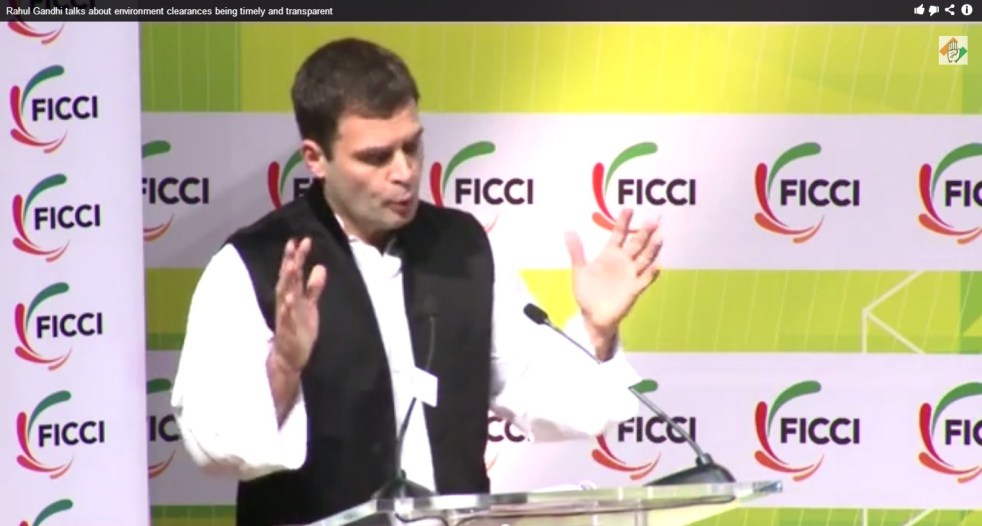
 administrative and judicial discretion. The loopholes are so big that you can drive a truck through some of them. Environmental and social damage must be avoided, but decisions must also be transparent, timely and fair.”
 Here in rare event when the statutory Forest Advisory Committee (twice) rejected forest clearance for the 300 MW Alaknanda Badrinath Hydropower project, your minister Mrs Natarajan overturned the FAC decision and gave clearance (it should be clear that we are not writing this in defense of Mrs Natarajan’s tenure at MoEF). In another instance, when FAC said no to Kalu Dam near Mumbai in April 2012, a more pliable FAC was put in place and your party Chief Minister from Maharashtra wrote to FAC to clear it and lo and behold, in April 2013 it was cleared! Mr Prime Minister sir, you yourself have gone ahead and laid foundation stone for the 3000 MW Dibang Hydropower Project in Arunachal Pradesh on January 31, 2008, when the project did not have statutory environment and forest clearances, the project still does not have them, because the basic studies have still not been done. All this only shows how off the mark your statements are.
 SANDRP