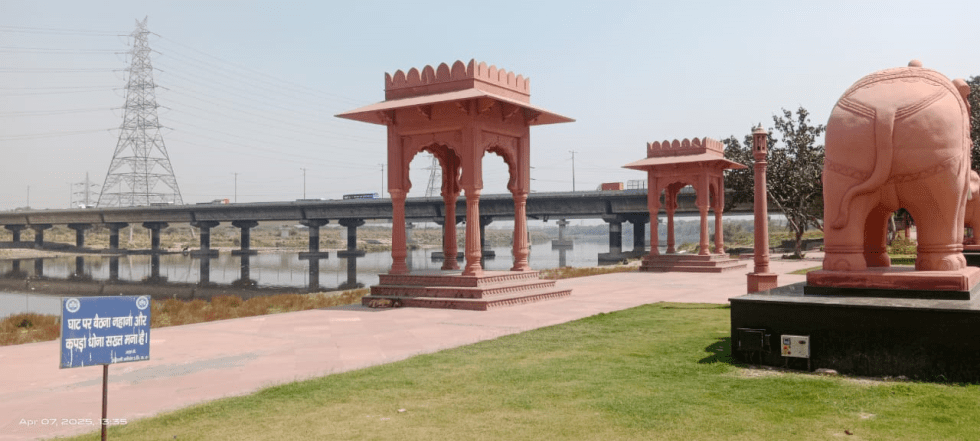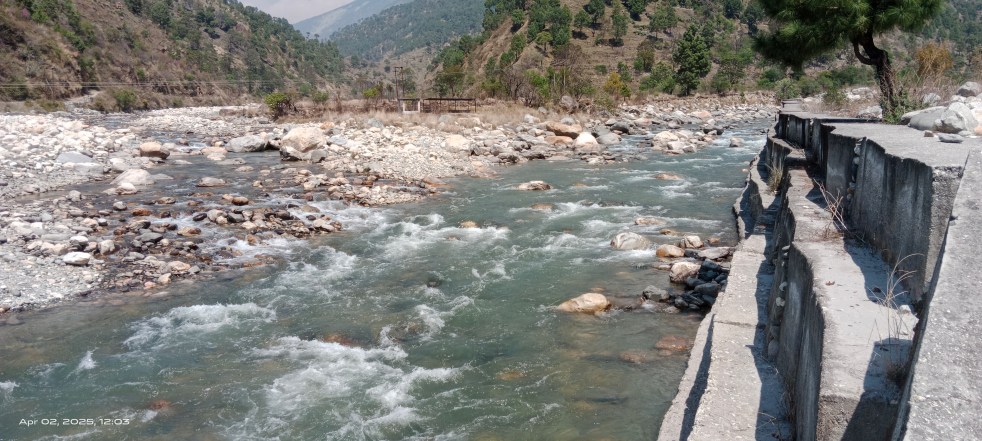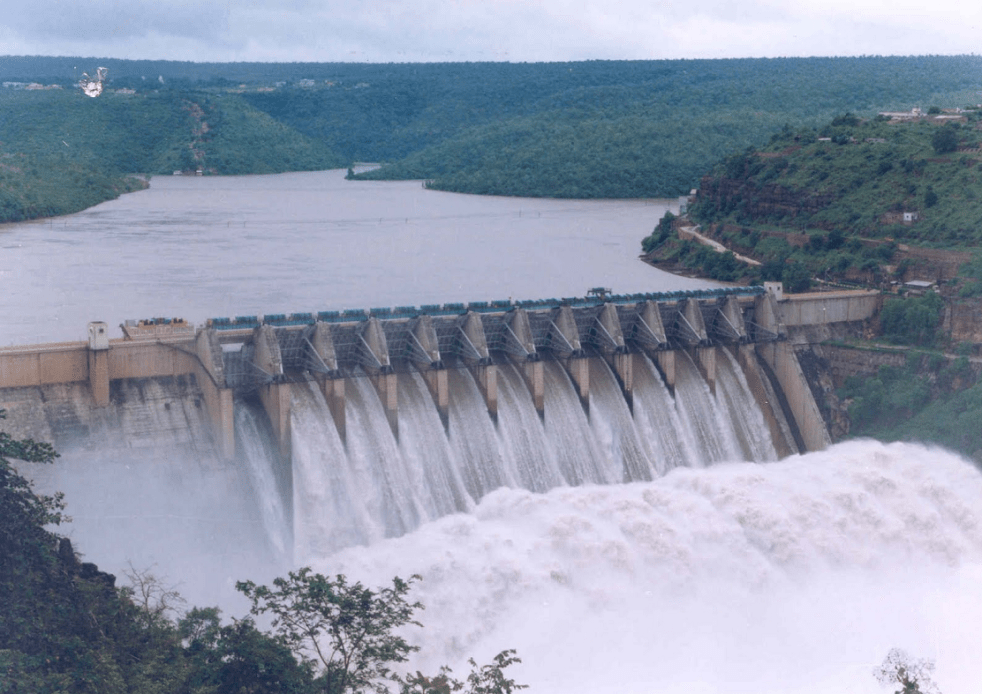
This week’s DRP News Bulletin brings two encouraging reports about revival of Kham River in Sambhajinagar district in Maharashtra. The Bulletin also brings report of Gujarat Human Rights Commission sending notice to the state and city government to uphold the environment rights of citizens in Vadodara. There is also here the news of signing of MOU for beginning of 4 km water taxi along Yamuna in Delhi upstream of Wazirabad barrage, of course without any environment or social impact assessment, any environmental clearance, any public consultation process, with blind faith in Sabarmati River Front Development model.
Continue reading “DRP NB 170325: Can we work for more Kham Rivers and Less Sabarmati Rivers?”Tag: Urban Water
DRP NB 100325: “Good Floods Reduce the Risk of Bad Floods”
(Feature Image: An aerial view of the flooded collectorate ghat at the bank of Ganga river in Patna. PTI Photo/Source: The Asian Age)
This remarkable report this week, quoting the work of Gilbert F White, also considered “father of floodplain management” provide a number of lessons in flood management. These include: – “Floods are ‘acts of God’, flood losses are largely acts of man” (By ‘acts of God,’ he meant that floods are perfectly natural events);
– “Yes, floods will happen. Whether or not those floods are good floods or bad floods, whether or not they cause damage is largely up to us”;
Continue reading “DRP NB 100325: “Good Floods Reduce the Risk of Bad Floods””2024 Bengaluru Groundwater: Top ten Reports: Problems, Causes & Solutions
(Feature Image: People stand in a queue with water cans to get drinking water at Jnana Jyothi Nagar, in Bengaluru. Image Source: PTI/Live Mint, 10 March 2024)
This annual overview complies the top ten reports regarding the continual depletion in groundwater levels in Bengaluru, the factors responsible for it and its impact on the citizens. It also highlights relevant steps taken by government agencies and some cost-effective sustainable alternatives suggested by experts and civil society groups.
Continue reading “2024 Bengaluru Groundwater: Top ten Reports: Problems, Causes & Solutions”DRP NB 030325: Supreme Court asks: How a city can become smart without protecting the water bodies, wetlands
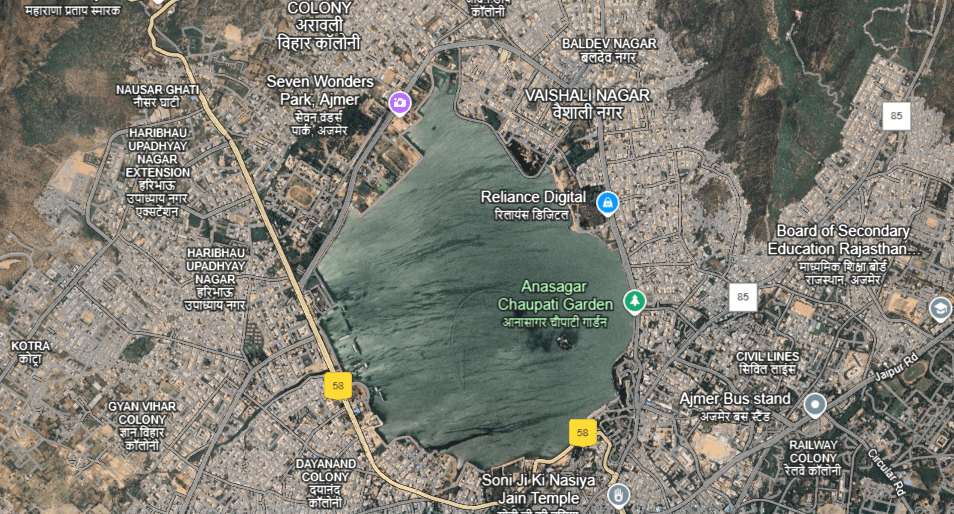
In a welcome development, the Supreme Court of India has asked, in the context of Ajmer City in Rajasthan, how can a city become smart without protecting the water bodies/ wetlands? How cities will become smarter by encroachments on the water bodies and wetlands? The Supreme Court bench threatened the Rajasthan government of contempt of court for non-compliance of order dated Dec 1 2023 as also the order of National Green Tribunal on Dec 13 2021.
The Supreme Court here has hit the nail and raised a very fundamental question that is relevant to all the cities across India as they are all guilty of allowing encroachments and destruction of local water bodies in their respective areas. This is a suicidal step as it has adverse impact on the cities in multiple ways and yet, most cities consider this smart and in fact get away with it. There is also no National Urban Water Policy guiding the cities solve the puzzle of multiple issues handled by multiple departments, including some by the local, state and central governments. This self-created mess in the cities comes handy for the various vested interests in encroaching more water bodies. The judiciary, so far has also not been effective in addressing this issue with any effectiveness.
Continue reading “DRP NB 030325: Supreme Court asks: How a city can become smart without protecting the water bodies, wetlands”DRP NB 240225: Unanswered questions on Ken Betwa Project
At a well-attended meeting at India International Centre in Delhi on Feb 20 2025, organised by VIDHI Centre for Legal Policy, a panel of speakers including Shri Shashi Shekhar (former secretary, Union Ministry of Water Resources) and Shri Jasbir Singh Chauhan (former Principle Chief Conservator of Forests, Madhya Pradesh) and Himanshu Thakkar of SANDRP, a number of fundamental questions were raised about the controversial Ken Betwa River Link Project. Unfortunately, no clear answers are forth coming from the authorities.
Continue reading “DRP NB 240225: Unanswered questions on Ken Betwa Project”Urban Groundwater 2024: Top Ten Judicial Interventions
(Feature Image: Underconstruction overhead water tank along Bindal river in Dehradun. B. S. Rawat/SANDRP/May 2024)
This annual overview includes the top ten reports from 2024 on judicial interventions regarding groundwater in urban India. The overview shows that the judicial bodies, particularly the NGT, have been dealing with various cases concerning the violations of groundwater extraction norms, including permission, use of treated sewage and rainwater harvesting by residential projects, and groundwater pollution by landfill sites and industrial waste across the country.
The overview of the court proceedings broadly suggest that the concerned governing bodies have been showing casual approach when it comes to ensuring the compliance to norms and improve governance, thus failing to stop the depletion & contamination of GW in Urban India.
Continue reading “Urban Groundwater 2024: Top Ten Judicial Interventions”DRP NB 030225: Water Anarchy in Gujarat in Narmada water allocation?
A report this week quotes a Govt of Gujarat (GOG) insider saying that GOG is giving 16.7% of SSP (Sardar Sarovar Project) water for industries (with more in pipeline) against planned allocation of just 2% (0.2 Million Acre Feet or MAF). Similarly, against planned allocation of zero for Urban areas in Ahmedabad, Gandhinagar, Vadodara, Kheda and Bharuch, most large urban areas are getting Narmada water. However, the insider says, the area irrigated by the SSP is only 33% of the targeted area, with largest water quantities going to already irrigated central Gujarat. Similarly, with the Narmada Water Disputes Tribunal (NWDT) asked Gujarat to provide water for the SSP Downstream areas from its allocated share, but Gujarat keeps claiming it has no water for this and asks other states to provide water for the downstream areas from common pool. It seems the worst fears of the project critiques are coming true. The insider has in fact characterized this state of affairs as water anarchy in Gujarat.
Continue reading “DRP NB 030225: Water Anarchy in Gujarat in Narmada water allocation?”DRP NB 270125: India’s non-functional Sewage Treatment Plants
(Feature Image: 10 MLD Kundli CETP in Sonipat. BS Rawat/SANDRP/May 2023)
A detailed report in this week’s DRP News Bulletin below shows how India’s Sewage Treatment Plants (STPs), Govt’s main weapon against pollution of rivers in Urban areas, have been a failure for decades. It is pertinent to note that this is the golden jubilee year of Water Pollution Control Act of 1974, that led to the formation of Central, state Pollution Control Boards, and the whole water pollution control bureaucracy, institutions and legal architecture. There should be little doubt that whole architecture has abysmally failed in achieving basic objective for which it was created, including ensuring proper treatment of urban sewage.
India has spent thousands of crores of rupees on these STPs, mostly, mega, centralized projects. But there has been little effort to address governance of the STPs, to ensure that they function as required and provide the results that they have been set up for. Whether they function or not, qualitatively or quantitatively, year after year and decades after decades, there are no consequences! In fact, if treated properly, sewage can become a asset rather than nuisance that it now is. The Judiciary too, right up to the apex court, have badly failed in achieving any improvement in this eminently justiciable issue.
Continue reading “DRP NB 270125: India’s non-functional Sewage Treatment Plants”DRP NB 200125: Whither Env Clearance Rejection rate from Expert Appraisal Committee or MoEF?
A detailed review of functioning of Union Ministry of Environment and Forests’ (MoEF) Expert Appraisal Committee (EAC) on River Valley Projects (RVP) for 2024 by SANDRP shows that the committee or for that matter MoEF has almost non-existent rejection rate. Even when a project is not cleared, when it applies again, it gets clearance, whether the application if for stage I (Terms of Reference) or Stage II (Environment Clearance- EC) clearance. Even in some cases like Pump Storage Projects (PSP) in Western Ghats or the Hydropower projects in disaster prone Himalayas, including the disaster-stricken projects like the 1200 MW Teesta III projects in Sikkim, the scrutiny including field visits by the EAC Sub committees is minimal, not worthy calling even scrutiny.
Continue reading “DRP NB 200125: Whither Env Clearance Rejection rate from Expert Appraisal Committee or MoEF?”DRP NB 060125: Concerns about & Contradictions in CGWB’s Reports
The Central Ground Water Board (CGWB) released two important reports last week. While the Annual Ground Water Quality Report 2024 reveals rise in nitrate fluoride, arsenic and uranium contimination of groundwater resource in India, the Dynamic Groundwater Resource Assessment Report 2024 claims substantial rise in annual groundwater recharge and decline in extraction of the resource.
As per the first report, the number of districts affected by high nitrate levels in groundwater has gone up to 440 (near 56% of all 779 districts in country) from 359 found in 2017 assessment which means in 7 years 81 more districts have been found having excessive nitrate levels in groundwater. This should concern us from a number of points of view.
Continue reading “DRP NB 060125: Concerns about & Contradictions in CGWB’s Reports”