DRP News Bulletin

DRP NB 290523: Goa Fights to save Mahadayi River

(Feature Image: Thousands form human chain along Mhadei river to celebrate #MahadaiAmchiMai festival. Source: ToI)

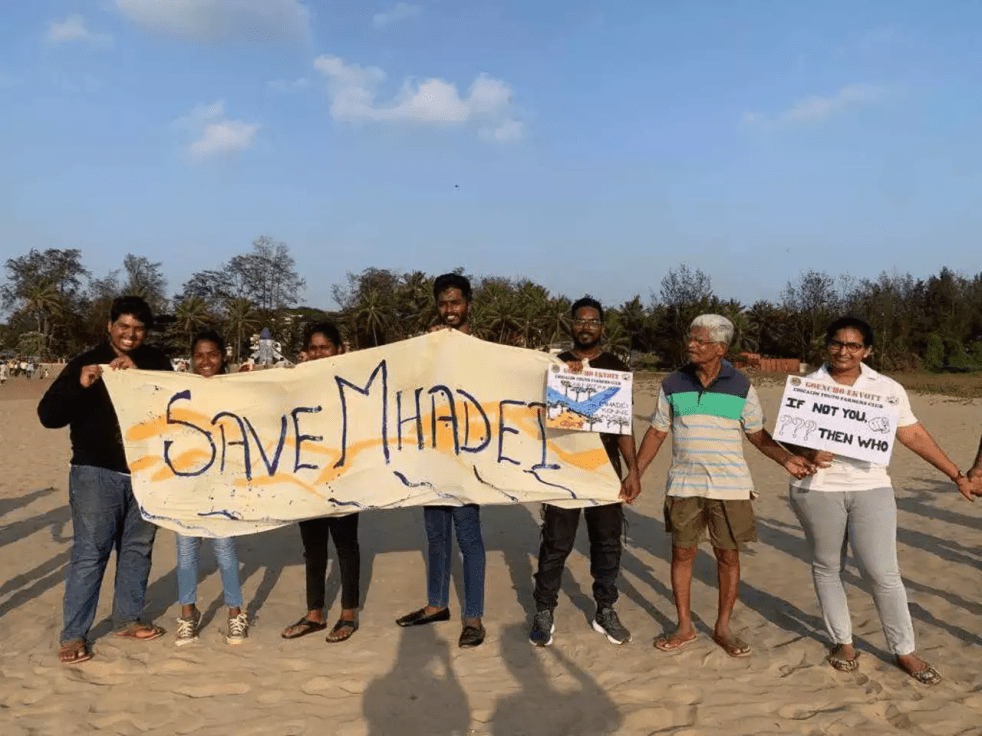
On May 20, 2023 when thousands of people of Goa, Rakhondars (protectors) came out to form a 7 km long human chain to save Mhadei or Mahadayi river, they were not only celebrating Goa’s unique Mahadayi River festival, but were also coming together to declare their resolve save and rejuvenate the River that is lifeline of Goa.

A large number of organizations came together, including Earthivist Collective, Goa Heritage Action Group, Save Mhadei Save Goa front, among many others. It was a unique attempt to reconnect with the river, its history, its soul. The people from all kinds of art forms and all walks of life came together in a state where the connection with the river has always been strong for the people.

One hopes their tribe multiplies and they succeed in saving the river from dam building plans and other river affecting activities. That success will provide an example and impetus for river conservation activities elsewhere too.

Continue reading “DRP NB 290523: Goa Fights to save Mahadayi River”
DRP News Bulletin

DRP NB 220523: Water Options as we await South West Monsoon 2023

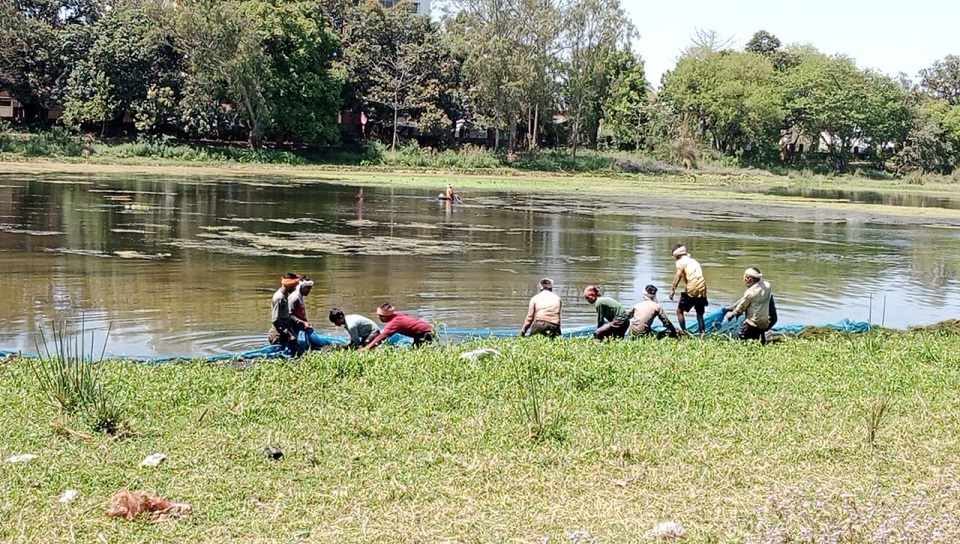
(Feature Image: Waster Chest nut cultivators removing weeds from Giri Taal of Kashipur. April 2023)

As we await the onset of South West Monsoon 2023, we would like to highlight the water options stories in lead story here, that includes examples from Ladakh, Madhya Pradesh, Rajasthan, Gujarat, Chennai, among others. It is important to remember these as we need to be ready to welcome and nourish the coming annual bounty that monsoon brings.

It also reminds us the fascination our poets have for this season, particularly the wonderment that Gulzar keeps expressing. In this one of his non filmy poetry “Baarish” he warns:

“Mujhko ye fikr, ke is baar bhi sailab ka paani…

Kud ke utrega kohsahr se jab..

tod ke le jayega ye kachhe kinaare..”

Continue reading “DRP NB 220523: Water Options as we await South West Monsoon 2023”
DRP News Bulletin

DRP NB 150523: Will the govt listen to caveats against Ken Betwa Project?

The following report raises three caveats regarding Ken Betwa River Link Project, among others. Firstly it urges that the substantial impact of climate change on the rivers needs to be taken into account, particularly the need for accurate hydrological assessment. It underlines that the project themselves are accelerating the climate change impact on monsoons as they are reducing freshwater flows to the oceans, which in turn has an impact on the ocean’s thermal and salinity gradients, both of which are drivers of monsoon.

Secondly, it rightly says that the impact of projects on adaptive capacity of areas like Bundelkhand needs to be taken into account. In Bundelkhand, climate adaptation can be harnessed using rain water harvesting, rejuvenation of traditional water systems, less water intensive crops and alternative agricultural practices. Thirdly, the water sharing issues that may worsen with both climate change and big projects, need to be kept in mind while taking up mega projects, particularly its impact on water and other security issues.

Continue reading “DRP NB 150523: Will the govt listen to caveats against Ken Betwa Project?”
DRP News Bulletin

DRP NB 030423: IRENA confirms bleak future of Large Hydro globally

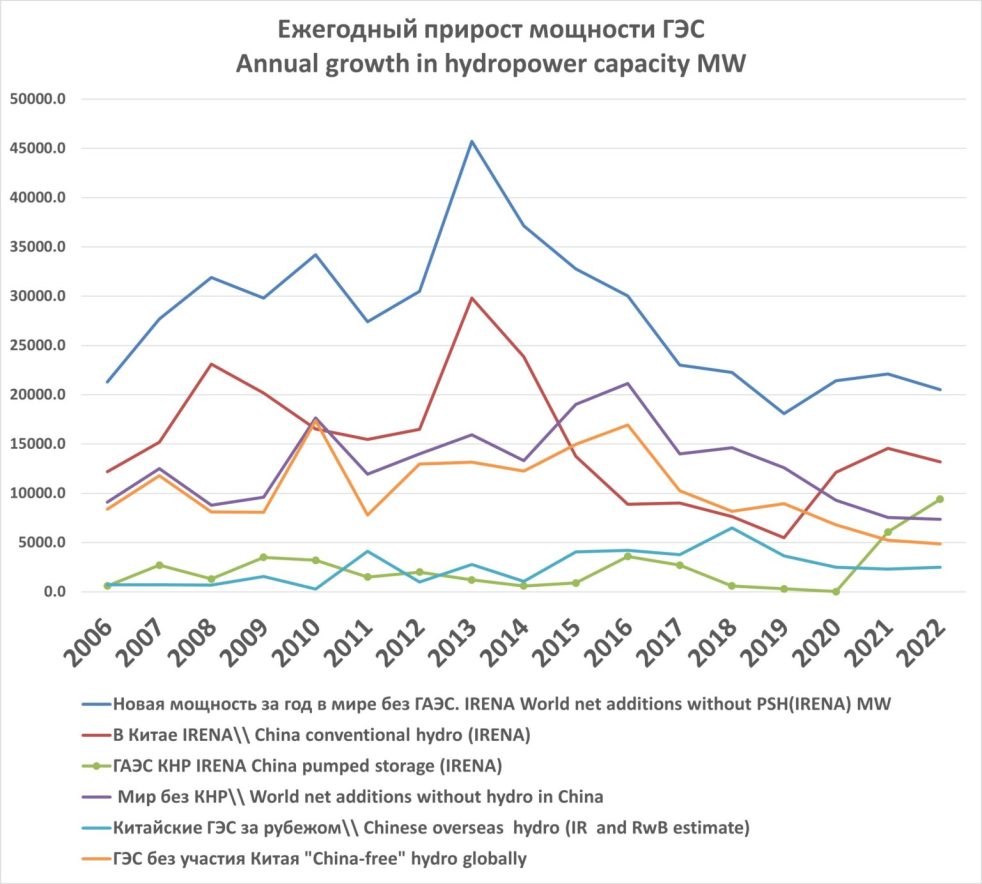
(Feature Image: Graph showing annual growth in hydro power capacity in MW. Source: Rivers Without Boundaries, April 01, 2023)

The annual Renewable Statistics 2023 report from IRENA (International Renewable Energy Agency) says that globally, only 1.6% was added to the hydropower capacity in 2022, that too two thirds in non-democratic China. The capacity added in rest of the world outside China in 2022 was 7.3 GW, lowest figure in last 15 years. Similarly 99% of additional capacity added in pump storage projects in 2022 was in China. The report from IRENA also says that 97% of hydropower finance comes from public or government sources and private sector seems to have little enthusiasm for this sector. The projections for future painted in the report is no better. This is broadly in line with our lead story in DRP News Bulletin last week (dated March 27 2023) painting bleak future of large hydropower projects.

Continue reading “DRP NB 030423: IRENA confirms bleak future of Large Hydro globally”
DRP News Bulletin

DRP NB 270323: Bleak future of Large Hydro

(Feature Image: Anti dam graffiti on the wall of the civil secretariat building in Itanagar, Arunachal Pradesh in July 2022. Source: Social Media)

Large Hydropower projects have bleak future as number of reports this week suggest, including the following Video. The large hydro is not renewable, sustainable or green or people friendly. In fact, it is increasingly seen as invitation to disasters. Much better options exist. In the changing climate situation, the destruction that hydropower projects bring about becomes even more relevant when we need the Rivers, Forests, the biodiversity and less disaster prone options. Earlier our governments see this writing on the dam walls from across the world, better it will be for all concerned.

Continue reading “DRP NB 270323: Bleak future of Large Hydro”
DRP News Bulletin

DRP NB 200323: Time to Focus on Natural Water Storages

(Feature Image: Cover page of World Bank report titled What the Future Has in Store: A New Paradigm for Water Storage)

On the occasion of World Water Day 2023, the United Nation will be organizing a conference (March 22-24) in New York, USA. In its latest report the World Bank has also raised concern over decline in fresh water storages and underlined the need of a new approach for integration of built and natural water storages as a measure to adapt to climate change related water challenges and better management of water resources.

There is no doubt that large parts of the world are facing water scarcity and insecurity from existing and looming threats both from man made reasons and changing climates. Given the omnipresent & increasing shortages of cumulative storage capacity and adverse impacts of built water storages especially big reservoirs and dams; it is time global bodies like UN, World Bank, policy makers and governments at large must focus on conservation and replenishment of natural water storages, which are far better, cost effective options available to address and mitigate ever increasing and evolving climatic threats on human water security and sources.

Continue reading “DRP NB 200323: Time to Focus on Natural Water Storages”
DRP News Bulletin

DRP NB 270223: How much Pump Storage Hydro capacity is required in India?

(Feature Image: State steps up pumped hydro storage projects amid coal crisis. Source: EQ Mag Pro/ May 2022)

On Feb 15, 2023, Union Ministry of Power issued draft guidelines for Pump Storage Projects, inviting comments from stakeholders in 15 days to the email id – hydro2-mop@gov.in. The guidelines say that more Pump Storage Projects (PSPs) are required in view of increasing solar and wind power capacity connected to the grid, to stabilize the grid, store the power to make it available during non-solar and non-wind power hours and for peaking power, reactive power, etc. It describes the PSP as “clean, green, safe, and non-explosive” and “environment friendly” option. No studies or basis are provided for this sweeping conclusion.

Continue reading “DRP NB 270223: How much Pump Storage Hydro capacity is required in India?”
DRP News Bulletin

DRP NB 090123: Atal Bhujal Yojana just chaff without any wheat?

According to this detailed report, possibly the first independent review of the Atal Bhujal Yojana, a 5-year program of the Union govt for management of groundwater, India’s water lifeline, with over half of the project period completed, seems bereft of the fundamental aspects that the scheme itself says are necessary for any sound foundation of the scheme. The review describes it as a dish full of chaff, without almost any kernels of wheat for some sound reasons. It says hardly 18% of allocated money has been spent on Gram Panchayat level community-led Water Security Plan. Only 4% of the planned Gram Panchayat level trainings have been held, with Gujarat and Haryana holding none. Only 27% of money allocated for Gram Panchayat level Hydrogeological monitoring network has been spent. The data gathering instruments that were required from the beginning of the program have not been installed in over half the planned locations. On Information, Education and Communication activities, only 16% of allocated amount is spent.

More detailed independent review of the program implementation will help, but from the available information so far, the signs do not look particularly promising. Is it due to ineptness or lack of intention? Only time will tell.

Continue reading “DRP NB 090123: Atal Bhujal Yojana just chaff without any wheat?”
DRP News Bulletin

DRP NB 260922: Need for new credible Polavaram backwater study

(Feature Image:- The construction of the Polavaram dam across the Godavari river has posed a big threat to the Pulasa fish, as its movement to the upstream of the river could be curtailed. HT PHOTO).

Telangana state has demanded fresh backwater study for the Polavaram dam based on a number of grounds including the higher spillway capacity and outdated river cross sections of 1990s used in the old study. The changing rainfall pattern and resultant changing river flow pattern, both due to changed rainfall and changed state of catchment area also should be a reason for such a fresh study. However, more importantly, the study needs to be done in a credible way involving independent experts, not just state or central govt officials or academics from govt run institutions. Moreover, the study and all the information related to it has to be completely and promptly in public domain as these studies are required for the affected people and affected area. Normally Central Water Commission does such studies and refuses to make it public. What is the use or reason for backwater study to be secret? Possibly CWC is not confident of the quality of the study and that is why it is very important to have experts in the study team who are known to take independent stand. It is useful not only for the states of Telangana, Odisha and Chhattisgarh, but also for the people of Andhra Pradesh too. And earlier this is done, better it will be for all concerned.

Continue reading DRP NB 260922: Need for new credible Polavaram backwater study
Dams · DRP News Bulletin

DRP NB 120922: Decisive judicial action dire necessity for wetlands

( Feature Image:- Satish Acharya’s illustration on Bengaluru floods: Whose land is it anyway? 07 Sept. 2022)

The wetlands reports tell us a lot, but the key point is that decisive judicial action is necessary if our wetlands are to have any future. The directions of the Tamil Nadu High Court to geo reference all wetlands of Tamil Nadu, including small (Less than 2.25 ha area) is good beginning, but the court will need to ensure continuous monitoring and ensure implementation. Because the past shows that the government and other stakeholders have collectively failed to take any decisive action to save our wetlands. The disastrous results are evident at so many places, this week it is most clear from the flooding of Bangalore, mainly due to encroachment of lakes, wetlands, water channels and their catchments.

Continue reading DRP NB 120922: Decisive judicial action dire necessity for wetlands